
Non respiratory functions of respiratory system Lung defence

- Slides: 16
Non respiratory functions of respiratory system Lung defence mechanism Functions of pulmonary circulation Metabolic and endocrine functions
Functions of respiratory passage Humidify and cool or warm the inspired air. Bronchial secretions contain secretory immunoglobulin(Ig. A). Help to resist infection and maintain integrity of the mucosa. Prevent foreign bodies entering the alveoli.
Functions of pulmonary circulation. Acts as filter-clots , fat cells and gas bubbles.
Fluid exchange and drug absorption. Low pulmonary hydrostatic pressure tends to pull fluid from alveoli into pulmonary capillaries-keeps the alveoli dry. Drugs that rapidly pass through the alveolar capillary barrier enter the systemic circulation.
Metabolic and endocrine functions Surfactant-used in lungs Prostaglandins and histamine are synthesized or store and released into the blood. Vasoactive substances are inactivated , altered or removed from the blood they pass through the lungs.
Prostaglandins Bradykinin Adenine derivatives Serotonin Nor –epinephrine Ach
Dead space
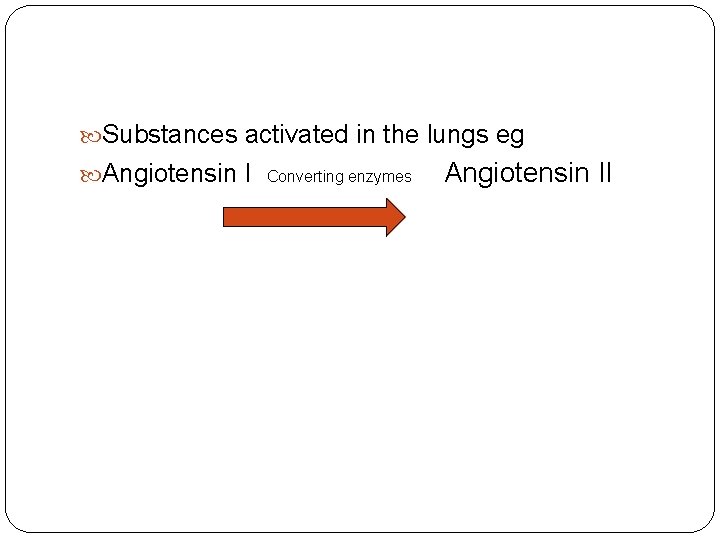
Substances activated in the lungs eg Angiotensin I Converting enzymes Angiotensin II
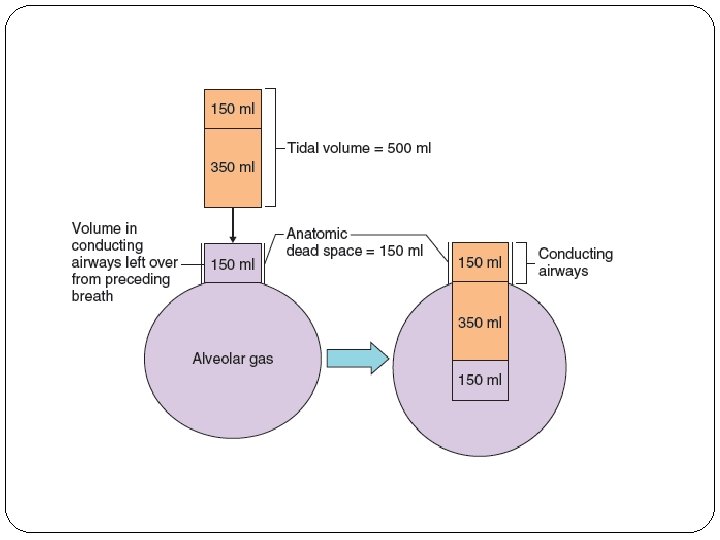
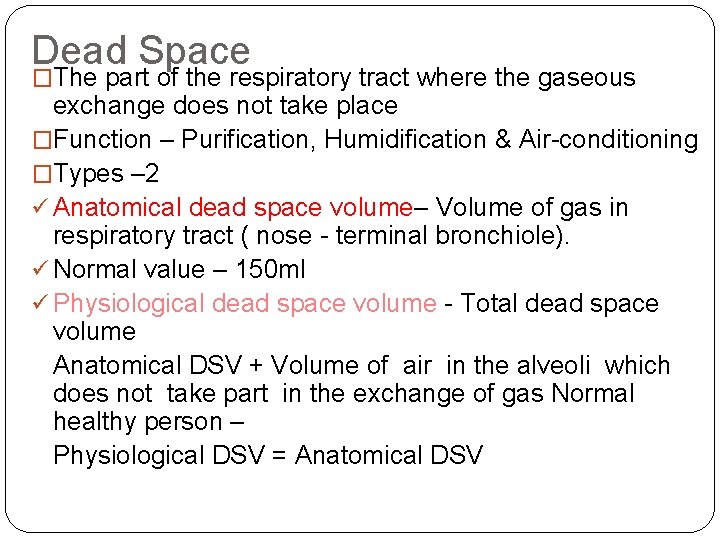
Dead Space �The part of the respiratory tract where the gaseous exchange does not take place �Function – Purification, Humidification & Air-conditioning �Types – 2 ü Anatomical dead space volume– volume Volume of gas in respiratory tract ( nose - terminal bronchiole). ü Normal value – 150 ml ü Physiological dead space volume - Total dead space volume Anatomical DSV + Volume of air in the alveoli which does not take part in the exchange of gas Normal healthy person – Physiological DSV = Anatomical DSV
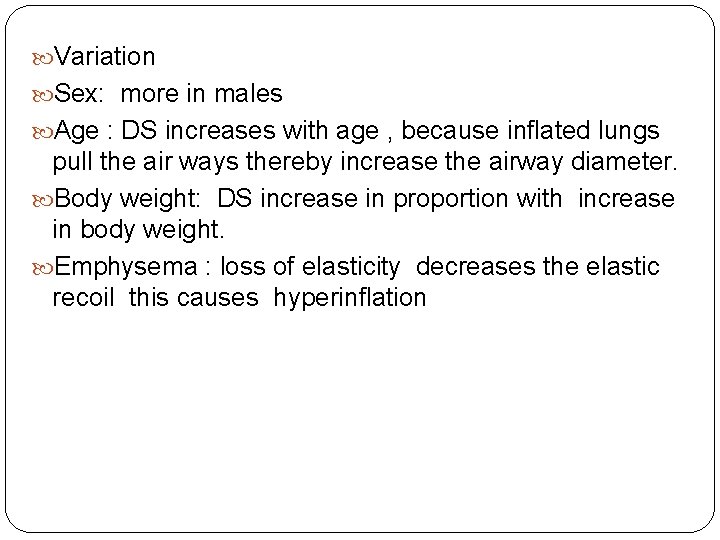
Variation Sex: more in males Age : DS increases with age , because inflated lungs pull the air ways thereby increase the airway diameter. Body weight: DS increase in proportion with increase in body weight. Emphysema : loss of elasticity decreases the elastic recoil this causes hyperinflation
Alveolar ventilation
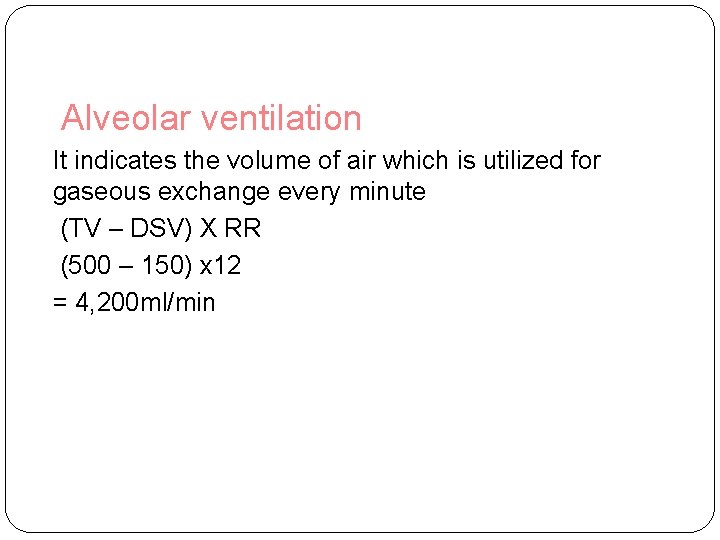
Alveolar ventilation It indicates the volume of air which is utilized for gaseous exchange every minute (TV – DSV) X RR (500 – 150) x 12 = 4, 200 ml/min
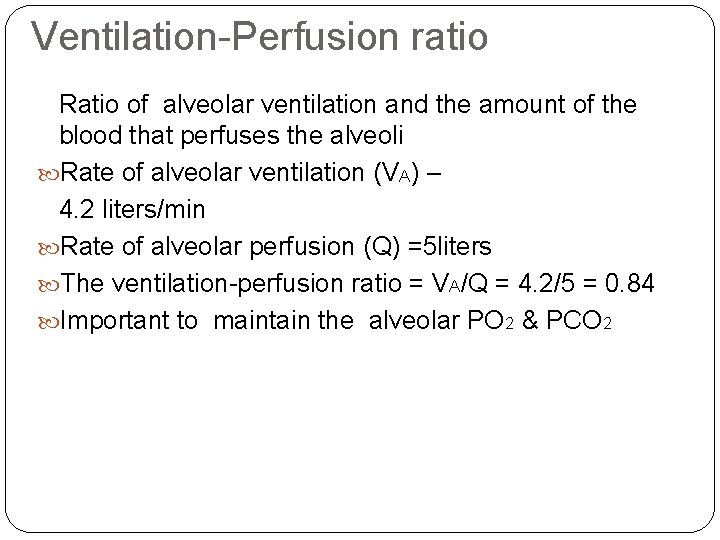
Ventilation-Perfusion ratio Ratio of alveolar ventilation and the amount of the blood that perfuses the alveoli Rate of alveolar ventilation (VA) – 4. 2 liters/min Rate of alveolar perfusion (Q) =5 liters The ventilation-perfusion ratio = VA/Q = 4. 2/5 = 0. 84 Important to maintain the alveolar PO 2 & PCO 2
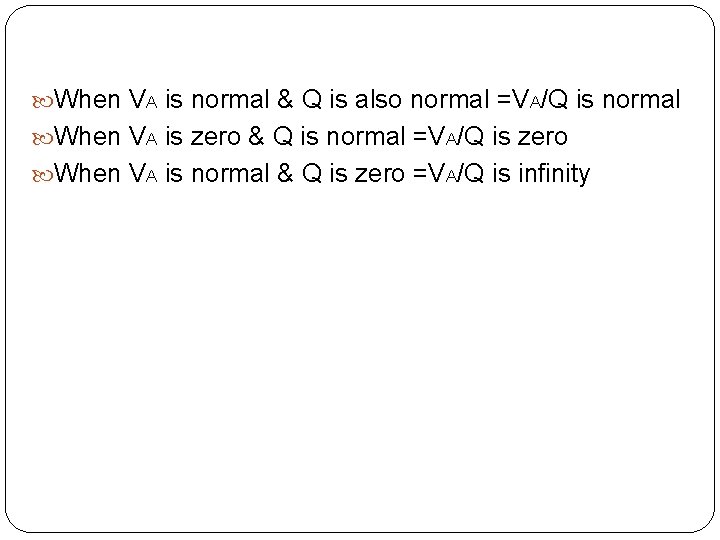
When VA is normal & Q is also normal =VA/Q is normal When VA is zero & Q is normal =VA/Q is zero When VA is normal & Q is zero =VA/Q is infinity
Thank you