
NON PROJECTED VISUAL REPORTER JOEL D BAYQUIN SUBJECT
NON PROJECTED VISUAL REPORTER: JOEL D. BAYQUIN SUBJECT: LANGUAGE TEACHING CONSTRUCTION OF INSTRUCTIONAL MATERIALS FOR PROFESSOR: PROF. MARY LEANNE LEGANHON
NON PROJECTED VISUALS are those aid which used without projection. So, they translate abstract ideas into a more realistic format. They allow instruction to move from verbal representation to a more concrete level.

Real objects
• Increases the effectiveness of the teacher • Clarity subject matter • Stimulates interest , motivates the learner to learn • Tools of the teacher
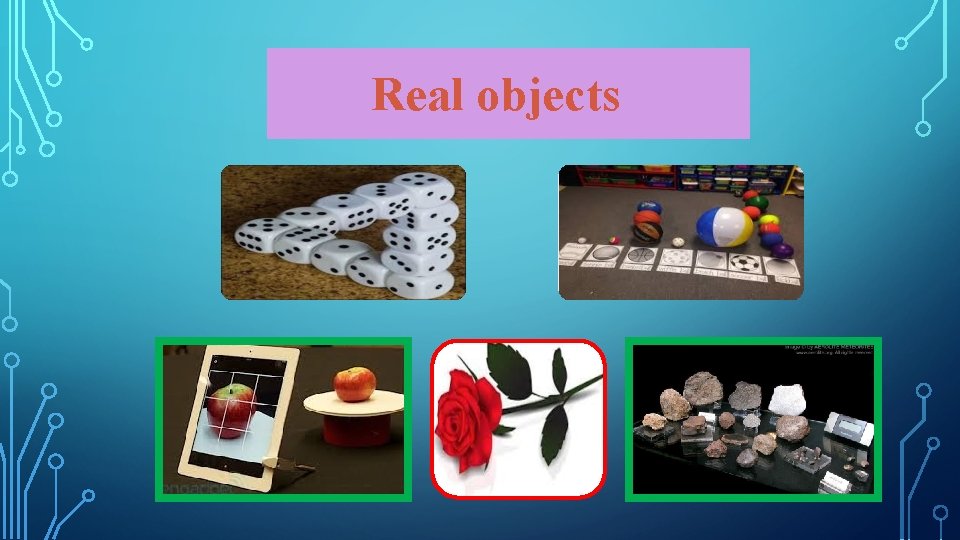
• tell your students that it is “real” • choose real object that is relevant and interesting • provide the relevant cultural background beforehand • make connections to real in your students own culture
• A trip made by students or research workers to study something at first hand. • is a journey by group to a place away from their normal environment. • are important to help bridge the gap between education and hand-on experience • are a vital requirement of their educational curriculum.
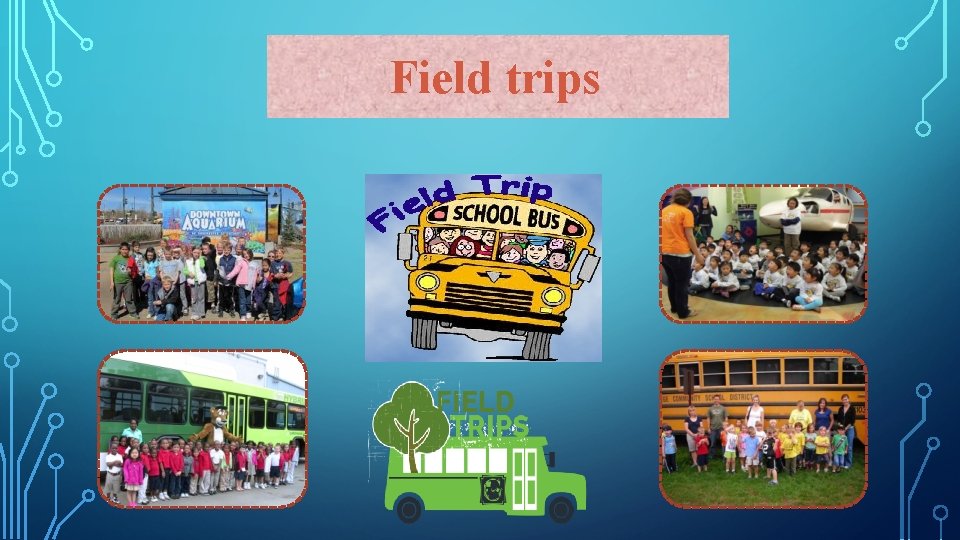
Field trips
WHY SCHOOL SHOULD HAVE EDUCATIONAL TRIPS? • REINFORCEMENT - The trip can reinforce what a teacher has been instructing in class about a subject and help students understand the topic better. • ENGAGEMENT - Teachers turn into mobile classrooms, instructing students to collect data, then quizzing them or assigning a project based on what they learned during the outing. • SOCIALIZATION - Taking students into a new environment gives them the experience of traveling in a group and teaches them to be respectful of the locations they visit. • EXPOSURE – Kids get to visit a place to which they have never been before. This can particularly advantageous to students who are less
• Educational trips can give students exposure to places they might not otherwise visit. • Field trips give students educational experiences away from their regular school environment. • Students visiting different educational facilities learn in a more hands-on and interactive manner than they do in school. • Field trips give children a welcome break in routine. • A field trip can awaken the desire in a child to try new things and pursue previously unconsidered dreams.
• Educational and Relaxing - Students are more likely to learn on an Educational trip because their minds are relaxed. They aren't worried about the competitive classroom setting. • Break from the Routine - Students see Educational trips as extended play time. If you find that you are approaching a topic that drains on your students, consider applying a relevant Educational trip to make the topic more enjoyable. • Learn Something New - There are facts that aren't included in the textbooks that are fascinating to know. Many experts can share knowledge to further the learning process about your topic.
• Are defined as documents in the form of pictures , photographs, drawings, prints, and other forms of the two dimensions.
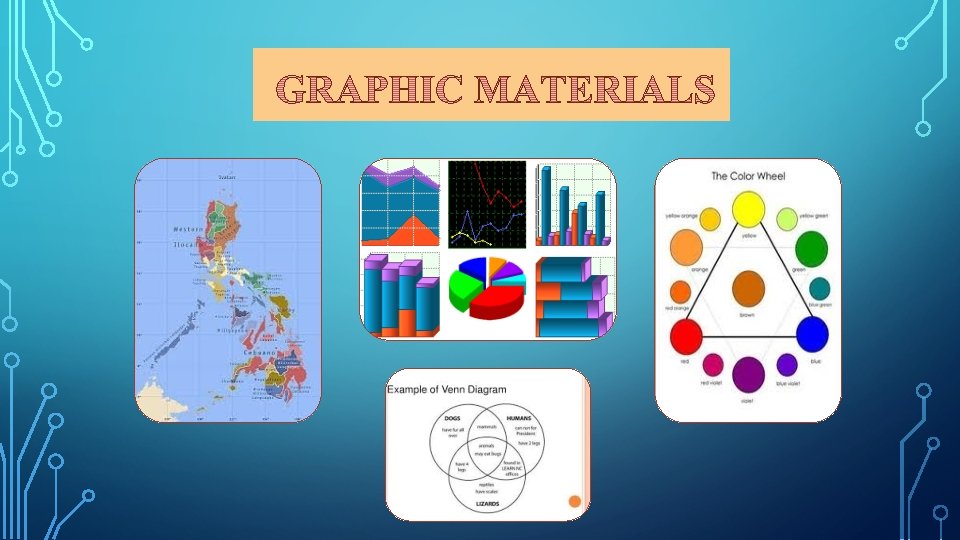
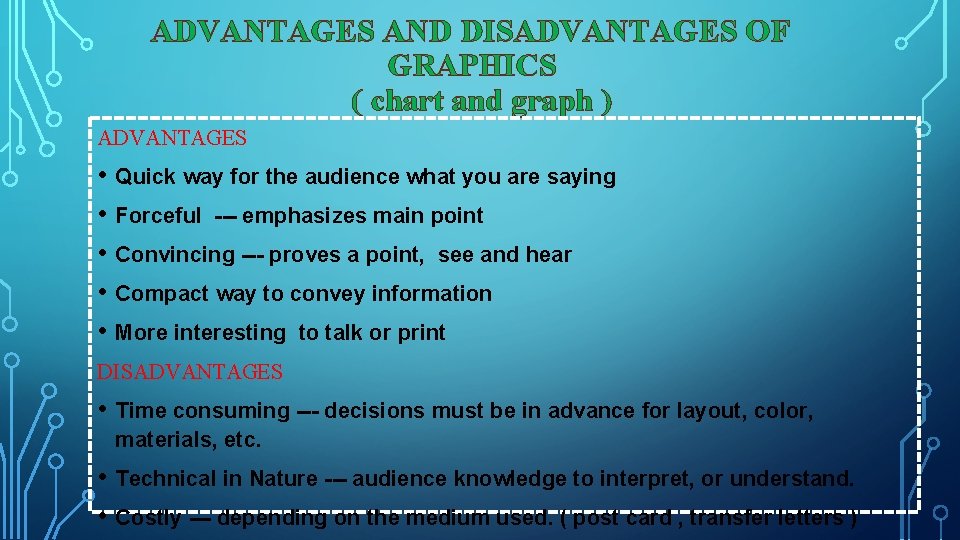
ADVANTAGES AND DISADVANTAGES OF GRAPHICS ( chart and graph ) ADVANTAGES • Quick way for the audience what you are saying • Forceful --- emphasizes main point • Convincing --- proves a point, see and hear • Compact way to convey information • More interesting to talk or print DISADVANTAGES • Time consuming --- decisions must be in advance for layout, color, materials, etc. • Technical in Nature --- audience knowledge to interpret, or understand. • Costly --- depending on the medium used. ( post card , transfer letters )
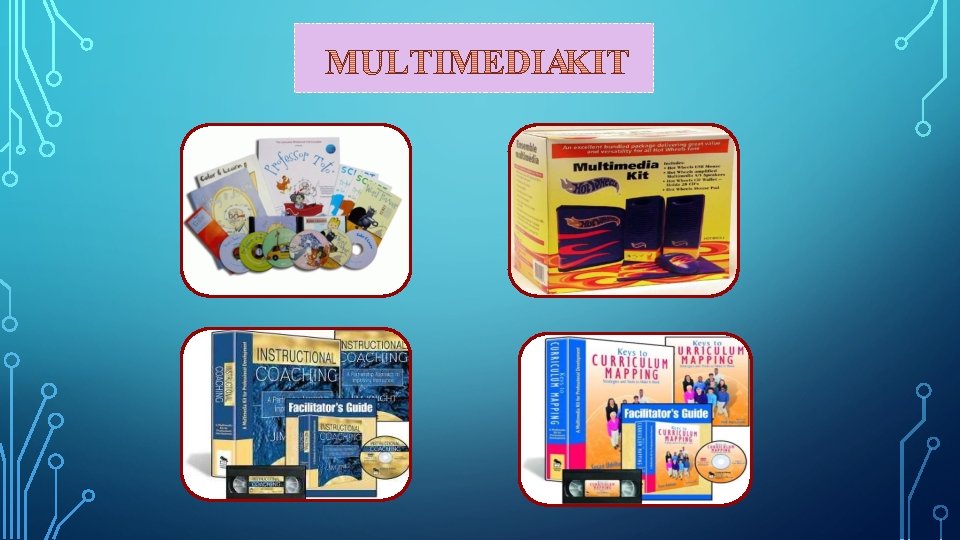
• is a collection of teaching, learning materials involving more than one type of medium and organized around a single topic. • is a set of teaching materials that you have designed using instructional technology and have ready at hand to deploy in the classroom. • is a set of article or equipment needed for a specific purpose
Are objects that duplicate as accurately as possible the real objects. Sometimes they are smaller version of the real objects. WHY ARE MODELS GOOD FOR? v. Demonstrating v. Making Impact v. Explaining a process v. Making a topic interesting
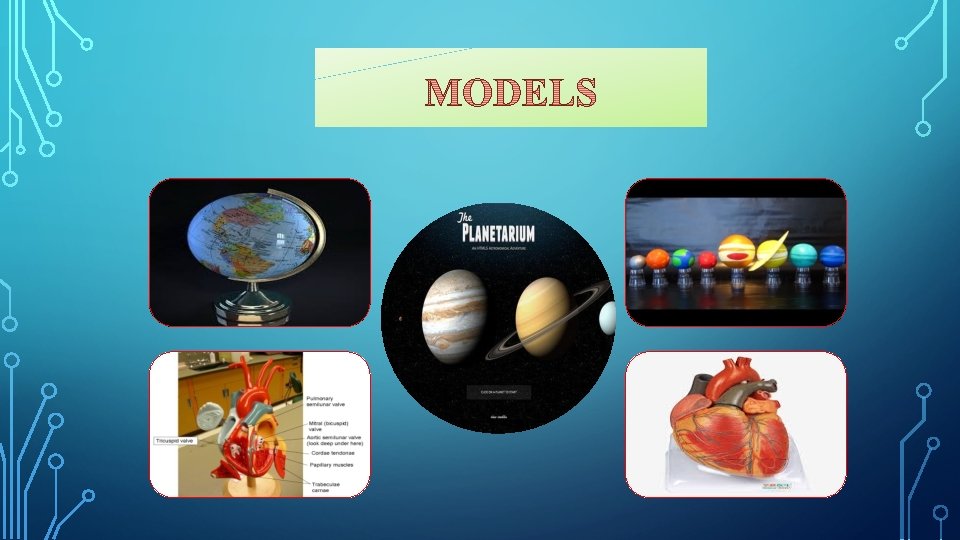
• Ensure that the model will work • Make sure that it is big enough for your students to see • If you pass the model around the class, make sure that your students are given enough to examine the model.
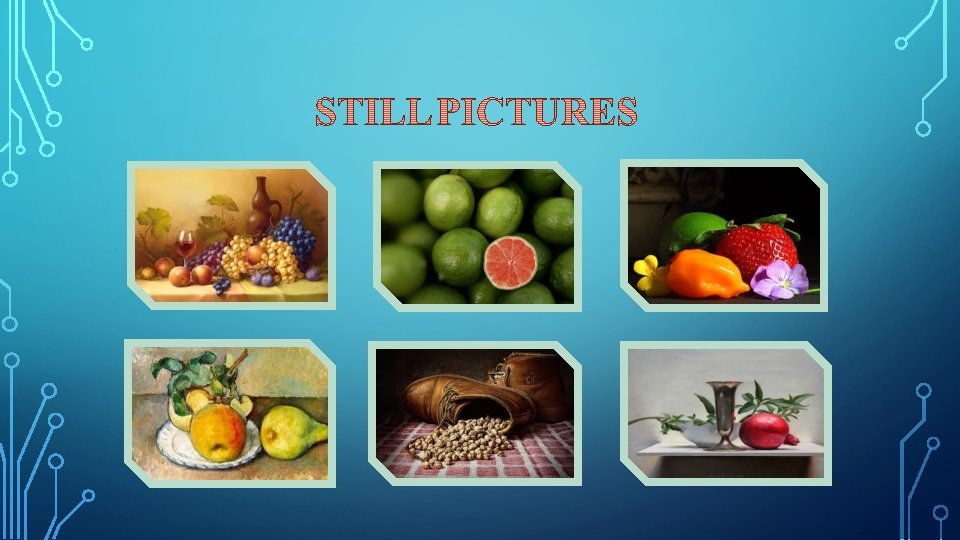
Still life photography is the depiction of inanimate subject matter, most typically a small grouping of objects. Still life photography, more so than other types of photography, such as landscape or portraiture, gives the photographer more leeway in the arrangement of design elements within a composition.
• can translate abstract ideas into more realistic form. • are usable in different kinds of academic levels. • provide for a variety of guided and free exercises. • can save the teacher’s time and energy. • is inexpensive, familiar medium of communication. • pictures are very important in helping students to retell experiences or understand something since they can represent place, object, people. • are essential visual media since they can show concrete visual description of the ideas they bring. They can make readers understand the ideas or information, they bring clearly, even more clearly than written or oral words. • pictures may improve the student’s visual literacy.
Printed matter is a term to describe printed materials produced by printers or publishers, such as books, magazines, booklets, brochures and other publicity materials and in some cases, newspapers.
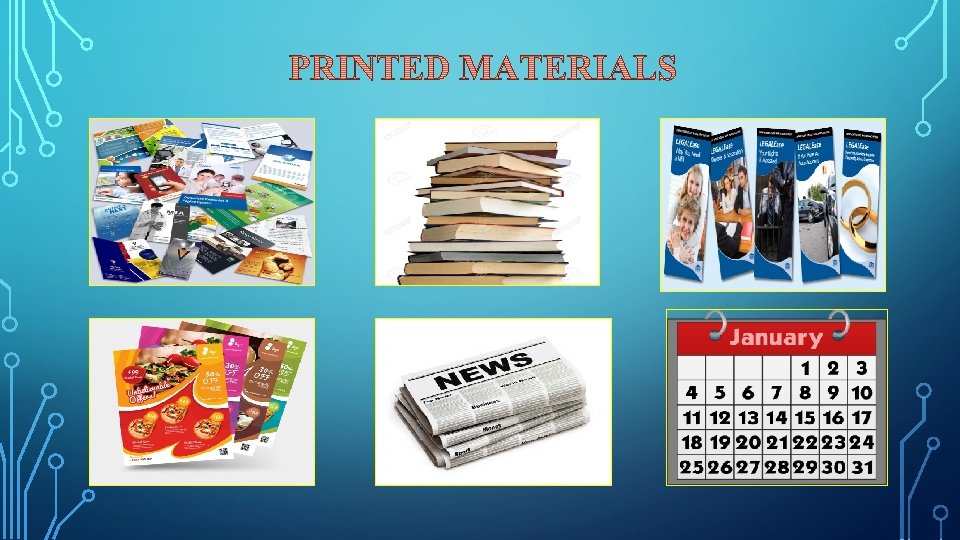
A. Textbooks B. Supplemental Materials a. Workbooks b. Duplicated Outline c. Teacher-prepared study guide d. Reference Books e. Pamphlets f. Magazine articles g. Newspaper h. store flyers I. calendars j. phone book h. alphabet posters
• Extremely portable. Print materials can be used in any location. • High comfort level. Most students are very comfortable using print materials to learn. • Cost effective. Print materials can be created and duplicated with little expense. • Readily available. Many distance learning courses can take advantage of existing textbooks, thus saving the time and expense of creating custom materials.
• No interactions. Print materials do not generally provide built-in interactions. Additional technologies, such as e-mail, must be supplemented. • No audio/visual elements. Print materials are static and are not appropriate for teaching languages and visual concepts. • Require reading skills. If the learners are non-readers or language skills are required, print materials will not be effective. • Time delay. It may take days or weeks for printed matter to travel between student and teacher.
• Abundant and easily attainable • Requires no electricity • Appropriate for low budget • Can be used in many ways at all levels of instruction and discipline • Used to stimulate creative expression such as stories or writing stories • Many of them can be converted into projected aids • Some of them can be projected through an opaque projector

- Slides: 29