
Nomenclature Naming Compounds Binary Compounds Compounds with only
Nomenclature Naming Compounds

Binary Compounds
• Compounds with only two elements in any ratio
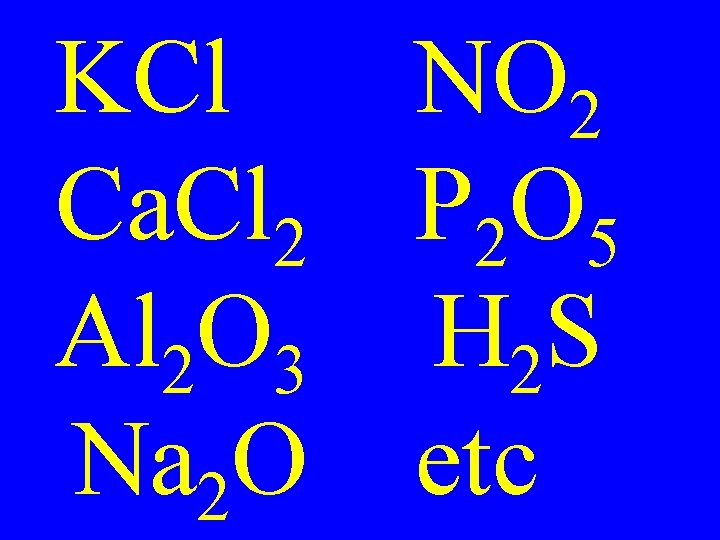
KCl Ca. Cl 2 Al 2 O 3 Na 2 O NO 2 P 2 O 5 H 2 S etc

• Binary compounds can be either ionic or covalent
Naming Binary Compounds
Naming Ionic Compounds
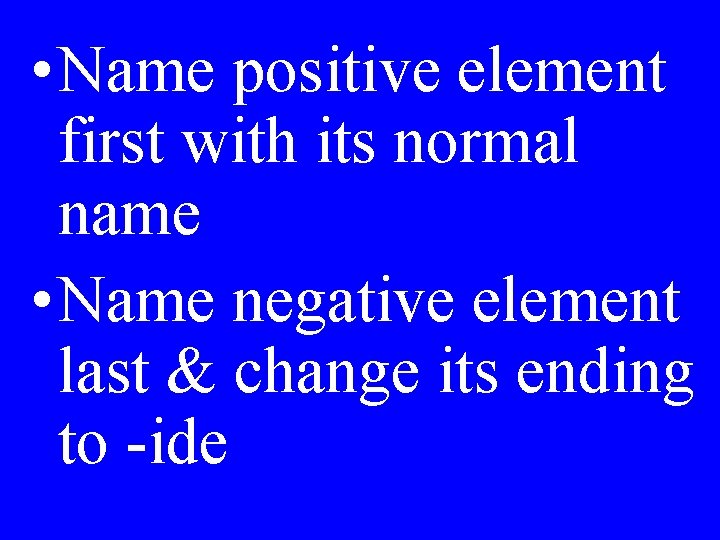
• Name positive element first with its normal name • Name negative element last & change its ending to -ide
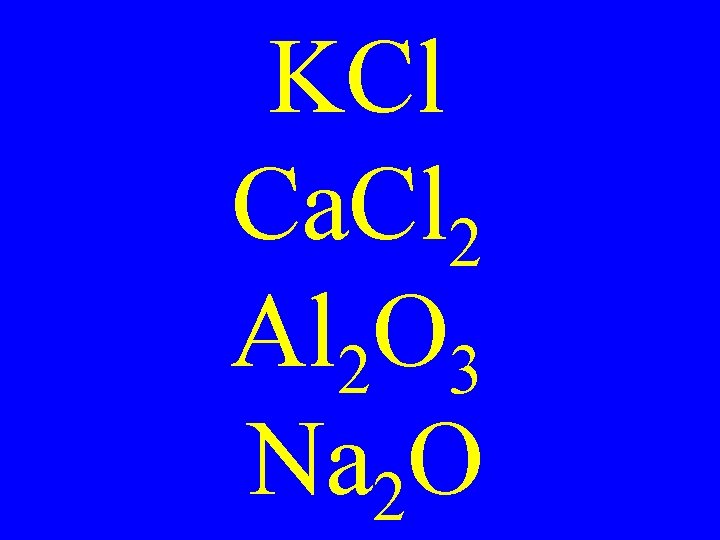
KCl Ca. Cl 2 Al 2 O 3 Na 2 O
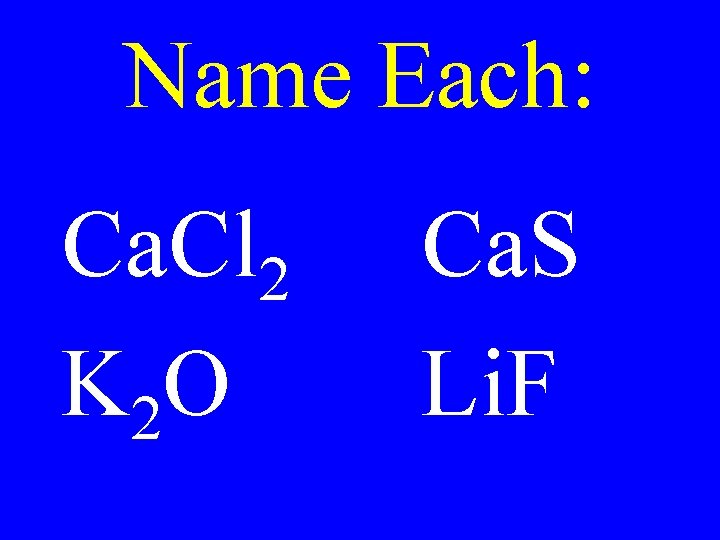
Name Each: Ca. Cl 2 K 2 O Ca. S Li. F
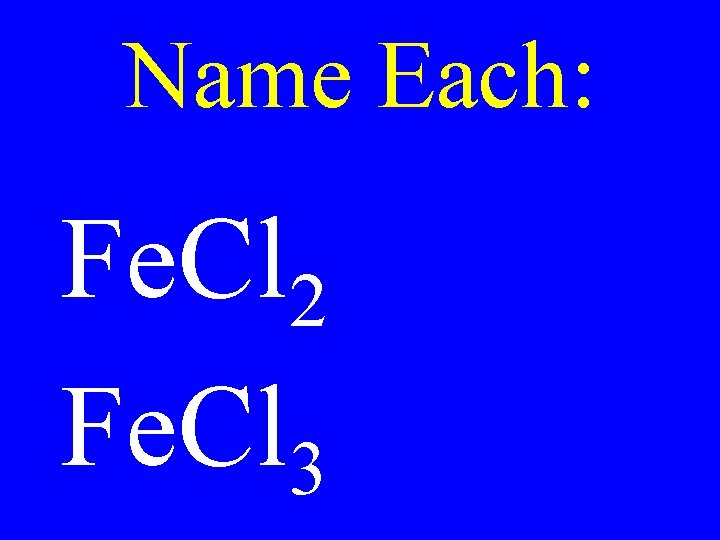
Name Each: Fe. Cl 2 Fe. Cl 3
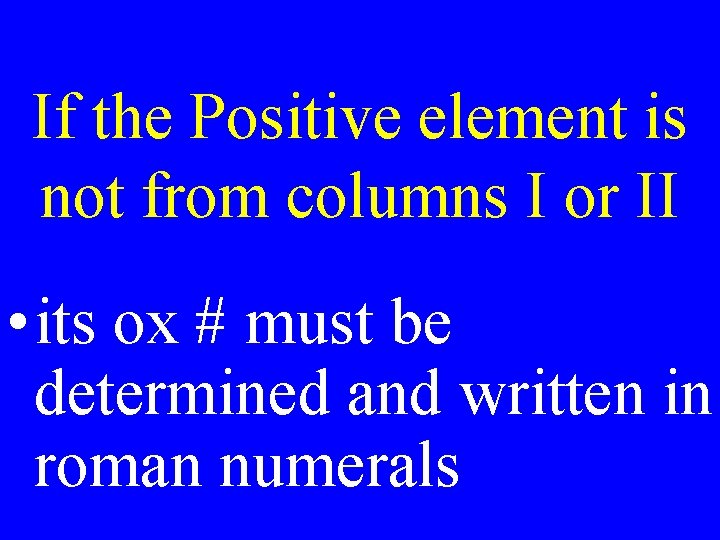
If the Positive element is not from columns I or II • its ox # must be determined and written in roman numerals
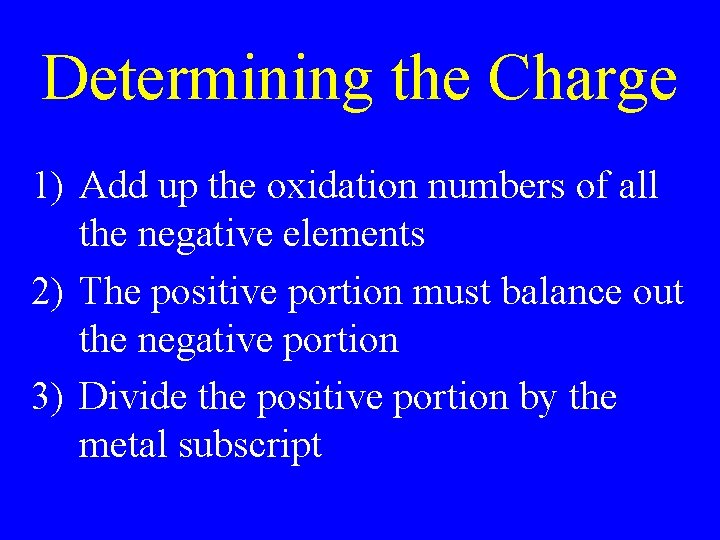
Determining the Charge 1) Add up the oxidation numbers of all the negative elements 2) The positive portion must balance out the negative portion 3) Divide the positive portion by the metal subscript
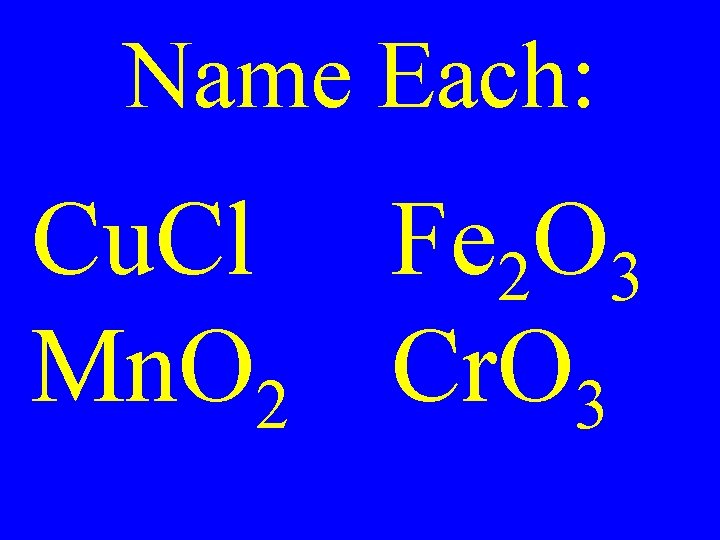
Name Each: Cu. Cl Fe 2 O 3 Mn. O 2 Cr. O 3
Molecule
• A covalent compound that can exist as a separate unit • Non-metals bond to form molecules
Naming Molecules or Covalent Compounds
• Same rules as ionic compounds except: • use geometric prefixes to determine the # of each atom
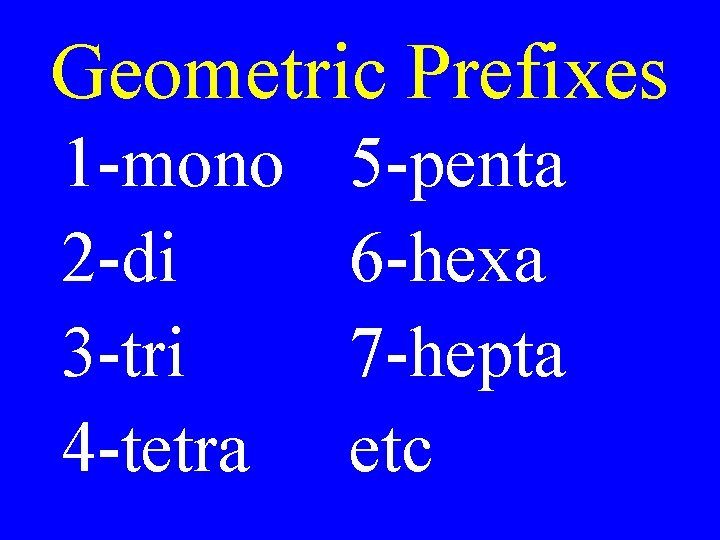
Geometric Prefixes 1 -mono 2 -di 3 -tri 4 -tetra 5 -penta 6 -hexa 7 -hepta etc
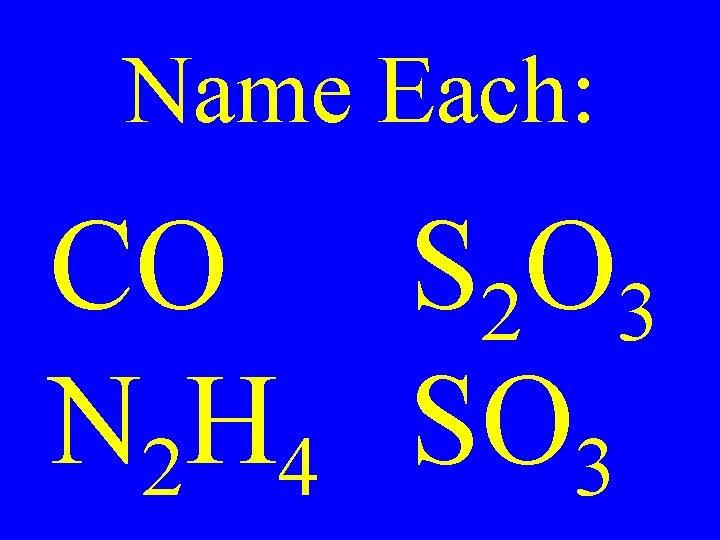
Name Each: CO S 2 O 3 N 2 H 4 SO 3
Nomenclature HW • Work problems: 49 - 54 on page 51
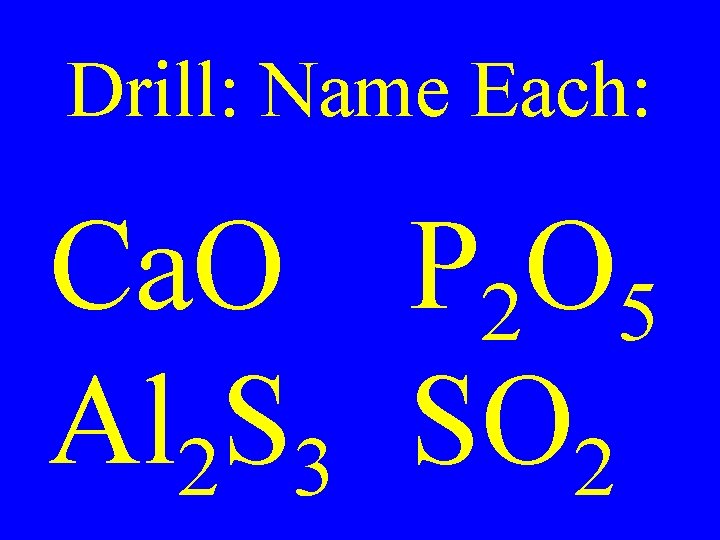
Drill: Name Each: Ca. O P 2 O 5 Al 2 S 3 SO 2
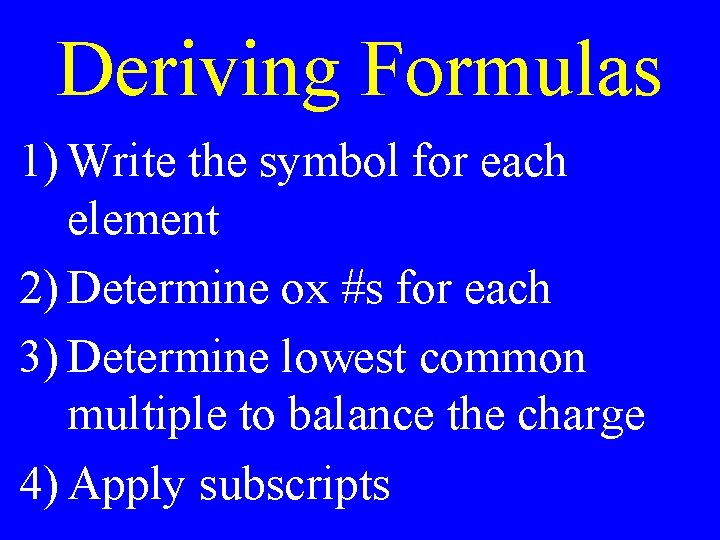
Deriving Formulas 1) Write the symbol for each element 2) Determine ox #s for each 3) Determine lowest common multiple to balance the charge 4) Apply subscripts
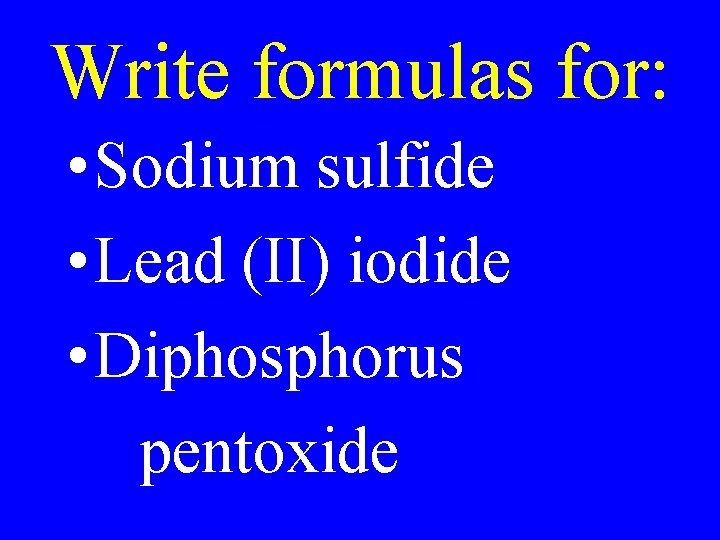
Write formulas for: • Sodium sulfide • Lead (II) iodide • Diphosphorus pentoxide
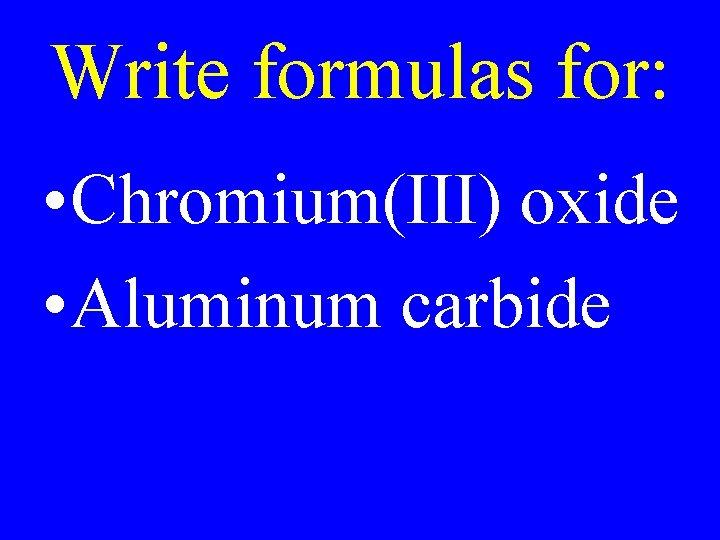
Write formulas for: • Chromium(III) oxide • Aluminum carbide
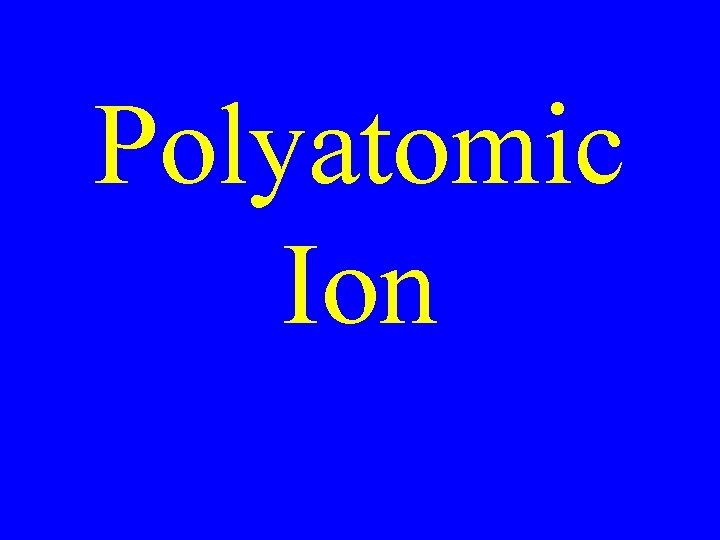
Polyatomic Ion
• A group of atoms chemically combined that together have a charge
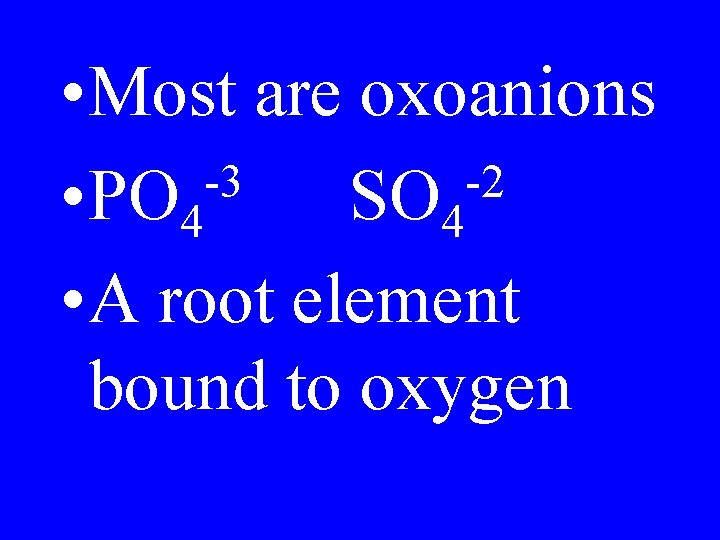
• Most are oxoanions -3 -2 • PO 4 SO 4 • A root element bound to oxygen
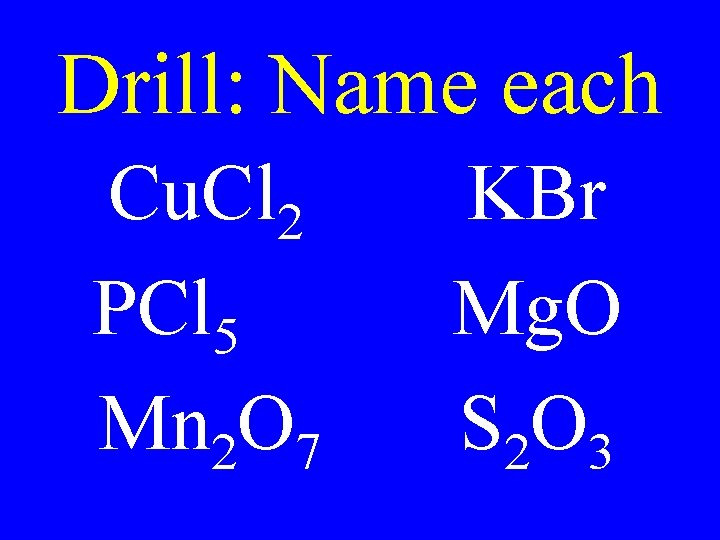
Drill: Name each Cu. Cl 2 PCl 5 Mn 2 O 7 KBr Mg. O S 2 O 3
Naming Polyatomic Ions
• Learn the polyatomic table on page 42 & 43 • Learn how to use the periodic table to determine polyatomic ions
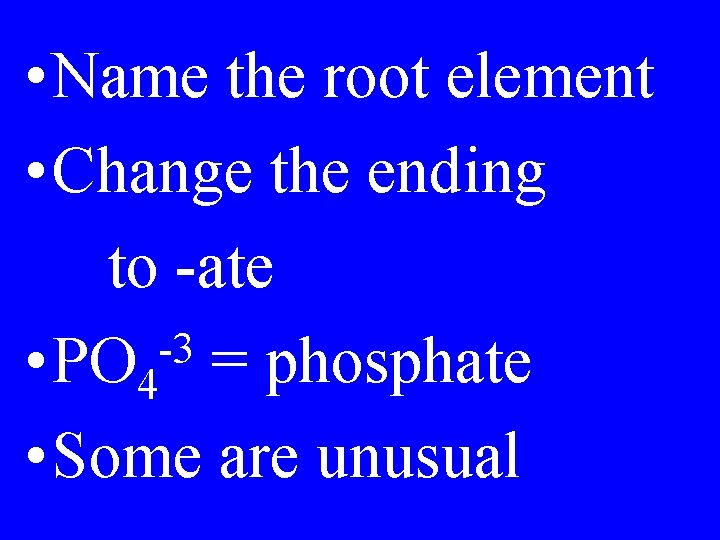
• Name the root element • Change the ending to -ate -3 • PO 4 = phosphate • Some are unusual
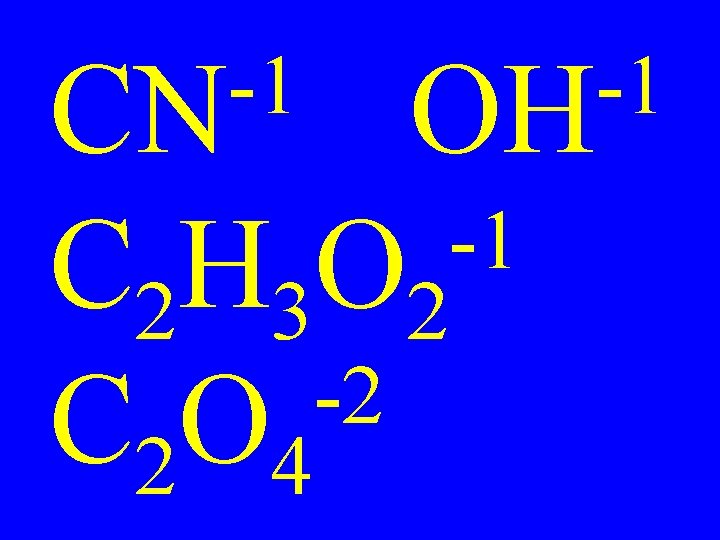
-1 CN -1 OH C 2 H 3 O 2 -2 C 2 O 4 -1
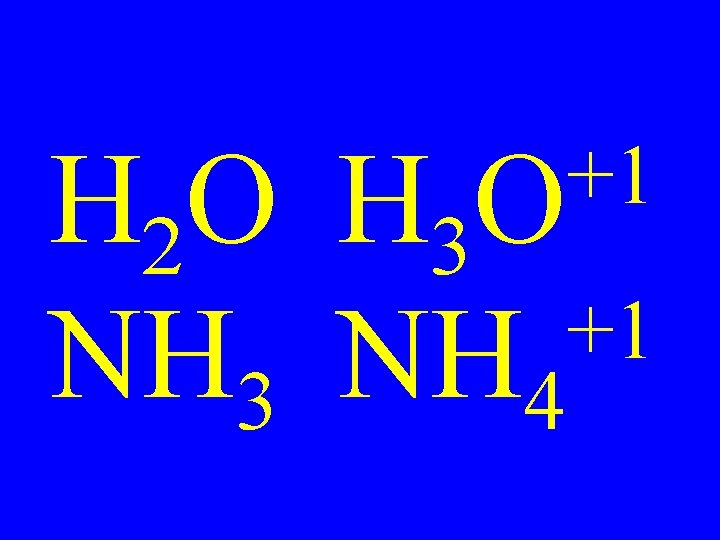
+1 O H 2 O H 3 +1 NH 3 NH 4
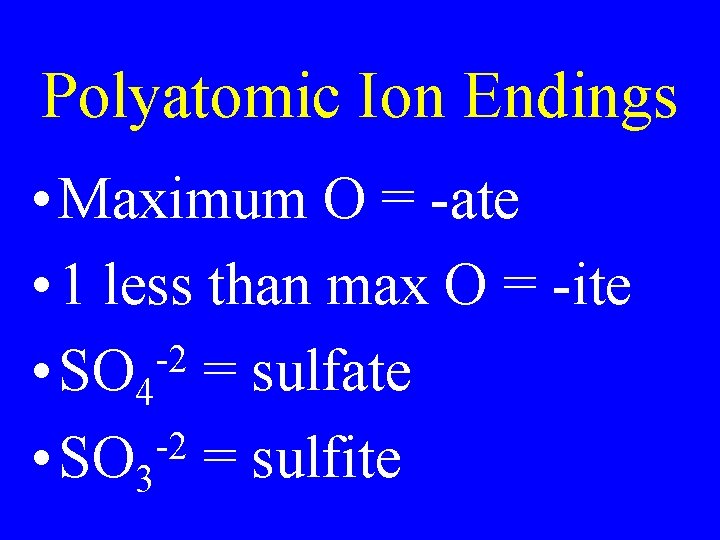
Polyatomic Ion Endings • Maximum O = -ate • 1 less than max O = -ite -2 • SO 4 = sulfate -2 • SO 3 = sulfite
Naming Ternary Compounds
Ternary Compounds • Compounds containing more than two different elements • Most contain polyatomic ions
• Follow ionic rules for naming the compound • Name the polyatomic ion as the positive or negative portion
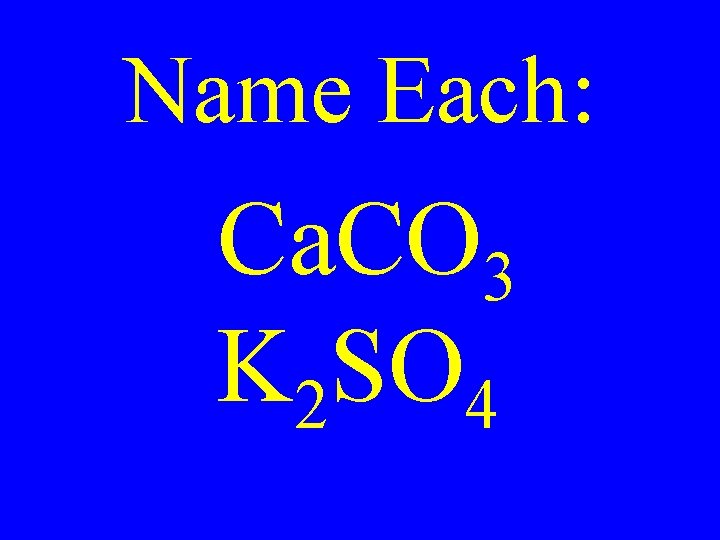
Name Each: Ca. CO 3 K 2 SO 4
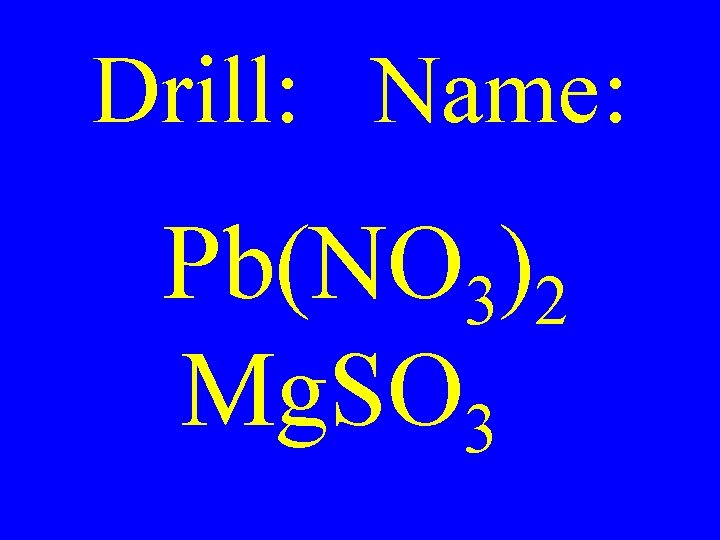
Drill: Name: Pb(NO 3)2 Mg. SO 3
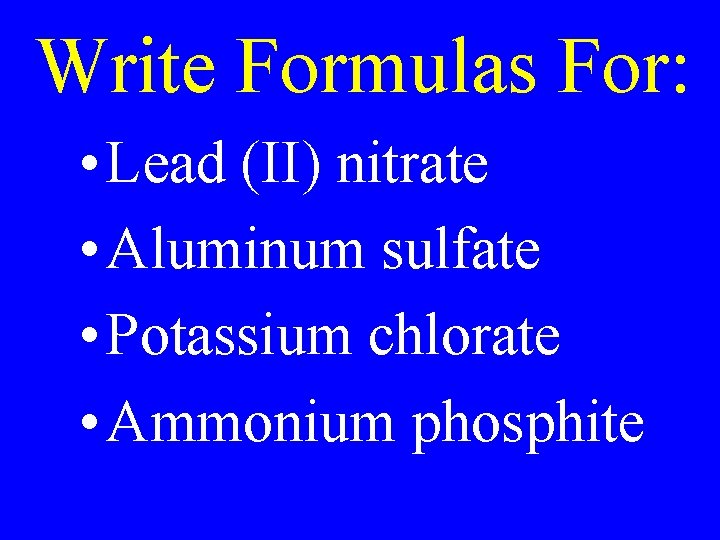
Write Formulas For: • Lead (II) nitrate • Aluminum sulfate • Potassium chlorate • Ammonium phosphite
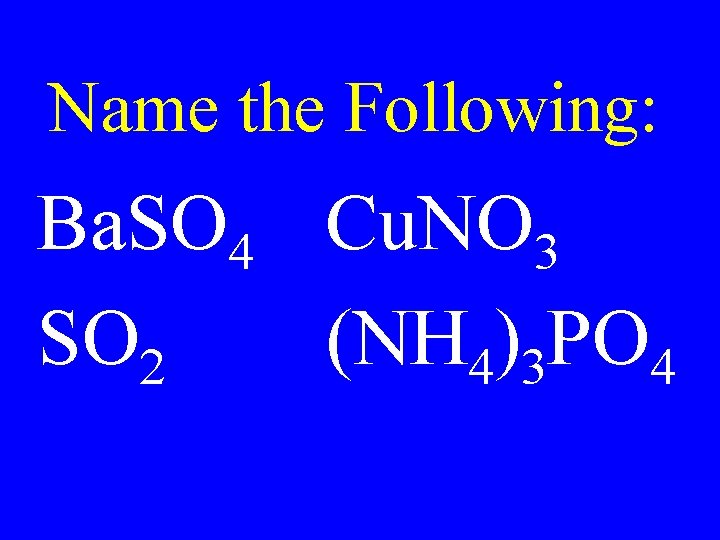
Name the Following: Ba. SO 4 Cu. NO 3 SO 2 (NH 4)3 PO 4
Naming Acids
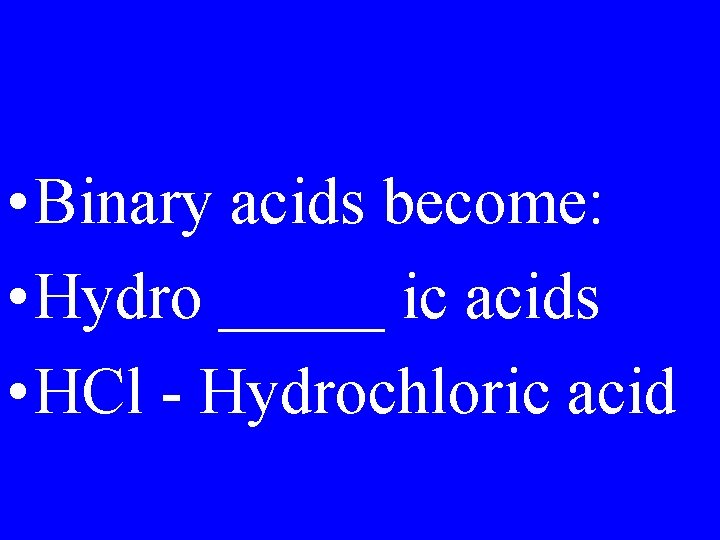
• Binary acids become: • Hydro _____ ic acids • HCl - Hydrochloric acid
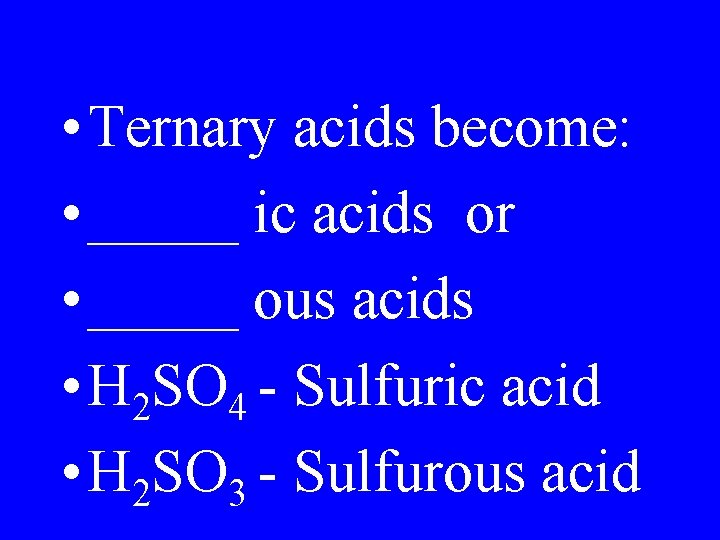
• Ternary acids become: • _____ ic acids or • _____ ous acids • H 2 SO 4 - Sulfuric acid • H 2 SO 3 - Sulfurous acid
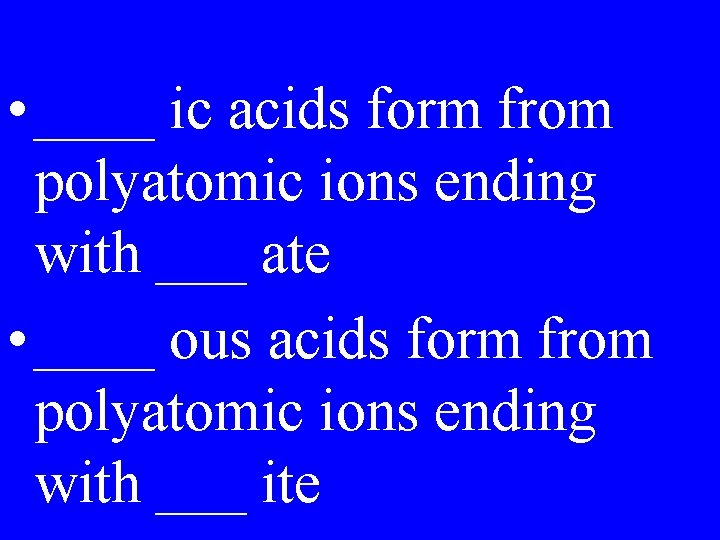
• ____ ic acids form from polyatomic ions ending with ___ ate • ____ ous acids form from polyatomic ions ending with ___ ite
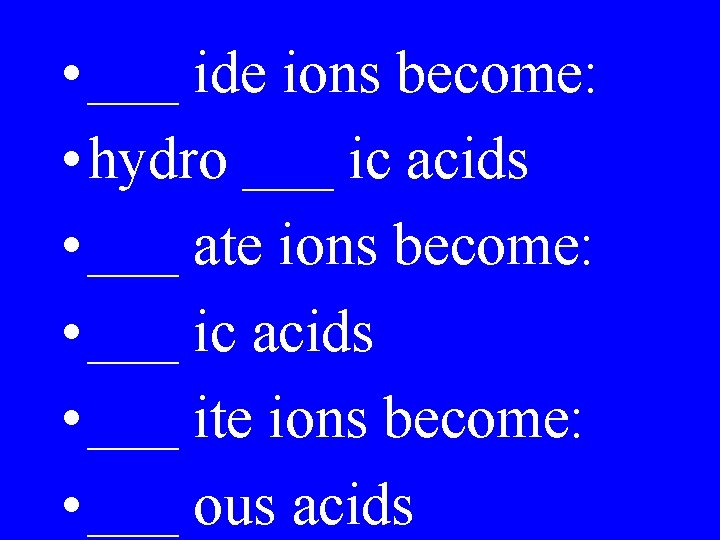
• ___ ide ions become: • hydro ___ ic acids • ___ ate ions become: • ___ ic acids • ___ ite ions become: • ___ ous acids
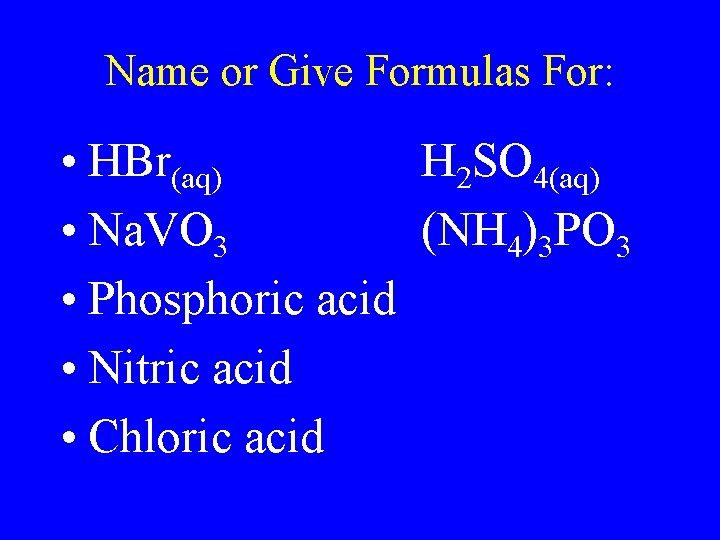
Name or Give Formulas For: • HBr(aq) H 2 SO 4(aq) • Na. VO 3 (NH 4)3 PO 3 • Phosphoric acid • Nitric acid • Chloric acid
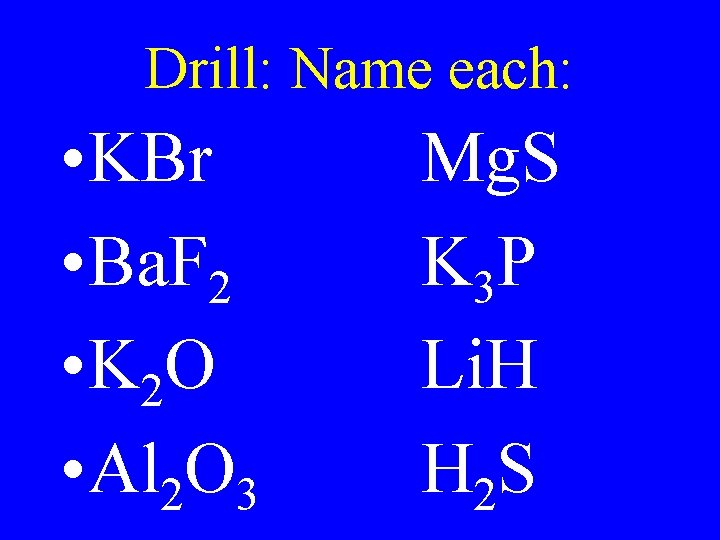
Drill: Name each: • KBr • Ba. F 2 • K 2 O • Al 2 O 3 Mg. S K 3 P Li. H H 2 S
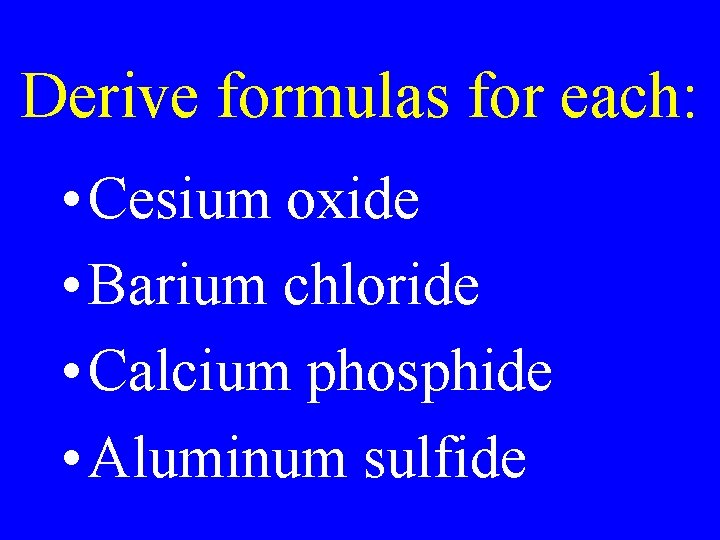
Derive formulas for each: • Cesium oxide • Barium chloride • Calcium phosphide • Aluminum sulfide
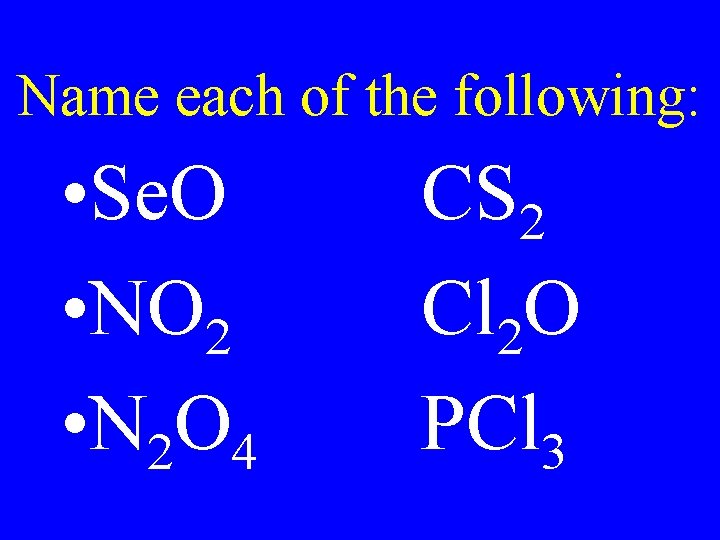
Name each of the following: • Se. O • NO 2 • N 2 O 4 CS 2 Cl 2 O PCl 3
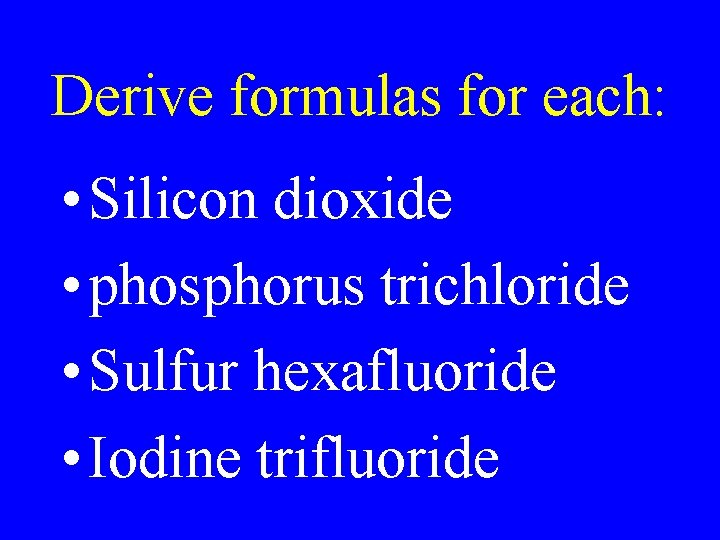
Derive formulas for each: • Silicon dioxide • phosphorus trichloride • Sulfur hexafluoride • Iodine trifluoride
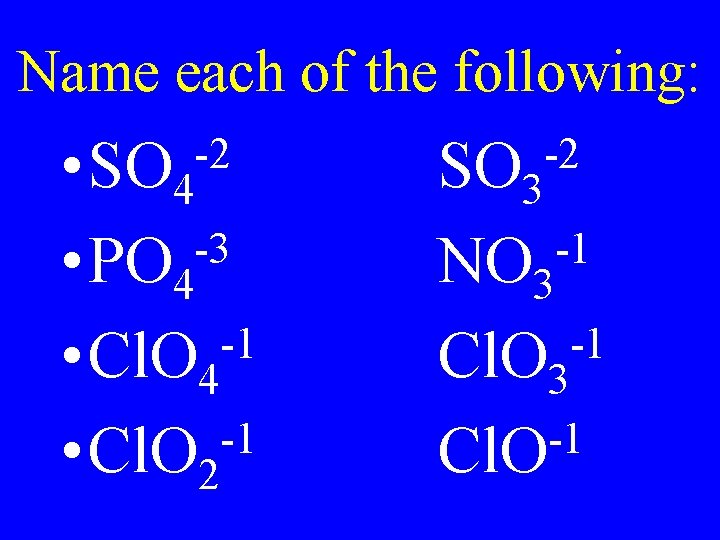
Name each of the following: -2 • SO 4 -3 • PO 4 -1 • Cl. O 2 -2 SO 3 -1 NO 3 -1 Cl. O
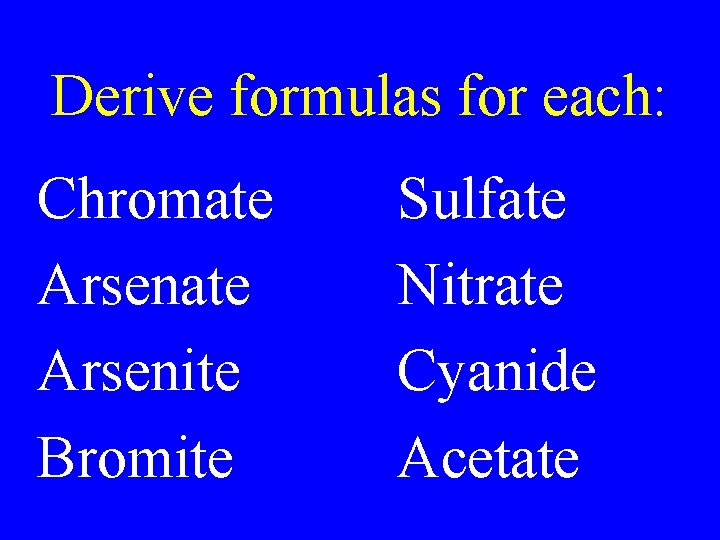
Derive formulas for each: Chromate Arsenite Bromite Sulfate Nitrate Cyanide Acetate
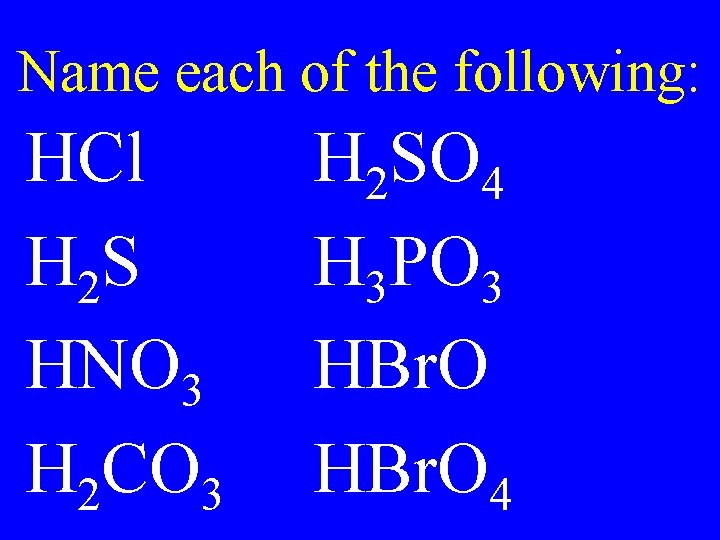
Name each of the following: HCl H 2 S HNO 3 H 2 CO 3 H 2 SO 4 H 3 PO 3 HBr. O 4
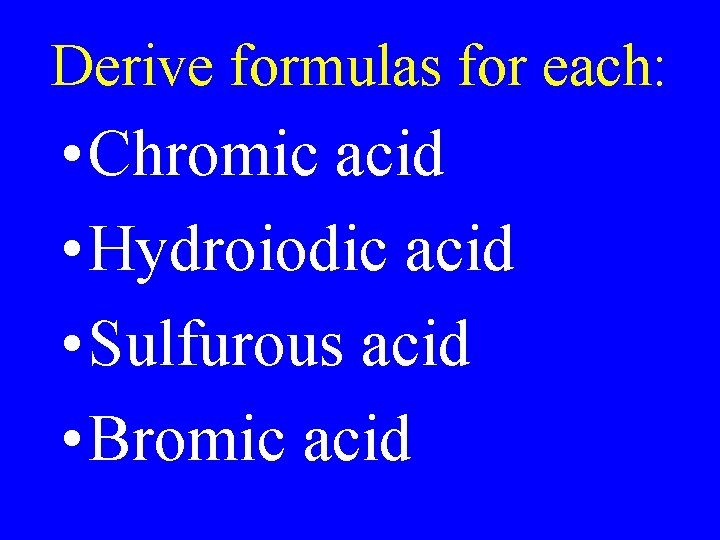
Derive formulas for each: • Chromic acid • Hydroiodic acid • Sulfurous acid • Bromic acid
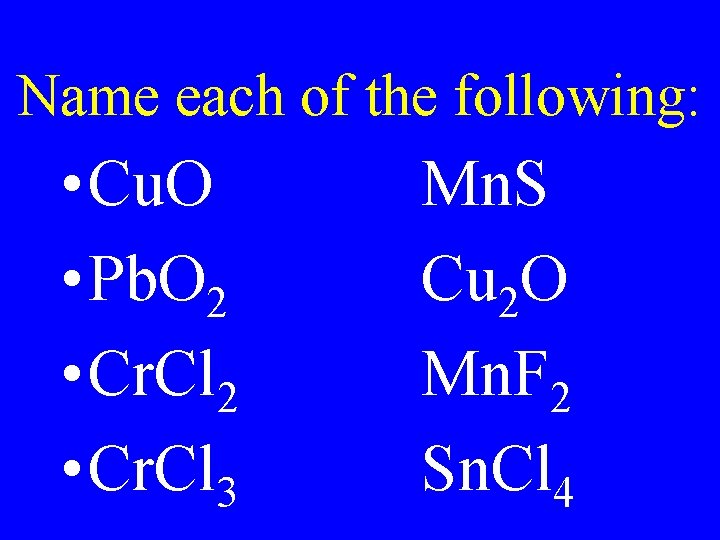
Name each of the following: • Cu. O • Pb. O 2 • Cr. Cl 3 Mn. S Cu 2 O Mn. F 2 Sn. Cl 4
Percent Composition by Mass
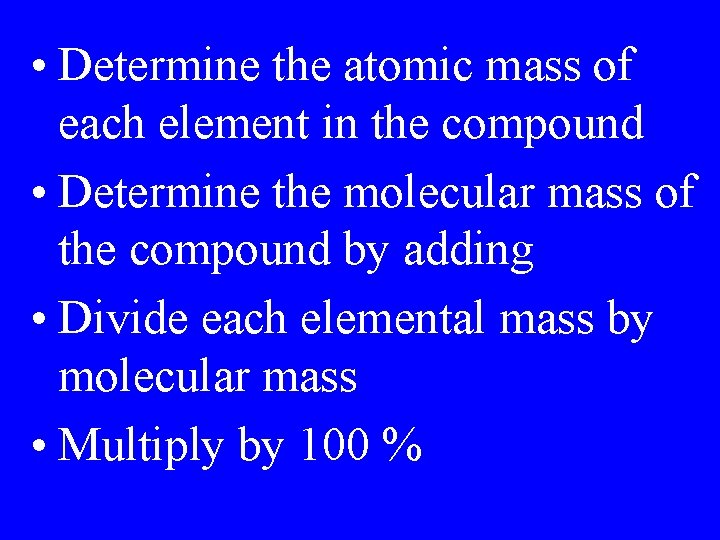
• Determine the atomic mass of each element in the compound • Determine the molecular mass of the compound by adding • Divide each elemental mass by molecular mass • Multiply by 100 %
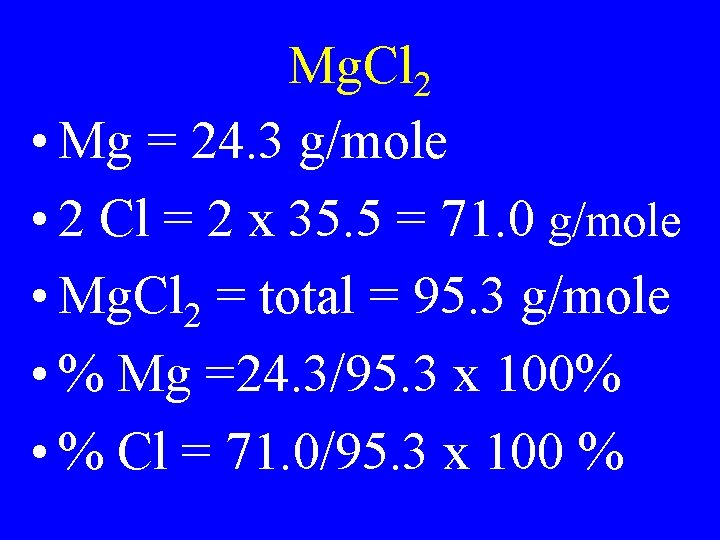
Mg. Cl 2 • Mg = 24. 3 g/mole • 2 Cl = 2 x 35. 5 = 71. 0 g/mole • Mg. Cl 2 = total = 95. 3 g/mole • % Mg =24. 3/95. 3 x 100% • % Cl = 71. 0/95. 3 x 100 %
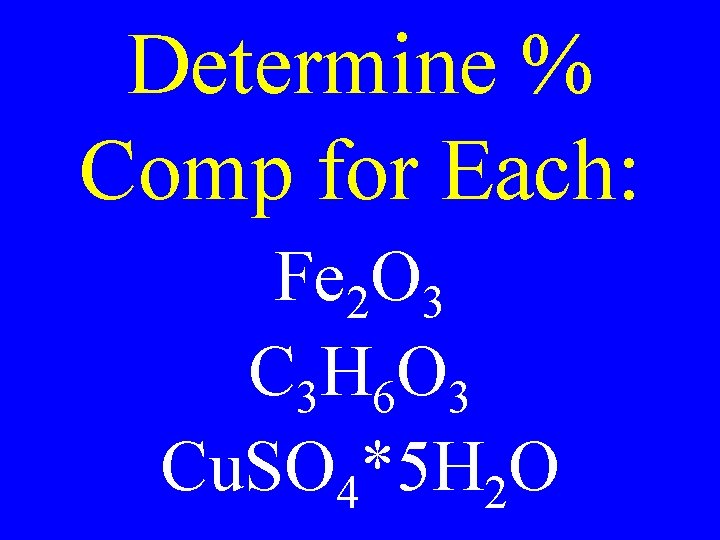
Determine % Comp for Each: Fe 2 O 3 C 3 H 6 O 3 Cu. SO 4*5 H 2 O
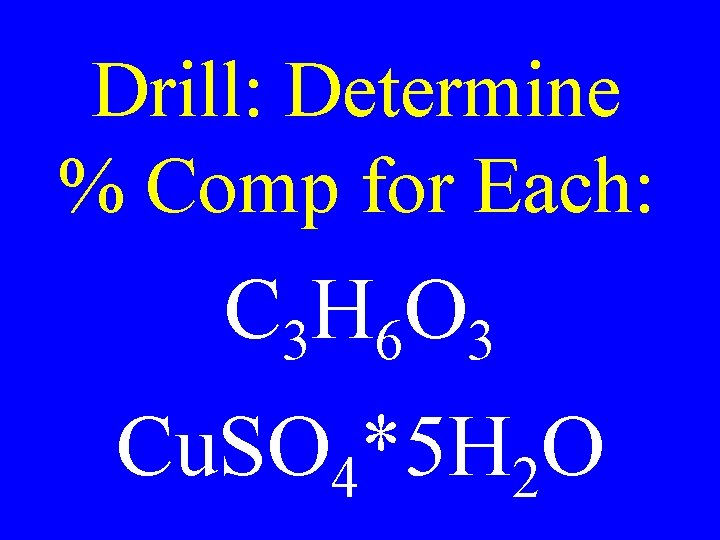
Drill: Determine % Comp for Each: C 3 H 6 O 3 Cu. SO 4*5 H 2 O
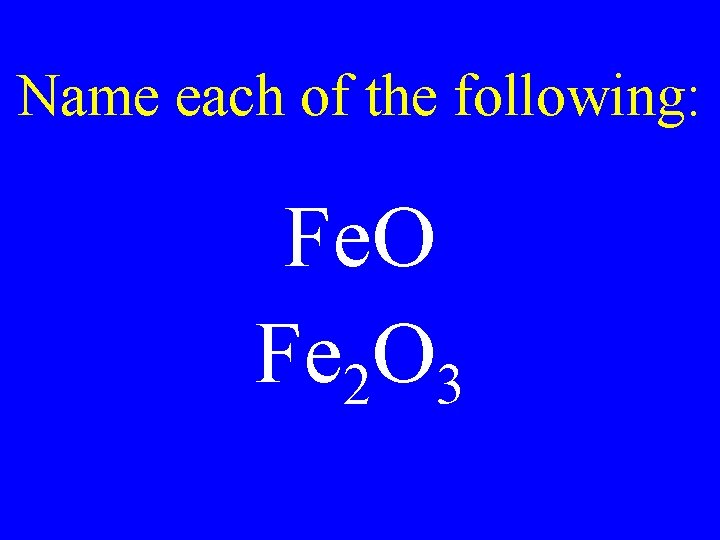
Name each of the following: Fe. O Fe 2 O 3
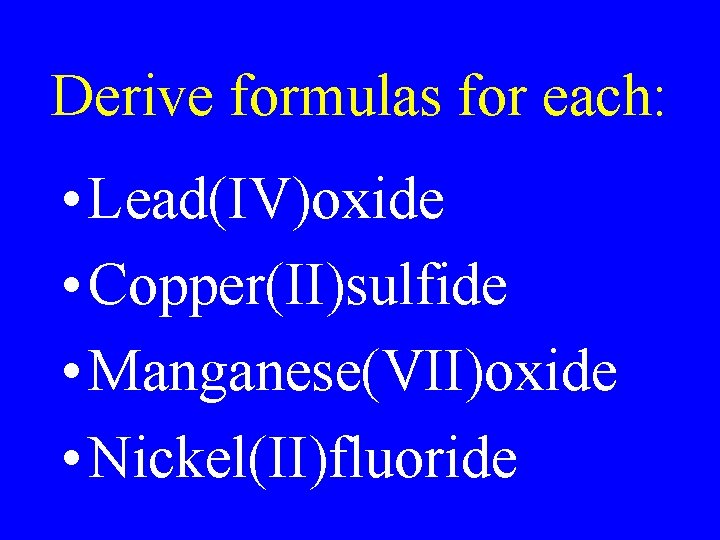
Derive formulas for each: • Lead(IV)oxide • Copper(II)sulfide • Manganese(VII)oxide • Nickel(II)fluoride
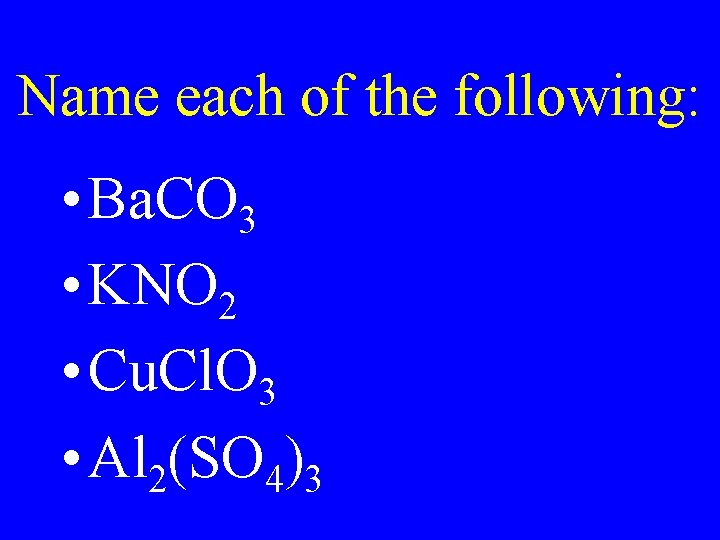
Name each of the following: • Ba. CO 3 • KNO 2 • Cu. Cl. O 3 • Al 2(SO 4)3
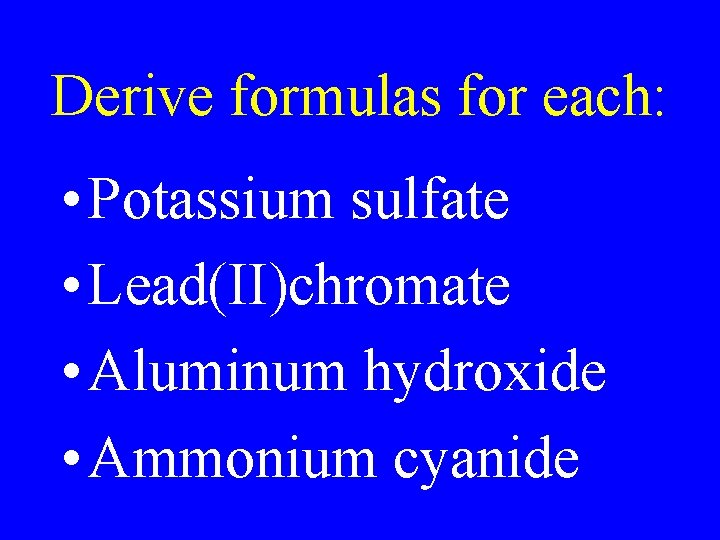
Derive formulas for each: • Potassium sulfate • Lead(II)chromate • Aluminum hydroxide • Ammonium cyanide
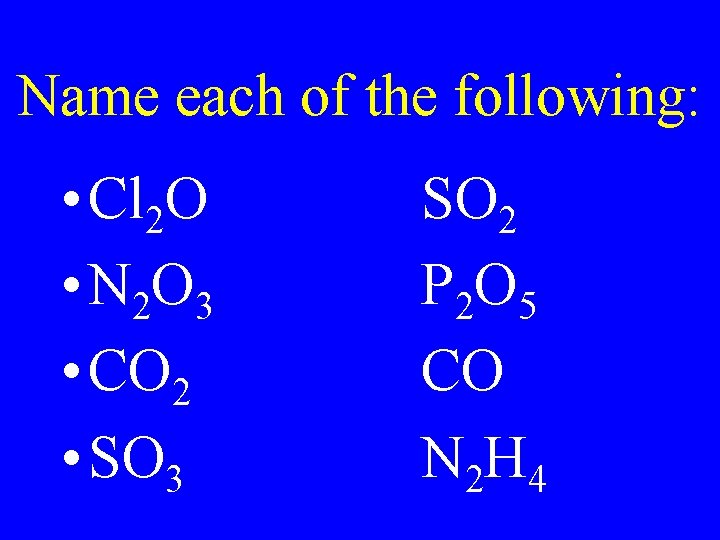
Name each of the following: • Cl 2 O • N 2 O 3 • CO 2 • SO 3 SO 2 P 2 O 5 CO N 2 H 4
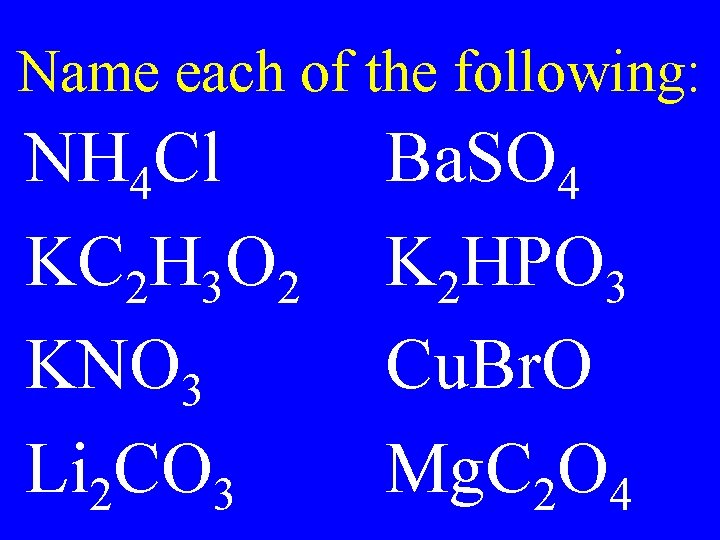
Name each of the following: NH 4 Cl KC 2 H 3 O 2 KNO 3 Li 2 CO 3 Ba. SO 4 K 2 HPO 3 Cu. Br. O Mg. C 2 O 4
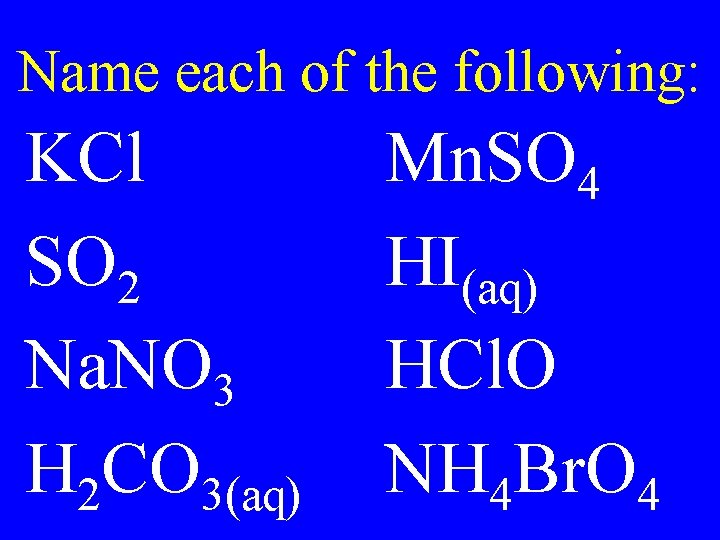
Name each of the following: KCl SO 2 Na. NO 3 H 2 CO 3(aq) Mn. SO 4 HI(aq) HCl. O NH 4 Br. O 4
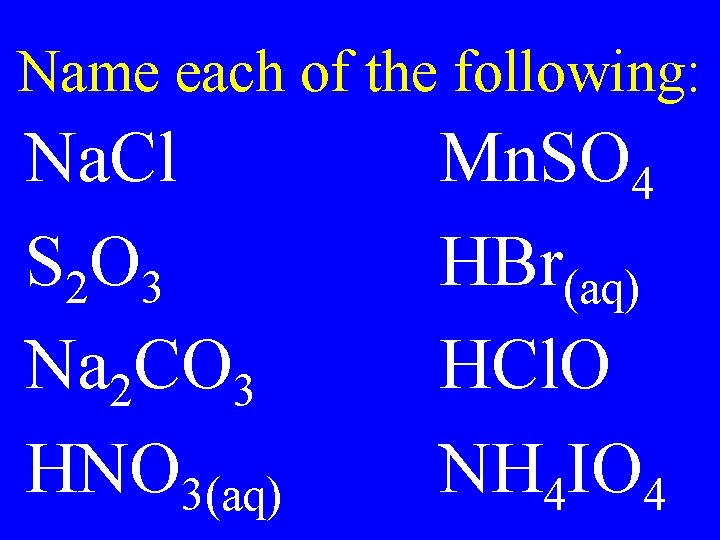
Name each of the following: Na. Cl S 2 O 3 Na 2 CO 3 HNO 3(aq) Mn. SO 4 HBr(aq) HCl. O NH 4 IO 4
Chapter 3 General • Define all the Key Terms on page 74
Nomenclature • Work problems 43 – 56 • On Pages 51 & 52
- Slides: 72