
Nomenclature Compounds Formulas Names Dr Ron Rusay Chemical


![Naming Acids [Compounds with electropositive Hydrogen atom(s)]](https://slidetodoc.com/presentation_image_h2/ba0193c87c6238a55992901d44d9f669/image-24.jpg "Naming Acids [Compounds with electropositive Hydrogen atom(s)]")
![Naming Acids [Compounds with electropositive Hydrogen atom(s)]](https://slidetodoc.com/presentation_image_h2/ba0193c87c6238a55992901d44d9f669/image-25.jpg "Naming Acids [Compounds with electropositive Hydrogen atom(s)]")
- Slides: 31
Nomenclature (Compounds: Formulas & Names) Dr. Ron Rusay
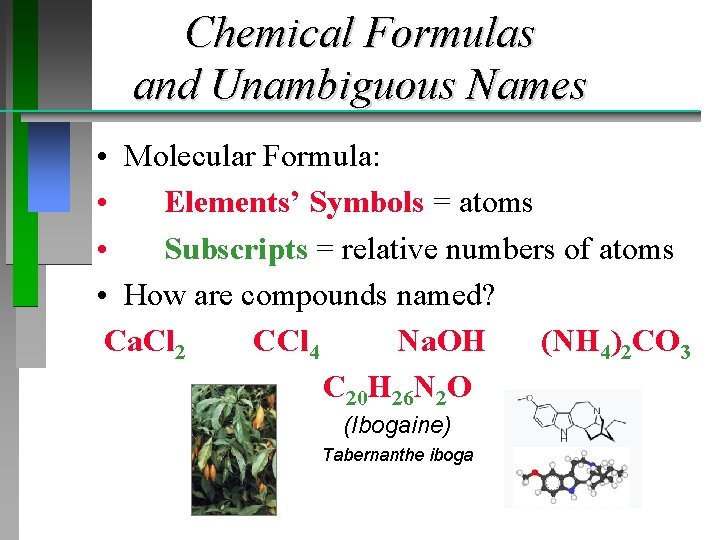
Chemical Formulas and Unambiguous Names • Molecular Formula: • Elements’ Symbols = atoms • Subscripts = relative numbers of atoms • How are compounds named? Ca. Cl 2 CCl 4 Na. OH (NH 4)2 CO 3 C 20 H 26 N 2 O (Ibogaine) Tabernanthe iboga
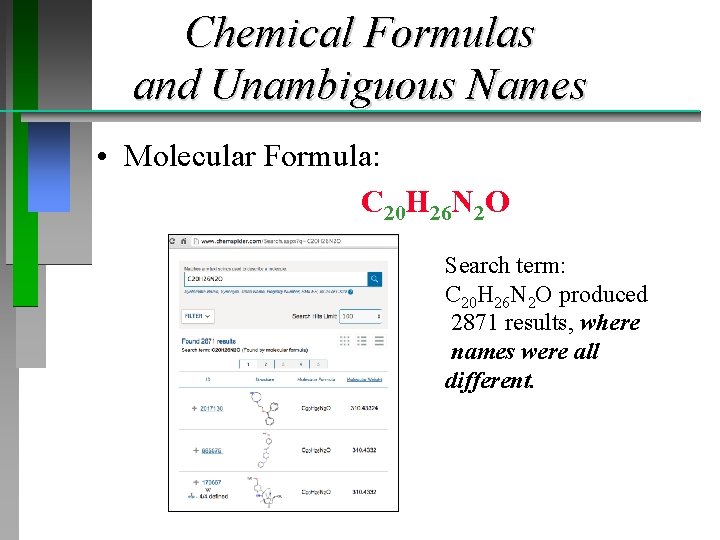
Chemical Formulas and Unambiguous Names • Molecular Formula: C 20 H 26 N 2 O Search term: C 20 H 26 N 2 O produced 2871 results, where names were all different.
Nomenclature • Nomenclature: the unambiguous naming of compounds/ molecules • Governed by the IUPAC: International Union of Pure and Applied Chemistry • International rules are updated periodically https: //www. iupac. org/fileadmin/user_upload/databases/R ed_Book_2005. pdf Organic and Inorganic compounds/ molecules have separate naming rules.
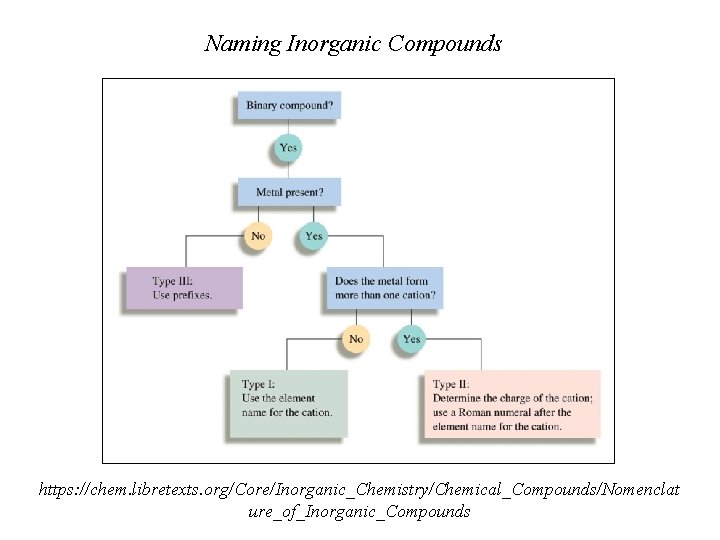
Naming Inorganic Compounds https: //chem. libretexts. org/Core/Inorganic_Chemistry/Chemical_Compounds/Nomenclat ure_of_Inorganic_Compounds
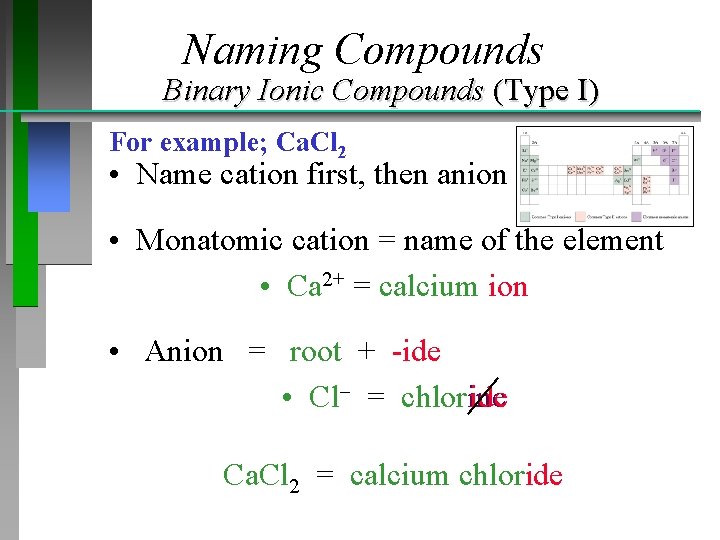
Naming Compounds Binary Ionic Compounds (Type I) For example; Ca. Cl 2 • Name cation first, then anion • Monatomic cation = name of the element • Ca 2+ = calcium ion • Anion = root + -ide • Cl = chlorine Ca. Cl 2 = calcium chloride
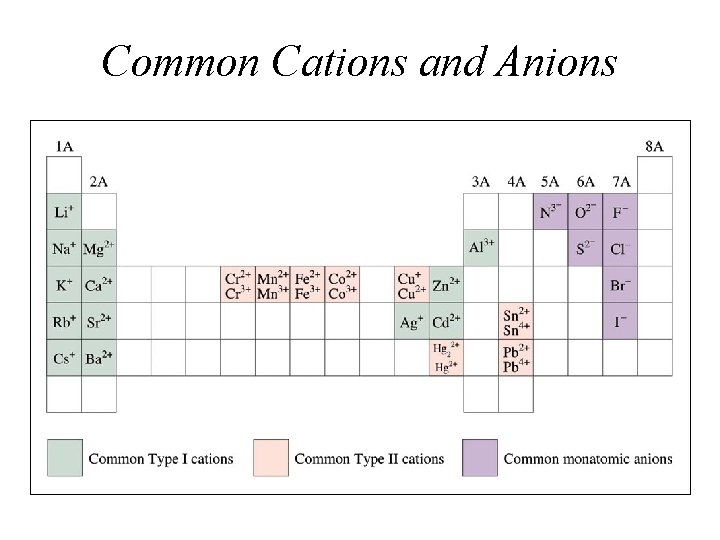
Common Cations and Anions
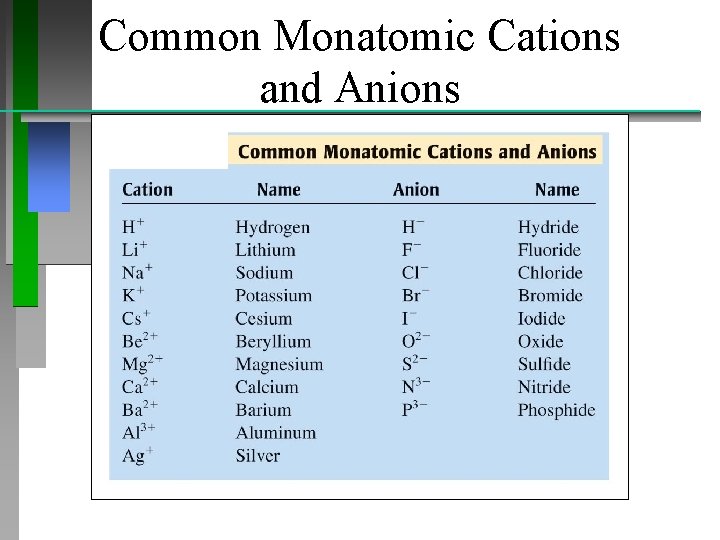
Common Monatomic Cations and Anions
QUESTION
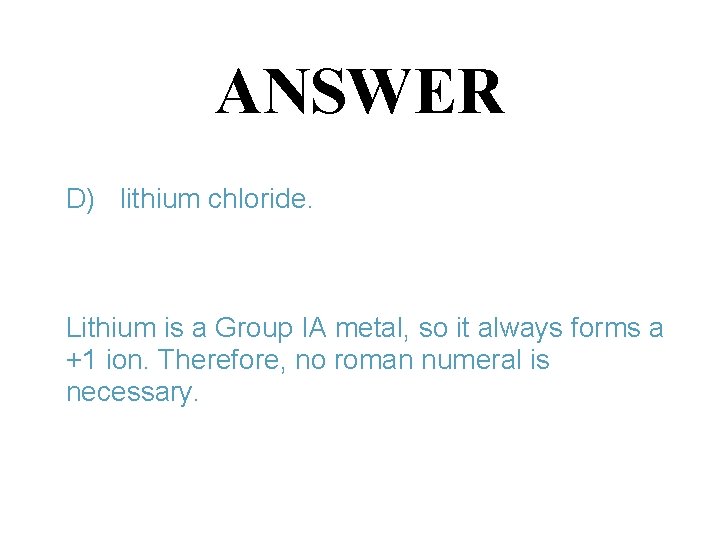
ANSWER D) lithium chloride. Lithium is a Group IA metal, so it always forms a +1 ion. Therefore, no roman numeral is necessary.
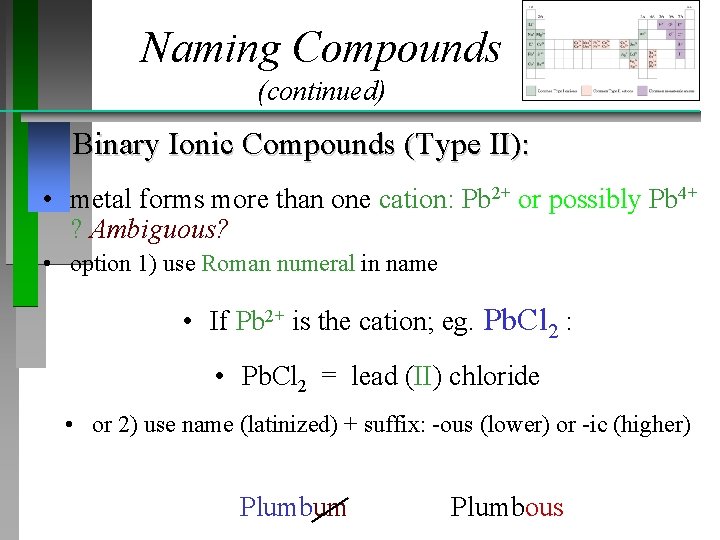
Naming Compounds (continued) Binary Ionic Compounds (Type II): • metal forms more than one cation: Pb 2+ or possibly Pb 4+ ? Ambiguous? • option 1) use Roman numeral in name • If Pb 2+ is the cation; eg. Pb. Cl 2 : • Pb. Cl 2 = lead (II) chloride • or 2) use name (latinized) + suffix: -ous (lower) or -ic (higher) Plumbum Plumbous
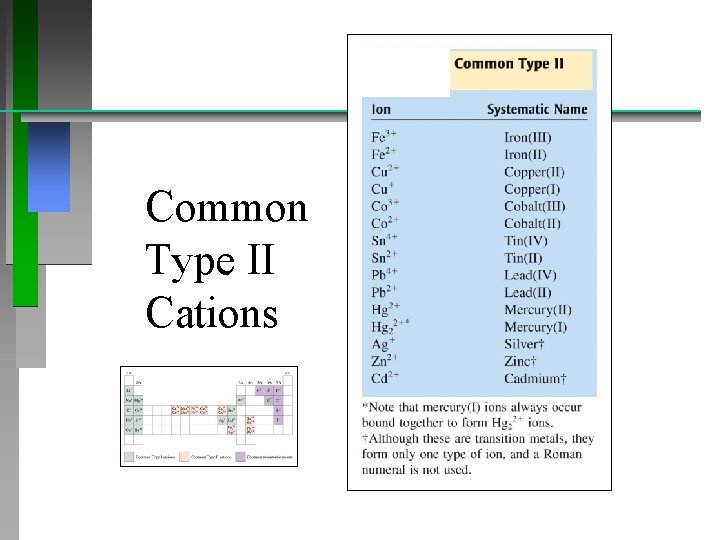
Common Type II Cations
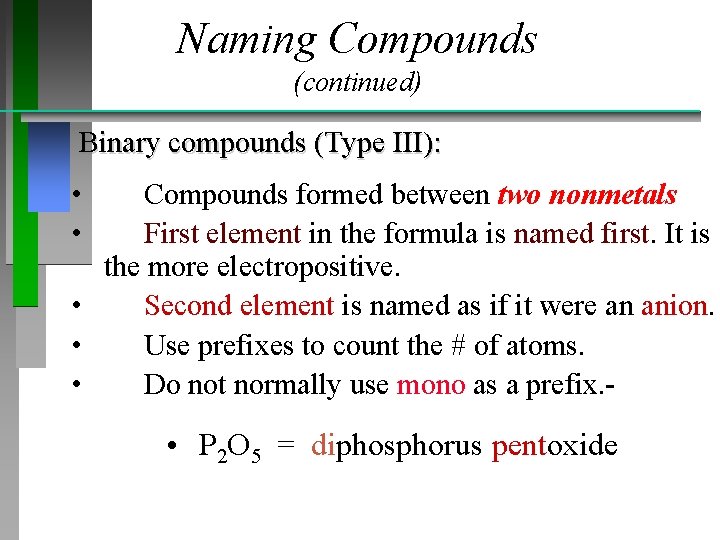
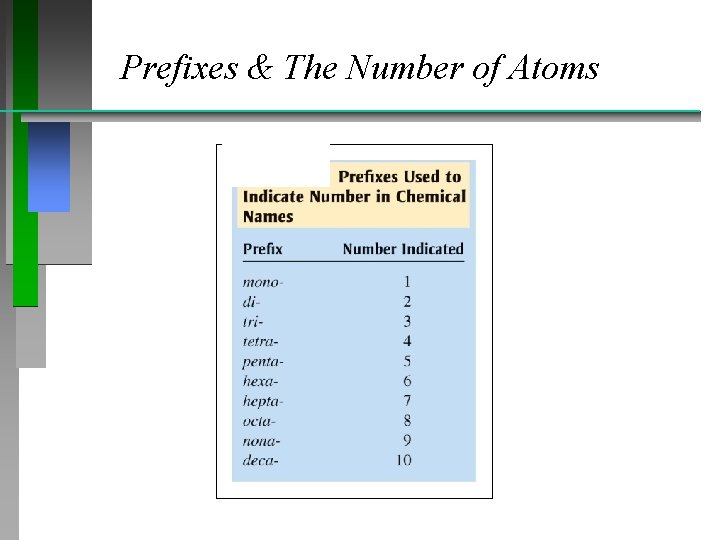
Naming Compounds (continued) Binary compounds (Type III): • • Compounds formed between two nonmetals First element in the formula is named first. It is the more electropositive. • Second element is named as if it were an anion. • Use prefixes to count the # of atoms. • Do not normally use mono as a prefix. - • P 2 O 5 = diphosphorus pentoxide
QUESTION
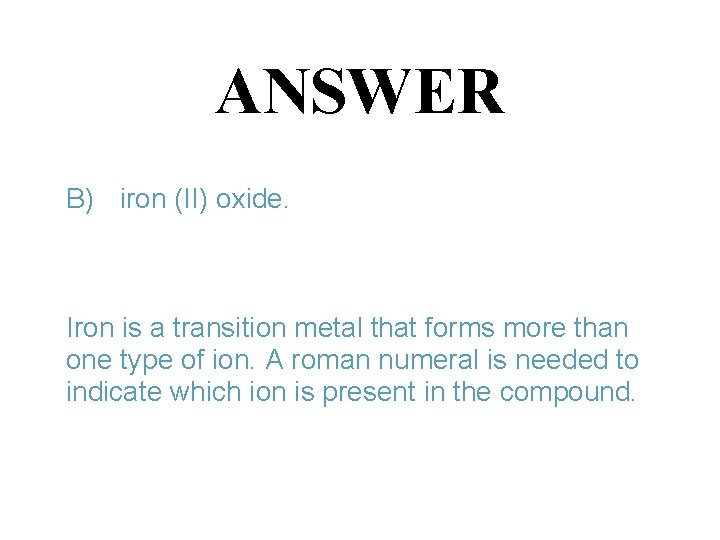
ANSWER B) iron (II) oxide. Iron is a transition metal that forms more than one type of ion. A roman numeral is needed to indicate which ion is present in the compound.
Prefixes & The Number of Atoms
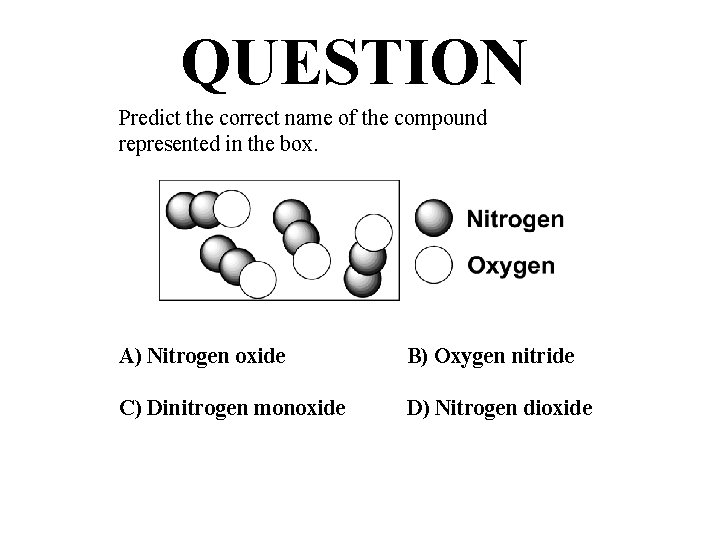
QUESTION Predict the correct name of the compound represented in the box. A) Nitrogen oxide B) Oxygen nitride C) Dinitrogen monoxide D) Nitrogen dioxide
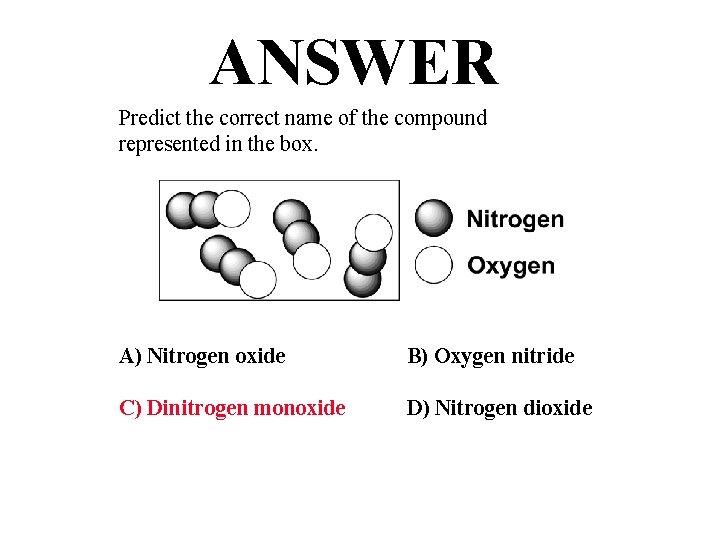
ANSWER Predict the correct name of the compound represented in the box. A) Nitrogen oxide B) Oxygen nitride C) Dinitrogen monoxide D) Nitrogen dioxide
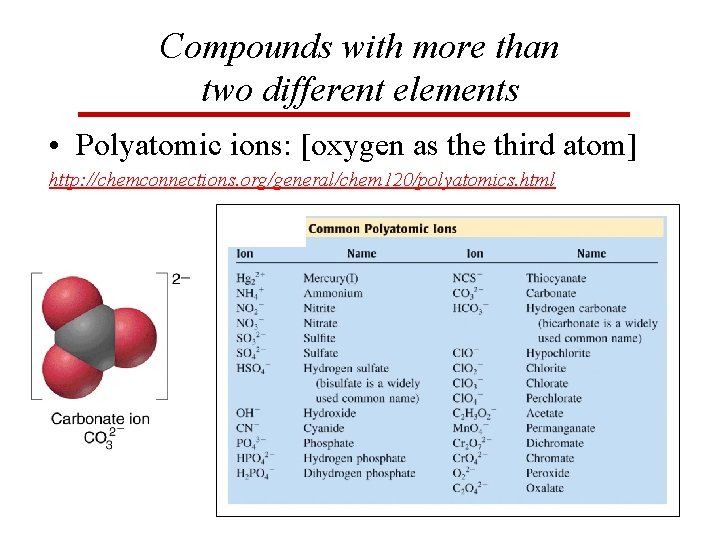
Compounds with more than two different elements • Polyatomic ions: [oxygen as the third atom] http: //chemconnections. org/general/chem 120/polyatomics. html
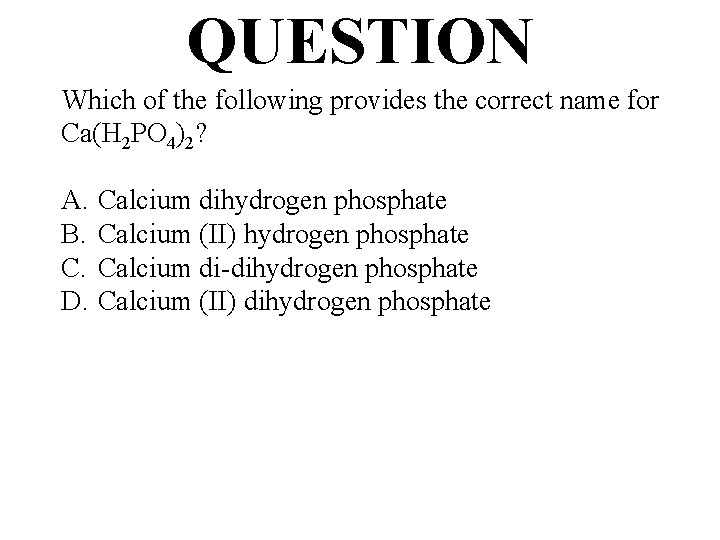
QUESTION Which of the following provides the correct name for Ca(H 2 PO 4)2? A. B. C. D. Calcium dihydrogen phosphate Calcium (II) hydrogen phosphate Calcium di-dihydrogen phosphate Calcium (II) dihydrogen phosphate
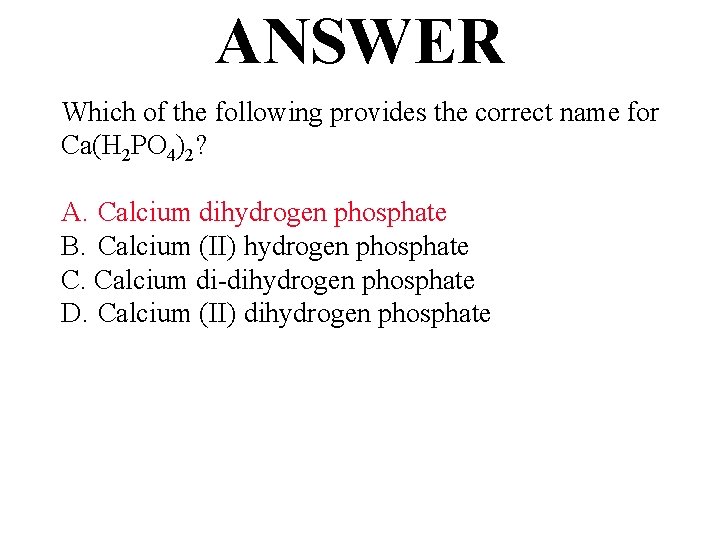
ANSWER Which of the following provides the correct name for Ca(H 2 PO 4)2? A. Calcium dihydrogen phosphate B. Calcium (II) hydrogen phosphate C. Calcium di-dihydrogen phosphate D. Calcium (II) dihydrogen phosphate
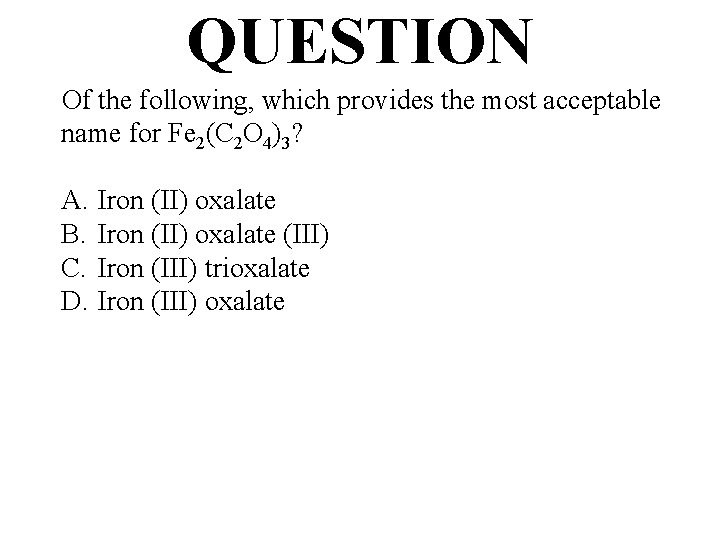
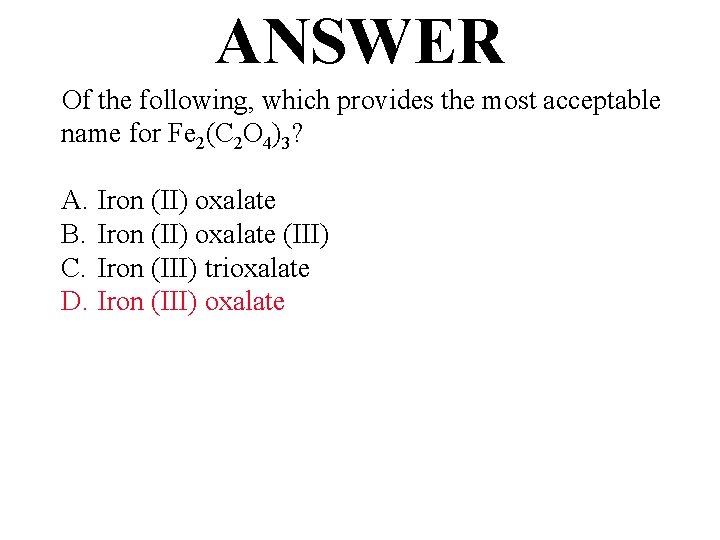
QUESTION Of the following, which provides the most acceptable name for Fe 2(C 2 O 4)3? A. B. C. D. Iron (II) oxalate (III) Iron (III) trioxalate Iron (III) oxalate
ANSWER Of the following, which provides the most acceptable name for Fe 2(C 2 O 4)3? A. B. C. D. Iron (II) oxalate (III) Iron (III) trioxalate Iron (III) oxalate
Naming Acids [Compounds with electropositive Hydrogen atom(s)]
Naming Acids [Compounds with electropositive Hydrogen atom(s)]
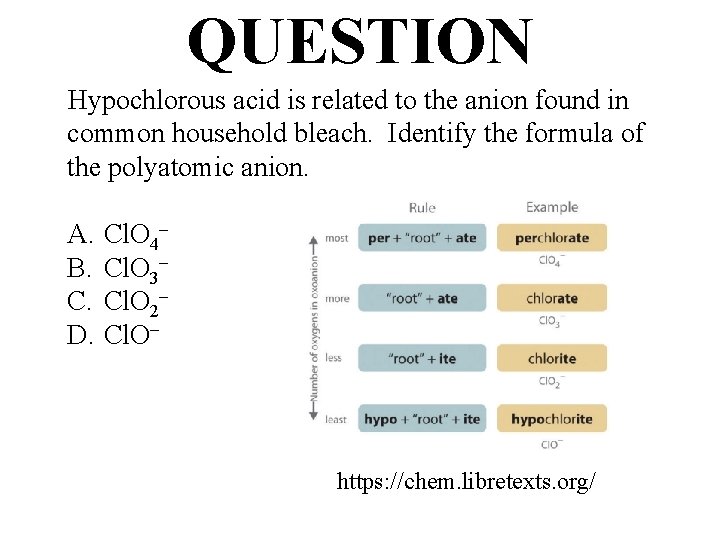
QUESTION Hypochlorous acid is related to the anion found in common household bleach. Identify the formula of the polyatomic anion. A. B. C. D. Cl. O 4– Cl. O 3– Cl. O 2– Cl. O– https: //chem. libretexts. org/
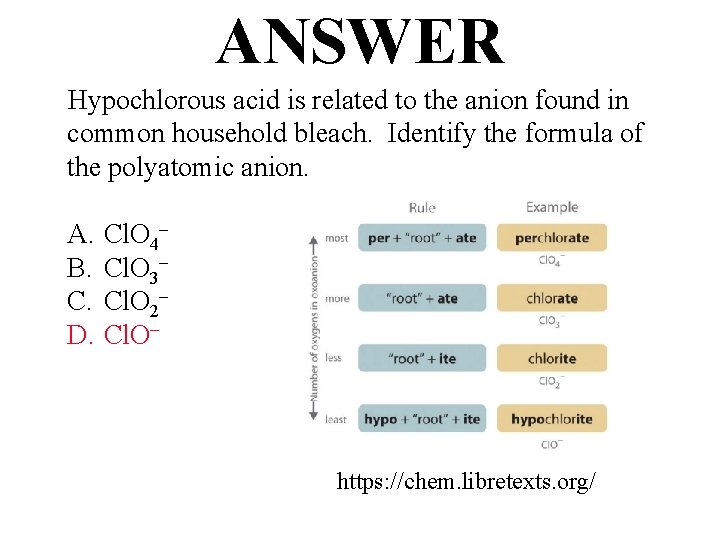
ANSWER Hypochlorous acid is related to the anion found in common household bleach. Identify the formula of the polyatomic anion. A. B. C. D. Cl. O 4– Cl. O 3– Cl. O 2– Cl. O– https: //chem. libretexts. org/
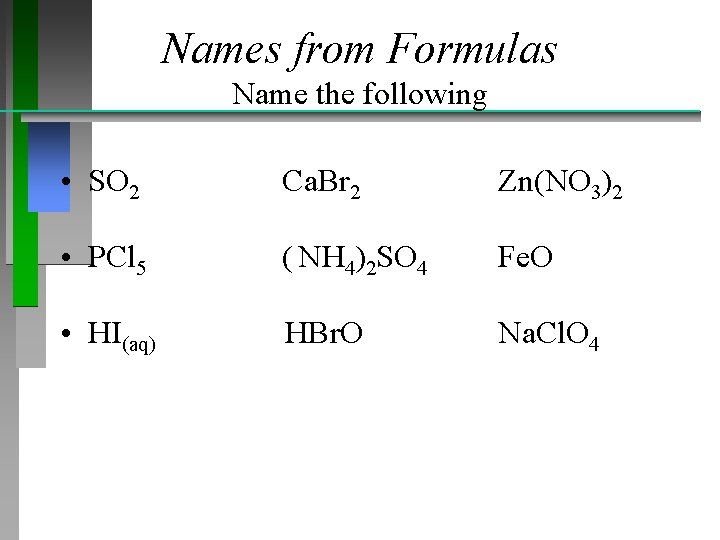
Names from Formulas Name the following • SO 2 Ca. Br 2 Zn(NO 3)2 • PCl 5 ( NH 4)2 SO 4 Fe. O • HI(aq) HBr. O Na. Cl. O 4
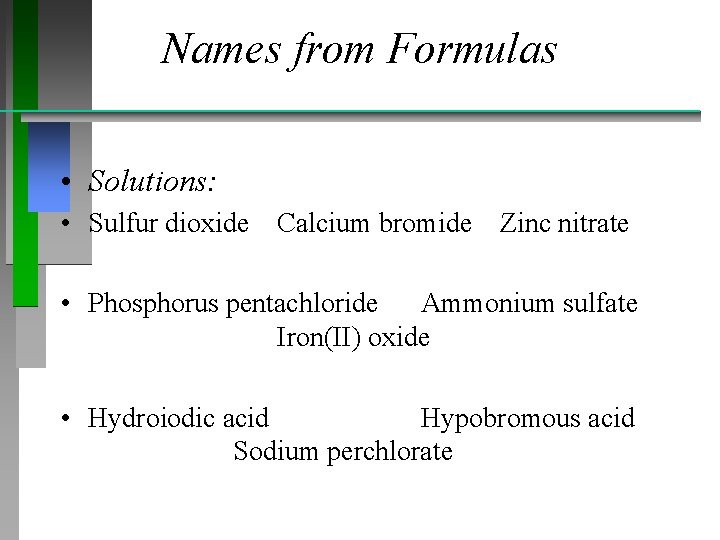
Names from Formulas • Solutions: • Sulfur dioxide Calcium bromide Zinc nitrate • Phosphorus pentachloride Ammonium sulfate Iron(II) oxide • Hydroiodic acid Hypobromous acid Sodium perchlorate
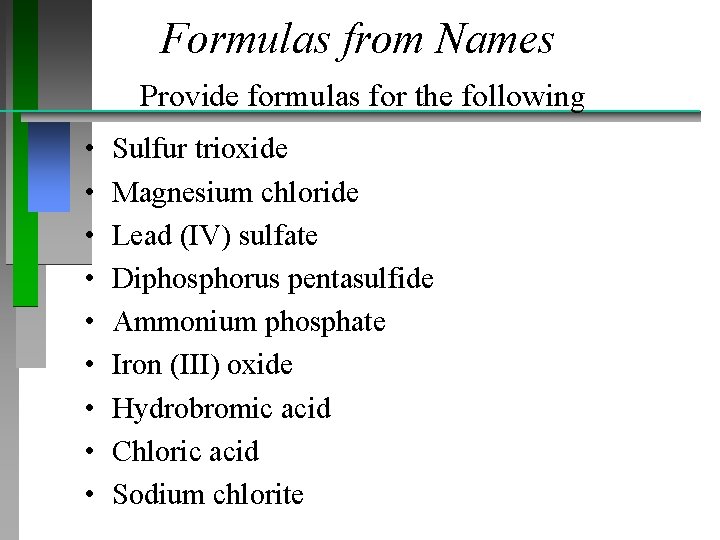
Formulas from Names Provide formulas for the following • • • Sulfur trioxide Magnesium chloride Lead (IV) sulfate Diphosphorus pentasulfide Ammonium phosphate Iron (III) oxide Hydrobromic acid Chloric acid Sodium chlorite
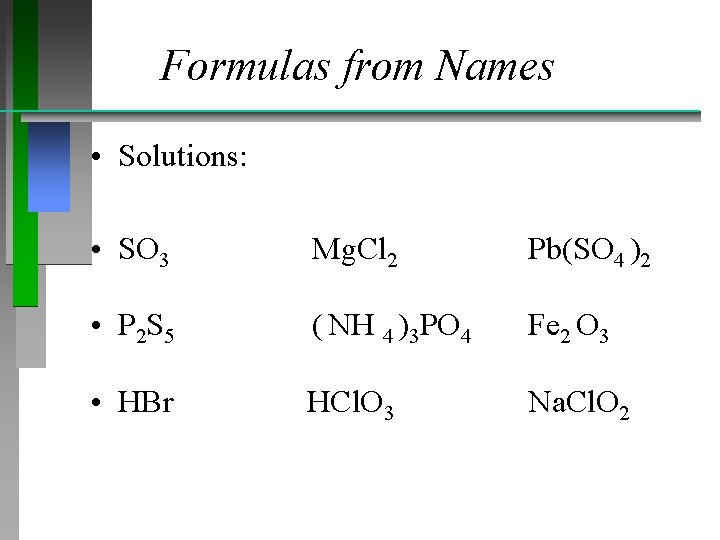
Formulas from Names • Solutions: • SO 3 Mg. Cl 2 Pb(SO 4 )2 • P 2 S 5 ( NH 4 )3 PO 4 Fe 2 O 3 • HBr HCl. O 3 Na. Cl. O 2