
Noise in cascode current mirrors Standard cascode current
- Slides: 6
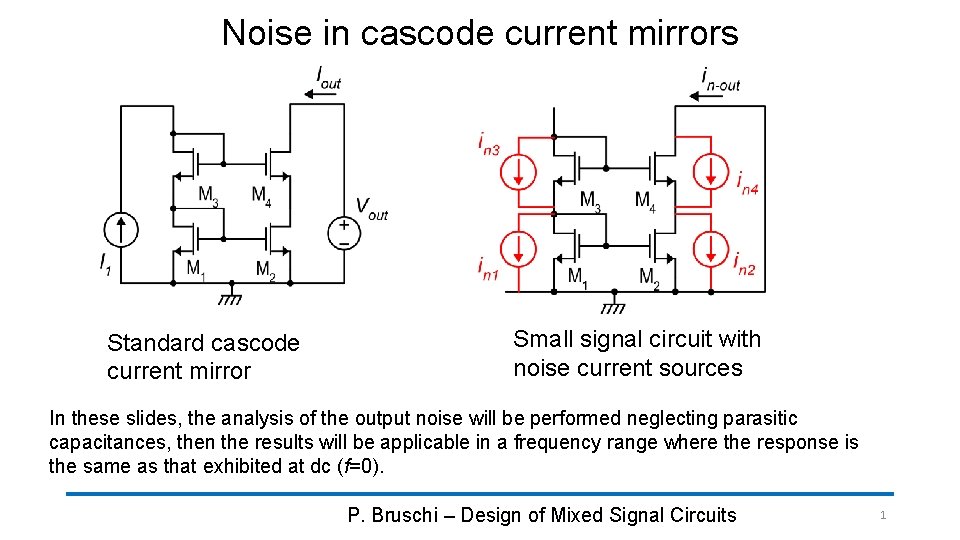
Noise in cascode current mirrors Standard cascode current mirror Small signal circuit with noise current sources In these slides, the analysis of the output noise will be performed neglecting parasitic capacitances, then the results will be applicable in a frequency range where the response is the same as that exhibited at dc (f=0). P. Bruschi – Design of Mixed Signal Circuits 1
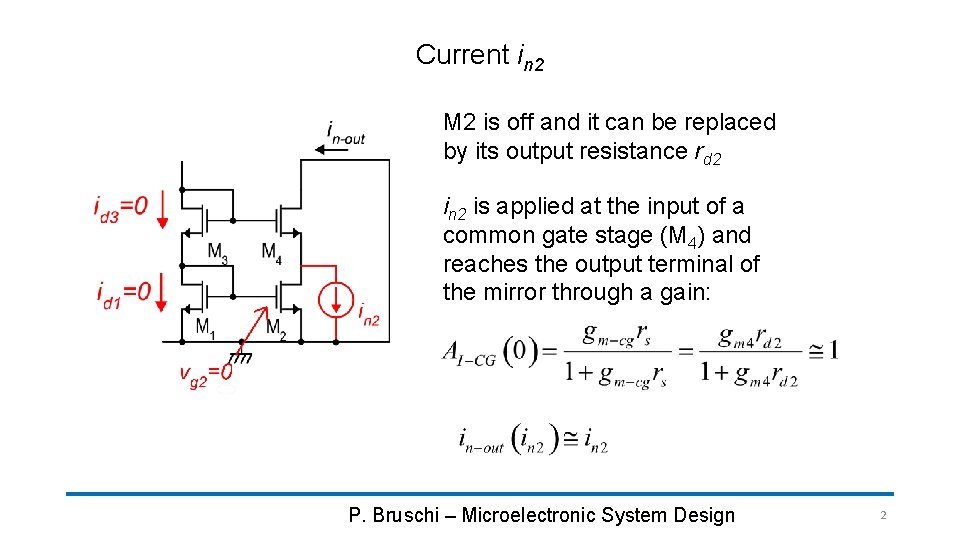
Current in 2 M 2 is off and it can be replaced by its output resistance rd 2 in 2 is applied at the input of a common gate stage (M 4) and reaches the output terminal of the mirror through a gain: P. Bruschi – Microelectronic System Design 2
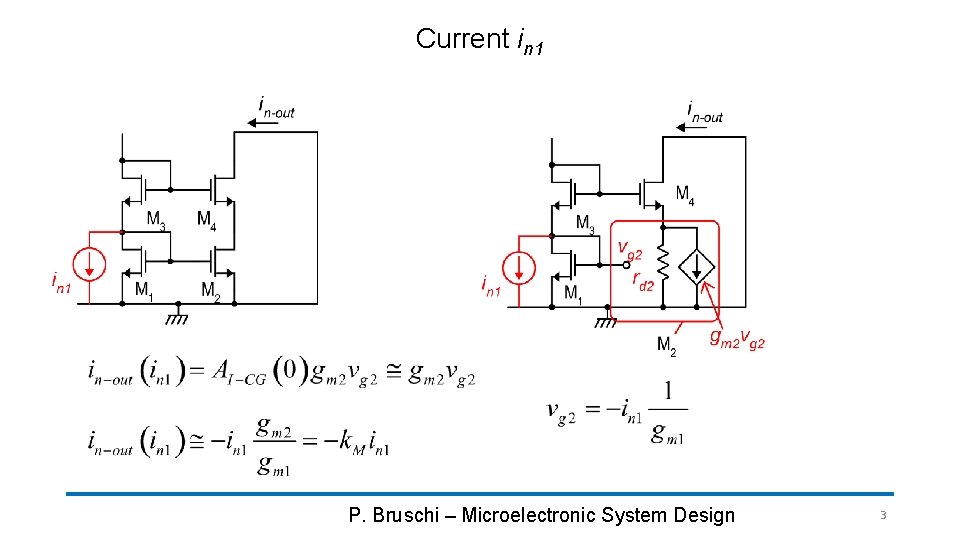
Current in 1 P. Bruschi – Microelectronic System Design 3
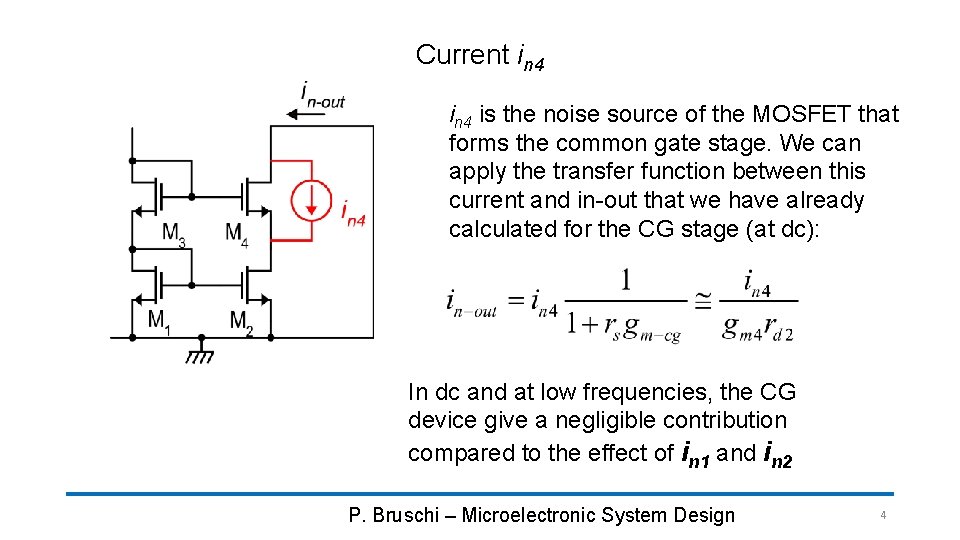
Current in 4 is the noise source of the MOSFET that forms the common gate stage. We can apply the transfer function between this current and in-out that we have already calculated for the CG stage (at dc): In dc and at low frequencies, the CG device give a negligible contribution compared to the effect of in 1 and in 2 P. Bruschi – Microelectronic System Design 4
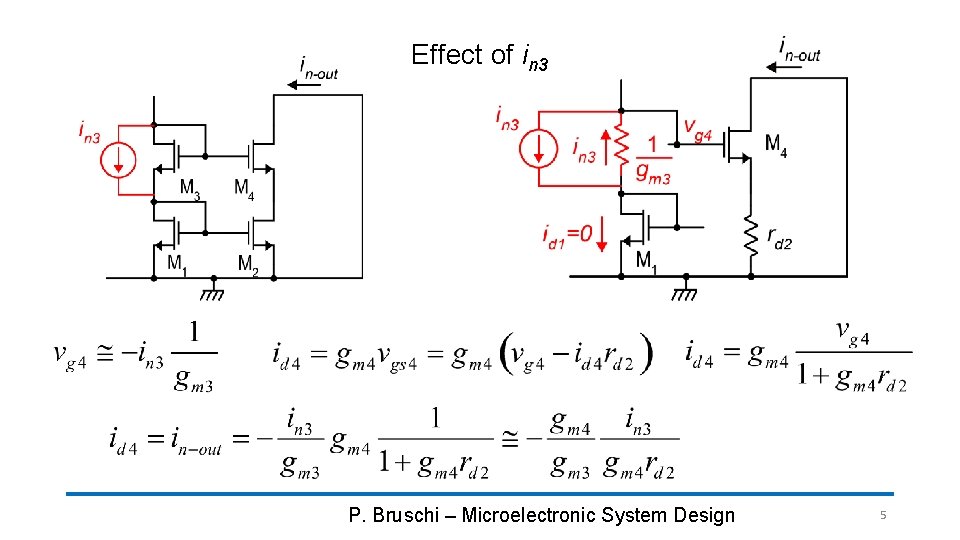
Effect of in 3 P. Bruschi – Microelectronic System Design 5
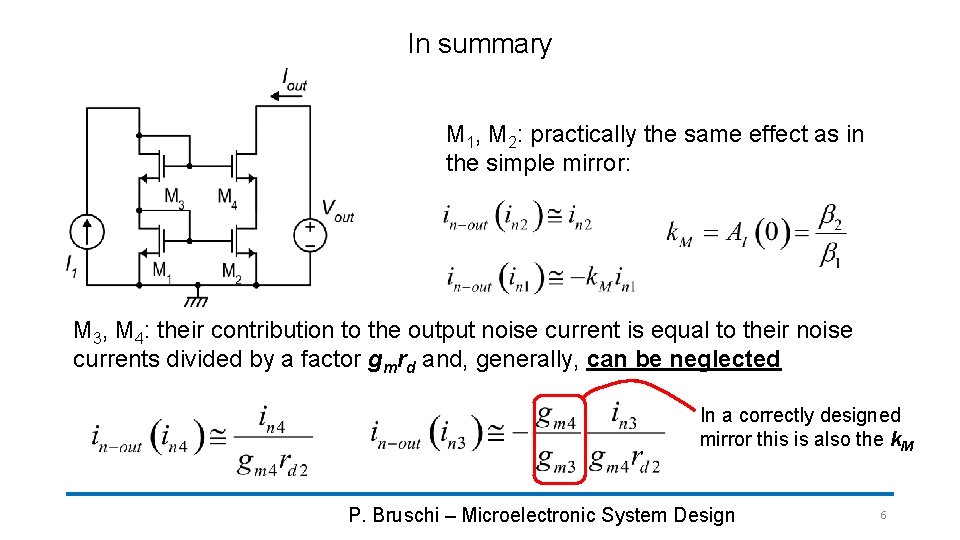
In summary M 1, M 2: practically the same effect as in the simple mirror: M 3, M 4: their contribution to the output noise current is equal to their noise currents divided by a factor gmrd and, generally, can be neglected In a correctly designed mirror this is also the k. M P. Bruschi – Microelectronic System Design 6