
Noah Snavely Largescale structure from motion Dubrovnik Croatia
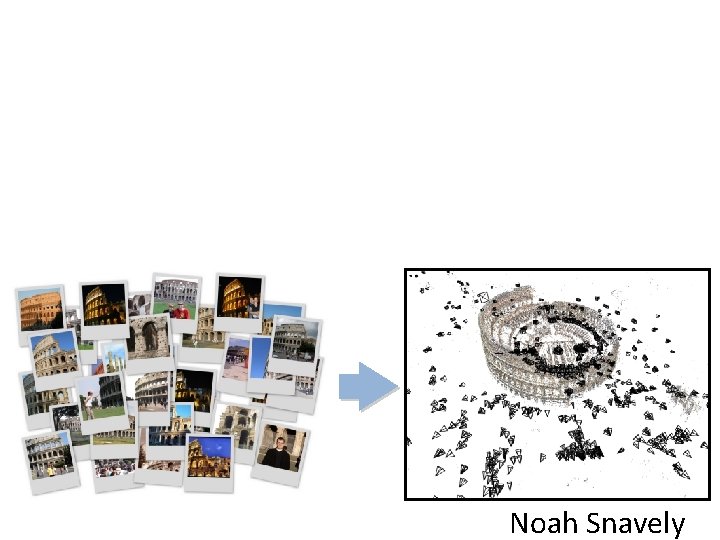
Noah Snavely
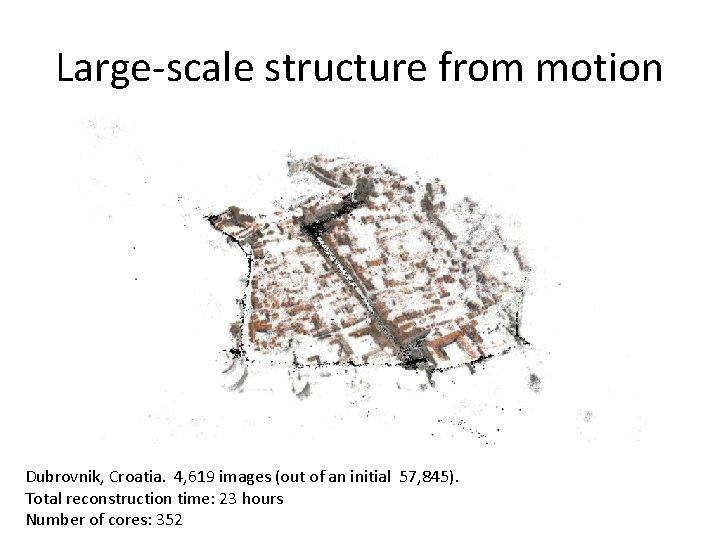
Large-scale structure from motion Dubrovnik, Croatia. 4, 619 images (out of an initial 57, 845). Total reconstruction time: 23 hours Number of cores: 352
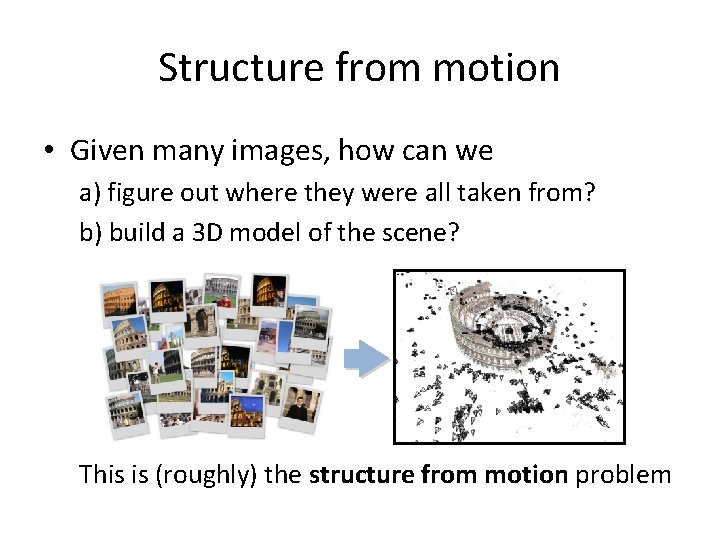
Structure from motion • Given many images, how can we a) figure out where they were all taken from? b) build a 3 D model of the scene? This is (roughly) the structure from motion problem
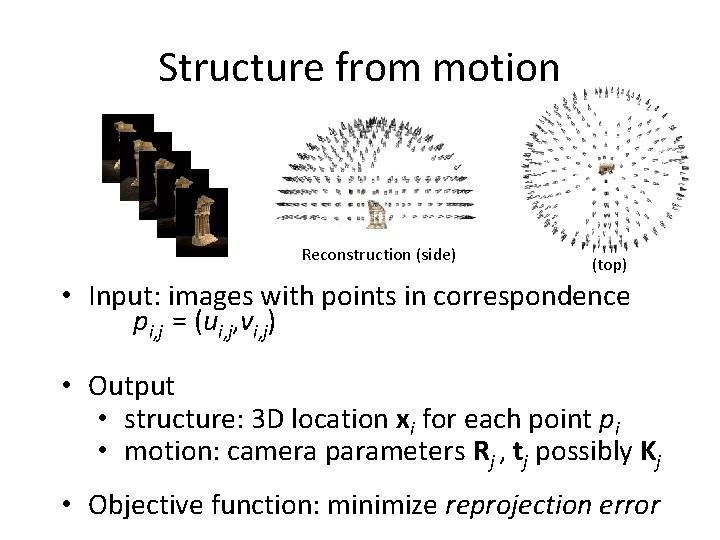
Structure from motion Reconstruction (side) (top) • Input: images with points in correspondence pi, j = (ui, j, vi, j) • Output • structure: 3 D location xi for each point pi • motion: camera parameters Rj , tj possibly Kj • Objective function: minimize reprojection error
Camera calibration and triangulation • Suppose we know 3 D points – And have matches between these points and an image – How can we compute the camera parameters? • Suppose we have know camera parameters, each of which observes a point – How can we compute the 3 D location of that point?
Structure from motion • Sf. M solves both of these problems at once • A kind of chicken-and-egg problem – (but solvable)
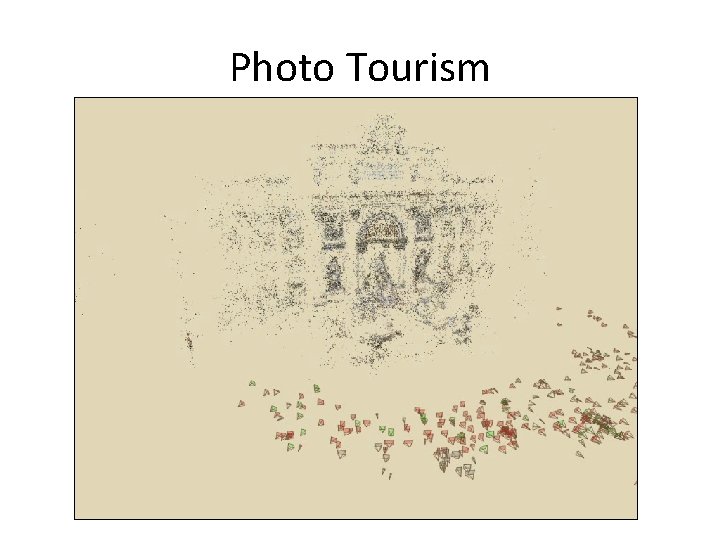
Photo Tourism
First step: how to get correspondence? • Feature detection and matching
![Feature detection Detect features using SIFT [Lowe, IJCV 2004]](http://slidetodoc.com/presentation_image_h2/a52b0e08d1813fdc4194e2fe17038947/image-9.jpg "Feature detection Detect features using SIFT [Lowe, IJCV 2004]")
Feature detection Detect features using SIFT [Lowe, IJCV 2004]
![Feature detection Detect features using SIFT [Lowe, IJCV 2004]](http://slidetodoc.com/presentation_image_h2/a52b0e08d1813fdc4194e2fe17038947/image-10.jpg "Feature detection Detect features using SIFT [Lowe, IJCV 2004]")
Feature detection Detect features using SIFT [Lowe, IJCV 2004]
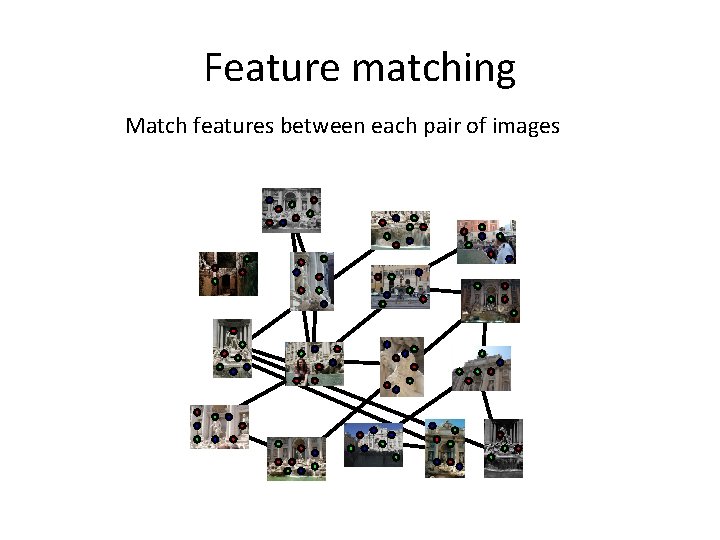
Feature matching Match features between each pair of images
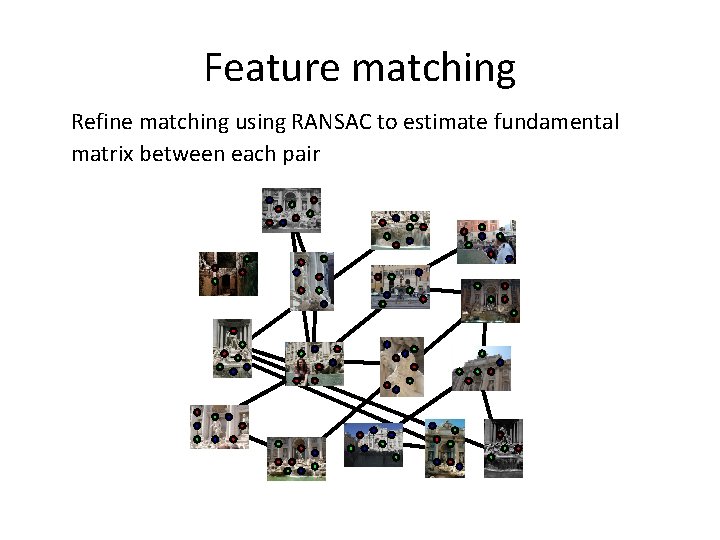
Feature matching Refine matching using RANSAC to estimate fundamental matrix between each pair
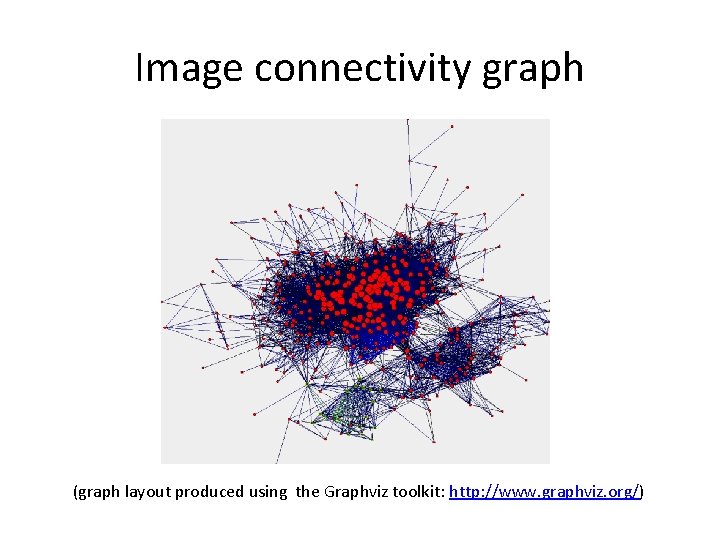
Image connectivity graph (graph layout produced using the Graphviz toolkit: http: //www. graphviz. org/)
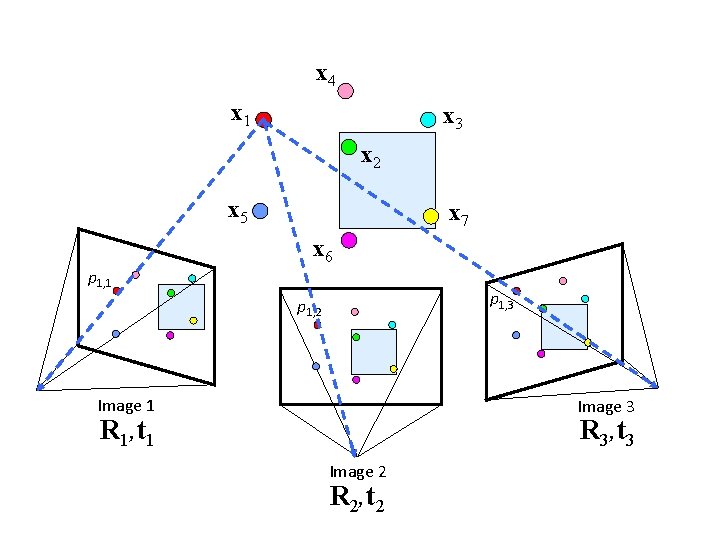
x 4 x 1 x 3 x 2 x 5 x 7 x 6 p 1, 1 p 1, 3 p 1, 2 Image 1 Image 3 R 3, t 3 R 1, t 1 Image 2 R 2, t 2
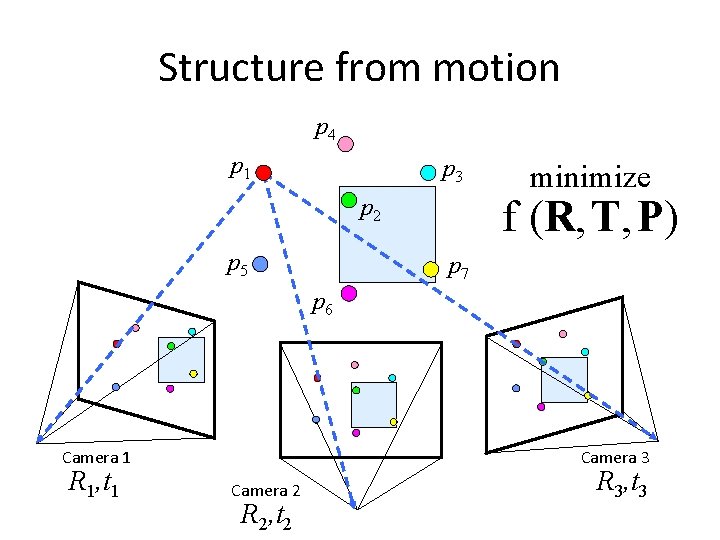
Structure from motion p 4 p 1 p 3 f (R, T, P) p 2 p 5 minimize p 7 p 6 Camera 1 R 1, t 1 Camera 3 Camera 2 R 2, t 2 R 3, t 3
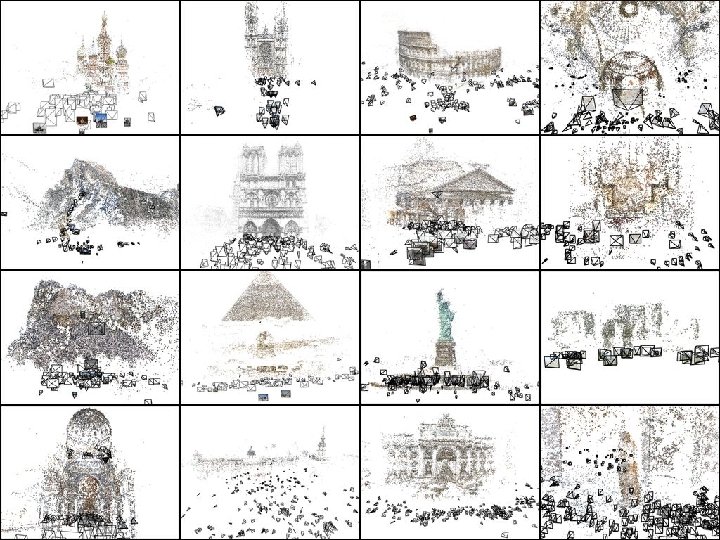
Problem size • Trevi Fountain collection 466 input photos + > 100, 000 3 D points = very large optimization problem
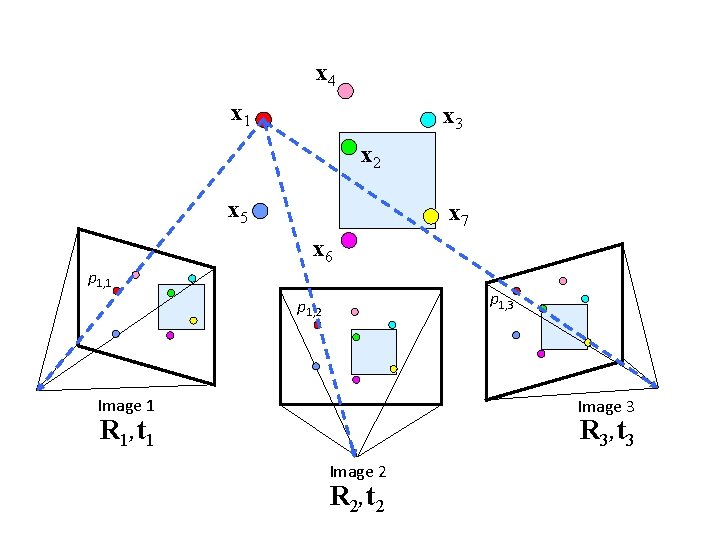
x 4 x 1 x 3 x 2 x 5 x 7 x 6 p 1, 1 p 1, 3 p 1, 2 Image 1 Image 3 R 3, t 3 R 1, t 1 Image 2 R 2, t 2
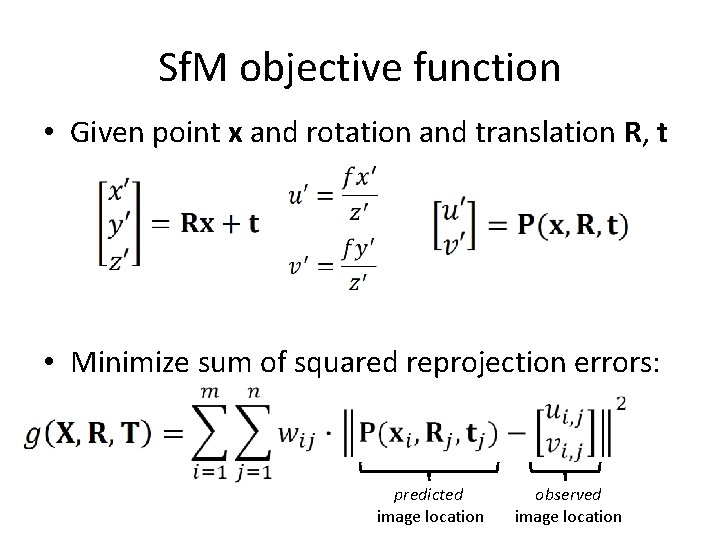
Sf. M objective function • Given point x and rotation and translation R, t • Minimize sum of squared reprojection errors: predicted image location observed image location
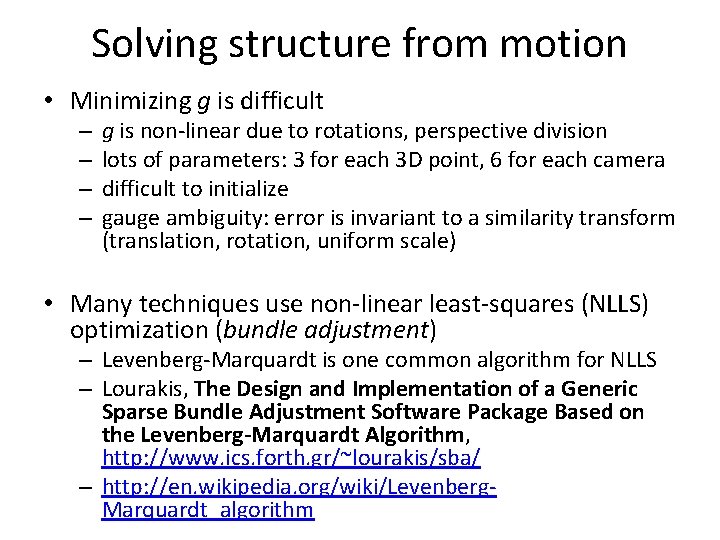
Solving structure from motion • Minimizing g is difficult – – g is non-linear due to rotations, perspective division lots of parameters: 3 for each 3 D point, 6 for each camera difficult to initialize gauge ambiguity: error is invariant to a similarity transform (translation, rotation, uniform scale) • Many techniques use non-linear least-squares (NLLS) optimization (bundle adjustment) – Levenberg-Marquardt is one common algorithm for NLLS – Lourakis, The Design and Implementation of a Generic Sparse Bundle Adjustment Software Package Based on the Levenberg-Marquardt Algorithm, http: //www. ics. forth. gr/~lourakis/sba/ – http: //en. wikipedia. org/wiki/Levenberg. Marquardt_algorithm
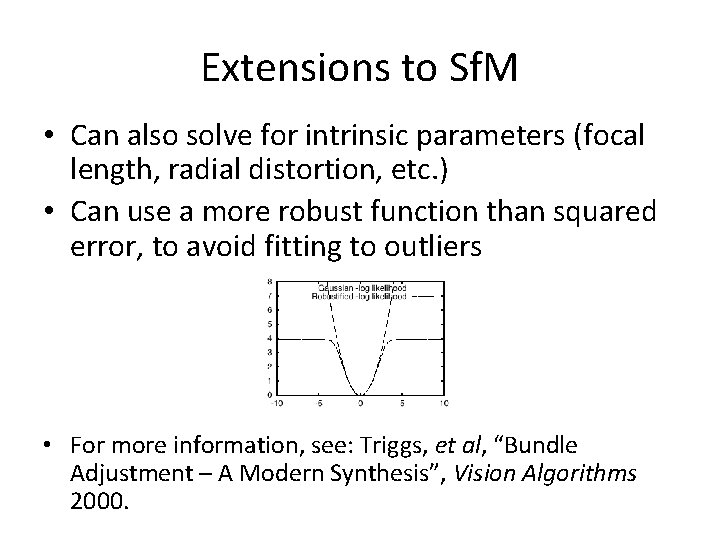
Extensions to Sf. M • Can also solve for intrinsic parameters (focal length, radial distortion, etc. ) • Can use a more robust function than squared error, to avoid fitting to outliers • For more information, see: Triggs, et al, “Bundle Adjustment – A Modern Synthesis”, Vision Algorithms 2000.
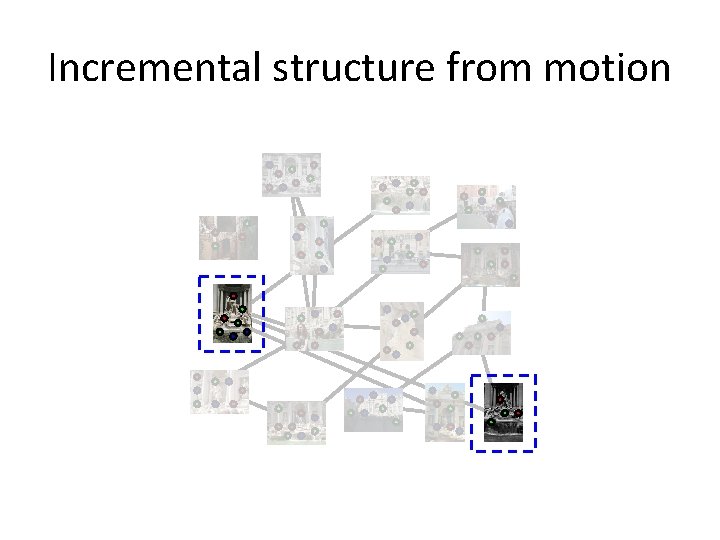
Incremental structure from motion
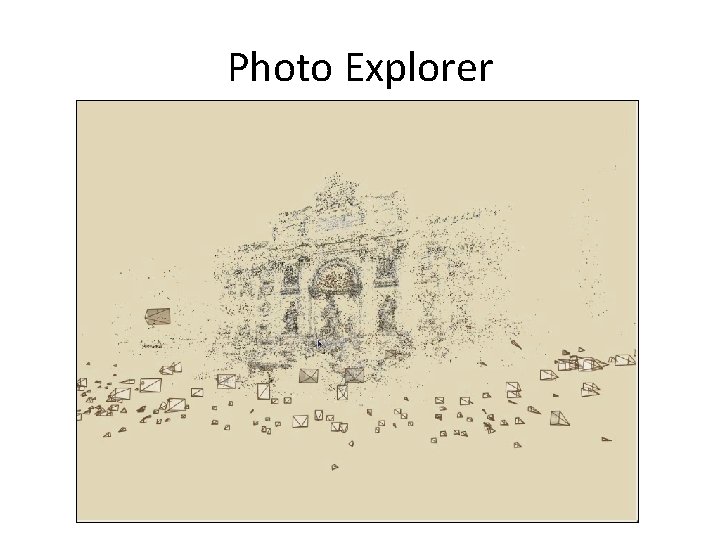
Photo Explorer
Questions?
- Slides: 26