
No Taxation Without Representation The Road to Revolution
- Slides: 33
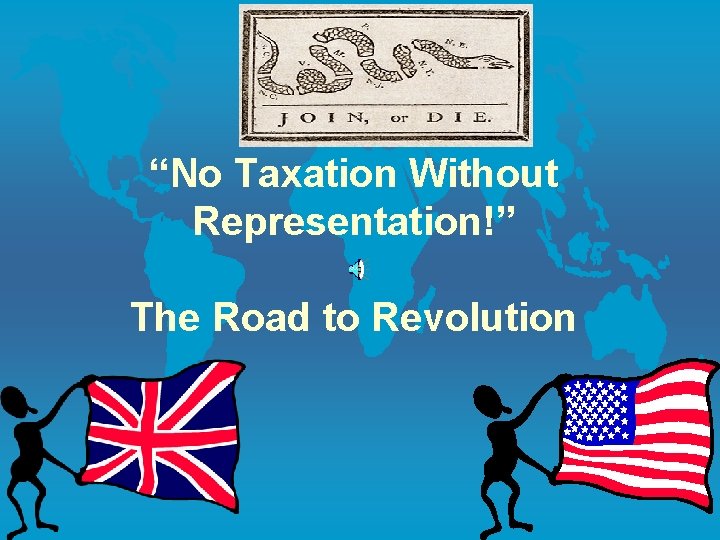
“No Taxation Without Representation!” The Road to Revolution
Britain Needs CASH King George III needed money because: • England had debt from the French and Indian War. • It cost a lot of money to govern the colonies Prime Minister George Grenville believed the colonists should pay more for governing them.
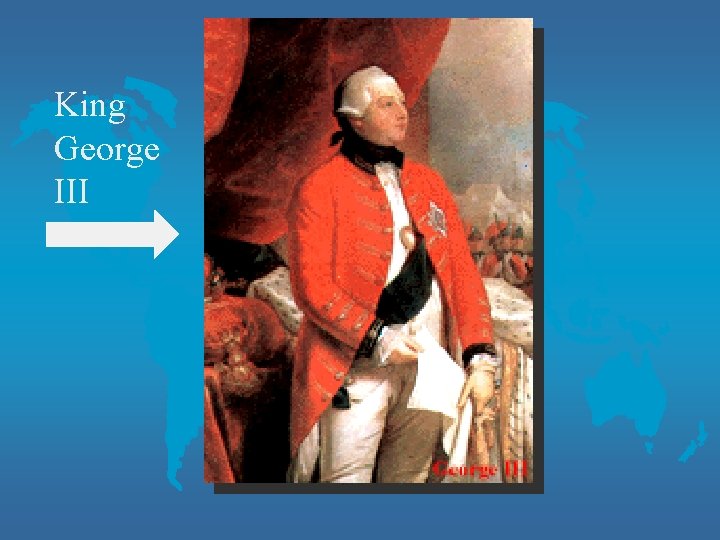
King George III
Proclamation Line • This act banned Americans from settling in lands west of the Appalachian Mountains • Created to stop conflict between the colonists and American Indians. • Colonist not happy.
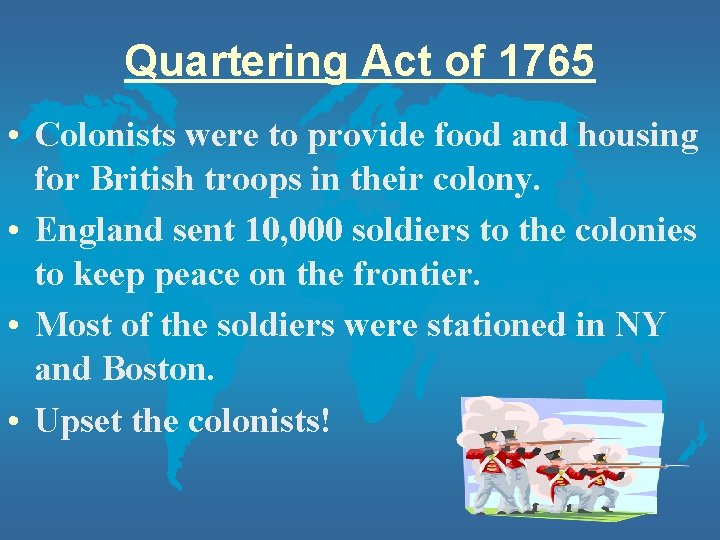
Quartering Act of 1765 • Colonists were to provide food and housing for British troops in their colony. • England sent 10, 000 soldiers to the colonies to keep peace on the frontier. • Most of the soldiers were stationed in NY and Boston. • Upset the colonists!
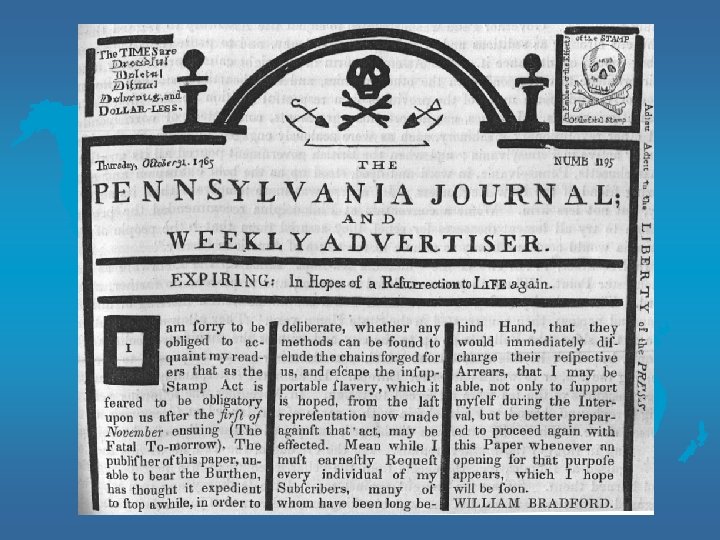
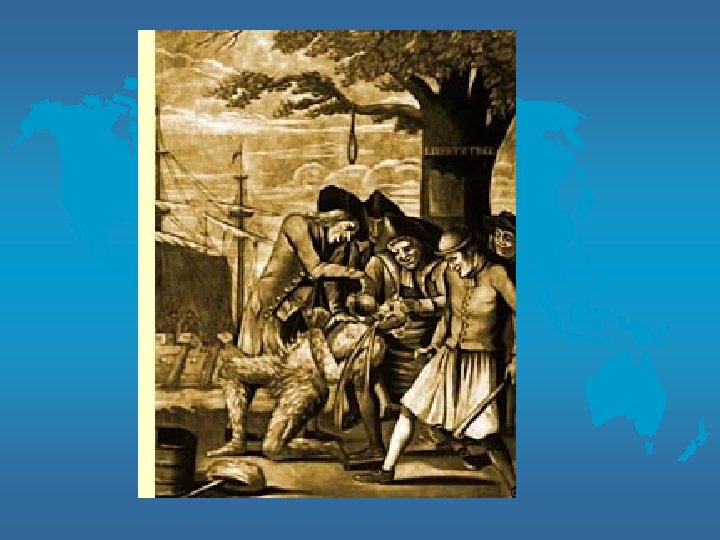
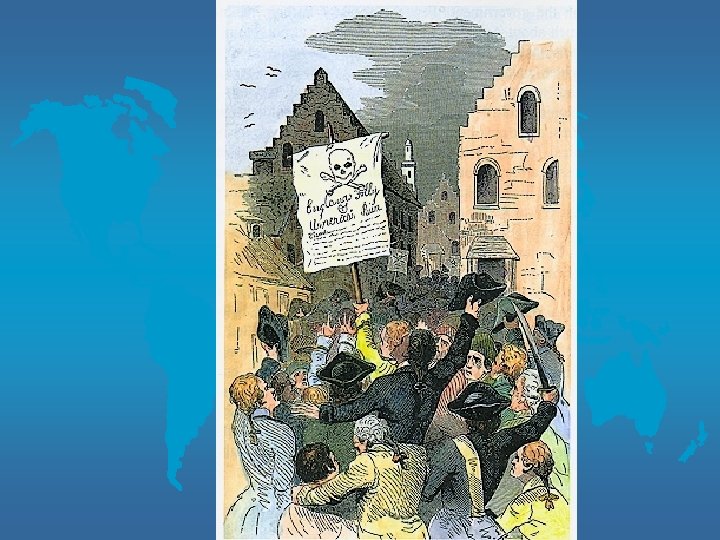
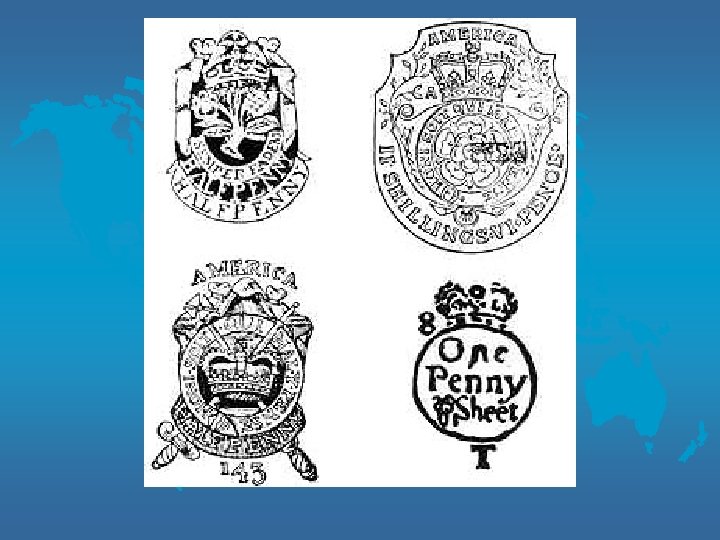
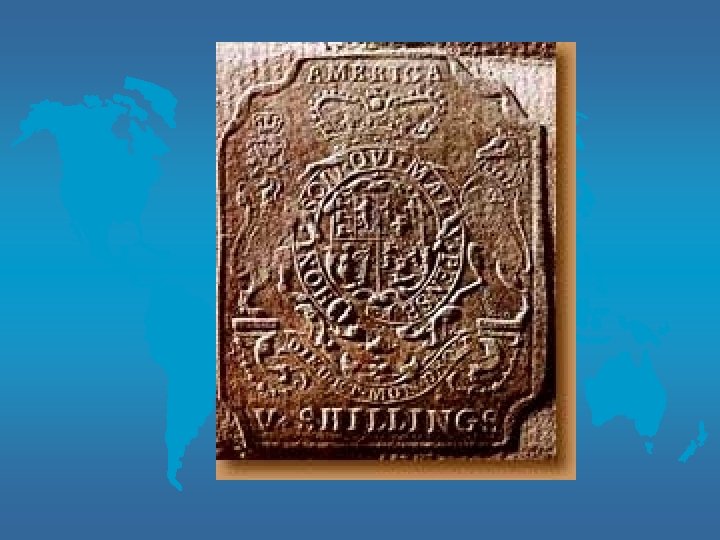
Stamp Act • 1765 was passed by Parliament • Tax on newspapers, almanacs, playing cards, & all legal papers… • RESULTS: • Son’s of Liberty formed & threatened collectors. • Boycott British Goods. • Stamp Act was Repealed in 1766
1767 - Townshend Acts • Taxed manufactured goods shipped to the colonies. • Examples: Paper, Glass, & Paints • Also a Tax on Tea. • Tax Collectors had writs of assistance allowing them to search colonists homes and business for smuggled goods.
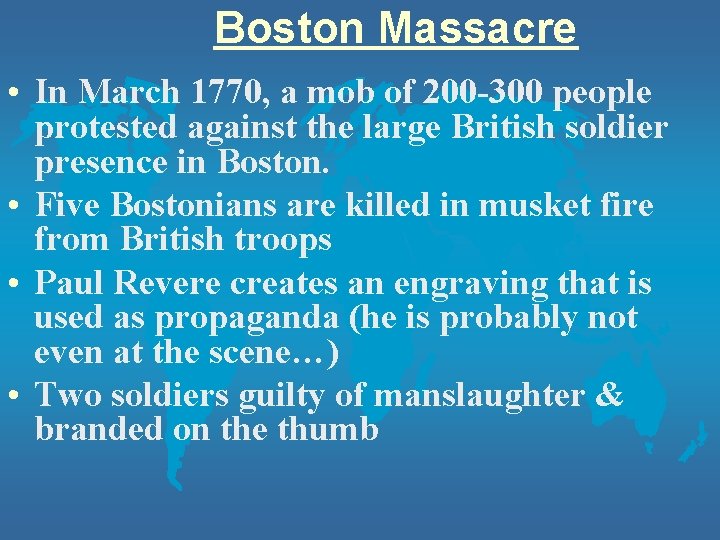
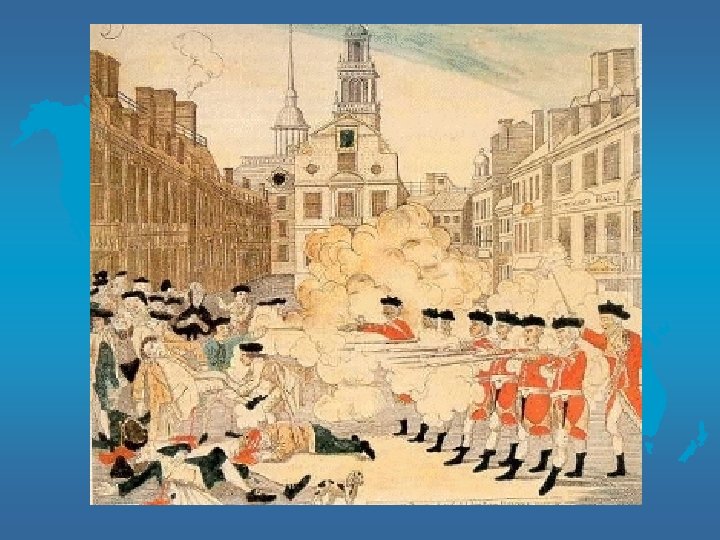
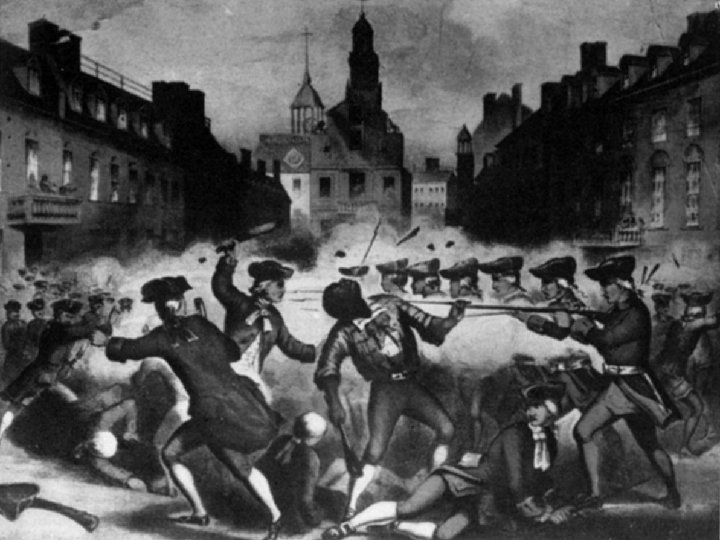
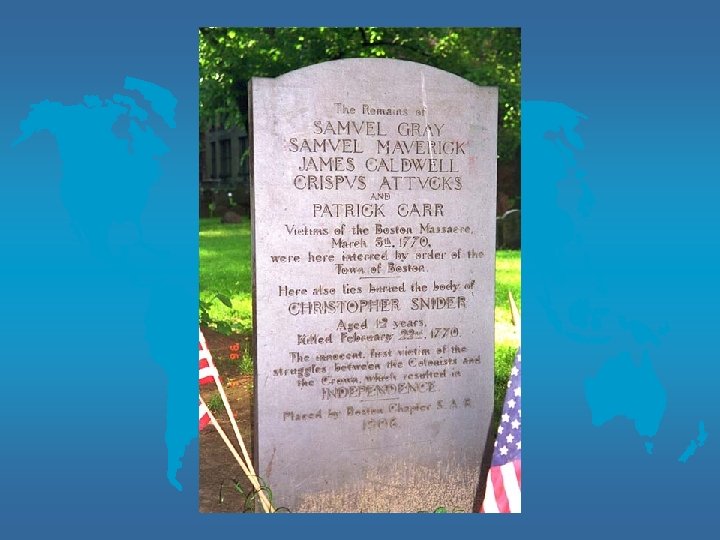
Boston Massacre • In March 1770, a mob of 200 -300 people protested against the large British soldier presence in Boston. • Five Bostonians are killed in musket fire from British troops • Paul Revere creates an engraving that is used as propaganda (he is probably not even at the scene…) • Two soldiers guilty of manslaughter & branded on the thumb
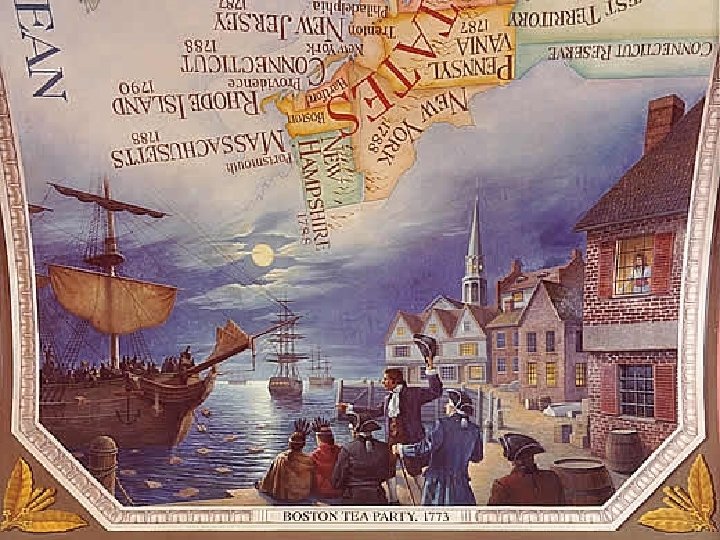
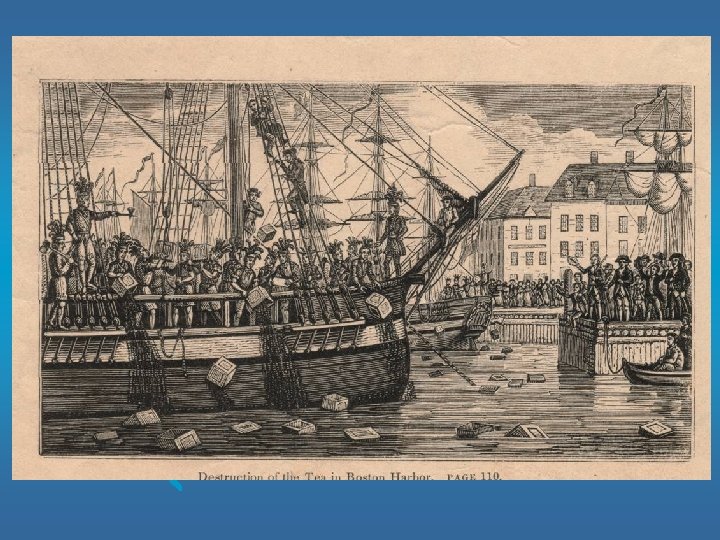
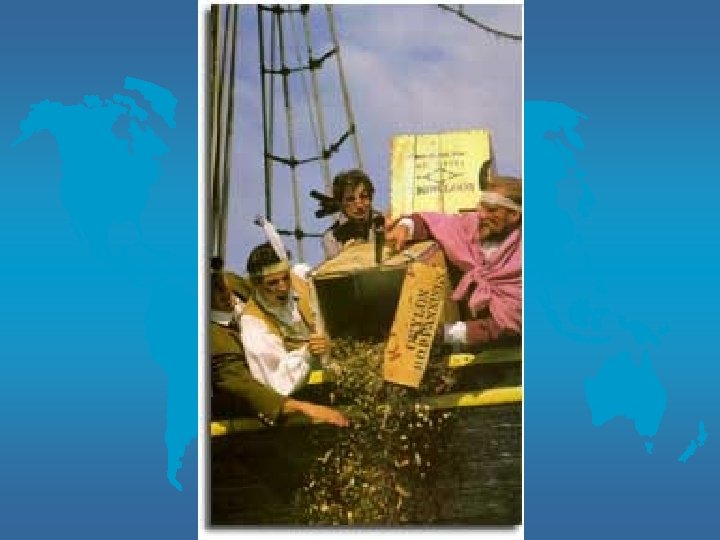
The Tea Act • In 1773, Parliament passed the Tea Act to help the struggling the East India Tea Company. • A small tax was placed on tea. • Colonists could only purchase tea from the East India Tea Company. • A monopoly… • The Colonists again respond… • Boston Tea Party in December 1773
England Responds • England responds to the Boston Tea Party by writing the Intolerable Acts in 1774 • Closed Boston Harbor • Forced colonists to pay for lost tea • Forced colonists to clean Boston Harbor • Took control of Massachusetts government
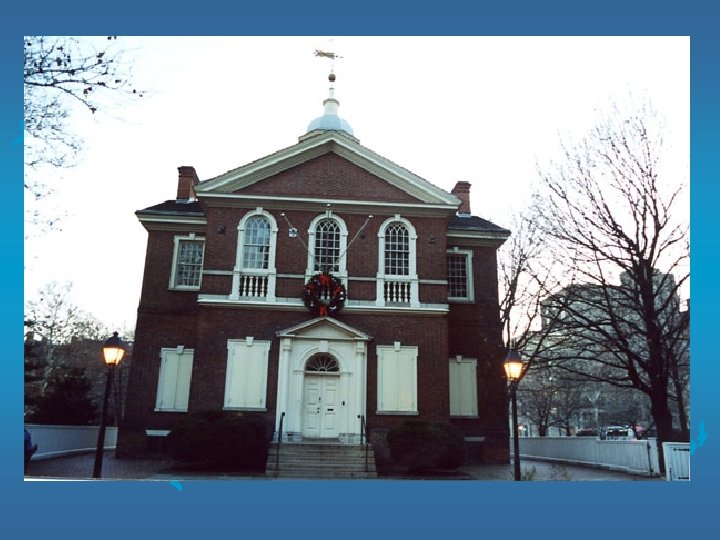
First Continental Congress • A Committee had been created to keep revolutionaries in touch throughout the colonies. • In 1774, they met in Philadelphia. • The 1 st Continental Congress decided to unite together against the Intolerable Acts. • Not meant to be a threat to England- they remained “loyal” to King George III, but wanted the Intolerable Acts repealed (letter sent to King George III)
The Revolution Begins • Bostonians enraged as a result of the Intolerable Acts. • Patriots formed militias: Minute Men • Parliament declares Massachusetts in a state of rebellion. • England sent troops to capture the Minute Men & take their weapons. • Paul Revere, William Dawes, and Sam Prescott rode through the countryside to warn others.
The Revolution Begins • Fighting broke out in Lexington & Concord • Who fired first? ? ? • Only handful of American & British troops were killed in the battle of Lexington. • But, during the British march back to Boston, local colonists fired on the British causing a total of 273 casualties (100 American losses) • The War had begun!
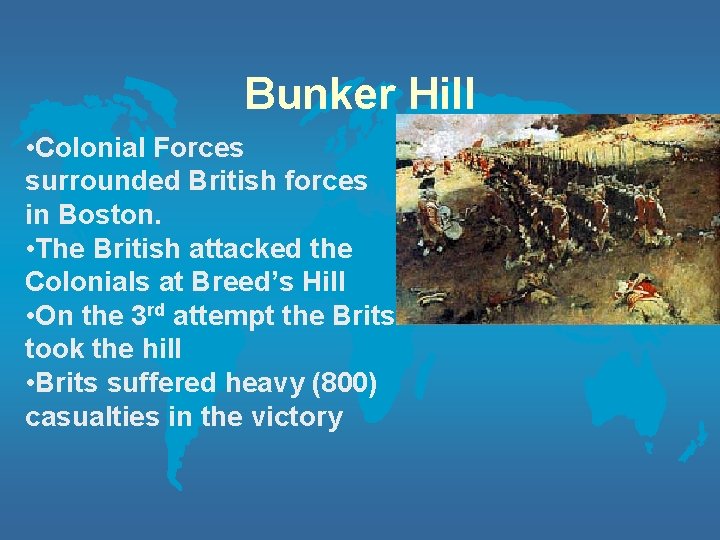
Bunker Hill • Colonial Forces surrounded British forces in Boston. • The British attacked the Colonials at Breed’s Hill • On the 3 rd attempt the Brits took the hill • Brits suffered heavy (800) casualties in the victory
The Second Continental Congress • When the 2 nd Congress met in May 1775, it had inherited a war • Created a “Continental Army”- men were volunteers for a few months • At the urging of John Adams, George Washington named commander • Major debates and arguments took place because many Members of Congress still wanted to stay British Colonies
The Second Continental Congress • The Congress acted much like a regular government: • Took command of the army • Printed money • Opened diplomacy with Indians • Took control of the post office • Did NOT pass laws…
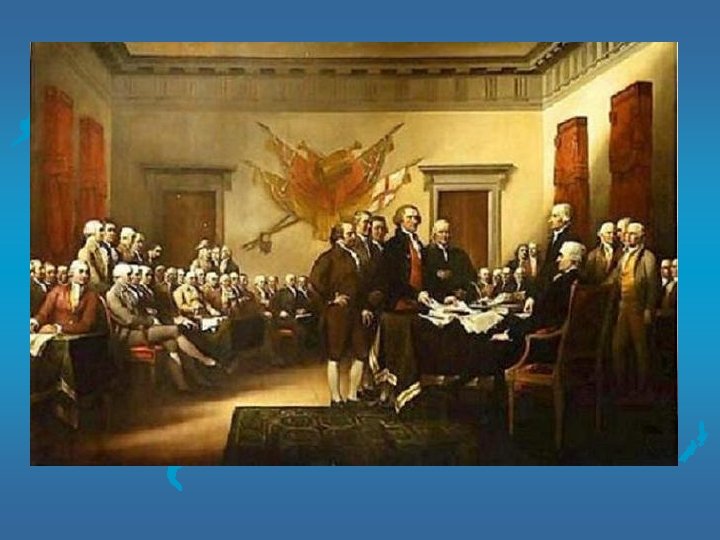
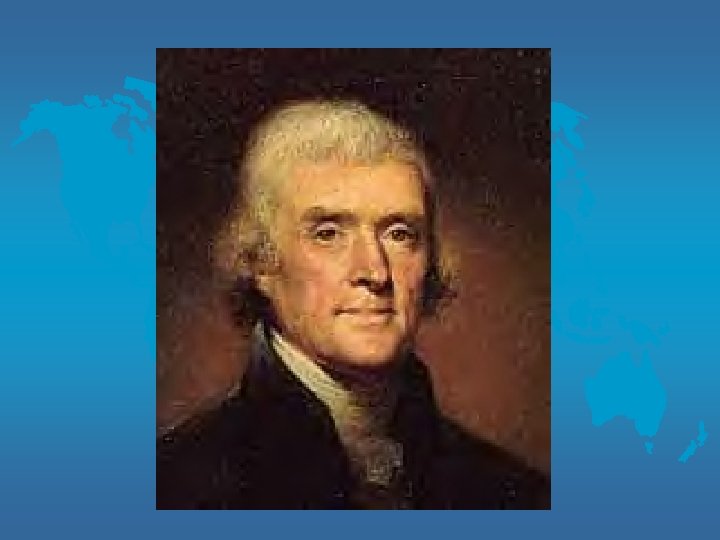
The Declaration of Independence • In May 1775, Congress names a committee of five to prepare a declaration that would explain America’s position to the world. • Thomas Jefferson draft stated we deserved independence on the ground of “self evident truths” including a right to “life, Liberty & the pursuit of happiness” • Also included accusations of King George III as a tyrant.
Independence • John Adams to his wife, Abigail: • “This date will be the most memorable epoch in this history of America. ” • The date? ---July 2, 1776. • July 2 is the date that Congress agreed to break from England & declare independence • Why do we celebrate July 4 th?
July 4: • On July 4 th, Congress adopted & signed the Declaration of Independence & ordered it to be printed • But, America had been independent for 2 days!