
No Outsiders Week beginning 29 th June 2020
No Outsiders Week beginning 29 th June 2020
What does “no outsiders” mean?
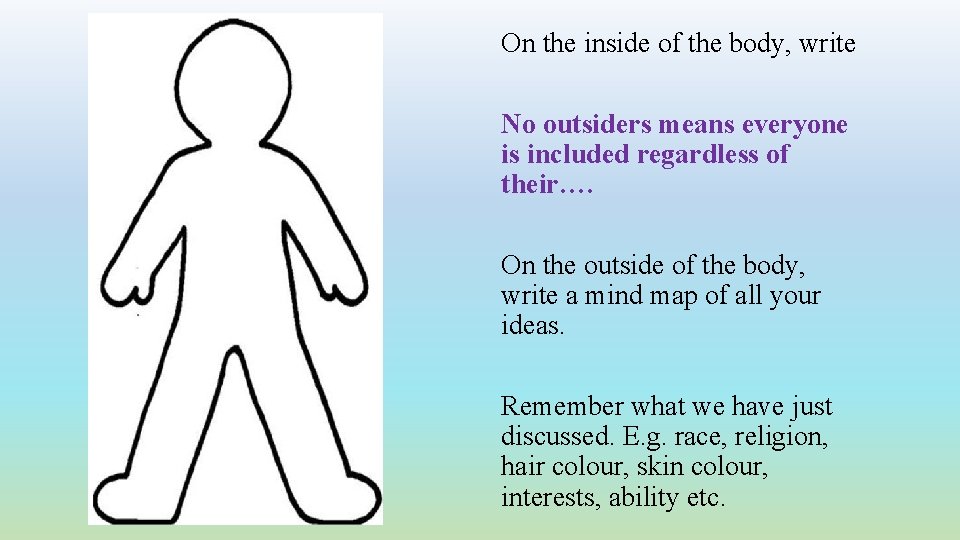
On the inside of the body, write No outsiders means everyone is included regardless of their…. On the outside of the body, write a mind map of all your ideas. Remember what we have just discussed. E. g. race, religion, hair colour, skin colour, interests, ability etc.
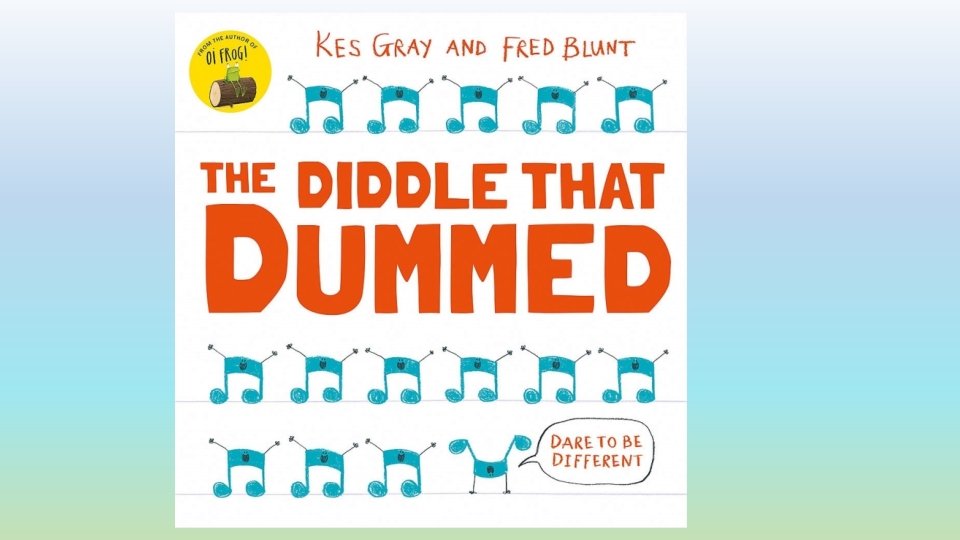
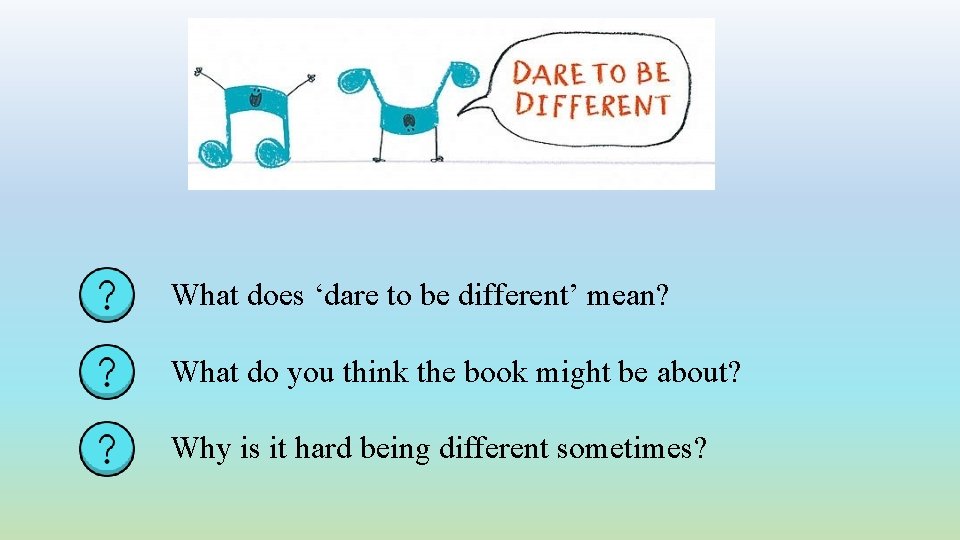
What does ‘dare to be different’ mean? What do you think the book might be about? Why is it hard being different sometimes?
Let’s listen to the book… https: //www. youtube. com/watch? v=Ghdr. JMRLb 04 https: //www. youtube. com/watch? v=jb. NMFQ 0 OTPI
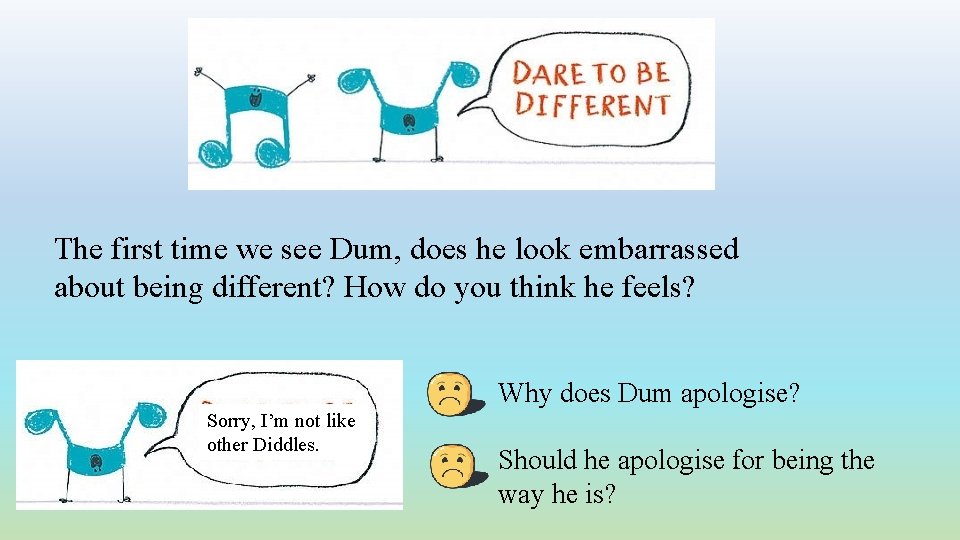
The first time we see Dum, does he look embarrassed about being different? How do you think he feels? Why does Dum apologise? Sorry, I’m not like other Diddles. Should he apologise for being the way he is?
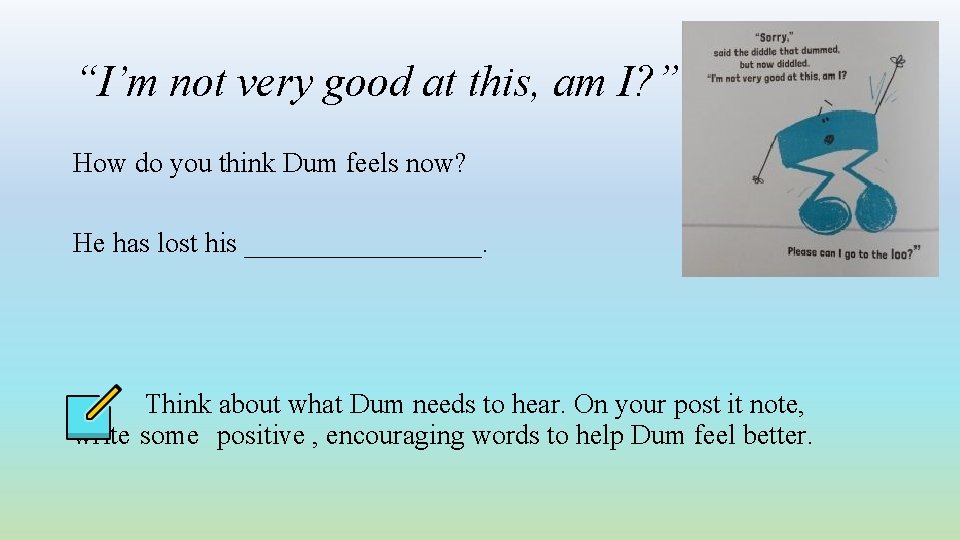
“I’m not very good at this, am I? ” How do you think Dum feels now? He has lost his _________. Think about what Dum needs to hear. On your post it note, write some positive , encouraging words to help Dum feel better.
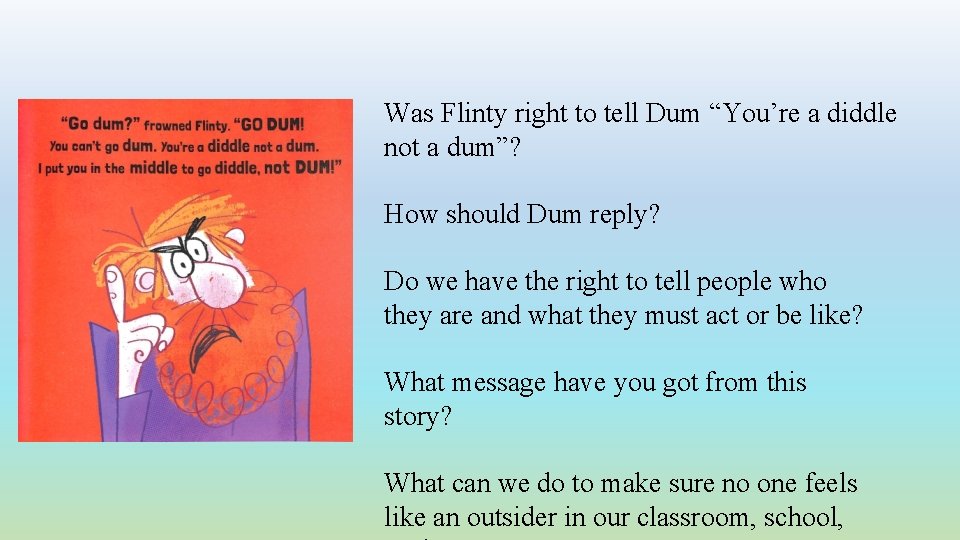
Was Flinty right to tell Dum “You’re a diddle not a dum”? How should Dum reply? Do we have the right to tell people who they are and what they must act or be like? What message have you got from this story? What can we do to make sure no one feels like an outsider in our classroom, school,
Think about how you play the violin. Could you still play the violin if you had a physical disability?

Watch this…. . https: //www. youtube. com/watch? v=Kncn. B 5 bf. MWo
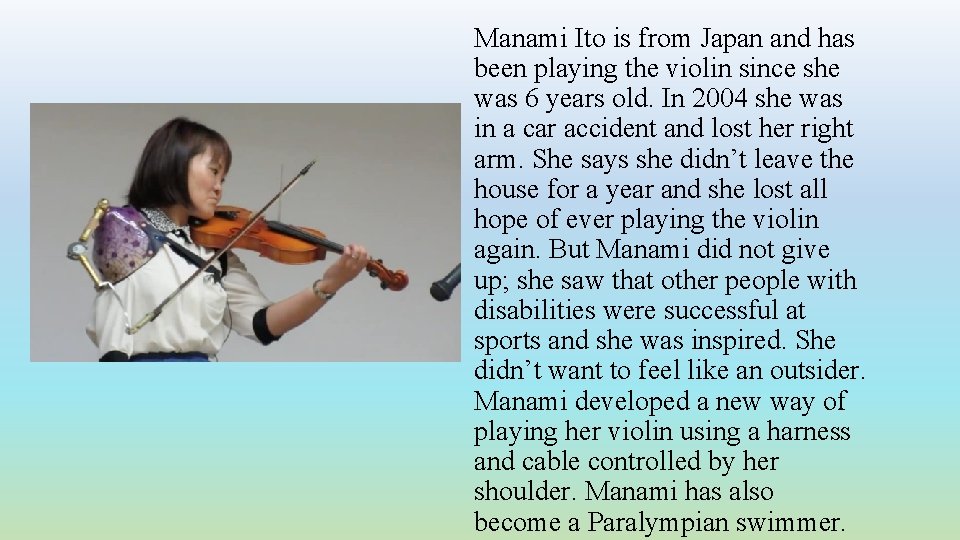
Manami Ito is from Japan and has been playing the violin since she was 6 years old. In 2004 she was in a car accident and lost her right arm. She says she didn’t leave the house for a year and she lost all hope of ever playing the violin again. But Manami did not give up; she saw that other people with disabilities were successful at sports and she was inspired. She didn’t want to feel like an outsider. Manami developed a new way of playing her violin using a harness and cable controlled by her shoulder. Manami has also become a Paralympian swimmer.
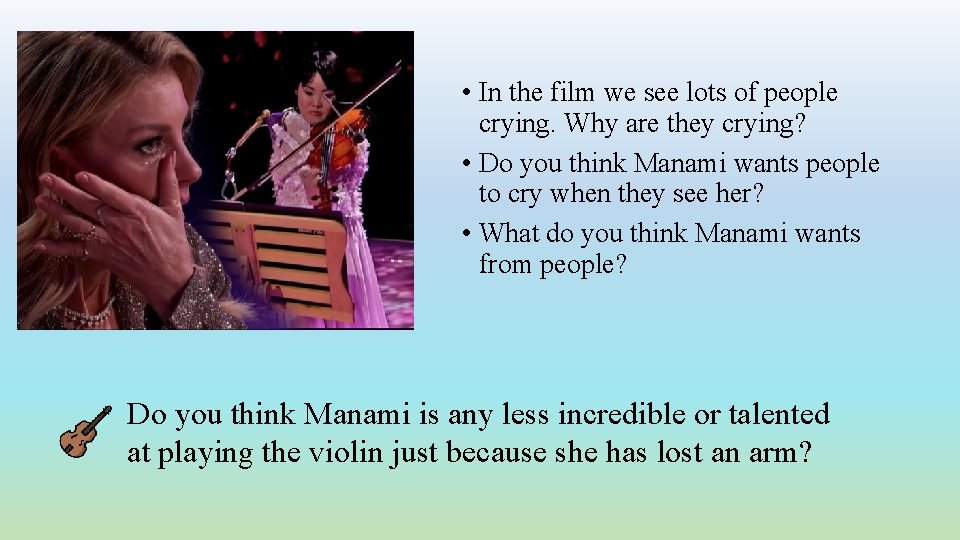
• In the film we see lots of people crying. Why are they crying? • Do you think Manami wants people to cry when they see her? • What do you think Manami wants from people? Do you think Manami is any less incredible or talented at playing the violin just because she has lost an arm?
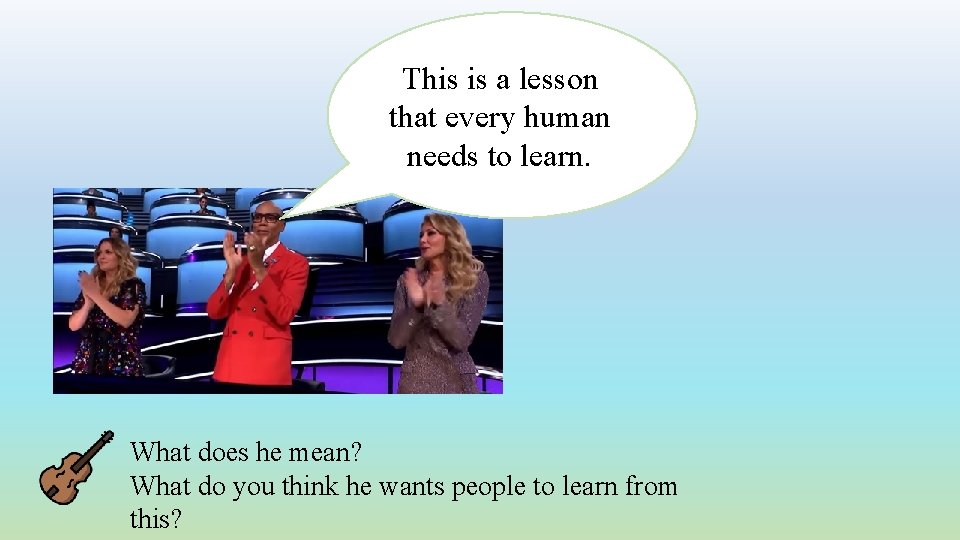
This is a lesson that every human needs to learn. What does he mean? What do you think he wants people to learn from this?
I would like you to write a short letter to Manami to tell her what her story has taught you. You might want to include: How inspirational she is to not let her disability stop her talent. How you are glad that she found a way around her disability.
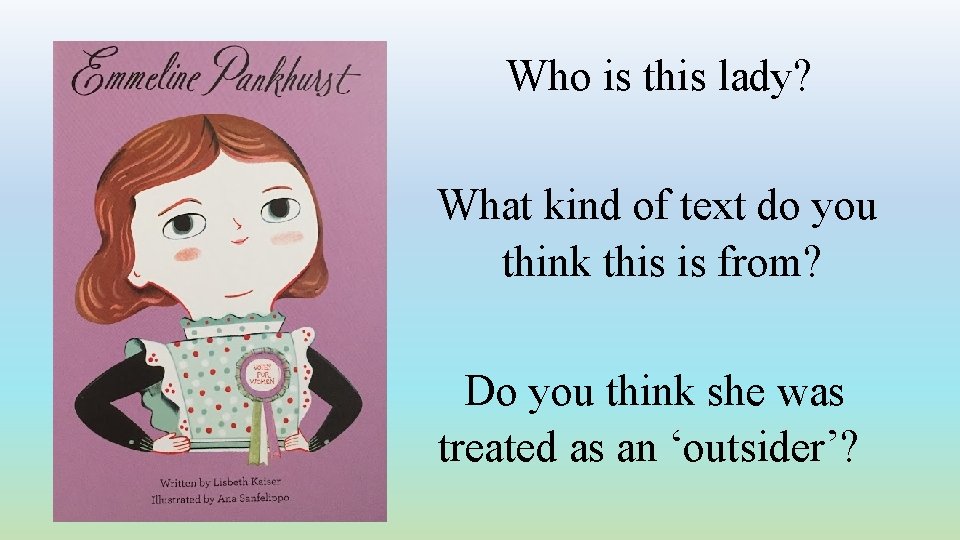
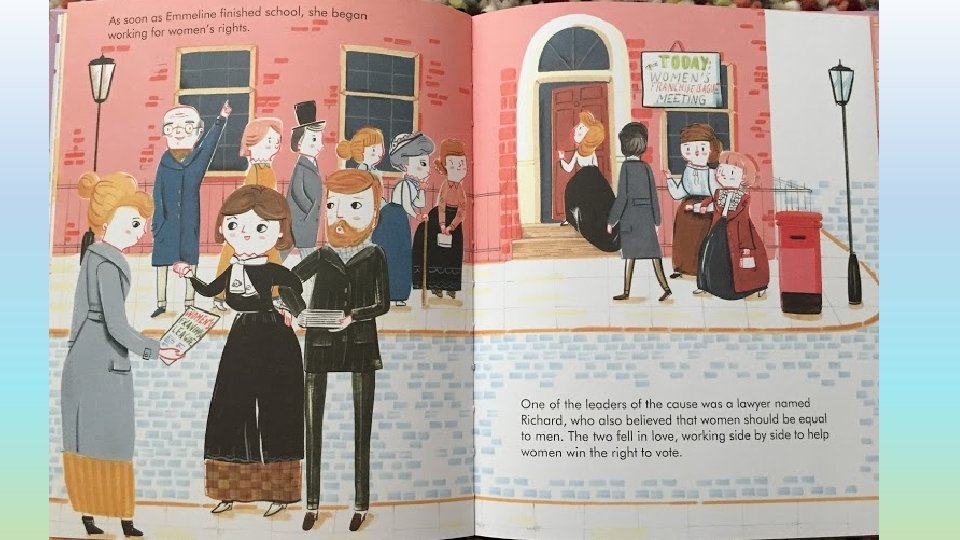
Who is this lady? What kind of text do you think this is from? Do you think she was treated as an ‘outsider’?
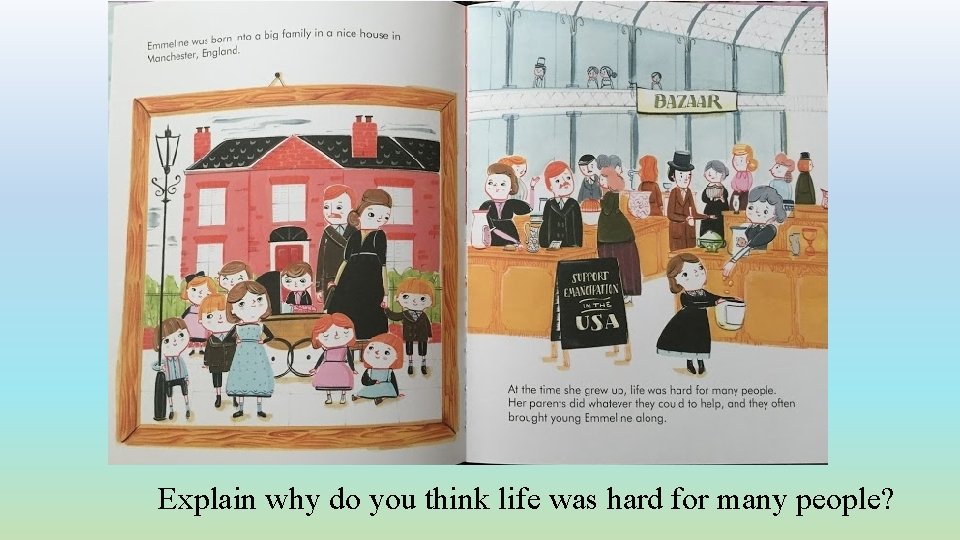
Explain why do you think life was hard for many people?
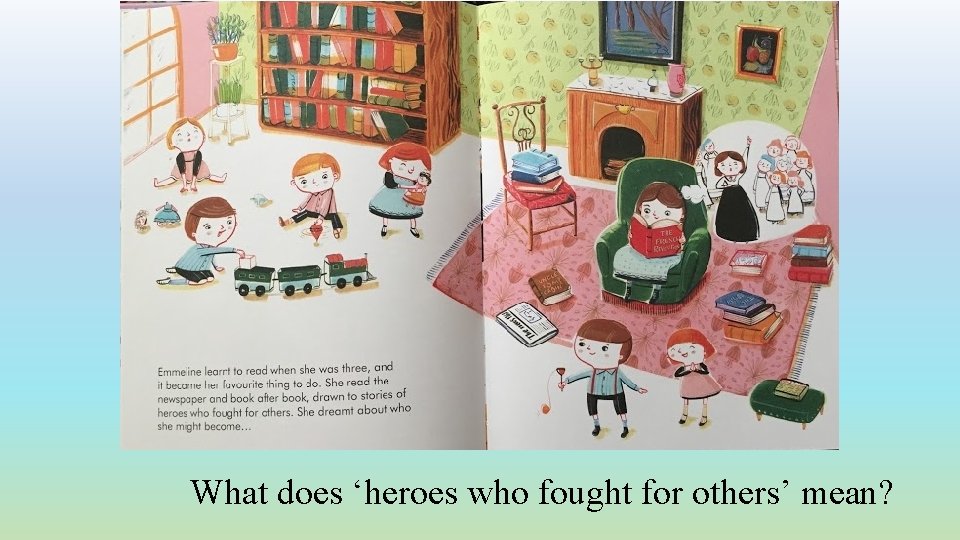
What does ‘heroes who fought for others’ mean?
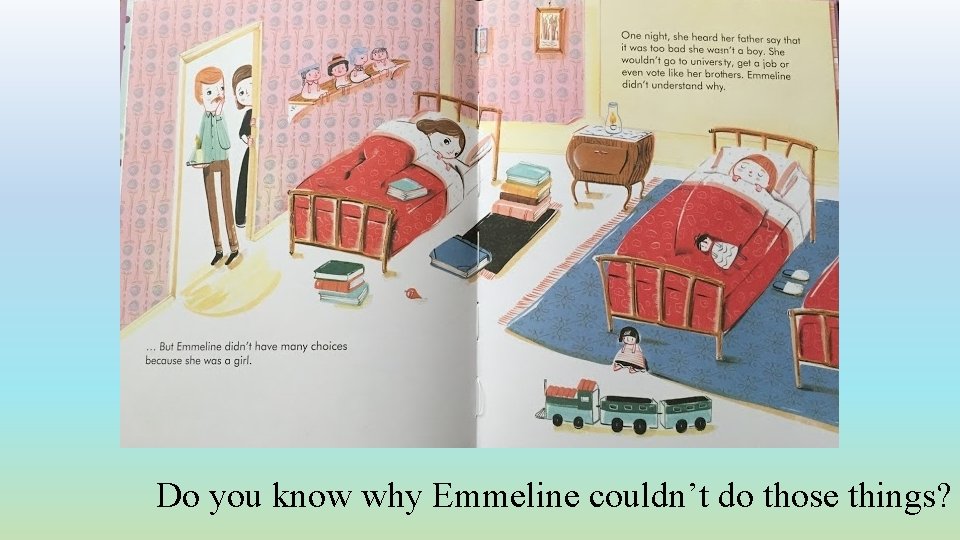
Do you know why Emmeline couldn’t do those things?
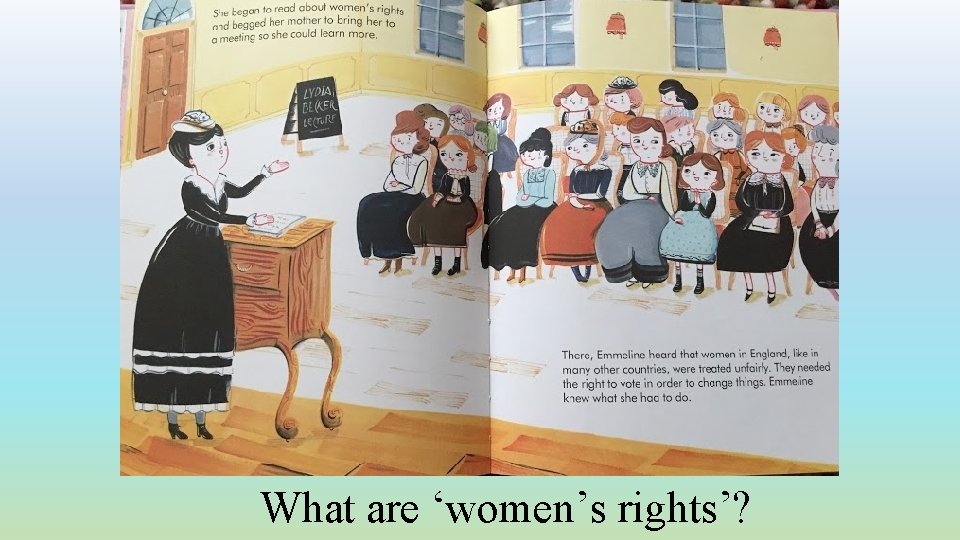
What are ‘women’s rights’?
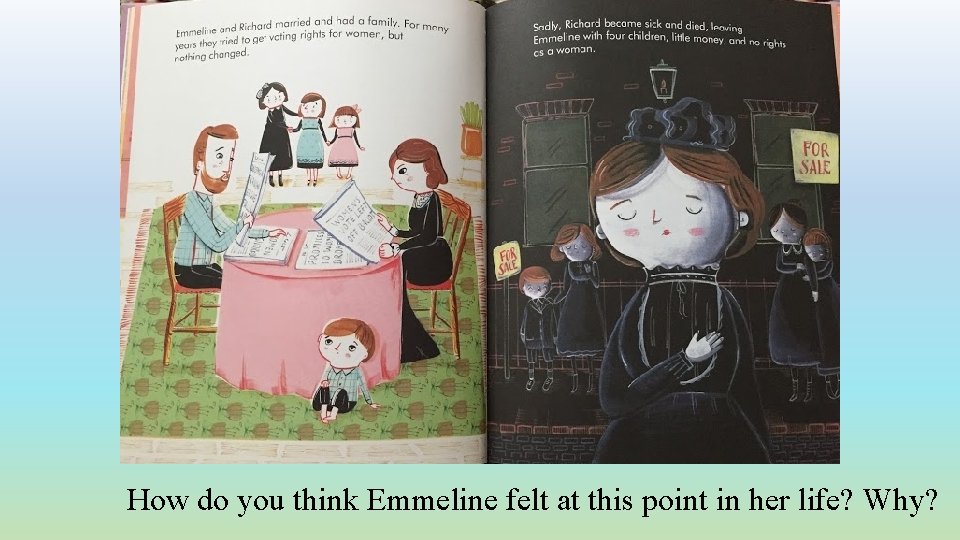
How do you think Emmeline felt at this point in her life? Why?
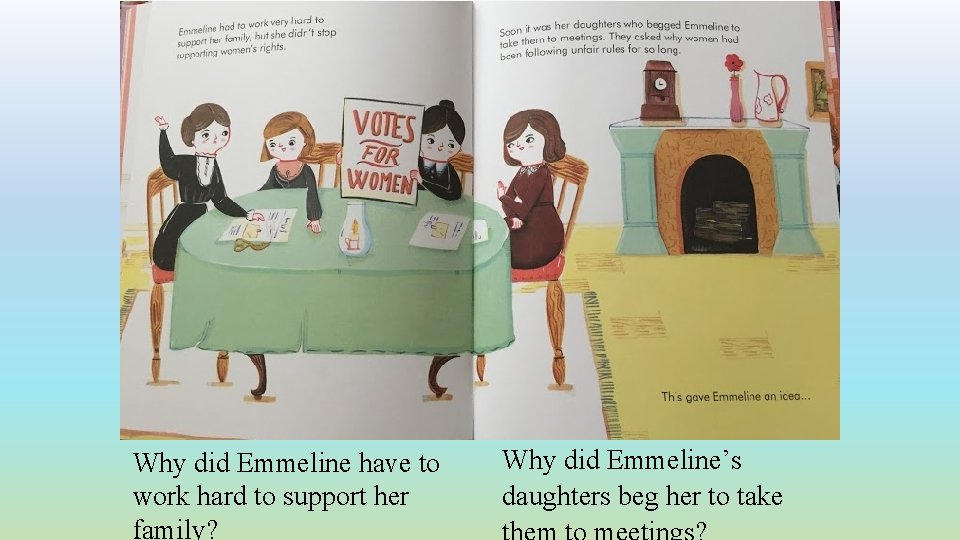
Why did Emmeline have to work hard to support her family? Why did Emmeline’s daughters beg her to take
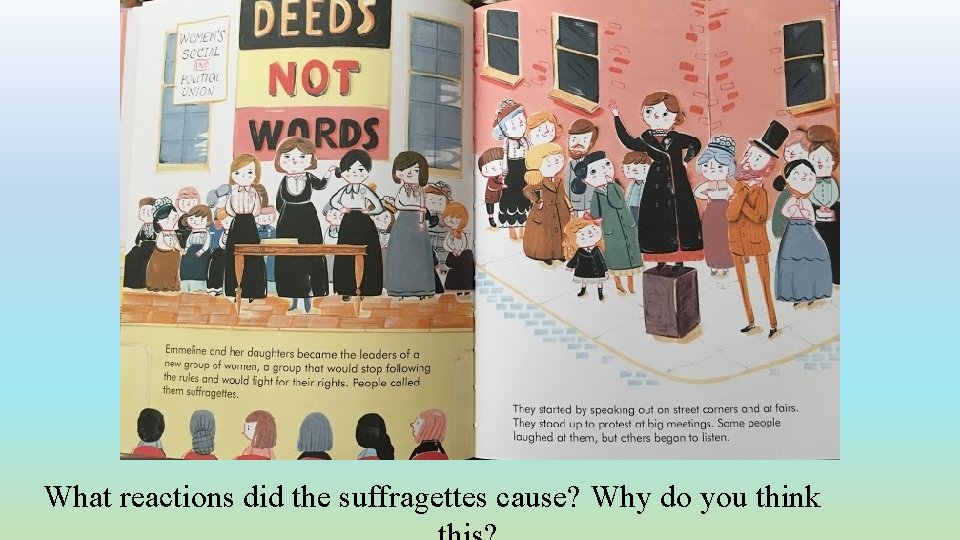
What reactions did the suffragettes cause? Why do you think
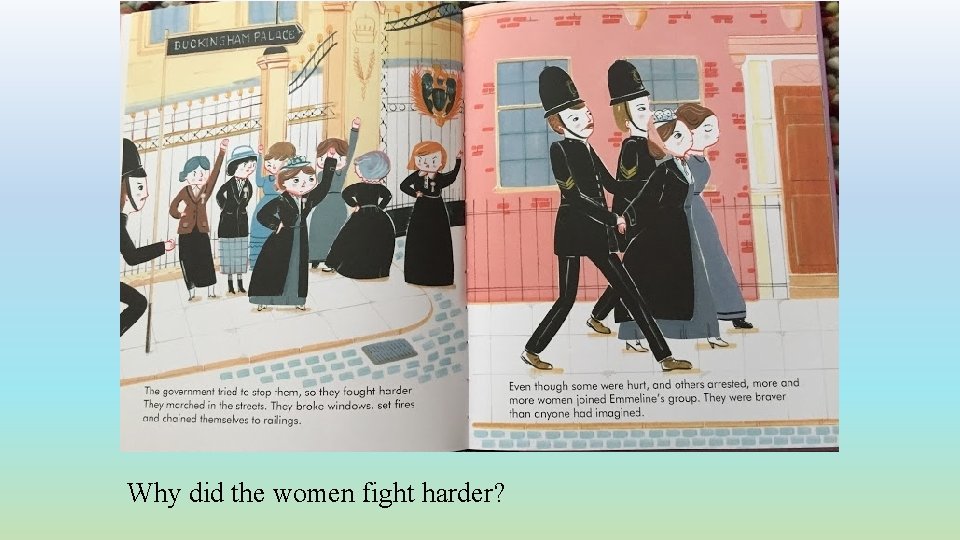
Why did the women fight harder?
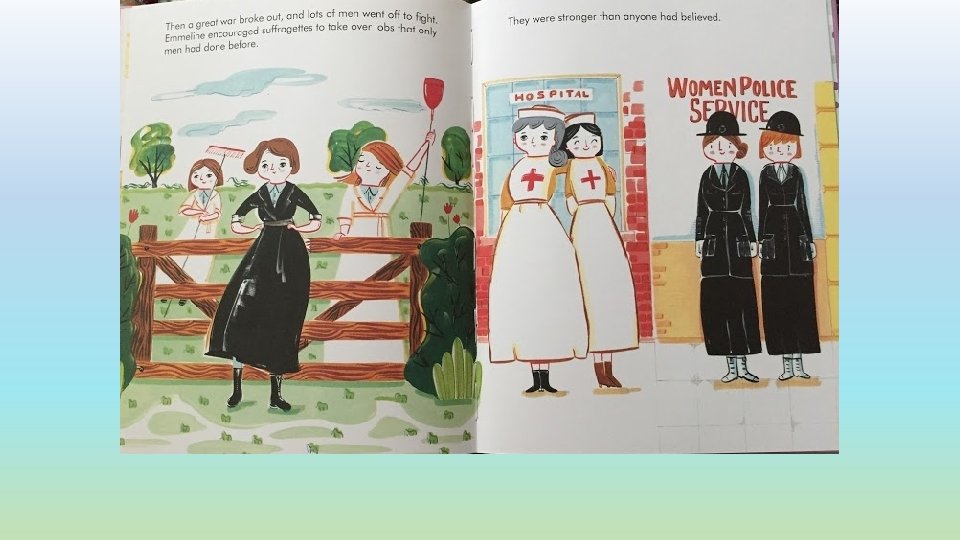
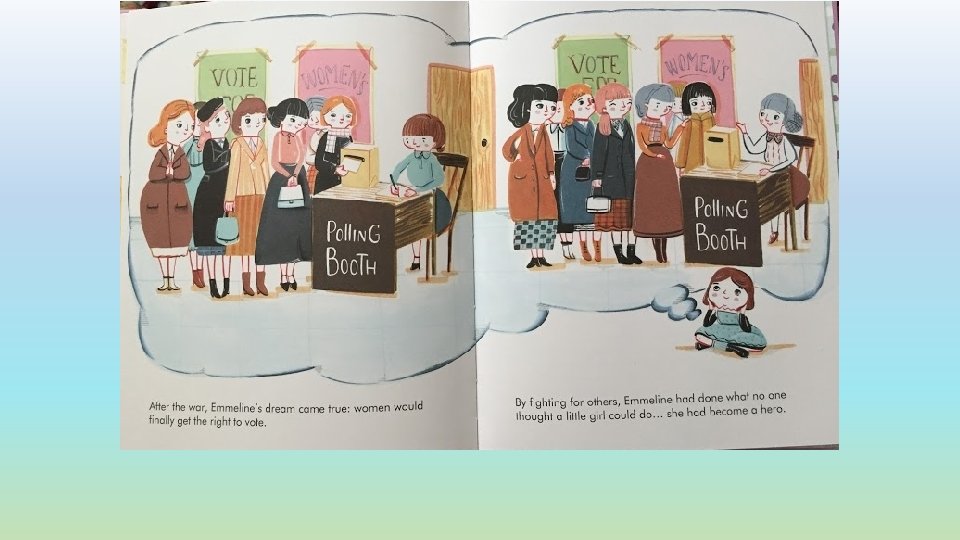
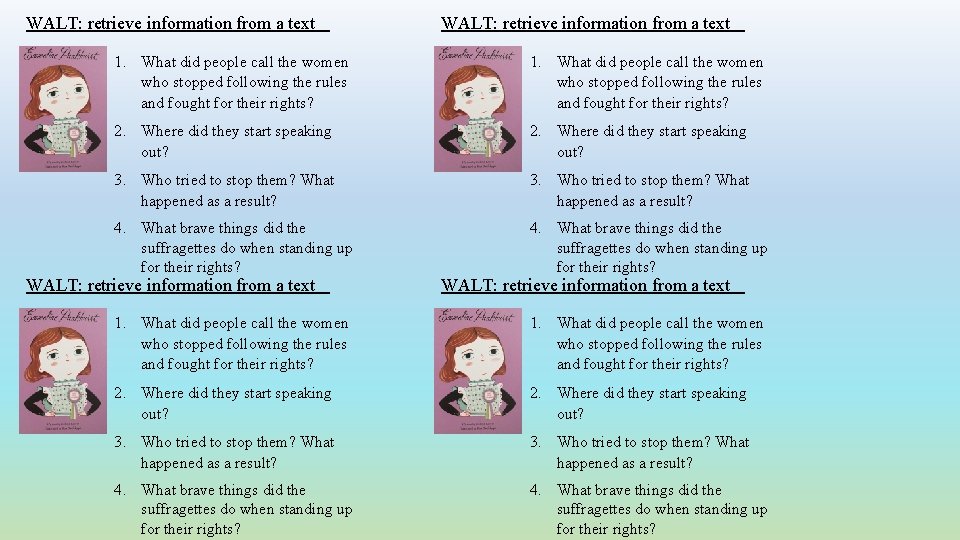
WALT: retrieve information from a text 1. What did people call the women who stopped following the rules and fought for their rights? 2. Where did they start speaking out? 3. Who tried to stop them? What happened as a result? 4. What brave things did the suffragettes do when standing up for their rights?
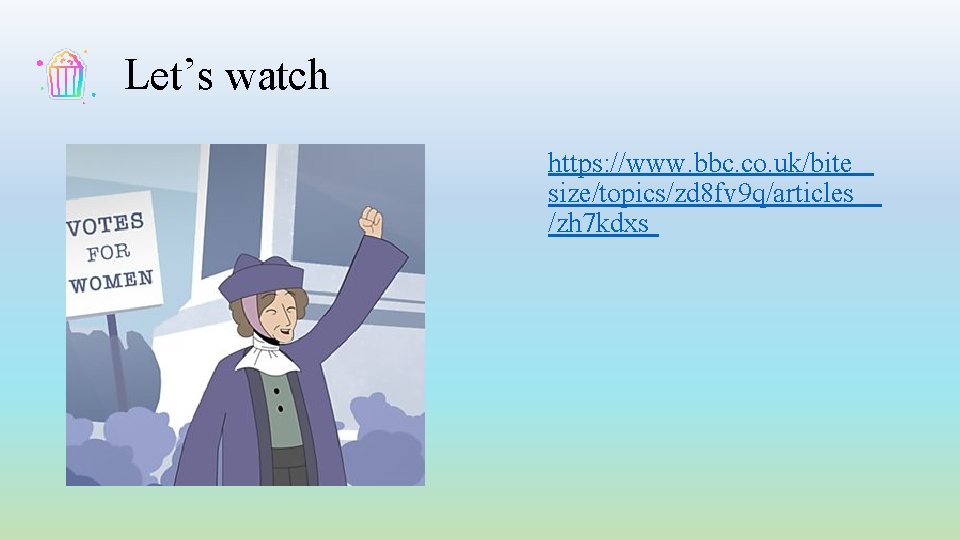
Let’s watch https: //www. bbc. co. uk/bite size/topics/zd 8 fv 9 q/articles /zh 7 kdxs
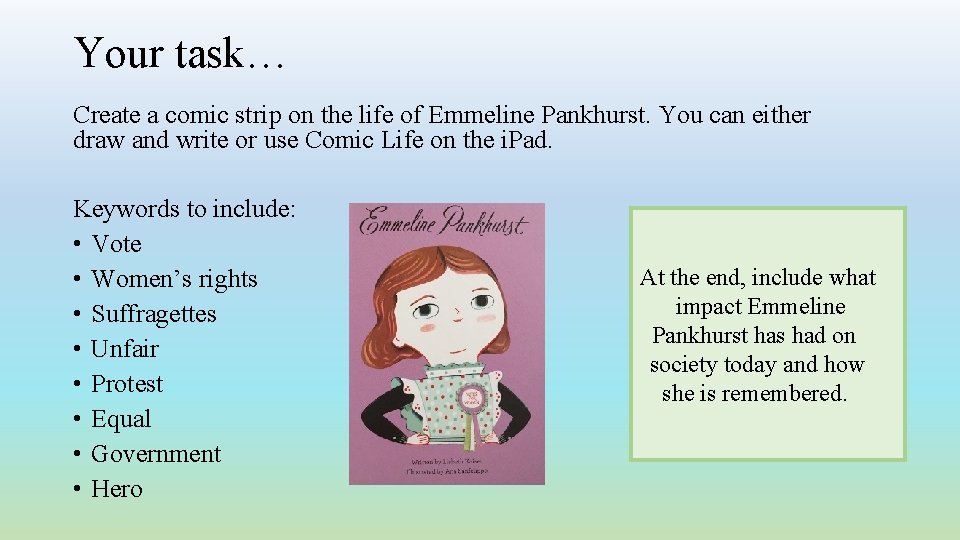
Your task… Create a comic strip on the life of Emmeline Pankhurst. You can either draw and write or use Comic Life on the i. Pad. Keywords to include: • Vote • Women’s rights • Suffragettes • Unfair • Protest • Equal • Government • Hero At the end, include what impact Emmeline Pankhurst has had on society today and how she is remembered.
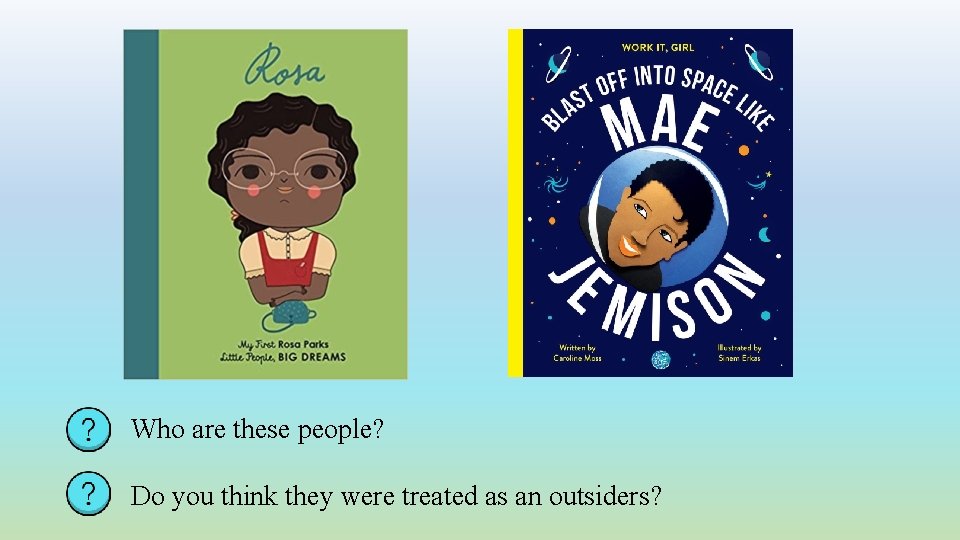
Who are these people? Do you think they were treated as an outsiders?
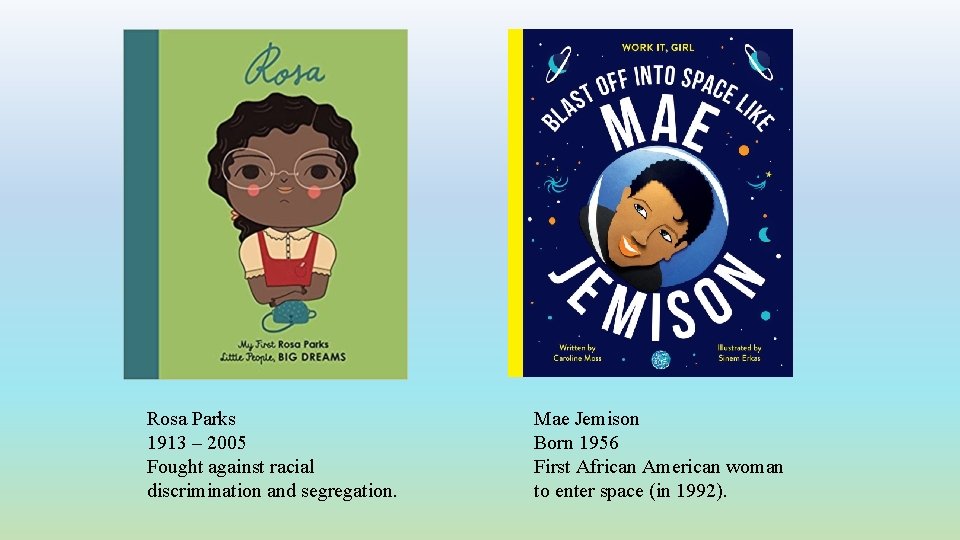
Rosa Parks 1913 – 2005 Fought against racial discrimination and segregation. Mae Jemison Born 1956 First African American woman to enter space (in 1992).
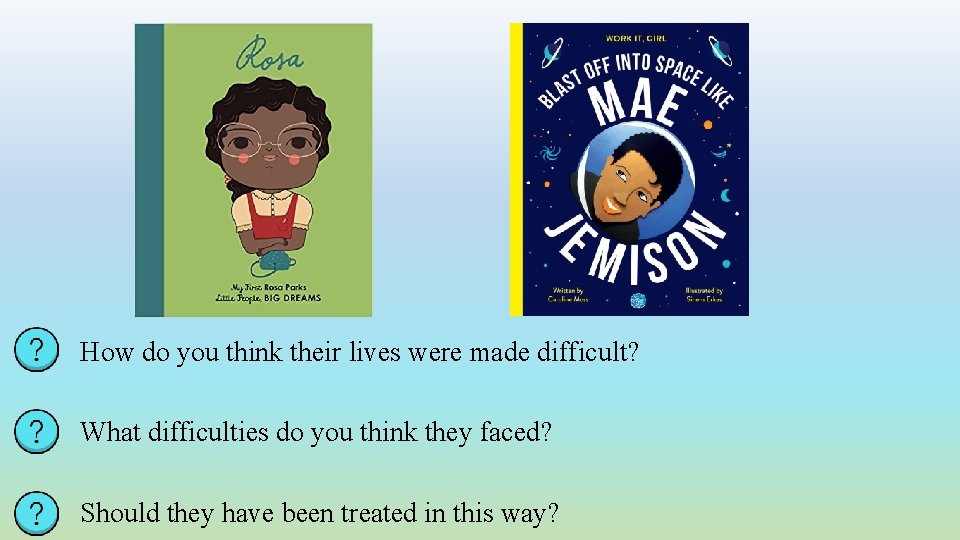
How do you think their lives were made difficult? What difficulties do you think they faced? Should they have been treated in this way?
Let’s watch… https: //www. youtube. com/watch? v=52 Oi 6 e. HKMFY https: //www. bbc. co. uk/bitesize/topics/zjkj 382/articles/ zkhknrd
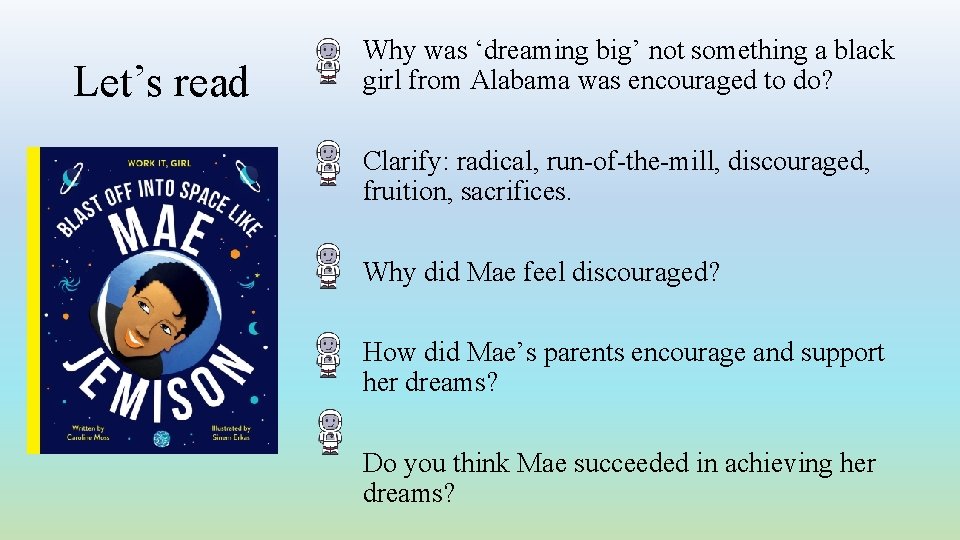
Let’s read Why was ‘dreaming big’ not something a black girl from Alabama was encouraged to do? Clarify: radical, run-of-the-mill, discouraged, fruition, sacrifices. Why did Mae feel discouraged? How did Mae’s parents encourage and support her dreams? Do you think Mae succeeded in achieving her dreams?
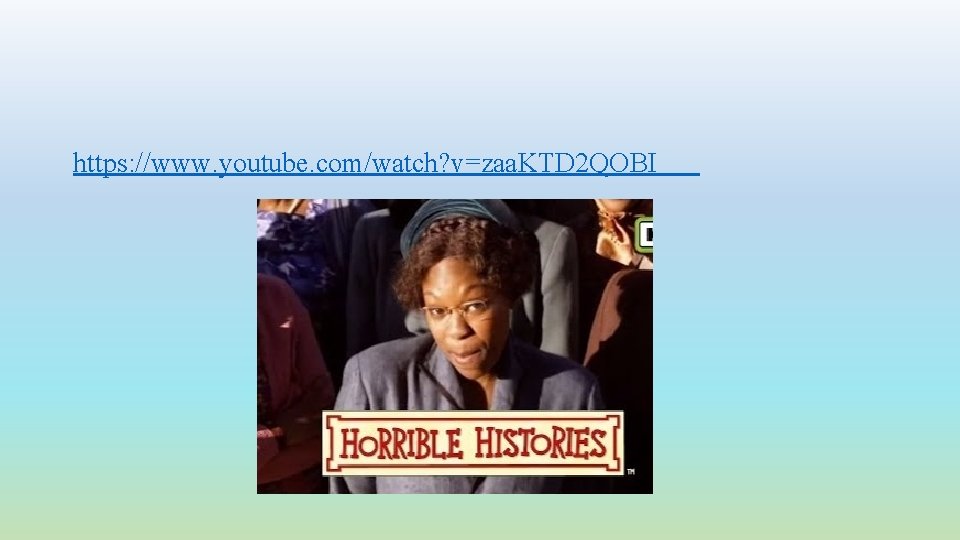
https: //www. youtube. com/watch? v=zaa. KTD 2 QOBI
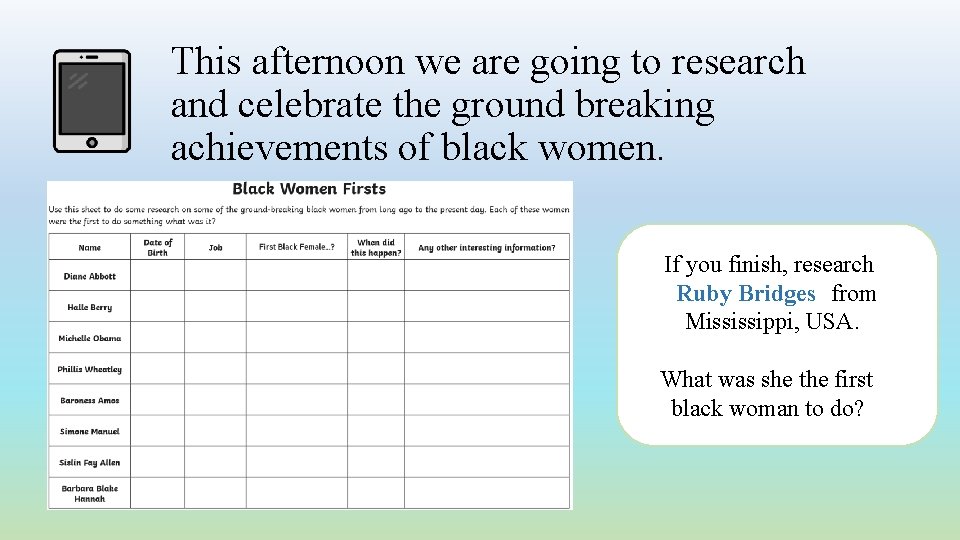
This afternoon we are going to research and celebrate the ground breaking achievements of black women. If you finish, research Ruby Bridges from Mississippi, USA. What was she the first black woman to do?
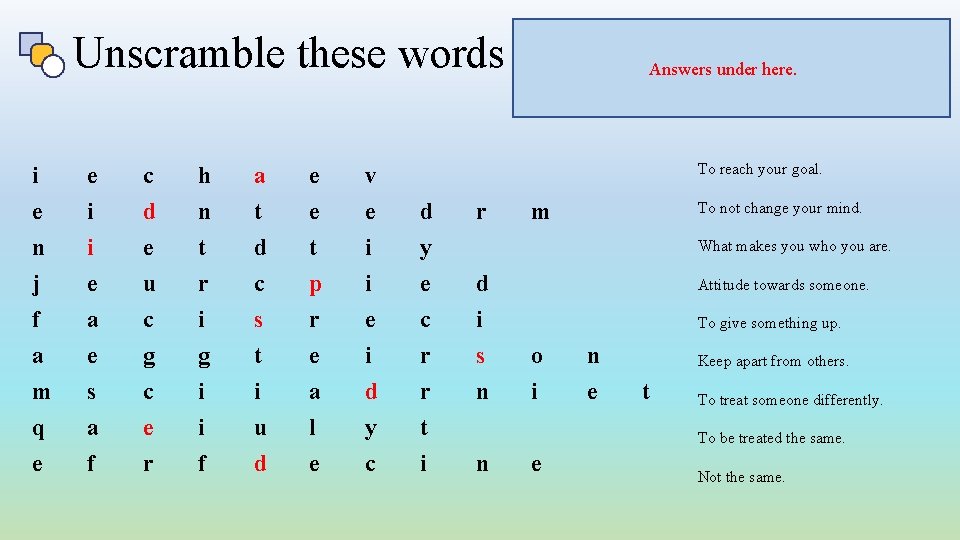
Unscramble these words achieve, determined, identity, prejudice, sacrifice, segregation, discriminate, Answers underequality, here. difference. To reach your goal. i e n j e i i e c d e u h n t r a t d c e e t p v e i i d y e r d Attitude towards someone. f a m q e a e s a f c g c e r i g i i f s t i u d r e a l e e i d y c c r r t i i s n To give something up. m To not change your mind. What makes you who you are. o i n e Keep apart from others. t To treat someone differently. To be treated the same. n e Not the same.
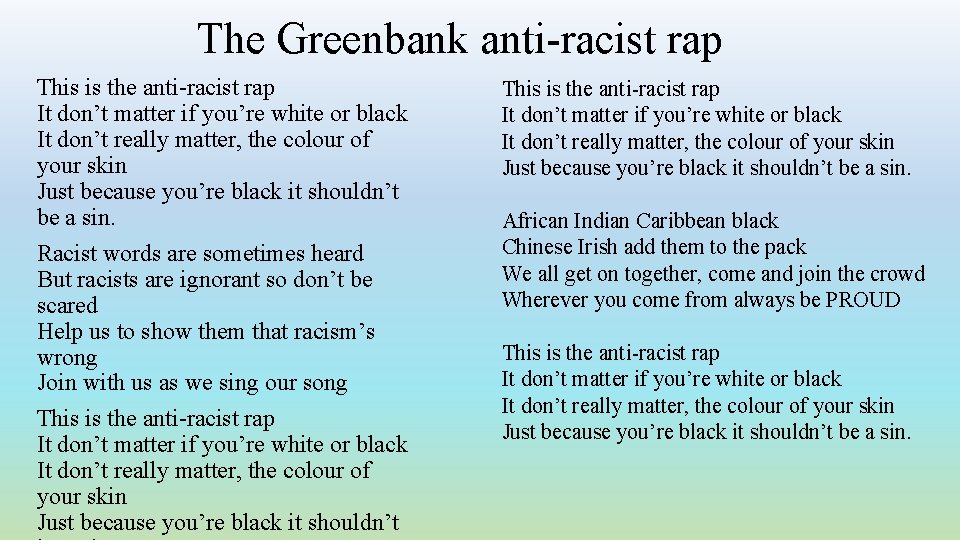
The Greenbank anti-racist rap This is the anti-racist rap It don’t matter if you’re white or black It don’t really matter, the colour of your skin Just because you’re black it shouldn’t be a sin. Racist words are sometimes heard But racists are ignorant so don’t be scared Help us to show them that racism’s wrong Join with us as we sing our song This is the anti-racist rap It don’t matter if you’re white or black It don’t really matter, the colour of your skin Just because you’re black it shouldn’t be a sin. African Indian Caribbean black Chinese Irish add them to the pack We all get on together, come and join the crowd Wherever you come from always be PROUD This is the anti-racist rap It don’t matter if you’re white or black It don’t really matter, the colour of your skin Just because you’re black it shouldn’t be a sin.
What do we notice about the rap?
Let’s practise rapping it together. You can click, clap or do anything else to give a steady beat, to make sure we all stay in time.
You are going to make up your own rap for our ‘No Outsiders’ topic we have been learning about this week. Watch these short videos for some tips and advice… https: //www. bbc. co. uk/cbbc/curations/4 -o-clock-club-rap-tutorials
When creating your rap, think about: What you want to say – your message Rhyming pattern Pace Repetition – chorus, opening lines etc You could start with: This is the No Outsiders rap My example: This is the rhythm of the No Outsiders rap , It doesn’t even matter if you’re white or black. It doesn’t even matter if you’re a boy or a girl, We celebrate our differences in this world. Everyone shout be treated equally , Difference is good, can’t you see ? Not everyone in the world looks the same ,
This morning you will: Finish your rap if needed Practise your rap together (socially distanced) Perform your rap – I will film and it will be published on the school website and Twitter Write up the lyrics to your rap to be used on a display
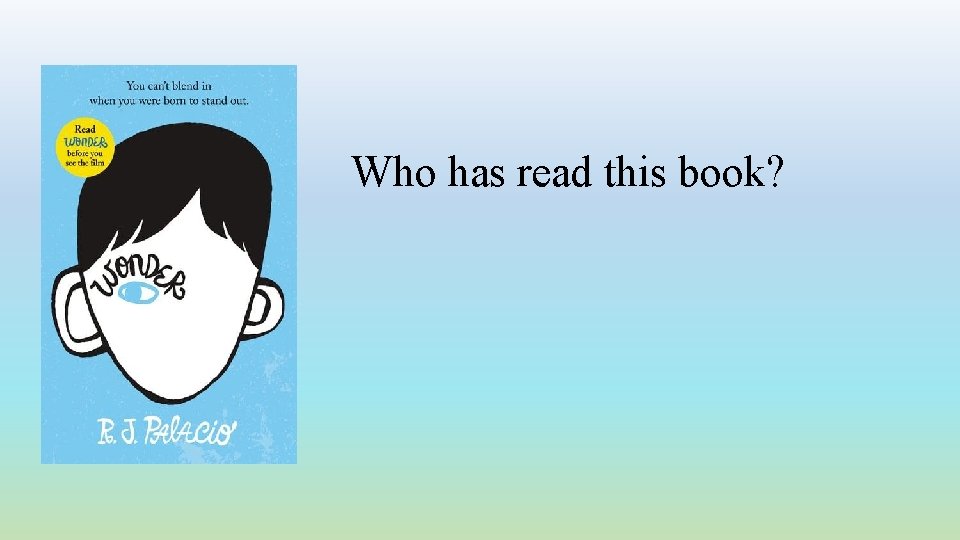
Who has read this book?
Part One – Ordinary I know I’m not an ordinary ten-year-old kid. I mean, sure, I do ordinary things. I eat ice cream. I ride my bike. I play ball. I have an Xbox. Stuff like that makes me ordinary. I guess. And I feel ordinary. Inside. But I know ordinary kids don’t make other ordinary kids run away screaming in playgrounds. I know ordinary kids don’t get stared at wherever they go. If I found a magic lamp and I could have one wish, I would wish that I had a normal face that no one ever noticed at all. I would wish that I could walk down the street without people seeing me and then doing that look-away thing. Here’s what I think: the only reason I’m not ordinary is that no one else sees me that way. But I’m kind of used to how I look by now. I know how to pretend I don’t see the faces people make. We’ve all gotten pretty good at that sort of thing: me, Mom and Dad, Via. Actually, I take that back: Via’s not so good at it. She can get really annoyed when people do something rude. Like, for instance, one time in the playground some older kids made some noises. I don’t even know what the noises were exactly because I didn’t hear them myself, but Via heard and she just started yelling at the kids. That’s the way she is. I’m not that way. Via doesn’t see me as ordinary. She says she does, but if I were ordinary, she wouldn’t feel like she needs to protect me as much. And Mom and Dad don’t see me as ordinary, either. They see me as extraordinary. I think the only person in the world who realizes how ordinary I am is me.
Let’s read through the first chapter together and discuss these questions: Why does August feel like an outsider? Why does August describe himself as ‘not ordinary’? Do you agree with him? How does it make you feel that August wishes he had a ‘normal face that no-one ever noticed at all’? Why do you think August’s parents see him as ‘extraordinary’? How does the line ‘Whatever you’re thinking, it’s probably worse’ make you feel towards August? How would you react if a boy like August started our school?
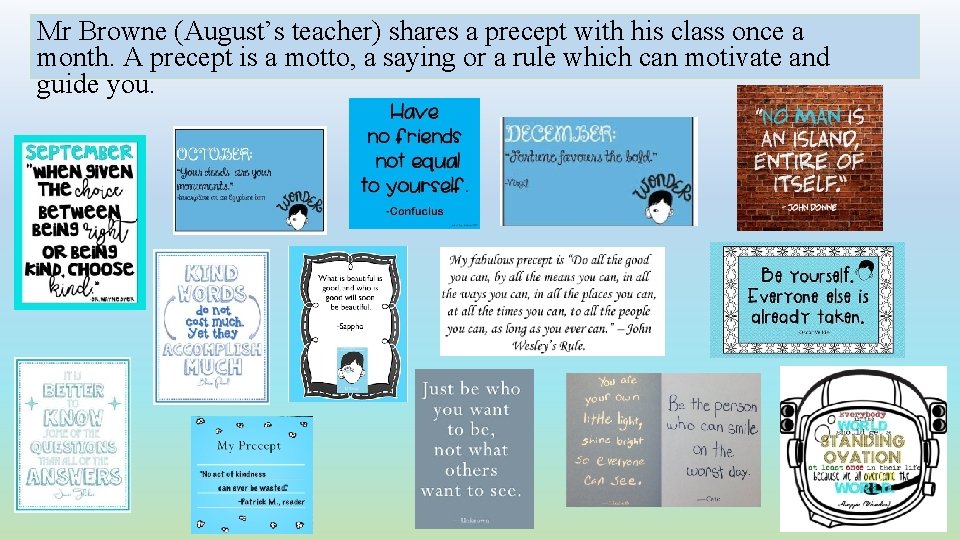
Mr Browne (August’s teacher) shares a precept with his class once a month. A precept is a motto, a saying or a rule which can motivate and guide you.
You are going to make your own motto based on everything you have learnt in our No Outsiders topic this week. We have discussed that no-one should be pushed out or treated differently because of their: race religion gender ability identity – shape, size, hair/eye/skin colour interests
To finish: Write a summary of what ‘No Outsiders’ means and what it means to you. Talk about embracing our differences, how everyone should be treated fairly and equally regardless of colour of skin, gender, ability, looks etc.
- Slides: 51