
No Disclosures Cervical cancer screening and colposcopy in

- Slides: 46
No Disclosures
Cervical cancer screening and colposcopy in General Practice. 1. Screening and HPV 2. Colposcopy and diagnosis 3. Treatment and follow up
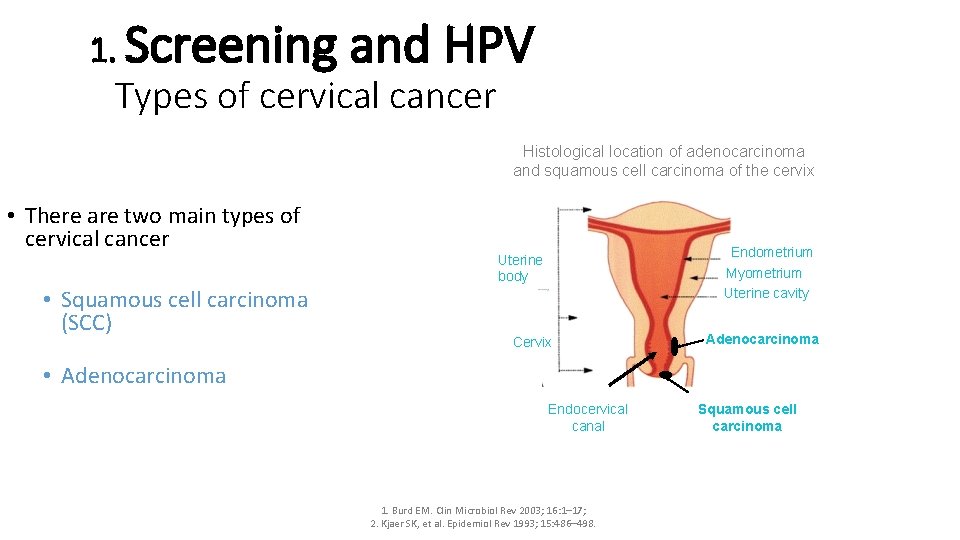
1. Screening and HPV Types of cervical cancer Histological location of adenocarcinoma and squamous cell carcinoma of the cervix • There are two main types of cervical cancer • Squamous cell carcinoma (SCC) Endometrium Myometrium Uterine cavity Uterine body Cervix Adenocarcinoma • Adenocarcinoma Endocervical canal 1. Burd EM. Clin Microbiol Rev 2003; 16: 1– 17; 2. Kjaer SK, et al. Epidemiol Rev 1993; 15: 486– 498. Squamous cell carcinoma
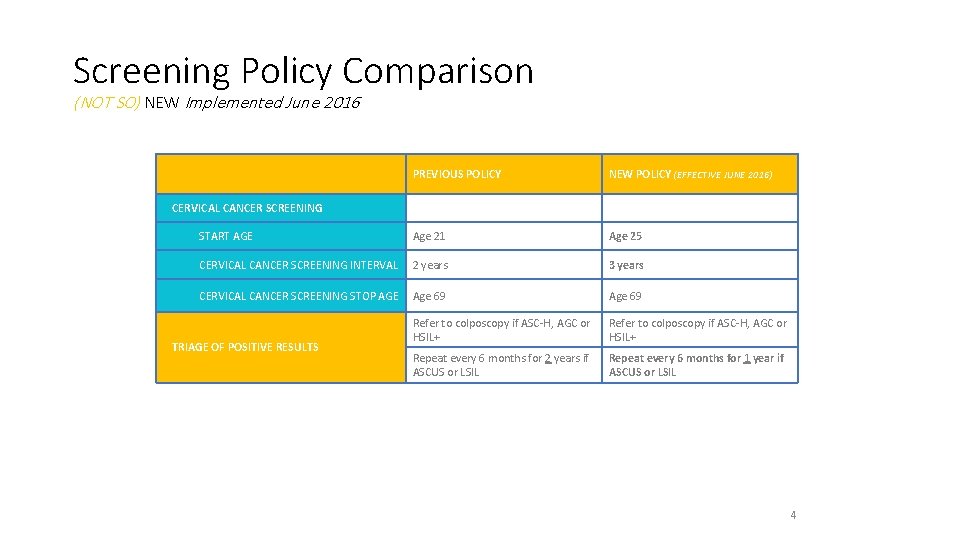
Screening Policy Comparison (NOT SO) NEW Implemented June 2016 PREVIOUS POLICY NEW POLICY (EFFECTIVE JUNE 2016) START AGE Age 21 Age 25 CERVICAL CANCER SCREENING INTERVAL 2 years 3 years CERVICAL CANCER SCREENING STOP AGE Age 69 Refer to colposcopy if ASC-H, AGC or HSIL+ Repeat every 6 months for 2 years if ASCUS or LSIL Repeat every 6 months for 1 year if ASCUS or LSIL CERVICAL CANCER SCREENING TRIAGE OF POSITIVE RESULTS 4
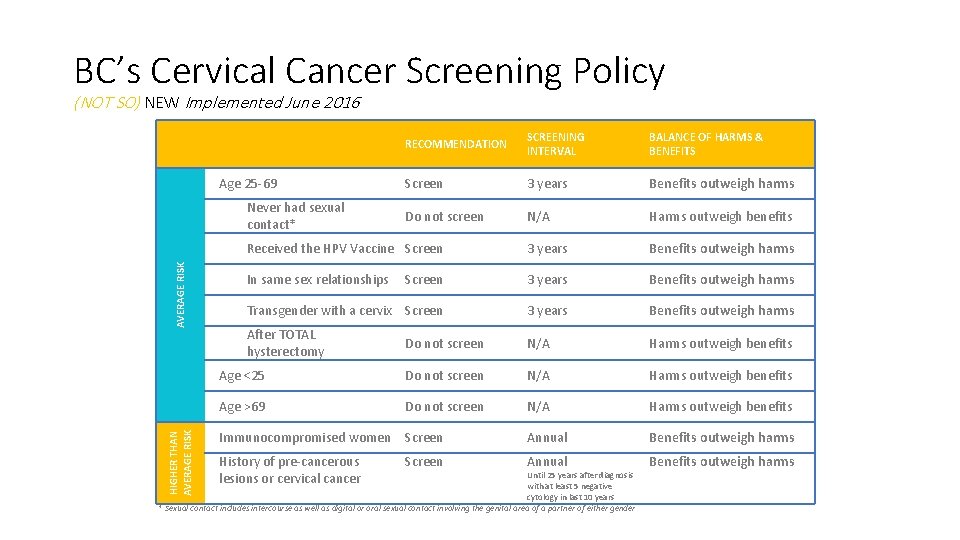
BC’s Cervical Cancer Screening Policy (NOT SO) NEW Implemented June 2016 RECOMMENDATION SCREENING INTERVAL BALANCE OF HARMS & BENEFITS Screen 3 years Benefits outweigh harms Do not screen N/A Harms outweigh benefits Received the HPV Vaccine Screen 3 years Benefits outweigh harms In same sex relationships Screen 3 years Benefits outweigh harms Transgender with a cervix Screen 3 years Benefits outweigh harms After TOTAL hysterectomy Do not screen N/A Harms outweigh benefits Age <25 Do not screen N/A Harms outweigh benefits Age >69 Do not screen N/A Harms outweigh benefits Immunocompromised women Screen Annual Benefits outweigh harms History of pre-cancerous lesions or cervical cancer Annual Benefits outweigh harms Age 25 -69 HIGHER THAN AVERAGE RISK Never had sexual contact* Screen Until 25 years after diagnosis with at least 5 negative cytology in last 10 years * Sexual contact includes intercourse as well as digital or oral sexual contact involving the genital area of a partner of either gender
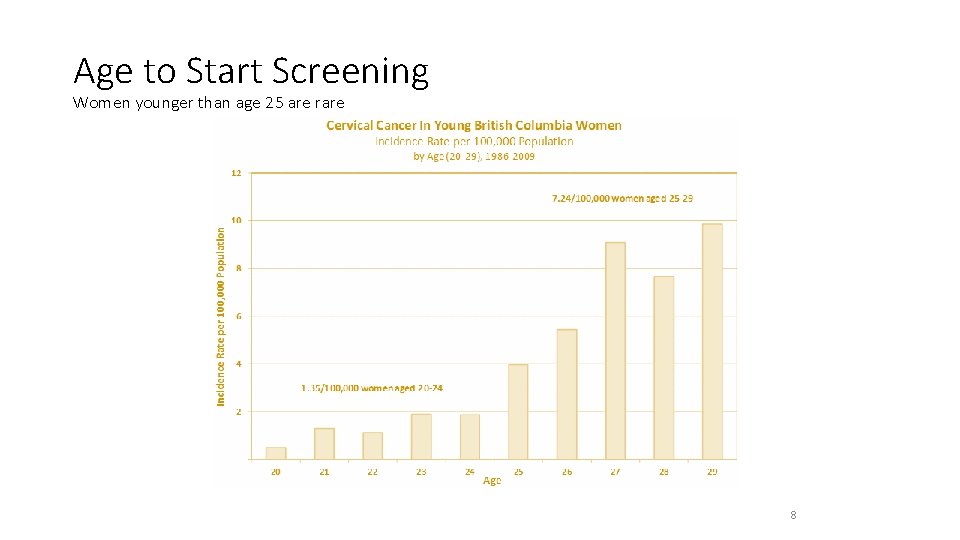
Average Risk Screening Start Age Cervical cancer screening should begin at age 25 (irrespective of sexual activity prior to age 25). Evidence suggests four well-founded reasons for initiating screening at age 25: 1. Invasive cervical cancers in women younger than age 25 are rare. > BC data 1986 – 2009 >> 1. 35/100 000 age 20 -24 and 7. 24 cases/100 000 women ages 25 – 29 1. > Peak incidence of cervical cancer is between 35 – 44 years of age. 2. Screening is relatively ineffective in younger women. > Screening at a younger age is associated with an increase in false + test results and colposcopies regardless of the screening interval 2. > No difference in rates of cervical cancers between countries screening < 25 years vs > 25 years of age 3.
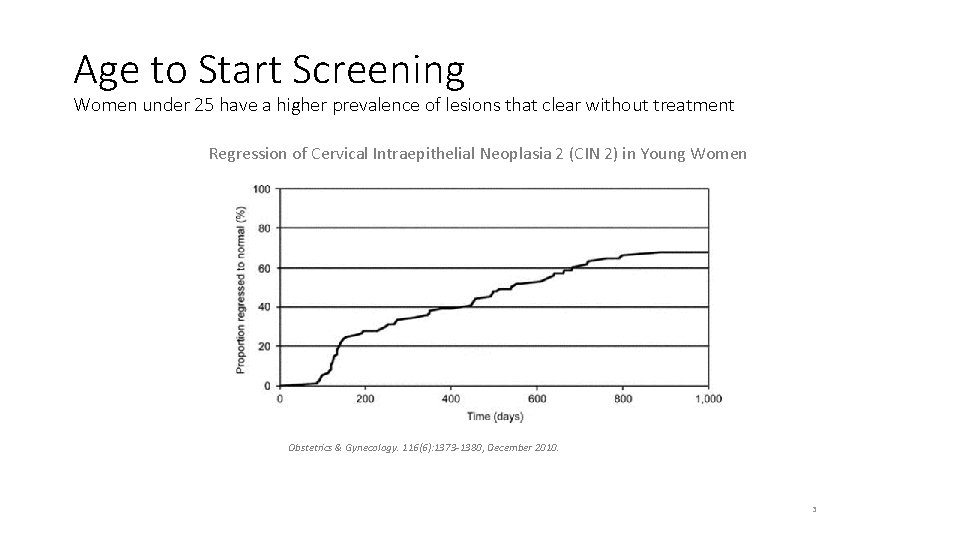
3. Women under 25 have a higher prevalence of lesions that often clear without treatment. > Women < 25 years have the highest rate of infection because they have immature cervical epithelium prone to HPV infection, lack acquired immunity and engage in high risk sexual behaviour 4. > HPV infections generally regress in 2 years. HPV was found to persist for at least 30 months in only 9% of women < 30 years, compared to 21% of women age > 305. 4. There are risks associated with unnecessary follow-up and treatments, many of which may have long-term consequences for pregnancy (ie preterm labour) or cause undue anxiety and distress 6. BUT regardless of age women should inform their doctor if they experience v Abnormal vaginal bleeding v Abnormal or persistent vaginal discharge v Pelvic pain or dyspareunia Average Risk Screening Interval Average risk women between the ages of 25 -69 should be screened every three years.
Age to Start Screening Women younger than age 25 are rare 8
Age to Start Screening Women under 25 have a higher prevalence of lesions that clear without treatment Regression of Cervical Intraepithelial Neoplasia 2 (CIN 2) in Young Women Obstetrics & Gynecology. 116(6): 1373 -1380, December 2010. 3
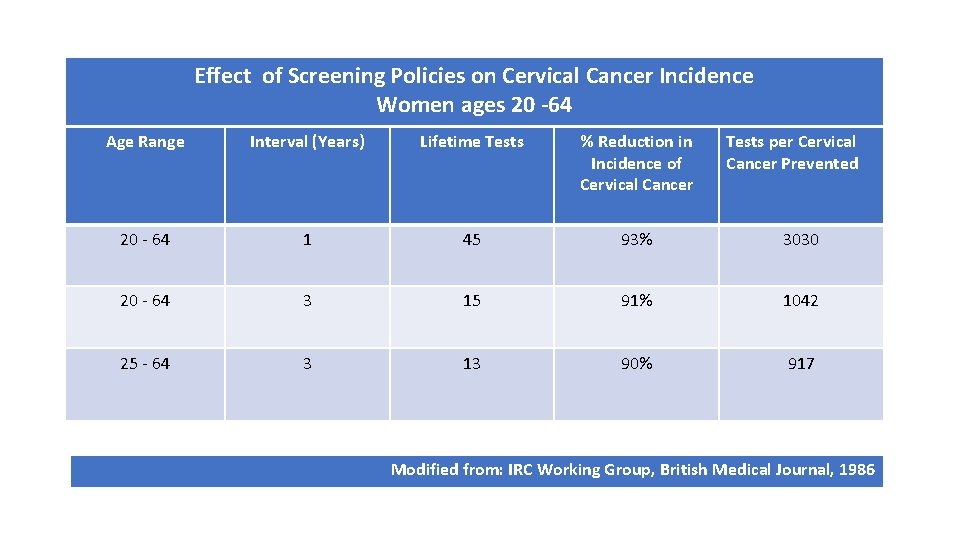
Effect of Screening Policies on Cervical Cancer Incidence Women ages 20 -64 Age Range Interval (Years) Lifetime Tests % Reduction in Incidence of Cervical Cancer Tests per Cervical Cancer Prevented 20 - 64 1 45 93% 3030 20 - 64 3 15 91% 1042 25 - 64 3 13 90% 917 Modified from: IRC Working Group, British Medical Journal, 1986
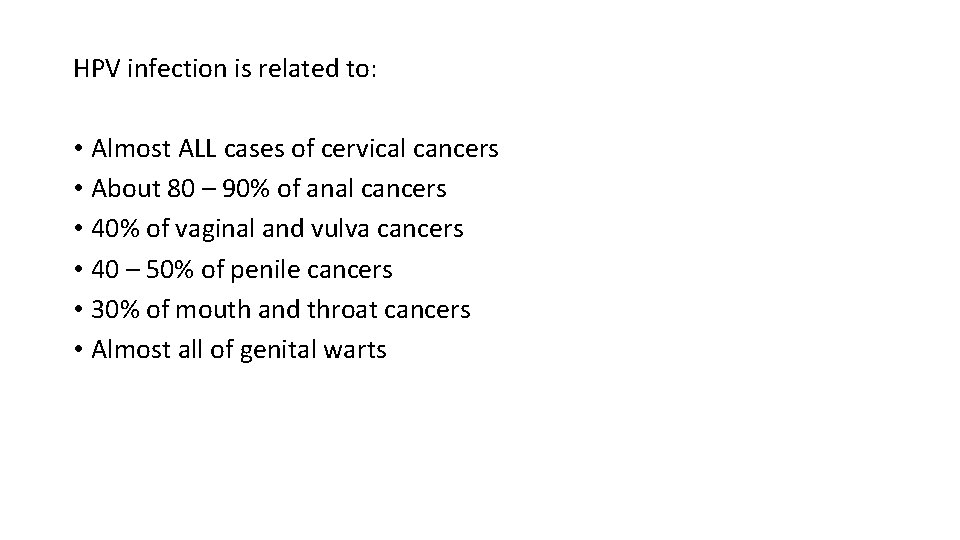
HPV infection is related to: • Almost ALL cases of cervical cancers • About 80 – 90% of anal cancers • 40% of vaginal and vulva cancers • 40 – 50% of penile cancers • 30% of mouth and throat cancers • Almost all of genital warts
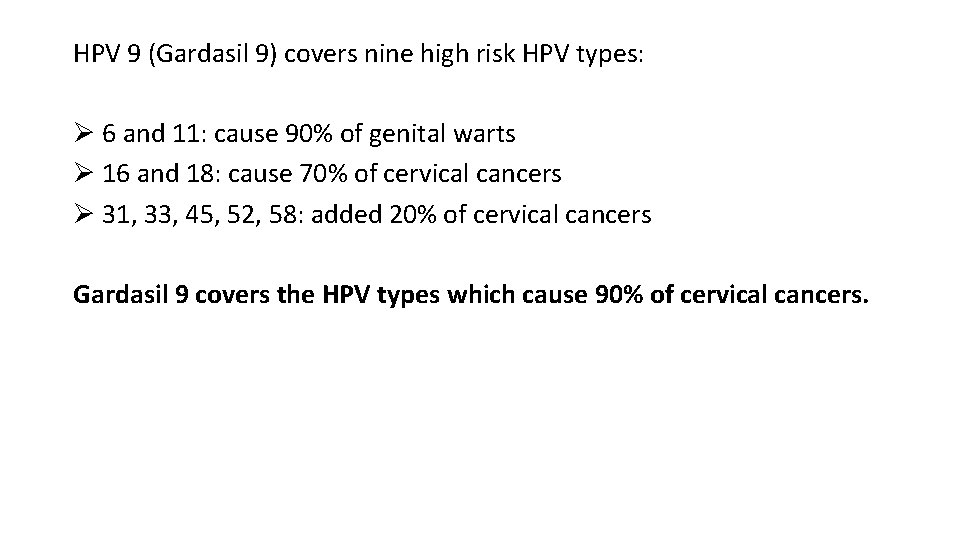
HPV 9 (Gardasil 9) covers nine high risk HPV types: Ø 6 and 11: cause 90% of genital warts Ø 16 and 18: cause 70% of cervical cancers Ø 31, 33, 45, 52, 58: added 20% of cervical cancers Gardasil 9 covers the HPV types which cause 90% of cervical cancers.
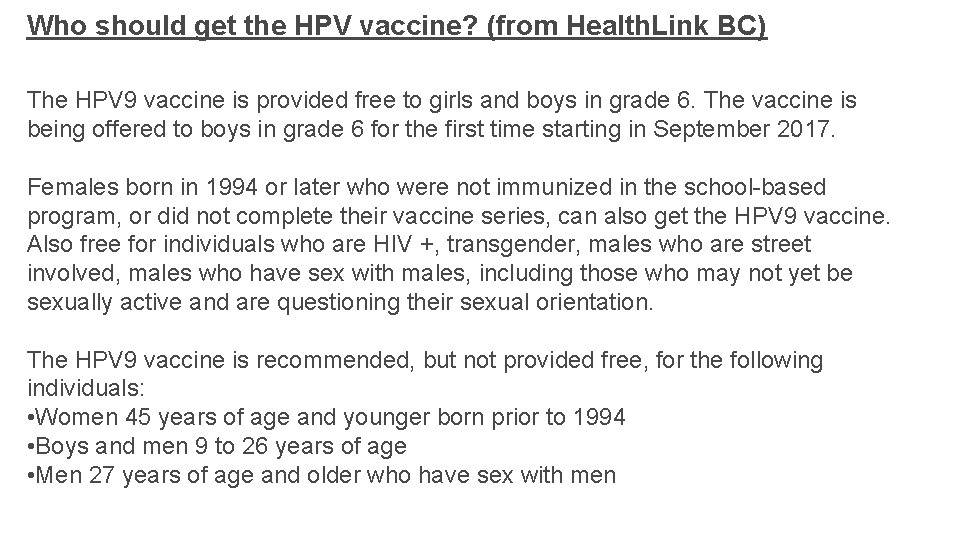
Who should get the HPV vaccine? (from Health. Link BC) The HPV 9 vaccine is provided free to girls and boys in grade 6. The vaccine is being offered to boys in grade 6 for the first time starting in September 2017. Females born in 1994 or later who were not immunized in the school-based program, or did not complete their vaccine series, can also get the HPV 9 vaccine. Also free for individuals who are HIV +, transgender, males who are street involved, males who have sex with males, including those who may not yet be sexually active and are questioning their sexual orientation. The HPV 9 vaccine is recommended, but not provided free, for the following individuals: • Women 45 years of age and younger born prior to 1994 • Boys and men 9 to 26 years of age • Men 27 years of age and older who have sex with men
The HPV vaccines are given as a series of either 2 or 3 doses over a 6 month period. Children who start a series when they are 9 to 14 years of age need 2 doses given at least 6 months apart. People who start a series when they are 15 years of age and older and those with a weakened immune system need 3 doses. Those not eligible for free HPV vaccine can purchase it at most pharmacies and travel clinics. Cranbrook pharmacy: Gardasil 9 x 3 dosages: Total $575 or $205 per dose. It is best to get immunized before becoming sexually active and coming in contact with HPV, because the vaccines prevent infection but do not clear it.
Children for HPV vaccination: Grade 6 Adults: 1 st dosage, then 2 months later, then at 6 months
What is the link between HPV and cervical cancer? Evidence has now confirmed that long term persistent hr-HPV infection is necessary for the development of cervical cancer 7. HPV is transmitted sexually, primarily through intercourse (vaginal or anal). Transmission requires skin to skin contact and intercourse is not a pre-requisite 8. HPV infection is highly prevalent and most individuals will be infected with HPV at some point in their lives, with a 75% lifetime risk of infection. Of the more than 100 known types of HPV, 15 can be defined as high-risk (hr-HPV) types and can cause cervical cancer 9. The two most prevalent hr-HPV types (associated with 70% of cervical cancers) are HPV-16 and 188. Low-risk HPV (lr-HPV) types cause anogenital warts and are not associated with cervical cancer or its precursors. The two most common lr-HPV types are HPV-6 and 11.
The majority of HPV infections are cleared by the body’s immune system within about 2 years. This is particularly the case in adolescents and women under the age of 30101112. Research has found that long-term infection with hr-HPV types may lead to cervical dysplasia which can progress to cervical cancer if left undetected or untreated 1314. It typically takes 10 to 15 years from the time of an initial hr-HPV infection until a cancer forms. It is not possible to predict which pre-cancerous lesions will become a cancer and which will regress. As a result, the threshold for treatment in BC is CIN 2.
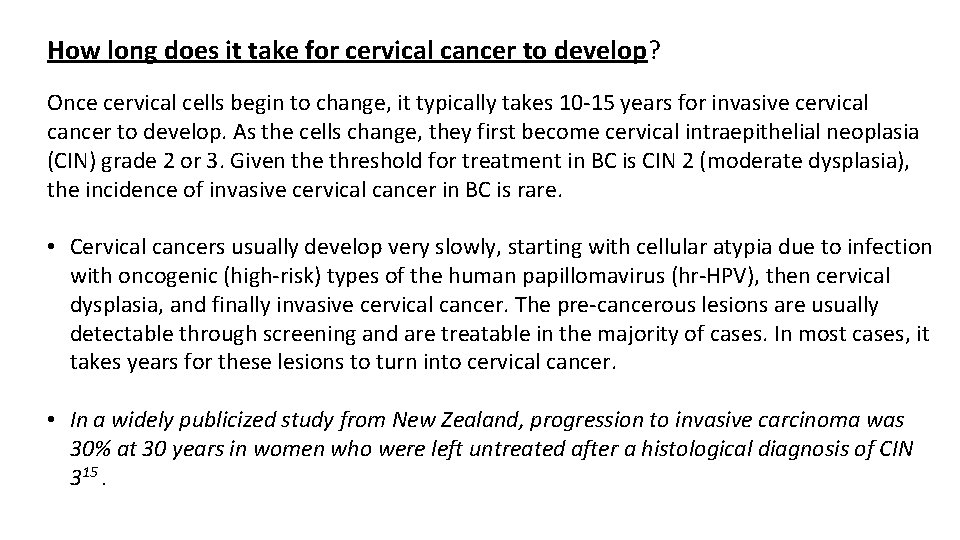
How long does it take for cervical cancer to develop? Once cervical cells begin to change, it typically takes 10 -15 years for invasive cervical cancer to develop. As the cells change, they first become cervical intraepithelial neoplasia (CIN) grade 2 or 3. Given the threshold for treatment in BC is CIN 2 (moderate dysplasia), the incidence of invasive cervical cancer in BC is rare. • Cervical cancers usually develop very slowly, starting with cellular atypia due to infection with oncogenic (high-risk) types of the human papillomavirus (hr-HPV), then cervical dysplasia, and finally invasive cervical cancer. The pre-cancerous lesions are usually detectable through screening and are treatable in the majority of cases. In most cases, it takes years for these lesions to turn into cervical cancer. • In a widely publicized study from New Zealand, progression to invasive carcinoma was 30% at 30 years in women who were left untreated after a histological diagnosis of CIN 315.
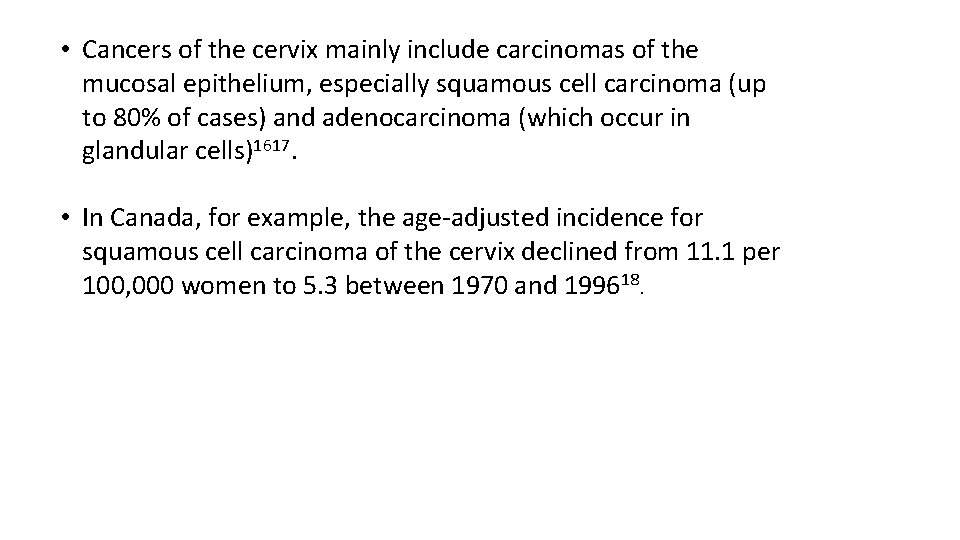
• Cancers of the cervix mainly include carcinomas of the mucosal epithelium, especially squamous cell carcinoma (up to 80% of cases) and adenocarcinoma (which occur in glandular cells)1617. • In Canada, for example, the age-adjusted incidence for squamous cell carcinoma of the cervix declined from 11. 1 per 100, 000 women to 5. 3 between 1970 and 199618.
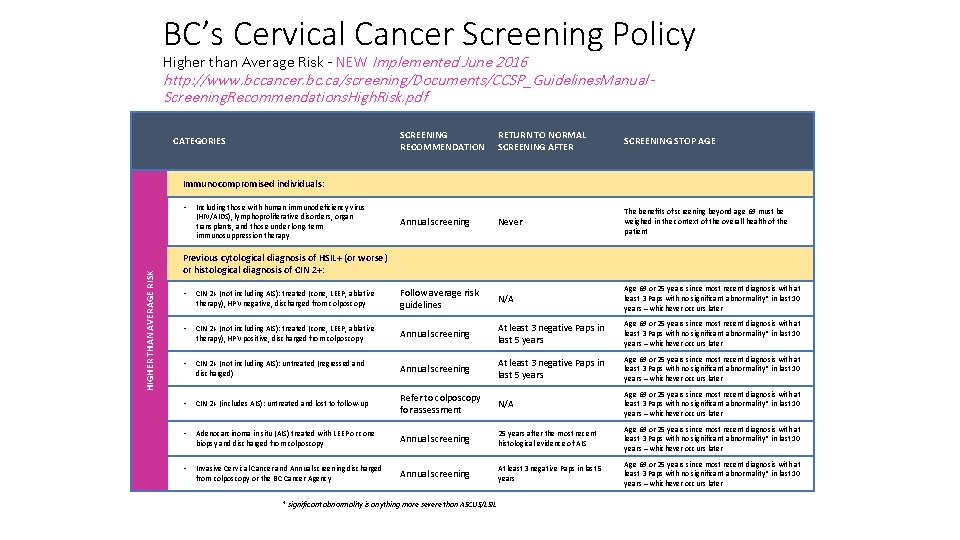
BC’s Cervical Cancer Screening Policy Higher than Average Risk - NEW Implemented June 2016 http: //www. bccancer. bc. ca/screening/Documents/CCSP_Guidelines. Manual. Screening. Recommendations. High. Risk. pdf CATEGORIES SCREENING RECOMMENDATION RETURN TO NORMAL SCREENING AFTER SCREENING STOP AGE Annual screening Never The benefits of screening beyond age 69 must be weighed in the context of the overall health of the patient Immunocompromised individuals: HIGHER THAN AVERAGE RISK • Including those with human immunodeficiency virus (HIV/AIDS), lymphoproliferative disorders, organ transplants, and those under long-term immunosuppression therapy Previous cytological diagnosis of HSIL+ (or worse) or histological diagnosis of CIN 2+: • CIN 2+ (not including AIS): treated (cone, LEEP, ablative therapy), HPV negative, discharged from colposcopy Follow average risk guidelines N/A Age 69 or 25 years since most recent diagnosis with at least 3 Paps with no significant abnormality* in last 10 years – whichever occurs later • CIN 2+ (not including AIS): treated (cone, LEEP, ablative therapy), HPV positive, discharged from colposcopy Annual screening At least 3 negative Paps in last 5 years Age 69 or 25 years since most recent diagnosis with at least 3 Paps with no significant abnormality* in last 10 years – whichever occurs later • CIN 2+ (not including AIS): untreated (regressed and discharged) Annual screening At least 3 negative Paps in last 5 years Age 69 or 25 years since most recent diagnosis with at least 3 Paps with no significant abnormality* in last 10 years – whichever occurs later • CIN 2+ (includes AIS): untreated and lost to follow-up Refer to colposcopy for assessment N/A Age 69 or 25 years since most recent diagnosis with at least 3 Paps with no significant abnormality* in last 10 years – whichever occurs later • Adenocarcinoma in situ (AIS) treated with LEEP or cone biopsy and discharged from colposcopy Annual screening 25 years after the most recent histological evidence of AIS Age 69 or 25 years since most recent diagnosis with at least 3 Paps with no significant abnormality* in last 10 years – whichever occurs later • Invasive Cervical Cancer and Annual screening discharged from colposcopy or the BC Cancer Agency Annual screening At least 3 negative Paps in last 5 years Age 69 or 25 years since most recent diagnosis with at least 3 Paps with no significant abnormality* in last 10 years – whichever occurs later * significant abnormality is anything more severe than ASCUS/LSIL
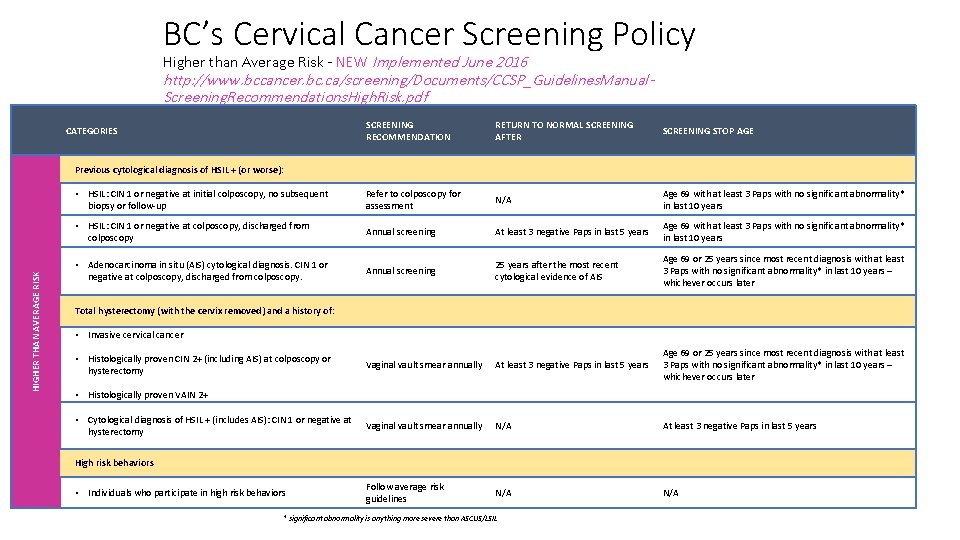
BC’s Cervical Cancer Screening Policy Higher than Average Risk - NEW Implemented June 2016 http: //www. bccancer. bc. ca/screening/Documents/CCSP_Guidelines. Manual. Screening. Recommendations. High. Risk. pdf SCREENING RECOMMENDATION RETURN TO NORMAL SCREENING AFTER SCREENING STOP AGE • HSIL: CIN 1 or negative at initial colposcopy, no subsequent biopsy or follow-up Refer to colposcopy for assessment N/A Age 69 with at least 3 Paps with no significant abnormality* in last 10 years • HSIL: CIN 1 or negative at colposcopy, discharged from colposcopy Annual screening At least 3 negative Paps in last 5 years Age 69 with at least 3 Paps with no significant abnormality* in last 10 years • Adenocarcinoma in situ (AIS) cytological diagnosis. CIN 1 or negative at colposcopy, discharged from colposcopy. Annual screening 25 years after the most recent cytological evidence of AIS Age 69 or 25 years since most recent diagnosis with at least 3 Paps with no significant abnormality* in last 10 years – whichever occurs later Vaginal vault smear annually At least 3 negative Paps in last 5 years Age 69 or 25 years since most recent diagnosis with at least 3 Paps with no significant abnormality* in last 10 years – whichever occurs later Vaginal vault smear annually N/A At least 3 negative Paps in last 5 years Follow average risk guidelines N/A CATEGORIES HIGHER THAN AVERAGE RISK Previous cytological diagnosis of HSIL + (or worse): Total hysterectomy (with the cervix removed) and a history of: • Invasive cervical cancer • Histologically proven CIN 2+ (including AIS) at colposcopy or hysterectomy • Histologically proven VAIN 2+ • Cytological diagnosis of HSIL + (includes AIS): CIN 1 or negative at hysterectomy High risk behaviors • Individuals who participate in high risk behaviors * significant abnormality is anything more severe than ASCUS/LSIL
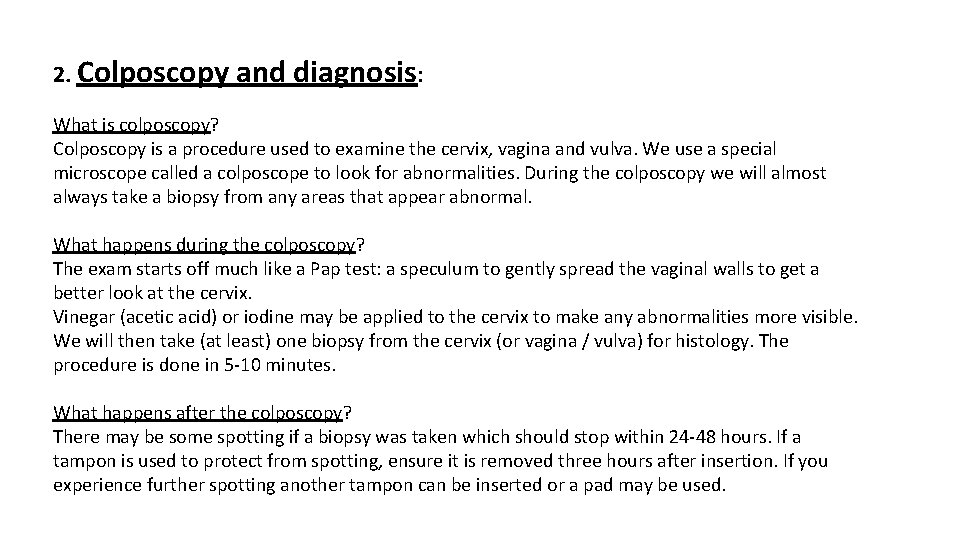
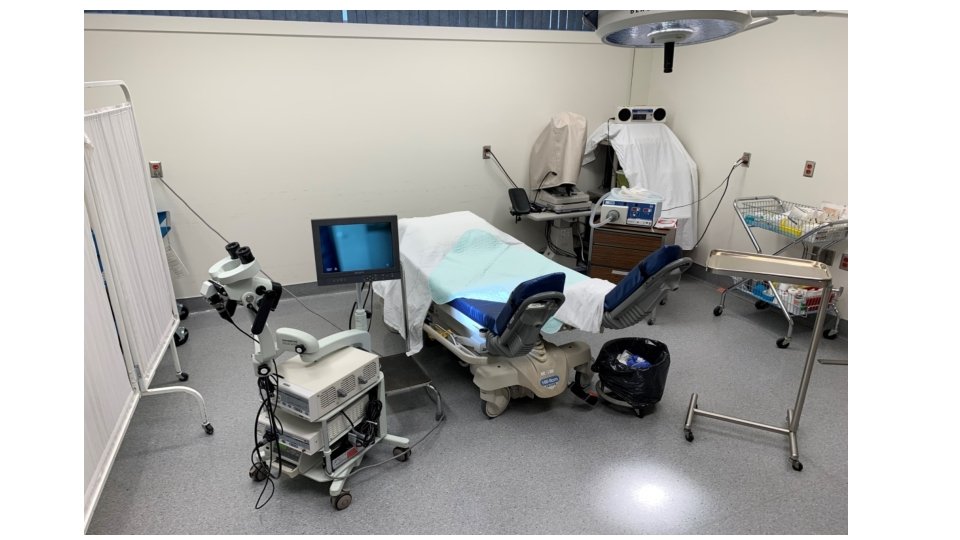
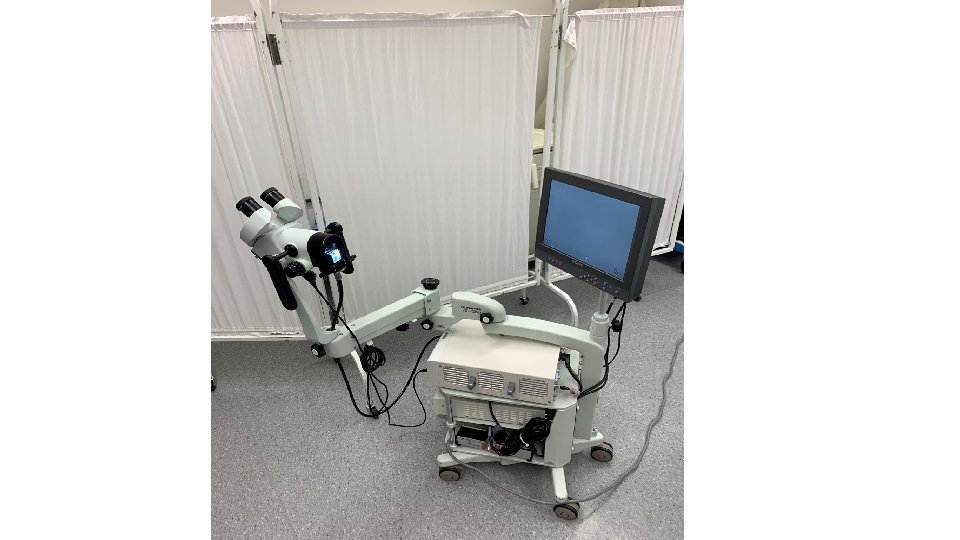
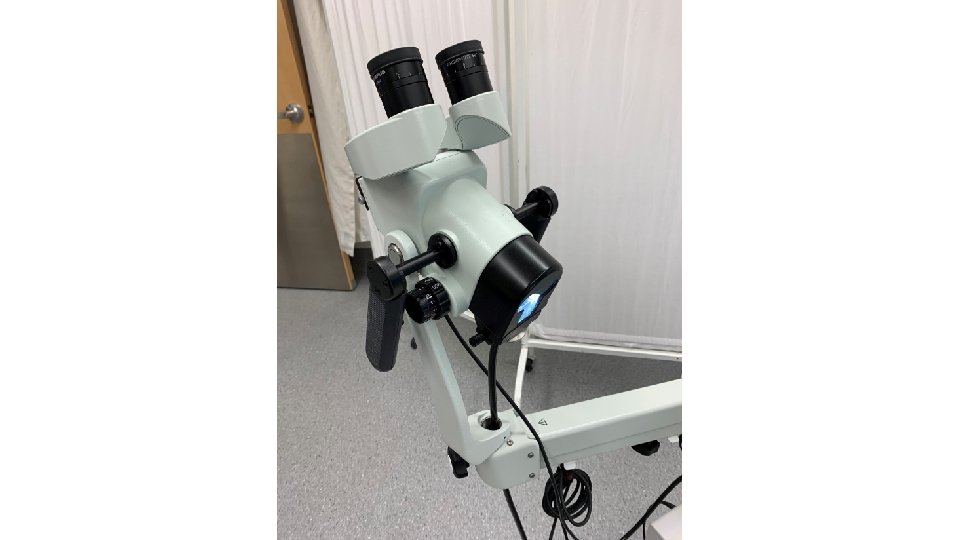
2. Colposcopy and diagnosis: What is colposcopy? Colposcopy is a procedure used to examine the cervix, vagina and vulva. We use a special microscope called a colposcope to look for abnormalities. During the colposcopy we will almost always take a biopsy from any areas that appear abnormal. What happens during the colposcopy? The exam starts off much like a Pap test: a speculum to gently spread the vaginal walls to get a better look at the cervix. Vinegar (acetic acid) or iodine may be applied to the cervix to make any abnormalities more visible. We will then take (at least) one biopsy from the cervix (or vagina / vulva) for histology. The procedure is done in 5 -10 minutes. What happens after the colposcopy? There may be some spotting if a biopsy was taken which should stop within 24 -48 hours. If a tampon is used to protect from spotting, ensure it is removed three hours after insertion. If you experience further spotting another tampon can be inserted or a pad may be used.
Reasons to refer to colposcopy clinic: Abnormal Pap smears: Ø ASCUS/LSIL persistent over 12 months because PPV (positive predictive value) of ASCUS/LSIL for CIN 2+ is 15 -25%. Ø ASC-H because PPV of ASC-H for CIN 2+ is 50 – 60%. Ø HSIL because PPV of HSIL for CIN 2+ is 70 – 80%. Ø AGC-NOS because PPV of AGC-NOS for CIN 2+ is 20 – 30%. Ø AGC-N because PPV of AGC-N for CIN 2+ is 70 – 80%. Ø All Paps with Atypical endometrial cells also for colposcopy / endometrial biopsy / ECC Ø Unsatisfactory Paps for 2 years. Ø Adenocarcinoma in situ (AIS). Ø Squamous cell carcinoma, adenocarcinoma or other malignancy. Patients with a history of intrauterine diethylstilbestrol (DES) exposure Post coital bleeding / abnormal vaginal bleeding or discharge Abnormal looking cervix
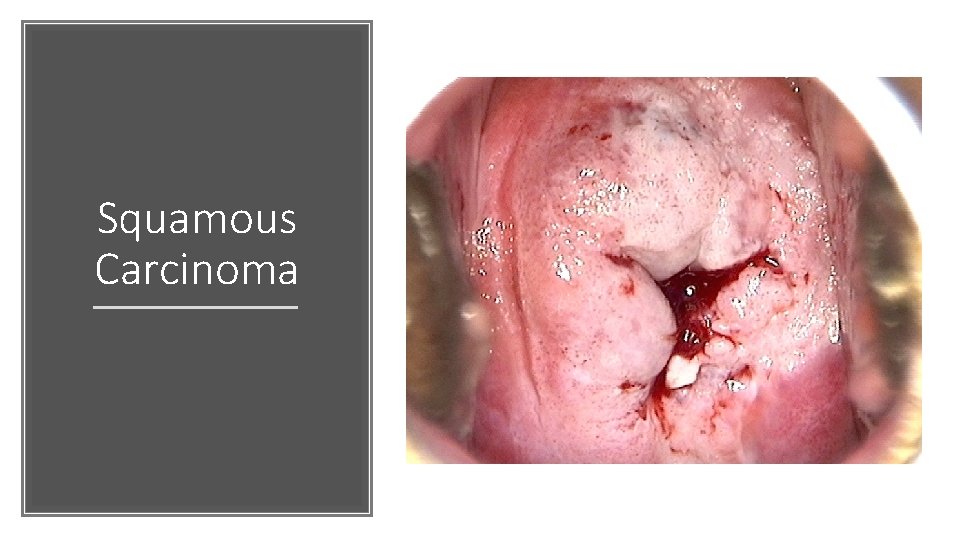
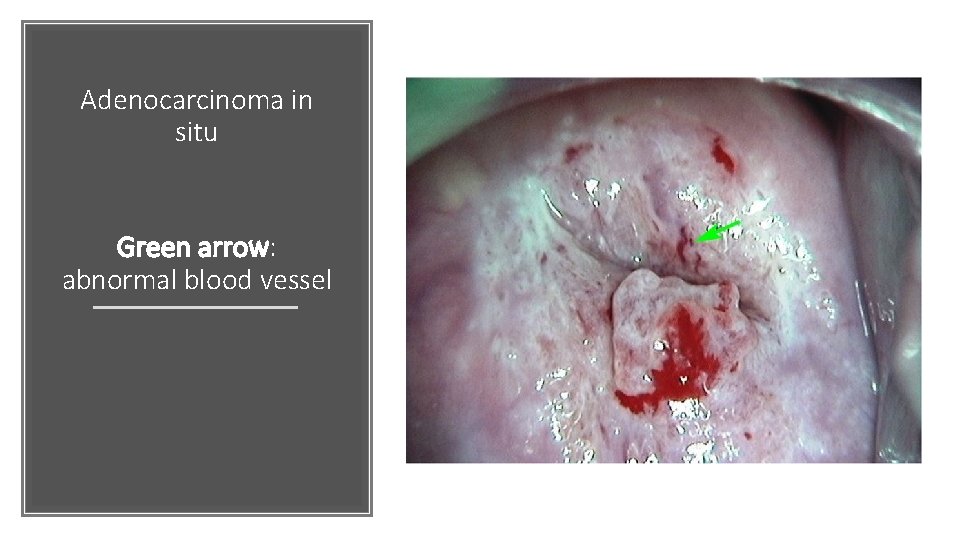
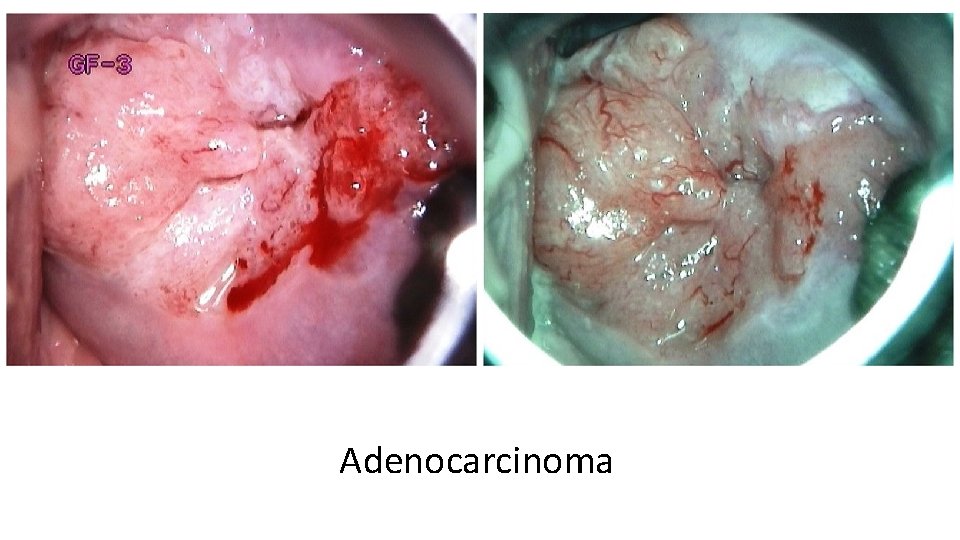
Colposcopy biopsy results: LSIL HSIL (CIN 2 or CIN 3 = Squamous carcinoma in situ) Squamous carcinoma Adenocarcinoma in situ Adenocarcinoma
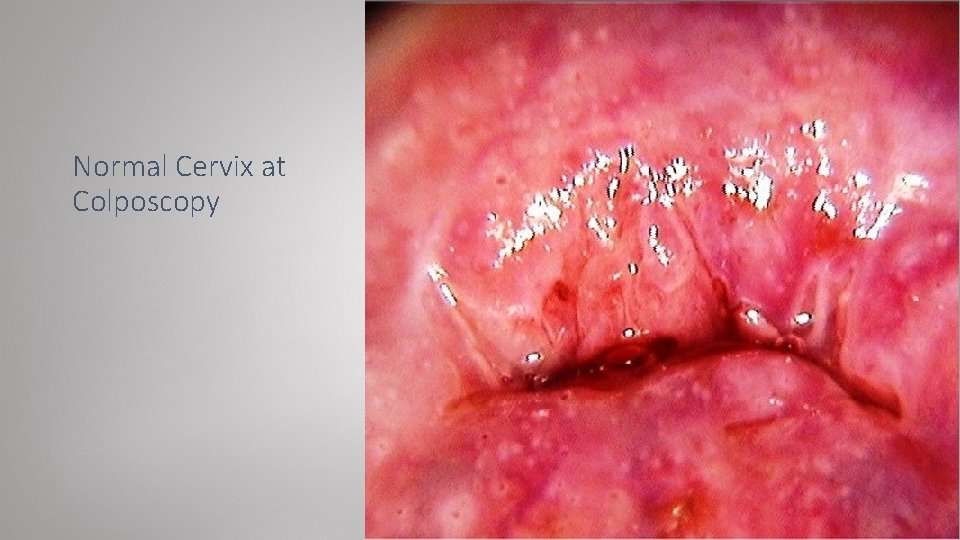
Normal Cervix at Colposcopy
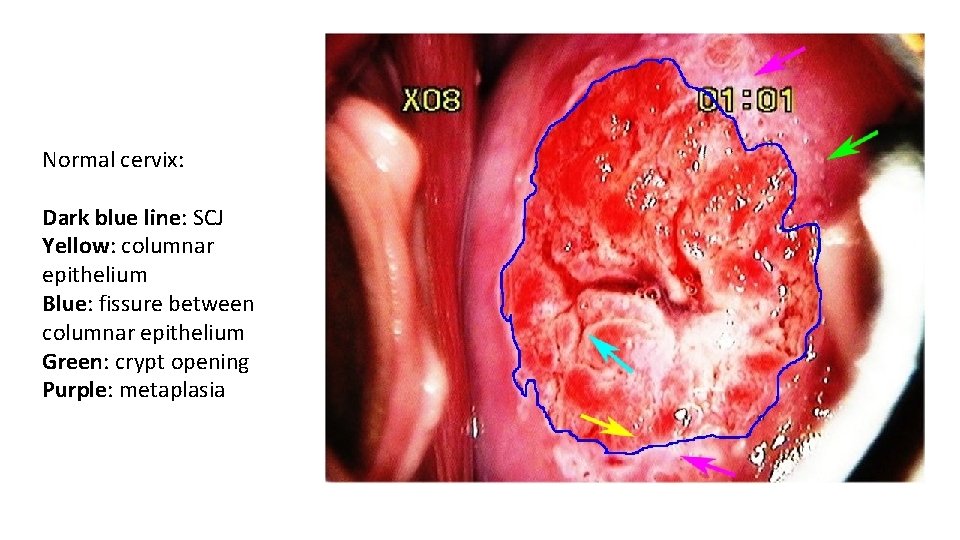
Normal cervix: Dark blue line: SCJ Yellow: columnar epithelium Blue: fissure between columnar epithelium Green: crypt opening Purple: metaplasia
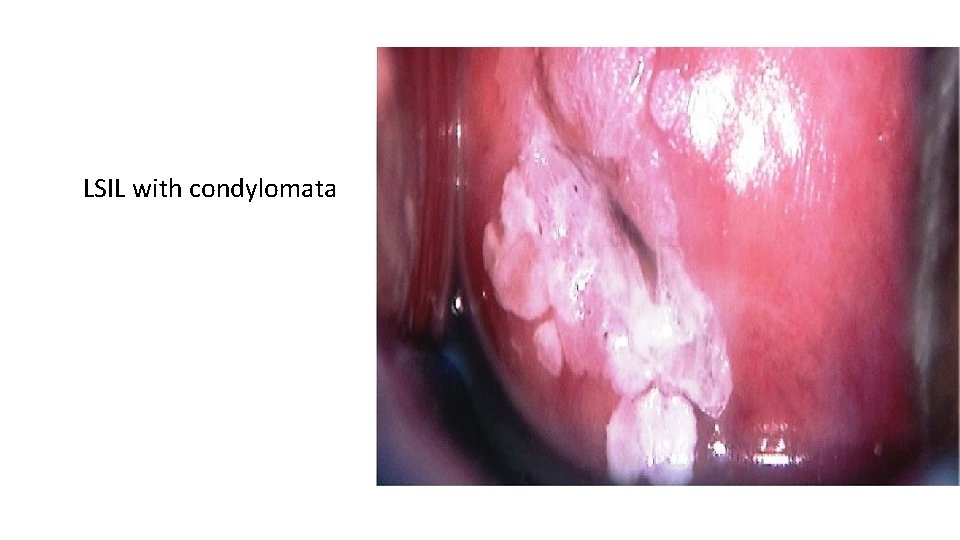
LSIL with condylomata
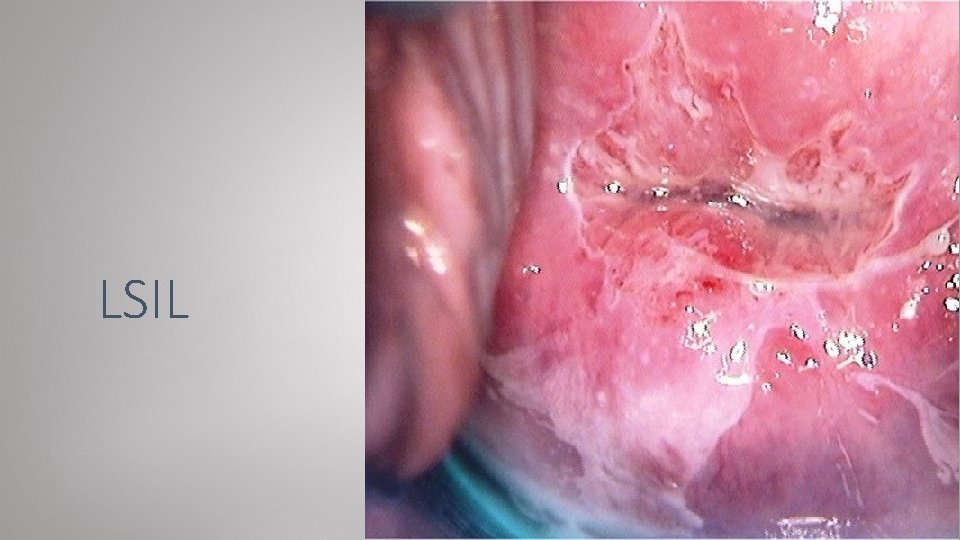
LSIL
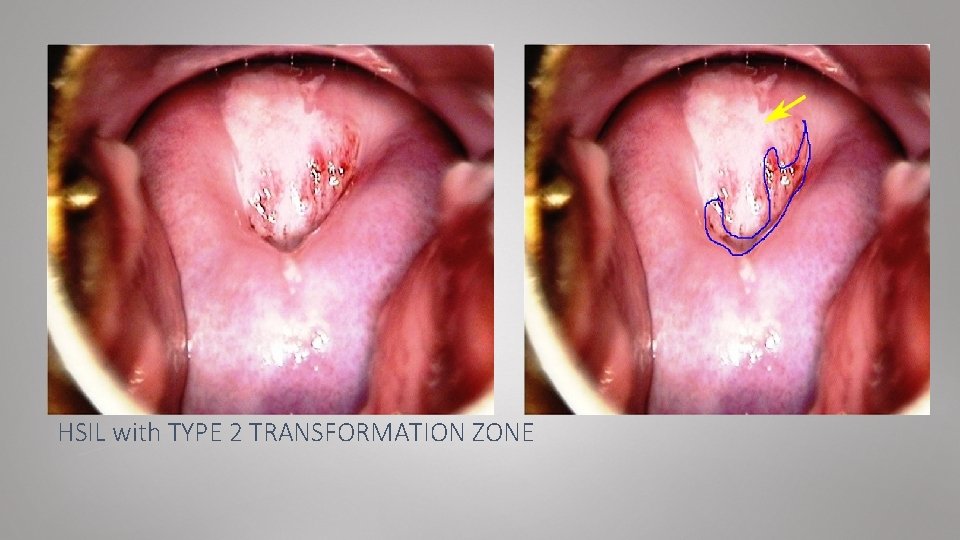
HSIL with TYPE 2 TRANSFORMATION ZONE
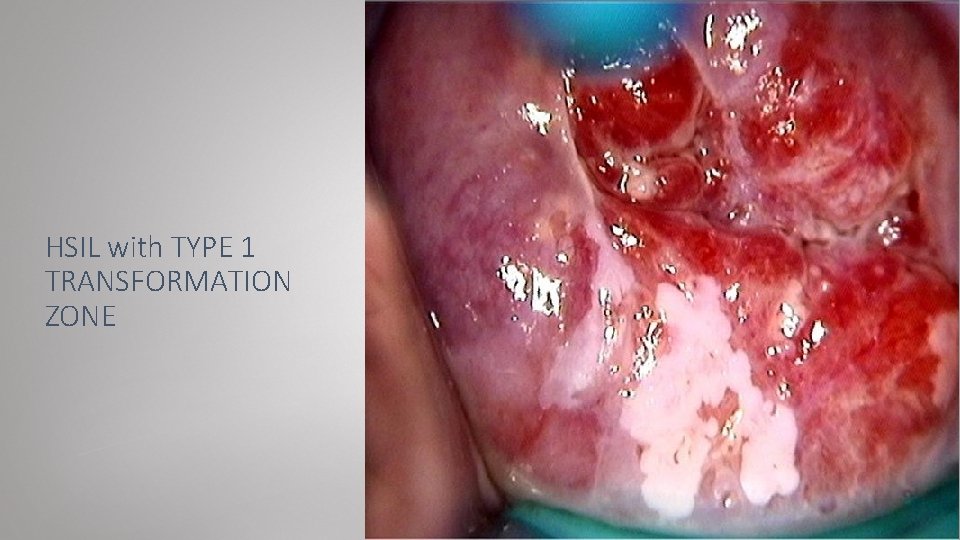
HSIL with TYPE 1 TRANSFORMATION ZONE
Squamous Carcinoma
Adenocarcinoma in situ Green arrow: abnormal blood vessel
Adenocarcinoma
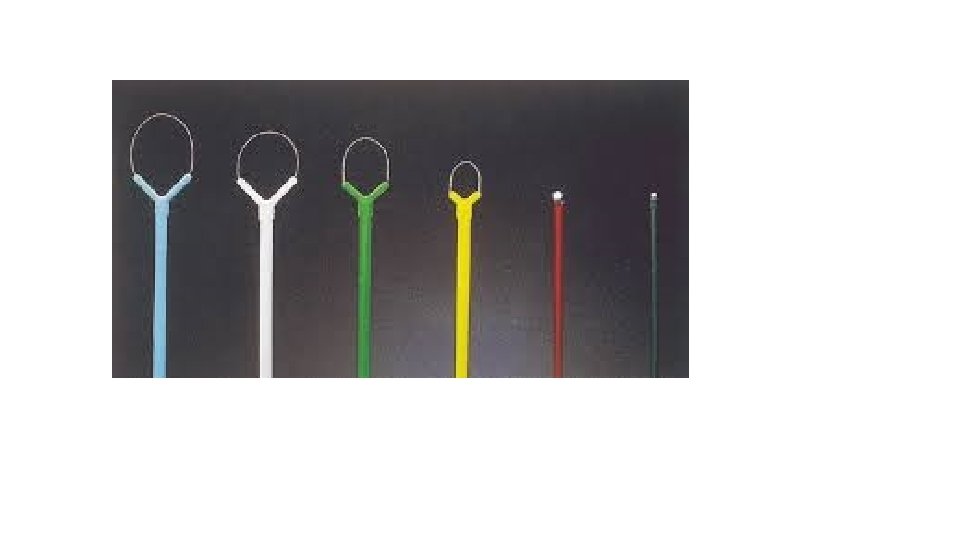
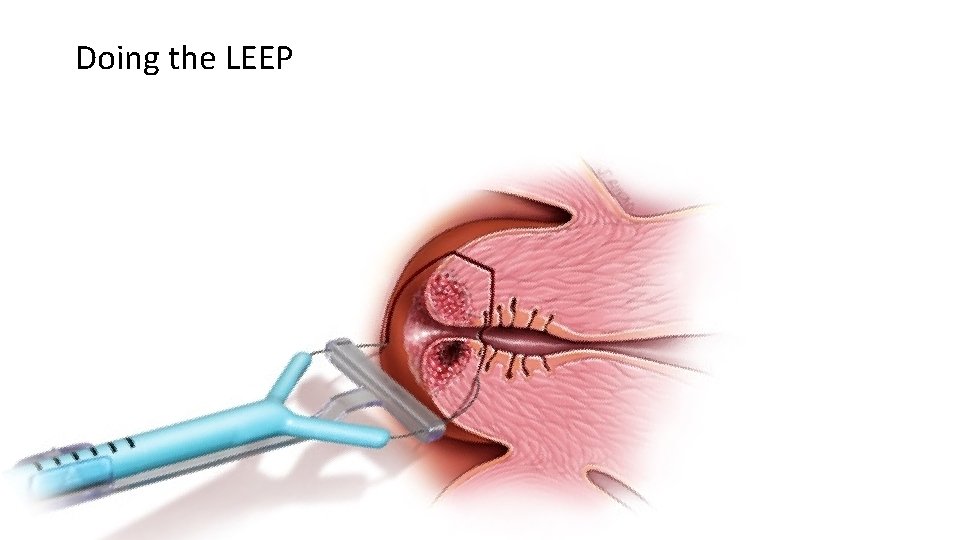
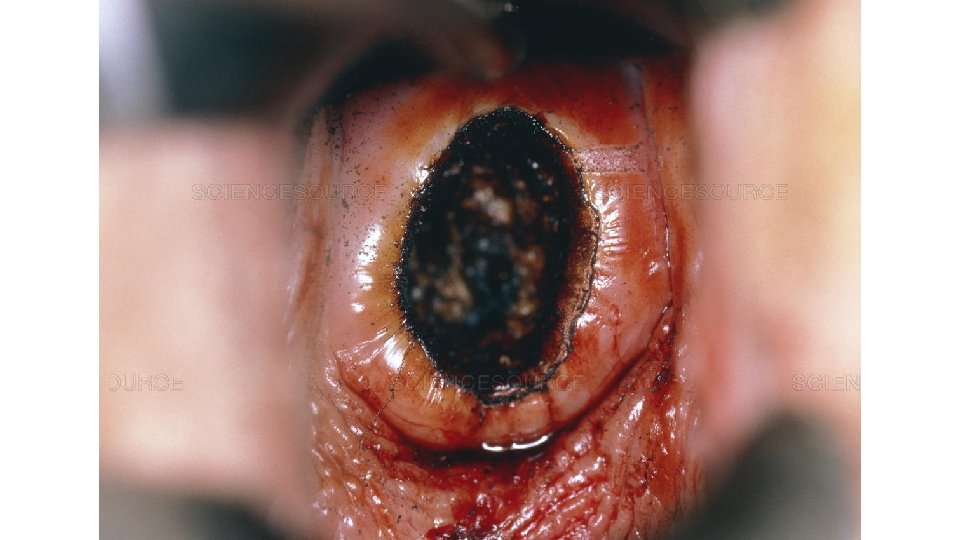
3. Treatment and follow up What is a LEEP (Loop Electrical Excision Procedure)? A LEEP involves removing abnormal tissue from the cervix using a thin wire loop. It is usually done within eight weeks of diagnosis. Over 90% of women will only require one LEEP to remove any abnormal tissue. What happens during a LEEP? We usually again look at the cervix using the colposcope. A small amount of vinegar or iodine will be placed on the cervix to make any abnormalities more visible. Local freezing (1% lidocaine with epinephrine) is then giving to the cervix as a paracervical block. Some people feel a pinch or cramp or discomfort when the freezing is done. The lidocaine / epinephrine will make the heart beat a little faster, but it’s not dangerous, and it will pass within a few minutes. A thin wire loop is then used to remove abnormal tissue. The cervix is then cauterized. To reduce any bleeding, a brown paste (Monsels) may be placed on the cervix. The paste comes out later looking brown or black, which is normal. The procedure usually lasts less than five minutes.
Doing the LEEP
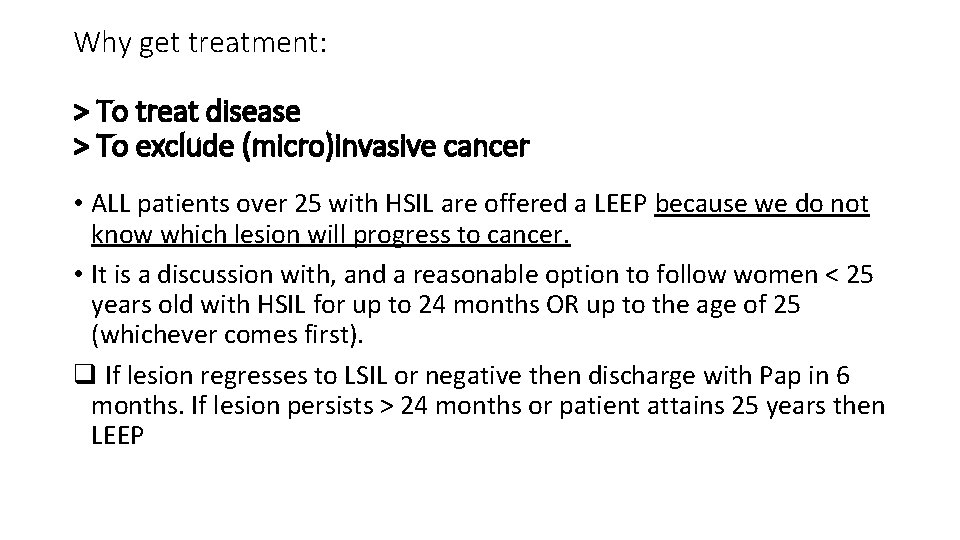
Why get treatment: > To treat disease > To exclude (micro)invasive cancer • ALL patients over 25 with HSIL are offered a LEEP because we do not know which lesion will progress to cancer. • It is a discussion with, and a reasonable option to follow women < 25 years old with HSIL for up to 24 months OR up to the age of 25 (whichever comes first). q If lesion regresses to LSIL or negative then discharge with Pap in 6 months. If lesion persists > 24 months or patient attains 25 years then LEEP
Risks and side effects: § § Abdominal cramping Infection Bleeding Future pregnancy problems (small increased risk of premature birth and having a low birth weight baby) § Incomplete removal of the abnormal tissue § Accidental cutting or burning of normal tissue § Narrowing/stenosis of the cervix (rare)
Then we get the Histology results about 2 weeks later: q LSIL q HSIL (CIN 3 = Squamous carcinoma in situ) q Squamous carcinoma q Adenocarcinoma in situ q Adenocarcinoma For example: LEEP HSIL and complete margins are seen again at 6 months in colposcopy clinic for colposcopy / ECC / HPV
REFERENCES: 1. Canadian Task Force on Preventive Health Care, Recommendations on screening for cervical cancer. CMAJ. 2013 Jan 8; 185(1): 35 -45. 2. Kulasingam S, Havrilesky L, Ghebre R et al. Screening for Cervical Cancer: A Decision Analysis for the U. S. Preventive Services Task Force. 2011. Available at http: //www. uspreventiveservicestaskforce. org/uspstf 11/cervcanceres. pdf. Accessed January 2012. 3. Landy R, Birke H, Castanon A et al. Benefits and harms of cervical screening from age 20 years compared with screening from age 25 years. British Journal of Cancer. 2014; 110(7): 1841 -6. 4. Jayasinghe YL, Moore EE, Tabrizi SN et al. Human papillomavirus in adolescents: lessons learned from decades of evaluation. Journal of Paediatrics and Child Health. 2013; 49(2): 99 -104. 5. Rodriguez AC, Schiffman M, Herrero R et al. Rapid clearance of human papillomavirus and implications for clinical focus on persistent infections. Journal of the National Cancer Institute. 2008; 100(7): 513 -7. 6. Arbyn M, Kyrgiou M, Simoens C, Raifu AO, Koliopoulos G, Martin-Hirsch P, Prendiville W, Paraskevaidis E. Perinatal mortality and other severe adverse pregnancy outcomes associated with treatment of cervical intraepithelial neoplasia: meta-analysis. BMJ. 2008 Sep 18; 337: a 1284 7. Walboomers JM, Jacobs MV, Manos MM, Bosch FX, Kummer JA, Shah KV, et al. Human papillomavirus is a necessary cause of invasive cervical cancer worldwide. J Pathol 1999 Sep; 189(1): 12 -19. 8. Stanley, M. Pathology and epidemiology of HPV infection in females. Gyne Onc. 2010; 117: S 5 -S 10 9. Arbyn M, Tommasino M, Depuydt C et al. Are 20 human papillomavirus types causing cervical cancer? Journal of Pathology. 2014; 234(4): 431 -5.
10. Moscicki AB, Shiboski S, Broering J et al. The natural history of human papillomavirus infection as measured by repeated DNA testing in adolescent and young women. The Journal of Pediatrics. 1998; 132(2): 277 -84. 11. Woodman CB, Collins S, Winter H et al. Natural history of cervical human papillomavirus infection in young women: a longitudinal cohort study. The Lancet. 2001; 357(9271): 1831 -6. 12. Moscicki AB. Management of adolescents who have abnormal cytology and histology. Obstetrics and Gynecology Clinics of North America. 2008; 35(4): 633 -43; x. 13. Kjaer SK, van den Brule AJ, Paull G et al. Type specific persistence of high risk human papillomavirus (HPV) as indicator of high grade cervical squamous intraepithelial lesions in young women: population based prospective follow up study. BMJ. 2002; 325(7364): 572. 14. Kjær SK, Frederiksen K, Munk C et al. Long-term absolute risk of cervical intraepithelial neoplasia grade 3 or worse following human papillomavirus infection: role of persistence. Journal of the National Cancer Institute. 2010; 102(19): 1478 -88 15. Mc. Credie MR, Sharples KJ, Paul C, Baranyai J, Medley G, Jones RW, Skegg DC. Natural history of cervical neoplasia and risk of invasive cancer in women with cervical intraepithelial neoplasia 3: a retrospective cohort study. Lancet Oncol. 2008 May; 9(5): 425 -34 16. Brinton LA, Tashima KT, Lehman HF et al. Epidemiology of cervical cancer by cell type. Cancer Research. 1987; 47(6): 1706 -11. 17. Copeland G, Datta SD, Spivak G et al. Total burden and incidence of in situ and invasive cervical carcinoma in Michigan, 1985 -2003. Cancer. 2008; 113(10 Suppl): 2946 -54. 18. Liu S, Semenciw R, Probert A et al. Cervical cancer in Canada: changing patterns in incidence and mortality. International Journal of Gynecological Cancer. 2001; 11(1): 24 -31. 6 Smith HO, Tiffany MF, Qualls CR et al.
Resources – Provider and Patient • http: //www. bccancer. bc. ca/screening/health-professionals/cervix • http: //www. bccancer. bc. ca/screening/healthprofessionals/cervix/colposcopy#Resources • HPV FOCAL FAQ • http: //www. bccancer. bc. ca/our-research/participate/cervical-screening • www. sexualityandu. ca • www. hpvinfo. ca • http: //immunizebc. ca/diseases-vaccinations/hpv • NACI (National Advisory Committee on Immunization) Guidelines: • http: //www. phac-aspc. gc. ca/naci-ccni/index-eng. php