
NNU Team Conceptual Design Review NORTHWEST NAZARENE UNIVERSITY
- Slides: 19
NNU Team Conceptual Design Review NORTHWEST NAZARENE UNIVERSITY CHAD LARSON, BEN GORDON, DAVID VINSON, SETH LEIJA, ZACH THOMAS, DREW JOHNSON
Table of Contents �Section 1: Mission Overview Purpose Theory Benefits Success/Concept of Operation Expected Results �Section 2: Design Overview Block Diagram Payload Layout Rock. Sat-C 2012 User’s Guide Compliance Shared Can Logistics
Table of Contents �Section 3: Management Team Organization Budget Schedule Important Notes �Section 4: Conclusions
Mission Overview �Purpose: Study the feasibility of using superhydrophobic materials in the presence of high acceleration and vibrations for possible use on space missions. �Run an experiment for American Semiconductor Inc.
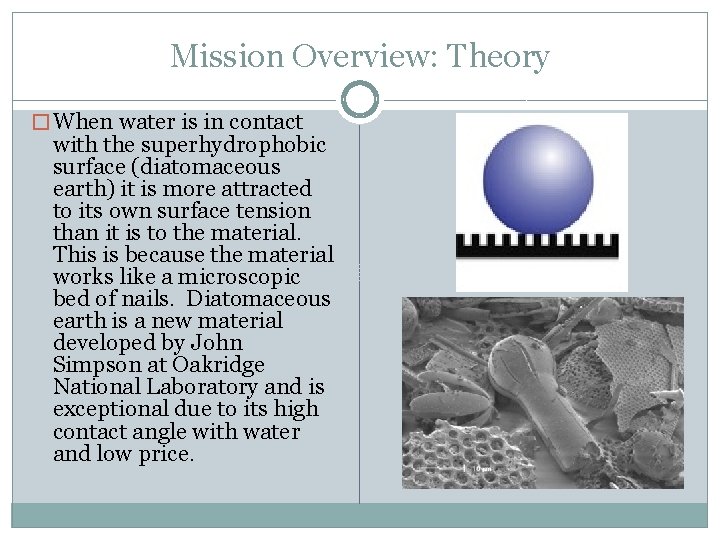
Mission Overview: Theory � When water is in contact with the superhydrophobic surface (diatomaceous earth) it is more attracted to its own surface tension than it is to the material. This is because the material works like a microscopic bed of nails. Diatomaceous earth is a new material developed by John Simpson at Oakridge National Laboratory and is exceptional due to its high contact angle with water and low price.
Mission Overview: Benefits �The goal of this launch is to prove that this diatomaceous earth can survive a rocket launch and still be functional post-flight. �This material could have many different benefits if it is shown to survive space travel. The SH material has already been shown to work in microgravity by NNU and NASA’s Reduced Gravity program. It is now being hypothesized that this material could reduce water entrapment in space craft piping or be able to separate liquids from gas without the need of moving parts.
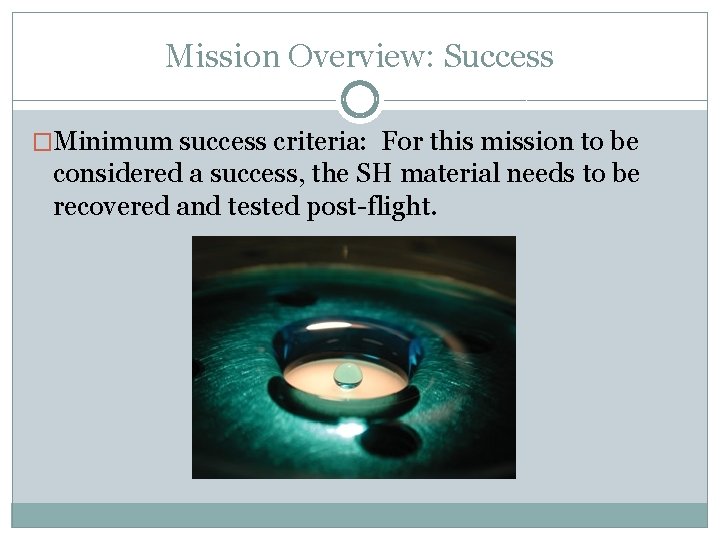
Mission Overview: Success �Minimum success criteria: For this mission to be considered a success, the SH material needs to be recovered and tested post-flight.
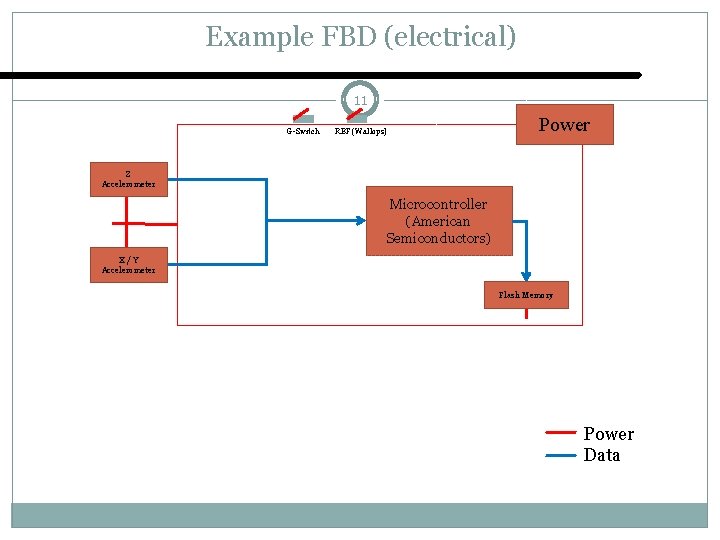
Mission Overview: Concept of Operations �Due to most of the testing being done pre-flight and post-flight, during the flight the material just needs to stay contained. A g-switch will activate the accelerometers and American Conductor’s board which will both run for the entire duration of the flight.
Mission Overview: Expected Results �It is hypothesized that the material will survive the high acceleration and vibrations and still be functional in post-flight testing.
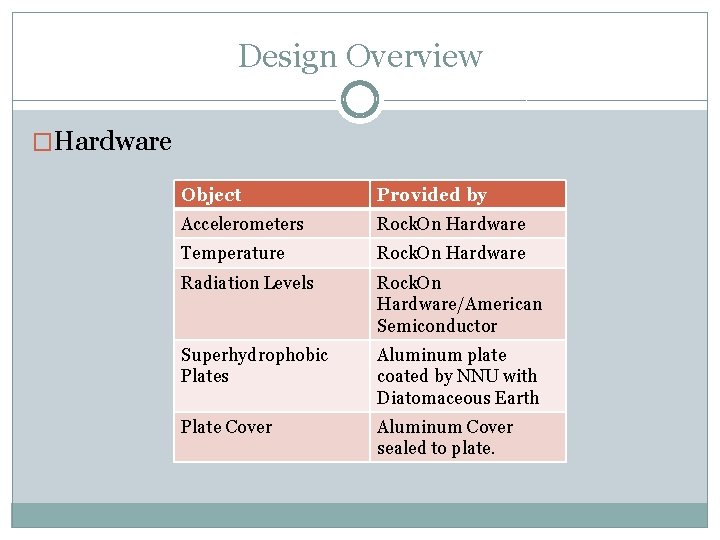
Design Overview �Hardware Object Provided by Accelerometers Rock. On Hardware Temperature Rock. On Hardware Radiation Levels Rock. On Hardware/American Semiconductor Superhydrophobic Plates Aluminum plate coated by NNU with Diatomaceous Earth Plate Cover Aluminum Cover sealed to plate.
Example FBD (electrical) 11 G-Switch RBF (Wallops) Power Z Accelerometer Microcontroller (American Semiconductors) X/Y Accelerometer Flash Memory Power Data
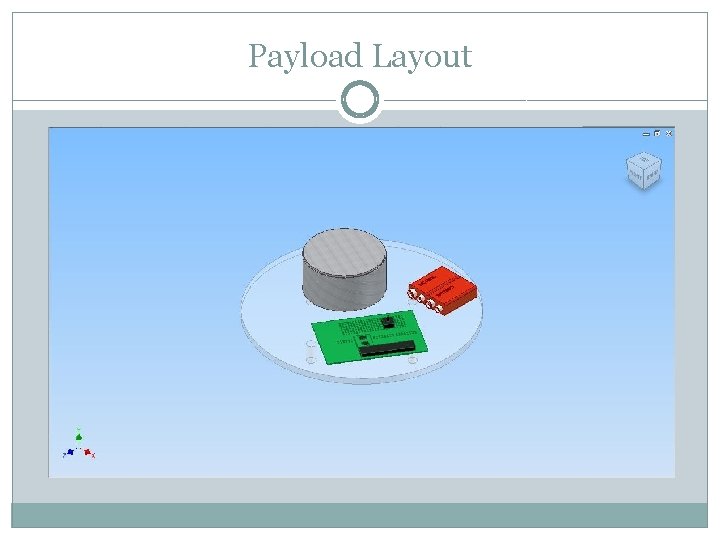
Payload Layout
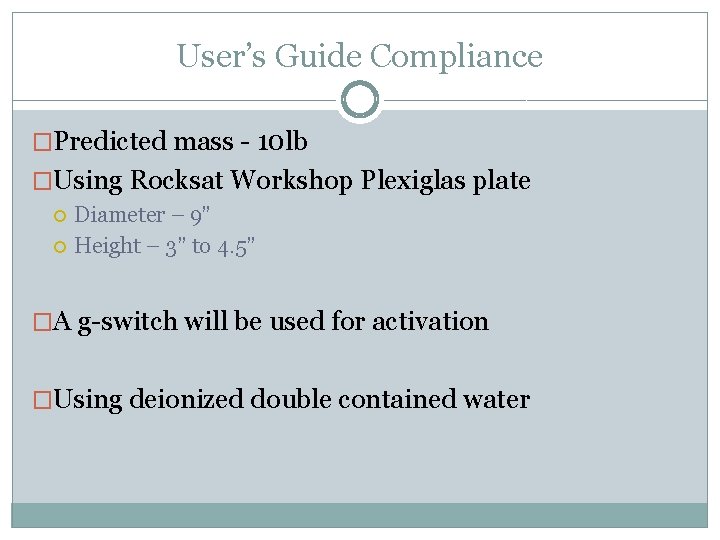
User’s Guide Compliance �Predicted mass - 10 lb �Using Rocksat Workshop Plexiglas plate Diameter – 9” Height – 3” to 4. 5” �A g-switch will be used for activation �Using deionized double contained water
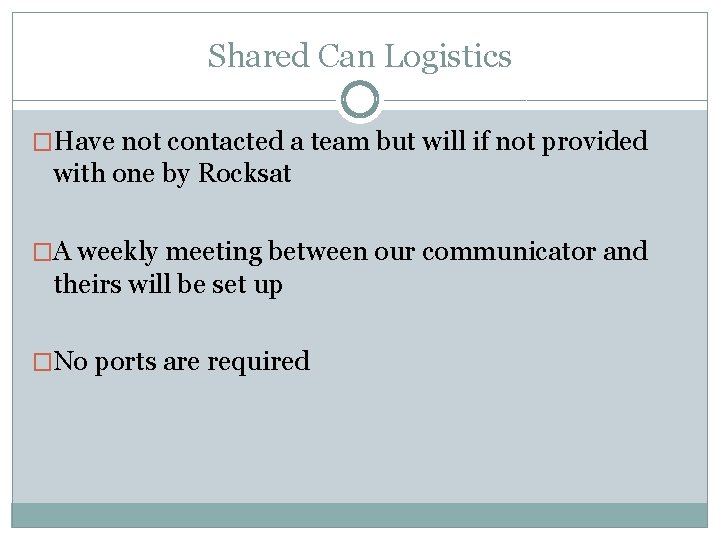
Shared Can Logistics �Have not contacted a team but will if not provided with one by Rocksat �A weekly meeting between our communicator and theirs will be set up �No ports are required
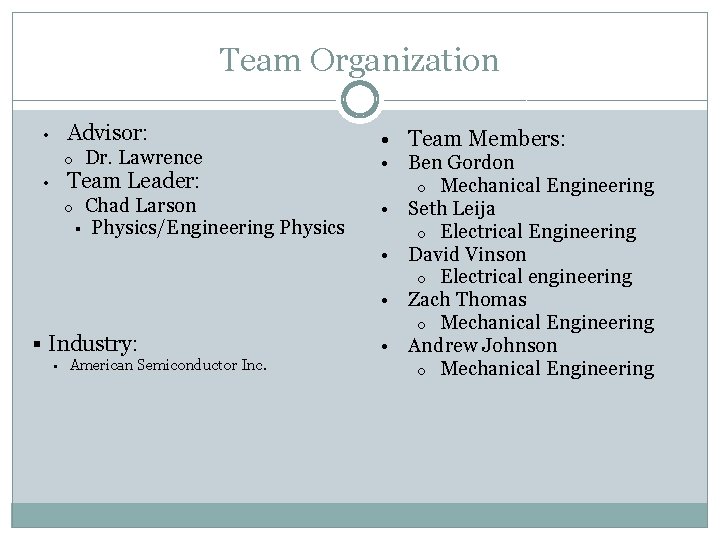
Team Organization Advisor: • o Dr. Lawrence Team Leader: • o Chad Larson § Physics/Engineering Physics § Industry: § American Semiconductor Inc. • Team Members: • Ben Gordon o Mechanical Engineering • Seth Leija o Electrical Engineering • David Vinson o Electrical engineering • Zach Thomas o Mechanical Engineering • Andrew Johnson o Mechanical Engineering
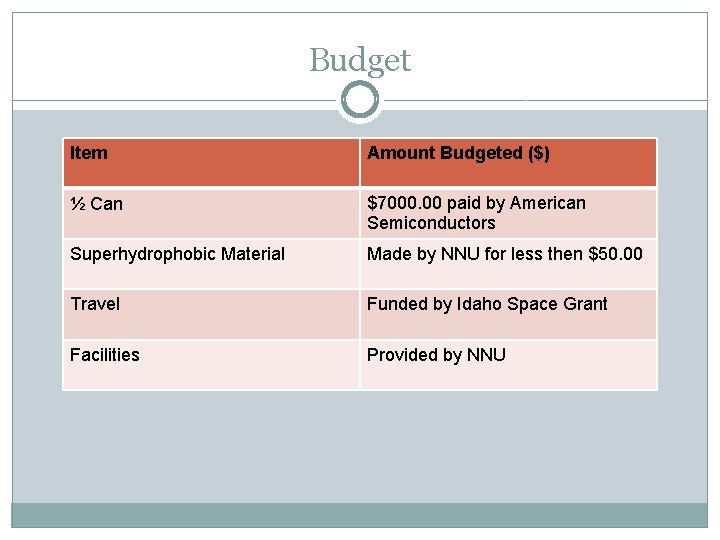
Budget Item Amount Budgeted ($) ½ Can $7000. 00 paid by American Semiconductors Superhydrophobic Material Made by NNU for less then $50. 00 Travel Funded by Idaho Space Grant Facilities Provided by NNU
Preliminary Schedule �In contact with American Semiconductor to find out exactly what they want to send up. �The size of their plate will then determine exactly how much superhydrophobic material can be sent up. �Construction will then begin.
Important Notes �A double containment system will be used to make sure the pure water will not go into the rest of the canister �Our work with American Semiconductors will determine the specifics of the superhydrophobic experiment
Conclusions �Superhydrophic material is new and largely untested. �The possible application for future space missions makes this experiment on a rocket very valuable. �This experiment will not only provide valuable data on the superhydrophobic material but also help teach students how to do real research.