
NM architectures RMON OSI Network Management Architecture OSI
- Slides: 29
NM architectures & RMON
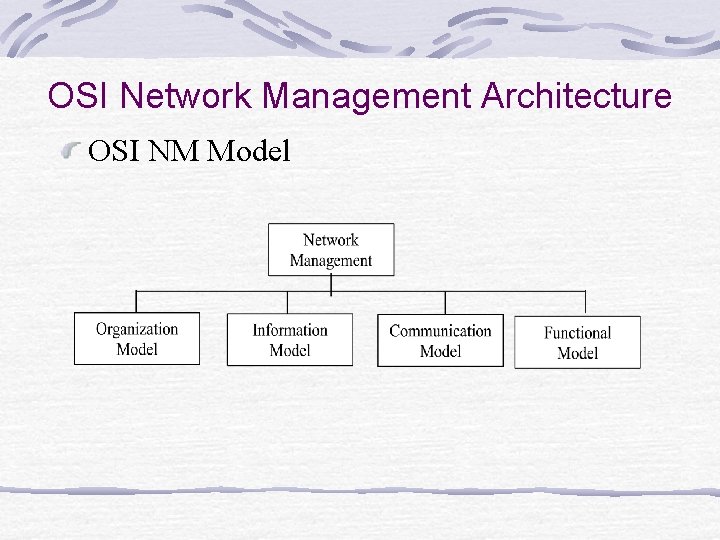
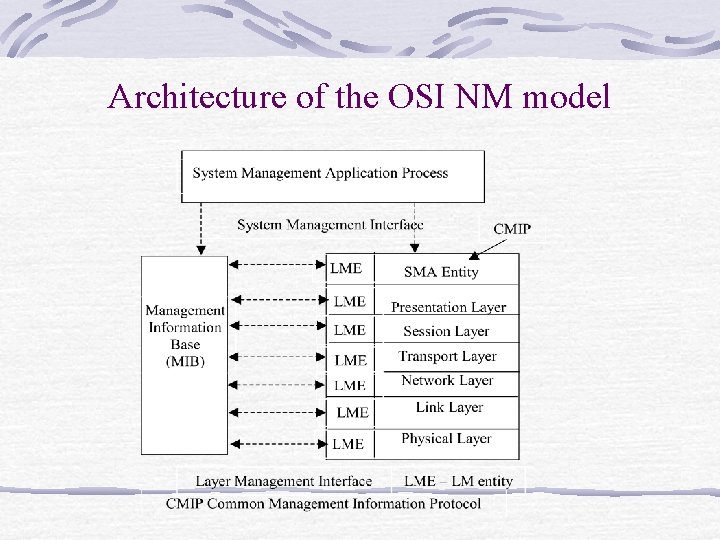
OSI Network Management Architecture OSI NM Model
OSI Organization Model Domain concept The Management system is a domain Has Manager system and Managed system A managed system has Managed Objects A Managed Object can have A number of other managed objects
OSI NM model Informational Model - MIB Communication Model - messages Functional Model – five basic functions
Architecture of the OSI NM model
Telecommunication Management Network It is network – an overlay network, which can be used for managing telecom and datacom networks Comprises of Operations Support Systems Eg traffic measurement system Trunk test System Network Management System
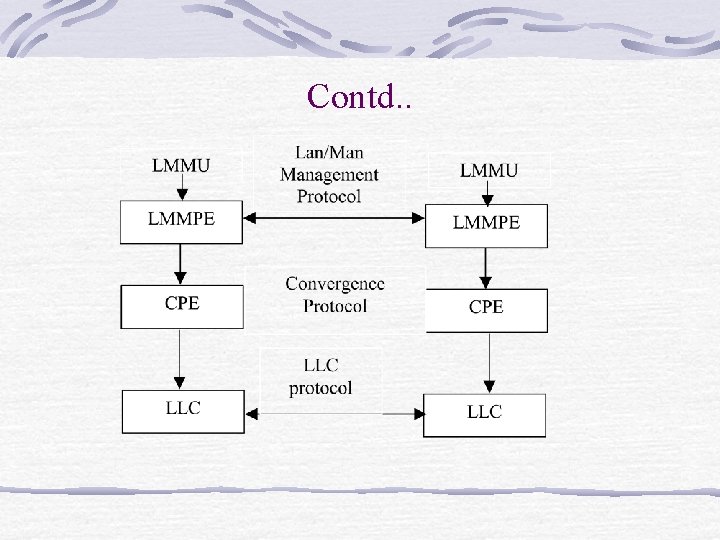
IEEE NM architecture IEEE primarily a workgroup working on LANs IEEE 802. 1 B LAN/MAN standards – LMM Uses CMIP - Common Management Information Protocol
Contd. . LAN/MAN management service (LMMS) service available to the user (LMMU) LAN/MAN management protocol entity (LMMPE) communicates management information via protocol exchanges Convergence Protocol Entity (CPE) Enables LAN MAN environment to provide LMMS adds functions of reliable and sequential data delivery (LLC provides unacknowledged connectionless service )
Contd. .
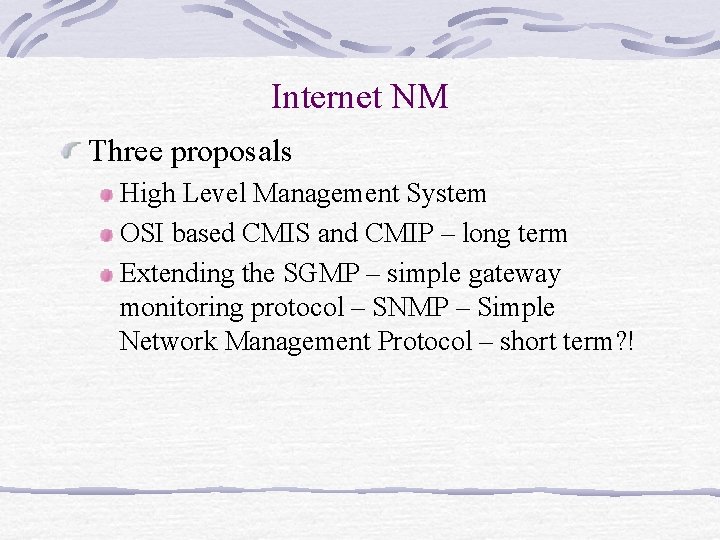
Internet NM Three proposals High Level Management System OSI based CMIS and CMIP – long term Extending the SGMP – simple gateway monitoring protocol – SNMP – Simple Network Management Protocol – short term? !
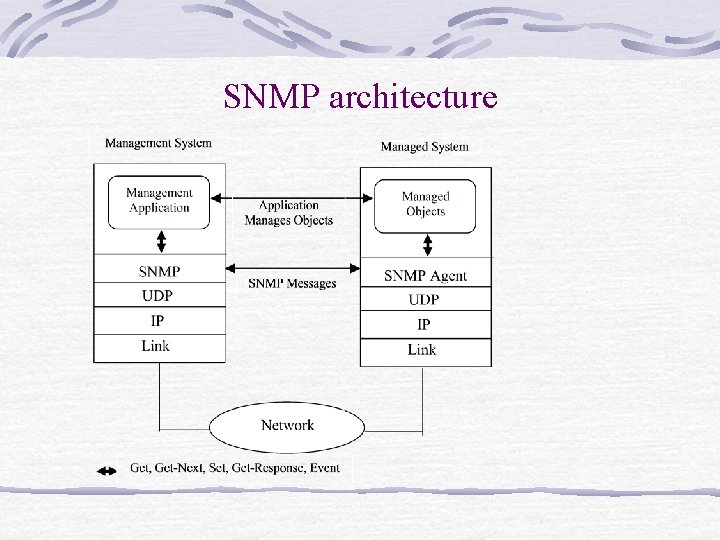
SNMP architecture
SNMP Manager / Agent Model SNMP is simple Agent requires minimal software Most of the processing power at the Manager Limited set of management commands No pre-arranged path – connection set-up SNMP is robust Manager , Agent protocols can run independently
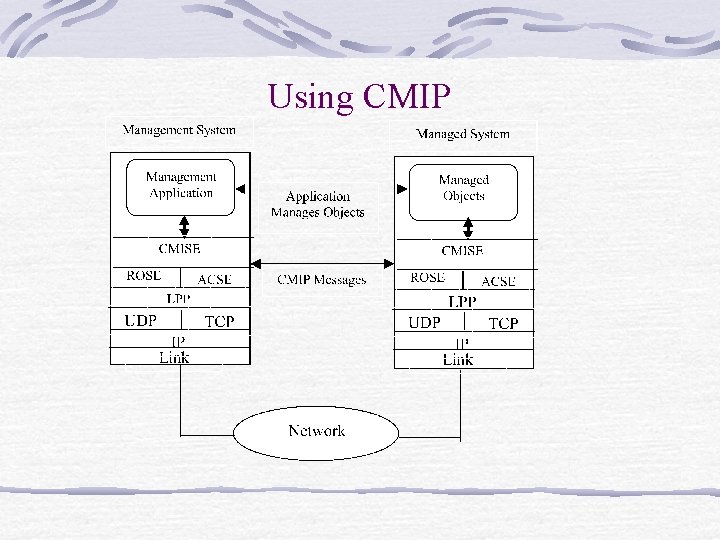
Using CMIP
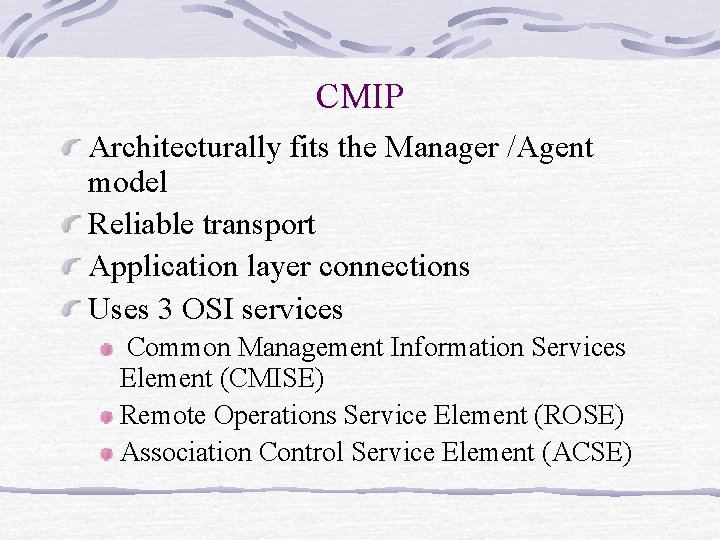
CMIP Architecturally fits the Manager /Agent model Reliable transport Application layer connections Uses 3 OSI services Common Management Information Services Element (CMISE) Remote Operations Service Element (ROSE) Association Control Service Element (ACSE)
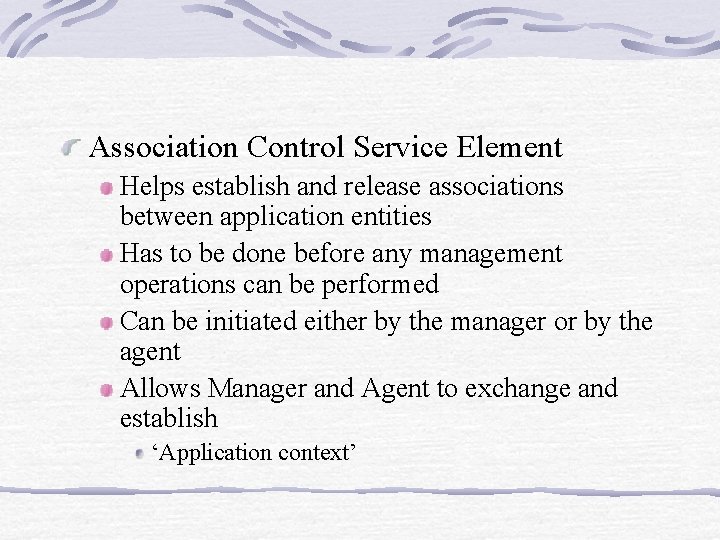
Association Control Service Element Helps establish and release associations between application entities Has to be done before any management operations can be performed Can be initiated either by the manager or by the agent Allows Manager and Agent to exchange and establish ‘Application context’
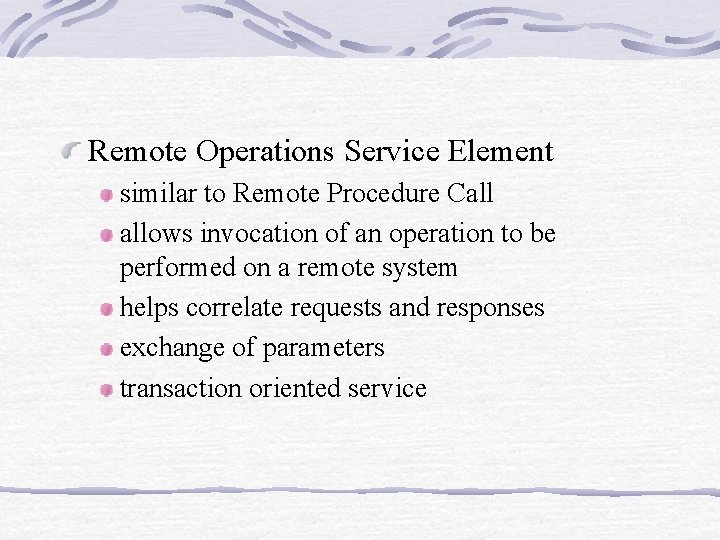
Remote Operations Service Element similar to Remote Procedure Call allows invocation of an operation to be performed on a remote system helps correlate requests and responses exchange of parameters transaction oriented service
Common Management Information Service Element Provides basic management services Uses both ROSE and ACSE Provides confirmed and unconfirmed services Reporting events Retrieving management data Manipulating management data
Architectural categories Hieratical Network Management Distributed Network management Centralised Network Management
Centralized Network Control Host performs management Uses a single database – back up needed Could have a stand-by Good for main-frame vendors Good for Information system executives Manager has control over the entire network Easy to balance resources Optimise overall utilisation Easy troubleshooting Convenience, accessibility and security
Contd. . Can allow access to other consoles Can forward events to other consoles Not scalable Querying all devices from a single point – traffic - throughput Eg: IBM’s Netview – for SNA
Hierarchical Multiple systems One system is the central server Others are clients Clients can be configured to monitor and poll different portions of the network Client/server database technology Central database with backup
Contd. . Distribution of network management tasks Not dependent on a single system Centralised storage Saves valuable bandwidth resources Clients close to the monitoring system – quick pick up of information Gathering information may be difficult Overlap of devices across clients should be avoided Eg: Sun Net manager, HP Openview
Distributed Combines centralised and hierarchical Multiple peer platforms One platform is the leader Individual platforms can have a complete database Each peer system performs various tasks and reports result to the central system
Features Single location for all information Single location for access to all management applications Not dependent on a single system Distributed network management tasks Distributed network monitoring Problem: Database replication
New NM ventures Distributed Management Task Force www. dmtf. org Common Information Model Web based Enterprise Management Java Management APIs - JMAPI
Remote Monitoring (RMON) Monitoring or Probing a Network Monitored analyzed information is sent to a remote Network Management Station The Network Management Station is remotely managing the network via the probe.
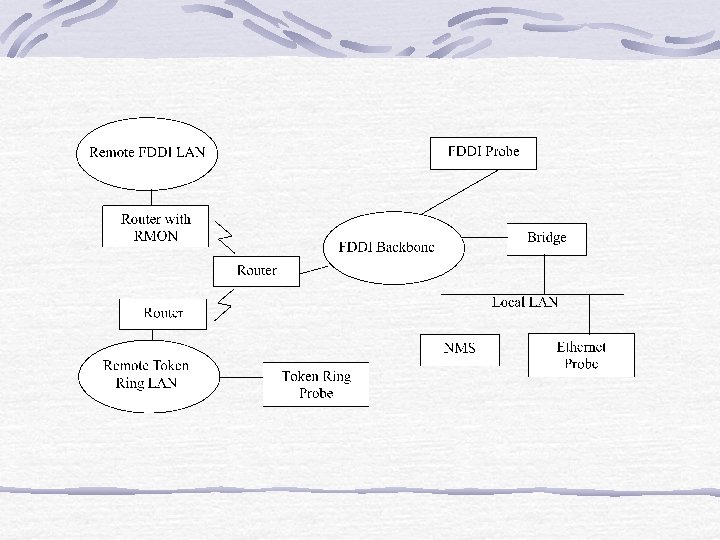
All four probe devices above are RMON devices The RMON device monitors the local network segment and does necessary analyses Relays solicited and unsolicited information to the NMS Local polling of information and inform NMS on alarm
Advantages Reduces SNMP traffic Loss of long distance pinging packets reduced More frequent polling Quicker fault diagnosis and report to NMS