
NKT cells in liver diseases Shasha Zhu Huimin
- Slides: 1
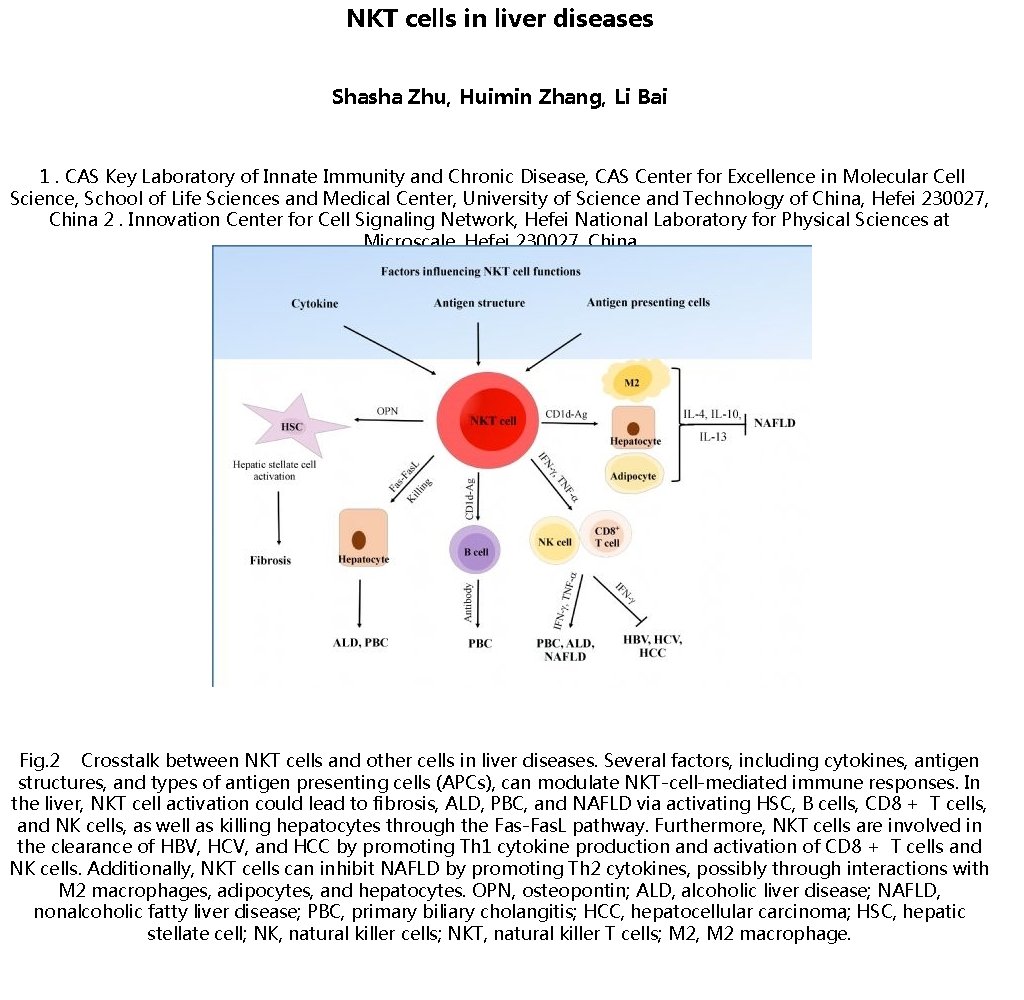
NKT cells in liver diseases Shasha Zhu, Huimin Zhang, Li Bai 1. CAS Key Laboratory of Innate Immunity and Chronic Disease, CAS Center for Excellence in Molecular Cell Science, School of Life Sciences and Medical Center, University of Science and Technology of China, Hefei 230027, China 2. Innovation Center for Cell Signaling Network, Hefei National Laboratory for Physical Sciences at Microscale, Hefei 230027, China Fig. 2 Crosstalk between NKT cells and other cells in liver diseases. Several factors, including cytokines, antigen structures, and types of antigen presenting cells (APCs), can modulate NKT-cell-mediated immune responses. In the liver, NKT cell activation could lead to fibrosis, ALD, PBC, and NAFLD via activating HSC, B cells, CD 8 + T cells, and NK cells, as well as killing hepatocytes through the Fas-Fas. L pathway. Furthermore, NKT cells are involved in the clearance of HBV, HCV, and HCC by promoting Th 1 cytokine production and activation of CD 8 + T cells and NK cells. Additionally, NKT cells can inhibit NAFLD by promoting Th 2 cytokines, possibly through interactions with M 2 macrophages, adipocytes, and hepatocytes. OPN, osteopontin; ALD, alcoholic liver disease; NAFLD, nonalcoholic fatty liver disease; PBC, primary biliary cholangitis; HCC, hepatocellular carcinoma; HSC, hepatic stellate cell; NK, natural killer cells; NKT, natural killer T cells; M 2, M 2 macrophage.