
NKRUMAH AND AFRICAN SOCIALISM Nkrumahs socialist ideology Nkrumah
- Slides: 25
NKRUMAH AND AFRICAN SOCIALISM
• Nkrumah’s socialist ideology • Nkrumah in power
SOCIALISM • Originated from Latin sociare: to combine or to share. • The early forms: Henri de Saint-Simon and "utopian socialism” • Marxism Karl Marx and Friedrich Engels • Concept of class struggle: bourgeoisie or capitalist class who owns the means of production • Petty bourgeoisie • Working class or proletariat
• Class struggle: the contradictions between the proletariat whose labor is exploited to produce profit for the bourgeoisie • As the proletariat becomes aware of its exploitation, it leads a social revolution • Establishment of socialism: the means of production and resources would be distributed equally, and would create a classless society
KWAME NKRUMAH • Nkrumah’s thought consist of three themes, corresponding to his career • 1 Black Consciousness and Identity • 2 Search for national autonomy • 3 Advocacy of Pan-African unity • Black consciousness developed in 1940 s when he was in the US • Search for independence dominated his thought in the 1950 s • In the 1960 s, Pan Africanism and African unity dominated his thinking
• During his time in London, Nkrumah devoted his time and energy to study and practice socialism and Pan-Africanism • Intellectuals who shaped his thought: Hegel, Karl Marx, Engels, Lenin • Marxism is a tool to be adapted to specific local conditions • More interested practical side rather than theoretical aspect of Marxism • He summarized socialism as follows:
• 1 - Common Ownership of the means of production • 2 State control of production: modern industry and agriculture • 3 Political power should be in the hands of the people • Should be based on humanist and egalitarian nature of traditional African societies
NKRUMAH’S PAN AFRICANISM • Nkrumah’s passion for Pan Africanism • The most important influence was Marcus Garvey’s book Philosophy and Opinions of Marcus Garvey (1923) • Nkrumah believed that Ghana’s independence would be incomplete and meaningless unless it was linked to the liberation of the whole continent • He was also influenced by Christian ethics when he studied theology at Lincoln • He described himself as “non-denominational Christian and a Marxist socialist” and “ I have not found contradictions between the two”
CONSCIENCISM • Nkrumah argued for the need for a new ideology based on the humanist African traditions His own philosophy: “Consciencism” a philosophy and ideology for decolonization African socialism, a socialism that adapted to African indigenous culture and African society, which he considered as classless, communal and egalitarian (democratic)
NKRUMAH IN POWER • Socialist objective: economic independence and industrialization • His Emphasis on Industrialization • Role of Hydroelectricity as key for industrialization • The politics of building dams in Africa • Aswan Dam in Egypt • Zambezi dams: Mozambique and Zimbabwe
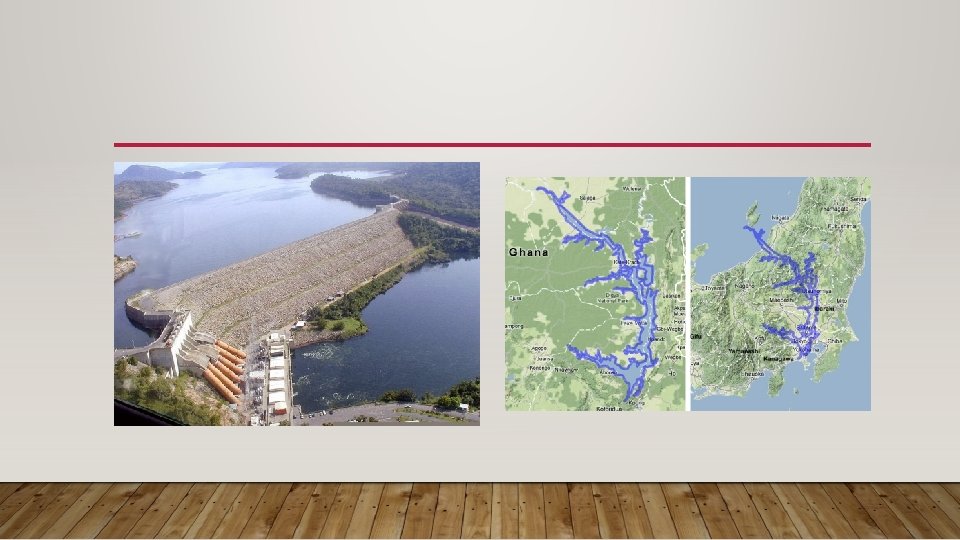
THE VOLTA PROJECT: • The most ambitious and most expensive project in Africa • The project was linked to building an aluminum industry based on Ghanaian bauxite • Financing the project • The realities of neo-colonialism • Negotiating with the US under Eisenhower • Kaiser Corporation conditions: • The Volta project should not be integrated into an industrial complex controlled by Ghanaians
• The American would not accept the project as envisioned by Nkrumah • Ghanaian Bauxite would be frozen for 10 years • The aluminum would not be exported as finish product • Nkrumah would contribute $35 million • Provision of a high interest loan of $80 million from the US, Britain, and the World Bank • The Volta project became and obsession for Nkrumah • Neglect of the cocoa industry
ECONOMIC DEVELOPMENT • Nkrumah’s philosophy of development: austerity is necessary to achieve prosperity in the long term • 1961 Increase in taxation and compulsory national savings • Became a source of protests • Nkrumah raised the expectation of the population • Promotion of government-run projects and limited role for the private sector • Small scale production was left in the hands of immigrants from Lebanon and Nigeria
• Nkrumah’s effort to control the gold mining industry • Gold has been at the center of the economy, after cocoa: creation of thousands of jobs • 1920 s colonial government used forced labor and kept wages low • The strike of 30, 000 mine workers at in 1947 and winning concessions from the Chambers of Mine • Establishment of trade unions and improved working conditions • Growing strength of trade unions
• General Spears and his close relationship with Nkrumah and its impact • Tiny Rowlands and his Lonrho corporation takeover of the Ashanti gold fields • Nkrumah was the first African leader who was seduced by British neocolonial tycoons
NKRUMAH AND THE TRADE UNIONS • Gold mine workers strikes of 1955 • Mine owners threat to abandon Ghana if the government did not help them to keep labor costs down • Nkrumah and the nationalists could not influence neither groups • A compromise was reached between the workers and the mine owners • Nkrumah’s realization of the power of labor unions and he became committed to control the trade union movement
• To attract foreign investment and industrialization, Nkrumah wanted to reduce the power of trade union leadership in order to keep wages down • Bringing the unions under Trade Union Congress, which was dominated by the ruling party • Coopting union leaders and putting them in privilege positions • 1958 act outlawed strikes • 1961 the railway workers led strike
• Growing strength of Ghanaian railway workers since the 1920 s • 1955 they established the Trade Union Congress • Their support of Nkrumah’s party at independence and remained loyal to Nkrumah • Economic conditions in the early 1960 s, inflation, shortage of consumer goods • Railway strikes September 1961 the most serious challenge to independent government • Nkrumah’s response: declaring state of emergency, detention and arrest of opposition leaders
• Mine owners strategy after the strike of 1955 • realization that they could not keep wages down • Abandoning marginal mines • Nkrumah decision to nationalize marginal mines, except the Ashanti gold fields • Localization of management with less experienced Ghanaians • Challenge of trade unions • The leader of the 1955 mine workers, was appointed managing director of the Chamber of Mines • His policy of purging the old union
AGRICULTURE • Growing need for food in urban centers • Nkrumah’s policy of exporting cocoa, timber, and minerals to buy cheap food from North America • Attempt to send young people from the urban centers to the rural areas • It became a source of resentment
RULING STYLE • Development of personality cult • Nkrumah wanted to be seen as great ideological thinker of Africa • Personalization of politics • At the personal level he led a modest life • His marriage to an Egyptian Christian, who spoke French • Strategic marriage
• 1960 s he was no longer the hero • Cocoa farmers who were taxed heavily turned against him • Trade unions, market women, retail traders • Increased tide of opposition, Nkrumah became less tolerant of dissent • Introduction of preventative detention or internment without trial • Nkrumah’s use of the law to silence critics • Detention of Dr. J. B. Danquah who was the father of Ghanaian nationalism
• Nkrumah’s growing unpopularity and seclusion • Deterioration of economic conditions • The problem of the national army • Nkrumah tried to strengthen the army to carryout his pan-African and liberation project • He gave the task of building an army to a British major-general H. T. Alexander • Launching a program of militarization • Accelerating the pace of localization by replacing British officers with Soviet-trained officers
• Downfall of Nkrumah • Army coup of 24 February 1966 while Nkrumah was on a foreign trip