
NK cells in cancer therapy Not all are

- Slides: 50
NK cells in cancer therapy - Not all are natural killers Yong-Oon Ahn, Ph. D. Assistant Professor Strategic Center of Cell & Bio Therapy for Heart & Diabetes & Cancer, Biomedical Research Institute, Seoul National University Hospital 1
Outline 1. Introduction to cancer immunology / Immuno-oncology 2. NK cell biology 1: basics - NK cell biology 101 - Missing self theory - How to activate NK cells - Role of NK cells in HSCT 3. NK cell biology 2: recent findings - NK cell alloreactivity and education/license - “serial killer” - memory(-like) and/or adaptive NK cells 4. Current strategies - SNU NK trials - UMN, WASH trials 2
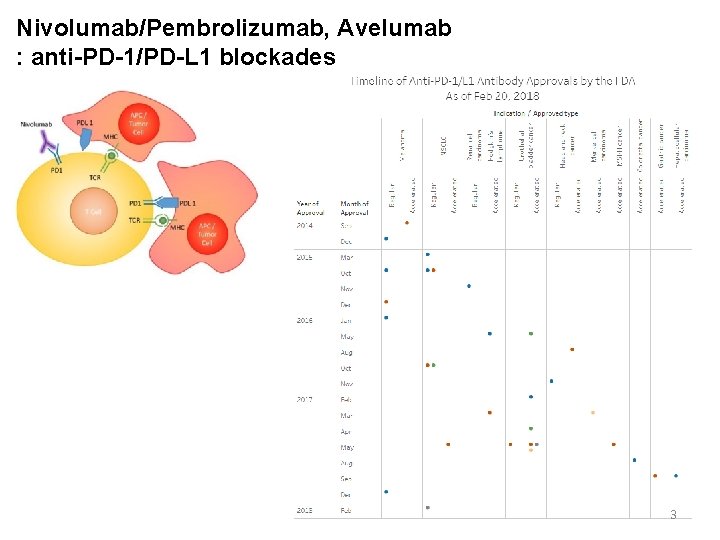
Nivolumab/Pembrolizumab, Avelumab : anti-PD-1/PD-L 1 blockades 3
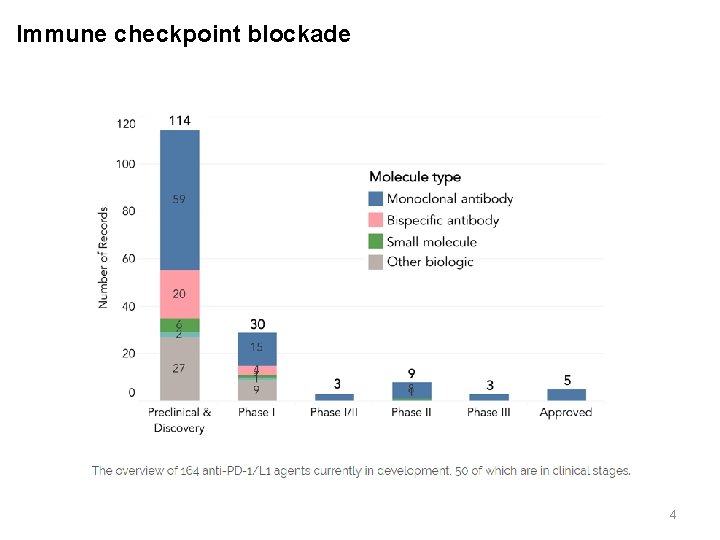
Immune checkpoint blockade 4
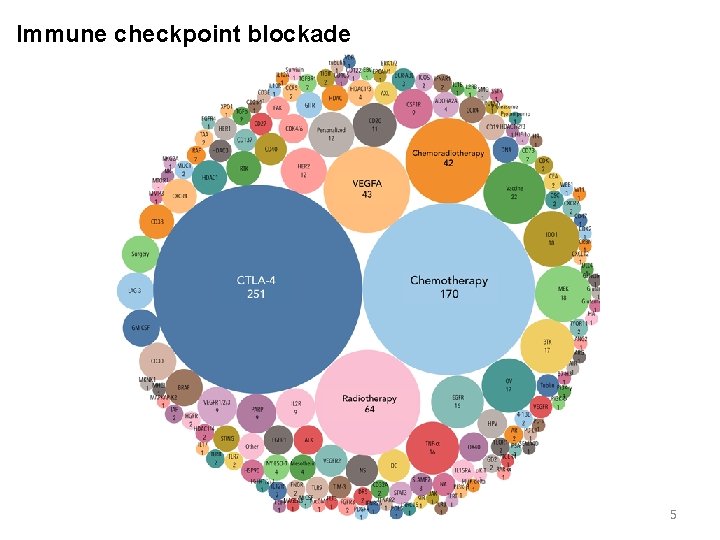
Immune checkpoint blockade 5
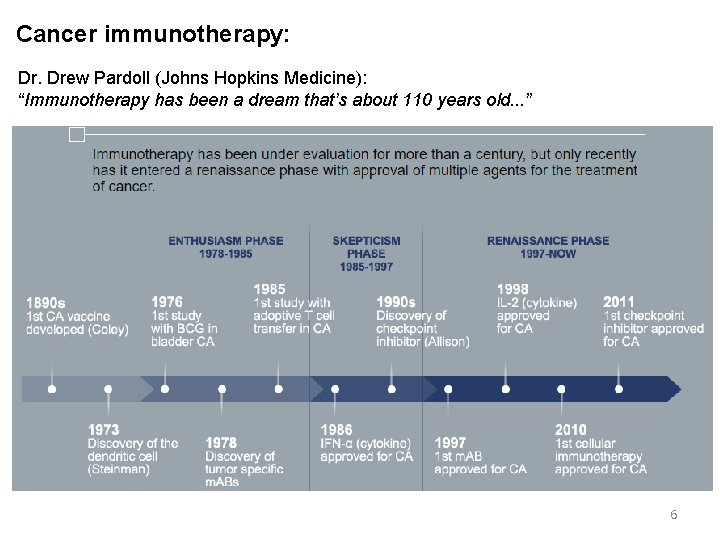
Cancer immunotherapy: Dr. Drew Pardoll (Johns Hopkins Medicine): “Immunotherapy has been a dream that’s about 110 years old. . . ” 6
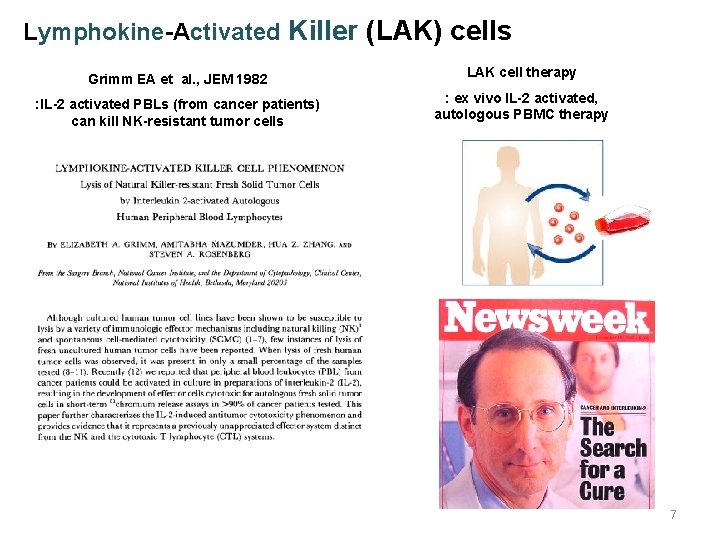
Lymphokine-Activated Killer (LAK) cells Grimm EA et al. , JEM 1982 LAK cell therapy : IL-2 activated PBLs (from cancer patients) can kill NK-resistant tumor cells : ex vivo IL-2 activated, autologous PBMC therapy 7
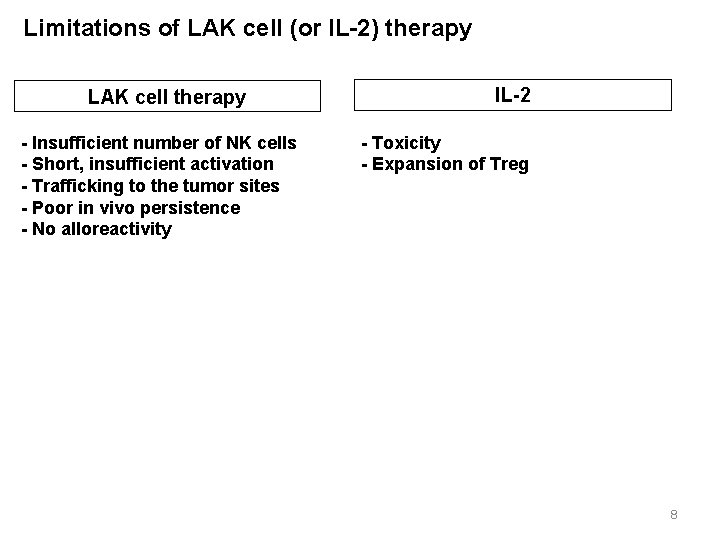
Limitations of LAK cell (or IL-2) therapy LAK cell therapy - Insufficient number of NK cells - Short, insufficient activation - Trafficking to the tumor sites - Poor in vivo persistence - No alloreactivity IL-2 - Toxicity - Expansion of Treg 8
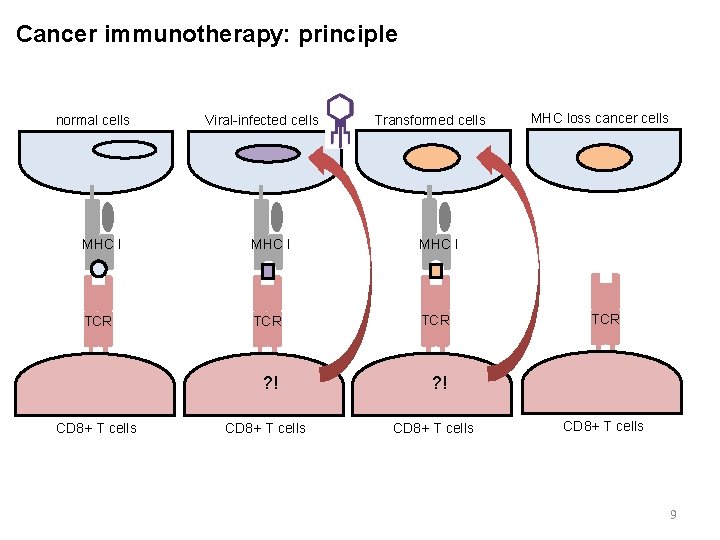
Cancer immunotherapy: principle normal cells Viral-infected cells Transformed cells MHC I TCR TCR ? ! CD 8+ T cells MHC loss cancer cells TCR CD 8+ T cells 9
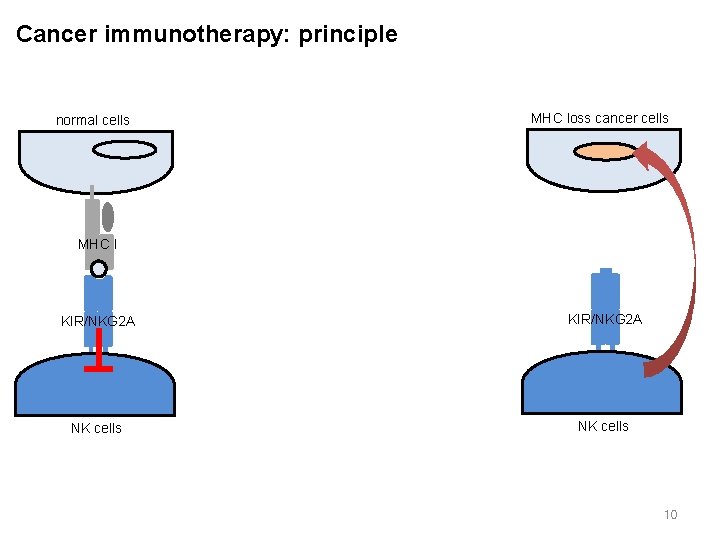
Cancer immunotherapy: principle normal cells MHC loss cancer cells MHC I KIR/NKG 2 A NK cells 10
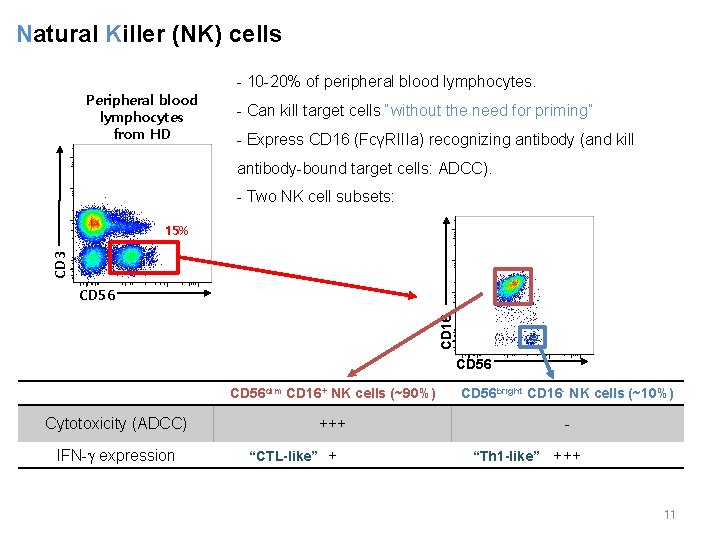
Natural Killer (NK) cells Peripheral blood lymphocytes from HD - 10 -20% of peripheral blood lymphocytes. - Can kill target cells “without the need for priming” - Express CD 16 (FcγRIIIa) recognizing antibody (and kill antibody-bound target cells: ADCC). - Two NK cell subsets: CD 3 15% CD 16 CD 56 Cytotoxicity (ADCC) IFN- expression CD 56 dim CD 16+ NK cells (~90%) CD 56 bright CD 16 - NK cells (~10%) +++ - “CTL-like” + “Th 1 -like” +++ 11
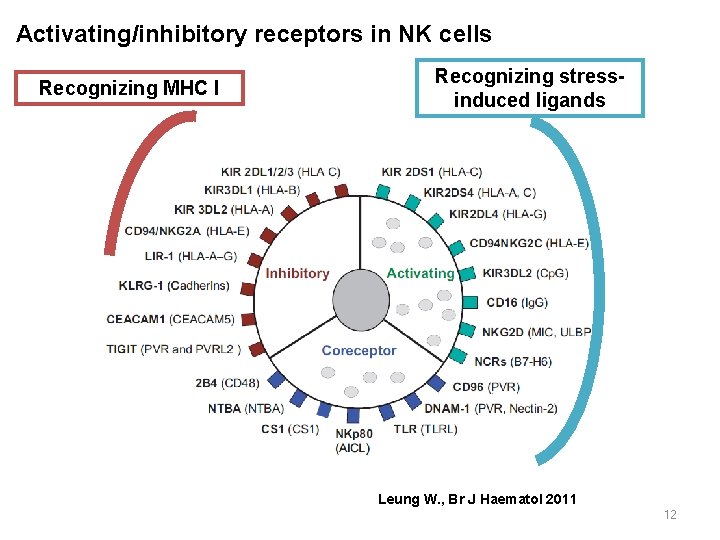
Activating/inhibitory receptors in NK cells Recognizing MHC I Recognizing stressinduced ligands Leung W. , Br J Haematol 2011 12
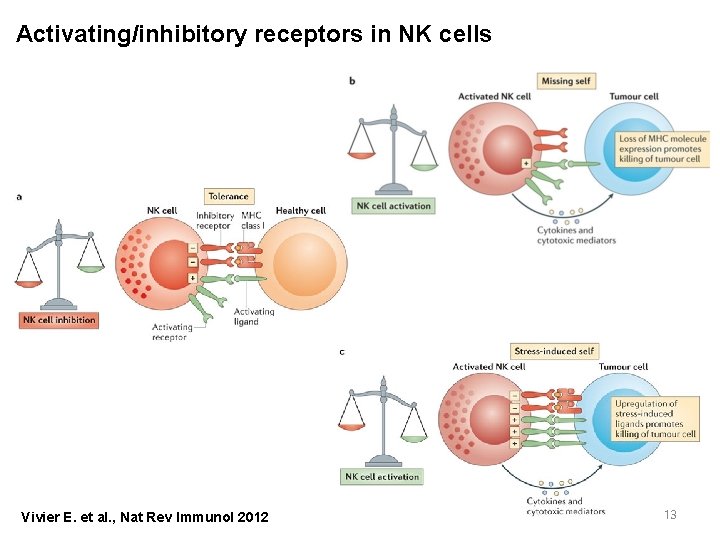
Activating/inhibitory receptors in NK cells Vivier E. et al. , Nat Rev Immunol 2012 13
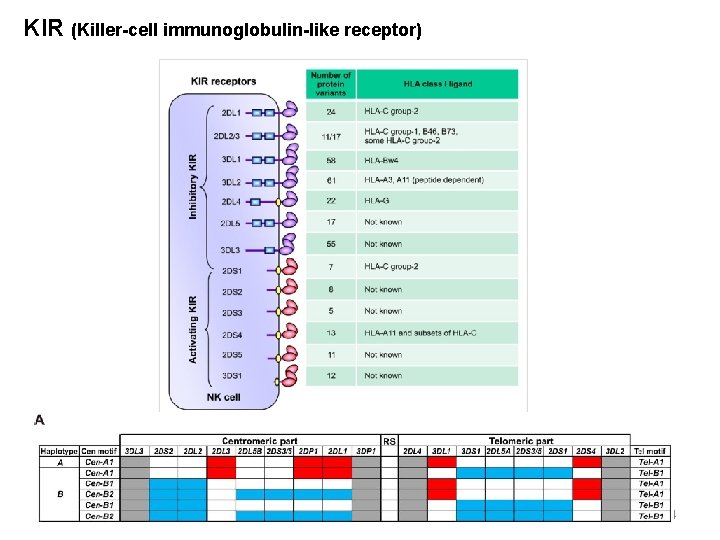
KIR (Killer-cell immunoglobulin-like receptor) 14
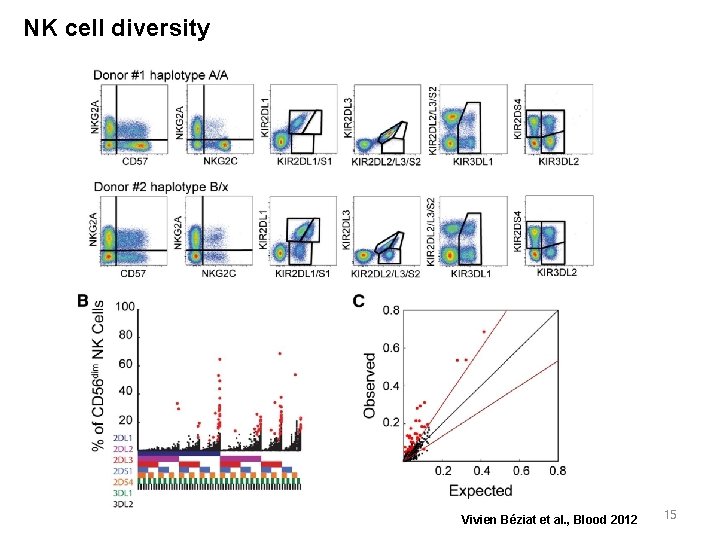
NK cell diversity Vivien Béziat et al. , Blood 2012 15
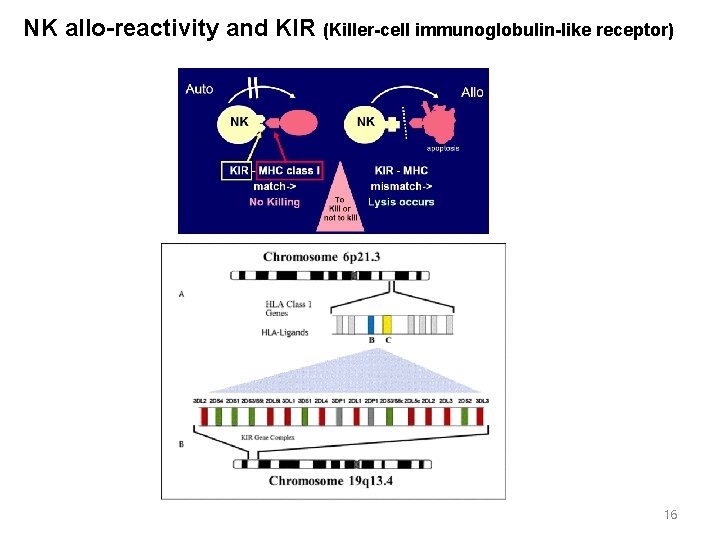
NK allo-reactivity and KIR (Killer-cell immunoglobulin-like receptor) 16
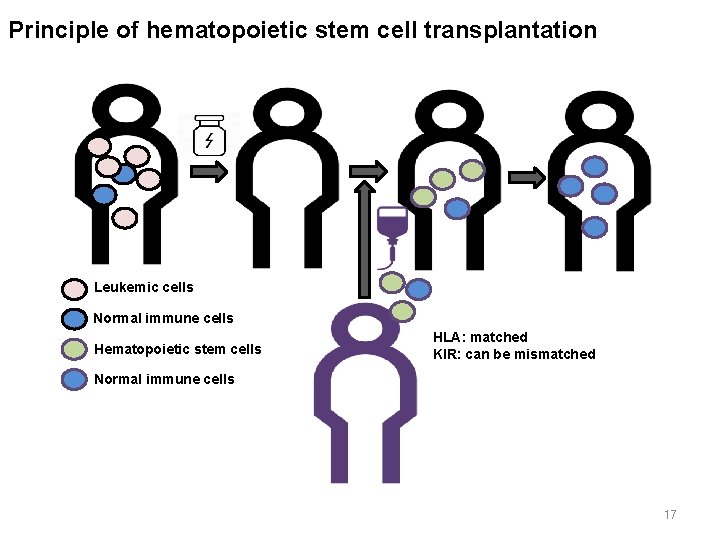
Principle of hematopoietic stem cell transplantation Leukemic cells Normal immune cells Hematopoietic stem cells HLA: matched KIR: can be mismatched Normal immune cells 17
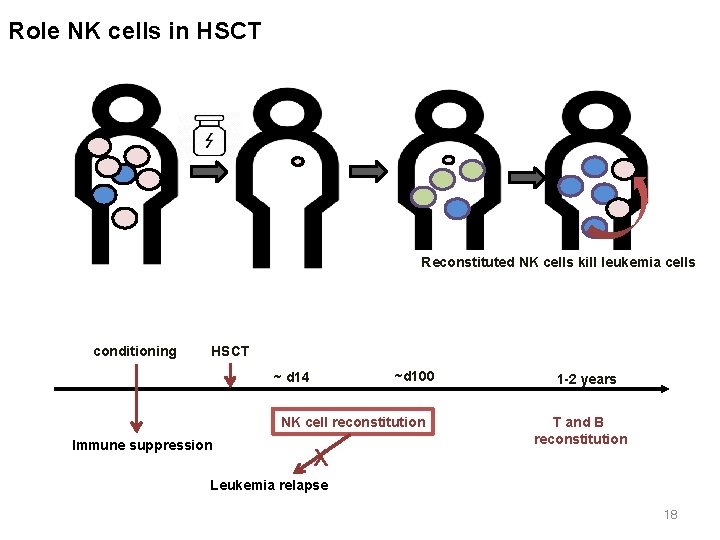
Role NK cells in HSCT Reconstituted NK cells kill leukemia cells conditioning HSCT ~d 100 ~ d 14 NK cell reconstitution Immune suppression X 1 -2 years T and B reconstitution Leukemia relapse 18
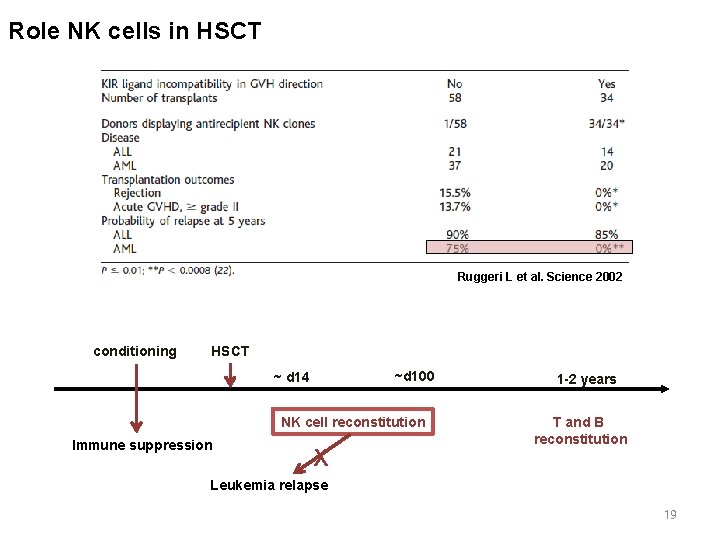
Role NK cells in HSCT Ruggeri L et al. Science 2002 conditioning HSCT ~d 100 ~ d 14 NK cell reconstitution Immune suppression X 1 -2 years T and B reconstitution Leukemia relapse 19
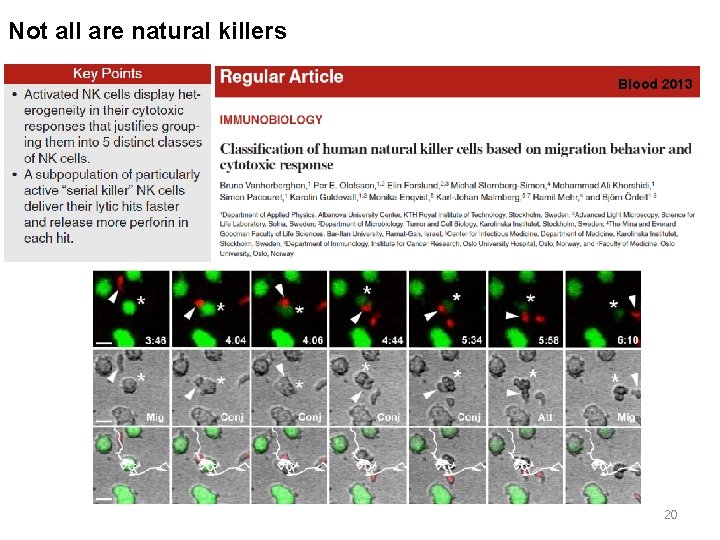
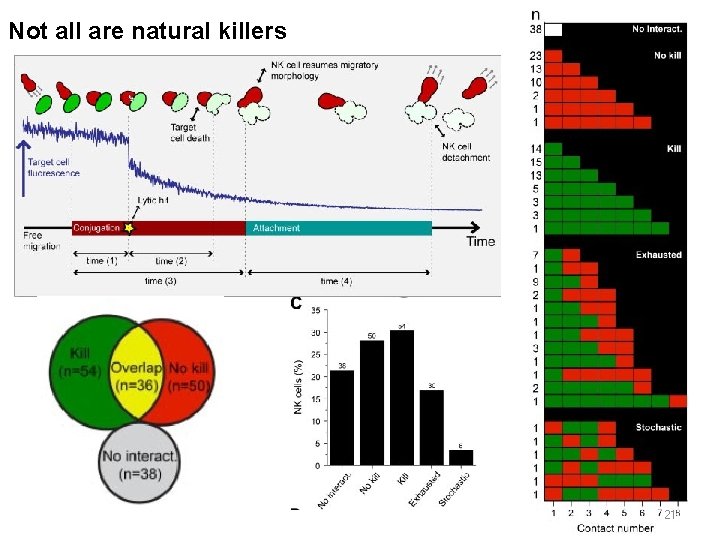
Not all are natural killers Blood 2013 20
Not all are natural killers 21
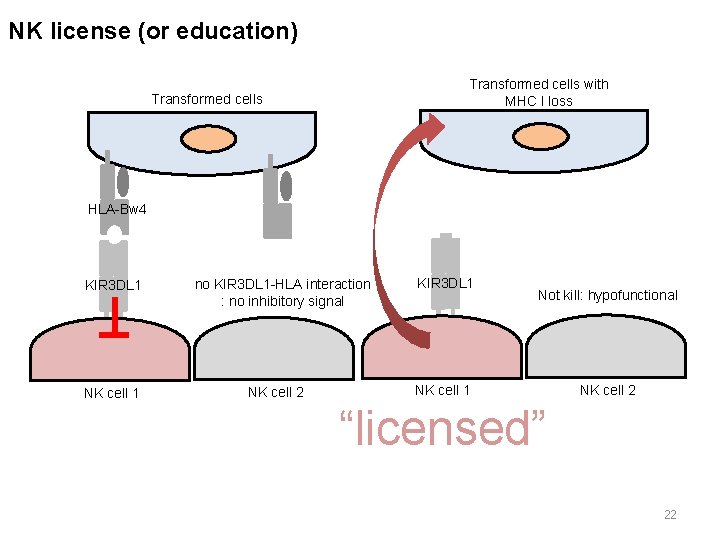
NK license (or education) Transformed cells with MHC I loss Transformed cells HLA-Bw 4 KIR 3 DL 1 NK cell 1 no KIR 3 DL 1 -HLA interaction : no inhibitory signal NK cell 2 KIR 3 DL 1 Not kill: hypofunctional NK cell 1 NK cell 2 “licensed” 22
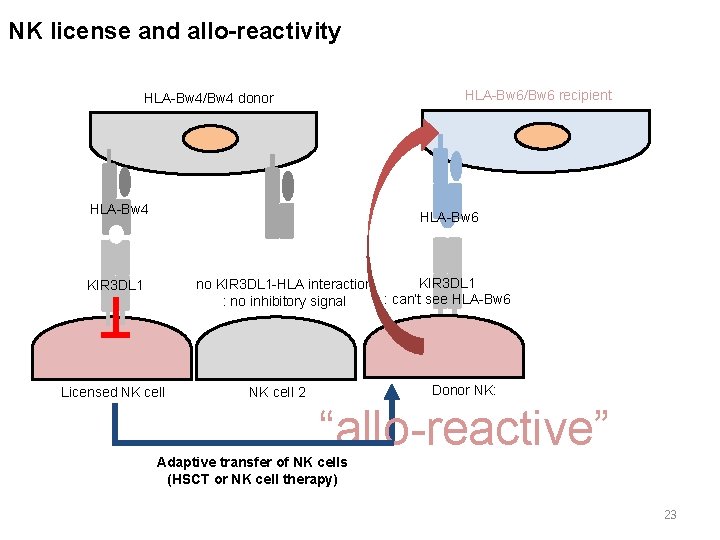
NK license and allo-reactivity HLA-Bw 6/Bw 6 recipient HLA-Bw 4/Bw 4 donor HLA-Bw 4 HLA-Bw 6 KIR 3 DL 1 no KIR 3 DL 1 -HLA interaction : can’t see HLA-Bw 6 : no inhibitory signal KIR 3 DL 1 Licensed NK cell Donor NK: NK cell 2 “allo-reactive” Adaptive transfer of NK cells (HSCT or NK cell therapy) 23
Summary 1 1. NK cells do not have antigen specificity and do not recognize antigen presentation 2. Regardless of antigen, MHC I molecules inhibit NK cell cytotoxicity vis KIR 3. NK cells can kill MHC I-loss transformed or viral infected cells (missing self) 4. NK cells require inhibitory signal through MHC I to have functionality (license) 5. NK cells efficiently kill allogeneic leukemic cells in HSCT (allo-reactivity in HSCT)
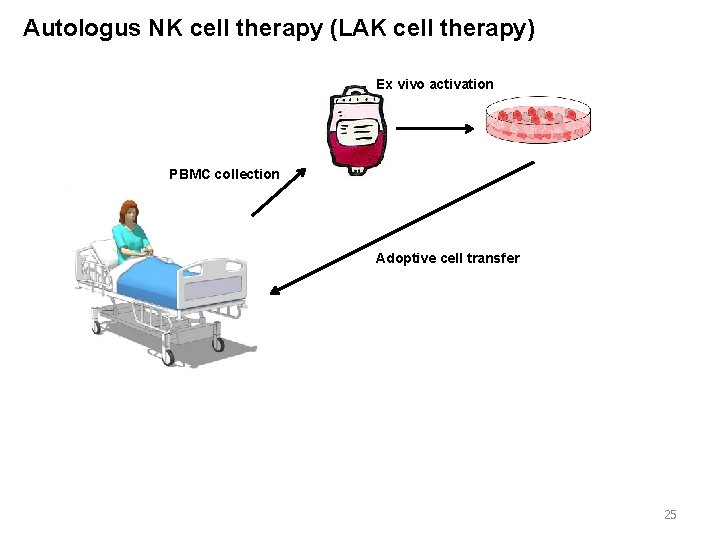
Autologus NK cell therapy (LAK cell therapy) Ex vivo activation PBMC collection Adoptive cell transfer 25
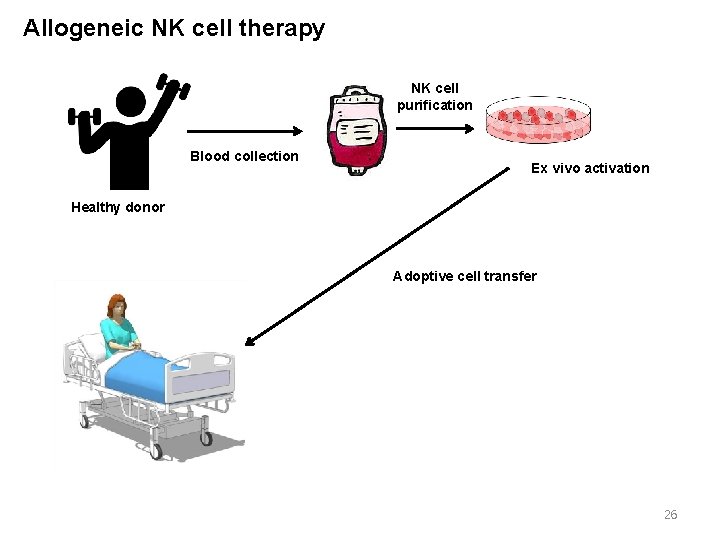
Allogeneic NK cell therapy NK cell purification Blood collection Ex vivo activation Healthy donor Adoptive cell transfer 26
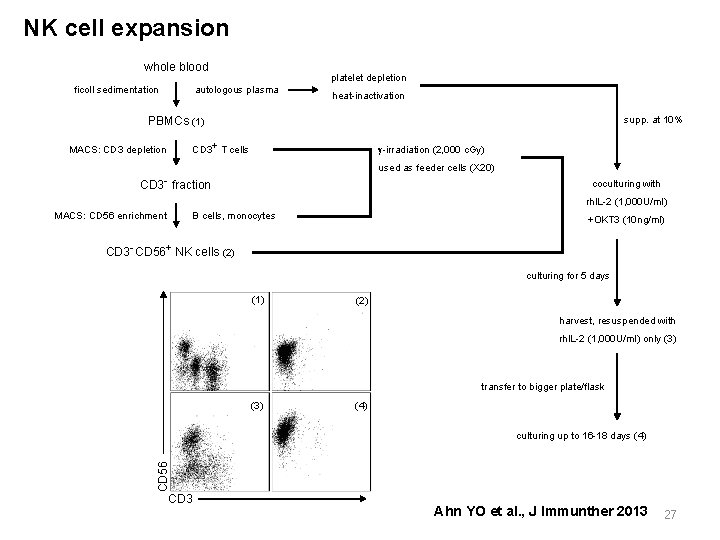
NK cell expansion whole blood ficoll sedimentation platelet depletion autologous plasma heat-inactivation supp. at 10% PBMCs (1) CD 3+ T cells MACS: CD 3 depletion -irradiation (2, 000 c. Gy) used as feeder cells (X 20) CD 3 - fraction coculturing with rh. IL-2 (1, 000 U/ml) MACS: CD 56 enrichment B cells, monocytes +OKT 3 (10 ng/ml) CD 3 - CD 56+ NK cells (2) culturing for 5 days (1) (2) harvest, resuspended with rh. IL-2 (1, 000 U/ml) only (3) transfer to bigger plate/flask (3) (4) CD 56 culturing up to 16 -18 days (4) CD 3 Ahn YO et al. , J Immunther 2013 27
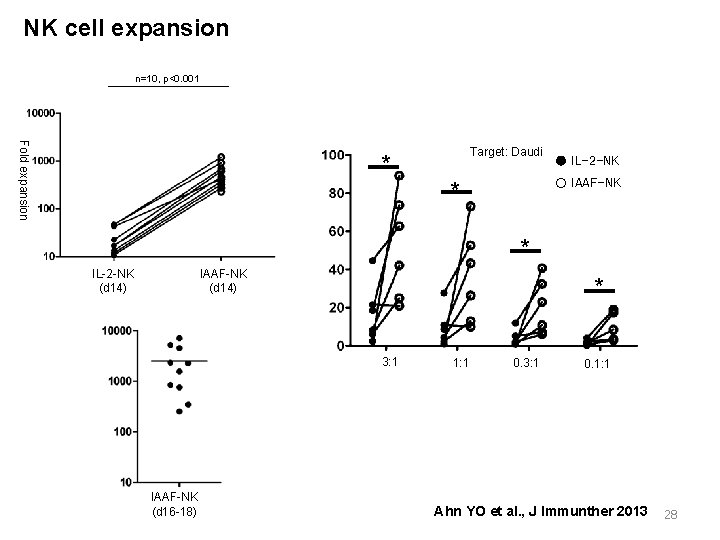
NK cell expansion n=10, p<0. 001 Fold expansion Target: Daudi * ● IL-2 -NK ○ IAAF-NK * * IL-2 -NK (d 14) IAAF-NK (d 14) * 3: 1 IAAF-NK (d 16 -18) 1: 1 0. 3: 1 0. 1: 1 Ahn YO et al. , J Immunther 2013 28
NK cell therapy trial at SNUH (1) Haploidential NK cell therapy with high-dose IL-2 in refractory/relapsed malignant melanoma or renal cell carcinoma Tae Min Kim, Eunkyung Kim, Bhumsuk Keam, Yong-Oon Ahn, Se-Hoon Lee, Eun Young Song, Dong-Wan Kim, Kyou-Sup Han, Myoung Hee Park, Dae Seog Heo Unpublished data 29
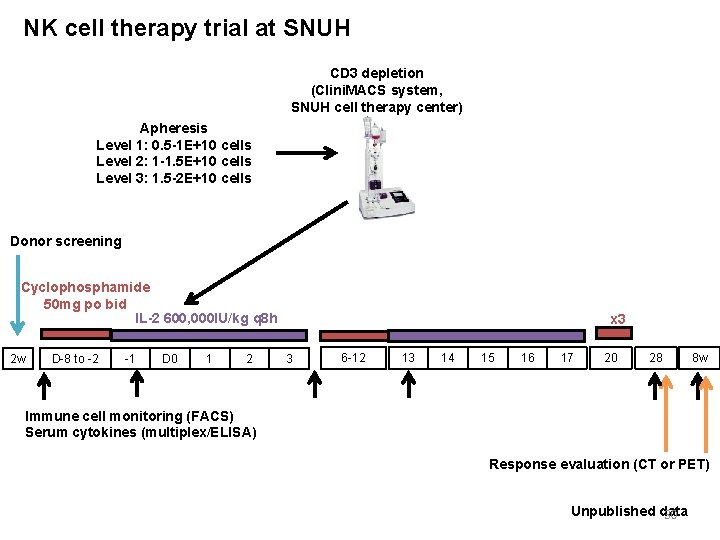
NK cell therapy trial at SNUH CD 3 depletion (Clini. MACS system, SNUH cell therapy center) Apheresis Level 1: 0. 5 -1 E+10 cells Level 2: 1 -1. 5 E+10 cells Level 3: 1. 5 -2 E+10 cells Donor screening Cyclophosphamide 50 mg po bid IL-2 600, 000 IU/kg q 8 h 2 w D-8 to -2 -1 D 0 1 2 x 3 3 6 -12 13 14 15 16 17 20 28 8 w Immune cell monitoring (FACS) Serum cytokines (multiplex/ELISA) Response evaluation (CT or PET) Unpublished data 30
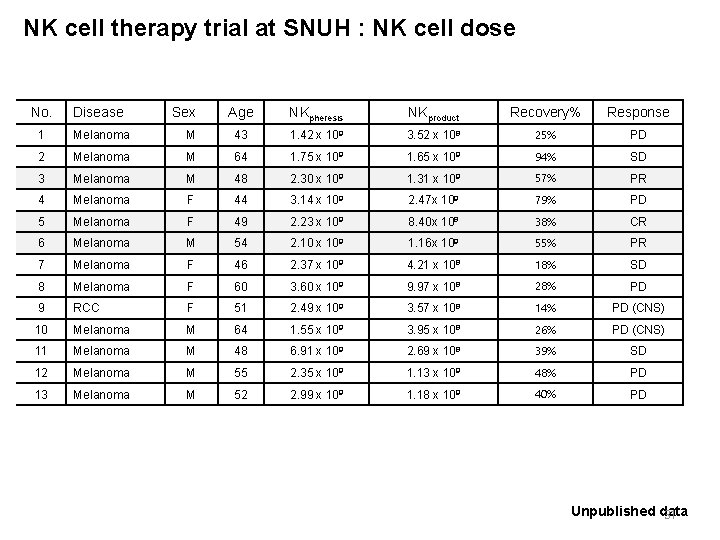
NK cell therapy trial at SNUH : NK cell dose No. Disease 1 Melanoma 2 Sex Age NKpheresis NKproduct Recovery% Response M 43 1. 42 x 109 3. 52 x 108 25% PD Melanoma M 64 1. 75 x 109 1. 65 x 109 94% SD 3 Melanoma M 48 2. 30 x 109 1. 31 x 109 57% PR 4 Melanoma F 44 3. 14 x 109 2. 47 x 109 79% PD 5 Melanoma F 49 2. 23 x 109 8. 40 x 108 38% CR 6 Melanoma M 54 2. 10 x 109 1. 16 x 109 55% PR 7 Melanoma F 46 2. 37 x 109 4. 21 x 108 18% SD 8 Melanoma F 60 3. 60 x 109 9. 97 x 108 28% PD 9 RCC F 51 2. 49 x 109 3. 57 x 108 14% PD (CNS) 10 Melanoma M 64 1. 55 x 109 3. 95 x 108 26% PD (CNS) 11 Melanoma M 48 6. 91 x 109 2. 69 x 108 39% SD 12 Melanoma M 55 2. 35 x 109 1. 13 x 109 48% PD 13 Melanoma M 52 2. 99 x 109 1. 18 x 109 40% PD Unpublished data 31
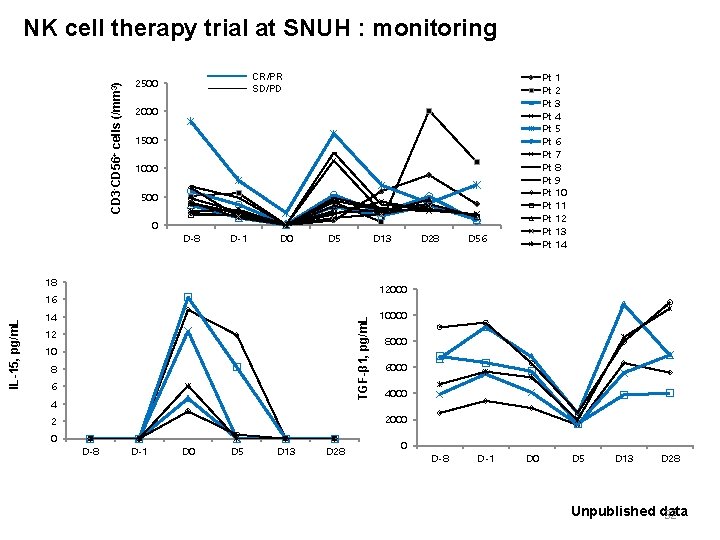
CD 3 -CD 56+ cells (/mm 3) NK cell therapy trial at SNUH : monitoring 2000 1500 1000 500 0 D-8 D-1 D 0 D 5 D 13 18 14 TGF-β 1, pg/m. L IL-15, pg/m. L D 28 D 56 1 2 3 4 5 6 7 8 9 10 11 12 13 14 12000 16 12 10 8 6 4 10000 8000 6000 4000 2 0 Pt Pt Pt Pt CR/PR SD/PD 2500 D-8 D-1 D 0 D 5 D 13 D 28 Unpublished data 32
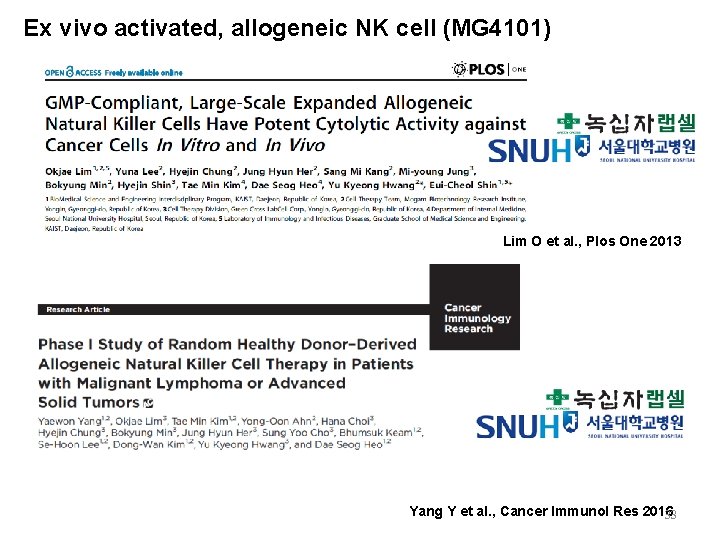
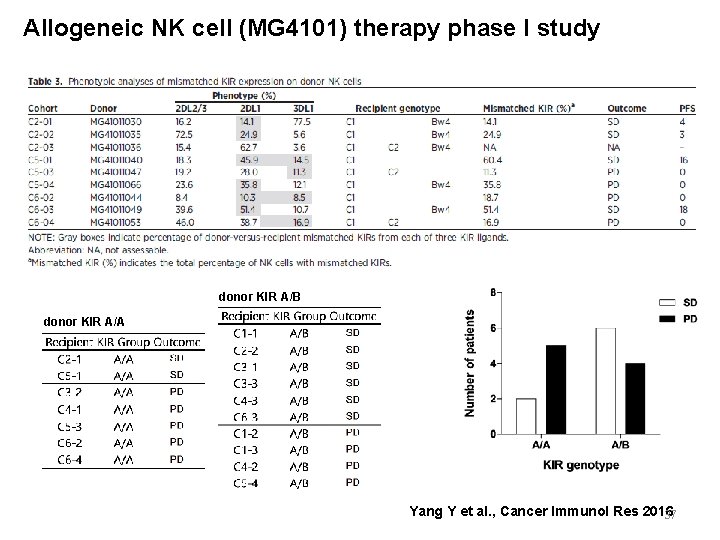
Ex vivo activated, allogeneic NK cell (MG 4101) Lim O et al. , Plos One 2013 Yang Y et al. , Cancer Immunol Res 2016 33
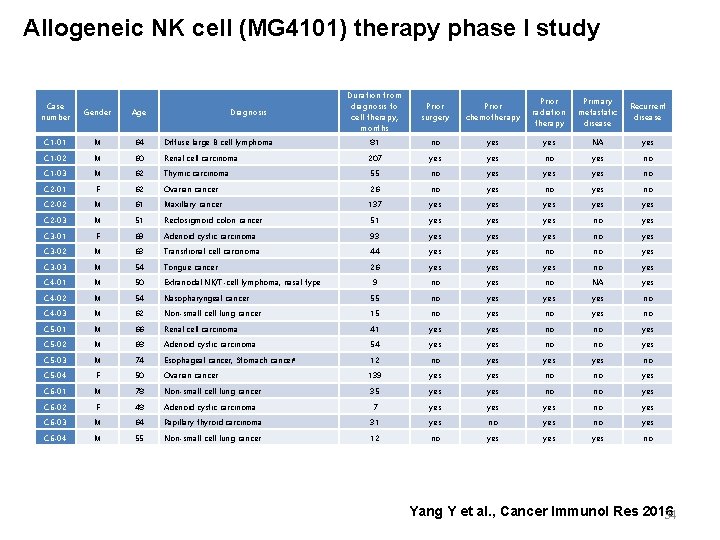
Allogeneic NK cell (MG 4101) therapy phase I study Duration from diagnosis to cell therapy, months Prior surgery Prior chemotherapy Prior radiation therapy Primary metastatic disease Recurrent disease Diffuse large B cell lymphoma 81 no yes NA yes 60 Renal cell carcinoma 207 yes no M 62 Thymic carcinoma 55 no yes yes no F 62 Ovarian cancer 26 no yes no C 2 -02 M 61 Maxillary cancer 137 yes yes yes C 2 -03 M 51 Rectosigmoid colon cancer 51 yes yes no yes C 3 -01 F 69 Adenoid cystic carcinoma 93 yes yes no yes C 3 -02 M 63 Transitional cell carcinoma 44 yes no no yes C 3 -03 M 54 Tongue cancer 26 yes yes no yes C 4 -01 M 50 Extranodal NK/T-cell lymphoma, nasal type 9 no yes no NA yes C 4 -02 M 54 Nasopharyngeal cancer 55 no yes yes no C 4 -03 M 62 Non-small cell lung cancer 15 no yes no C 5 -01 M 66 Renal cell carcinoma 41 yes no no yes C 5 -02 M 68 Adenoid cystic carcinoma 54 yes no no yes C 5 -03 M 74 Esophageal cancer, Stomach cancera 12 no yes yes no C 5 -04 F 50 Ovarian cancer 139 yes no no yes C 6 -01 M 78 Non-small cell lung cancer 35 yes no no yes C 6 -02 F 48 Adenoid cystic carcinoma 7 yes yes no yes C 6 -03 M 64 Papillary thyroid carcinoma 31 yes no yes C 6 -04 M 55 Non-small cell lung cancer 12 no yes yes no Case number Gender Age C 1 -01 M 64 C 1 -02 M C 1 -03 C 2 -01 Diagnosis Yang Y et al. , Cancer Immunol Res 2016 34
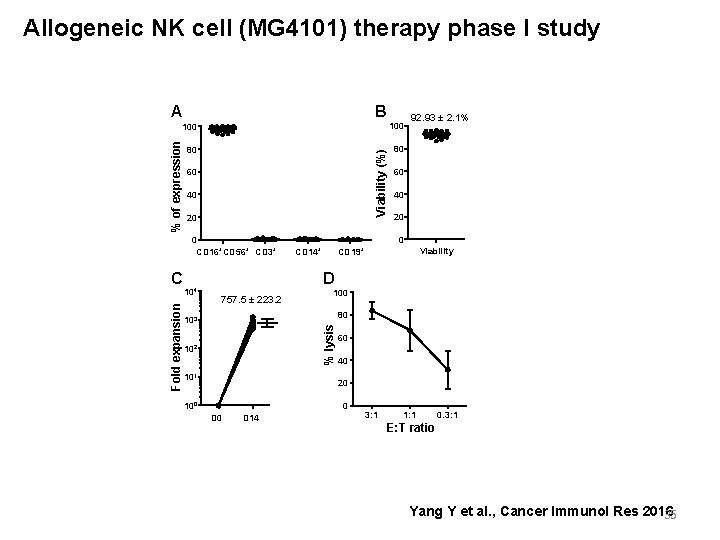
Allogeneic NK cell (MG 4101) therapy phase I study B 100 80 80 Viability (%) % of expression A 60 40 20 0 CD 16+CD 56+ CD 3+ 104 60 40 20 0 CD 14+ Viability CD 19+ D 757. 5 ± 223. 2 100 80 103 % lysis Fold expansion C 92. 93 ± 2. 1% 102 101 60 40 20 100 0 D 14 3: 1 1: 1 0. 3: 1 E: T ratio Yang Y et al. , Cancer Immunol Res 2016 35
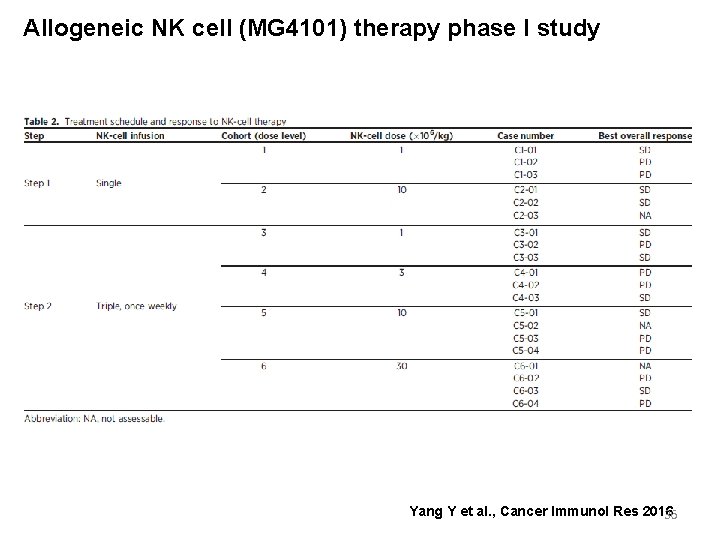
Allogeneic NK cell (MG 4101) therapy phase I study Yang Y et al. , Cancer Immunol Res 2016 36
Allogeneic NK cell (MG 4101) therapy phase I study donor KIR A/B donor KIR A/A Yang Y et al. , Cancer Immunol Res 2016 37
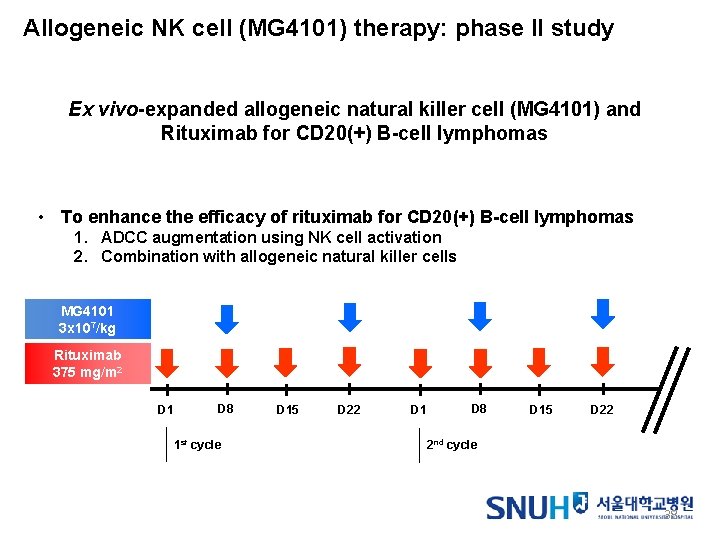
Allogeneic NK cell (MG 4101) therapy: phase II study Ex vivo-expanded allogeneic natural killer cell (MG 4101) and Rituximab for CD 20(+) B-cell lymphomas • To enhance the efficacy of rituximab for CD 20(+) B-cell lymphomas 1. ADCC augmentation using NK cell activation 2. Combination with allogeneic natural killer cells MG 4101 3 x 10⁷/kg Rituximab 375 mg/m 2 D 1 D 8 1 st cycle D 15 D 22 D 1 D 8 D 15 D 22 2 nd cycle 38
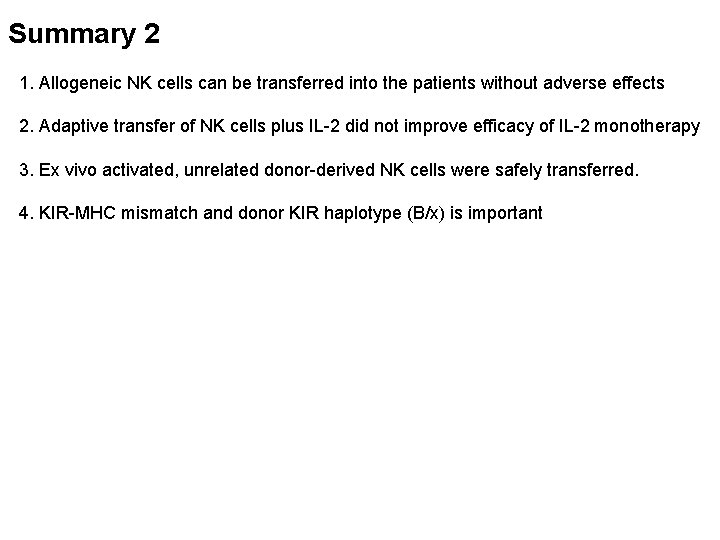
Summary 2 1. Allogeneic NK cells can be transferred into the patients without adverse effects 2. Adaptive transfer of NK cells plus IL-2 did not improve efficacy of IL-2 monotherapy 3. Ex vivo activated, unrelated donor-derived NK cells were safely transferred. 4. KIR-MHC mismatch and donor KIR haplotype (B/x) is important
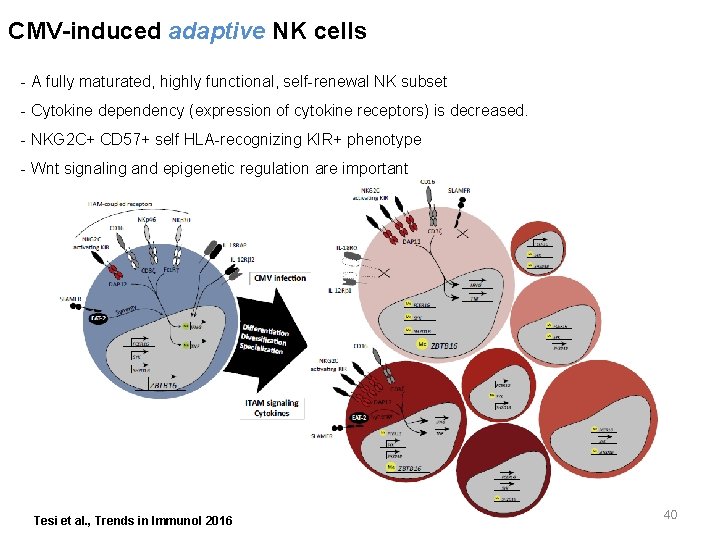
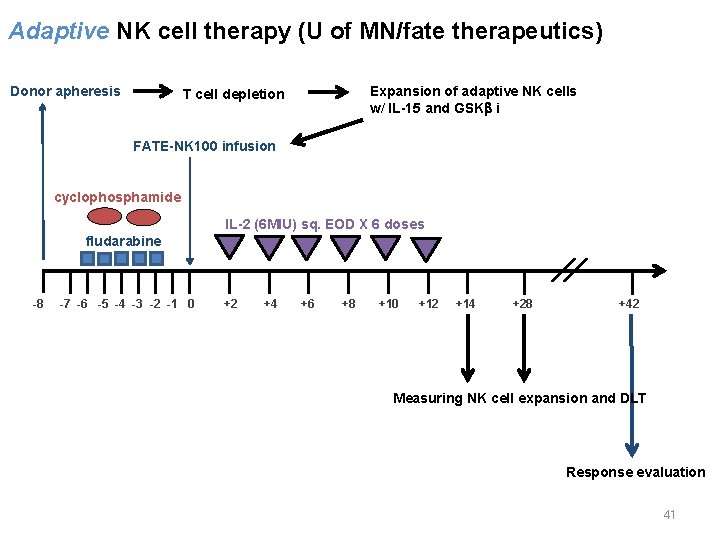
CMV-induced adaptive NK cells - A fully maturated, highly functional, self-renewal NK subset - Cytokine dependency (expression of cytokine receptors) is decreased. - NKG 2 C+ CD 57+ self HLA-recognizing KIR+ phenotype - Wnt signaling and epigenetic regulation are important Tesi et al. , Trends in Immunol 2016 40
Adaptive NK cell therapy (U of MN/fate therapeutics) Donor apheresis Expansion of adaptive NK cells w/ IL-15 and GSKb i T cell depletion FATE-NK 100 infusion cyclophosphamide IL-2 (6 MIU) sq. EOD X 6 doses fludarabine -8 -7 -6 -5 -4 -3 -2 -1 0 +2 +4 +6 +8 +10 +12 +14 +28 +42 Measuring NK cell expansion and DLT Response evaluation 41
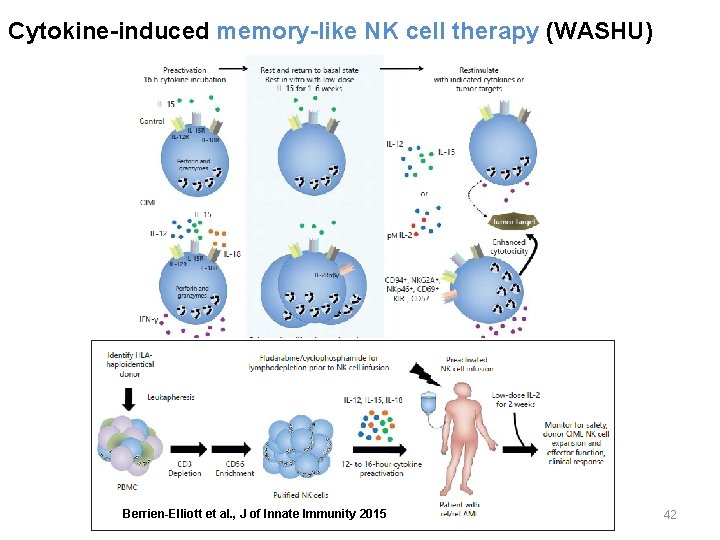
Cytokine-induced memory-like NK cell therapy (WASHU) Berrien-Elliott et al. , J of Innate Immunity 2015 42
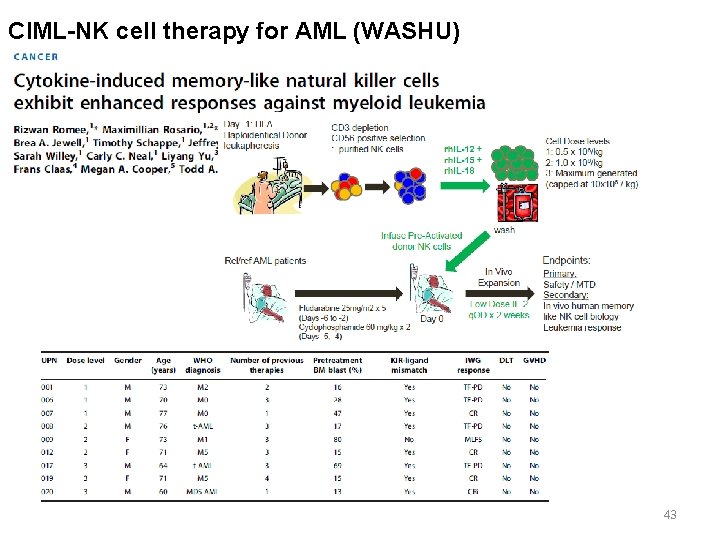
CIML-NK cell therapy for AML (WASHU) 43
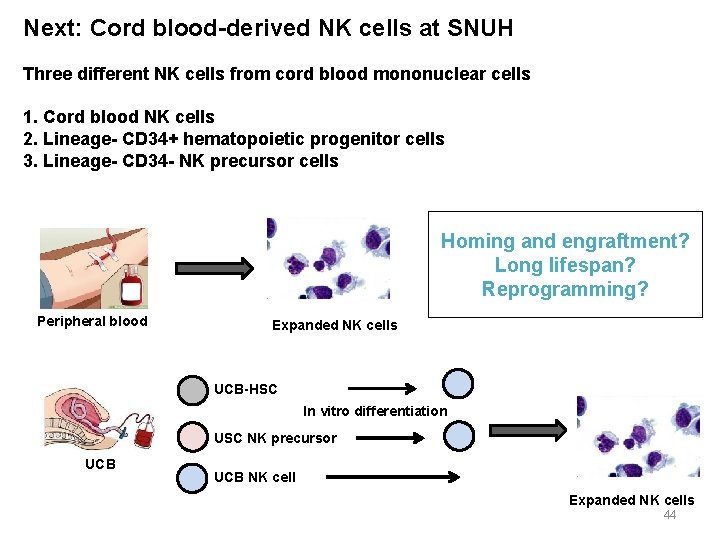
Next: Cord blood-derived NK cells at SNUH Three different NK cells from cord blood mononuclear cells 1. Cord blood NK cells 2. Lineage- CD 34+ hematopoietic progenitor cells 3. Lineage- CD 34 - NK precursor cells Homing and engraftment? Long lifespan? Reprogramming? Peripheral blood Expanded NK cells UCB-HSC In vitro differentiation USC NK precursor UCB NK cell Expanded NK cells 44
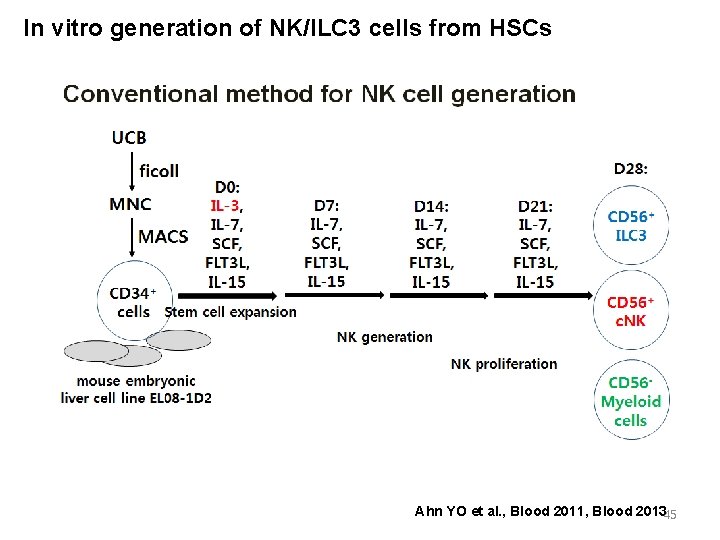
In vitro generation of NK/ILC 3 cells from HSCs Ahn YO et al. , Blood 2011, Blood 201345
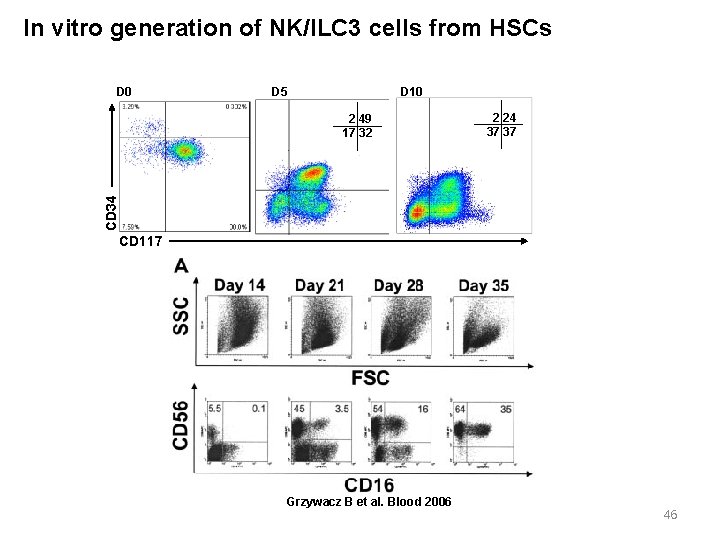
In vitro generation of NK/ILC 3 cells from HSCs D 0 D 5 D 10 2 24 37 37 CD 34 2 49 17 32 CD 117 Grzywacz B et al. Blood 2006 46
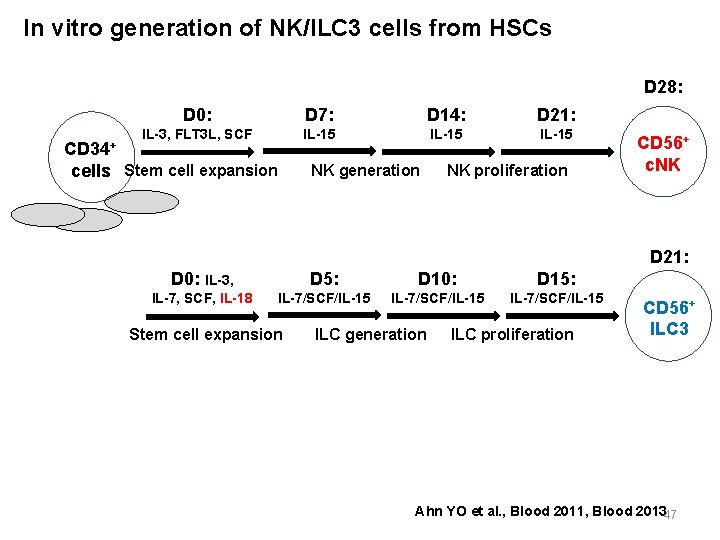
In vitro generation of NK/ILC 3 cells from HSCs D 28: CD 34+ D 0: D 7: D 14: D 21: IL-3, FLT 3 L, SCF IL-15 cells Stem cell expansion NK generation NK proliferation CD 56+ c. NK D 21: D 0: IL-3, D 5: D 10: D 15: IL-7, SCF, IL-18 IL-7/SCF/IL-15 Stem cell expansion ILC generation ILC proliferation CD 56+ ILC 3 Ahn YO et al. , Blood 2011, Blood 201347
Optimized protocols for generating c. NK and ILC 3 s IL-15+FL SCF+IL 7+FL 95. 4 CD 117 76. 7 CD 56+ gated 88. 7 ILC 3 92. 7 CD 117 c. NK CD 94 Ahn YO et al. Blood 2013 48
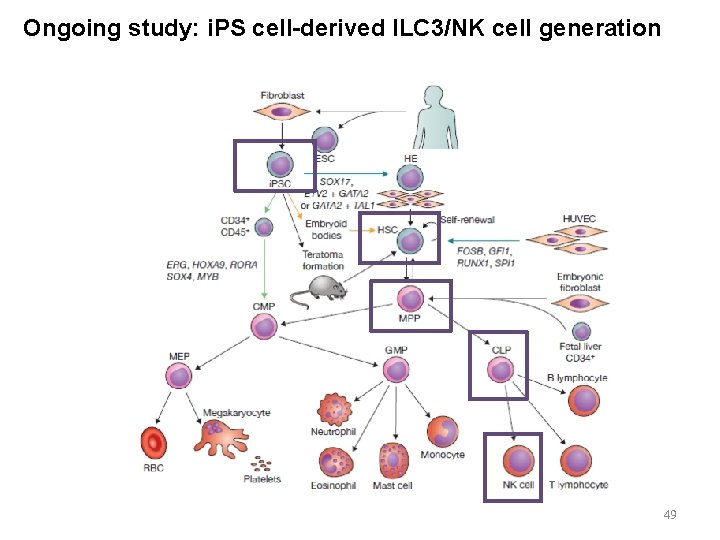
Ongoing study: i. PS cell-derived ILC 3/NK cell generation 49
Summary 3 1. “Innate lymphoid” NK cells also have memory/adaptive features 2. Use of adaptive NK cells and cytokine-induced memory like NK cells are under clinical trials 3. NK cells are successfully generated from cord blood HSCs in vitro, but these NK cells are not fully maturated 4. i. PS/ES cells also can be differentiated into NK cells in vitro