
Nixon Ford Carter CHAPTER 25 Section 1 The
- Slides: 36
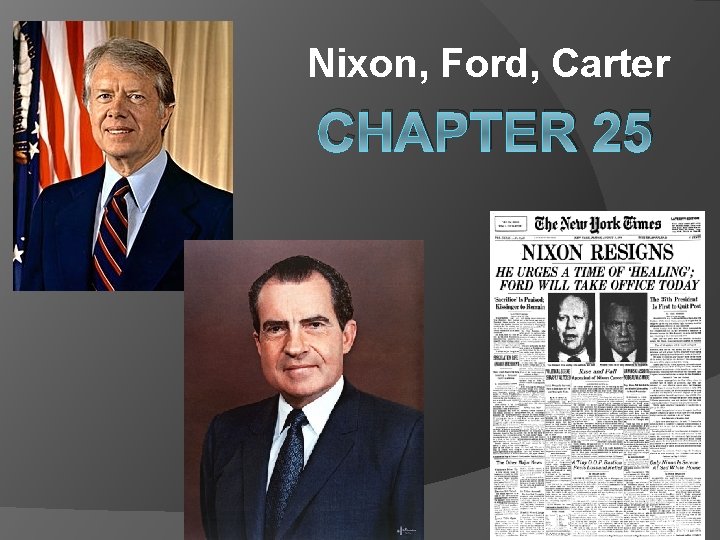
Nixon, Ford, Carter CHAPTER 25
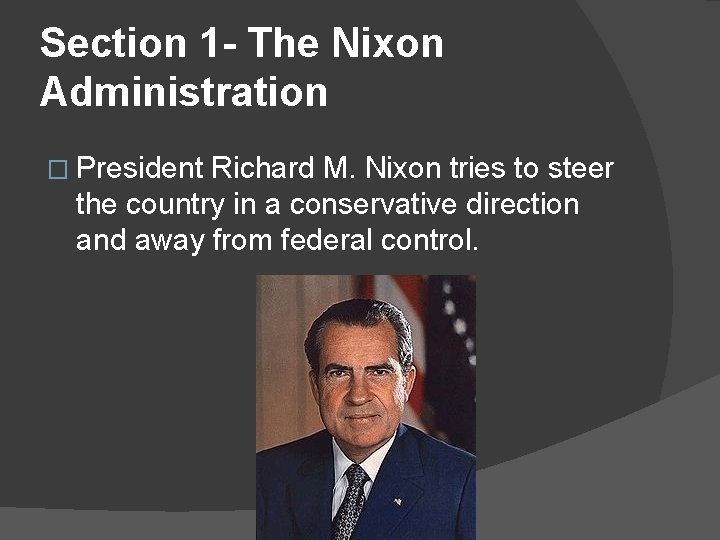
Section 1 - The Nixon Administration � President Richard M. Nixon tries to steer the country in a conservative direction and away from federal control.
Nixon’s New Conservatism New Federalism � Richard M. Nixon wants to decrease size and influence of federal government � New Federalism —give part of federal power to state and local governments • Nixon proposes revenue sharing, which becomes law in 1972: �state, local governments now decide how to spend federal money
Welfare Reform � Nixon is not as successful in attempts to revise welfare- he felt welfare had become inefficient � Family Assistance Plan gives family of four with no outside income a base income of $1, 600/ year and earn up to $4, 000 additional � Unemployed would have to accept any reasonable work offered to them � Senate liberals and conservatives defeat bill
Law and Order Politics • Nixon moves aggressively to end war, mend divisiveness in country • Begins law and order policies to end antiwar riots, demonstrations- appeal to “silent majority” �sometimes uses illegal tactics: ○ wire-taps left-wing activist ○ builds a personal enemies list, he is a bit paranoid
Nixon’s Southern Strategy A New South � Southern Democrats help segregationist George Wallace win 5 states in 1968 election � Nixon must win over Southern Democrats for votes and a majority in Congress in 1972 election � Southern strategy-appeal to dislike of desegregation and a liberal Supreme Court Nixon Slows Integration � To attract white voters in South, Nixon slows desegregation � Supreme Court orders Nixon to comply with Brown ruling � Nixon opposes extension of Voting Rights Act but Congress extends it
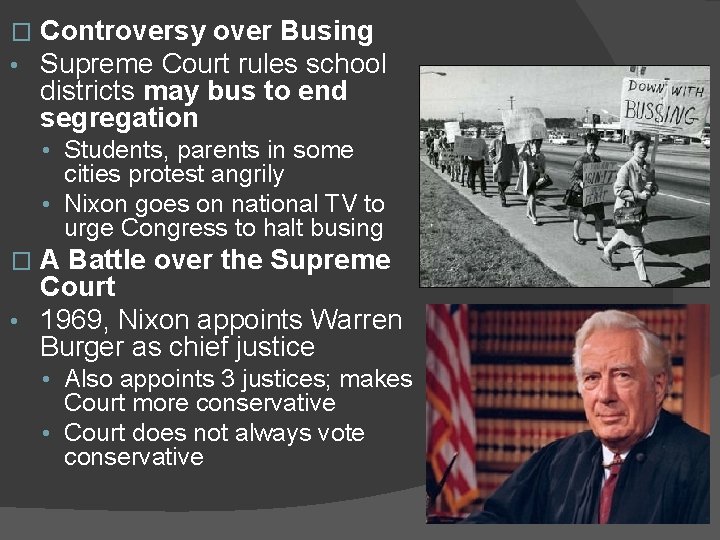
� • Controversy over Busing Supreme Court rules school districts may bus to end segregation • Students, parents in some cities protest angrily • Nixon goes on national TV to urge Congress to halt busing A Battle over the Supreme Court • 1969, Nixon appoints Warren Burger as chief justice � • Also appoints 3 justices; makes Court more conservative • Court does not always vote conservative
Confronting a Stagnant Economy The Causes of Stagflation � Stagflation-combination of high inflation, high unemployment � Inflation result of LBJ’s deficit spending on war, social programs � Unemployment from more international trade, new workers � Rising oil prices, U. S. dependence on foreign oil add to inflation � Organization of Petroleum Exporting Countries (OPEC) embargo in 1973 on U. S. then in 1974 prices are 4 x higher (1973 oil crisis) Nixon Battles Stagflation � Nixon tries different strategies; none have much success
Nixon’s Foreign Policy Triumphs Kissinger and Realpolitik � Henry Kissinger—national security adviser, later secretary of state �Realpolitik—foreign policy based on power issues, not ideals, morals • Realpolitik calls for U. S. to confront powerful nations, ignore weak • Nixon, Kissinger follow policy of détente— easing Cold War tensions • Visits China and Mao Zedong
Nixon Visits China � � 1972, Nixon’s visit to China is a huge success U. S. and China agree to: �cooperate over disputes, have scientific, cultural exchange � Nixon Takes advantage of problems between China & Soviet Union Nixon Travels to Moscow � First U. S. President to visit the USSR • 1972, Nixon visits Moscow; he and premier Brezhnev sign SALT I Treaty: �Strategic Arms Limitation Talks limit missiles to 1972 levels • • Foreign policy triumphs Expected peace in Vietnam helps him to win reelection in 1972
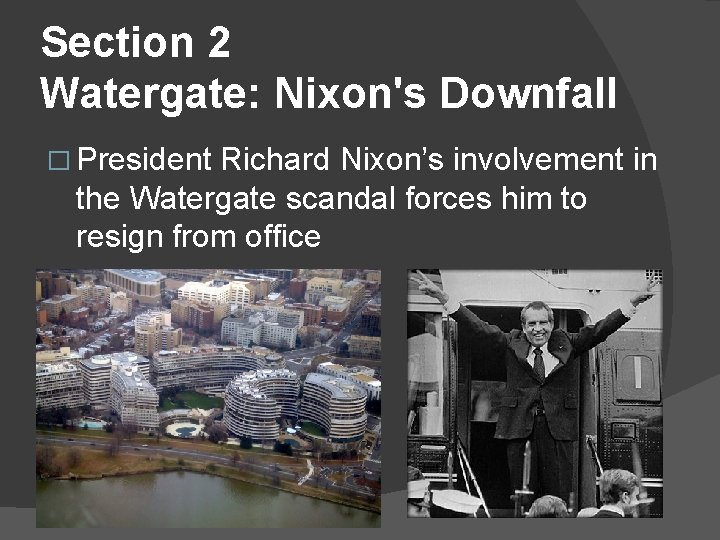
Section 2 Watergate: Nixon's Downfall � President Richard Nixon’s involvement in the Watergate scandal forces him to resign from office
President Nixon and His White House An Imperial Presidency � Depression, WWII, Cold War make executive the most powerful branch � Nixon expands presidential powers, ignores Congress (thinks he’s above the law) � The President’s Men � Nixon has small, loyal group of advisers- like him, desire secrecy �H. R. Haldeman, White House chief of staff �John Ehrlichman, Chief domestic adviser �John Mitchell, Nixon’s former attorney general �John Dean, Presidential Counsel
The Drive Toward Reelection Nixon fears losing an election � His campaign team is willing to do whatever they deem necessary to gain advantages- even breaking into the Democratic National Committee Headquarters to steal info. � A Bungled Burglary � 2: 30 AM June 17, 1972 a guard at the Watergate complex in Washington D. C. catches five men breaking into the campaign headquarters of the DNC �Plan to photograph documents with Democrats strategy and place wiretaps, or “bugs”, on the telephones �
� Press discovers that the leader was James Mc. Cord, a former CIA agent � He was also a security coordinator for a group known as the Committee to Reelect the President (CRP) � John Mitchell (former Attorney General) is the CRP’s director � Watergate scandal is administration’s attempt to cover up the break-in. �They destroy all documents & try to stop investigation- ask CIA to urge FBI to stop its investigations on the ground of national security �Buy burglars’ silence ($450, 000 passed out by the CRP)
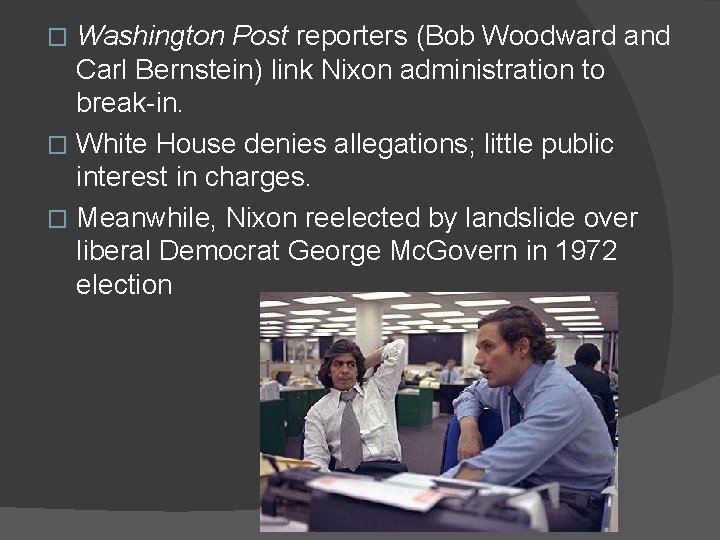
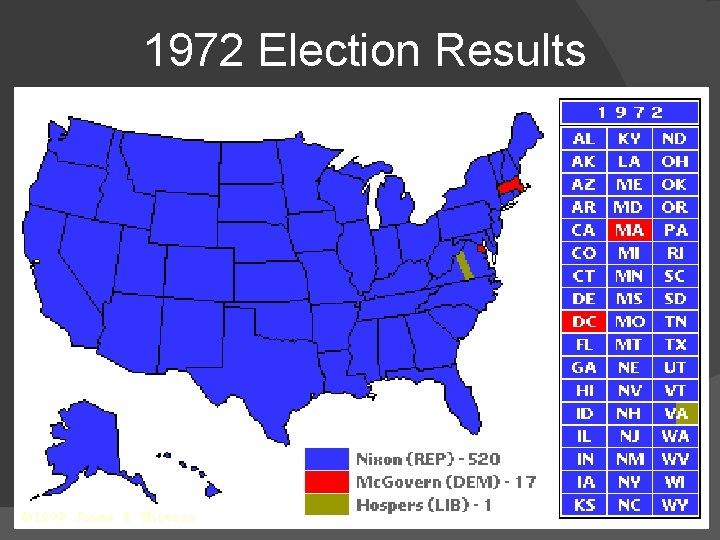
Washington Post reporters (Bob Woodward and Carl Bernstein) link Nixon administration to break-in. � White House denies allegations; little public interest in charges. � Meanwhile, Nixon reelected by landslide over liberal Democrat George Mc. Govern in 1972 election �
1972 Election Results
The Cover-up Unravels The Trial Begins • It’s clear now that White House involved- public interest now rises • Question: What did the president know and when did he know it? • April 30, 1973 - Nixon dismisses Presidential counsel John Dean, while Haldeman, Ehrlichman, and new Attorney General Richard Kleindienst (replaced John Mitchell) all resign. • Nixon goes on TV and denies any involvement • May 1973 Senate begins its investigation- the “president’s men” testify
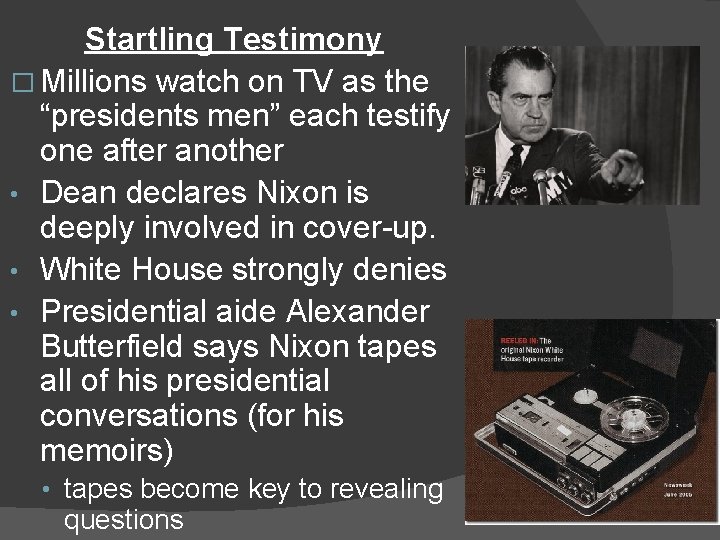
Startling Testimony � Millions watch on TV as the “presidents men” each testify one after another • Dean declares Nixon is deeply involved in cover-up. • White House strongly denies • Presidential aide Alexander Butterfield says Nixon tapes all of his presidential conversations (for his memoirs) • tapes become key to revealing questions
The Saturday Night Massacre • A year long battle for the tapes ensues • Special prosecutor Archibald Cox subpoenas tapes in Oct. 1973; Nixon refuses. • Nixon orders Cox fired, but attorney general Elliot Richardson refuses to fire him. • Saturday Night Massacre: Richardson resigns; deputy attorney general refuses to fire Cox, he is then fired. • Cox finally fired by Solicitor General Robert Bork • Cox’s replacement, Leon Jaworski, also calls for tapes. • Vice President Spiro Agnew resigns, revealed he was accepted bribes while governor of Maryland • Nixon nominates Gerald Ford as VP & Congress confirms.
The Fall of a President Nixon Releases the Tapes • March 1974, grand jury indicts 7 presidential aides. �charges: conspiracy, obstruction of justice, perjury. • Nixon tells TV audience he is releasing edited transcripts of conversations • Investigators demand unedited tapes • Goes to the Supreme Court • July, Supreme Court rules unanimously Nixon must surrender original tapes. (8 -0) • Reject Nixon’s claim that this would violate national security • Nixon still claims he had done nothing wrong- “I am not a crook!”
The President Resigns • House Judiciary Committee approves 3 articles of impeachment (Formal accusation of wrongdoing while in office) • Charges: obstruction of justice, abuse of power, contempt of Congress (refusing to obey subpoena to release the tapes. ) • Nixon finally releases tapes- there is a disturbing 18 ½ minute gap • Claims that Rose Mary Woods, Presidents secretary, accidentally erased parts • Still they ultimately show he knew of his administrations role and the cover up. • Before full House votes on impeachment, Nixon resigns. • Nixon still admitted no guilt
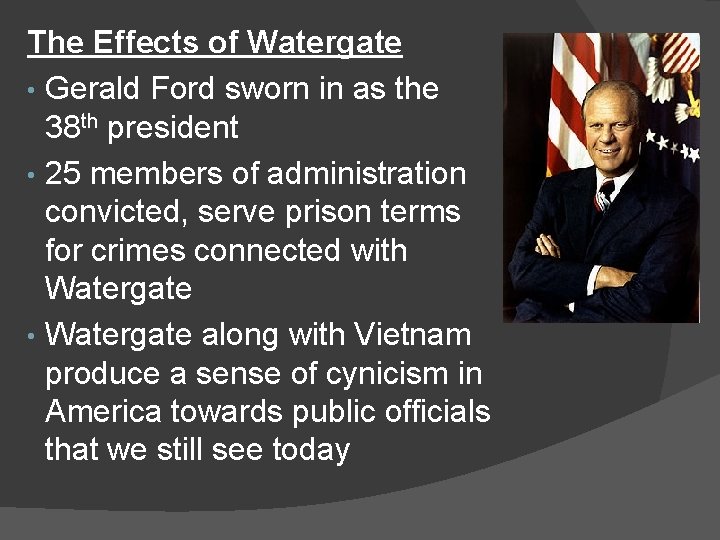
The Effects of Watergate • Gerald Ford sworn in as the 38 th president • 25 members of administration convicted, serve prison terms for crimes connected with Watergate • Watergate along with Vietnam produce a sense of cynicism in America towards public officials that we still see today
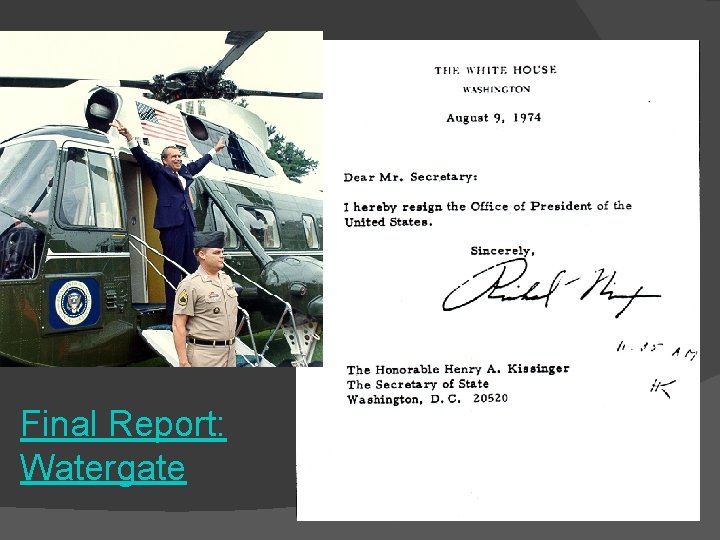
Final Report: Watergate
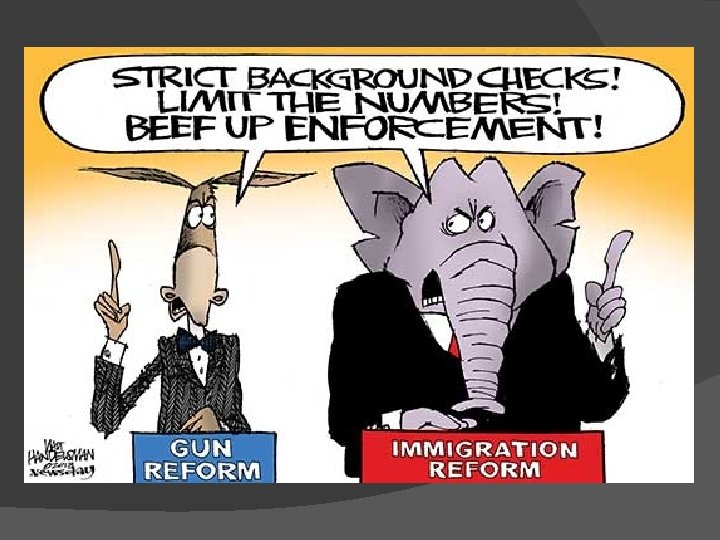
What issues does this cartoon address? 2. What symbols or caricatures do you see? 3. Does the cartoon do a good job of relaying its message to the audience? 1.
Nixon/Watergate Political Cartoon Activity Listen to which group you are in and meet with your group 2. As a group look at each political cartoon #1 -5 and then answer the accompanying questions for each 3. When you are finished wait for the other groups to finish up and keep looking for any other meanings/symbolism in the cartoons you may have missed 1.
Section 3 The Ford and Carter Years � The Ford and Carter administrations attempt to remedy the nation’s worst economic crisis in decades.
Ford Travels a Rough Road “A Ford, Not a Lincoln” September 1974, new president Gerald R. Ford pardons Nixon • Tries to move country past Watergate; loses much public support • Ford Tries to “Whip” Inflation Unsuccessfully asks public to cut back use of oil, gas, save energy • Cuts government spending; urges higher interest to restrict credit • “Tight money” policy triggers recession • Continually battles Democratic Congress with own economic agenda •
Ford’s Foreign Policy � Carrying Out Nixon’s Foreign Policies Ford continues negotiations with China, Soviet Union • Signs Helsinki Accords—cooperation between Eastern, Western Europe • � Ongoing Turmoil in Southeast Asia Vietnam cease-fire breaks down; Ford asks Congress for aid to South • Congress refuses; South Vietnam surrenders in 1975 • Cambodia seizes U. S. merchant ship Mayagüez • Ford uses big military response; 41 die to rescue 39, is criticized •
Carter Enters the White House �Mr. Carter Goes to Washington �Jimmy Carter promises to restore integrity to presidency �defeats Ford by narrow margin Has down-to-earth style; holds “fireside chats” on radio, TV • Does not make deals with Congress; relies on Georgia advisers • Both parties in Congress join to sink Carter budgets, major reforms •
Carter’s Domestic Agenda �Confronting the Energy Crisis Carter offers energy proposals; oil-, gasproducing states, auto makers resist �National Energy Act—encourages conservation, U. S. energy sources • National Energy Act, conservation cut foreign oil dependence • �The Economic Crisis Worsens Violence in Middle East creates fuel shortage; OPEC raises prices • Carter tries various methods, none work; gives “malaise” speech • 1980 inflation 14%, standard of living drops; people lose confidence •
�A Changing Economy From 1950 s automation, foreign competition reduce manufacturing jobs • Service sector expands, higher paying jobs require education, skills • �Carter and Civil Rights Carter hires more African Americans, women than previous presidents • Many civil rights groups disappointed because few laws passed • 1978 Bakke case, Supreme Court strikes affirmative action quotas • � allows race as one factor in university admissions
Human Rights Foreign Policy �Advancing Human Rights Carter’s foreign policy promotes human rights—basic freedoms • Cuts off aid to some, not all, allies that mistreat own citizens • �Yielding the Panama Canal People in Panama resent having country split in two by foreign power • 1977 treaty gives control of canal to Panama on Dec. 31, 1999 •
�The Collapse of Détente Carter’s insistence on human rights strains relations with U. S. S. R. • SALT II talks delayed; Carter, Brezhnev finally sign June 1979 • SALT II meets sharp opposition in Senate • December, Soviets invade Afghanistan; Carter lets SALT II die •
Triumph and Crisis in the Middle East �The Camp David Accords 1978 Carter hosts talks between Anwar el-Sadat, Menachem Begin �Camp David Accords forge peace between Israel, Egypt: • �Israel withdraws from Sinai Peninsula �Egypt recognizes Israel’s right to exist
The Iran Hostage Crisis �Ayatollah Ruhollah Khomeini leads overthrow of shah �establishes Islamic state Carter supports shah; allows him entry to U. S. for cancer treatment • Students seize U. S. embassy, take 52 hostages; demand shah back • Carter refuses; standoff ensues; intense secret negotiations follow • Captives released Jan. 1981, shortly after Ronald Reagan sworn in •