
Nitrous Oxide Hazards and Proper Use College of
- Slides: 11
Nitrous Oxide Hazards and Proper Use College of Dental Medicine Occupational Safety Programs www. ehs. columbia. edu
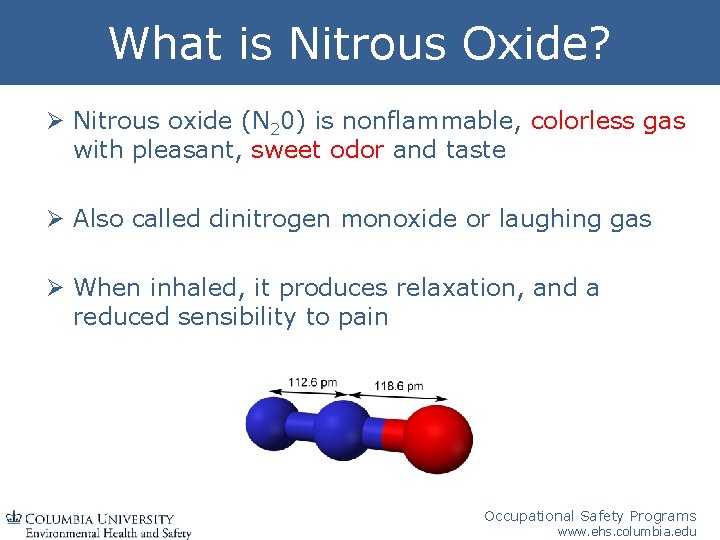
What is Nitrous Oxide? Ø Nitrous oxide (N 20) is nonflammable, colorless gas with pleasant, sweet odor and taste Ø Also called dinitrogen monoxide or laughing gas Ø When inhaled, it produces relaxation, and a reduced sensibility to pain Occupational Safety Programs www. ehs. columbia. edu
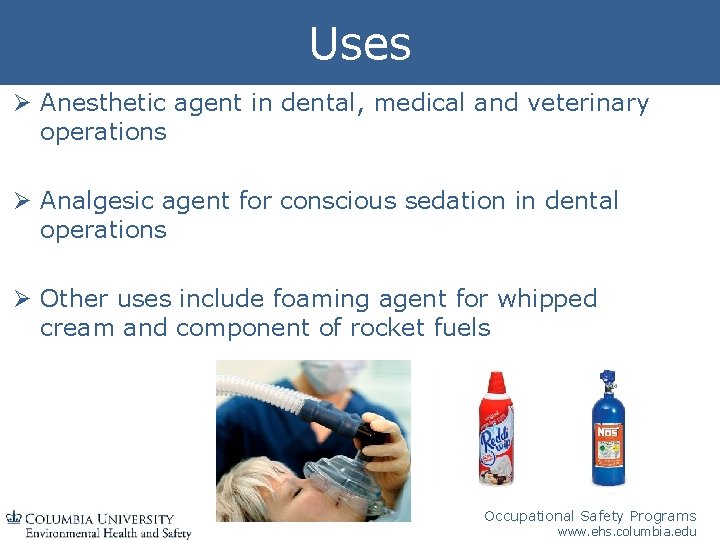
Uses Ø Anesthetic agent in dental, medical and veterinary operations Ø Analgesic agent for conscious sedation in dental operations Ø Other uses include foaming agent for whipped cream and component of rocket fuels Occupational Safety Programs www. ehs. columbia. edu
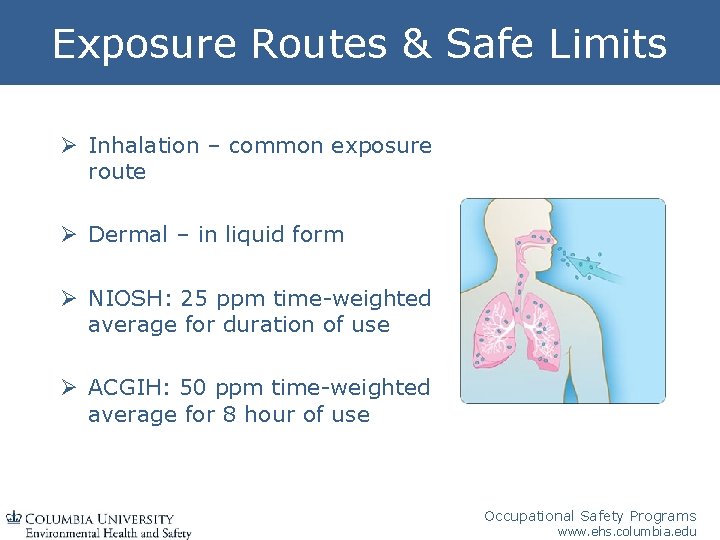
Exposure Routes & Safe Limits Ø Inhalation – common exposure route Ø Dermal – in liquid form Ø NIOSH: 25 ppm time-weighted average for duration of use Ø ACGIH: 50 ppm time-weighted average for 8 hour of use Occupational Safety Programs www. ehs. columbia. edu
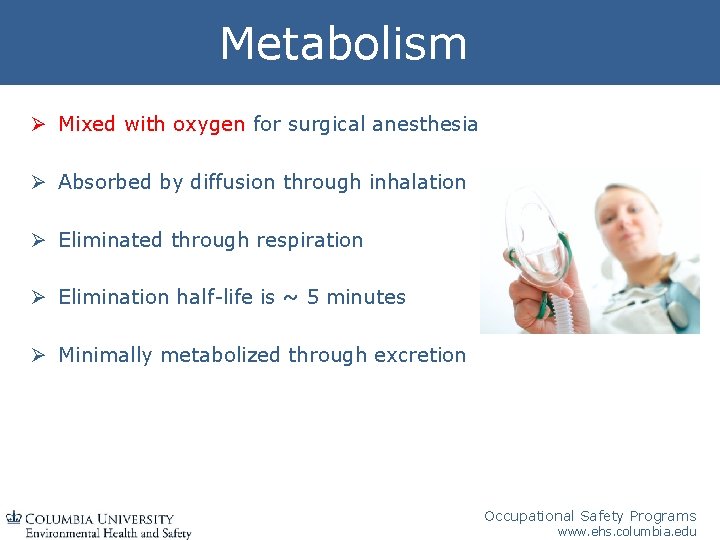
Metabolism Ø Mixed with oxygen for surgical anesthesia Ø Absorbed by diffusion through inhalation Ø Eliminated through respiration Ø Elimination half-life is ~ 5 minutes Ø Minimally metabolized through excretion Occupational Safety Programs www. ehs. columbia. edu
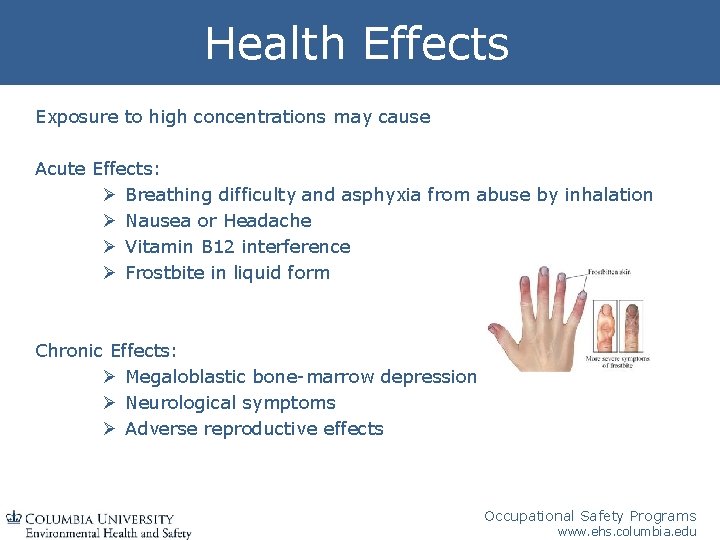
Health Effects Exposure to high concentrations may cause Acute Effects: Ø Breathing difficulty and asphyxia from abuse by inhalation Ø Nausea or Headache Ø Vitamin B 12 interference Ø Frostbite in liquid form Chronic Effects: Ø Megaloblastic bone-marrow depression Ø Neurological symptoms Ø Adverse reproductive effects Occupational Safety Programs www. ehs. columbia. edu
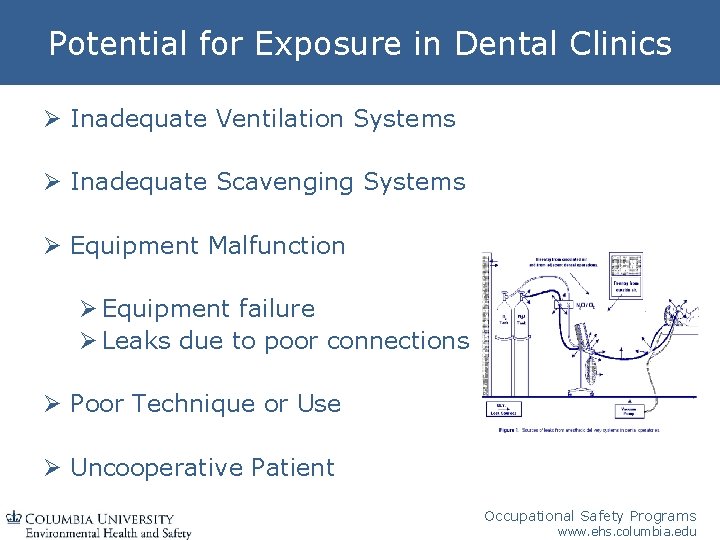
Potential for Exposure in Dental Clinics Ø Inadequate Ventilation Systems Ø Inadequate Scavenging Systems Ø Equipment Malfunction Ø Equipment failure Ø Leaks due to poor connections Ø Poor Technique or Use Ø Uncooperative Patient Occupational Safety Programs www. ehs. columbia. edu
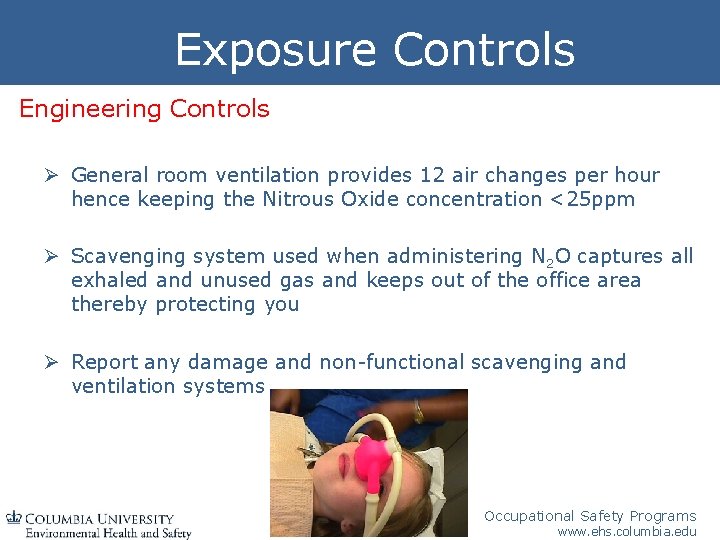
Exposure Controls Engineering Controls Ø General room ventilation provides 12 air changes per hour hence keeping the Nitrous Oxide concentration <25 ppm Ø Scavenging system used when administering N 2 O captures all exhaled and unused gas and keeps out of the office area thereby protecting you Ø Report any damage and non-functional scavenging and ventilation systems Occupational Safety Programs www. ehs. columbia. edu
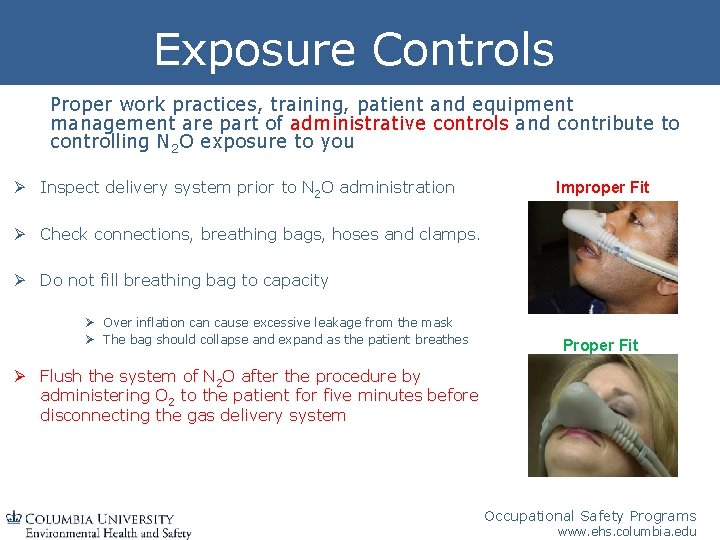
Exposure Controls Proper work practices, training, patient and equipment management are part of administrative controls and contribute to controlling N 2 O exposure to you Ø Inspect delivery system prior to N 2 O administration Improper Fit Ø Check connections, breathing bags, hoses and clamps. Ø Do not fill breathing bag to capacity Ø Over inflation cause excessive leakage from the mask Ø The bag should collapse and expand as the patient breathes Proper Fit Ø Flush the system of N 2 O after the procedure by administering O 2 to the patient for five minutes before disconnecting the gas delivery system Occupational Safety Programs www. ehs. columbia. edu
Exposure Assessments Surveys performed by consultant to ensure systems are working properly and- Ø Nitrous oxide levels are < 5 ppm Ø Air changes are adequate (> 10 ACH) in rooms Ø All rooms are confirmed to be under negative pressure Occupational Safety Programs www. ehs. columbia. edu
occusafety@columbia. edu Occupational Safety Programs www. ehs. columbia. edu