
Nitrogenase enzyme complex Nitrogenase Electron transport Mo Fe
- Slides: 52
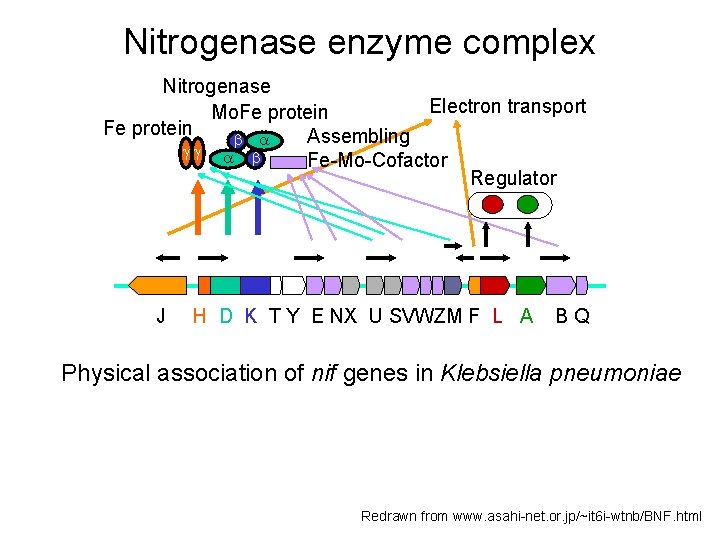
Nitrogenase enzyme complex Nitrogenase Electron transport Mo. Fe protein Assembling Fe-Mo-Cofactor Regulator J H D K T Y E NX U SVWZM F L A BQ Physical association of nif genes in Klebsiella pneumoniae Redrawn from www. asahi-net. or. jp/~it 6 i-wtnb/BNF. html
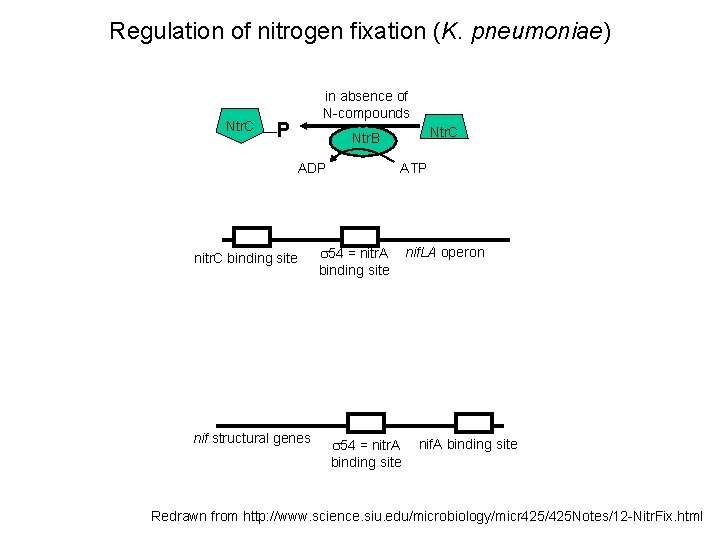
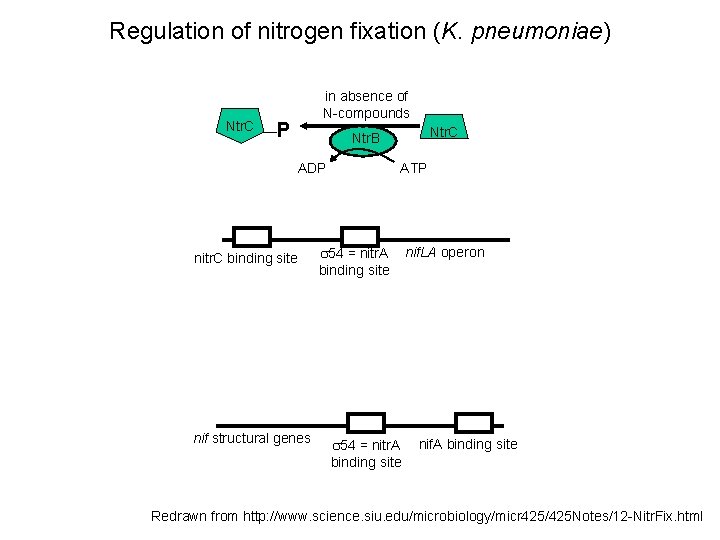
Regulation of nitrogen fixation (K. pneumoniae) Ntr. C in absence of N-compounds P Ntr. C Ntr. B ADP nitr. C binding site nif structural genes ATP 54 = nitr. A binding site nif. LA operon nif. A binding site Redrawn from http: //www. science. siu. edu/microbiology/micr 425/425 Notes/12 -Nitr. Fix. html
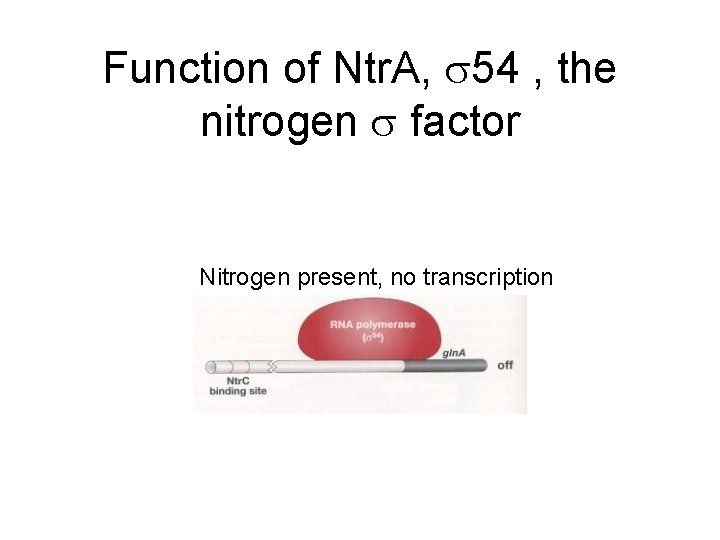
Function of Ntr. A, 54 , the nitrogen factor Nitrogen present, no transcription
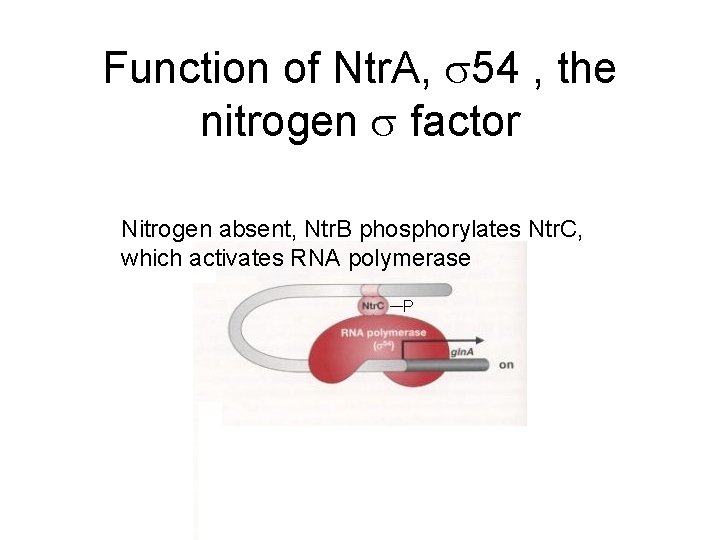
Function of Ntr. A, 54 , the nitrogen factor Nitrogen absent, Ntr. B phosphorylates Ntr. C, which activates RNA polymerase P
Regulation of nitrogen fixation (K. pneumoniae) Ntr. C in absence of N-compounds P Ntr. C Ntr. B ADP nitr. C binding site nif structural genes ATP 54 = nitr. A binding site nif. LA operon nif. A binding site Redrawn from http: //www. science. siu. edu/microbiology/micr 425/425 Notes/12 -Nitr. Fix. html
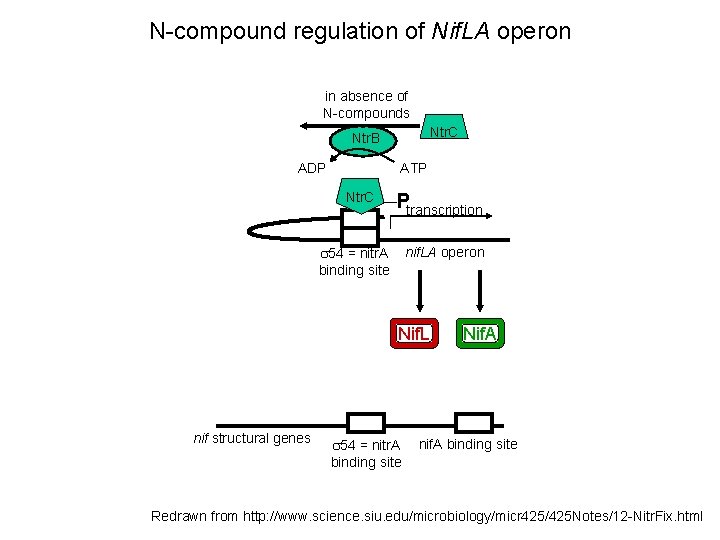
N-compound regulation of Nif. LA operon in absence of N-compounds Ntr. C Ntr. B ADP ATP Ntr. C Ptranscription 54 = nitr. A binding site nif. LA operon Nif. L nif structural genes 54 = nitr. A binding site Nif. A nif. A binding site Redrawn from http: //www. science. siu. edu/microbiology/micr 425/425 Notes/12 -Nitr. Fix. html
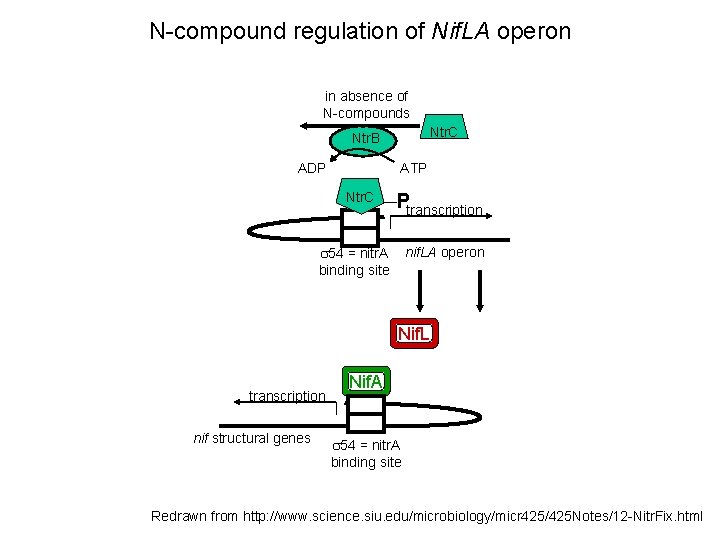
N-compound regulation of Nif. LA operon in absence of N-compounds Ntr. C Ntr. B ADP ATP Ntr. C Ptranscription 54 = nitr. A binding site nif. LA operon Nif. L transcription nif structural genes Nif. A 54 = nitr. A binding site Redrawn from http: //www. science. siu. edu/microbiology/micr 425/425 Notes/12 -Nitr. Fix. html
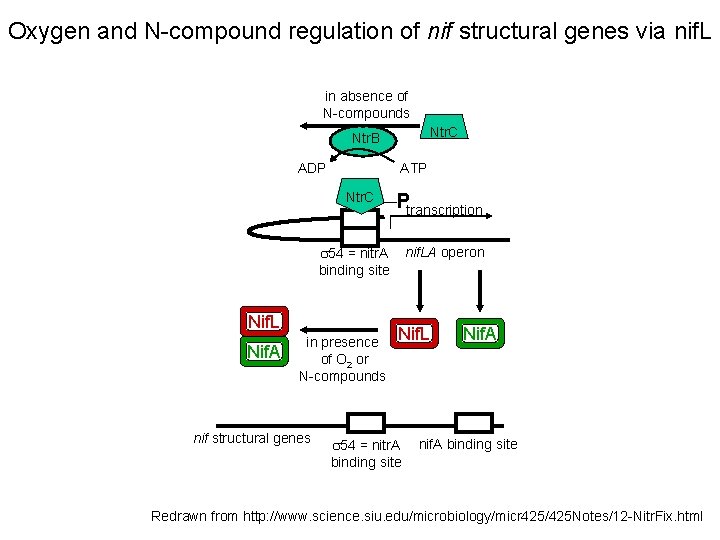
Oxygen and N-compound regulation of nif structural genes via nif. L in absence of N-compounds Ntr. C Ntr. B ADP ATP Ntr. C Ptranscription 54 = nitr. A binding site Nif. L Nif. A in presence of O 2 or N-compounds nif structural genes nif. LA operon Nif. L 54 = nitr. A binding site Nif. A nif. A binding site Redrawn from http: //www. science. siu. edu/microbiology/micr 425/425 Notes/12 -Nitr. Fix. html
Measuring N 2 fixation rates
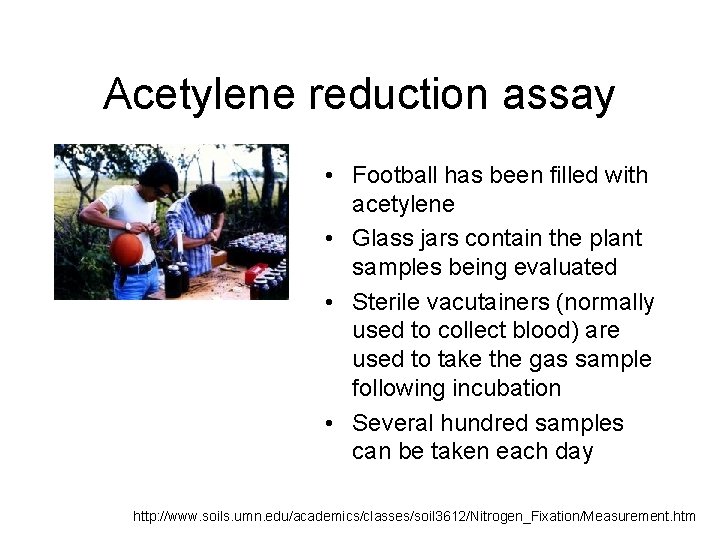
Acetylene reduction assay • Football has been filled with acetylene • Glass jars contain the plant samples being evaluated • Sterile vacutainers (normally used to collect blood) are used to take the gas sample following incubation • Several hundred samples can be taken each day http: //www. soils. umn. edu/academics/classes/soil 3612/Nitrogen_Fixation/Measurement. htm
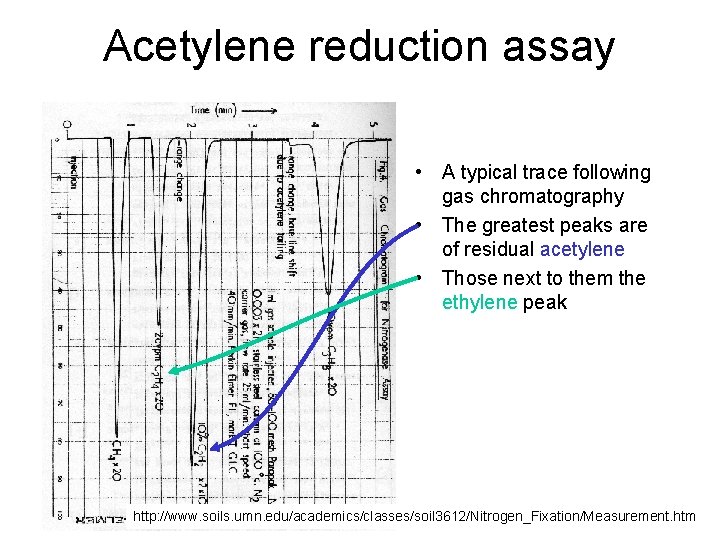
Acetylene reduction assay • A typical trace following gas chromatography • The greatest peaks are of residual acetylene • Those next to them the ethylene peak http: //www. soils. umn. edu/academics/classes/soil 3612/Nitrogen_Fixation/Measurement. htm
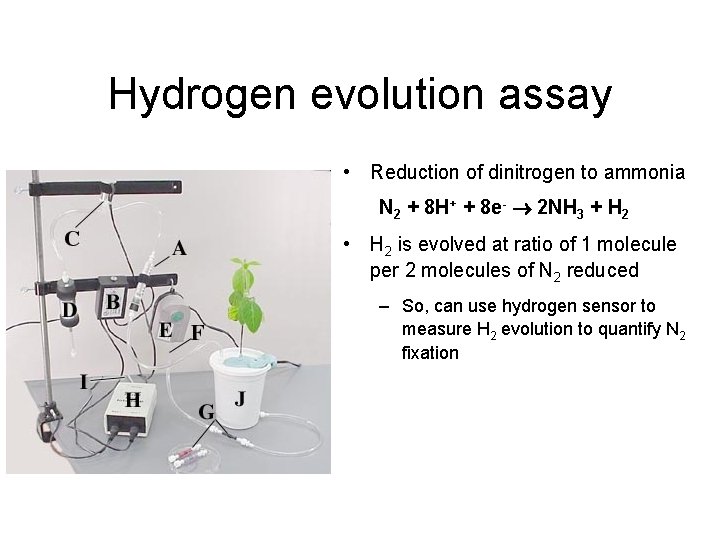
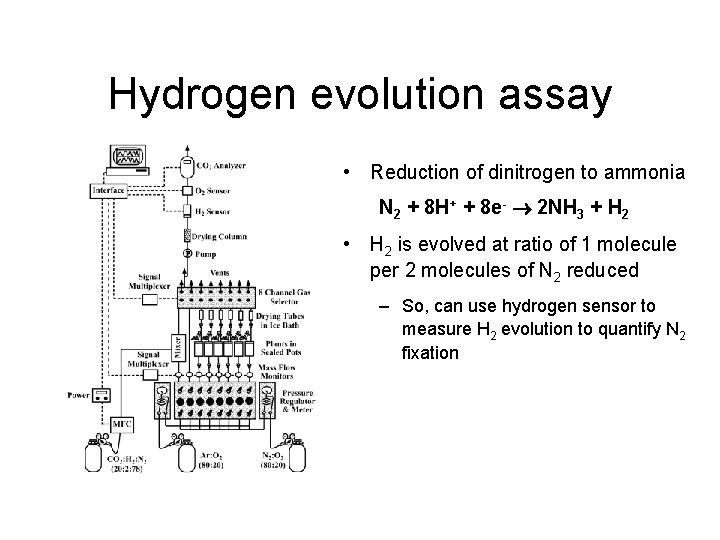
Hydrogen evolution assay • Reduction of dinitrogen to ammonia N 2 + 8 H+ + 8 e- 2 NH 3 + H 2 • H 2 is evolved at ratio of 1 molecule per 2 molecules of N 2 reduced – So, can use hydrogen sensor to measure H 2 evolution to quantify N 2 fixation
Hydrogen evolution assay • Reduction of dinitrogen to ammonia N 2 + 8 H+ + 8 e- 2 NH 3 + H 2 • H 2 is evolved at ratio of 1 molecule per 2 molecules of N 2 reduced – So, can use hydrogen sensor to measure H 2 evolution to quantify N 2 fixation
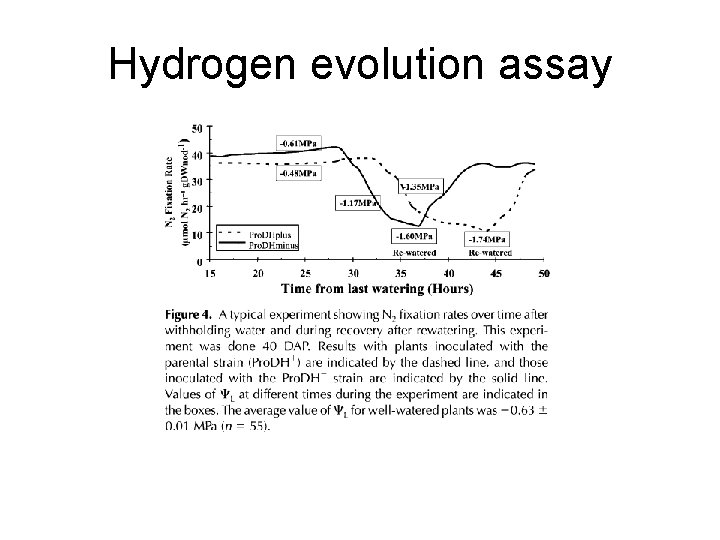
Hydrogen evolution assay
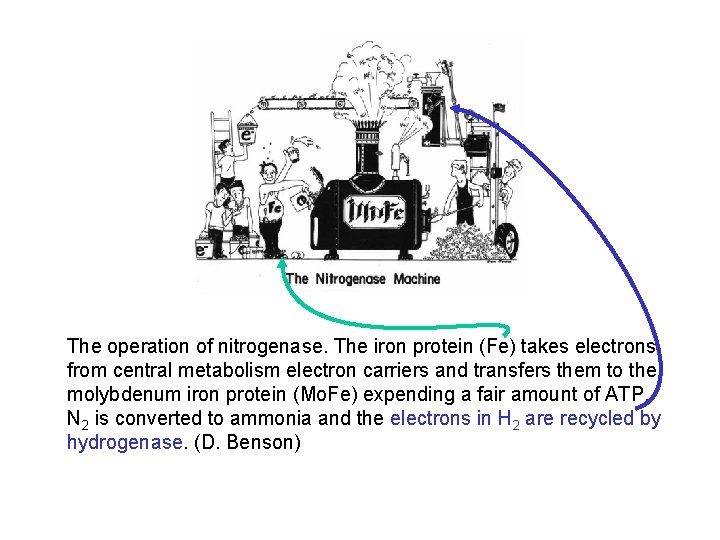
The operation of nitrogenase. The iron protein (Fe) takes electrons from central metabolism electron carriers and transfers them to the molybdenum iron protein (Mo. Fe) expending a fair amount of ATP. N 2 is converted to ammonia and the electrons in H 2 are recycled by hydrogenase. (D. Benson)
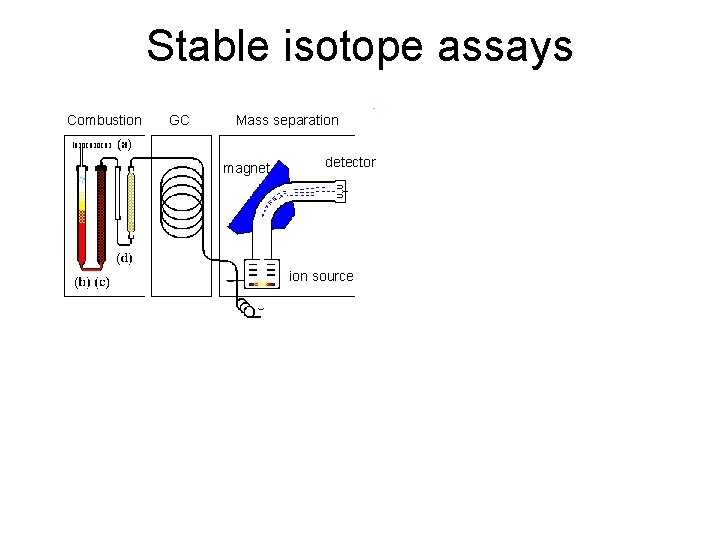
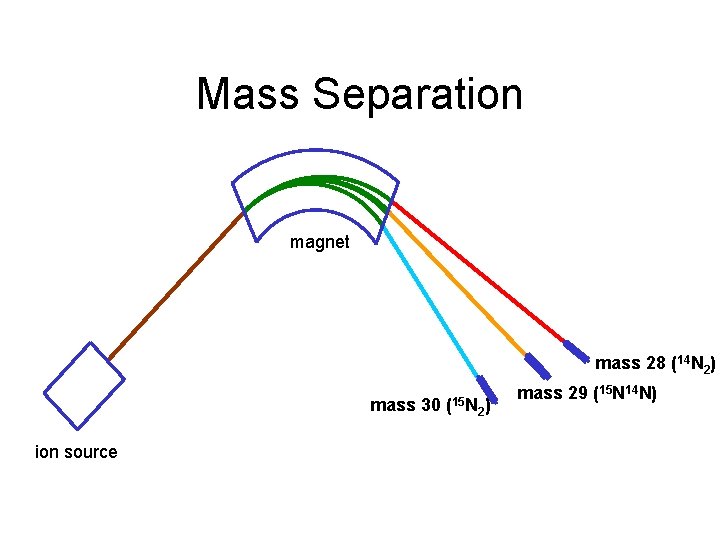
Stable isotope assays Combustion GC Mass separation magnet detector ion source
Mass Separation magnet mass 28 (14 N 2) mass 30 ion source (15 N 2) mass 29 (15 N 14 N)
Stable isotope lab
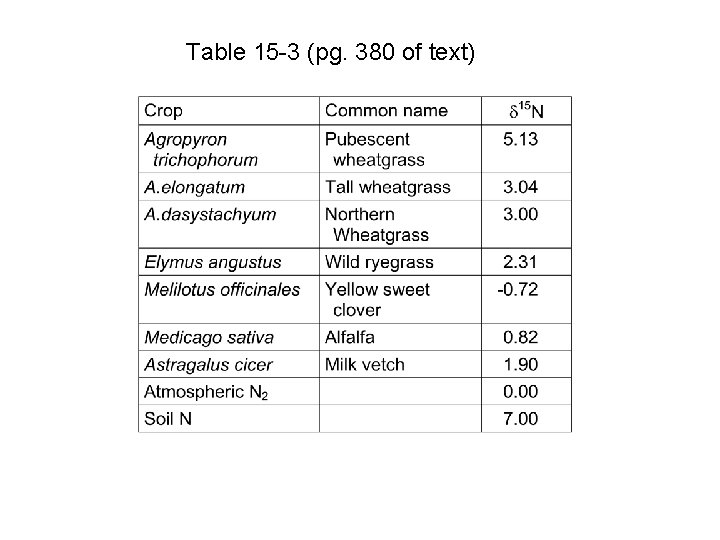
Table 15 -3 (pg. 380 of text)
Lifestyles of N 2 fixing bacteria (diazotrophs) • Free living • Living in consortia – e. g. stromatolites, soil crusts • Plant associative (living in rhizosphere) • Symbiotic
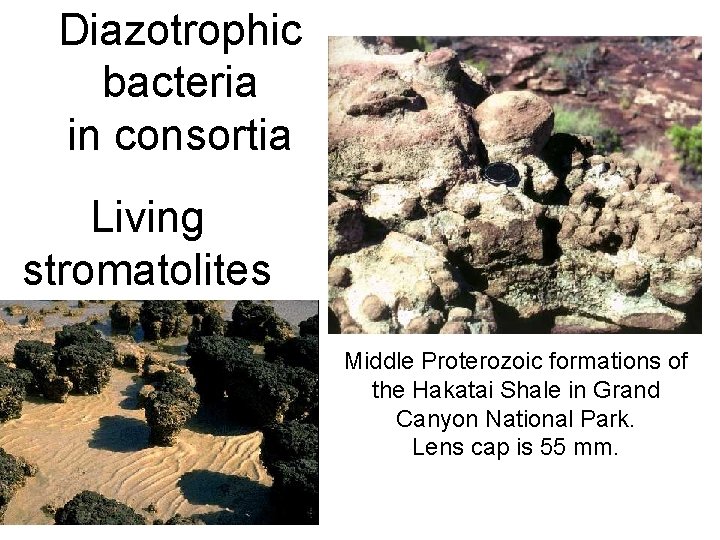
Diazotrophic bacteria in consortia Living stromatolites Middle Proterozoic formations of the Hakatai Shale in Grand Canyon National Park. Lens cap is 55 mm.
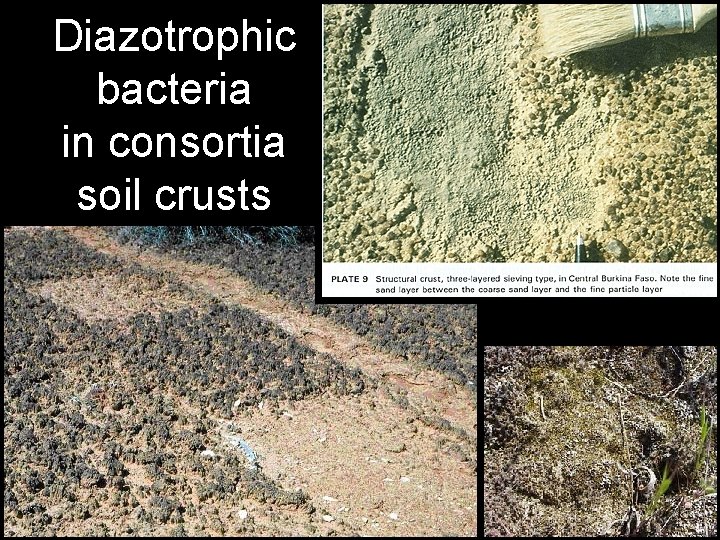
Diazotrophic bacteria in consortia soil crusts
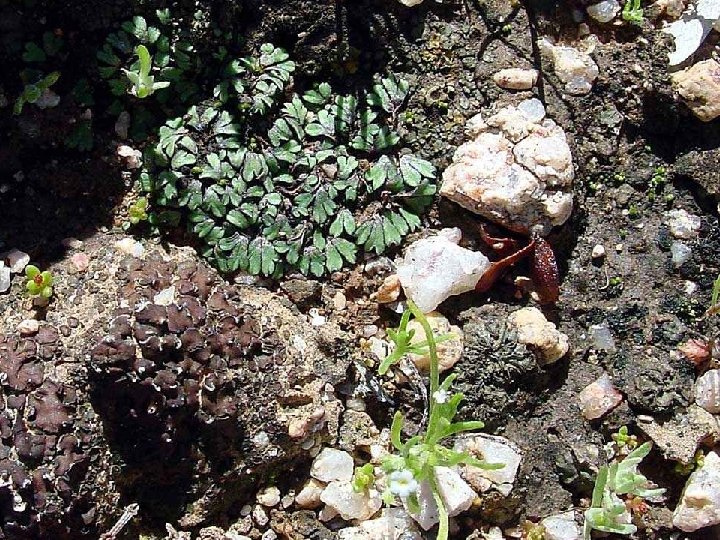
Cyanobacteria in soil crusts
Diazotrophic bacteria in consortia
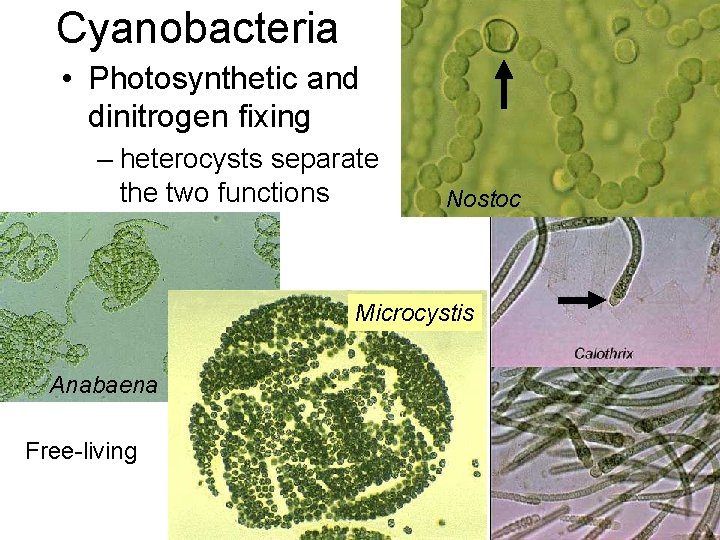
Cyanobacteria • Photosynthetic and dinitrogen fixing – heterocysts separate the two functions Nostoc Microcystis Anabaena Free-living
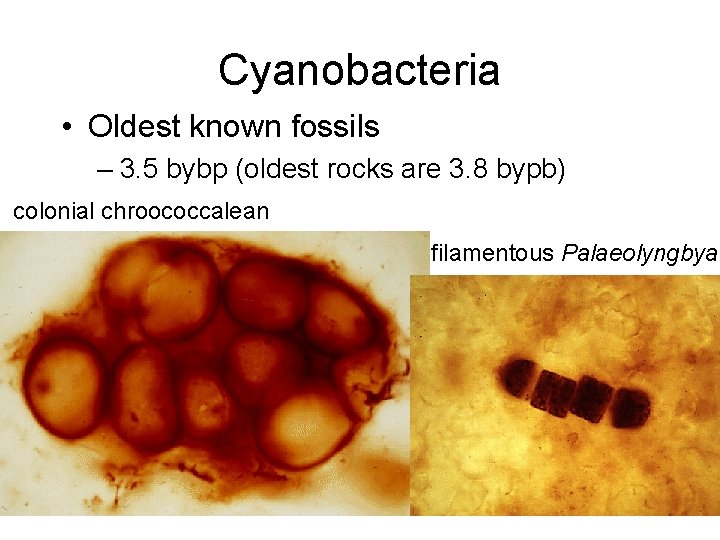
Cyanobacteria • Oldest known fossils – 3. 5 bybp (oldest rocks are 3. 8 bypb) colonial chroococcalean filamentous Palaeolyngbya
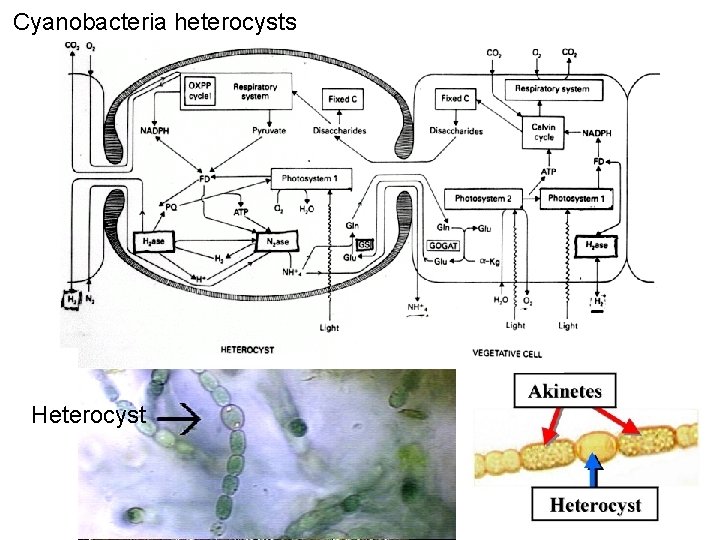
Cyanobacteria heterocysts Heterocyst
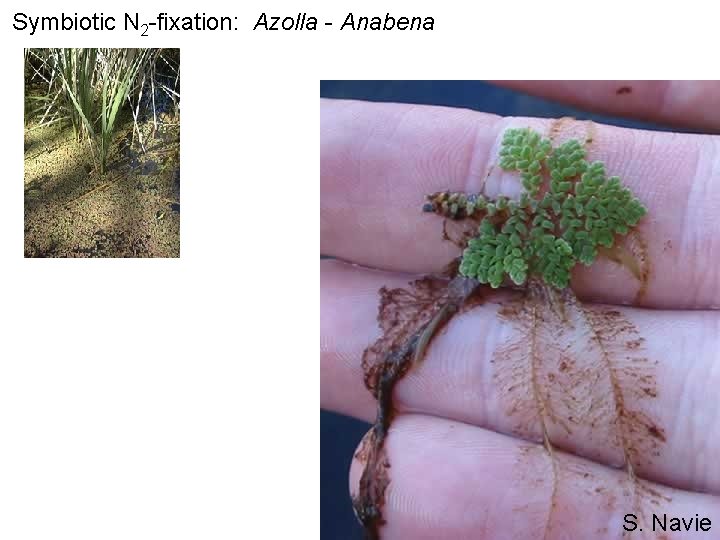
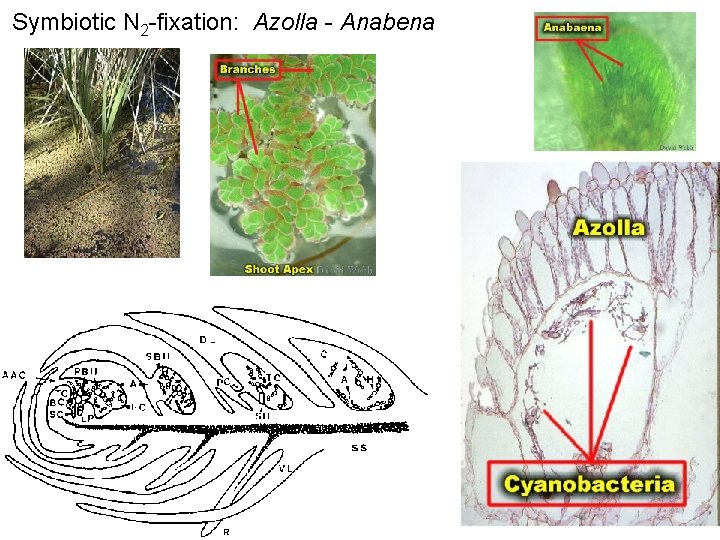
Symbiotic N 2 -fixation: Azolla - Anabena S. Navie
Symbiotic N 2 -fixation: Azolla - Anabena
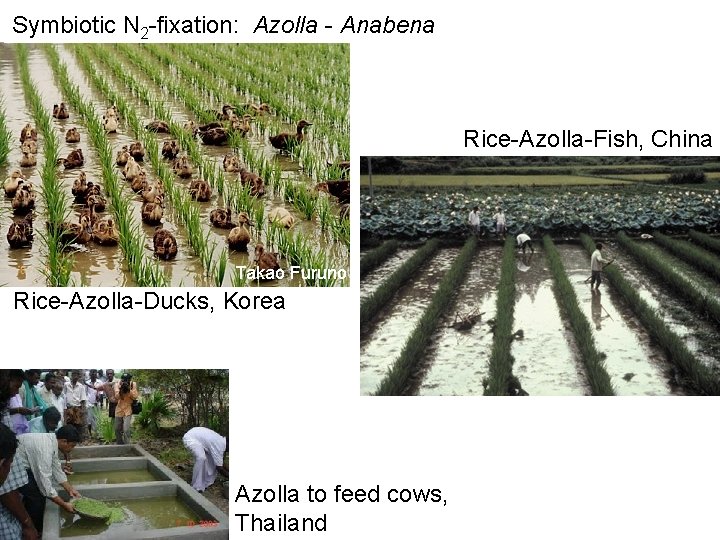
Symbiotic N 2 -fixation: Azolla - Anabena Rice-Azolla-Fish, China Takao Furuno Rice-Azolla-Ducks, Korea Azolla to feed cows, Thailand
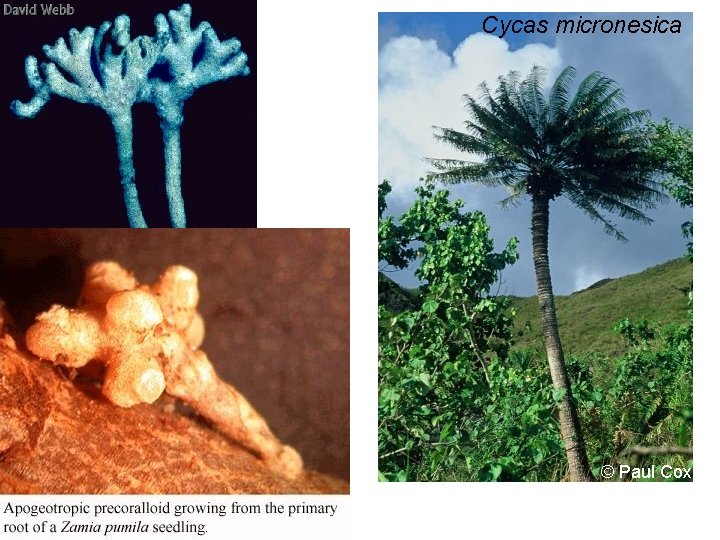
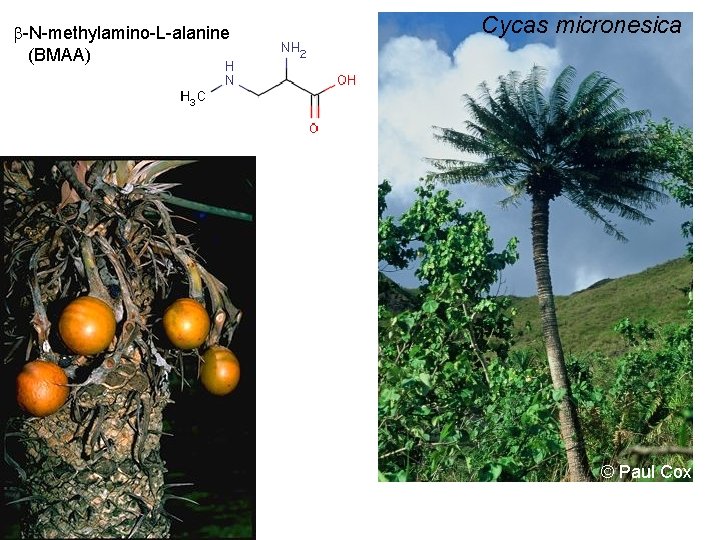
Cycas micronesica © Paul Cox
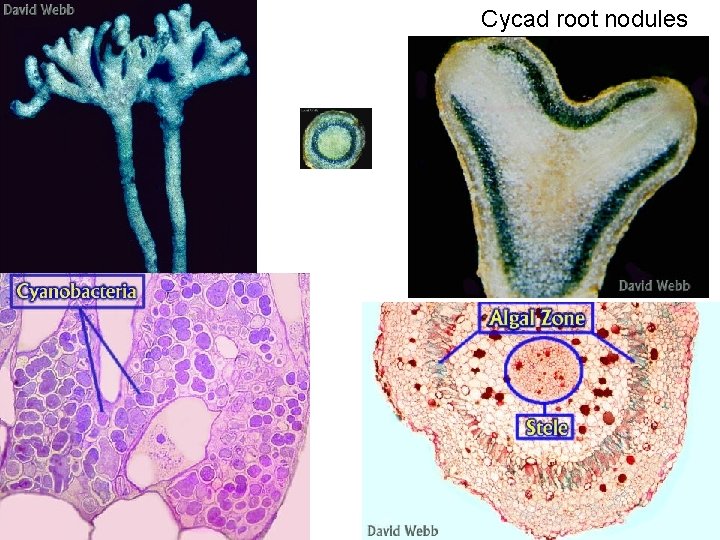
Cycad root nodules
-N-methylamino-L-alanine (BMAA) Cycas micronesica © Paul Cox
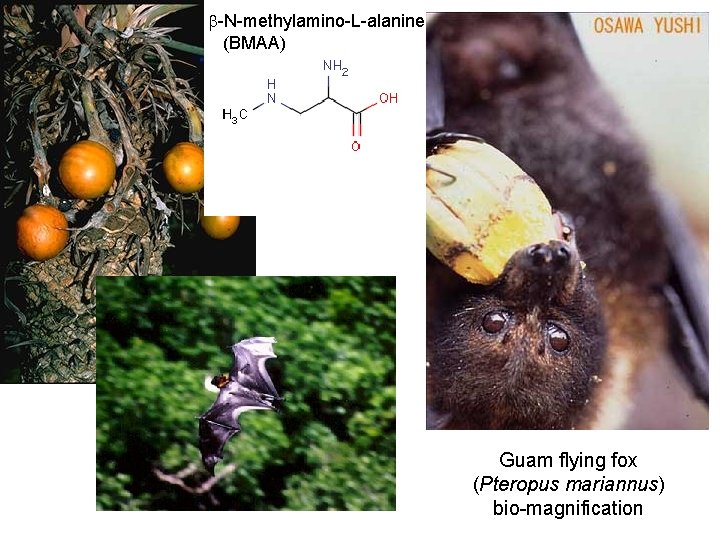
-N-methylamino-L-alanine (BMAA) Guam flying fox (Pteropus mariannus) bio-magnification
Flying Fox with Prunes and Cream Sauce 6 flying foxes (in case you are wondering, these are bats) 1 pound prunes 1 ¼ cup white wine salt, pepper 1/4 cup flour 2 oz. butter 1 tbsp red currant jelly 1 cup thick cream Remove the flesh from the flying foxes. Either plunge the animals in boiling water for a while, then skin them and remove the flesh from the bones, or roast the animals for a little over an open fire, remove, and when cool, break open down the backbone and remove the flesh from the skin. Soak the prunes overnight in 1 cup of the wine, then heat for about ten minutes in the wine before using. Season the flying fox meat with salt and pepper and roll in flour. Saute in butter over a low heat until brown. Add the rest of the wine, cover and cook another 20 minutes. Add the juice from the prunes, and transfer the prunes onto a serving dish. Cook the meat in the prune juice, uncovered, for another 10 minutes, then place on the serving dish with the prunes. The preparation of this recipe requires an ingredient which is now a protected species.
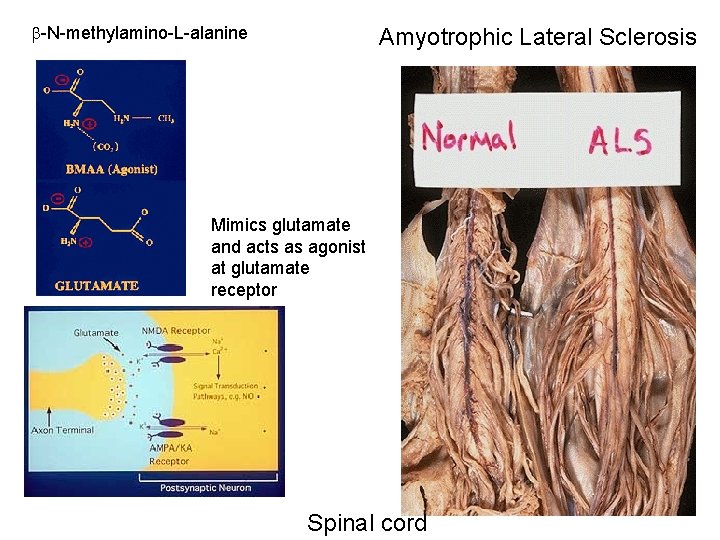
-N-methylamino-L-alanine Amyotrophic Lateral Sclerosis Mimics glutamate and acts as agonist at glutamate receptor Spinal cord
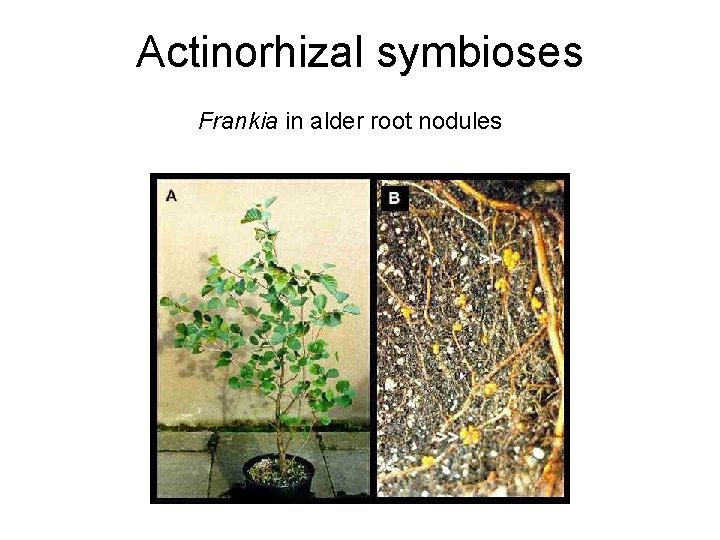
Actinorhizal symbioses Frankia in alder root nodules
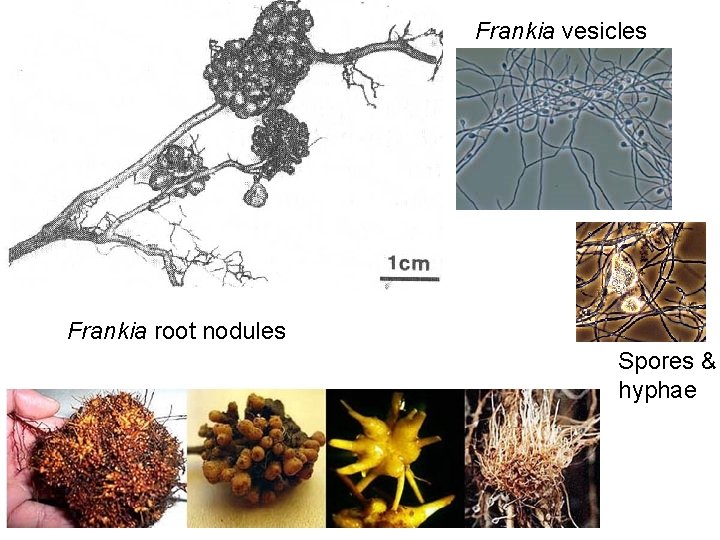
Frankia vesicles Frankia root nodules Spores & hyphae
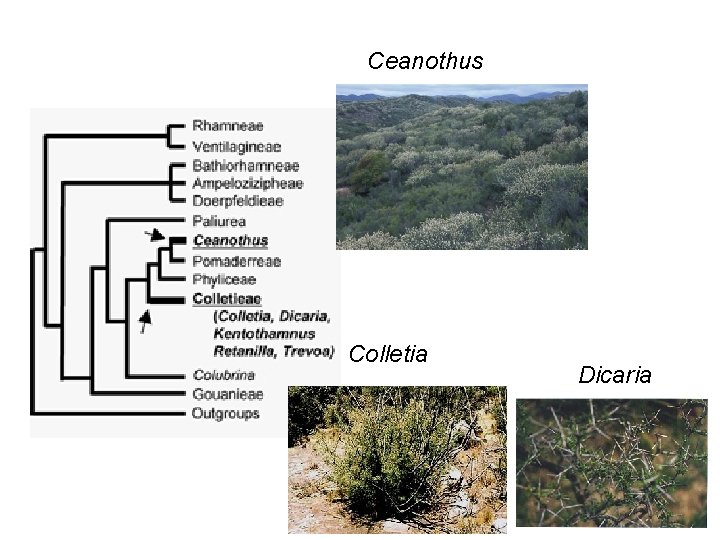
Ceanothus Colletia Dicaria
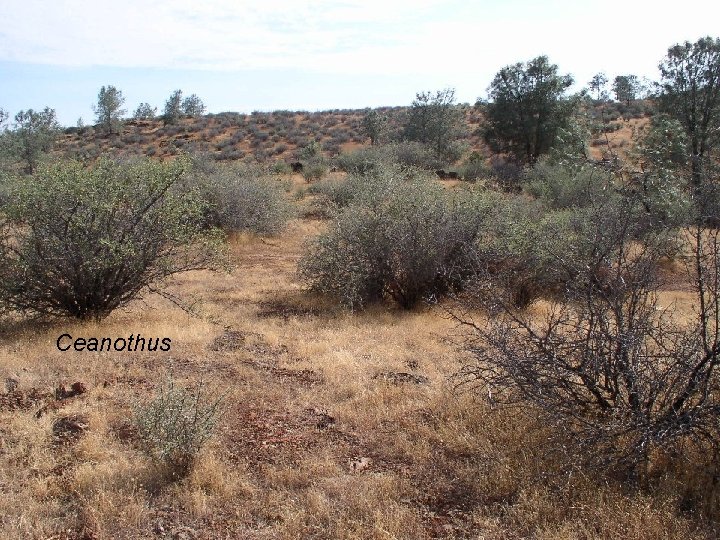
Ceanothus
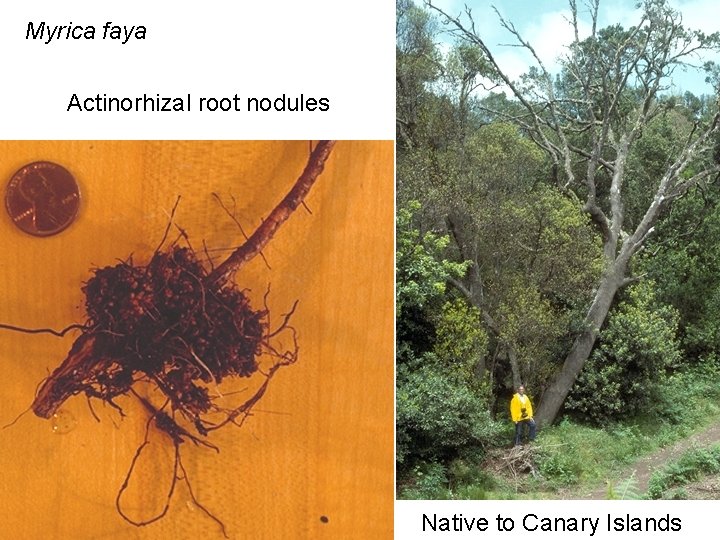
Myrica faya Actinorhizal root nodules Native to Canary Islands
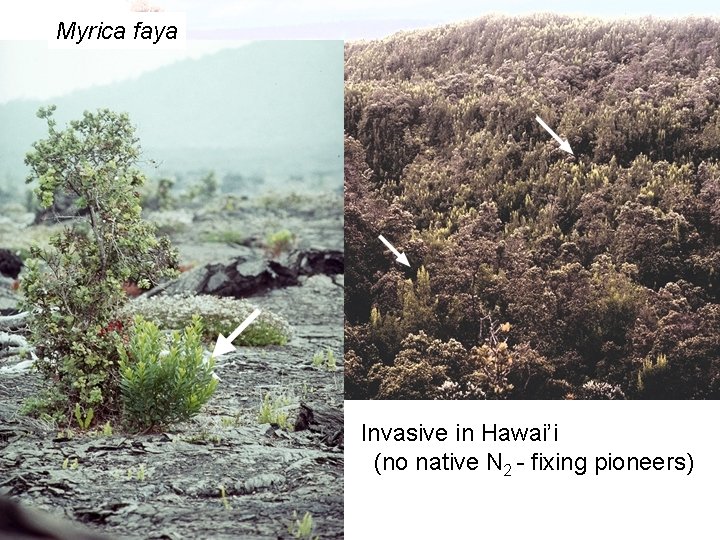
Myrica faya Invasive in Hawai’i (no native N 2 - fixing pioneers)
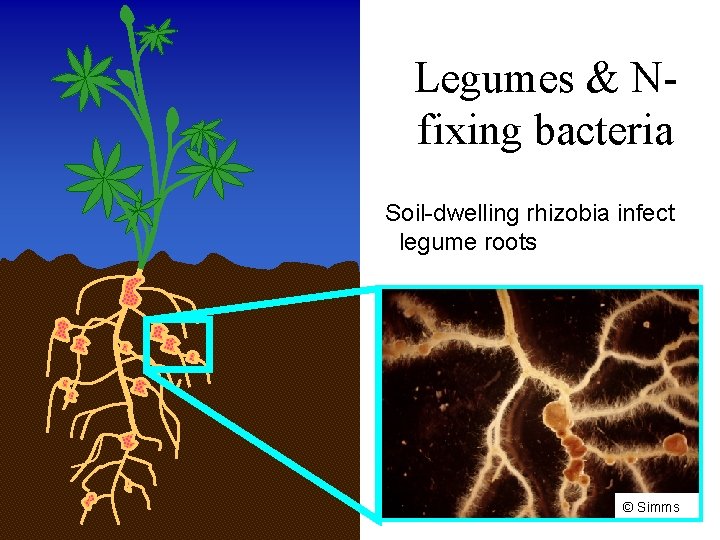
Legumes & Nfixing bacteria Soil-dwelling rhizobia infect legume roots © Simms
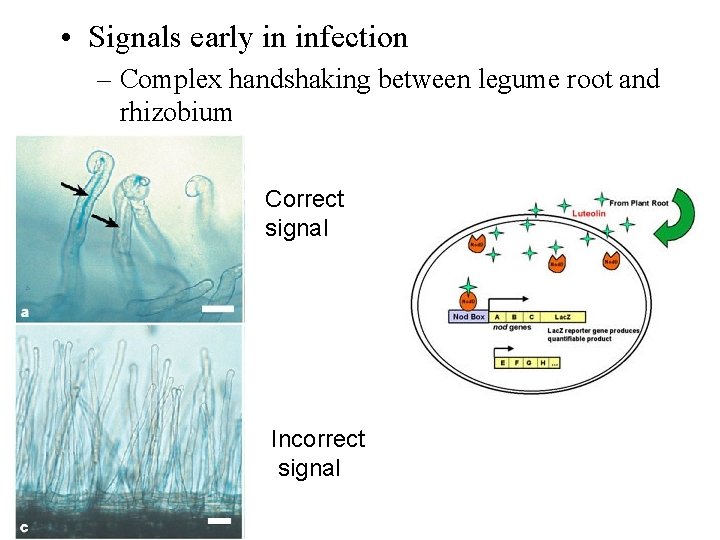
• Signals early in infection – Complex handshaking between legume root and rhizobium Correct signal Incorrect signal
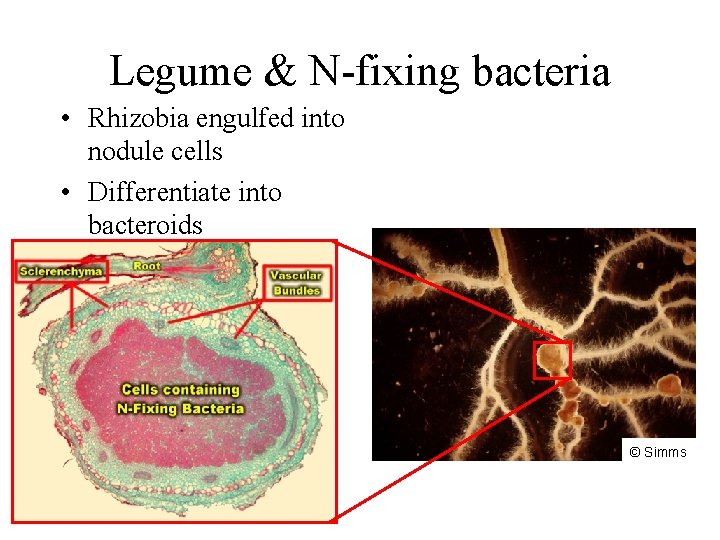
Legume & N-fixing bacteria • Rhizobia engulfed into nodule cells • Differentiate into bacteroids © Simms
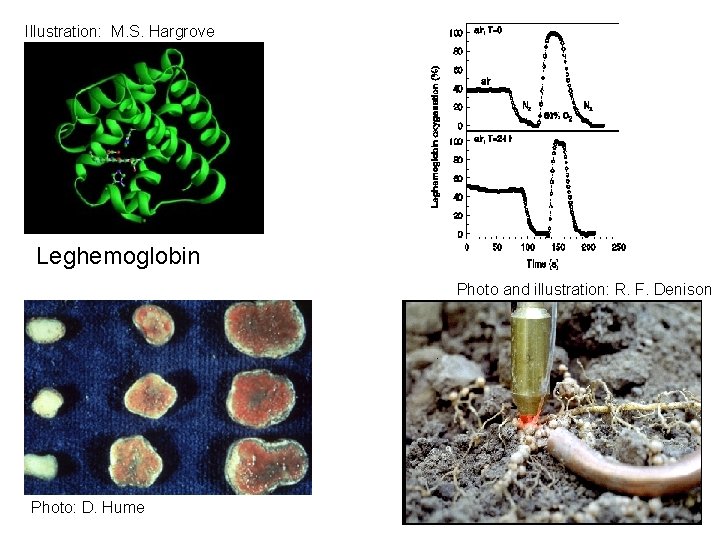
Illustration: M. S. Hargrove Leghemoglobin Photo and illustration: R. F. Denison Photo: D. Hume
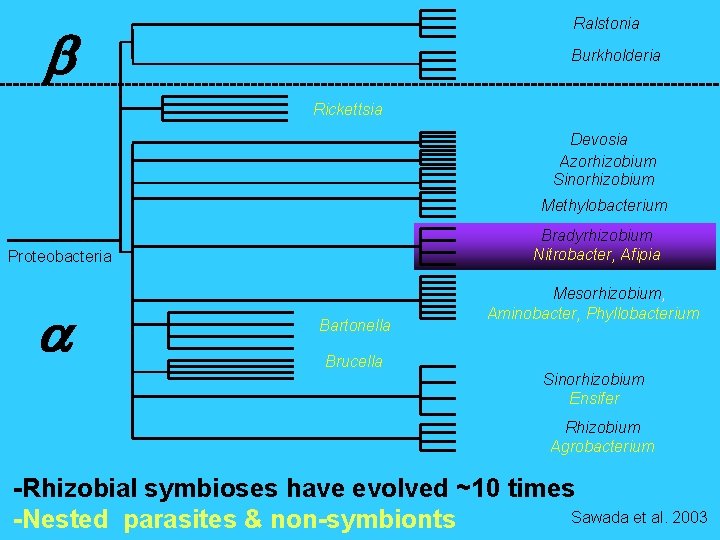
Ralstonia Burkholderia Rickettsia Devosia Azorhizobium Sinorhizobium Methylobacterium Bradyrhizobium Nitrobacter, Afipia Proteobacteria Bartonella Mesorhizobium, Aminobacter, Phyllobacterium Brucella Sinorhizobium Ensifer Rhizobium Agrobacterium -Rhizobial symbioses have evolved ~10 times Sawada et al. 2003 -Nested parasites & non-symbionts
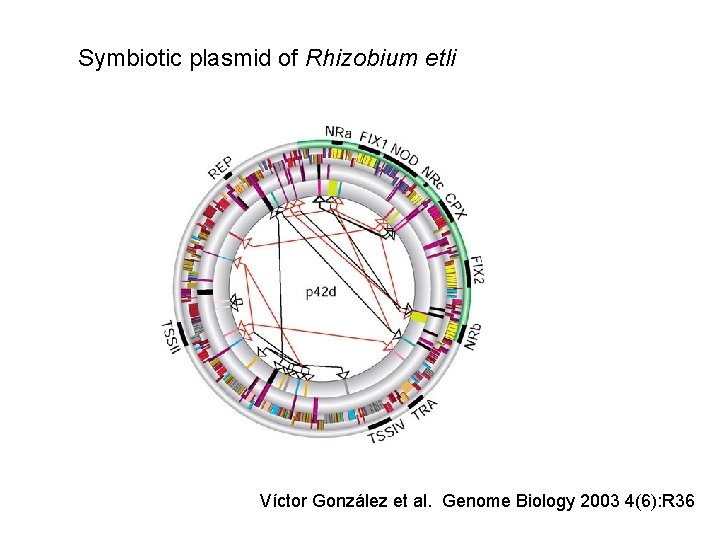
Symbiotic plasmid of Rhizobium etli Víctor González et al. Genome Biology 2003 4(6): R 36
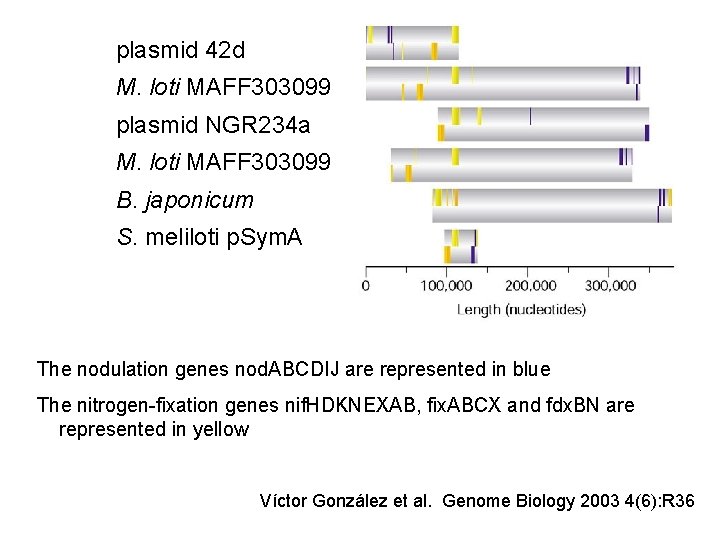
plasmid 42 d M. loti MAFF 303099 plasmid NGR 234 a M. loti MAFF 303099 B. japonicum S. meliloti p. Sym. A The nodulation genes nod. ABCDIJ are represented in blue The nitrogen-fixation genes nif. HDKNEXAB, fix. ABCX and fdx. BN are represented in yellow Víctor González et al. Genome Biology 2003 4(6): R 36
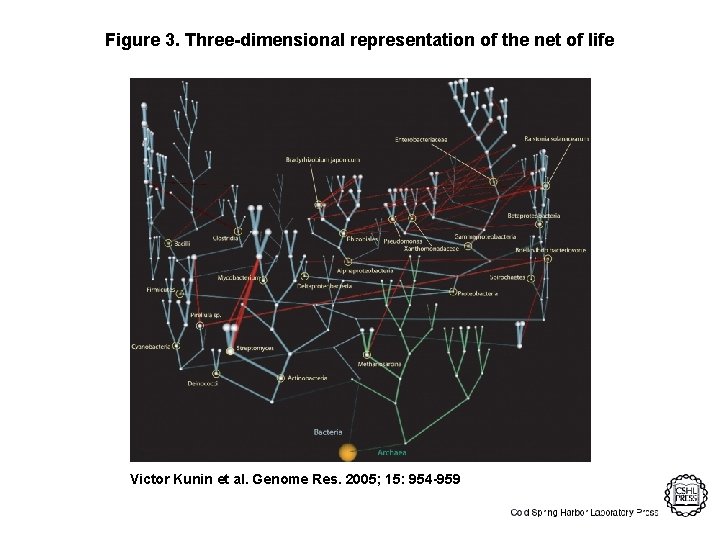
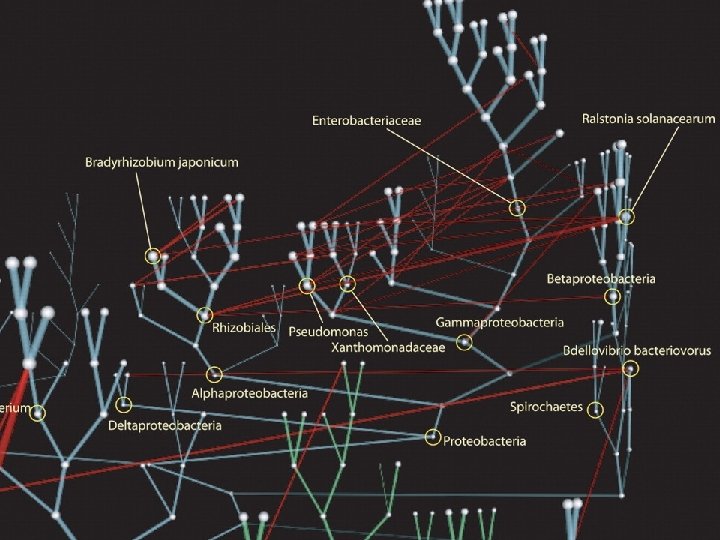
Figure 3. Three-dimensional representation of the net of life Victor Kunin et al. Genome Res. 2005; 15: 954 -959
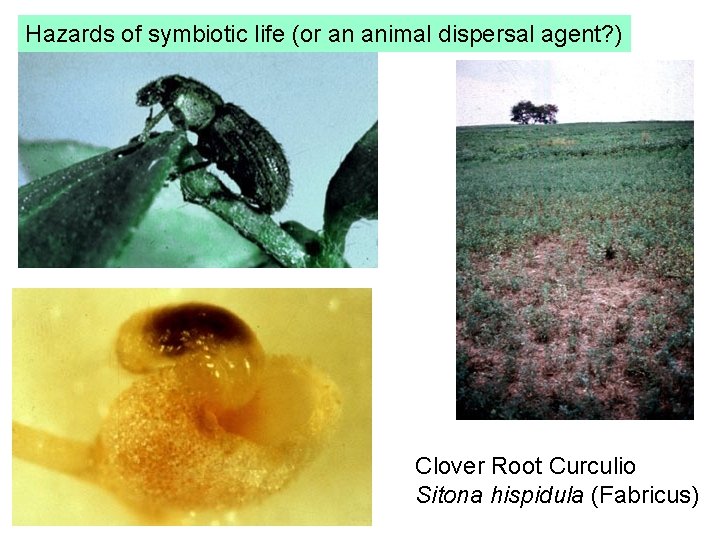
Hazards of symbiotic life (or an animal dispersal agent? ) Clover Root Curculio Sitona hispidula (Fabricus)