
Nitrogen fixation Symbiotic N 2 fixers Rhizobium Isolation
Nitrogen fixation Symbiotic N 2 fixers: Rhizobium - Isolation, characteristics, types, inoculum production and field application, legume/pulses plants By Debasish Mondal St. Paul’s C. M College Kolkata-9

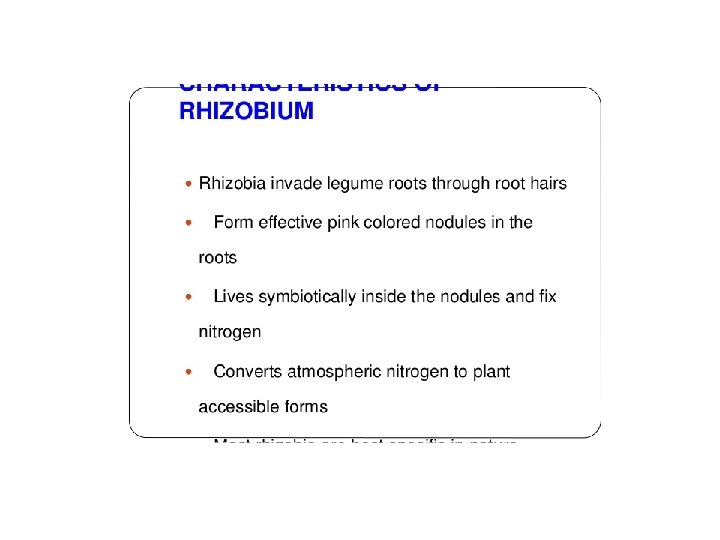
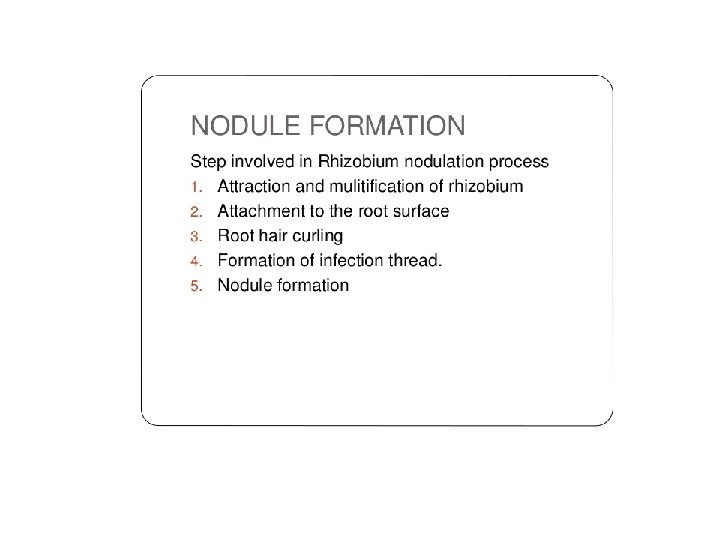
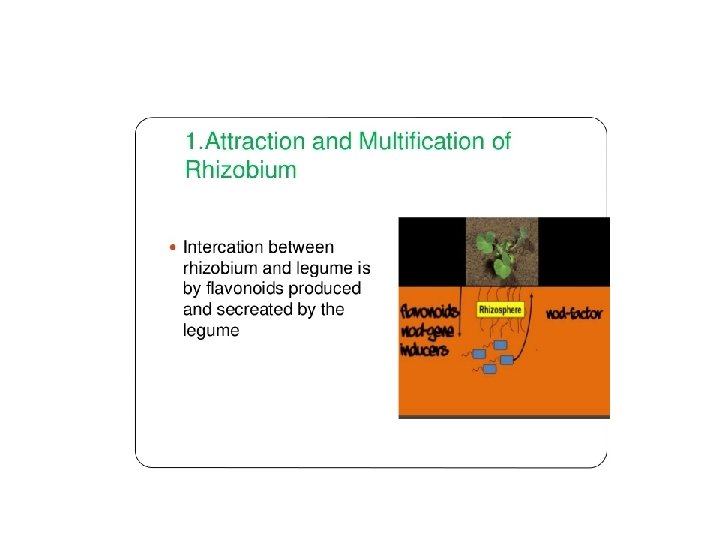
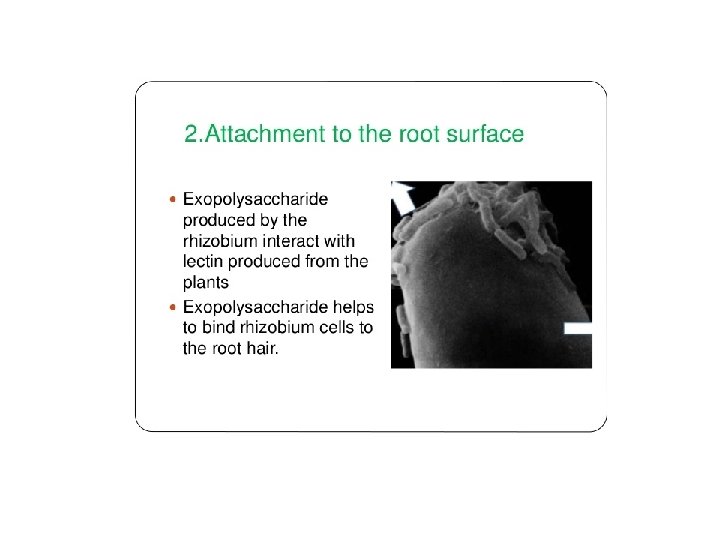
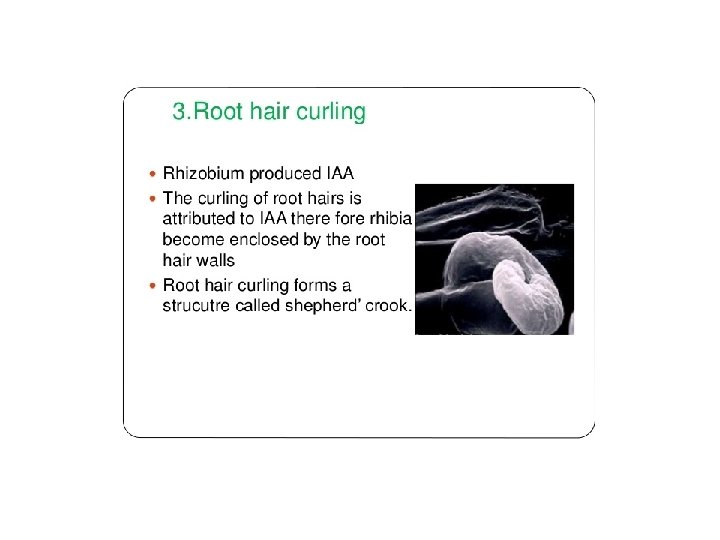
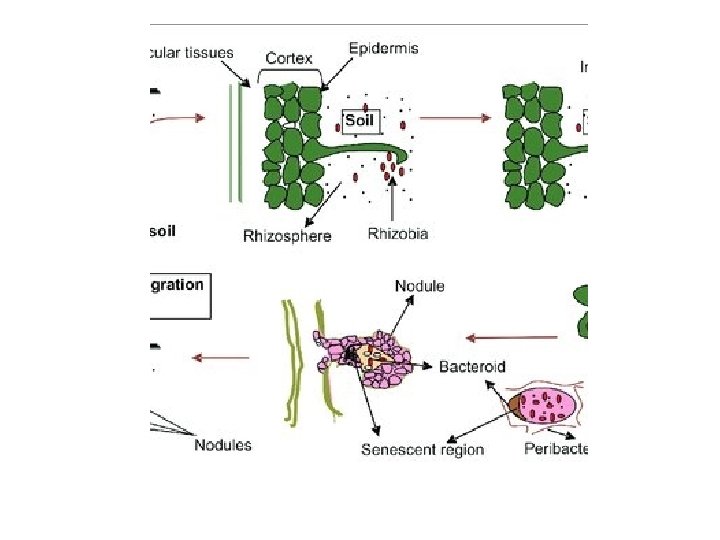
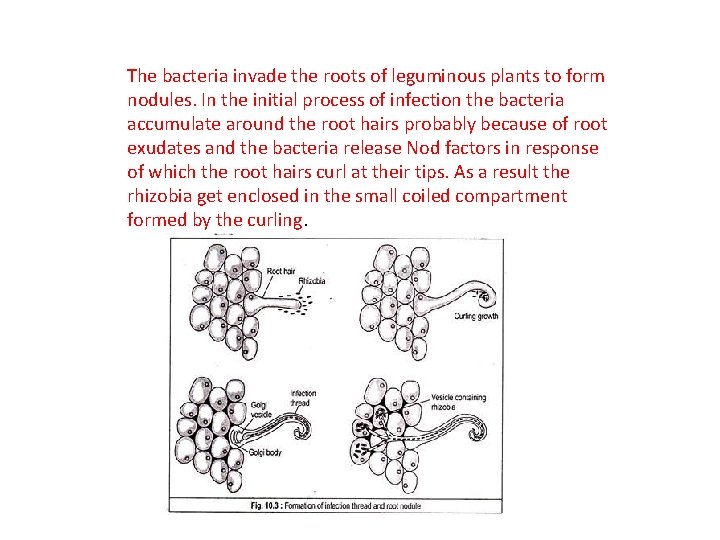
The bacteria invade the roots of leguminous plants to form nodules. In the initial process of infection the bacteria accumulate around the root hairs probably because of root exudates and the bacteria release Nod factors in response of which the root hairs curl at their tips. As a result the rhizobia get enclosed in the small coiled compartment formed by the curling.
The Nod factors are lipochitin oligosaccharide signal molecules and are the products of three nod genes – nod A nod B and nod C, which are host specific. Legume root hair exudates contain specific sugar-binding proteins called lections that being activated by Nod factors, facilitate attachment of the bacteria to the cell walls of root hairs The nod genes are divided into two categories, common and host specific. The commonnod genes, nod. ABC, are required for the synthesis of the N-acetylglucosamine backbone and attachment of the lipid moiety at the nonreducing end of NF (Fig
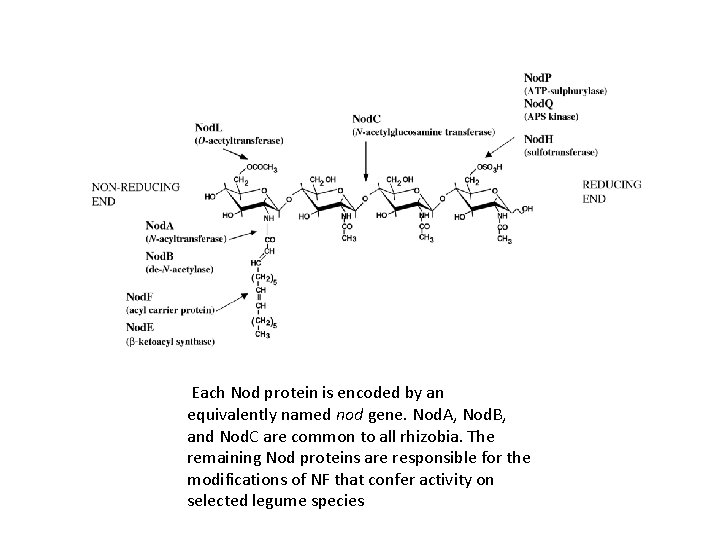
Each Nod protein is encoded by an equivalently named nod gene. Nod. A, Nod. B, and Nod. C are common to all rhizobia. The remaining Nod proteins are responsible for the modifications of NF that confer activity on selected legume species
Bacteria either penetrate the soft root tips or invade damaged or broken root hairs and the plant produces infection threads, which are internal tubular extensions of the plasma membrane produced by the fusion of Golgi-derived membrane vesicles at the site of infection.
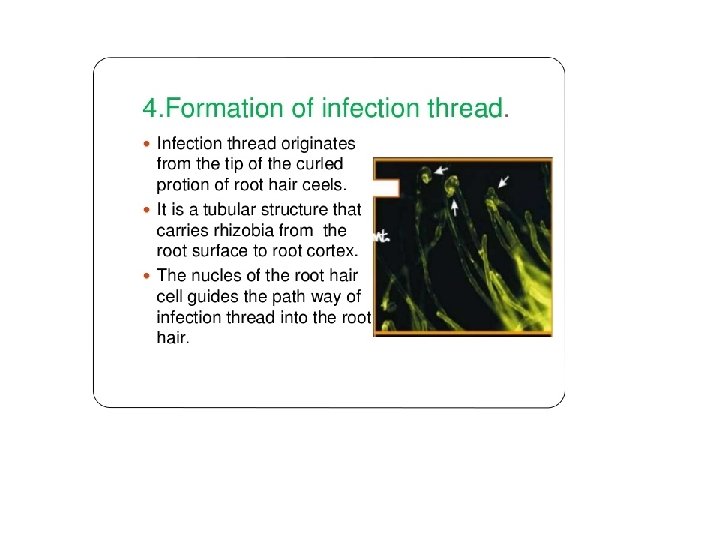
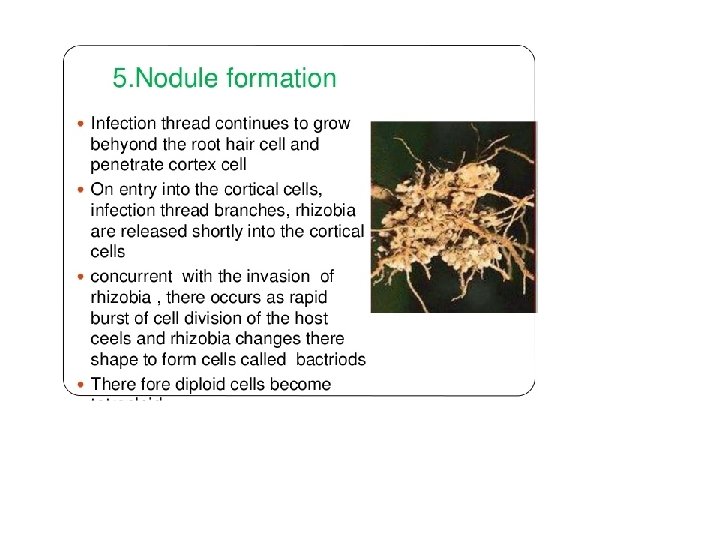
When the infection thread reaches the primordial cells, the tip of the infection thread fuses with the cell membranes of the host cells, releasing the bacteria into them. The bacterial cells are then packaged in a membrane derived from the cell membrane. Branching of the thread enables the bacteria to infect many cells.
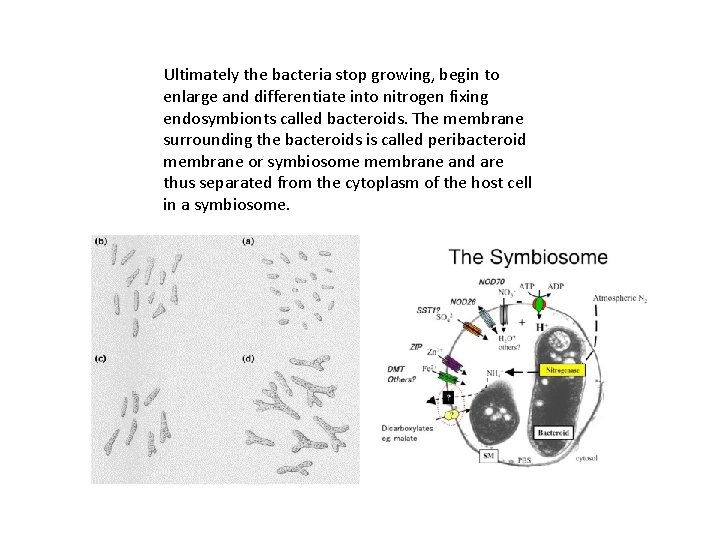
Ultimately the bacteria stop growing, begin to enlarge and differentiate into nitrogen fixing endosymbionts called bacteroids. The membrane surrounding the bacteroids is called peribacteroid membrane or symbiosome membrane and are thus separated from the cytoplasm of the host cell in a symbiosome.
The symbiosome membrane (SM) is a physical barrier between the host plant and nitrogen-fixing bacteria in the legume: rhizobia symbiosis, and represents a regulated interface for the movement of solutes between the symbionts that is under plant control. The primary nutrient exchange across the SM is the transport of a carbon energy source from plant to bacteroid in exchange for fixed nitrogen
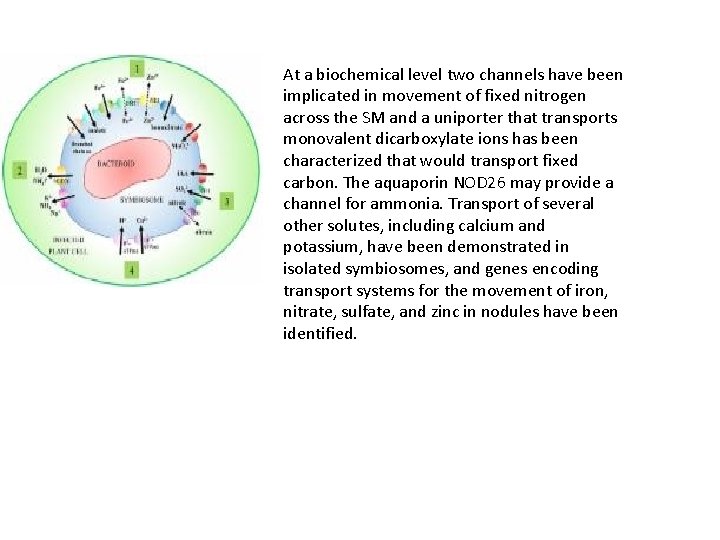
At a biochemical level two channels have been implicated in movement of fixed nitrogen across the SM and a uniporter that transports monovalent dicarboxylate ions has been characterized that would transport fixed carbon. The aquaporin NOD 26 may provide a channel for ammonia. Transport of several other solutes, including calcium and potassium, have been demonstrated in isolated symbiosomes, and genes encoding transport systems for the movement of iron, nitrate, sulfate, and zinc in nodules have been identified.
- Slides: 32