
Nitrogen Fixation by Cyanobacteria KSU Students Faculty of
Nitrogen Fixation by Cyanobacteria KSU Students Faculty of Science Botany & Microbiology Dept. Supervisor Prof. Dr. Ibraheem IBN
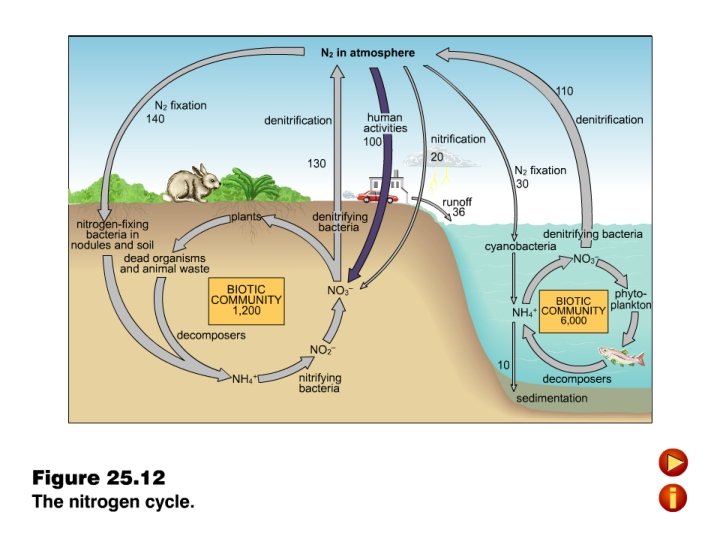
Nitrogen Fixation • The growth of all organisms depend on the availability of Nitrogen (e. g. amino acids) • Nitrogen in the form of Dinitrogen (N 2) makes up 80% of the air we breathe but is essentially inert due to the triple bond (N N) • In order for nitrogen to be used for growth it must be "fixed" (combined) in the form of ammonium (NH 4) or nitrate (NO 3) ions.
Nitrogen Fixation • The nitrogen molecule (N 2) is quite inert. To break it apart so that its atoms can combine with other atoms requires the input of substantial amounts of energy. • Three processes are responsible for most of the nitrogen fixation in the biosphere: • atmospheric fixation • biological fixation • industrial fixation
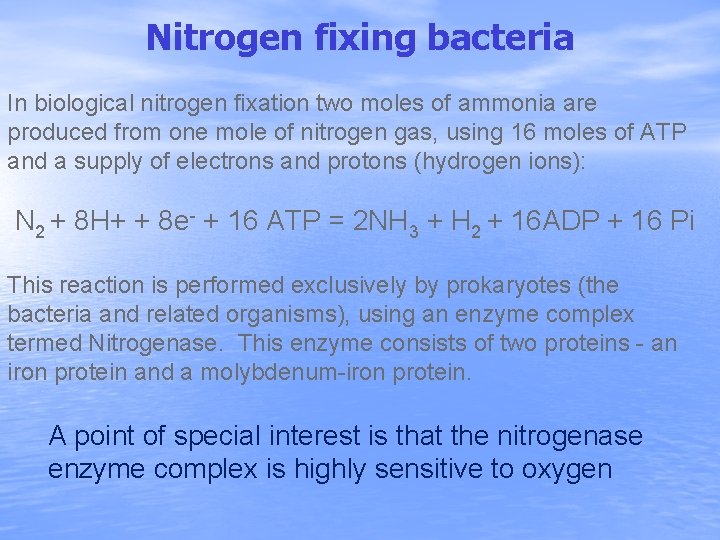
Nitrogen fixing bacteria In biological nitrogen fixation two moles of ammonia are produced from one mole of nitrogen gas, using 16 moles of ATP and a supply of electrons and protons (hydrogen ions): N 2 + 8 H+ + 8 e- + 16 ATP = 2 NH 3 + H 2 + 16 ADP + 16 Pi This reaction is performed exclusively by prokaryotes (the bacteria and related organisms), using an enzyme complex termed Nitrogenase. This enzyme consists of two proteins - an iron protein and a molybdenum-iron protein. A point of special interest is that the nitrogenase enzyme complex is highly sensitive to oxygen
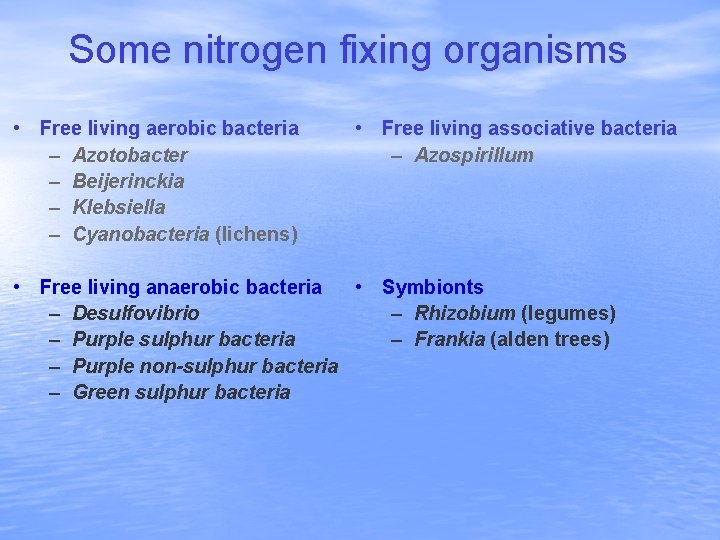
Some nitrogen fixing organisms • Free living aerobic bacteria – Azotobacter – Beijerinckia – Klebsiella – Cyanobacteria (lichens) • Free living associative bacteria – Azospirillum • Free living anaerobic bacteria • Symbionts – Desulfovibrio – Rhizobium (legumes) – Purple sulphur bacteria – Frankia (alden trees) – Purple non-sulphur bacteria – Green sulphur bacteria
Biological Fixation The ability to fix nitrogen is found only in certain bacteria. · Some live in a symbiotic relationship with plants of the legume family (e. g. , soybeans, alfalfa). · Some establish symbiotic relationships with plants other than legumes (e. g. , alders). · Some nitrogen-fixing bacteria live free in the soil. · Nitrogen-fixing cyanobacteria are essential to maintaining the fertility of semi-aquatic environments like rice paddies.
Biological Fixation cont. • Biological nitrogen fixation requires a complex set of enzymes and a huge expenditure of ATP. • Although the first stable product of the process is ammonia, this is quickly incorporated into protein and other organic nitrogen compounds. • Scientist estimate that biological fixation globally adds approximately 140 million metric tons of nitrogen to ecosystems every year.
Cyanobacteria • Gram negative • Contain photosytem I and II (fix CO 2, produce O 2) – Note: • Photosystem I provides the cells with ATP • Photosystem II breaks water down to O 2
Cyanobacteria • Diversity: Most diverse photosynthetic bacteria – Split into five subsections • I: Unicellular rods or cocci • II: Unicellular, aggregate with use of outer wall, from reproductive baeocytes • III: Vegetative unbranched trichomes • IV: Filamentous unbranched trichomes with heterocycst formation • V: Filamentous branched trichomes with heterocycst formation
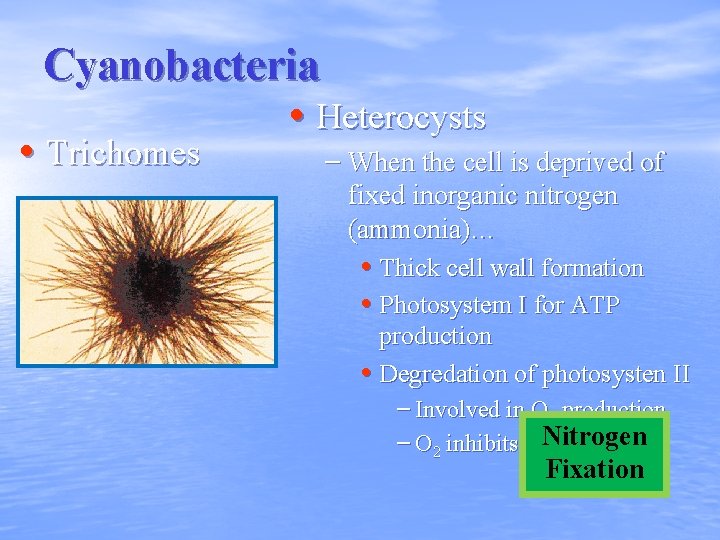
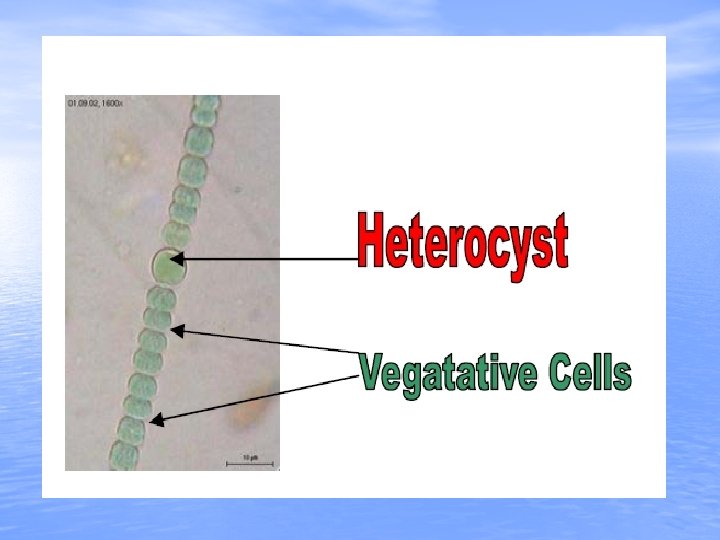
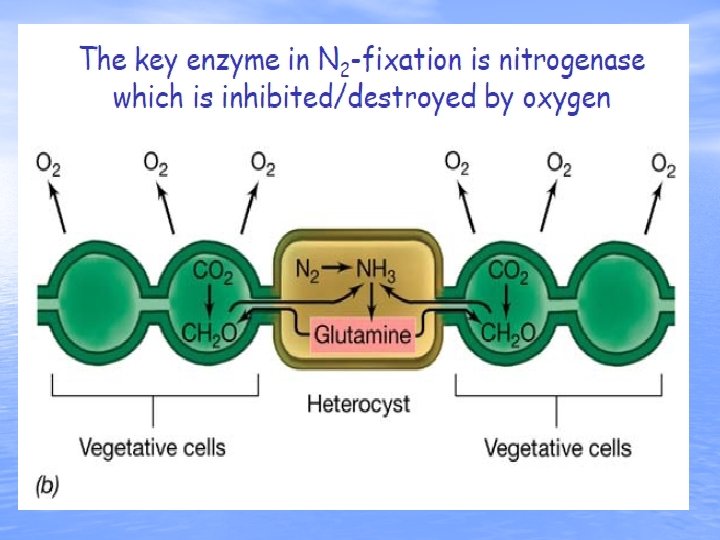
Cyanobacteria • Heterocysts • Trichomes – When the cell is deprived of fixed inorganic nitrogen (ammonia)… • Thick cell wall formation • Photosystem I for ATP production • Degredation of photosysten II – Involved in O 2 production Nitrogen – O 2 inhibits nitrogenase Fixation
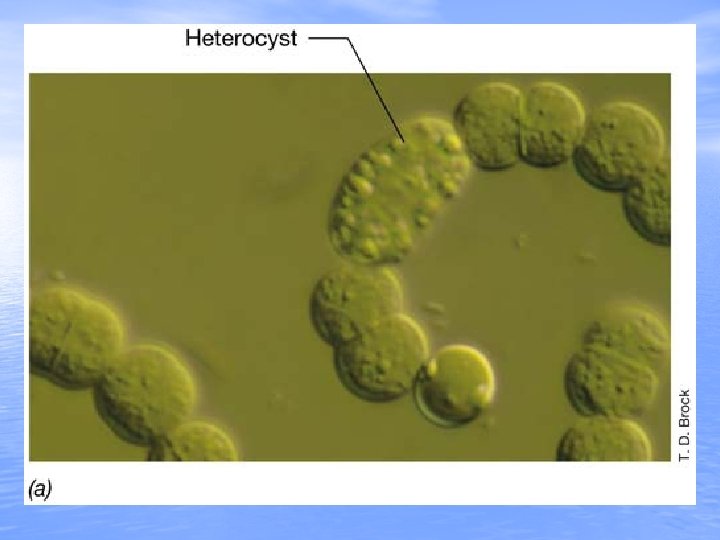
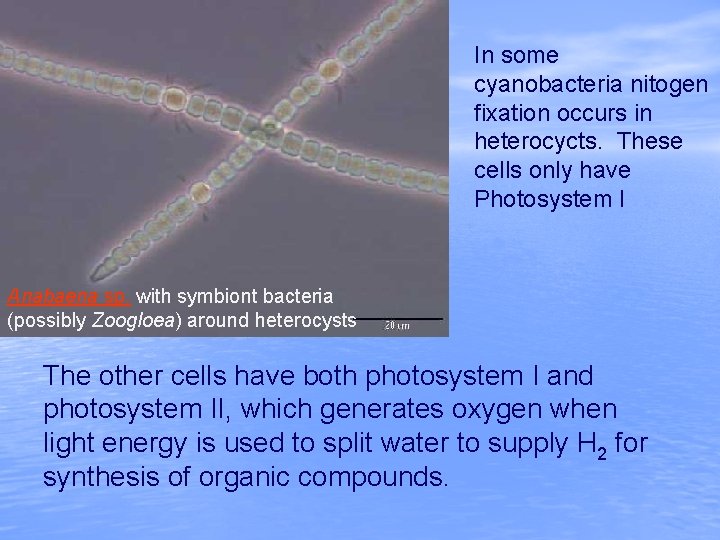
Anabaena with heterocysts In some cyanobacteria nitogen fixation occurs in heterocycts. These cells only have Photosystem I Anabaena sp. with symbiont bacteria (possibly Zoogloea) around heterocysts The other cells have both photosystem I and photosystem II, which generates oxygen when light energy is used to split water to supply H 2 for synthesis of organic compounds.
Nitrogen Fixation • All nitrogen fixing bacteria use highly conserved enzyme complex called Nitrogenase • Nitrogenase is composed of of two subunits: an iron-sulfur protein and a molybdenum-iron-sulfur protein • Aerobic organisms face special challenges to nitrogen fixation because nitrogenase is inactivated when oxygen reacts with the iron component of the proteins
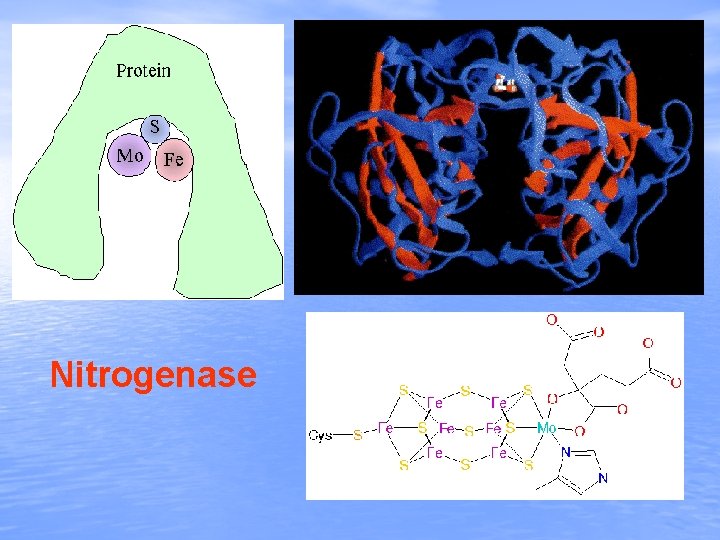
Nitrogenase
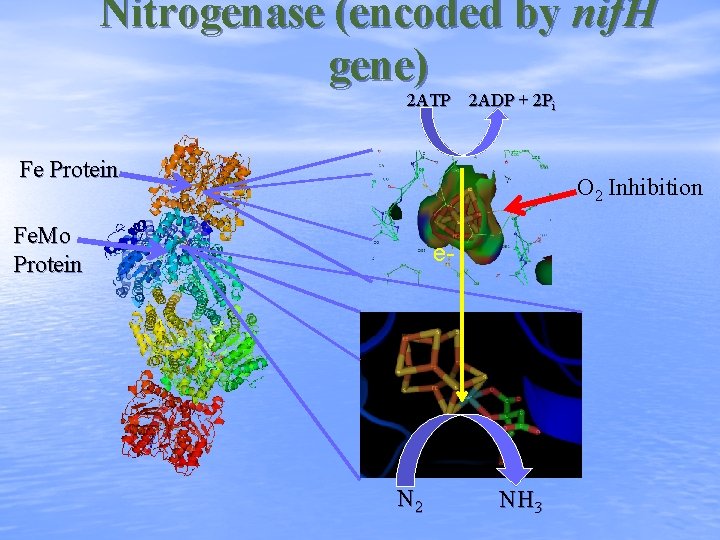
Nitrogenase (encoded by nif. H gene) 2 ATP 2 ADP + 2 Pi Fe Protein O 2 Inhibition Fe. Mo Protein e- N 2 NH 3
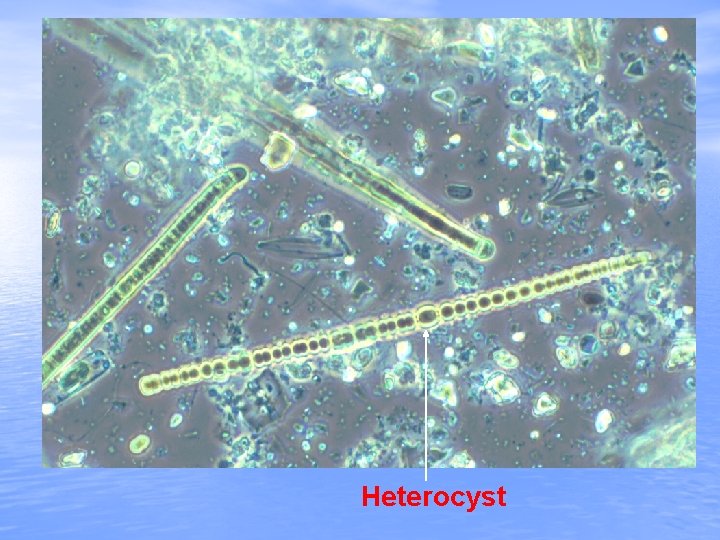
Heterocyst
Characteristic features of Heterocyst: 1. The Heterocyst is the site for cyanobacterial nitrogen fixation which is an enlarged cell, and may be present terminally or intercalary in the filamentous cyanophycean algae. 2. In the process of cyanobacterial nitrogen fixation, hydrogen gas (H 2) is also evolved as a by product and 40% of it is recycled by the hup gene (hydrogen uptake gene), whereas remaining 60% hydrogen gas can be used by biotechnologists as a source of future clean fuel. 3. The Heterocyst is made up of three (3) different cell wall layers- the outer fibrous and middle homogenous layers are made up of noncellulose polysaccharide. Whereas, the inner laminated layer is made up of glycolipids.
Characteristic features of Heterocyst: Cont. 4. On one hand, these special cell wall layers permit the atmospheric N 2 (g) to diffuse inside, whereas on the other hand they stop the atmospheric O 2 (g) to come inside. 5. This is a damage-control mechanism for the enzyme nitrogenase, as the nitrogenase is sensitive to O 2 and cold, and cannot function in the presence of O 2 (g).

Thank You
- Slides: 22