
NIMHD and the Model Minority Dismantling Stereotypes Eliseo
![The Face of America will Change: Children Diversity, Current Population Reports, 2014 Latino [PERCENTAGE]](https://slidetodoc.com/presentation_image/3580374dbdcd100e8e27b1cea12caa37/image-7.jpg "The Face of America will Change: Children Diversity, Current Population Reports, 2014 Latino [PERCENTAGE]")


- Slides: 37
NIMHD and the Model Minority: Dismantling Stereotypes Eliseo J. Pérez-Stable, M. D. Director, National Institute on Minority Health and Health Disparities eliseo. perez-stable@nih. gov 9 th Biennial Asian American, Native Hawaiian, and Pacific Islander Health Conference September 24, 2018
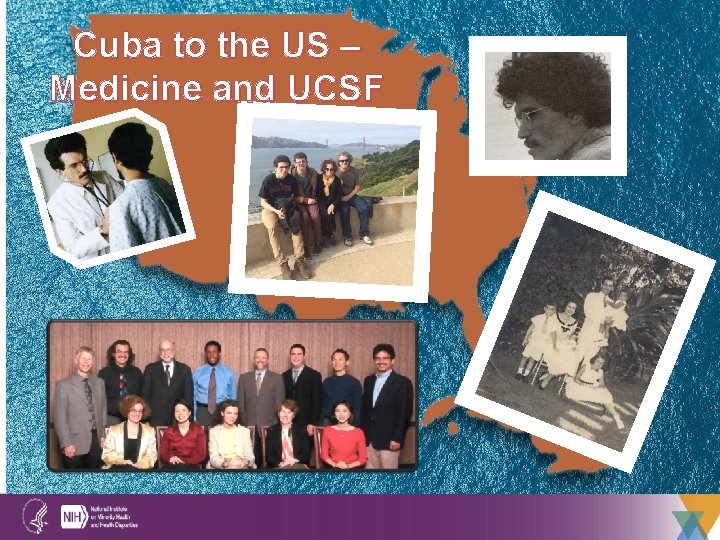
Cuba to the US – Medicine and UCSF
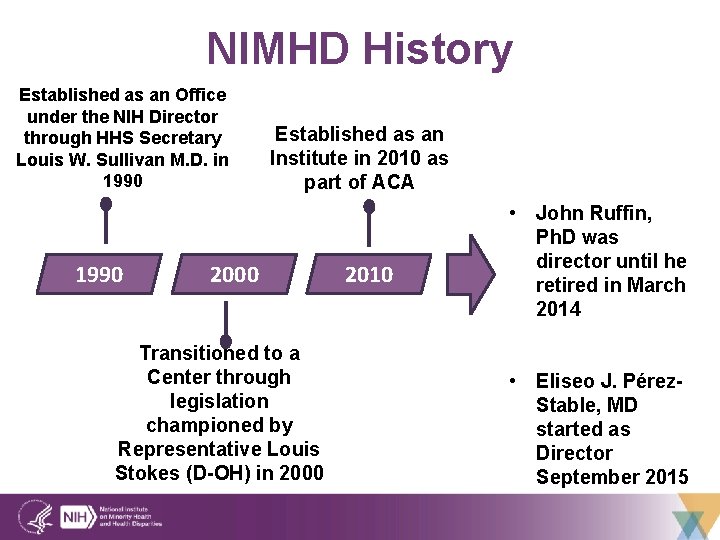
NIMHD History Established as an Office under the NIH Director through HHS Secretary Louis W. Sullivan M. D. in 1990 Established as an Institute in 2010 as part of ACA 2000 Transitioned to a Center through legislation championed by Representative Louis Stokes (D-OH) in 2000 2010 • John Ruffin, Ph. D was director until he retired in March 2014 • Eliseo J. Pérez. Stable, MD started as Director September 2015
Minority Health Research • Minority Health Research focuses on health determinants that lead to specific outcomes within a minority group and in comparison to others • Race and ethnic minorities share a social disadvantage based on being subject to discrimination as a common theme
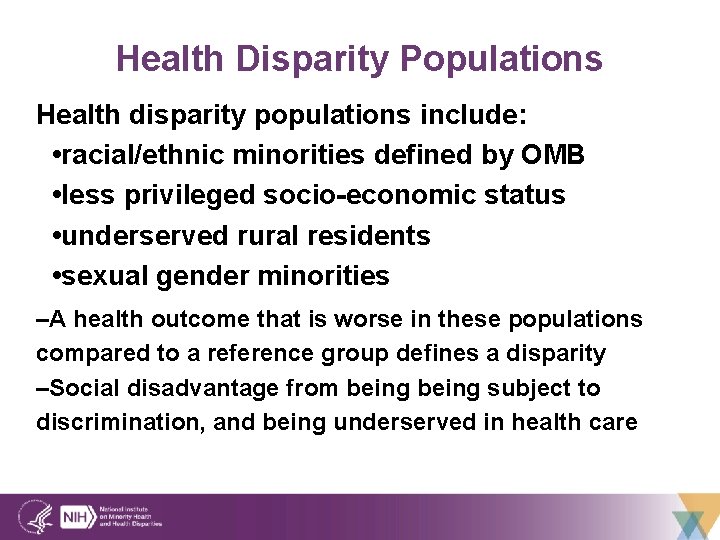
Health Disparity Populations Health disparity populations include: • racial/ethnic minorities defined by OMB • less privileged socio-economic status • underserved rural residents • sexual gender minorities –A health outcome that is worse in these populations compared to a reference group defines a disparity –Social disadvantage from being subject to discrimination, and being underserved in health care
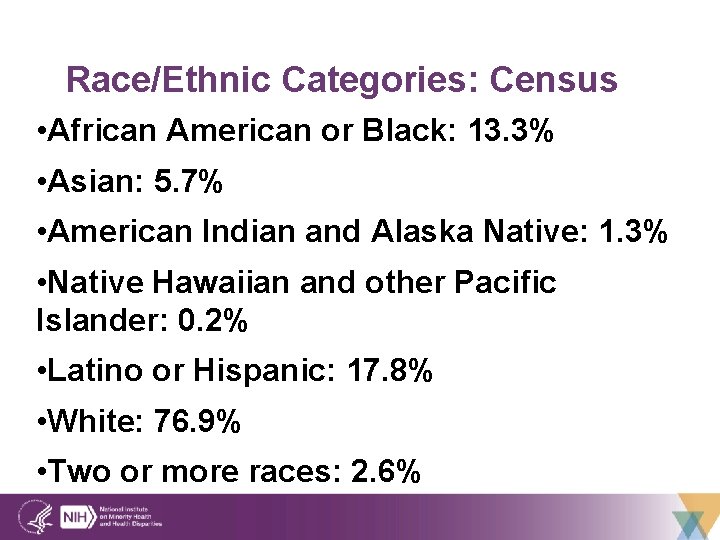
Race/Ethnic Categories: Census • African American or Black: 13. 3% • Asian: 5. 7% • American Indian and Alaska Native: 1. 3% • Native Hawaiian and other Pacific Islander: 0. 2% • Latino or Hispanic: 17. 8% • White: 76. 9% • Two or more races: 2. 6%
The Face of America will Change: Children Diversity, Current Population Reports, 2014 Latino [PERCENTAGE] Two or more races [PERCENTAGE] [CATEGORY NAME] <1% AI/AN 1% So Asian 5% Blacks [PERCENTAGE]
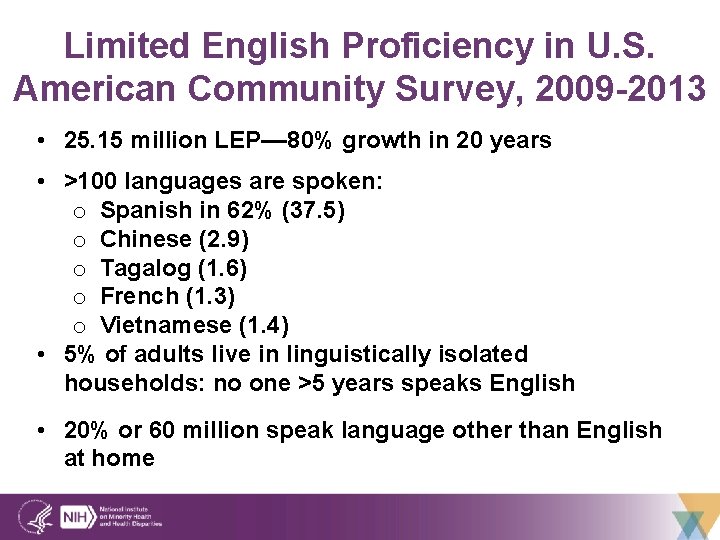
Limited English Proficiency in U. S. American Community Survey, 2009 -2013 • 25. 15 million LEP–– 80% growth in 20 years • >100 languages are spoken: o Spanish in 62% (37. 5) o Chinese (2. 9) o Tagalog (1. 6) o French (1. 3) o Vietnamese (1. 4) • 5% of adults live in linguistically isolated households: no one >5 years speaks English • 20% or 60 million speak language other than English at home
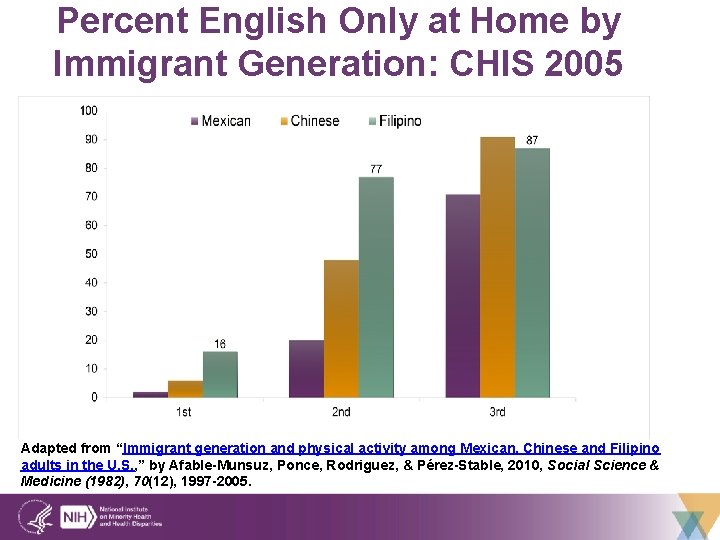
Percent English Only at Home by Immigrant Generation: CHIS 2005 Adapted from “Immigrant generation and physical activity among Mexican, Chinese and Filipino adults in the U. S. , ” by Afable-Munsuz, Ponce, Rodriguez, & Pérez-Stable, 2010, Social Science & Medicine (1982), 70(12), 1997 -2005.
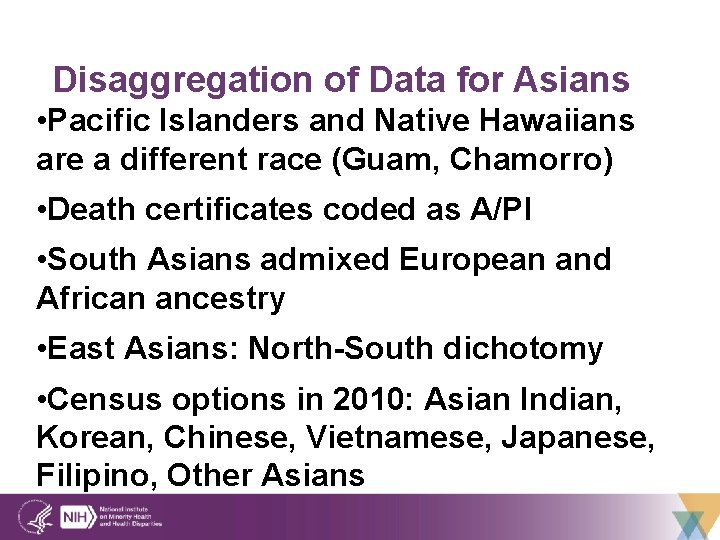
Disaggregation of Data for Asians • Pacific Islanders and Native Hawaiians are a different race (Guam, Chamorro) • Death certificates coded as A/PI • South Asians admixed European and African ancestry • East Asians: North-South dichotomy • Census options in 2010: Asian Indian, Korean, Chinese, Vietnamese, Japanese, Filipino, Other Asians
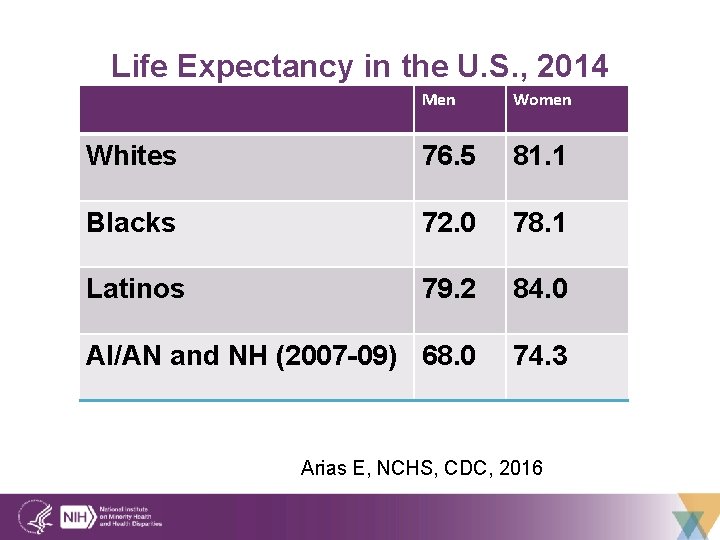
Life Expectancy in the U. S. , 2014 Men Women Whites 76. 5 81. 1 Blacks 72. 0 78. 1 Latinos 79. 2 84. 0 AI/AN and NH (2007 -09) 68. 0 74. 3 Arias E, NCHS, CDC, 2016
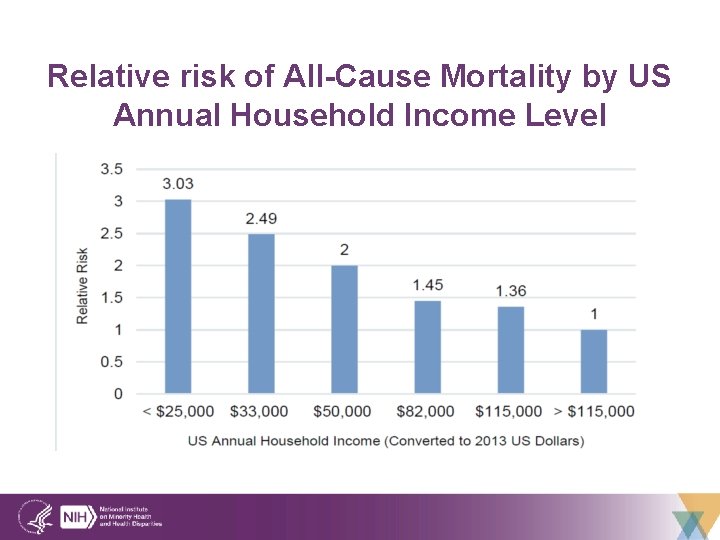
Relative risk of All-Cause Mortality by US Annual Household Income Level
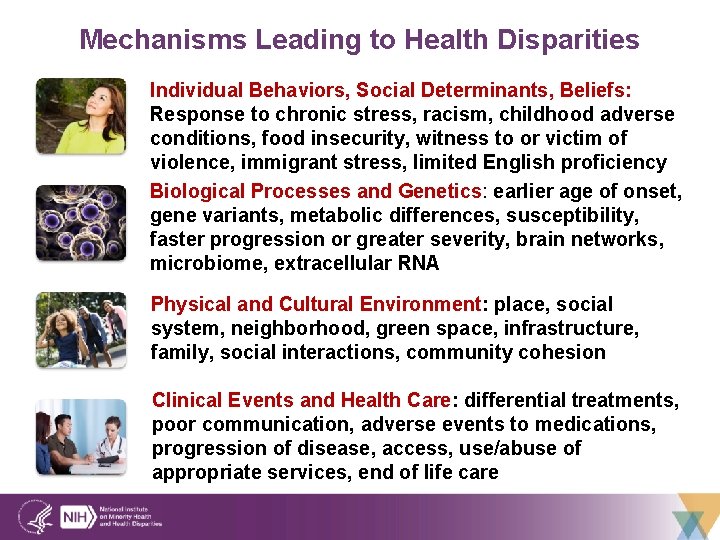
Mechanisms Leading to Health Disparities Individual Behaviors, Social Determinants, Beliefs: Response to chronic stress, racism, childhood adverse conditions, food insecurity, witness to or victim of violence, immigrant stress, limited English proficiency Biological Processes and Genetics: earlier age of onset, gene variants, metabolic differences, susceptibility, faster progression or greater severity, brain networks, microbiome, extracellular RNA Physical and Cultural Environment: place, social system, neighborhood, green space, infrastructure, family, social interactions, community cohesion Clinical Events and Health Care: differential treatments, poor communication, adverse events to medications, progression of disease, access, use/abuse of appropriate services, end of life care
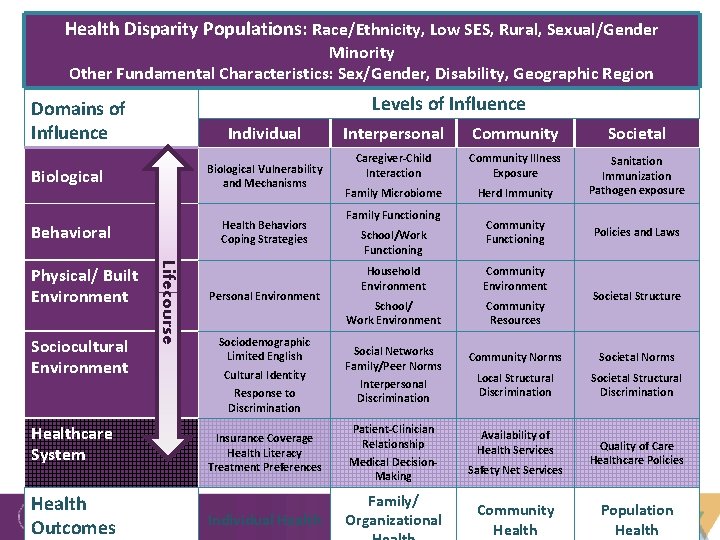
Health Disparity Populations: Race/Ethnicity, Low SES, Rural, Sexual/Gender Minority Other Fundamental Characteristics: Sex/Gender, Disability, Geographic Region Levels of Influence Domains of Influence Individual Biological Vulnerability and Mechanisms Biological Health Behaviors Coping Strategies Behavioral Sociocultural Environment Lifecourse Physical/ Built Environment Personal Environment Sociodemographic Limited English Cultural Identity Response to Discrimination Healthcare System Health Outcomes Insurance Coverage Health Literacy Treatment Preferences Individual Health Interpersonal Community Societal Caregiver-Child Interaction Community Illness Exposure Family Microbiome Herd Immunity Sanitation Immunization Pathogen exposure Family Functioning School/Work Functioning Community Functioning Policies and Laws Household Environment Community Environment School/ Work Environment Community Resources Social Networks Family/Peer Norms Community Norms Societal Norms Local Structural Discrimination Societal Structural Discrimination Interpersonal Discrimination Patient-Clinician Relationship Medical Decision. Making Family/ Organizational Availability of Health Services Safety Net Services Community Health Societal Structure Quality of Care Healthcare Policies Population Health
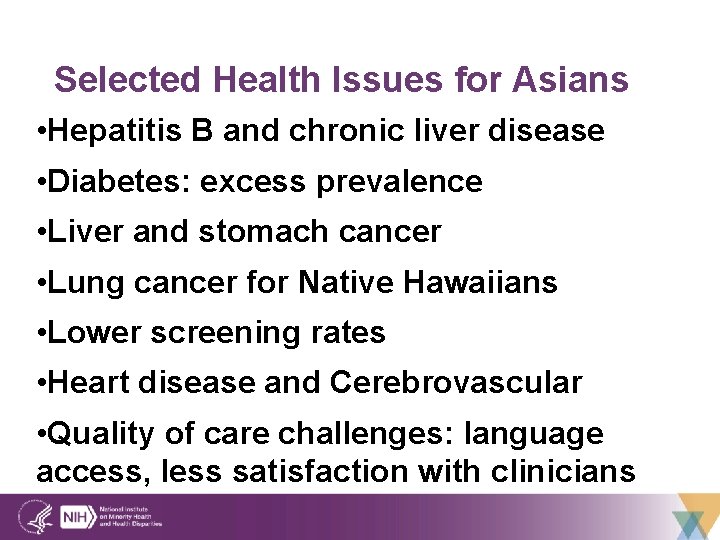
Selected Health Issues for Asians • Hepatitis B and chronic liver disease • Diabetes: excess prevalence • Liver and stomach cancer • Lung cancer for Native Hawaiians • Lower screening rates • Heart disease and Cerebrovascular • Quality of care challenges: language access, less satisfaction with clinicians
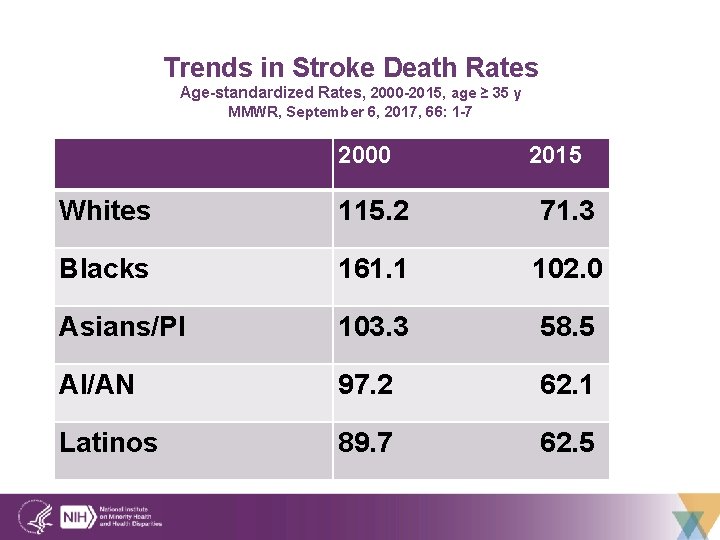
Trends in Stroke Death Rates Age-standardized Rates, 2000 -2015, age ≥ 35 y MMWR, September 6, 2017, 66: 1 -7 2000 2015 Whites 115. 2 71. 3 Blacks 161. 1 102. 0 Asians/PI 103. 3 58. 5 AI/AN 97. 2 62. 1 Latinos 89. 7 62. 5
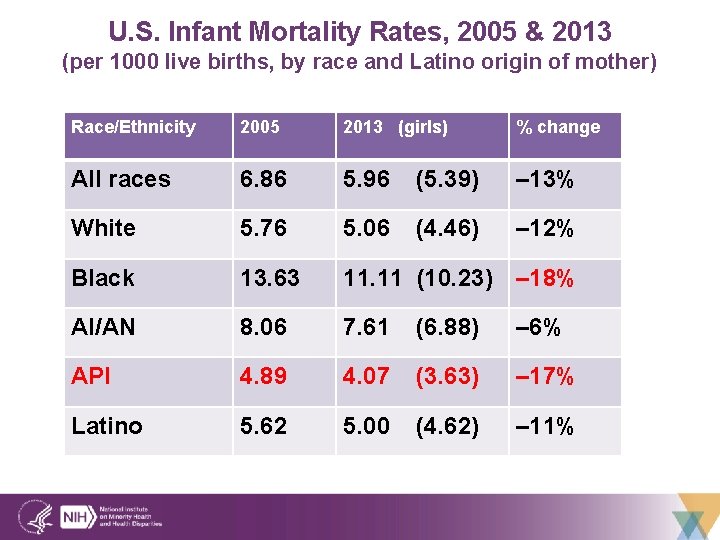
U. S. Infant Mortality Rates, 2005 & 2013 (per 1000 live births, by race and Latino origin of mother) Race/Ethnicity 2005 2013 (girls) % change All races 6. 86 5. 96 (5. 39) – 13% White 5. 76 5. 06 (4. 46) – 12% Black 13. 63 11. 11 (10. 23) – 18% AI/AN 8. 06 7. 61 (6. 88) – 6% API 4. 89 4. 07 (3. 63) – 17% Latino 5. 62 5. 00 (4. 62) – 11%
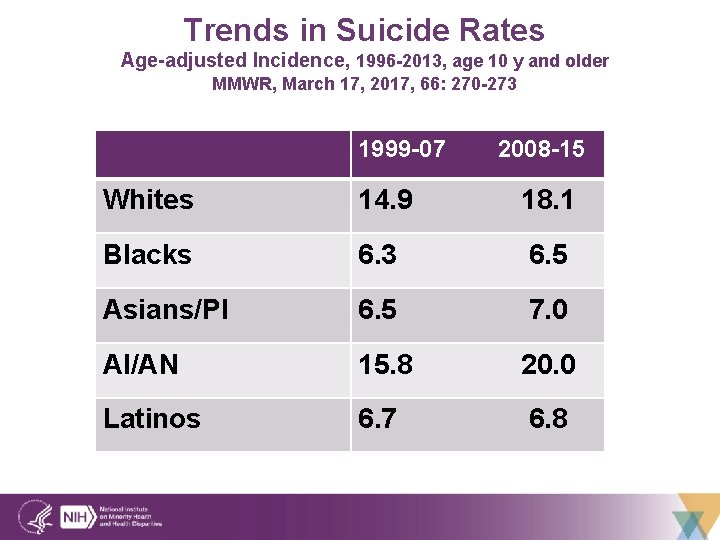
Trends in Suicide Rates Age-adjusted Incidence, 1996 -2013, age 10 y and older MMWR, March 17, 2017, 66: 270 -273 1999 -07 2008 -15 Whites 14. 9 18. 1 Blacks 6. 3 6. 5 Asians/PI 6. 5 7. 0 AI/AN 15. 8 20. 0 Latinos 6. 7 6. 8
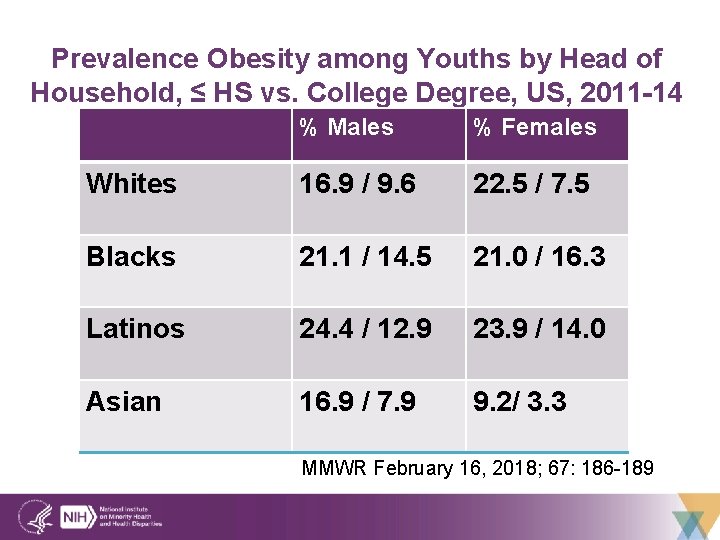
Prevalence Obesity among Youths by Head of Household, ≤ HS vs. College Degree, US, 2011 -14 % Males % Females Whites 16. 9 / 9. 6 22. 5 / 7. 5 Blacks 21. 1 / 14. 5 21. 0 / 16. 3 Latinos 24. 4 / 12. 9 23. 9 / 14. 0 Asian 16. 9 / 7. 9 9. 2/ 3. 3 MMWR February 16, 2018; 67: 186 -189
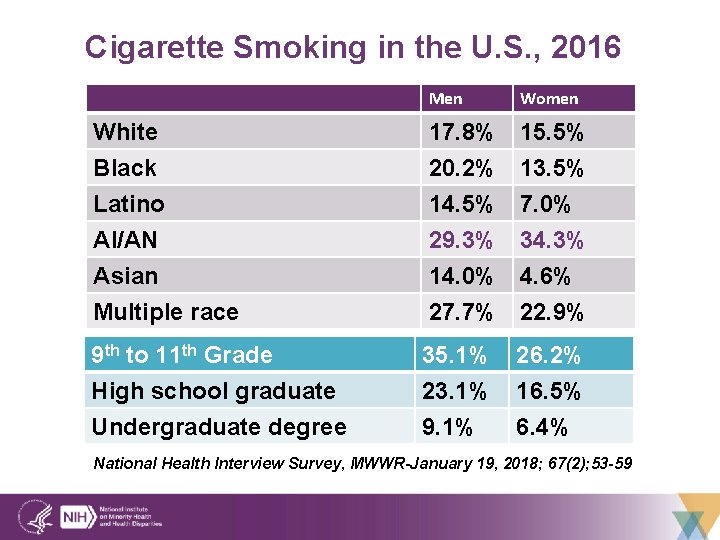
Cigarette Smoking in the U. S. , 2016 Men Women White 17. 8% 15. 5% Black 20. 2% 13. 5% Latino 14. 5% 7. 0% AI/AN 29. 3% 34. 3% Asian 14. 0% 4. 6% Multiple race 27. 7% 22. 9% 9 th to 11 th Grade 35. 1% 26. 2% High school graduate 23. 1% 16. 5% Undergraduate degree 9. 1% 6. 4% National Health Interview Survey, MWWR-January 19, 2018; 67(2); 53 -59
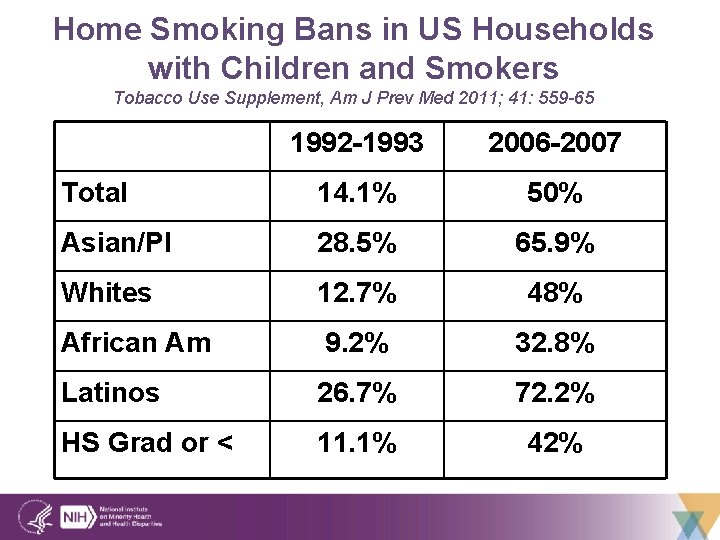
Home Smoking Bans in US Households with Children and Smokers Tobacco Use Supplement, Am J Prev Med 2011; 41: 559 -65 1992 -1993 2006 -2007 Total 14. 1% 50% Asian/PI 28. 5% 65. 9% Whites 12. 7% 48% African Am 9. 2% 32. 8% Latinos 26. 7% 72. 2% HS Grad or < 11. 1% 42%
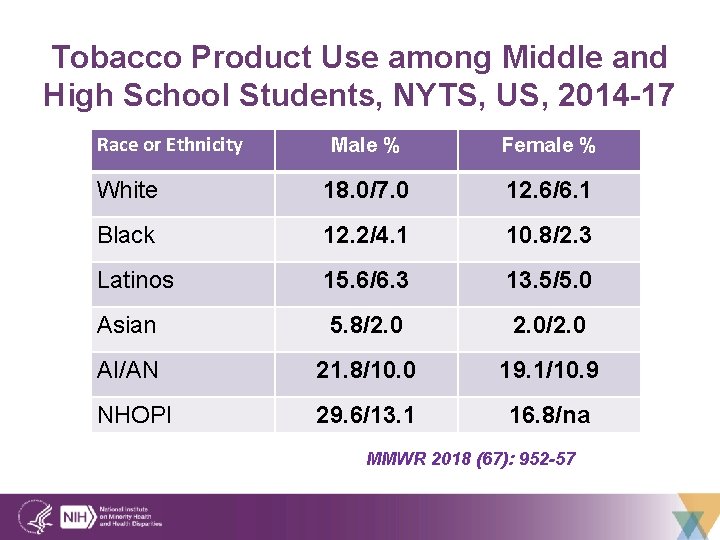
Tobacco Product Use among Middle and High School Students, NYTS, US, 2014 -17 Race or Ethnicity Male % Female % White 18. 0/7. 0 12. 6/6. 1 Black 12. 2/4. 1 10. 8/2. 3 Latinos 15. 6/6. 3 13. 5/5. 0 Asian 5. 8/2. 0/2. 0 AI/AN 21. 8/10. 0 19. 1/10. 9 NHOPI 29. 6/13. 1 16. 8/na MMWR 2018 (67): 952 -57
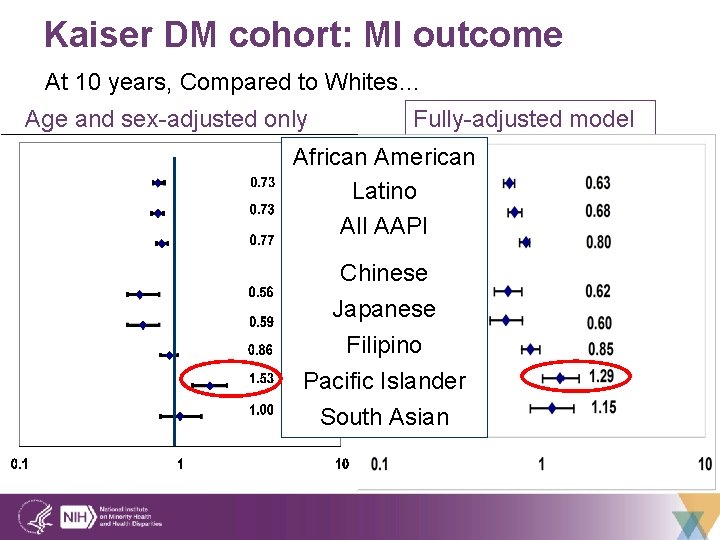
Kaiser DM cohort: MI outcome At 10 years, Compared to Whites… Age and sex-adjusted only Fully-adjusted model African American Latino All AAPI Chinese Japanese Filipino Pacific Islander South Asian
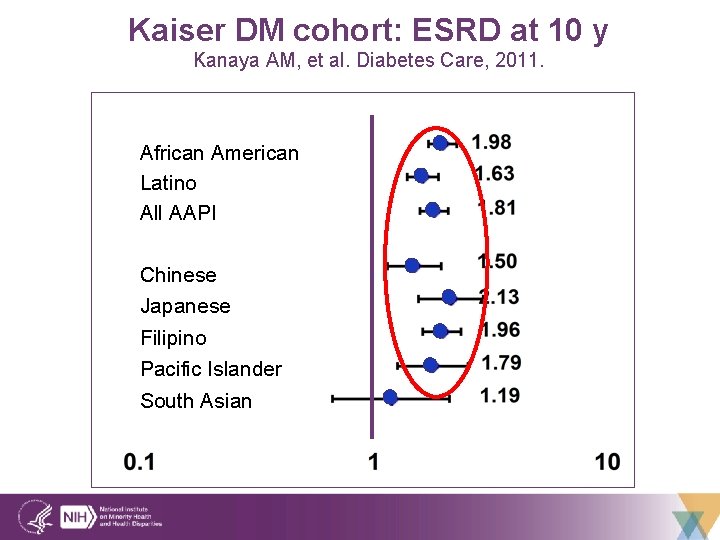
Kaiser DM cohort: ESRD at 10 y Kanaya AM, et al. Diabetes Care, 2011. African American Latino All AAPI Chinese Japanese Filipino Pacific Islander South Asian
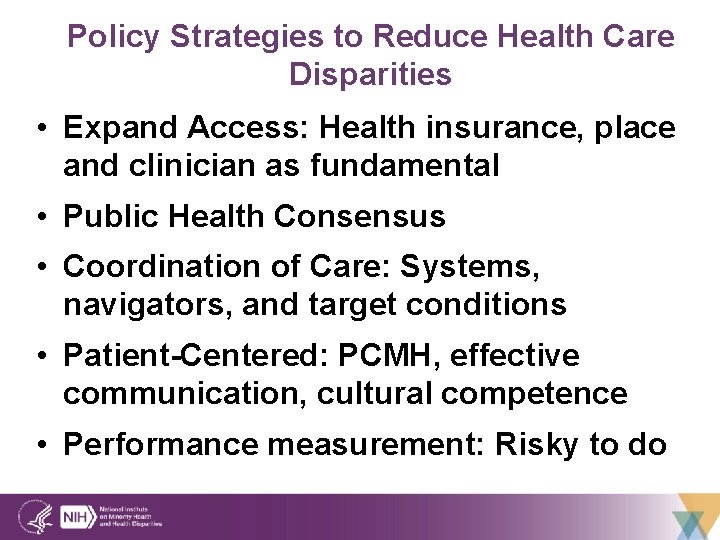
Policy Strategies to Reduce Health Care Disparities • Expand Access: Health insurance, place and clinician as fundamental • Public Health Consensus • Coordination of Care: Systems, navigators, and target conditions • Patient-Centered: PCMH, effective communication, cultural competence • Performance measurement: Risky to do
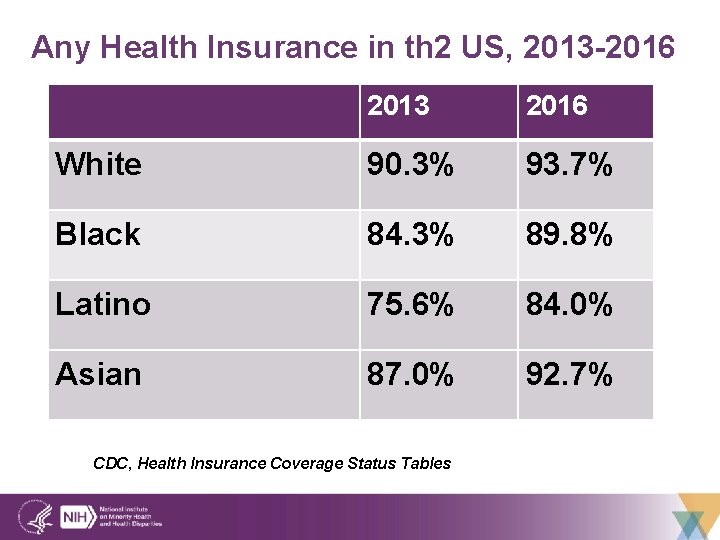
Any Health Insurance in th 2 US, 2013 -2016 2013 2016 White 90. 3% 93. 7% Black 84. 3% 89. 8% Latino 75. 6% 84. 0% Asian 87. 0% 92. 7% CDC, Health Insurance Coverage Status Tables
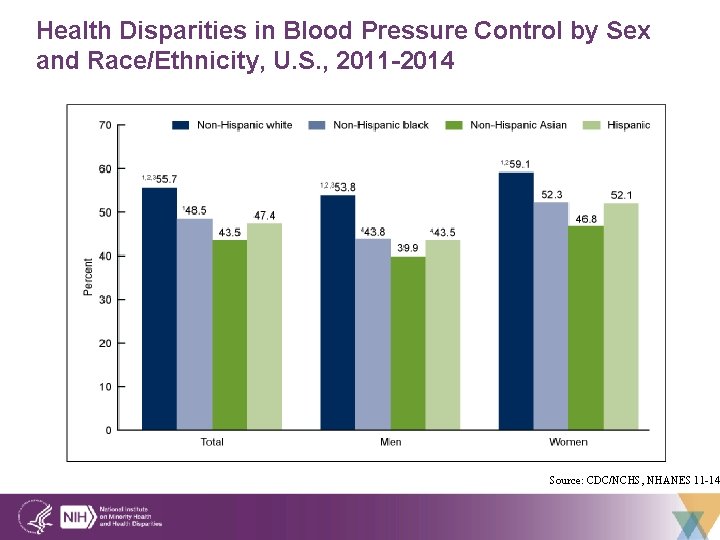
Health Disparities in Blood Pressure Control by Sex and Race/Ethnicity, U. S. , 2011 -2014 Source: CDC/NCHS, NHANES 11 -14
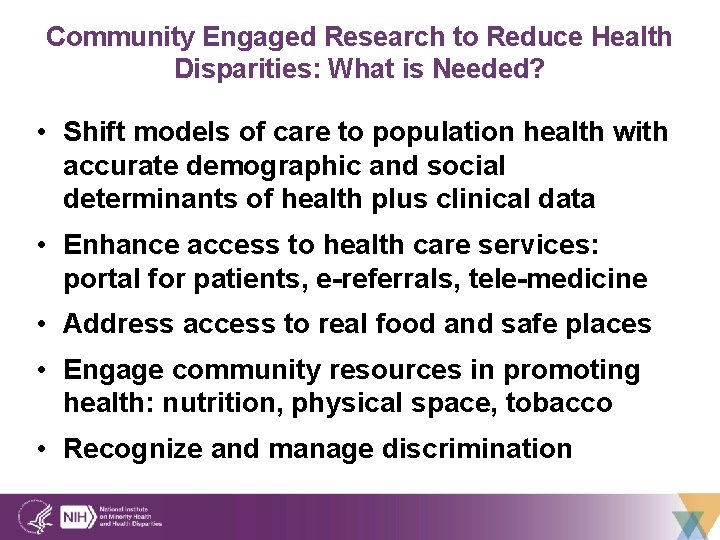
Community Engaged Research to Reduce Health Disparities: What is Needed? • Shift models of care to population health with accurate demographic and social determinants of health plus clinical data • Enhance access to health care services: portal for patients, e-referrals, tele-medicine • Address access to real food and safe places • Engage community resources in promoting health: nutrition, physical space, tobacco • Recognize and manage discrimination
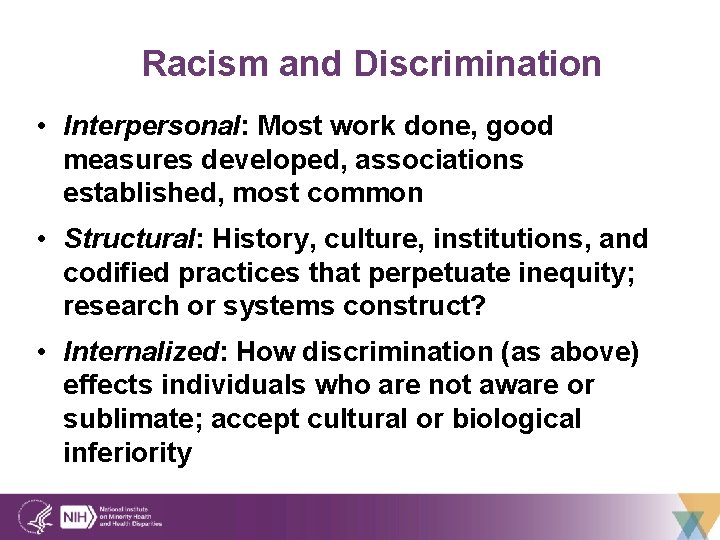
Racism and Discrimination • Interpersonal: Most work done, good measures developed, associations established, most common • Structural: History, culture, institutions, and codified practices that perpetuate inequity; research or systems construct? • Internalized: How discrimination (as above) effects individuals who are not aware or sublimate; accept cultural or biological inferiority
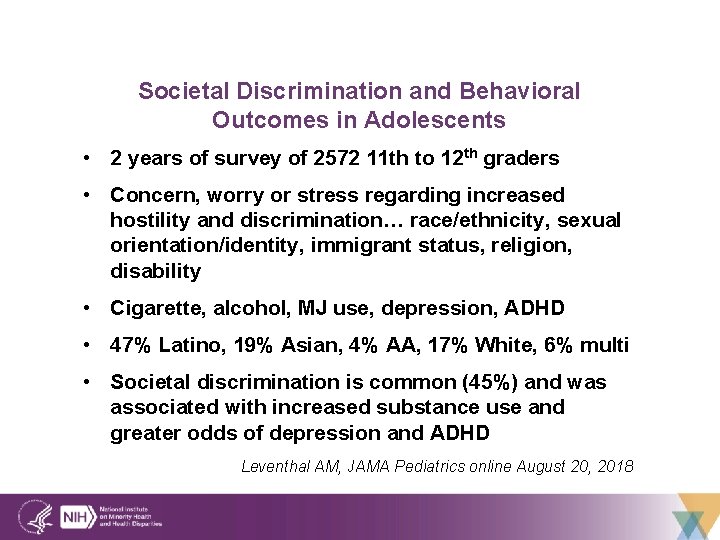
Societal Discrimination and Behavioral Outcomes in Adolescents • 2 years of survey of 2572 11 th to 12 th graders • Concern, worry or stress regarding increased hostility and discrimination… race/ethnicity, sexual orientation/identity, immigrant status, religion, disability • Cigarette, alcohol, MJ use, depression, ADHD • 47% Latino, 19% Asian, 4% AA, 17% White, 6% multi • Societal discrimination is common (45%) and was associated with increased substance use and greater odds of depression and ADHD Leventhal AM, JAMA Pediatrics online August 20, 2018
Inclusion of Diverse Participants • Minorities are underrepresented in research • Social justice and common sense mandate inclusion of minorities in clinical research: 40% US population • Good science: Discovery to be made with diverse participants • NIH Clinical studies: about 28% are minorities • All of Us Research Program aims to recruit 50% minorities
We Have to be at The Table • Yes, it is harder to recruit minorities and it usually takes more resources and different skills • More face time and personal messages • Minority scientists are generally better at it • We need greater granularity (SES, birthplace, language) and researcher accountability • End myth that barriers are insurmountable
Workforce Diversity: Asians and Pacific Islanders • Asian PIs overall are overrepresented in NIH grants: North East and South Asians • Lack of Asians in leadership roles • US Medical school graduates in 2015: 19. 8% Asian (3, 701) and only 5 were NH/PI • Diversity supplements flexibility
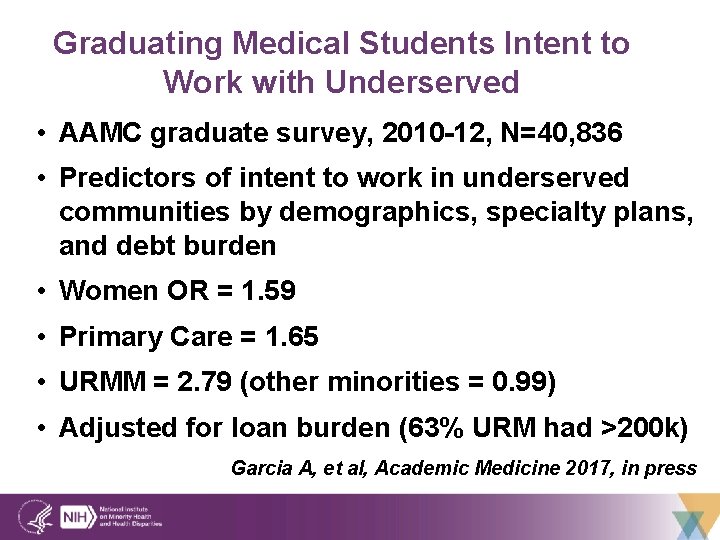
Graduating Medical Students Intent to Work with Underserved • AAMC graduate survey, 2010 -12, N=40, 836 • Predictors of intent to work in underserved communities by demographics, specialty plans, and debt burden • Women OR = 1. 59 • Primary Care = 1. 65 • URMM = 2. 79 (other minorities = 0. 99) • Adjusted for loan burden (63% URM had >200 k) Garcia A, et al, Academic Medicine 2017, in press
Defining a Vision on a National Stage
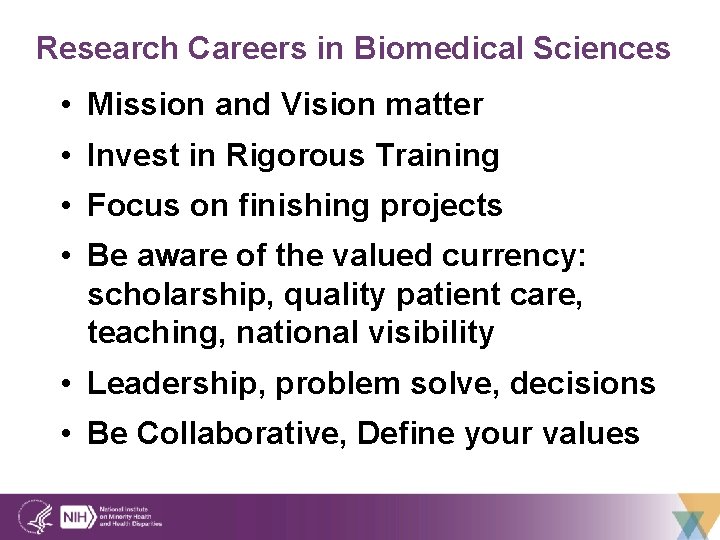
Research Careers in Biomedical Sciences • Mission and Vision matter • Invest in Rigorous Training • Focus on finishing projects • Be aware of the valued currency: scholarship, quality patient care, teaching, national visibility • Leadership, problem solve, decisions • Be Collaborative, Define your values
Connect With Us Visit us online www. nimhd. nih. gov Connect with us on Facebook www. facebook. com/NIMHD Follow us on Twitter @NIMHD