
Night Vision Eye Rods Cones Bowmaker J K
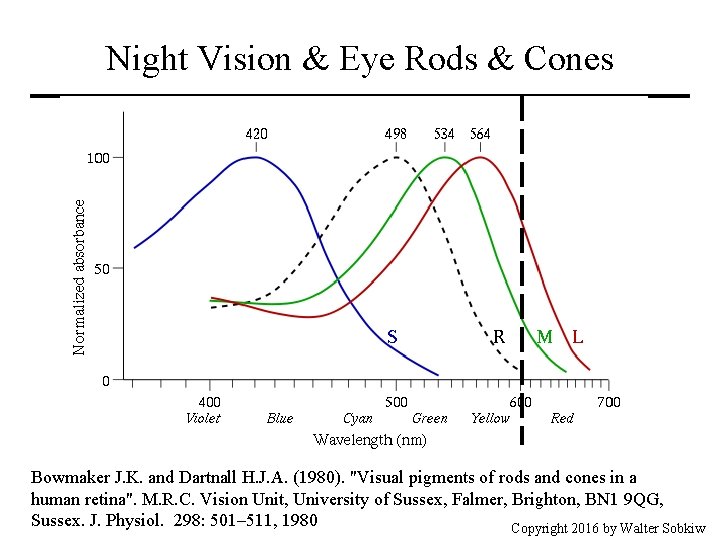
Night Vision & Eye Rods & Cones Bowmaker J. K. and Dartnall H. J. A. (1980). "Visual pigments of rods and cones in a human retina". M. R. C. Vision Unit, University of Sussex, Falmer, Brighton, BN 1 9 QG, Sussex. J. Physiol. 298: 501– 511, 1980 Copyright 2016 by Walter Sobkiw
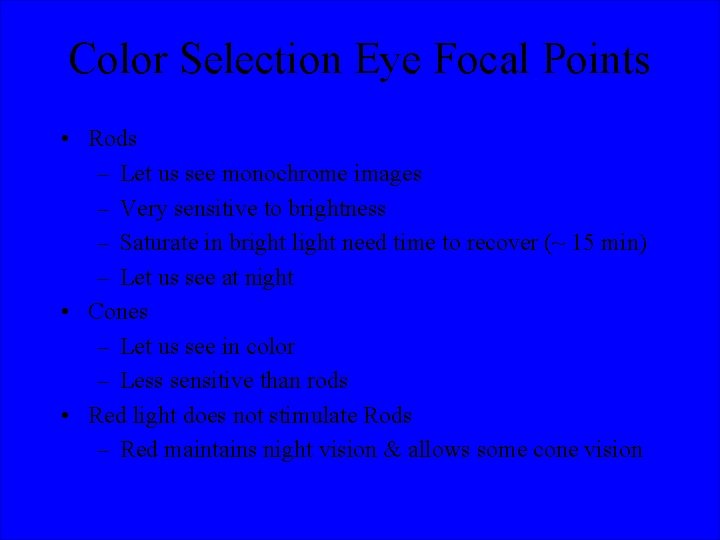
Color Selection Eye Focal Points • Rods – Let us see monochrome images – Very sensitive to brightness – Saturate in bright light need time to recover (~ 15 min) – Let us see at night • Cones – Let us see in color – Less sensitive than rods • Red light does not stimulate Rods – Red maintains night vision & allows some cone vision Copyright 2016 by Walter Sobkiw
Color Selection Eye Focal Points • Rods – Let us see monochrome images – Very sensitive to brightness – Saturate in bright light need time to recover (~ 15 min) – Let us see at night • Cones – Let us see in color – Less sensitive than rods • Red light does not stimulate Rods – Red maintains night vision & allows some cone vision Copyright 2016 by Walter Sobkiw
Color Selection Eye Focal Points • Rods – Let us see monochrome images – Very sensitive to brightness – Saturate in bright light need time to recover (~ 15 min) – Let us see at night • Cones – Let us see in color – Less sensitive than rods • Red light does not stimulate Rods – Red maintains night vision & allows some cone vision Copyright 2016 by Walter Sobkiw
Color Selection Eye Focal Points • Rods – Let us see monochrome images – Very sensitive to brightness – Saturate in bright light need time to recover (~ 15 min) – Let us see at night • Cones – Let us see in color – Less sensitive than rods • Red light does not stimulate Rods – Red maintains night vision & allows some cone vision Copyright 2016 by Walter Sobkiw
Color Selection Eye Focal Points • Rods – Let us see monochrome images – Very sensitive to brightness – Saturate in bright light need time to recover (~ 15 min) – Let us see at night • Cones – Let us see in color – Less sensitive than rods • Red light does not stimulate Rods – Red maintains night vision & allows some cone vision Copyright 2016 by Walter Sobkiw
Color Selection Eye Focal Points • Rods – Let us see monochrome images – Very sensitive to brightness – Saturate in bright light need time to recover (~ 15 min) – Let us see at night • Cones – Let us see in color – Less sensitive than rods • Red light does not stimulate Rods – Red maintains night vision & allows some cone vision Copyright 2016 by Walter Sobkiw
Color Selection Eye Focal Points • Rods – Let us see monochrome images – Very sensitive to brightness – Saturate in bright light need time to recover (~ 15 min) – Let us see at night • Cones – Let us see in color – Less sensitive than rods • Red light does not stimulate Rods – Red maintains night vision & allows some cone vision Copyright 2016 by Walter Sobkiw
Color Selection Eye Focal Points • Rods – Let us see monochrome images – Very sensitive to brightness – Saturate in bright light need time to recover (~ 15 min) – Let us see at night • Cones – Let us see in color – Less sensitive than rods • Red light does not stimulate Rods – Red maintains night vision & allows some cone vision Copyright 2016 by Walter Sobkiw
Color Selection Eye Focal Points • Rods – Let us see monochrome images – Very sensitive to brightness – Saturate in bright light need time to recover (~ 15 min) – Let us see at night • Cones – Let us see in color – Less sensitive than rods • Red light does not stimulate Rods – Red maintains night vision & allows some cone vision Copyright 2016 by Walter Sobkiw
Color Selection Eye Focal Points • Rods – Let us see monochrome images – Very sensitive to brightness – Saturate in bright light need time to recover (~ 15 min) – Let us see at night • Cones – Let us see in color – Less sensitive than rods • Red light does not stimulate Rods – Red maintains night vision & allows some cone vision Copyright 2016 by Walter Sobkiw
Color Selection Eye Focal Points • Rods – Let us see monochrome images – Very sensitive to brightness – Saturate in bright light need time to recover (~ 15 min) – Let us see at night • Cones – Let us see in color – Less sensitive than rods • Red light does not stimulate Rods – Red maintains night vision & allows some cone vision Copyright 2016 by Walter Sobkiw
Color Selection Eye Focal Points • Rods – Let us see monochrome images – Very sensitive to brightness – Saturate in bright light need time to recover (~ 15 min) – Let us see at night • Cones – Let us see in color – Less sensitive than rods • Red light does not stimulate Rods – Red maintains night vision & allows some cone vision Copyright 2016 by Walter Sobkiw
Color Selection Eye Focal Points • Rods – Let us see monochrome images – Very sensitive to brightness – Saturate in bright light need time to recover (~ 15 min) – Let us see at night • Cones – Let us see in color – Less sensitive than rods • Red light does not stimulate Rods – Red maintains night vision & allows some cone vision Copyright 2016 by Walter Sobkiw
Color Selection Eye Focal Points • Rods – Let us see monochrome images – Very sensitive to brightness – Saturate in bright light need time to recover (~ 15 min) – Let us see at night • Cones – Let us see in color – Less sensitive than rods • Red light does not stimulate Rods – Red maintains night vision & allows some cone vision Copyright 2016 by Walter Sobkiw
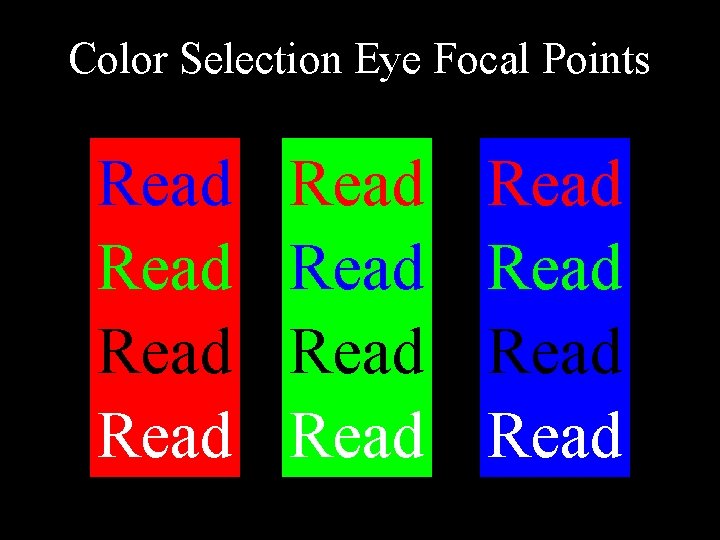
Color Selection Eye Focal Points Read Read Read Copyright 2016 by Walter Sobkiw
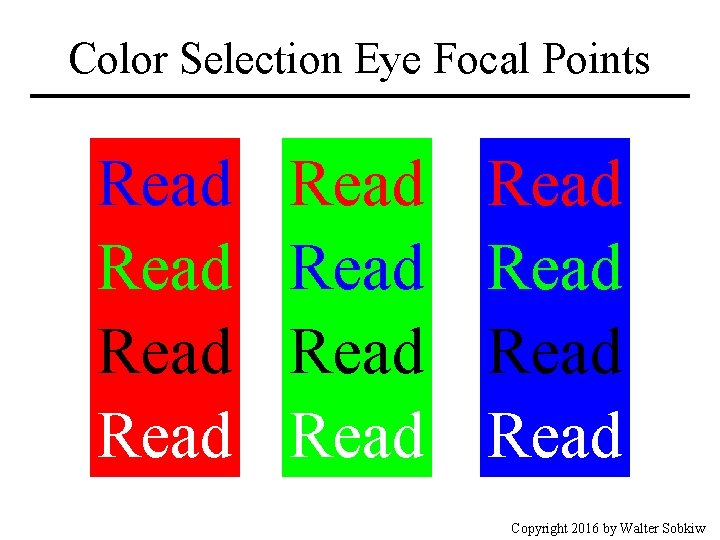
Color Selection Eye Focal Points Read Read Read Copyright 2016 by Walter Sobkiw
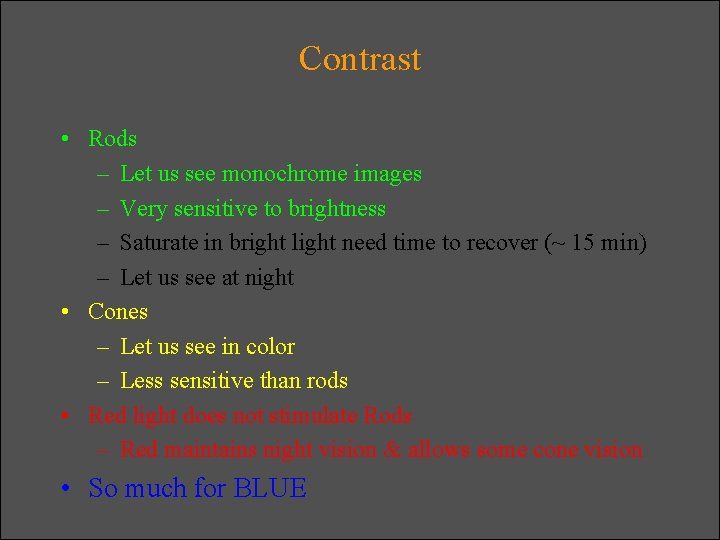
Contrast • Rods – Let us see monochrome images – Very sensitive to brightness – Saturate in bright light need time to recover (~ 15 min) – Let us see at night • Cones – Let us see in color – Less sensitive than rods • Red light does not stimulate Rods – Red maintains night vision & allows some cone vision • So much for BLUE Copyright 2016 by Walter Sobkiw
Contrast & Transparent Windows • Rods • Hello – Let us see monochrome images • I am transparent – Very sensitive to brightness • Are your overloaded yet – Saturate in bright light need time to recover (~ 15 min) – Let us see at night • Cones – Let us see in color – Less sensitive than rods • Red light does not stimulate Rods – Red maintains night vision & allows some cone vision • So much for BLUE Copyright 2016 by Walter Sobkiw
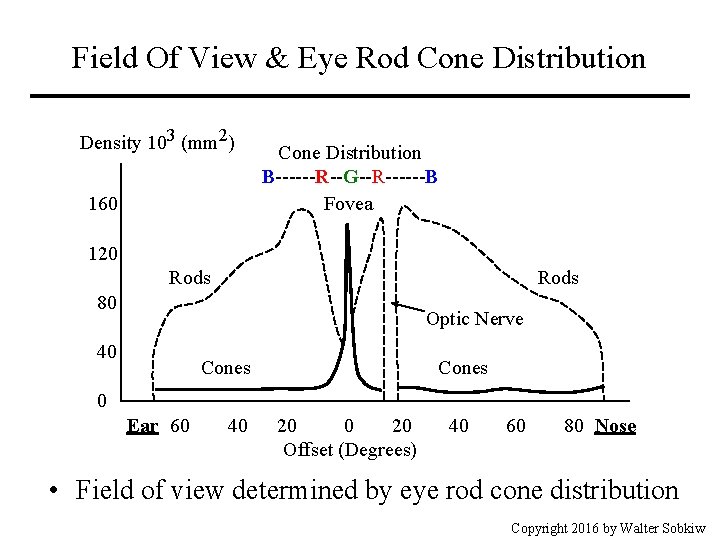
Field Of View & Eye Rod Cone Distribution Density 103 (mm 2) 160 Cone Distribution B------R--G--R------B Fovea 120 Rods 80 Optic Nerve 40 Cones 0 Ear 60 40 20 Offset (Degrees) 40 60 80 Nose • Field of view determined by eye rod cone distribution Copyright 2016 by Walter Sobkiw
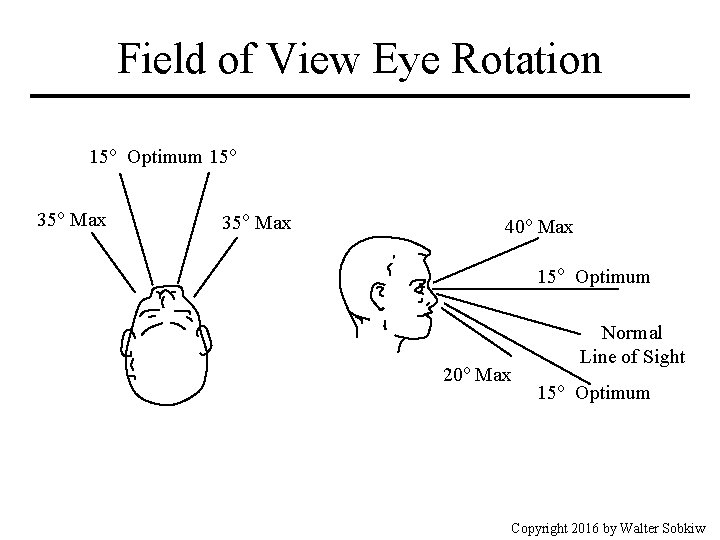
Field of View Eye Rotation 15 o Optimum 15 o 35 o Max 40 o Max 15 o Optimum 20 o Max Normal Line of Sight 15 o Optimum Copyright 2016 by Walter Sobkiw
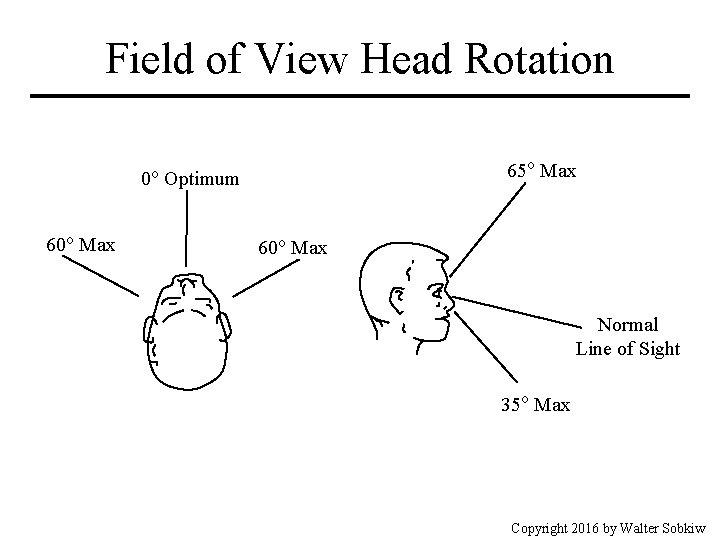
Field of View Head Rotation 0 o 60 o Max 65 o Max Optimum 60 o Max Normal Line of Sight 35 o Max Copyright 2016 by Walter Sobkiw
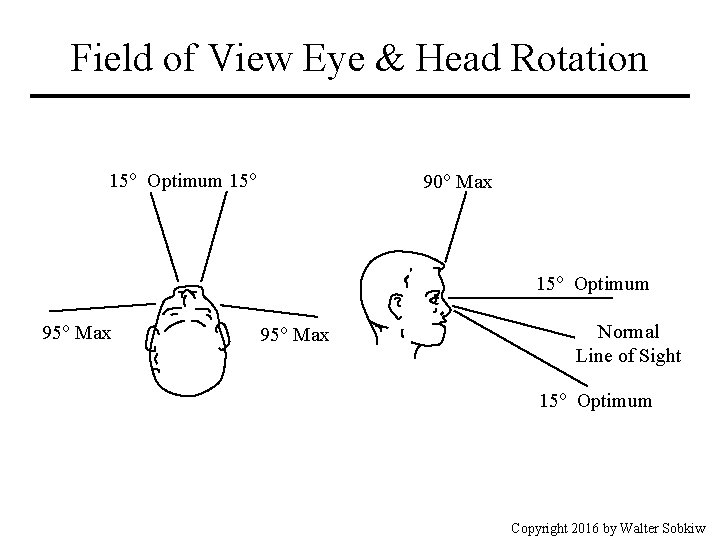
Field of View Eye & Head Rotation 15 o Optimum 15 o 90 o Max 15 o Optimum 95 o Max Normal Line of Sight 15 o Optimum Copyright 2016 by Walter Sobkiw
- Slides: 23