
Nigerian Culture The people Nigeria has over 250
- Slides: 7
Nigerian Culture
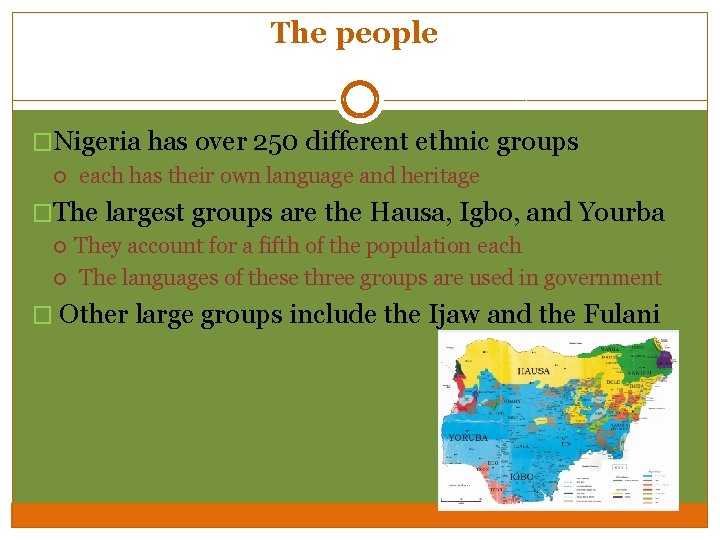
The people �Nigeria has over 250 different ethnic groups each has their own language and heritage �The largest groups are the Hausa, Igbo, and Yourba They account for a fifth of the population each The languages of these three groups are used in government � Other large groups include the Ijaw and the Fulani
Traditional culture and dress �Women, in the north, wear long flowing robes and headscarves, and rarely cover their faces �Women, in the south, wear Western-style clothes for everyday occasions mostly will buy them for cheap in markets But on Sunday, most women will dress in their best traditional clothes and headdresses � These are made from locally made and dyed fabrics.
Religion � Nigeria has 36 states � In 13 northern states, the majority of people are Muslim � The Hausa have been Muslims for almost a thousand years Due to Arab traders and merchants from the 10 th century who brought Islam with them � Due to harsh conditions, such as: poverty and frustration over corruption–Extremist groups have increased in north Nigeria � The majority of Nigerians that live in the north are Christian � Religion is taken seriously Most people attend church on a Sunday and make frequent references to God or Jesus in everyday conversation � Southern native religions are based on a belief of spirits They believe in a supreme being or creator, known as: � � Olorun/Olodumare in Yoruba culture Chineke/Chukwu by Igbo people.
English in Nigeria �The official language is English �However, depending on education, most people struggle to speak English �For informal occasions most people speak in their native language �In casual conversation ‘Pidgin’ English is used This is English and Nigerian words mixed together
Sharia law �In 2000, Sharia law was introduced to the northern states Sharia law is a code for how Muslims should lead their lives � People believe Muslim scholars in the early centuries of Islam, created this idea � Parts of this law is taken directly from the Koran �Northern states use this code for their justice system However, some of the harsher penalties, such as death-bystoning for adultery, have never been carried out
Dyeing and weaving �Local craftsmen are skilled in dyeing and weaving �Vocab: Adire-Hand-patterned cloth � patterns are created by making certain parts of the material resistant to dyes Asa-oke- hand-woven pieces of colorful cloth