
Niels Provos and Panayiotis Mavrommatis Google Inc Moheeb

Niels Provos and Panayiotis Mavrommatis Google Inc. Moheeb Abu Rajab and Fabian Monrose Johns Hopkins University 17 th USENIX Security Symposium All i. FRAMEs Point to US 1 / 22

Introduction[1/3] The WWW is a criminal’s preferred pathway for spreading malware. Two kinds of delivering web-malware Social engineering Drive-by download �URLs that attempt to exploit their visitors and cause malware to be installed and run automatically. 2 / 22

Introduction[2/3] Drive-by download Via i. FRAMEs Scripts exploits browser and triggers downloads 3 / 22
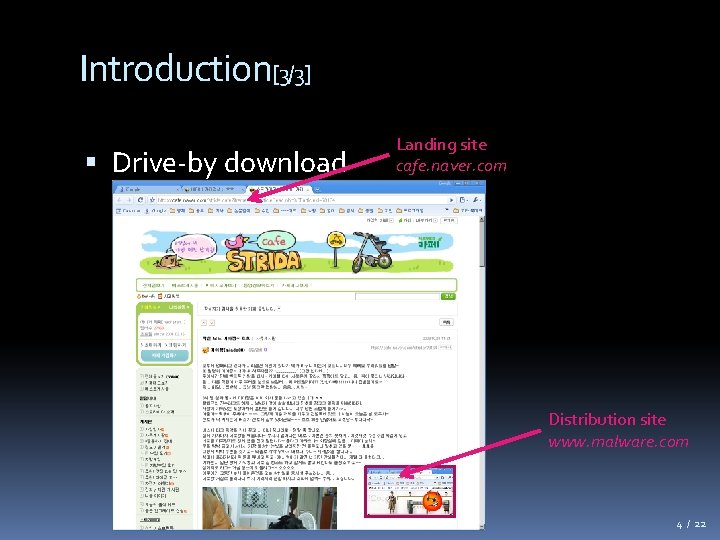
Introduction[3/3] Drive-by download Landing site cafe. naver. com Distribution site www. malware. com 4 / 22
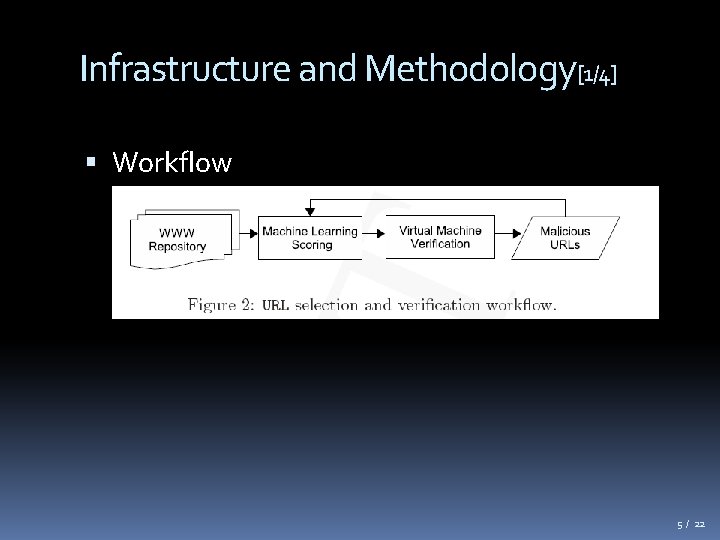
Infrastructure and Methodology[1/4] Workflow 5 / 22
Infrastructure and Methodology[2/4] Pre-processing phase Inspect URLs from repository and identify the ones that trigger drive-by downloads Mapreduce and machine-learning framework Pre-process a billion of pages daily Choose 1 million URLs for verification phase 6 / 22
Infrastructure and Methodology[3/4] Verification phase Large scale web-honeynet �Runs a large number of MS Windows images in VM �Unpatched version of Internet Explorer �Multiple anti-virus engines Loads a clean Windows image then visit the candidate URL Monitor the system behavior for abnormal state chnages 7 / 22
Infrastructure and Methodology[4/4] Malware distribution networks The set of malware delivery trees from all the landing site that lead to a particular malware distribution site. Inspecting the Referer header and HTTP request In some case, URLs contain randomly generated strings, apply heuristics based algorithm. 8 / 22
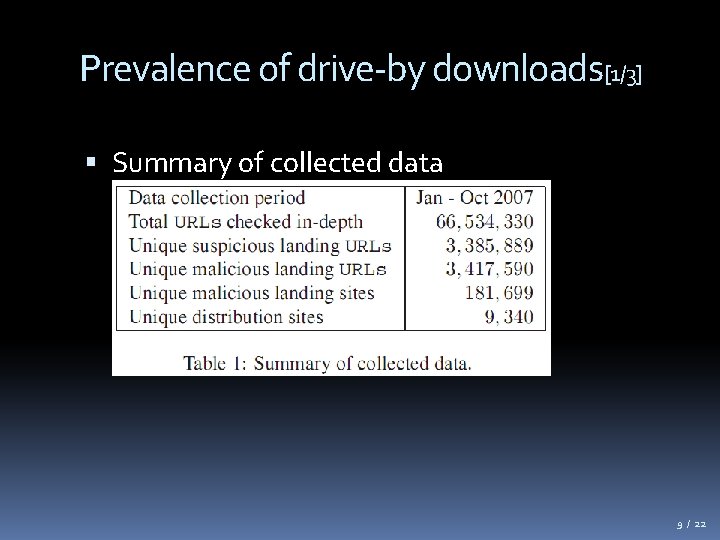
Prevalence of drive-by downloads[1/3] Summary of collected data 9 / 22
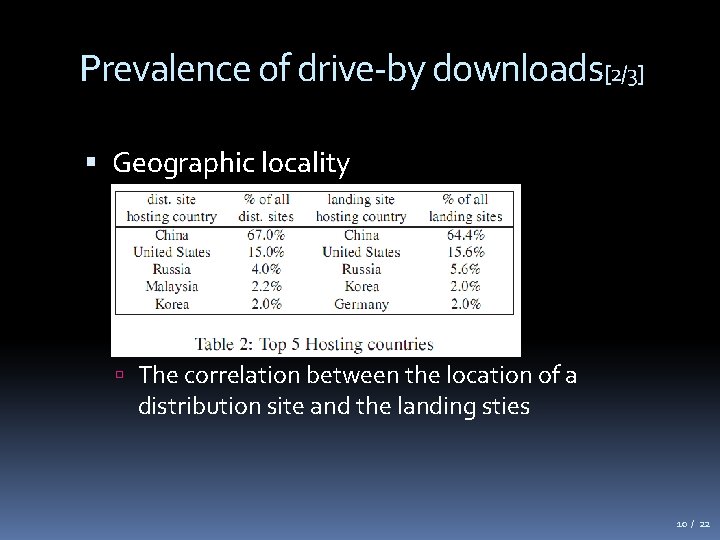
Prevalence of drive-by downloads[2/3] Geographic locality The correlation between the location of a distribution site and the landing sties 10 / 22
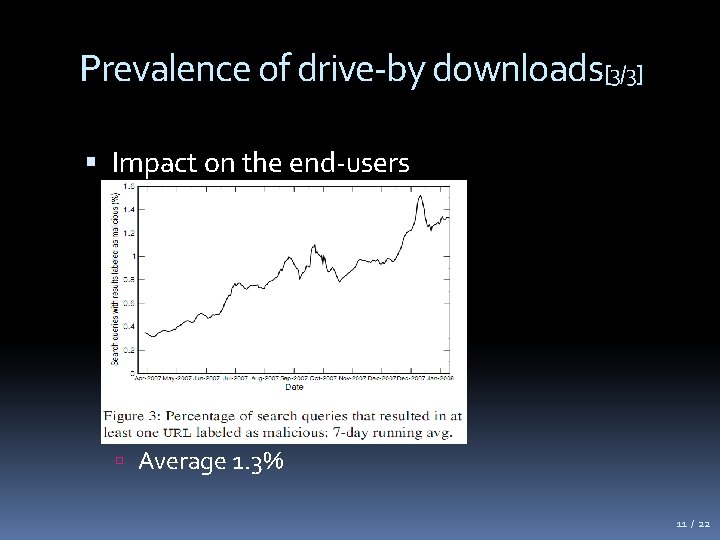
Prevalence of drive-by downloads[3/3] Impact on the end-users Average 1. 3% 11 / 22
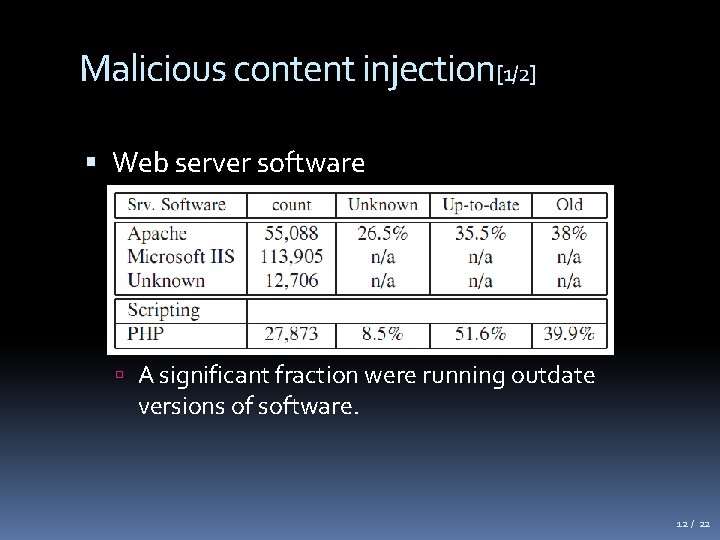
Malicious content injection[1/2] Web server software A significant fraction were running outdate versions of software. 12 / 22
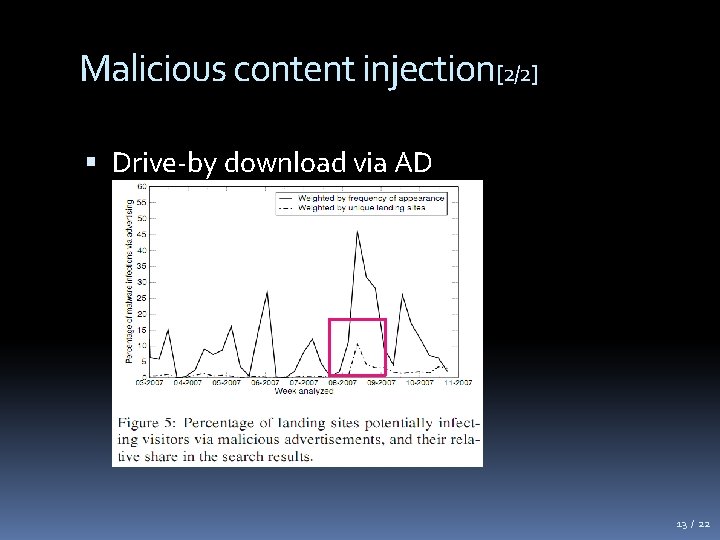
Malicious content injection[2/2] Drive-by download via AD 13 / 22
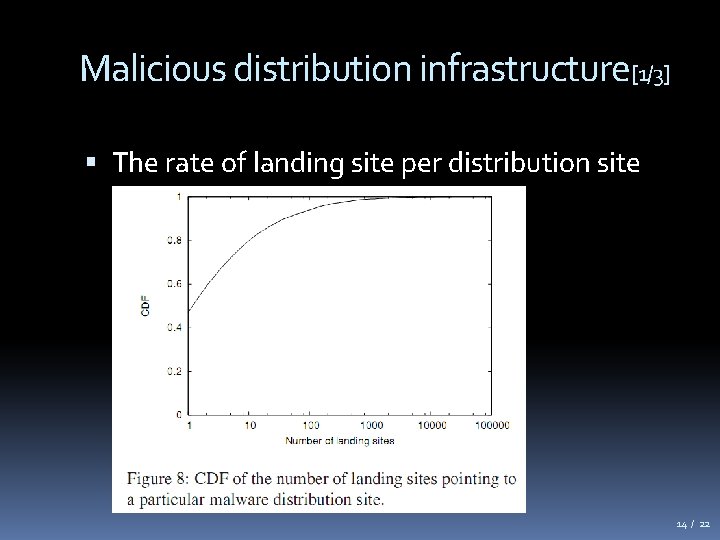
Malicious distribution infrastructure[1/3] The rate of landing site per distribution site 14 / 22
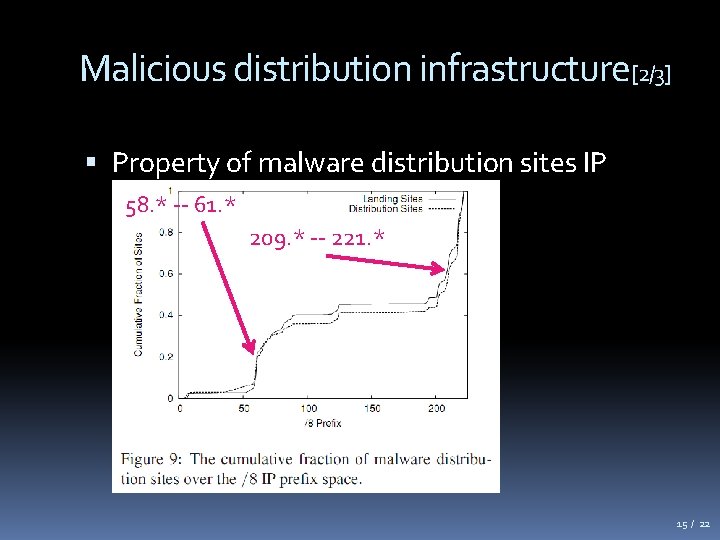
Malicious distribution infrastructure[2/3] Property of malware distribution sites IP 58. * -- 61. * 209. * -- 221. * 15 / 22

Malicious distribution infrastructure[3/3] The number of unique binaries downloaded from each malware distribution site 16 / 22
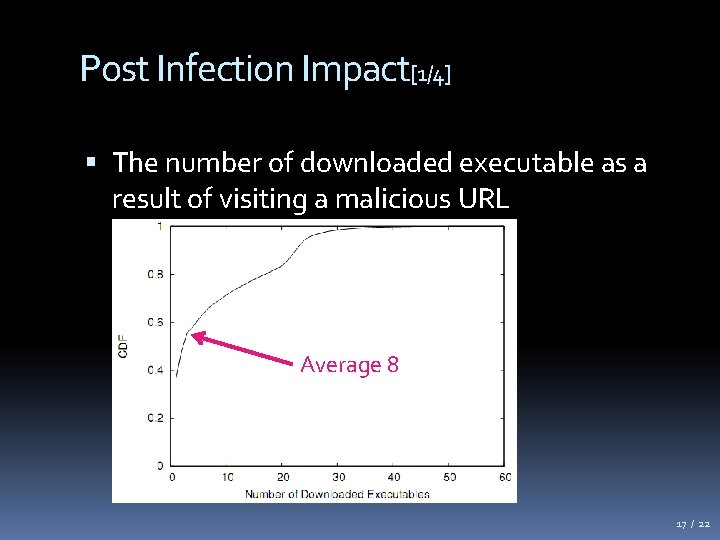
Post Infection Impact[1/4] The number of downloaded executable as a result of visiting a malicious URL Average 8 17 / 22
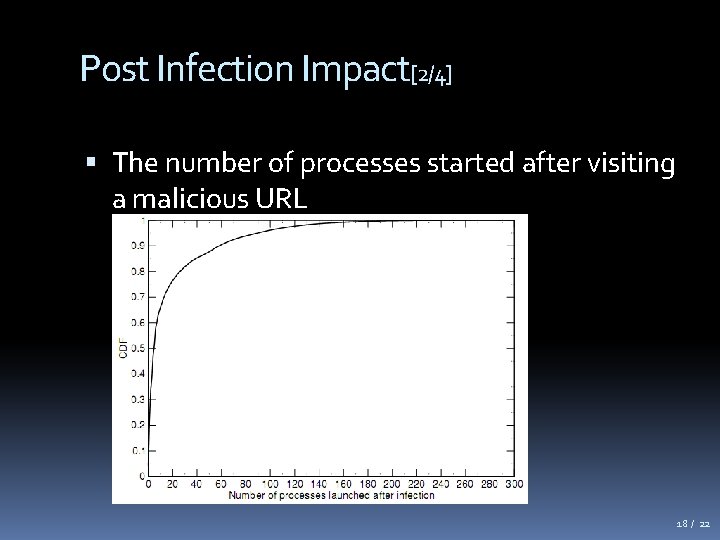
Post Infection Impact[2/4] The number of processes started after visiting a malicious URL 18 / 22
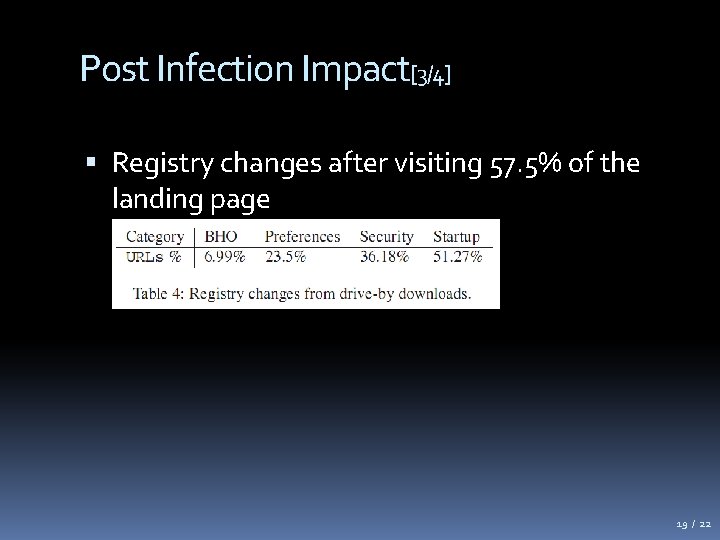
Post Infection Impact[3/4] Registry changes after visiting 57. 5% of the landing page 19 / 22
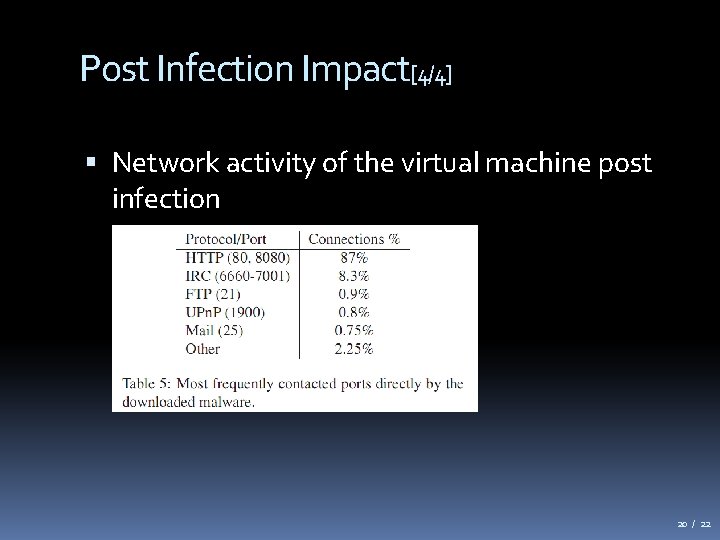
Post Infection Impact[4/4] Network activity of the virtual machine post infection 20 / 22
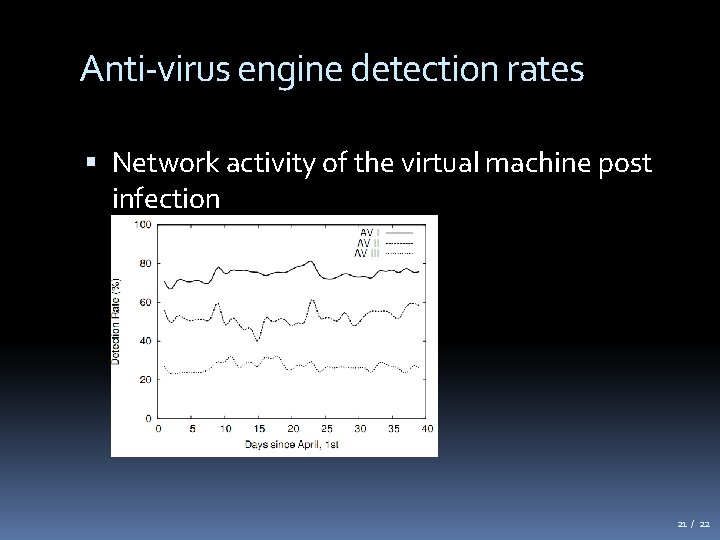
Anti-virus engine detection rates Network activity of the virtual machine post infection 21 / 22
Conclusion Large web scale data collection infrastructure In-depth analysis of over 66 million URLs Reveals that the scope of the problem is significant Anti-virus engines are lacking in their ability to protect against drive-by downloads 22 / 22

Extra-Authors Niels Provos Senior staff engineer, Google inc Web-based malware DDOS Panayiotis Mavrommatis Software engineer, Google inc Security Distributed computing 23 / 18
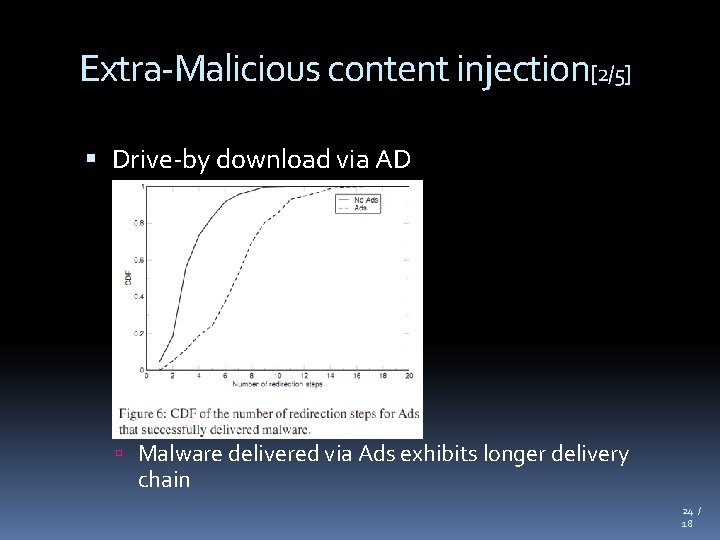
Extra-Malicious content injection[2/5] Drive-by download via AD Malware delivered via Ads exhibits longer delivery chain 24 / 18
- Slides: 24