
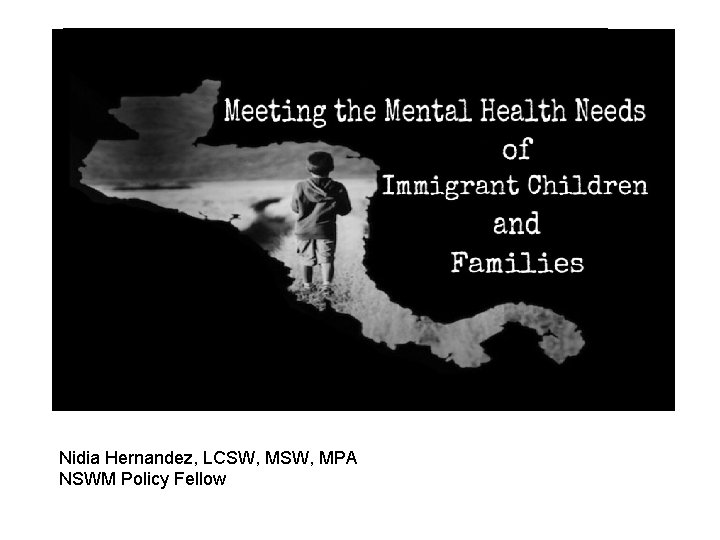
Nidia Hernandez LCSW MSW MPA NSWM Policy Fellow
- Slides: 16
Nidia Hernandez, LCSW, MSW, MPA NSWM Policy Fellow
Abstract § The United States has seen a significant increase in immigration from Spanish-speaking unaccompanied children and families. § This population has dispersed throughout the U. S. and many continue to be housed in detention centers. § The various mental health needs that this specific population requires can be met by community mental health agencies throughout the nation, however, cultural and linguistic accommodations must be considered. § Community collaborations among social workers, social service agencies, academia, public policy and the community can allow for better supports and delivery of services to this vulnerable population.
Background § As of 2014, a significant increase of children and families immigrated to the United States. § Approximately 69, 000 unaccompanied minors from various Latin American countries. § This represented an increase of 1600% over the 4, 059 who had arrived in 2011 (Shah, 2016).
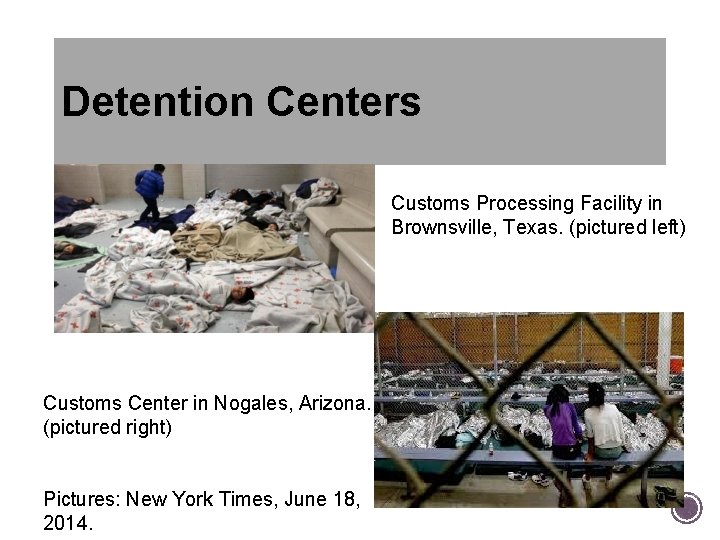
Trauma & The Immigration Experience § The immigration experience itself can be very traumatic for children (e. g. child abuse risks, separation and loss). § Unaccompanied children face many significant perils during their journey (Chen and Gill, 2015). § According to Chen and Gill (2015), “They may be mistreated by smugglers, fall prey to human traffickers, or susceptible to abuse”. § Detention Centers have served to house many of the children and their families for an indefinite amount of time.
Detention Centers Customs Processing Facility in Brownsville, Texas. (pictured left) Customs Center in Nogales, Arizona. (pictured right) Pictures: New York Times, June 18, 2014.
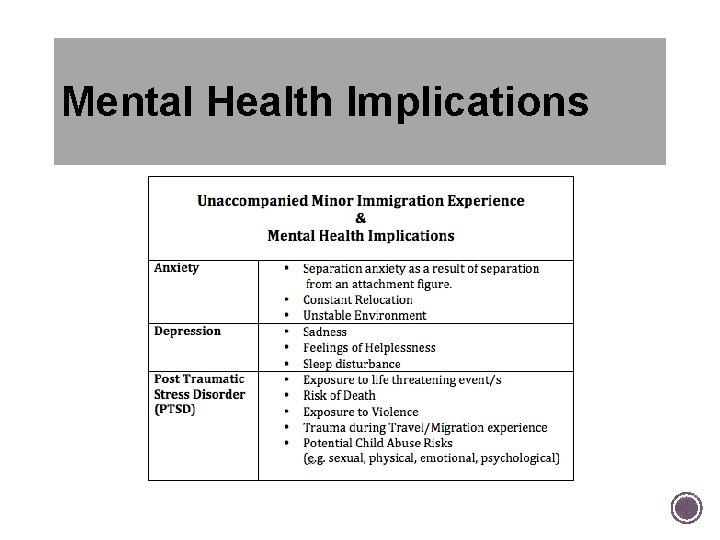
Mental Health Implications
Separation & Attachment § Temporary or sometimes permanent separation of a parent, caregiver, foster parent, service provider leads to disruptions in attachment. § A study found that, “When the children are asked "What was the hardest thing about coming to the US? " in the first year interview, frequently the response reflected the painful nature of leaving behind a loved one” (Suarez-Orozco, Todorova, & Louie, 2001).
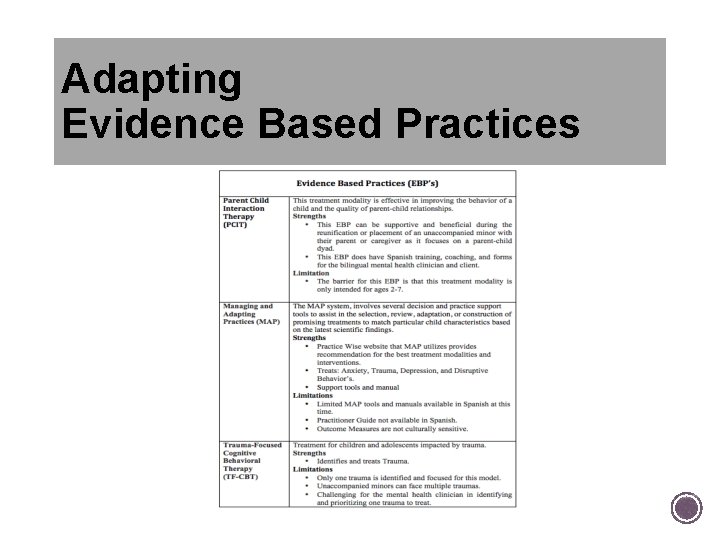
Adapting Evidence Based Practices
Cultural & Linguistic Needs § Cultural humility and sensitivity is necessary to meet the needs of the unaccompanied minor population. § Ethical dilemma in adhering to funding constraints while meeting population needs. § Refugees face barriers such as misdiagnosis, inappropriate use of interpreters and paraprofessionals, and culturally inappropriate treatment methods. (Gong-Guy, Cravens, & Patterson, 1991) § Community Mental Health Limitations: § EBP’s are written and taught in English § EBP resources are mostly available in English § Limited availability and retention of specialized Spanish speaking providers.
Spanish Speaking Clinician Needs § Ongoing professional administrative support, guidance, advocacy and policy updates. . § Culturally relevant training for a best-practices approach. § Development of culturally appropriate evidence-based practices. § Flexible, adaptable treatment modalities and standards of care in order to meet the complexity of this populations mental health needs and resources. § Translated agency forms, interventions, policies, and treatment resources.
Limitations § Complex needs, which are impacted by systemic forces and barriers. § Funding Constraints (e. g. Following EBP’s to fidelity, client program eligibility). § Limited Resources for Undocumented Children and Families. § Lack of unaccompanied minor mental health research. § Lack of evidence-based research for cultural and linguistic best practices. § Lack of specialized task forces to support bilingual Social Workers.
Conclusion § Due to the recent emergence and spotlight due to condemning political immigration policies it is important for Social Workers and community mental health providers and administrators to stay current on policies and laws. § By implementing a community collaborative approach, agencies can further support bilingual providers and clients by working with other agencies and organizations to meet service gaps. § A call to action is needed at this time from the Social Work community to address the current injustices that are affecting children and families.
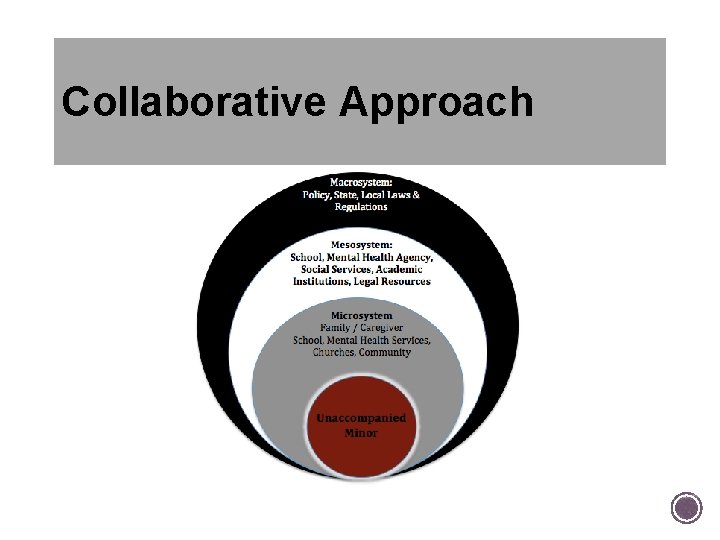
Next Steps § By staying current in community and agency needs, administrators can identify best ethical and cultural practices for the population they serve. § Collaborative approach can support direct practice social workers by gathering current community trends and needs. § Community collaborative approach is ideal in filling service gaps that can benefit the overall community. § Need for Evidence-Based Research on Unaccompanied Minors.
Collaborative Approach
References § Amuedo-dorantes, C. , Pozo, S. , & Puttitanun, T. (2015). Immigration enforcement, parent-child separations, and intent to remigrate by central american deportees. Demography, 52(6), 1825 -1851. doi: http: //dx. doi. org. msmc. idm. oclc. org/10. 1007/s 13524 -015 -0431 -0 § Bonovitz, J. M. (2004). THE CHILD IMMIGRANT. American Journal of Psychoanalysis, 64 (2), 129 -41. Retrieved from https: //msmc. idm. oclc. org/login? url=http: //search. proquest. com. msmc. idm. oclc. org/docview/204590146? accountid=12597 § Chen, A. , & Gill, J. (2015). UNACCOMPANIED CHILDREN AND THE U. S. IMMIGRATION SYSTEM: CHALLENGES AND REFORMS. Journal of International Affairs, 68(2), 115 -XIV. Retrieved from https: //msmc. idm. oclc. org/login? url=http: //search. proquest. com. msmc. idm. oclc. org/docview/1679733943? accountid=12597 § Gong-Guy, E. , Cravens, R. B. , & Patterson, T. E. (1991). Clinical issues in mental health service delivery to refugees. American Psychologist, 46(6), 642 -648. § Kendrick, J. (2011). Transformational leadership. Professional Safety, 56(11), 14. § Shah, S. (2016). Harvard Public Health Review. http: //harvardpublichealthreview. org/the-crisis-in-our-own-backyard-united-states-response-to-unaccompaniedminor-children-from-central-america/ § Suarez-Orozco, C. , Todorova, I. L. G. , & Louie, J. (2002). Making up for lost time: The experience of separation and reunification among immigrant families. Family Process, 41(4), 625 -43. Retrieved from https: //msmc. idm. oclc. org/login? url=http: //search. proquest. com. msmc. idm. oclc. org/docview/218869426? accountid=12597 § Suarez-Orozco, C. , Todorova, I. , & Louie, J. (2001). The transnationalization of families: Immigrant separations & reunifications Retrieved from https: //msmc. idm. oclc. org/login? url=http: //search. proquest. com. msmc. idm. oclc. org/docview/62259483? accountid=12597 § Zayas, L. H. (2015). Forgotten citizens: Deportation, children, and the making of American exiles and orphans. New York: Oxford. § Zayas, L. H. , Aguilar-gaxiola, S. , Yoon, H. , & Rey, G. N. (2015). The distress of citizen-children with detained and deported parents. Journal of Child and Family Studies, 24(11), 3213 -3223. doi: http: //dx. doi. org. msmc. idm. oclc. org/10. 1007/s 10826 -015 -0124 -8
Questions & Comments