
NIDA NATIONAL INSTITUTE ON DRUG ABUSE Bringing the
NIDA NATIONAL INSTITUTE ON DRUG ABUSE Bringing the Full Power of Science to Bear on Drug Abuse & Addiction
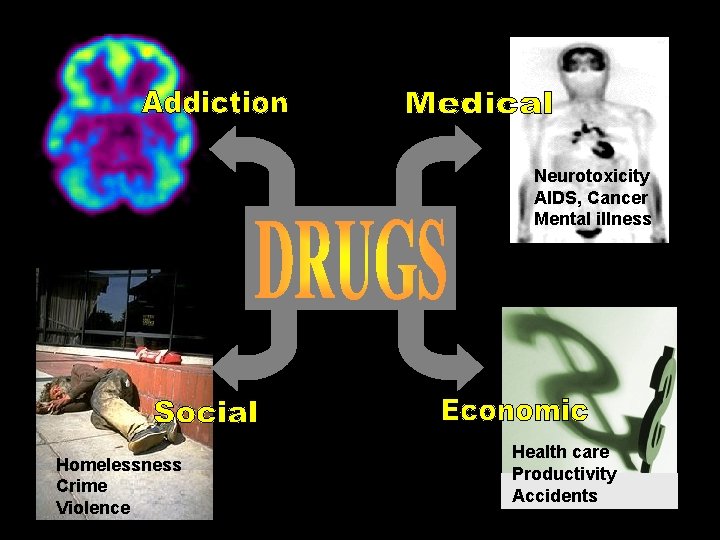
Neurotoxicity AIDS, Cancer NEUROTOXICITY AIDSMental illness CANCER MENTAL ILLNESS Homelessness Crime Violence Health care Productivity Accidents
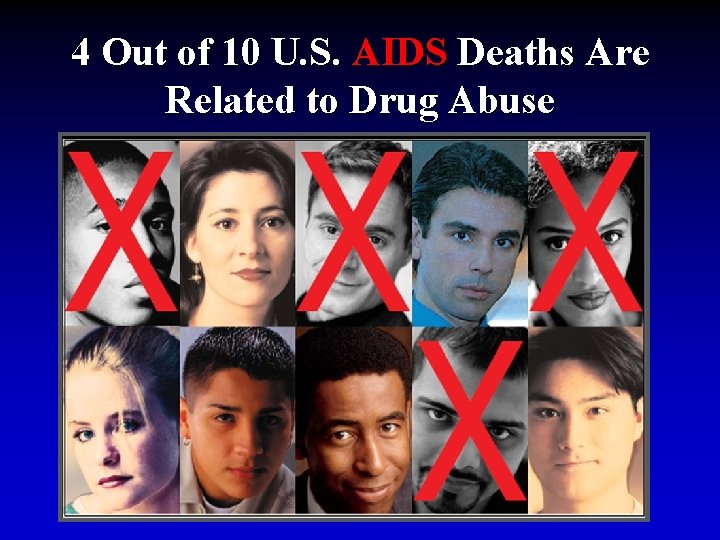
4 Out of 10 U. S. AIDS Deaths Are Related to Drug Abuse
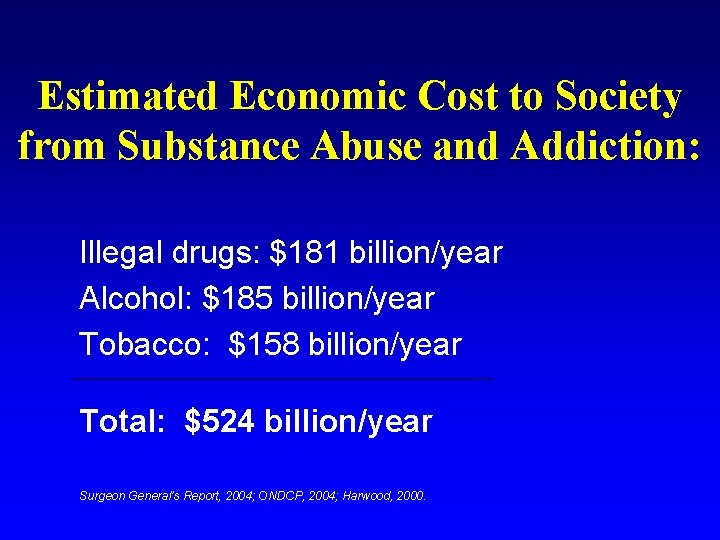
Estimated Economic Cost to Society from Substance Abuse and Addiction: Illegal drugs: $181 billion/year Alcohol: $185 billion/year Tobacco: $158 billion/year Total: $524 billion/year Surgeon General’s Report, 2004; ONDCP, 2004; Harwood, 2000.
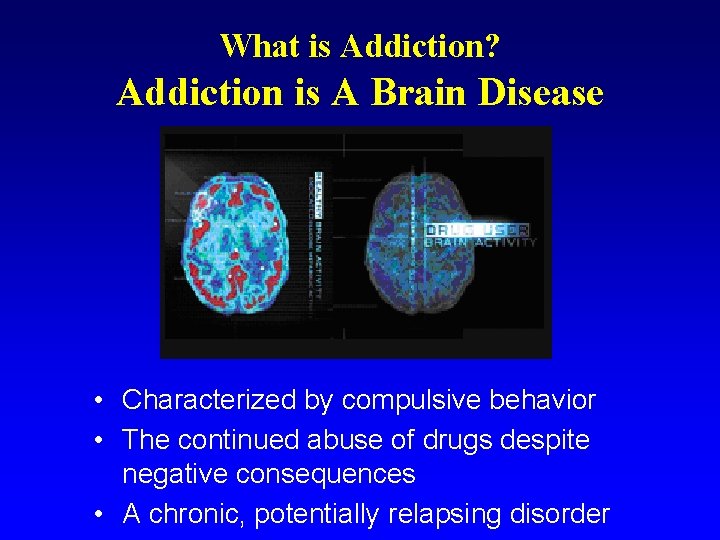
What is Addiction? Addiction is A Brain Disease • Characterized by compulsive behavior • The continued abuse of drugs despite negative consequences • A chronic, potentially relapsing disorder
Advances in science have revolutionized our fundamental views of drug abuse and addiction.
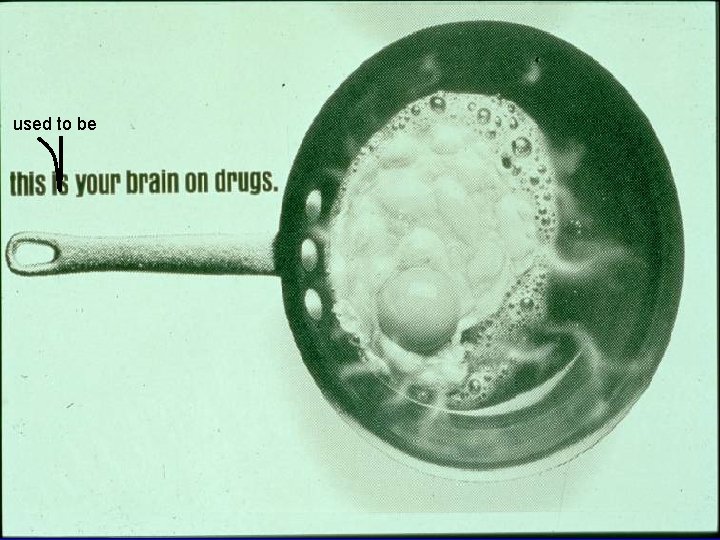
used to be
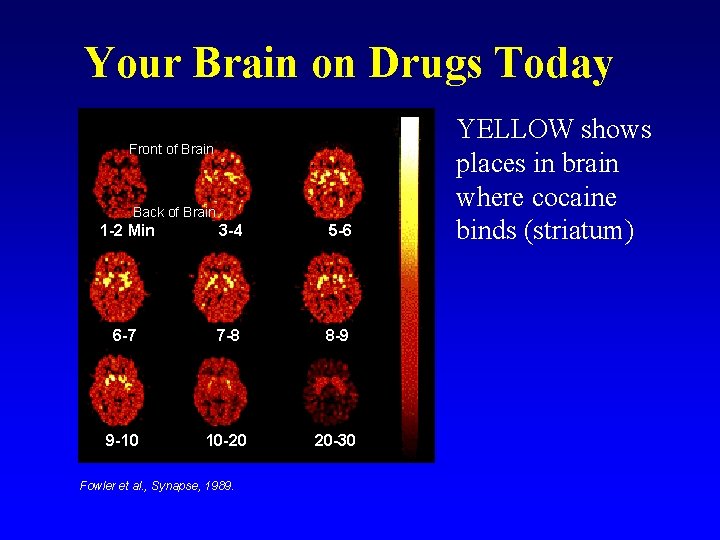
Your Brain on Drugs Today Front of Brain Back of Brain 1 -2 Min 3 -4 5 -6 6 -7 7 -8 8 -9 9 -10 10 -20 20 -30 Fowler et al. , Synapse, 1989. YELLOW shows places in brain where cocaine binds (striatum)
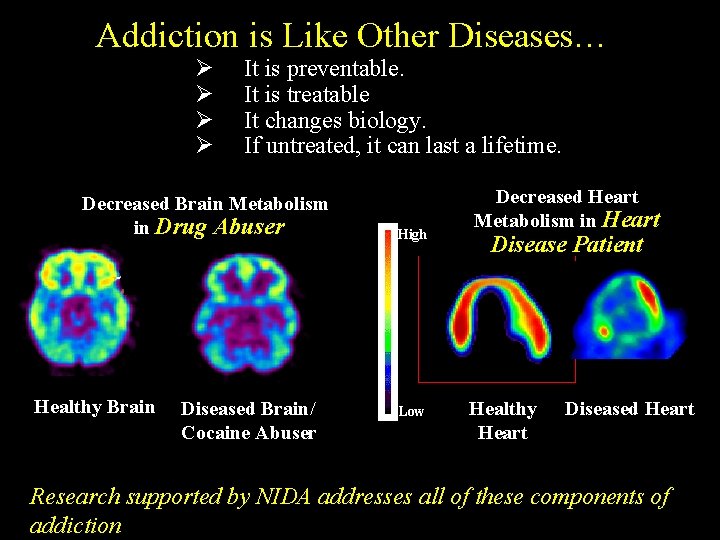
Addiction is Like Other Diseases… Ø Ø It is preventable. It is treatable It changes biology. If untreated, it can last a lifetime. Decreased Brain Metabolism in Drug Abuser Healthy Brain Diseased Brain/ Cocaine Abuser High Low Decreased Heart Metabolism in Heart Disease Patient Healthy Heart Diseased Heart Research supported by NIDA addresses all of these components of addiction
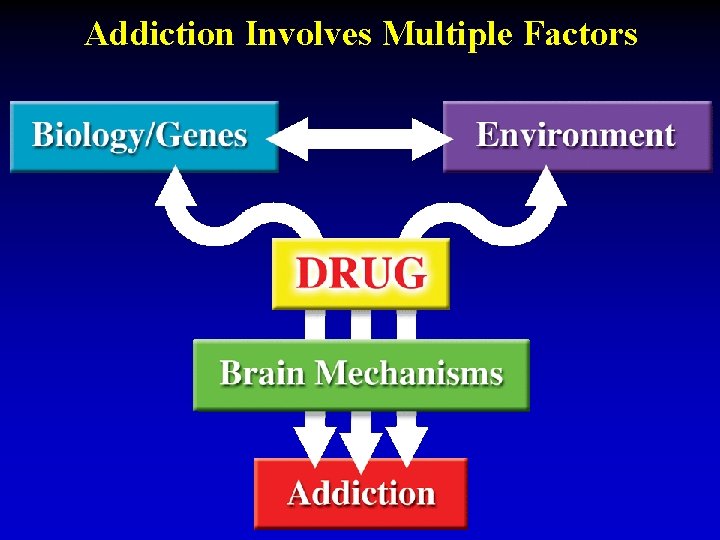
Addiction Involves Multiple Factors
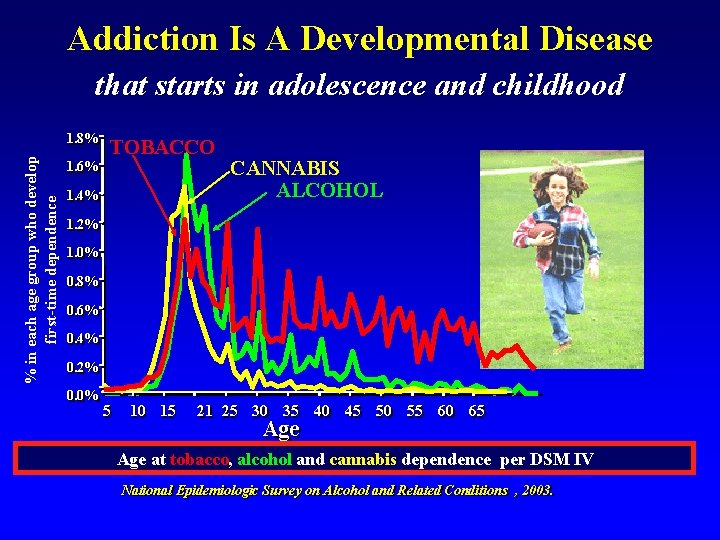
Addiction Is A Developmental Disease that starts in adolescence and childhood % in each age group who develop first-time dependence first 1. 8% TOBACCO 1. 6% 1. 4% CANNABIS ALCOHOL 1. 2% 1. 0% 0. 8% 0. 6% 0. 4% 0. 2% 0. 0% 55 10 10 15 15 21 21 25 25 30 30 35 35 40 40 45 45 50 50 55 55 60 60 65 65 Age at tobacco, alcohol and cannabis dependence per DSM IV National Epidemiologic Survey on on Alcohol and Related Conditions , , 2003.
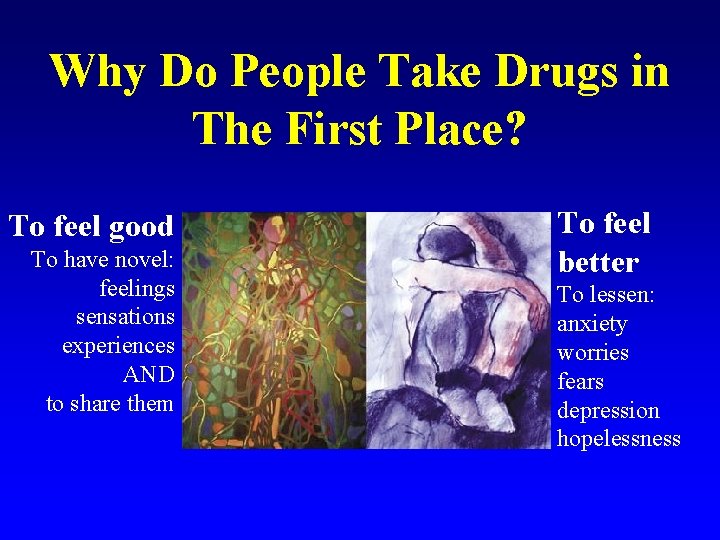
Why Do People Take Drugs in The First Place? To feel good To have novel: feelings sensations experiences AND to share them To feel better To lessen: anxiety worries fears depression hopelessness
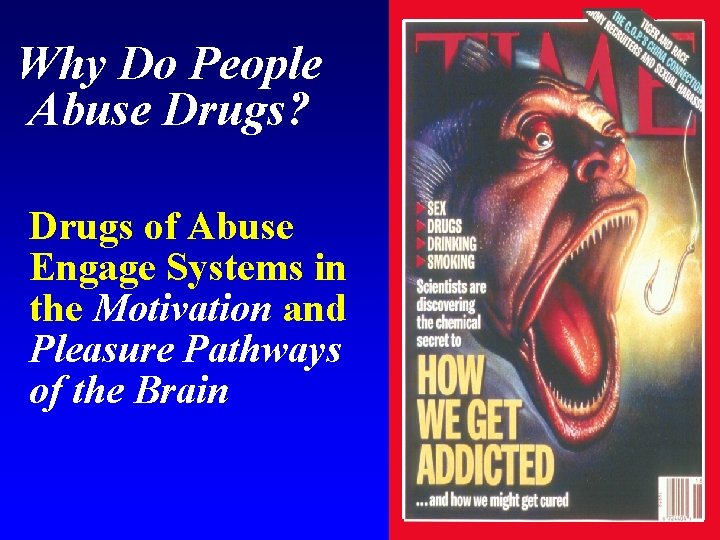
Why Do People Abuse Drugs? Drugs of Abuse Engage Systems in the Motivation and Pleasure Pathways of the Brain
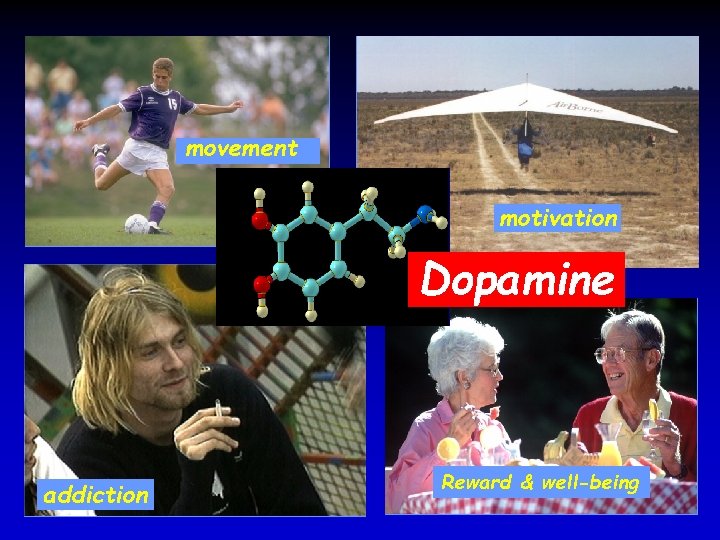
movement motivation Dopamine addiction Reward & well-being
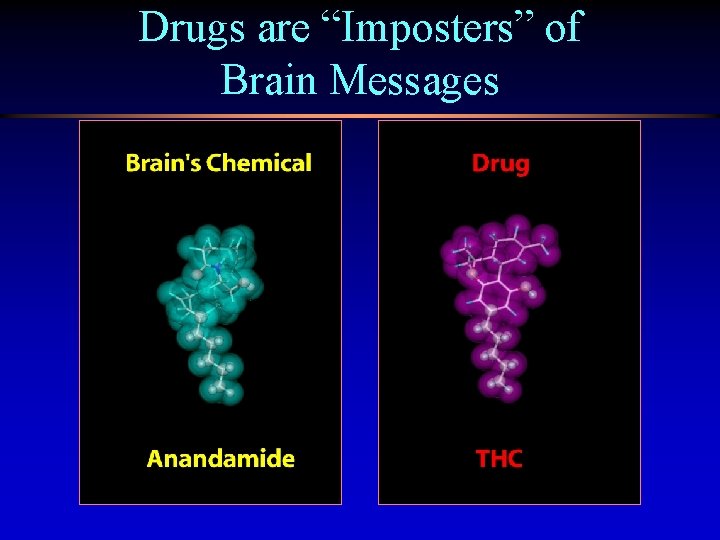
Drugs are “Imposters” of Brain Messages
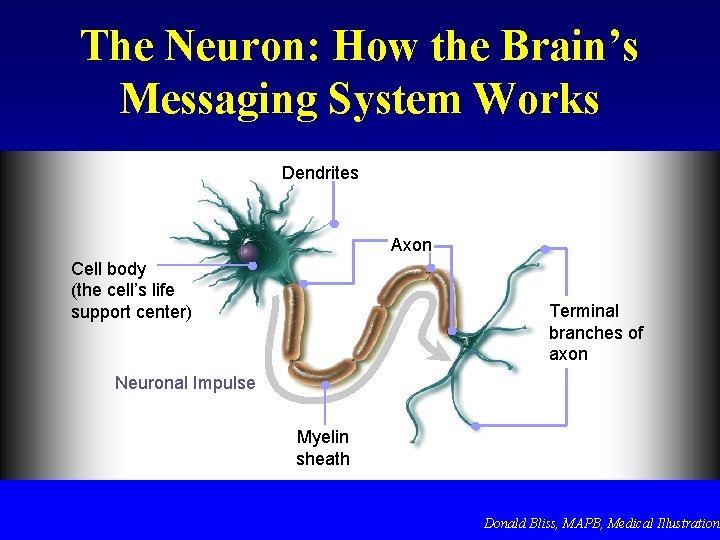
The Neuron: How the Brain’s Messaging System Works Dendrites Axon Cell body (the cell’s life support center) Terminal branches of axon Neuronal Impulse Myelin sheath Donald Bliss, MAPB, Medical Illustration
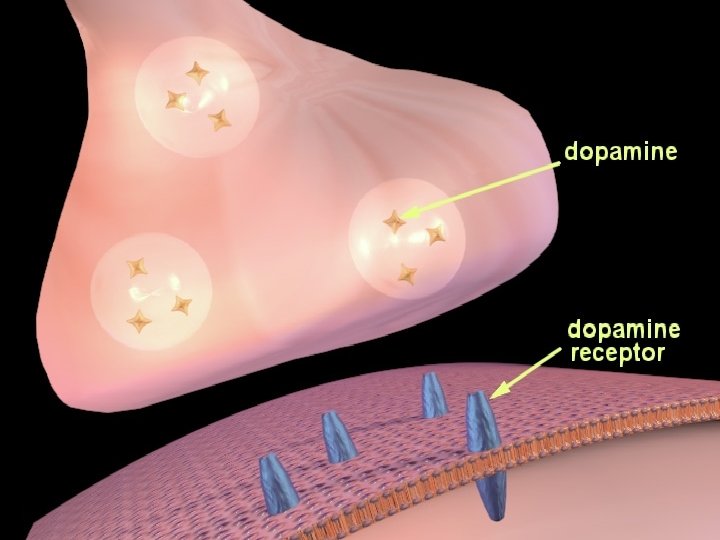
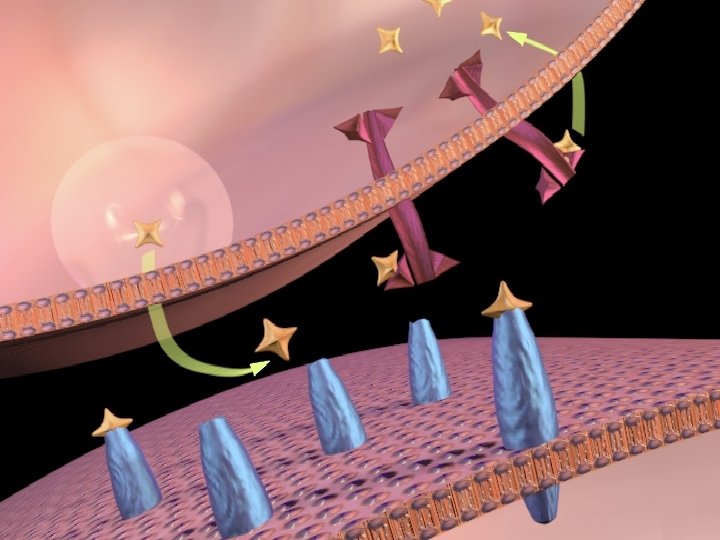
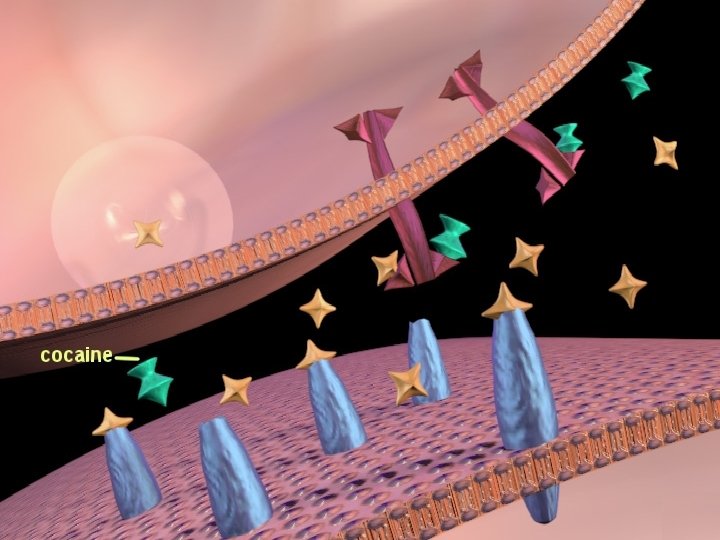
dopamine transporters

Natural Rewards Elevate Dopamine Levels SEX FOOD % of Basal DA Output NAc shell 150 100 50 Empty Box Feeding 200 150 100 15 10 5 0 0 0 60 120 Time (min) Di Chiara et al. , Neuroscience, 1999. 180 Copulation Frequency DA Concentration (% Baseline) 200 Female Present Sample Number 1 2 3 4 5 6 7 8 Fiorino and Phillips, J. Neuroscience, 1997. Mounts Intromissions Ejaculations
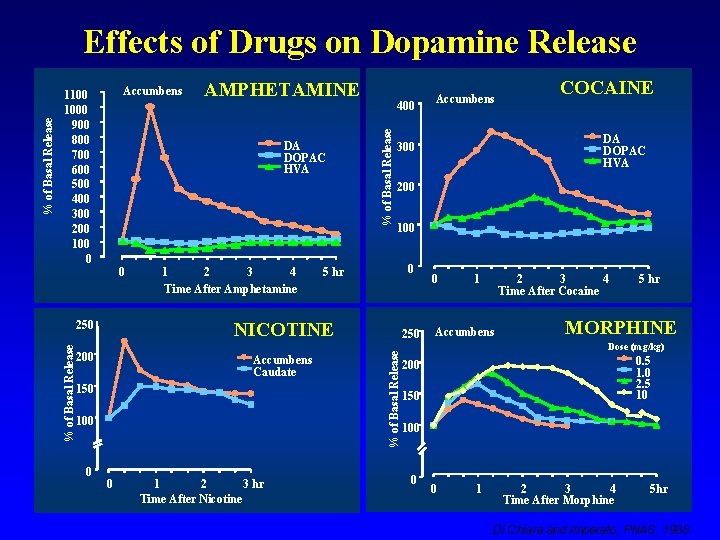
AMPHETAMINE DA DOPAC HVA 0 1 2 3 4 Time After Amphetamine Accumbens Caudate 150 100 0 1 2 3 hr Time After Nicotine COCAINE DA DOPAC HVA 200 100 0 5 hr 250 % of Basal Release 200 Accumbens 300 NICOTINE 250 0 400 % of Basal Release Accumbens 1100 1000 900 800 700 600 500 400 300 200 100 0 % of Basal Release Effects of Drugs on Dopamine Release 0 1 2 3 4 Time After Cocaine Accumbens 5 hr MORPHINE Dose (mg/kg) 0. 5 1. 0 2. 5 10 200 150 100 0 0 1 2 3 4 Time After Morphine 5 hr Di Chiara and Imperato, PNAS, 1988
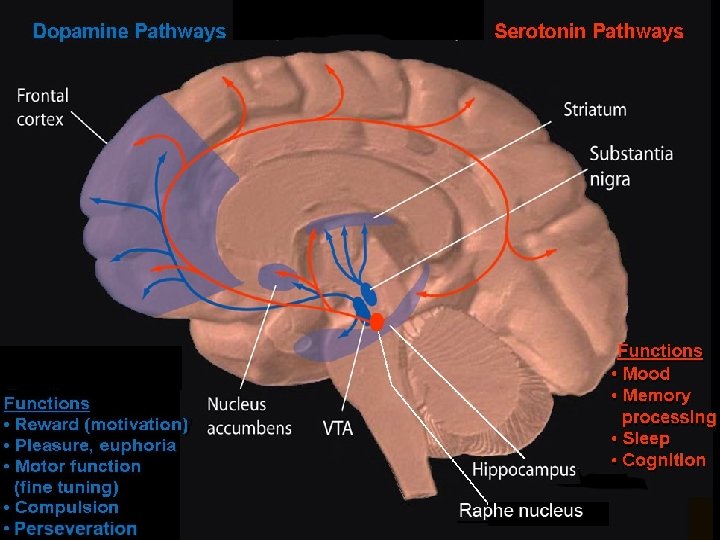
But Dopamine is only Part of the Story Other neurotransmitter systems are also affected: • Serotonin: mood regulation, sleep • Glutamate: learning and memory
Science Has Generated Much Evidence Showing That… Prolonged Drug Use Changes the Brain In Fundamental and Long-Lasting Ways

AND… We Have Evidence That These Changes Can Be Both Structural and Functional
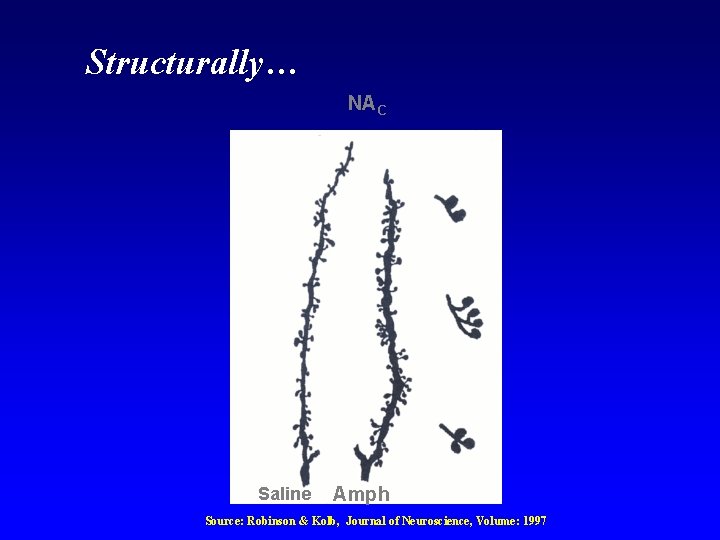
Structurally… NAC Saline Amph Source: Robinson & Kolb, Journal of Neuroscience, Volume: 1997
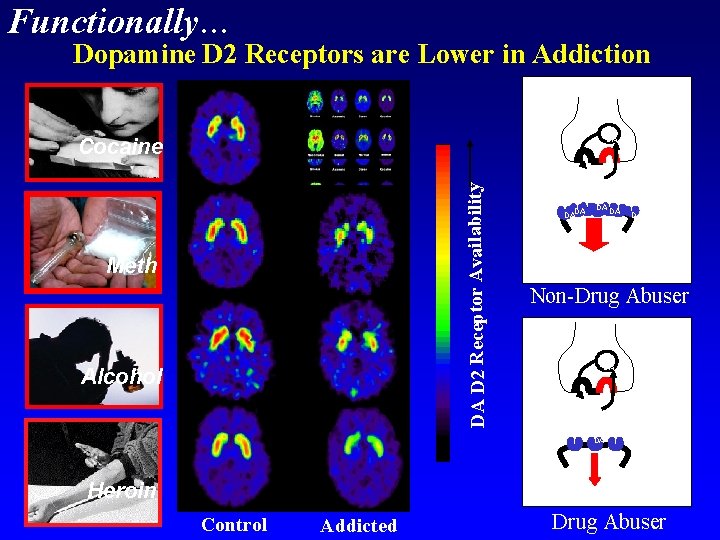
Functionally… Dopamine D 2 Receptors are Lower in Addiction Cocaine DA D 2 Receptor Availability DADA Meth Alcohol DA DA DADA Reward Circuits Non-Drug Abuser DADA DA DA Heroin Reward Circuits Control Addicted Drug Abuser
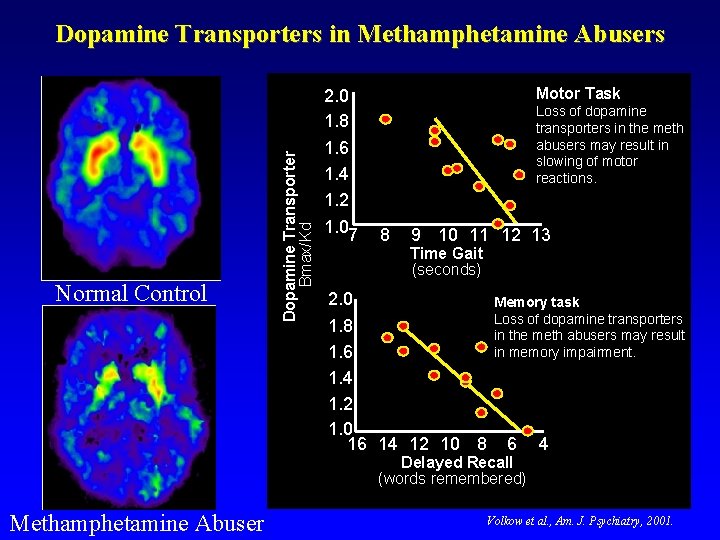
Normal Control Dopamine Transporter Bmax/Kd Dopamine Transporters in Methamphetamine Abusers 2. 0 1. 8 1. 6 1. 4 1. 2 1. 07 Motor Task Loss of dopamine transporters in the meth abusers may result in slowing of motor reactions. 8 9 10 11 12 13 Time Gait (seconds) 2. 0 1. 8 1. 6 1. 4 1. 2 1. 0 16 14 12 10 8 Memory task Loss of dopamine transporters in the meth abusers may result in memory impairment. 6 Delayed Recall (words remembered) Methamphetamine Abuser 4 Volkow et al. , Am. J. Psychiatry, 2001.
Implication: Brain changes resulting from prolonged use of drugs may compromise mental and motor functions
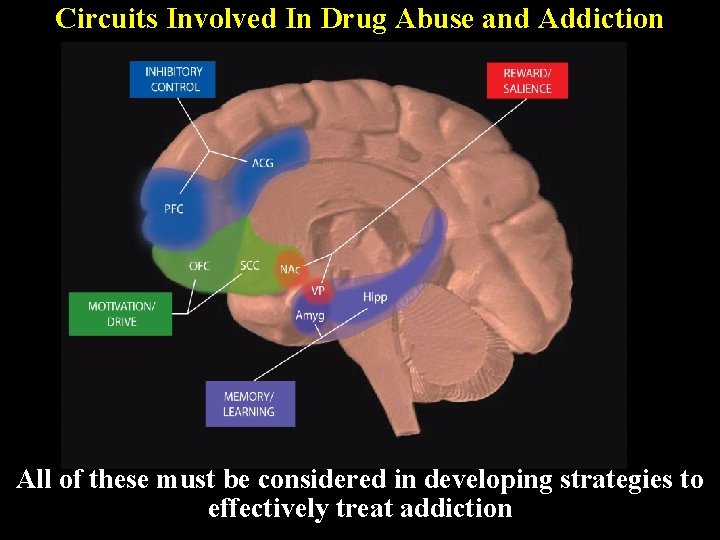
Circuits Involved In Drug Abuse and Addiction All of these must be considered in developing strategies to effectively treat addiction
- Slides: 30