
Nicolaus Copernicus Born 1473 Torun Poland Died 1543
Nicolaus Copernicus Born 1473 Torun, Poland Died 1543 Frauenburg, Poland 9/15/2020 1
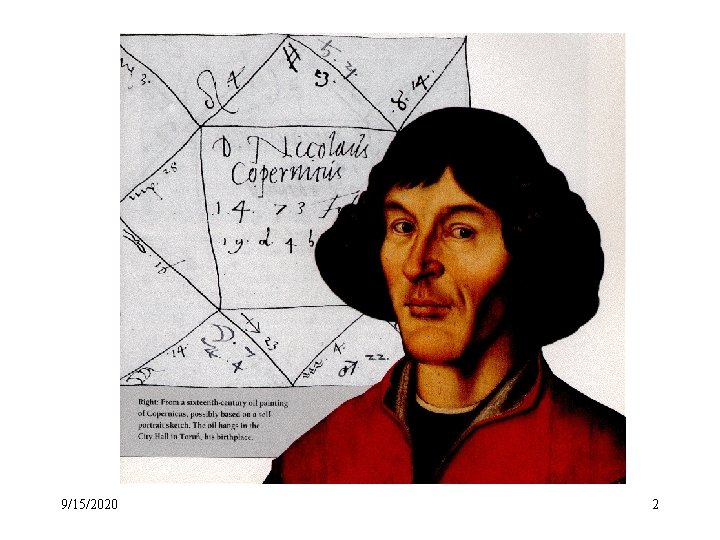
9/15/2020 2
Background and education • • Wealthy family Started education at University of Krakow moved to University of Bologna, Italy studied canon law moved to University of Padua, Italy studied medicine moved to University of Ferrara studied canon law - doctorate 1503 9/15/2020 3
Career • Taught mathematics in Rome • became canon at the University of Frauenburg – this position supported his astronomical studies • these date from Bologna • roomed with an astronomer, Novara, who was the official astrologer for the city • exposed to criticism of astrology and Ptolemy 9/15/2020 4
Background • At this time - mathematics, astronomy and astrology were intimately associated • problems with Ptolemy were that the order of the planets was indeterminate (Venus and Mercury) • Structure of the zodiac was in question • Copernicus tried other ways of arranging things 9/15/2020 5
Heliocentric system • Fixed Sun at center of circular orbits for all the planets - including Earth • All planets move at constant velocity along these circular orbits • order of things was: Mercury, Venus, Earth, Mars, Jupiter, Saturn • Earth was just another planet 9/15/2020 6
Successes • Explained the difference between the inferior and superior planets • allowed the determination of the period for each planet • allowed the determination of the distance of each planet from the Sun 9/15/2020 7
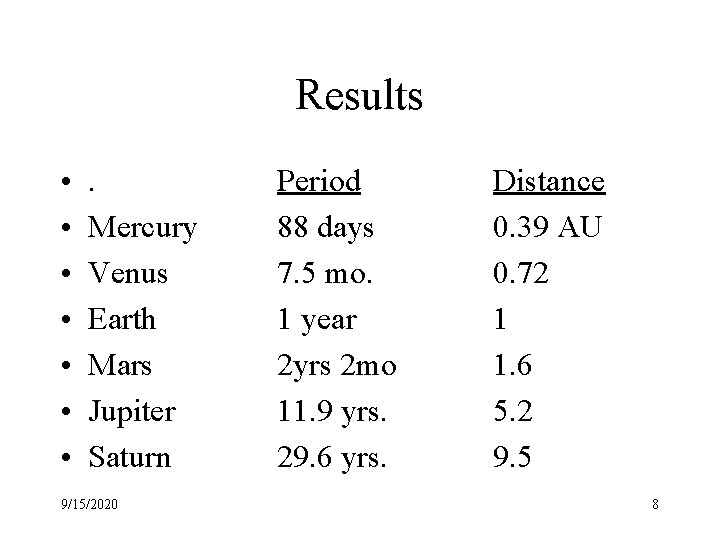
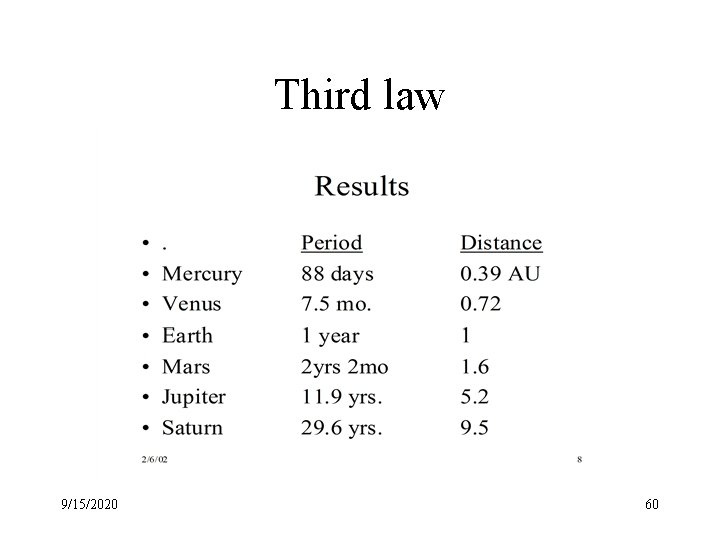
Results • • . Mercury Venus Earth Mars Jupiter Saturn 9/15/2020 Period 88 days 7. 5 mo. 1 year 2 yrs 2 mo 11. 9 yrs. 29. 6 yrs. Distance 0. 39 AU 0. 72 1 1. 6 5. 2 9. 5 8
Results cont. • In other words, the distance and period give the same order of the planets in the solar system • simple explanation of retrograde motion see the website following • http: //csep 10. phys. utk. edu/astr 161/lect/ retrograde/copernican. html 9/15/2020 9
Remaining errors • Circular orbits • Constant velocity 9/15/2020 10
Publications • 1503 wrote the “Little Commentary” but did not publish it. • Visited by Georg Rheticus, mathematician, who was impressed by the heliocentric view • Urged Copernicus to publish the book, undertook to do this • No unpleasant response to this 9/15/2020 11
Role of Osiander • This encouraged Copernicus to publish a larger work “On the revolutions of the heavenly spheres” • Rheticus moves and cannot proceed with the new book • Along comes Andreas Osiander, experienced with publishing technical books 9/15/2020 12
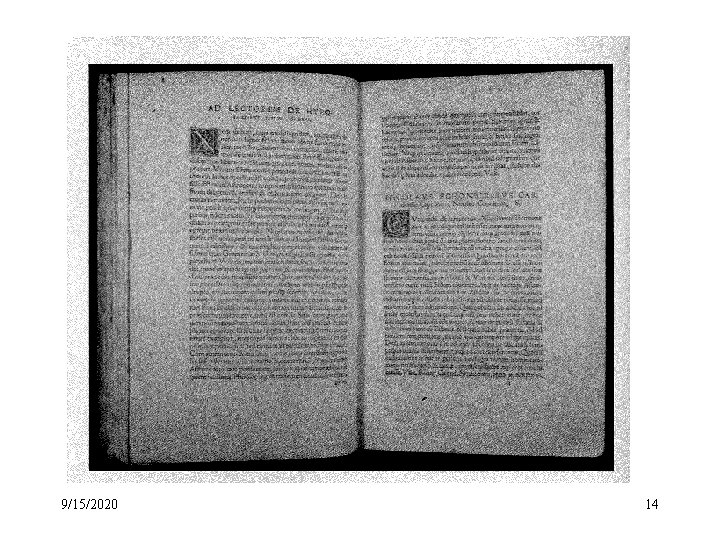
Osiander • Takes on the task of publishing De Revolutionibus… • inserts a “letter to the reader” before the text saying that a) ideas presented did not represent truth, b) it was impossible to know the causes of heavenly phenomena • book appears in 1543 just as Copernicus dies 9/15/2020 13
9/15/2020 14
Major Conflict • • Geocentric versus heliocentric Extremely different views of the world But no clear way to decide which is true Needed more accurate observations of the planets • Also needed improvements in Copernican view 9/15/2020 15
Interplay of theory and obs. • Theory due to Copernicus • Better (more accurate) observations need new observing tools • Along came Tycho Brahe • More accurate observations spur improvements in theory • Along come Kepler and Newton 9/15/2020 16
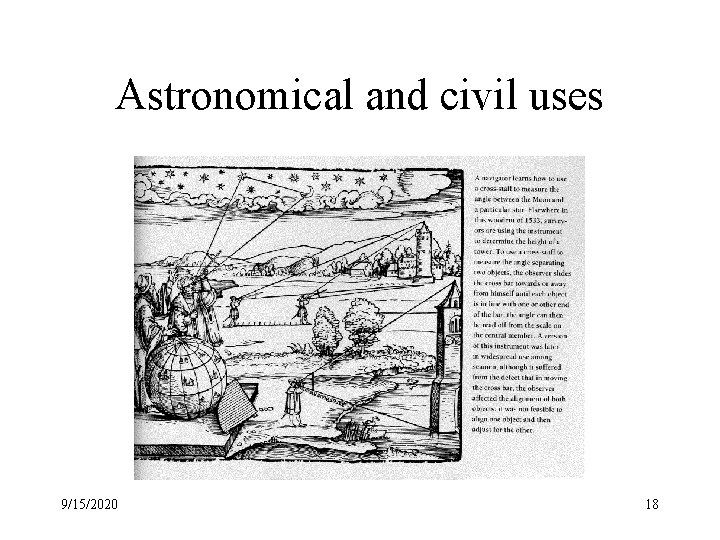
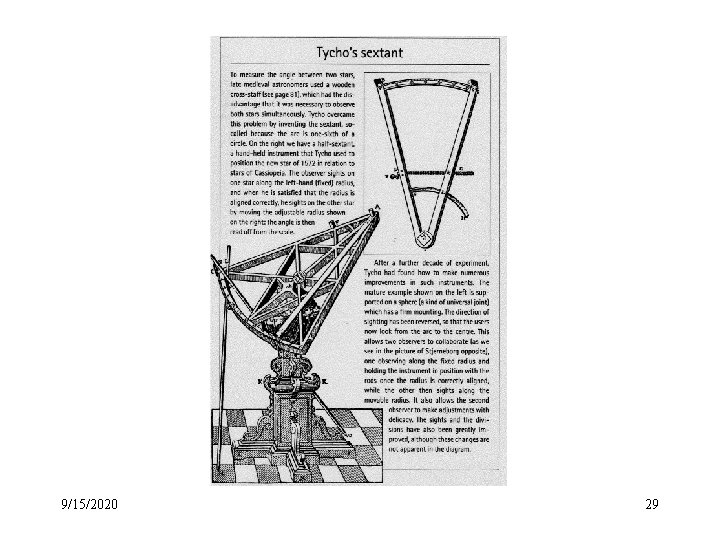
Old technology • Hand held instruments • made of wood • small and non-standard instruments 9/15/2020 17
Astronomical and civil uses 9/15/2020 18
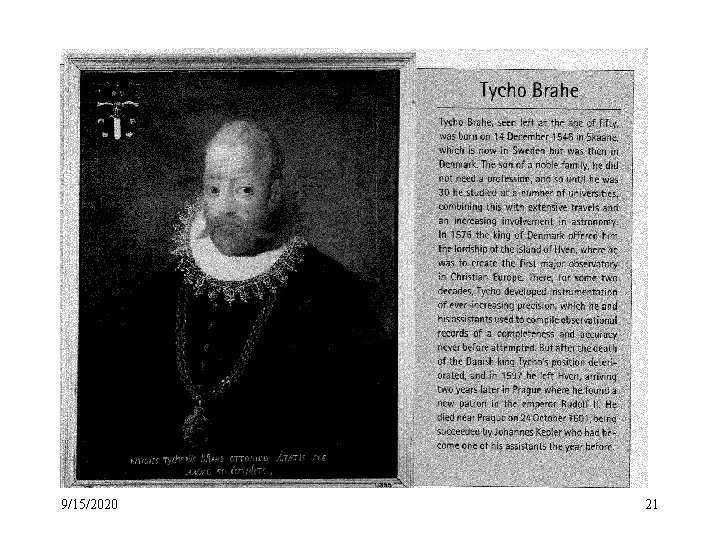
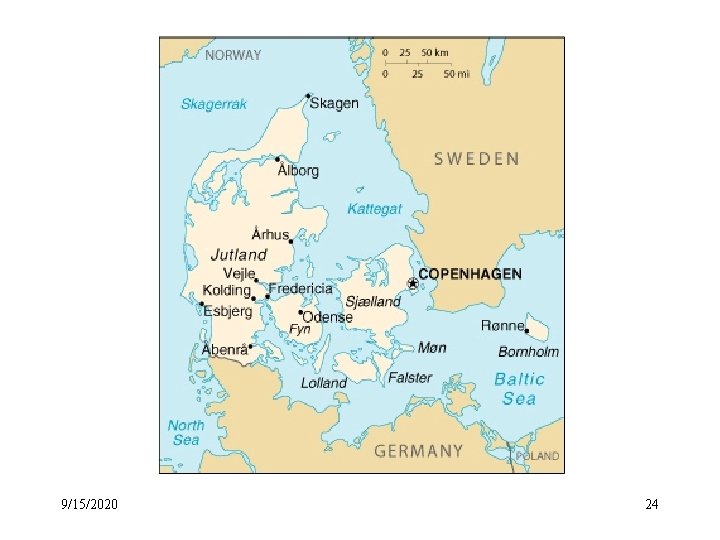
Brahe • Danish nobility, wealthy, fascinated by astronomy (a precursor of Percival Lowell) • interested also in alchemy • lost part of his nose in a duel - gold replacement • was given an island by the Danish king, Hven, near Copenhagen for an observatory 9/15/2020 19
Brahe • He represents a new kind of scientist, a professional who did “big science” • 1546 -1601 • A transitional figure - between the apex of naked eye observations and the telescope (1608) 9/15/2020 20
9/15/2020 21
Astronomical observations • Observed the nova of 1572 - supposed to be a terrestrial phenomenon • Brahe showed the nova was far away (parallax) • Aristotle said it (nova) could not exist 9/15/2020 22
Astronomical observations • • Jupiter passes Saturn predictions were off by days to months Comet of 1577 Aristotle said comets were terrestrial phenomena (in the atmosphere) • Brahe showed that the comet was placed among the planets (parallax) 9/15/2020 23
9/15/2020 24

Island of Hven 9/15/2020 25
www. hven. com/EUBORG. html www. hven. com/ELKRKART. html. 9/15/2020 26

9/15/2020 27
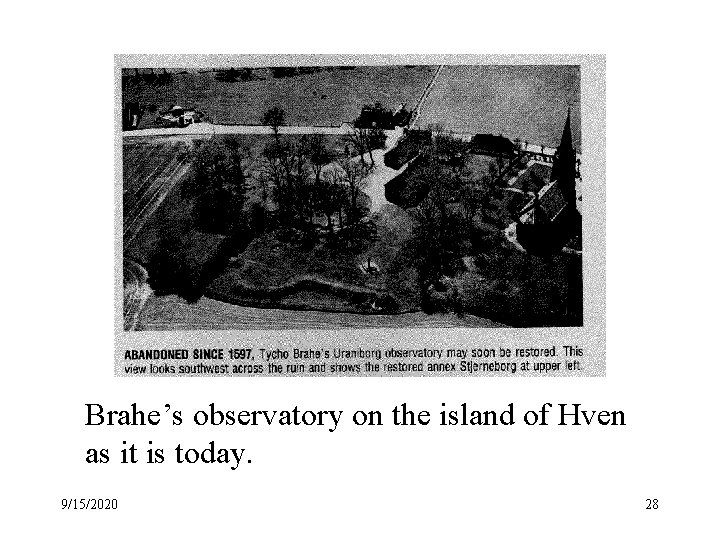
Brahe’s observatory on the island of Hven as it is today. 9/15/2020 28
9/15/2020 29
9/15/2020 30
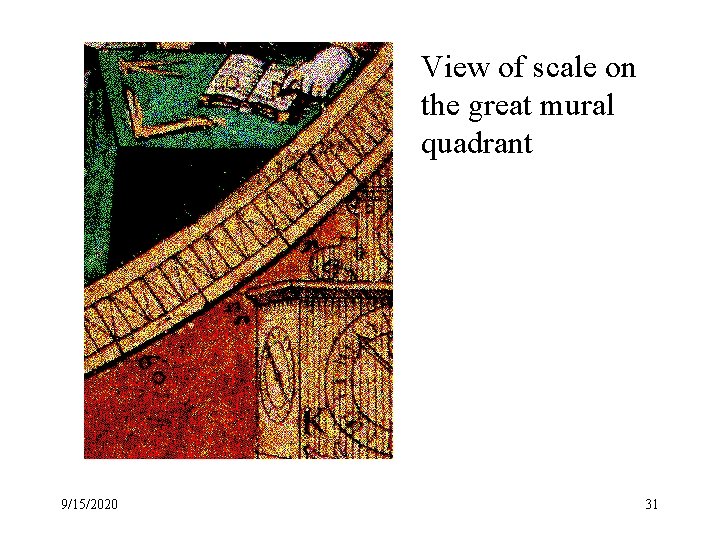
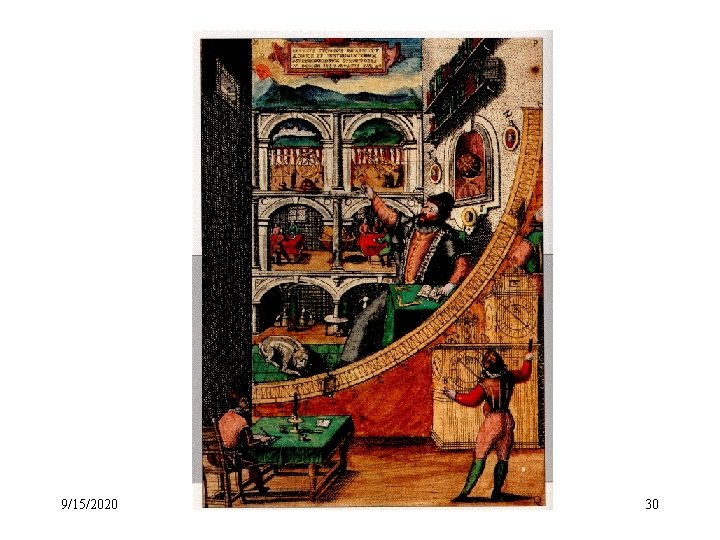
View of scale on the great mural quadrant 9/15/2020 31
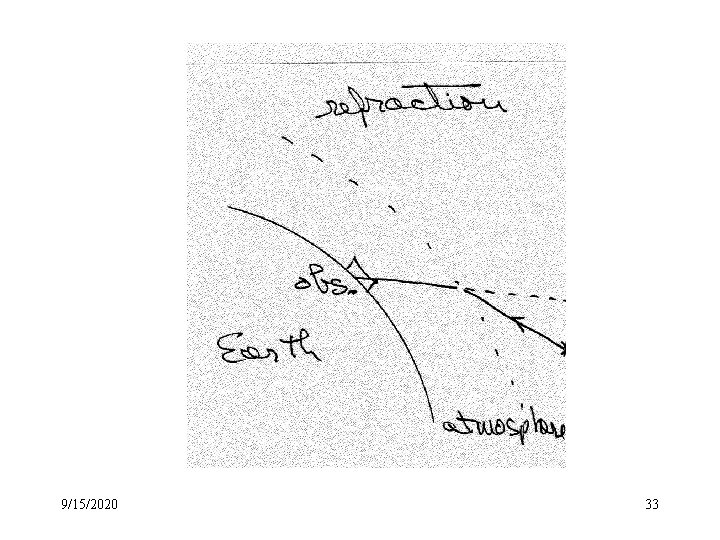
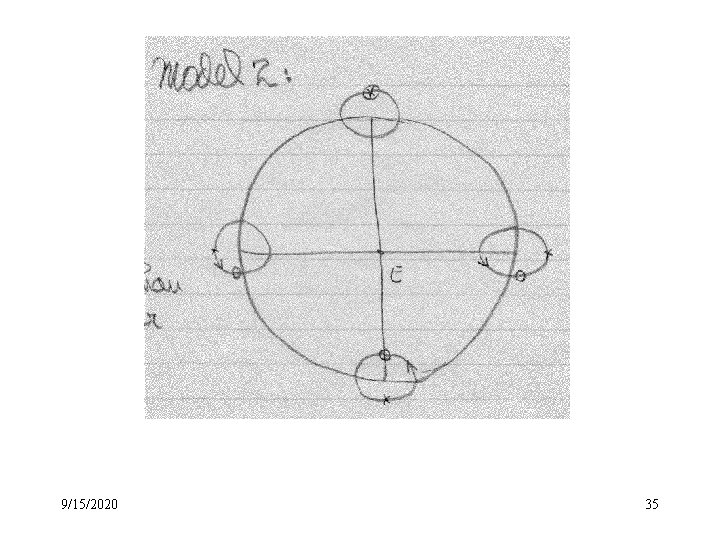
Brahe’s improvements • • Metal instruments fixed and therefore more stable large and therefore more accurate built a complete laboratory with printing shop, fabrication shops, assistants • continuous observations (vital) • corrected for refraction • also proposed a cosmological theory 9/15/2020 32
9/15/2020 33
Observations • Normally, observations of a planet were only made at a few positions in its orbit • Brahe had observations made continuously each clear night 9/15/2020 34
9/15/2020 35
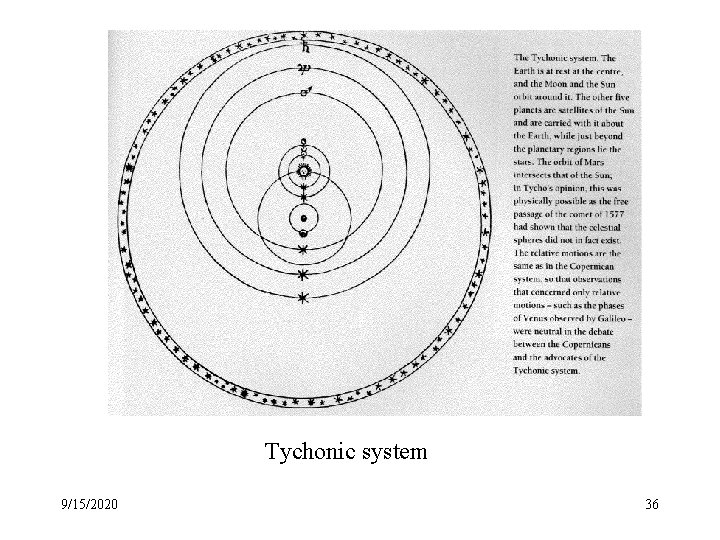
Tychonic system 9/15/2020 36
Brahe’s weaknesses • • Strong on observation weak on mathematics and theory enlisted the help of Kepler in 1600 at Prague at his death (1601), Brahe left his observations to Kepler • Kepler published the best planetary positions (Rudolphine tables) 9/15/2020 37
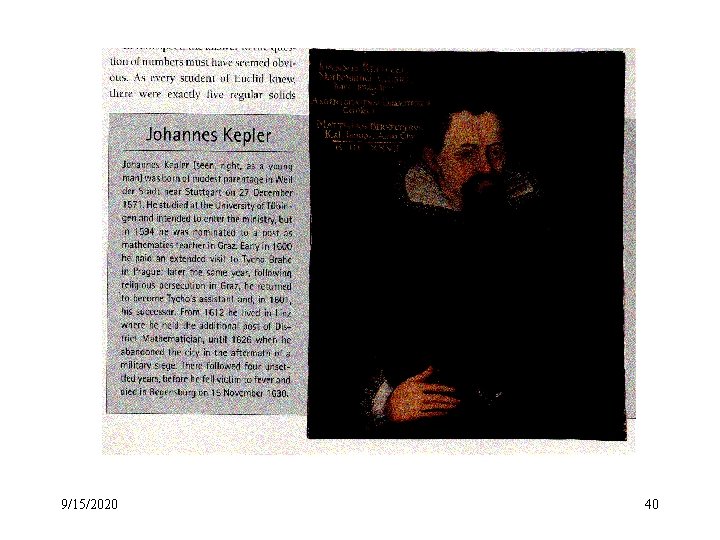
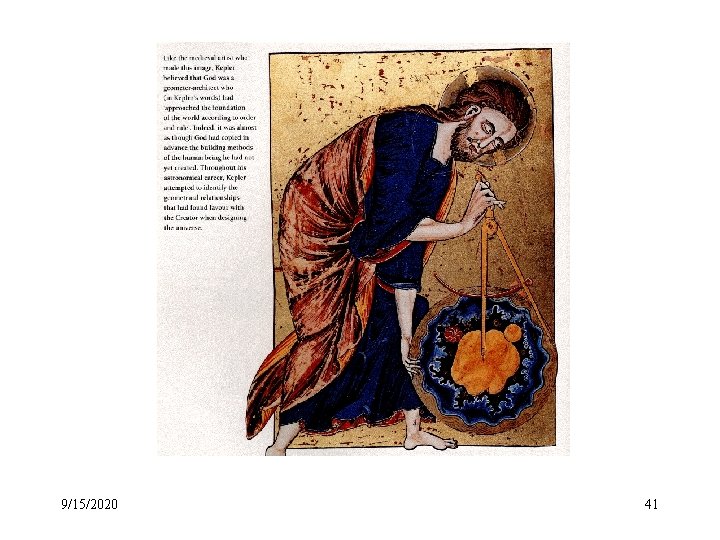
Johannes Kepler • Born 1571 • Died 1630 • he was convinced that the universe was designed according to geometrical principles (God was a geometer) • trained as a mathematician • imperial mathematician to Rudolf II 9/15/2020 38
Challenge • Calculated the positions of the planets and compared with Brahe’s observation • Worst agreement was for Mars • He spent 4 years trying to explain the orbit of Mars 9/15/2020 39
9/15/2020 40
9/15/2020 41
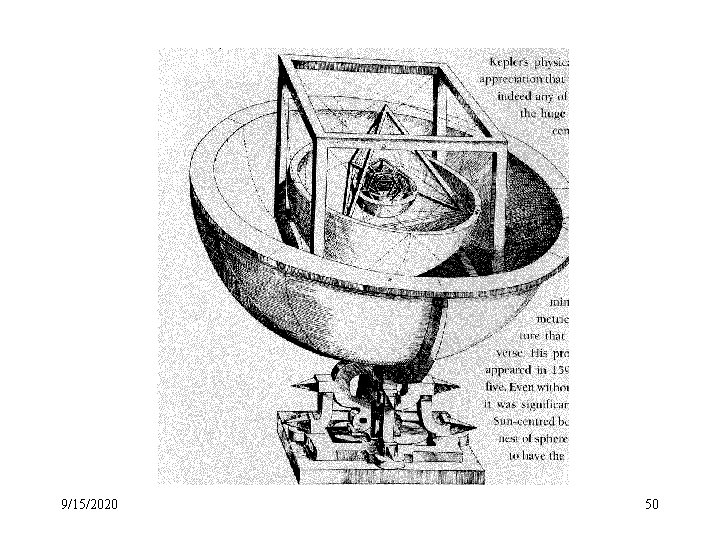
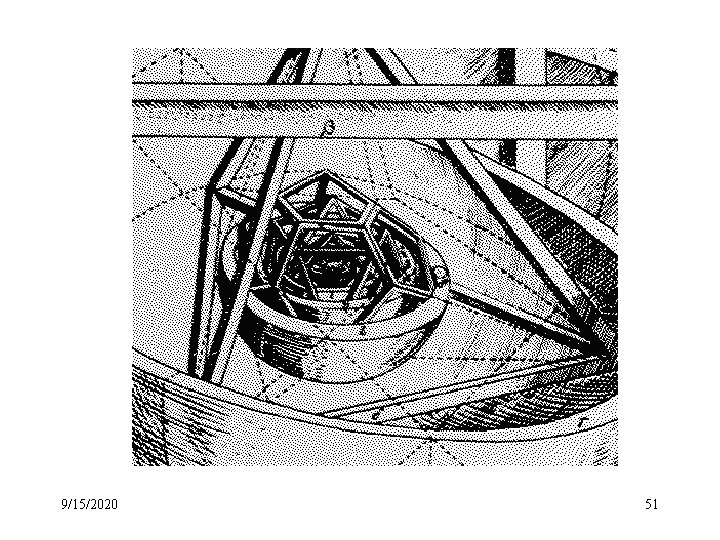
Geometry aspect • Kepler asked the question “why are there only 6 planets”? • Answer: there are 5 platonic solids • cube, octahedron, tetrahedron, dodecahedron, and icosahedron • he used these solids to position the planets about the sun 9/15/2020 42
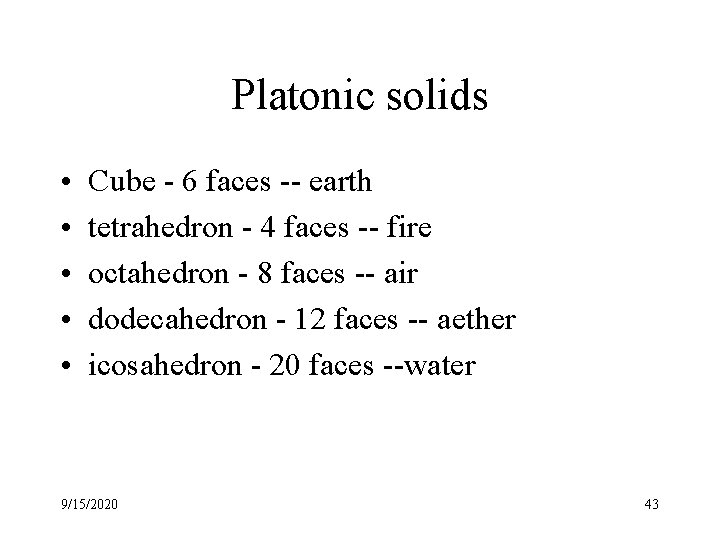
Platonic solids • • • Cube - 6 faces -- earth tetrahedron - 4 faces -- fire octahedron - 8 faces -- air dodecahedron - 12 faces -- aether icosahedron - 20 faces --water 9/15/2020 43
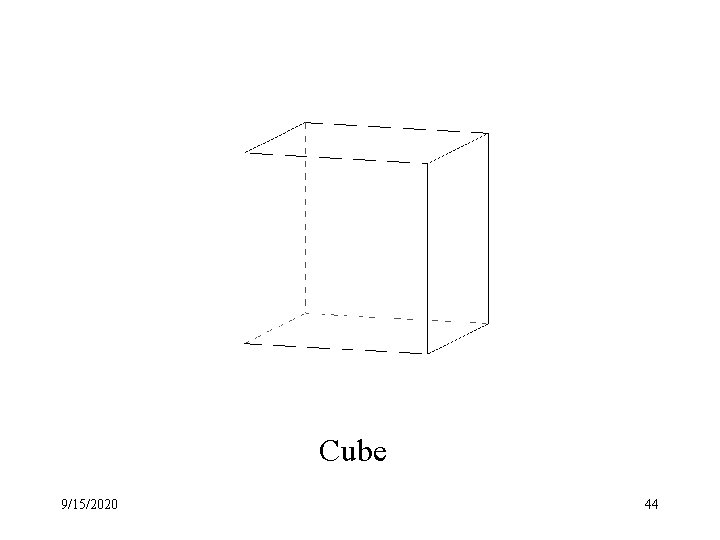
Cube 9/15/2020 44
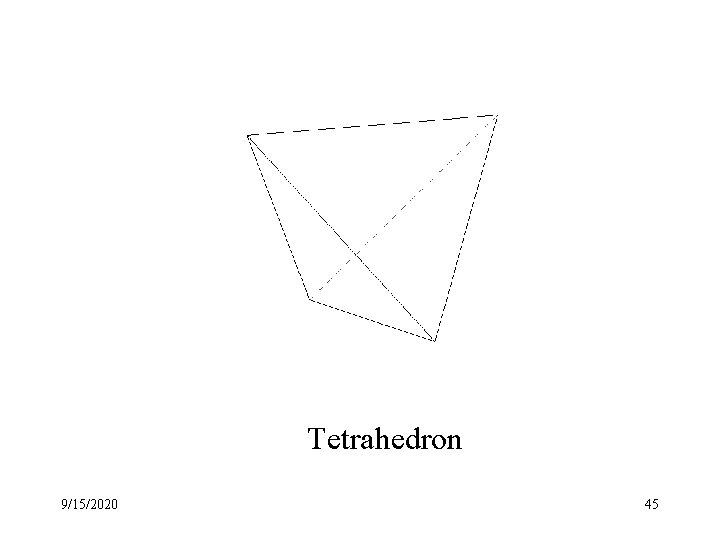
Tetrahedron 9/15/2020 45
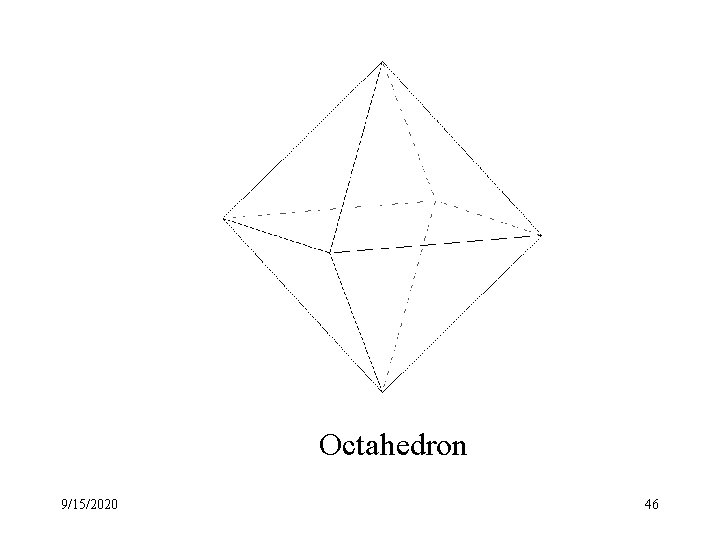
Octahedron 9/15/2020 46
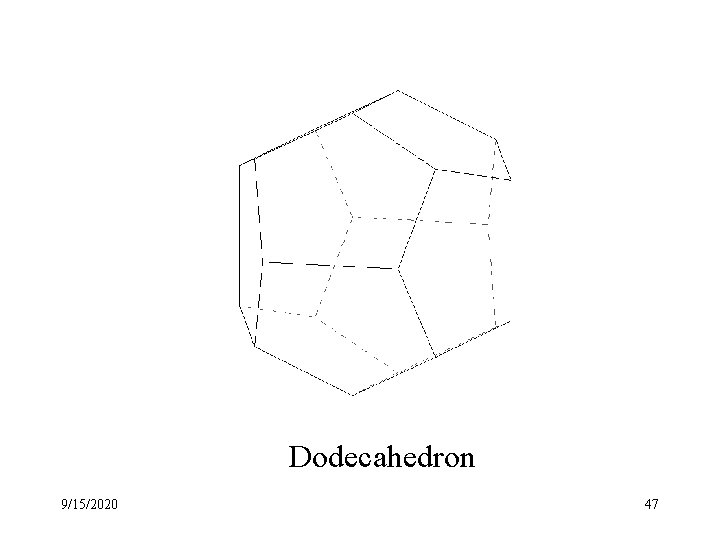
Dodecahedron 9/15/2020 47
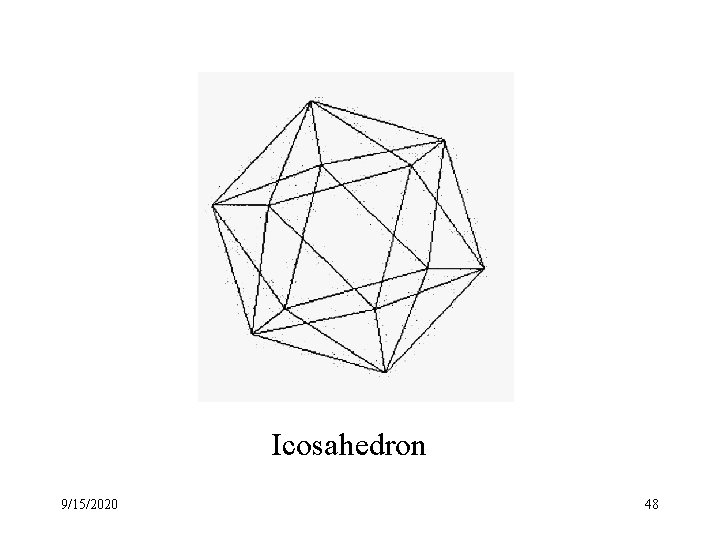
Icosahedron 9/15/2020 48
Scheme • Pick a solid (for example, the cube) • start with a large sphere, solid inside touching the sphere • place another sphere inside the solid so that the sphere touches the solid • the planet moves in a circular orbit defined by the sphere • then, place another solid inside the sphere so that its corners touch the sphere 9/15/2020 49
9/15/2020 50
9/15/2020 51
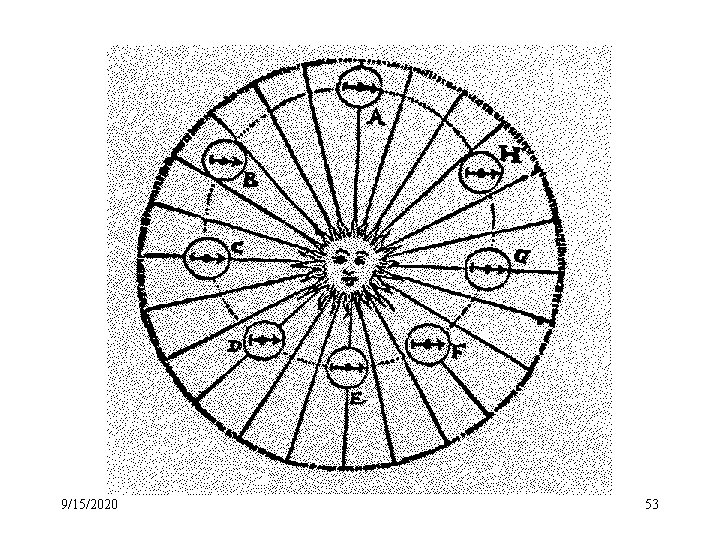
Something new • Kepler thought that the sun had an influence on the planets (he didn’t know about gravity) • Problem: action at a distance • William Gilbert publishes a book on magnetism • Kepler sees how this could couple the planets with the sun • first physical explanation 9/15/2020 52
9/15/2020 53
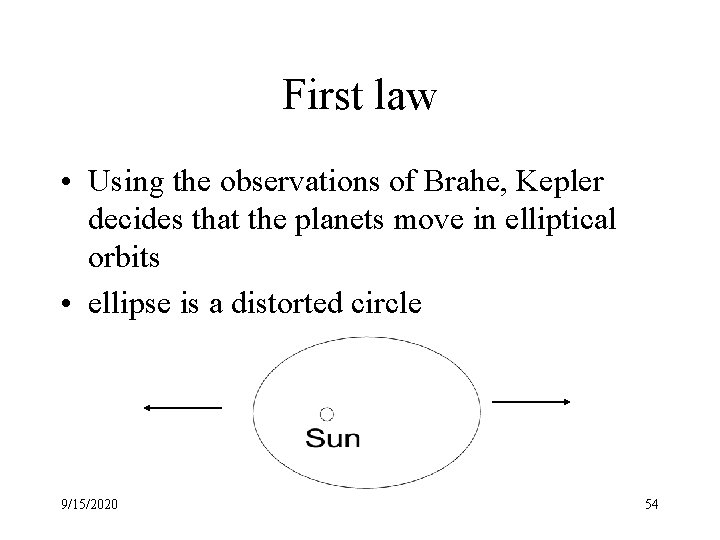
First law • Using the observations of Brahe, Kepler decides that the planets move in elliptical orbits • ellipse is a distorted circle 9/15/2020 54
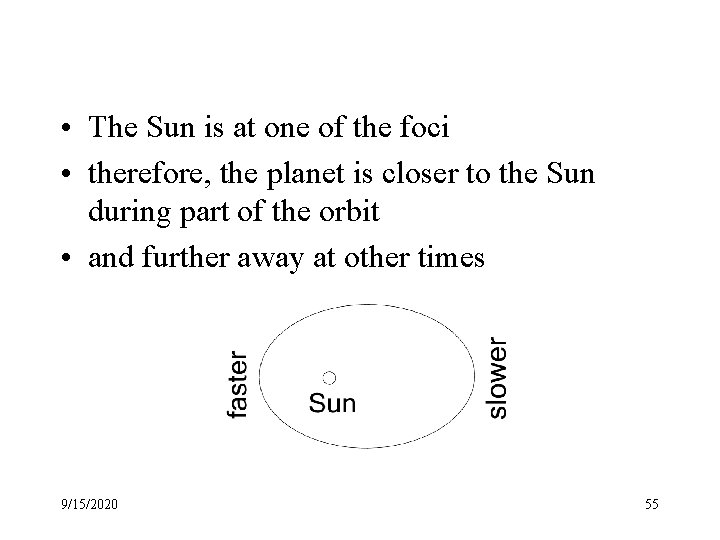
• The Sun is at one of the foci • therefore, the planet is closer to the Sun during part of the orbit • and further away at other times 9/15/2020 55
Second law • How did the planet’s velocity vary with distance from the planet? • Three ways to do this: – velocity varies as 1/distance – equal areas in equal time – uniform velocity as viewed from the empty focus 9/15/2020 56
Equal area 9/15/2020 57
Second law cont. • Kepler could not determine which was correct • the observations were not good enough • the problem remained until Newton 9/15/2020 58
http: //csep 10. phys. utk. edu/ astr 161/lect/history/kepler. html 9/15/2020 59
Third law 9/15/2020 60
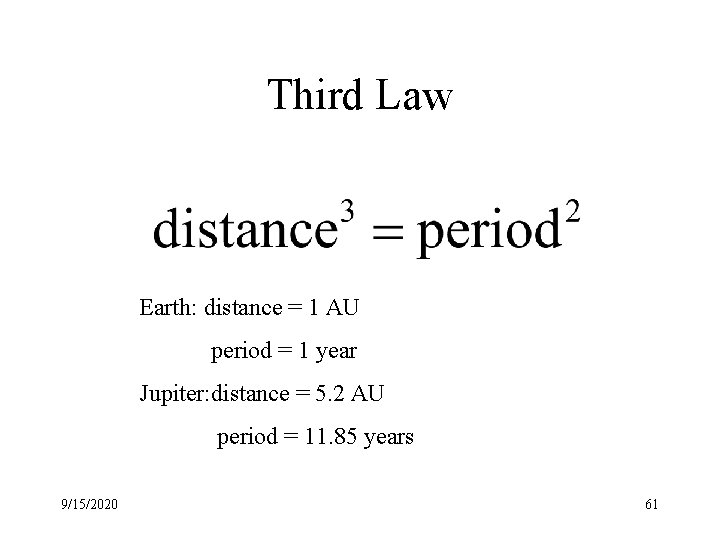
Third Law Earth: distance = 1 AU period = 1 year Jupiter: distance = 5. 2 AU period = 11. 85 years 9/15/2020 61
Final test • Calculate the positions of the planets and compare with observations • these were the Rudolphine tables • 30 times more accurate than the predictions of Copernicus 9/15/2020 62
Curiosity • Planets do not follow elliptical orbits • this is due to the gravitational attractions of each planets for all the others • the observations of Brahe were not good enough to show this • otherwise Kepler might have been misled 9/15/2020 63
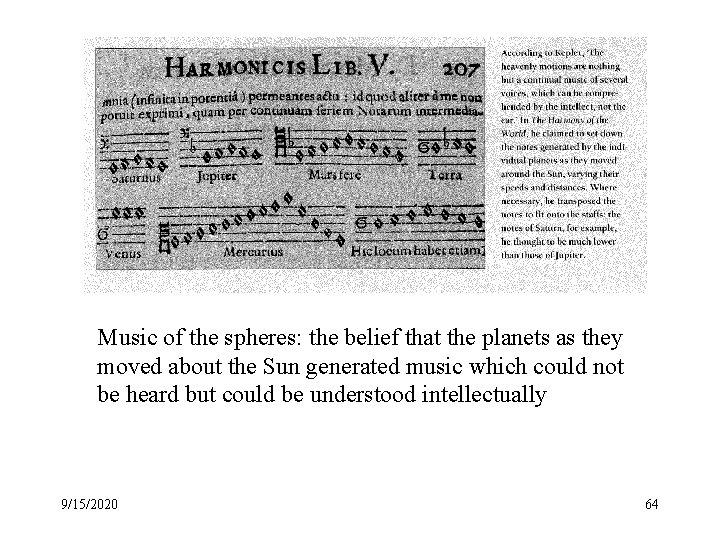
Music of the spheres: the belief that the planets as they moved about the Sun generated music which could not be heard but could be understood intellectually 9/15/2020 64
9/15/2020 65
9/15/2020 66
9/15/2020 67
Problems • There still remained resistance to Copernicus • largely theological • what was needed was someone of stature who could sell the idea - Galileo 9/15/2020 68
- Slides: 68