
NICE CVD prevention in populations CVD Risk Factors


- Slides: 36
NICE CVD prevention in populations CVD Risk Factors: paradigms & causal pathways Simon Capewell Professor of Clinical Epidemiology LIVERPOOL UNIVERSITY UK 7 th April 2009 Particular thanks to: Julia Critchley, Martin O’Flaherty, Robin Ireland, Ann Capewell, Robert Beaglehole, Zhao Dong & Tiina Laatikainen
NICE CVD prevention in populations CVD Risk Factors: paradigms & causal pathways 1. Epidemiology 2. Maps & Interventions
CVD: Options for prevention Understanding the disease process
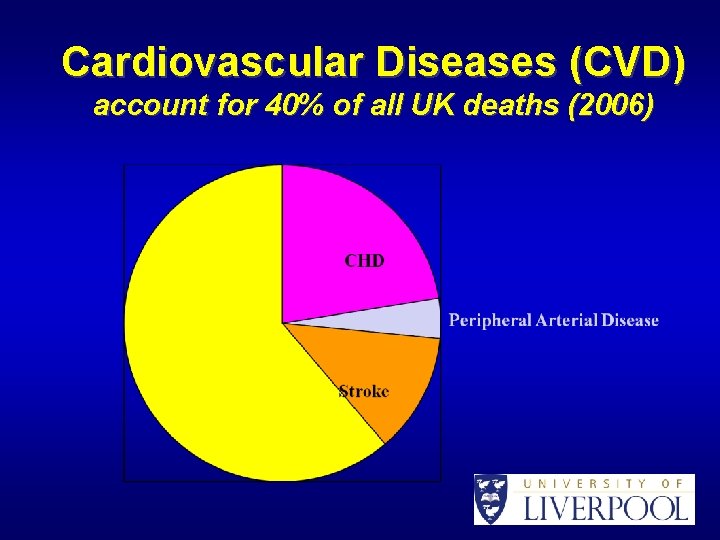
Cardiovascular Diseases (CVD) account for 40% of all UK deaths (2006)
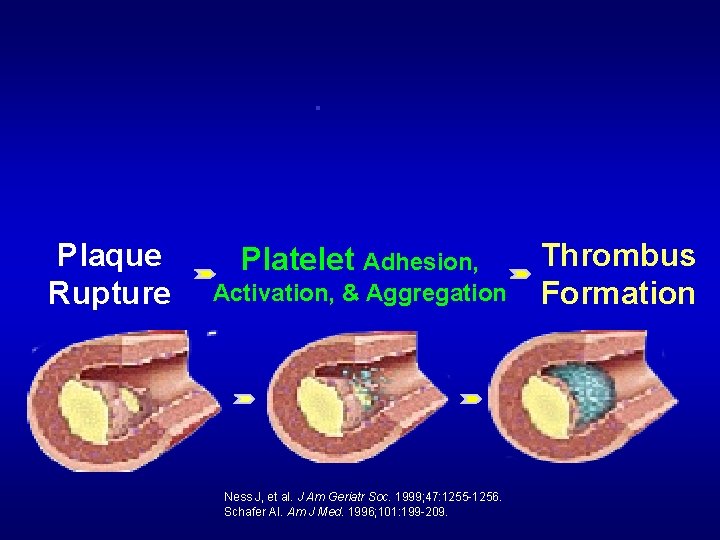
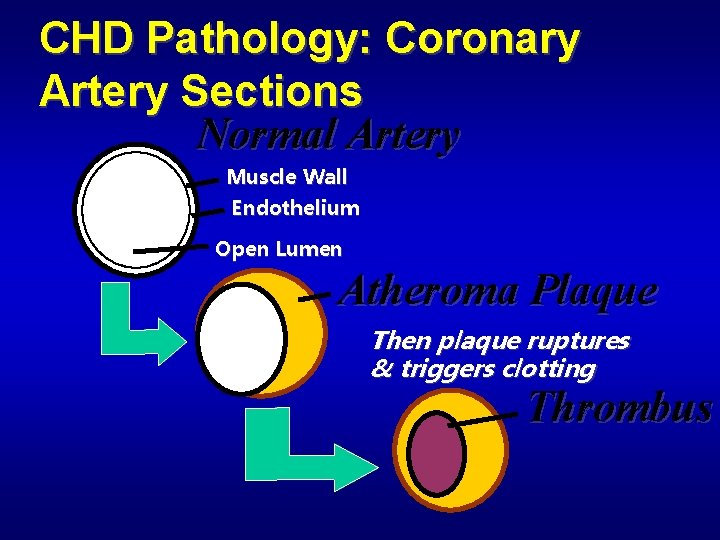
Plaque Rupture Platelet Adhesion, Activation, & Aggregation Ness J, et al. J Am Geriatr Soc. 1999; 47: 1255 -1256. Schafer AI. Am J Med. 1996; 101: 199 -209. Thrombus Formation
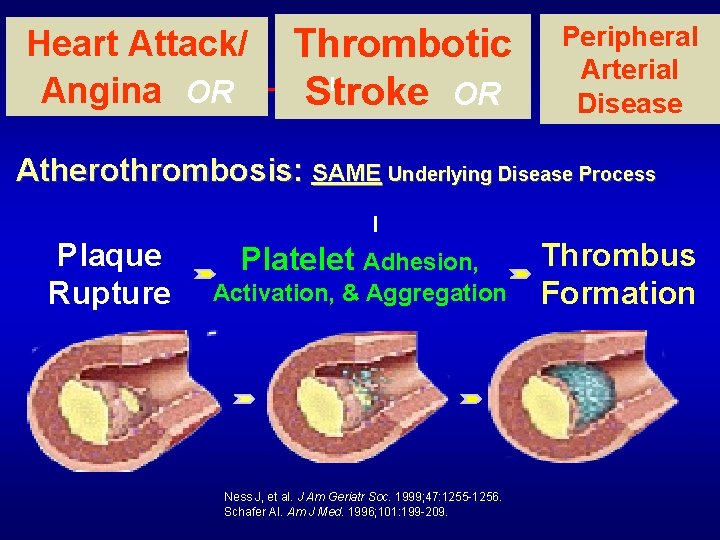
Heart Attack/ Angina OR Thrombotic Stroke OR Peripheral Arterial Disease Atherothrombosis: SAME Underlying Disease Process Plaque Rupture Platelet Adhesion, Activation, & Aggregation Ness J, et al. J Am Geriatr Soc. 1999; 47: 1255 -1256. Schafer AI. Am J Med. 1996; 101: 199 -209. Thrombus Formation
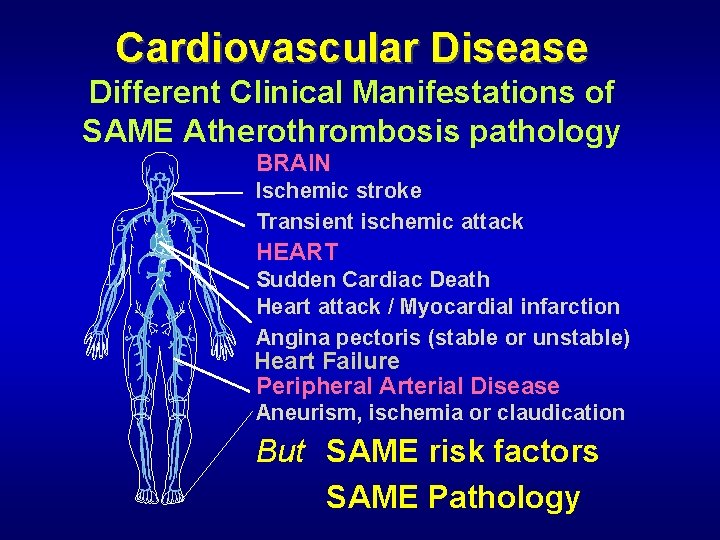
Cardiovascular Disease Different Clinical Manifestations of SAME Atherothrombosis pathology BRAIN Ischemic stroke Transient ischemic attack HEART Sudden Cardiac Death Heart attack / Myocardial infarction Angina pectoris (stable or unstable) Heart Failure Peripheral Arterial Disease Aneurism, ischemia or claudication But SAME risk factors SAME Pathology
CVD - Long natural history - Options for prevention
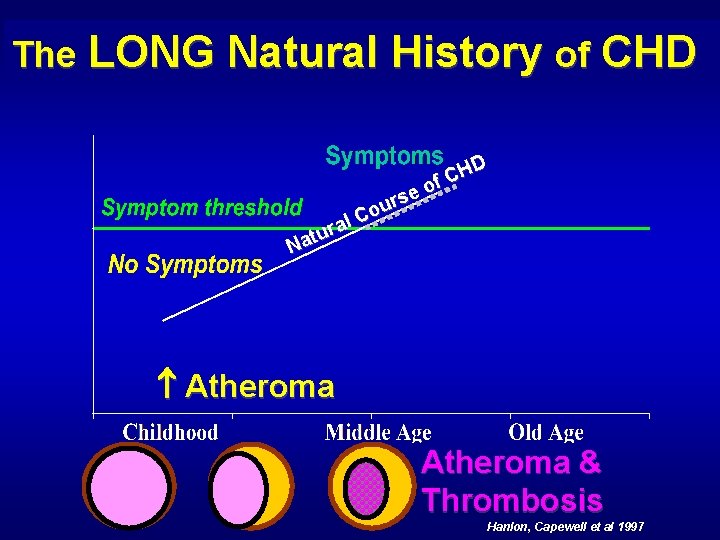
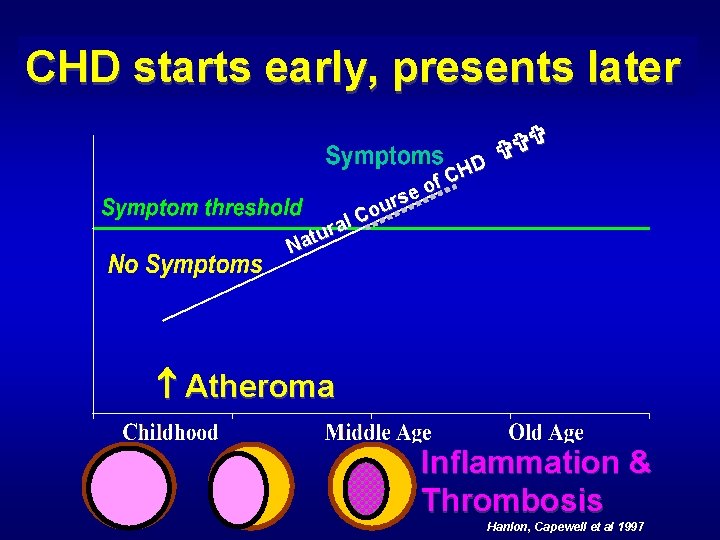
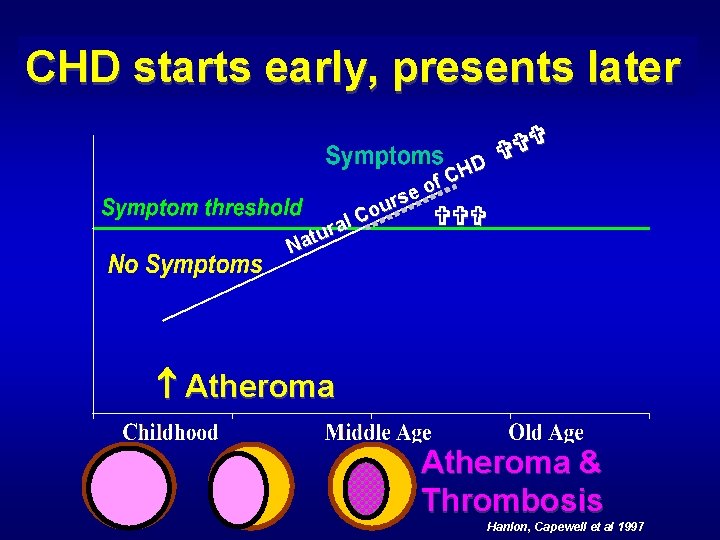
The LONG Natural History of CHD se r u o C l ra u t Na HD C of Atheroma & Thrombosis Hanlon, Capewell et al 1997
CHD starts early, presents later D H C f o e s our C ral u t Na Atheroma Inflammation & Thrombosis Hanlon, Capewell et al 1997
CHD starts early, presents later D H C f o e s our C l a r tu Na Atheroma & Thrombosis Hanlon, Capewell et al 1997
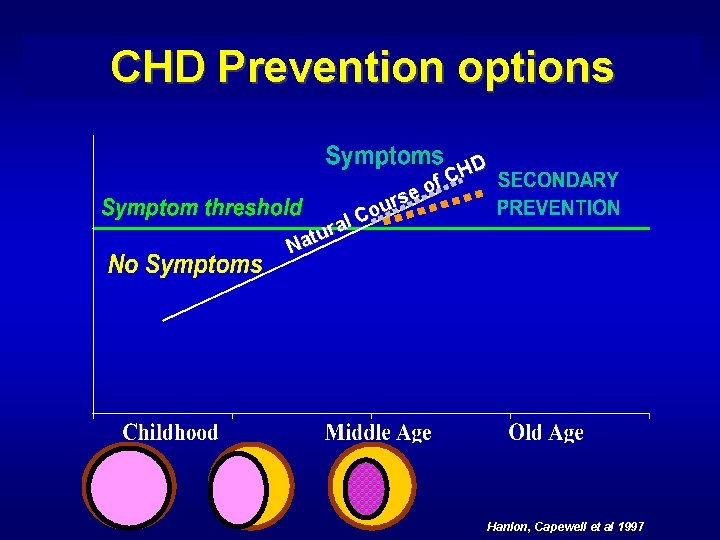
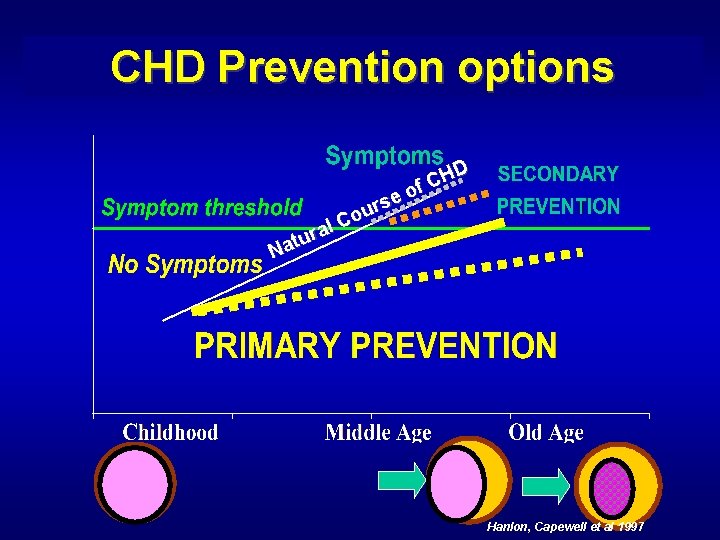
CHD Prevention options se r u o C l ra u t Na HD C of Hanlon, Capewell et al 1997
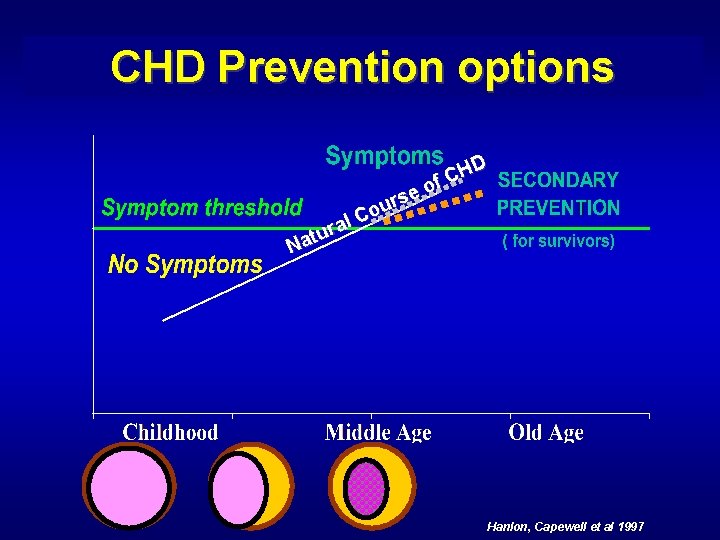
CHD Prevention options se r u o C l ra u t Na HD C of Hanlon, Capewell et al 1997
CHD Prevention options se r u o C l ra u t Na HD C of Hanlon, Capewell et al 1997
CVD Risk Factor Paradigm: solid evidence base IMPLEMENT THE DIET ACTION PLAN NOW
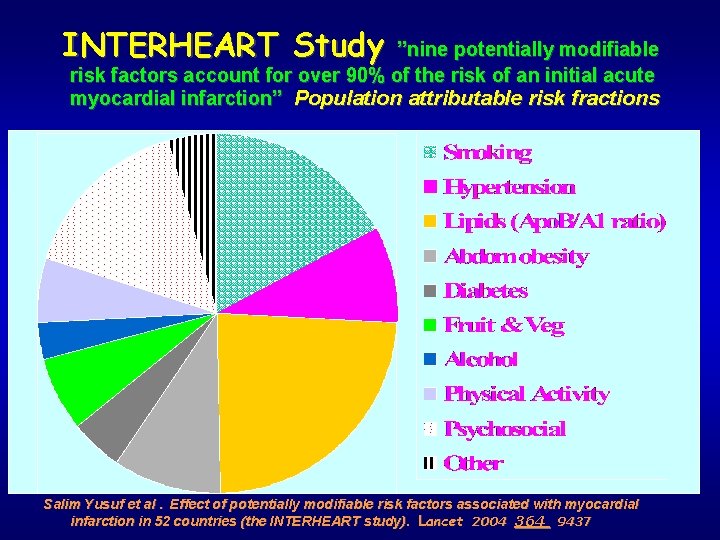
INTERHEART Study ”nine potentially modifiable risk factors account for over 90% of the risk of an initial acute myocardial infarction” Population attributable risk fractions Salim Yusuf et al. Effect of potentially modifiable risk factors associated with myocardial infarction in 52 countries (the INTERHEART study). Lancet 2004 364 9437
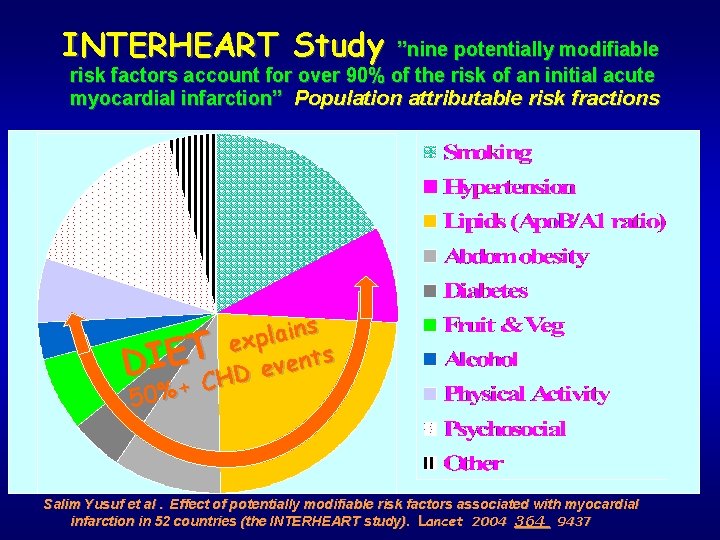
INTERHEART Study ”nine potentially modifiable risk factors account for over 90% of the risk of an initial acute myocardial infarction” Population attributable risk fractions s n i a l p ex T s t E n I e v D CHD e 50%+ Salim Yusuf et al. Effect of potentially modifiable risk factors associated with myocardial infarction in 52 countries (the INTERHEART study). Lancet 2004 364 9437
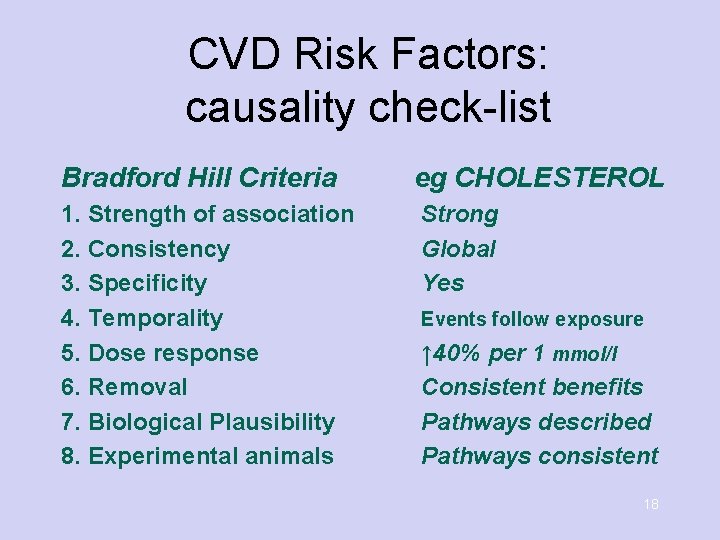
CVD Risk Factors: causality check-list Bradford Hill Criteria 1. Strength of association 2. Consistency 3. Specificity 4. Temporality 5. Dose response 6. Removal 7. Biological Plausibility 8. Experimental animals eg CHOLESTEROL Strong Global Yes Events follow exposure ↑ 40% per 1 mmol/l Consistent benefits Pathways described Pathways consistent 18
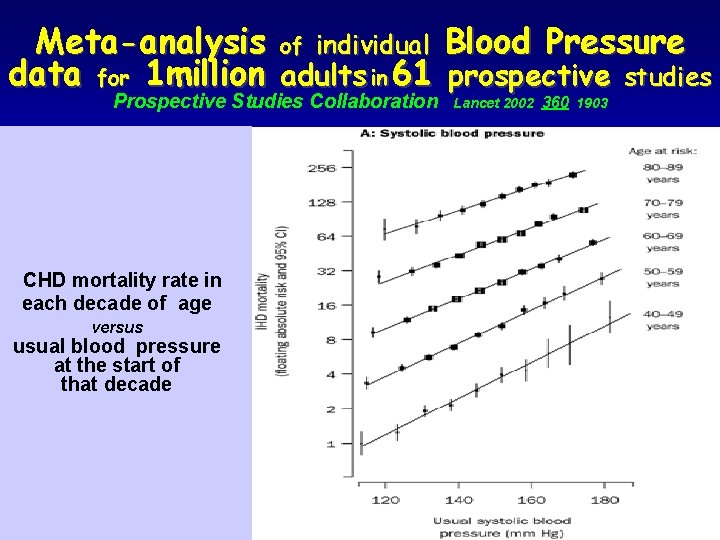
Meta-analysis of individual Blood Pressure data for 1 million adults in 61 prospective studies Prospective Studies Collaboration CHD mortality rate in each decade of age versus usual blood pressure at the start of that decade Lancet 2002 360 1903
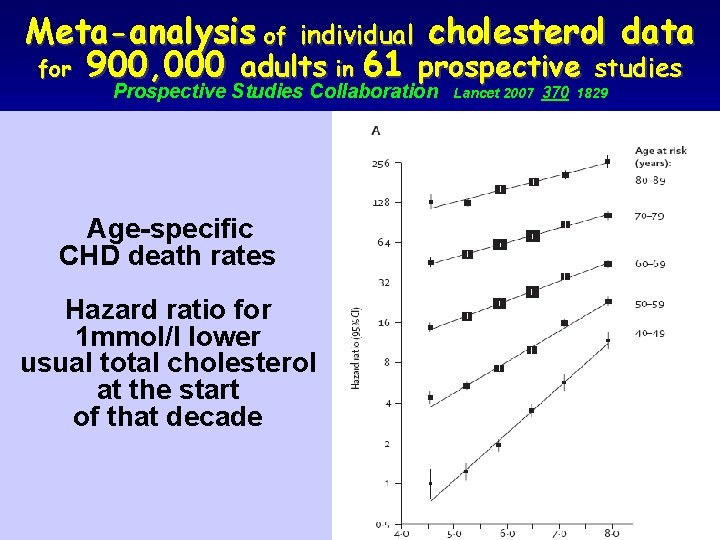
Meta-analysis of individual cholesterol data for 900, 000 adults in 61 prospective studies Prospective Studies Collaboration Age-specific CHD death rates Hazard ratio for 1 mmol/l lower usual total cholesterol at the start of that decade Lancet 2007 370 1829
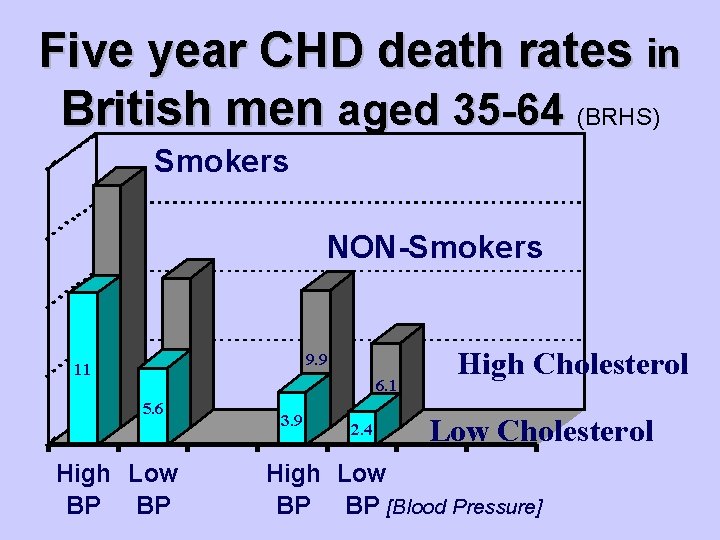
Five year CHD death rates in British men aged 35 -64 (BRHS) Smokers NON-Smokers 17. 5 11 10. 8 9. 9 6. 1 5. 6 High Low BP BP 3. 9 2. 4 High Cholesterol Low Cholesterol High Low BP BP [Blood Pressure]
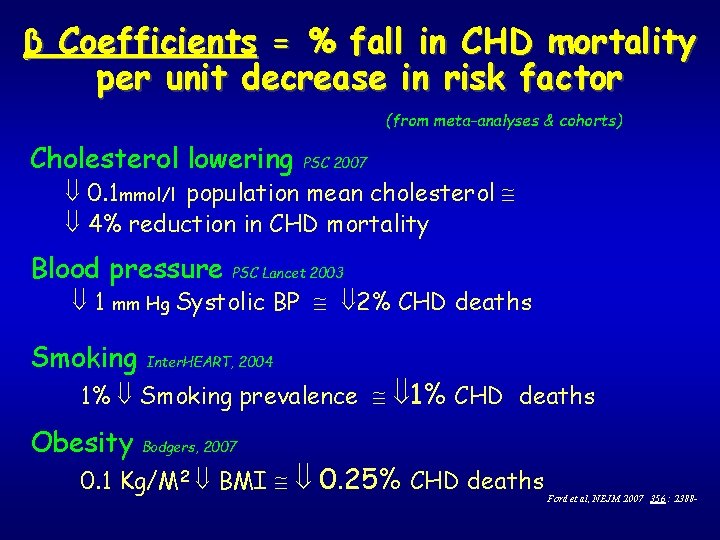
β Coefficients = % fall in CHD mortality per unit decrease in risk factor (from meta-analyses & cohorts) Cholesterol lowering PSC 2007 0. 1 mmol/l population mean cholesterol 4% reduction in CHD mortality Blood pressure PSC Lancet 2003 1 mm Hg Systolic BP 2% CHD deaths Smoking Inter. HEART, 2004 1% Smoking prevalence 1% CHD deaths Obesity Bodgers, 2007 0. 1 Kg/M 2 BMI 0. 25% CHD deaths Ford et al, NEJM 2007 356 : 2388 -
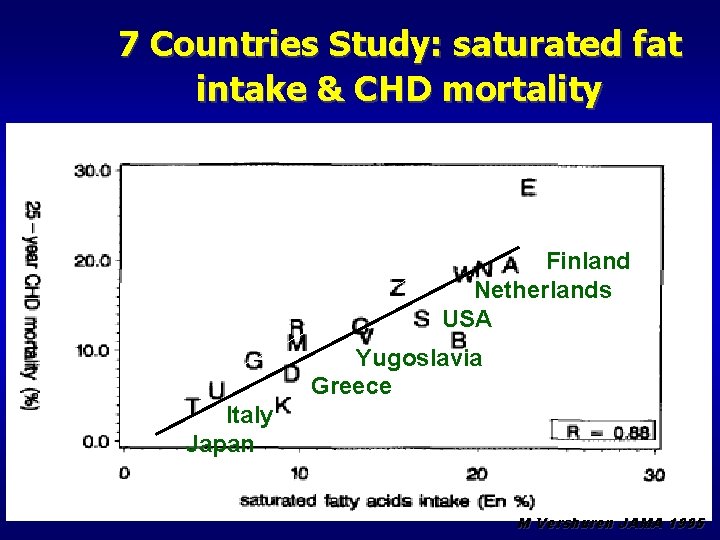
7 Countries Study: saturated fat intake & CHD mortality Finland Netherlands USA Yugoslavia Greece Italy Japan M Vershuren JAMA 1995
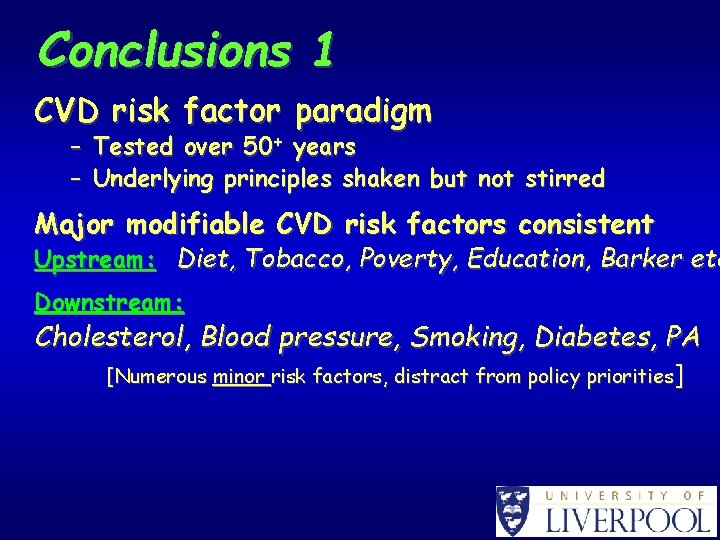
Conclusions 1 CVD risk factor paradigm – Tested over 50+ years – Underlying principles shaken but not stirred Major modifiable CVD risk factors consistent Upstream: Diet, Tobacco, Poverty, Education, Barker etc Downstream: Cholesterol, Blood pressure, Smoking, Diabetes, PA [Numerous minor risk factors, distract from policy priorities]
NICE CVD prevention in populations CVD Risk Factors: paradigms & causal pathways 1. Epidemiology 2. Maps & Interventions
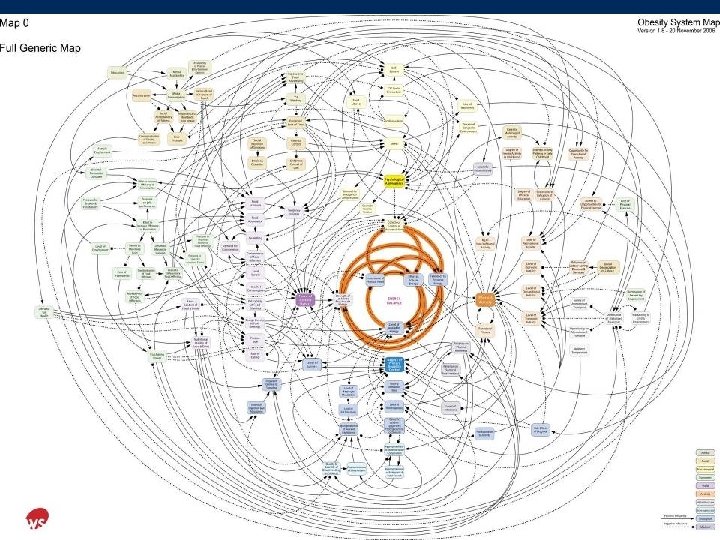
Government Office for Science, Dept. of Innovation, Universities and Sk
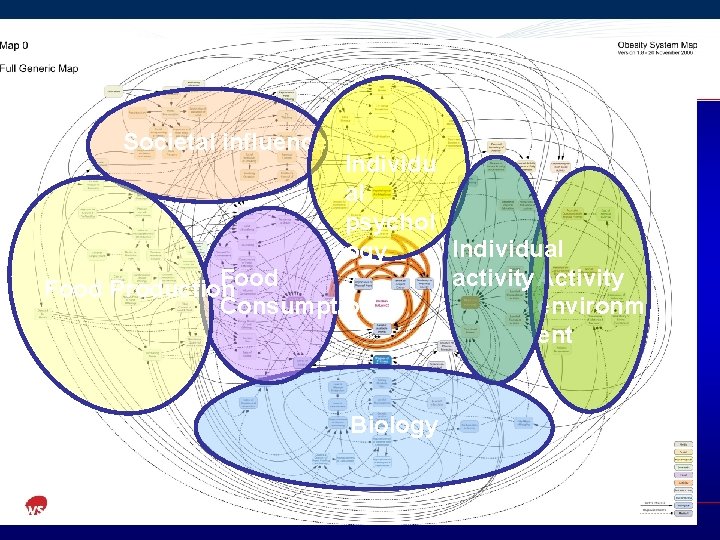
Societal influences Individu al psychol Individual ogy Food activity Activity Food Production Consumption environm ent Biology
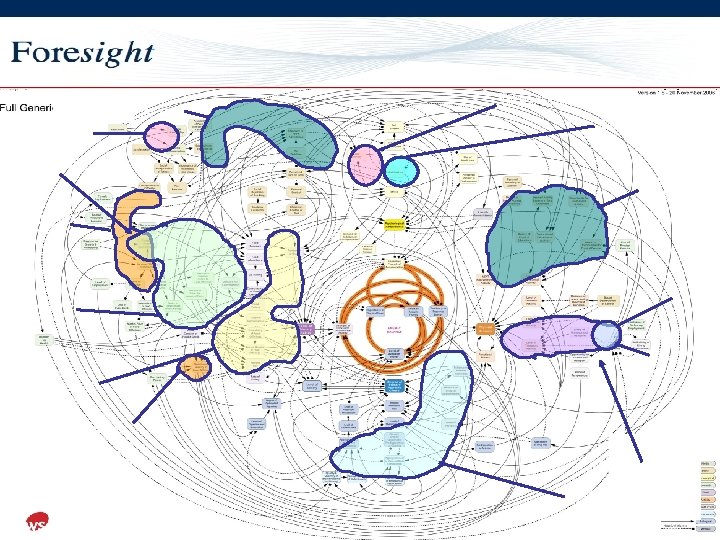
DCMS/ OFCOM DCFS/ DIUS/FSA DCFS/DIUS Sustainability work DCMS/DCFS /DIUS Local Authorities BERR/HMT? Df. T Defra/EU? CLG/ Local Authorities FSA Inequalities work? Link to social exclusion, benefits, employment etc DWP, DCLG, BERR, HMT? DH Sustainability work
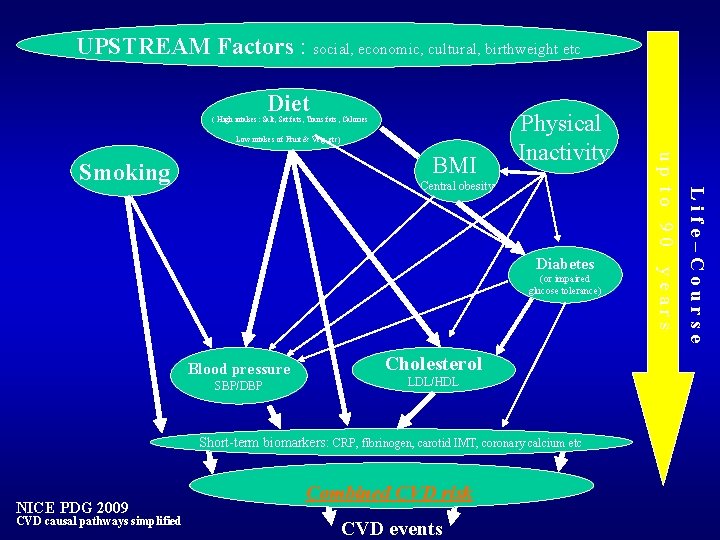
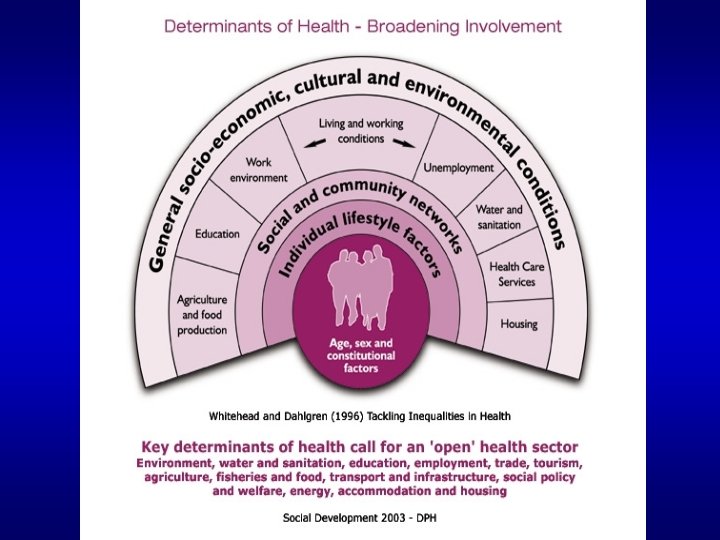
UPSTREAM Factors : social, economic, cultural, birthweight etc Diet ( High intakes: Salt, Sat fats, Trans fats, Calories Low intakes of Fruit & Veg, etc) (or impaired glucose tolerance) Blood pressure Cholesterol LDL/HDL SBP/DBP Short-term biomarkers: CRP, fibrinogen, carotid IMT, coronary calcium etc NICE PDG 2009 CVD causal pathways simplified Combined CVD risk CVD events years Diabetes L i f e – C o u r s e Central obesity up to 90 BMI Smoking Physical Inactivity
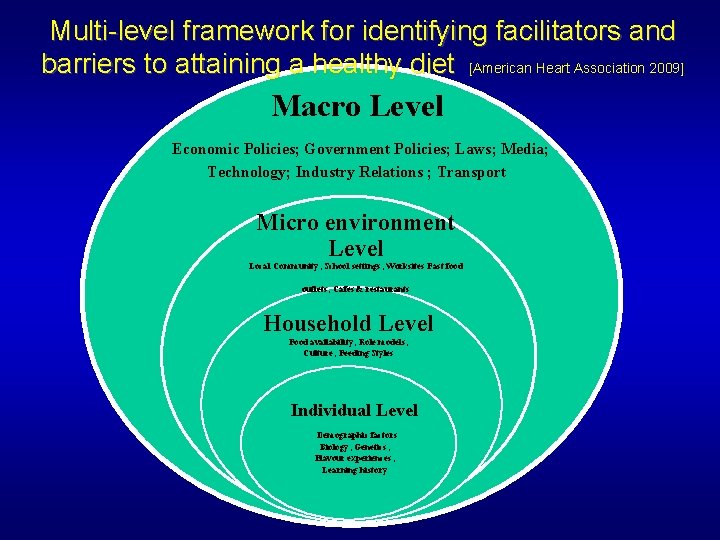
Multi-level framework for identifying facilitators and barriers to attaining a healthy diet [American Heart Association 2009] Macro Level Economic Policies; Government Policies; Laws; Media; Technology; Industry Relations ; Transport Micro environment Level Local Community; School settings; Worksites Fast food outlets; Cafes & restaurants Household Level Food availability; Role models; Culture; Feeding Styles Individual Level Demographic factors Biology; Genetics; Flavour experiences; Learning history
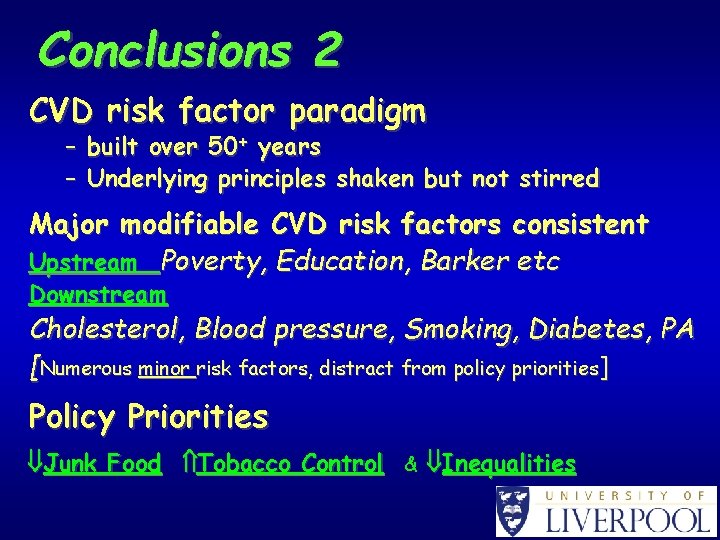
Conclusions 2 CVD risk factor paradigm – built over 50+ years – Underlying principles shaken but not stirred Major modifiable CVD risk factors consistent Upstream Poverty, Education, Barker etc Downstream Cholesterol, Blood pressure, Smoking, Diabetes, PA [Numerous minor risk factors, distract from policy priorities] Policy Priorities Junk Food Tobacco Control & Inequalities
Reserve slides
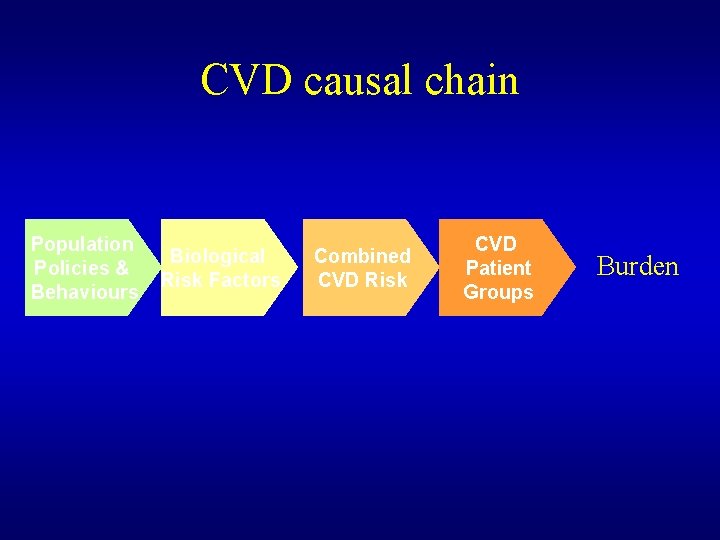
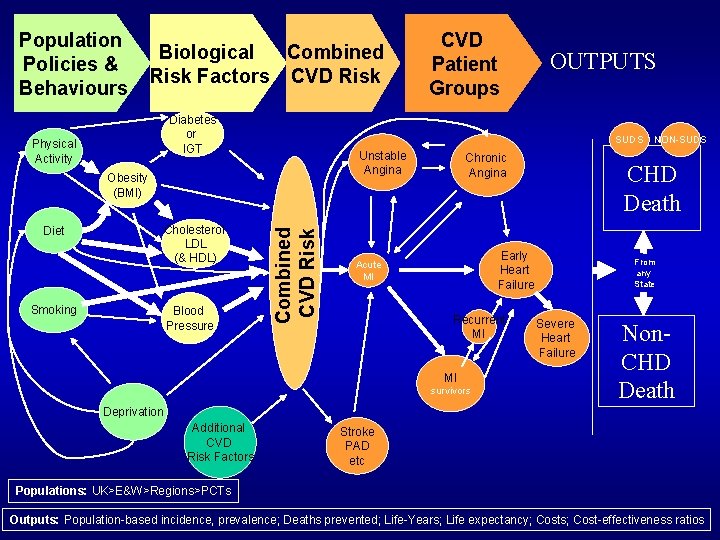
CVD causal chain Population Policies & Behaviours Biological Risk Factors Combined CVD Risk CVD Patient Groups Burden
Population Policies & Behaviours Biological Combined Risk Factors CVD Risk Diabetes or IGT Physical Activity Unstable Angina Smoking Blood Pressure Combined CVD Risk Cholesterol LDL (& HDL) OUTPUTS SUDS Obesity (BMI) Diet CVD Patient Groups Chronic Angina CHD Death Early Heart Failure Acute MI Recurrent MI MI survivors NON-SUDS From any State Severe Heart Failure Non. CHD Death Deprivation Additional CVD Risk Factors Stroke PAD etc Populations: UK>E&W>Regions>PCTs Outputs: Population-based incidence, prevalence; Deaths prevented; Life-Years; Life expectancy; Costs; Cost-effectiveness ratios
CHD Pathology: Coronary Artery Sections Normal Artery Muscle Wall Endothelium Open Lumen Atheroma Plaque Then plaque ruptures & triggers clotting Thrombus