
Niccol Machiavelli Belfagor arcidiavolo F A V O
Niccol ò Machiavelli Belfagor arcidiavolo F. A. V. O. L. A. Presentation by Franco Manai School of European Languages and Literatures Italian
Belfagor: ca 1520 �Machiavelli was a well-known story-teller �Many private letters are colourful and contain lively narration �See for example: to Luigi Guicciardini 8 Dec. 1509 (night meeting with the old woman from Verona); to Francesco Vettori 10 Dec 1513, 4 and 25 Feb; to Francesco Guicciardini 17, 18 and 19 May 1521. �La Mandragola is probably an adaptation of a short story that has been lost
History of criticism �Realistic interpretation �Luigi Russo in 1937 read it as a realistic text �Criticism of marriage is only apparent �The real aim of the novella is to ridicule the beliefs of ignorant people �Irony directed at Monna Onesta is minimal �Mythology surrounding the devil (his real existence) is ridiculed �Ironic reversal between Hell and Earth: Pluto is like a liberal prince who holds the ideals of a perfect republican and who could easily be admitted into the circle of the Orti Oricellari
“Realistic” vs “Structuralist” interpretation �Luigi Blasucci in 1970 also emphasizes the satire against religion and the ironic contraposition between Earth and Hell �“Structuralist” interpretation �Giorgio Bárberi Squarotti in 1966 attempts to find the deepest meaning of the text, its structural meaning �Belfagor becomes a tragedy about the Machiavellian hero’s struggle against reality
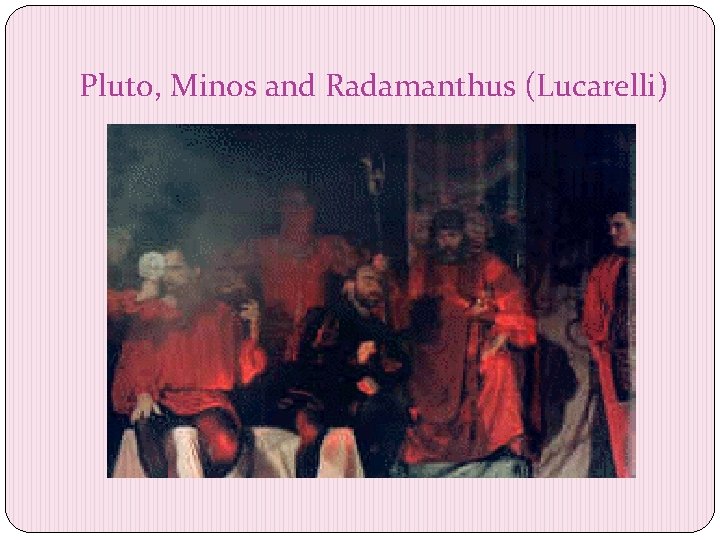
Pluto, Minos and Radamanthus (Lucarelli)
Misogynist joke/Rhetorical game �Other critics read it as �A misogynist joke (Nino Borsellino 1973) �A linguistic and rhetorical work (Mario Martelli 1971) �Femminist interpretation: Shin, J. J. (2004), ‘Beyond Virtù’, in M. J. Falco, ed. , Feminist interpretations of Niccolo Machiavelli, University Park: PA, 287 -308. �Our interpretation �Parody of literary models �Irony and realism �Comic ambiguity
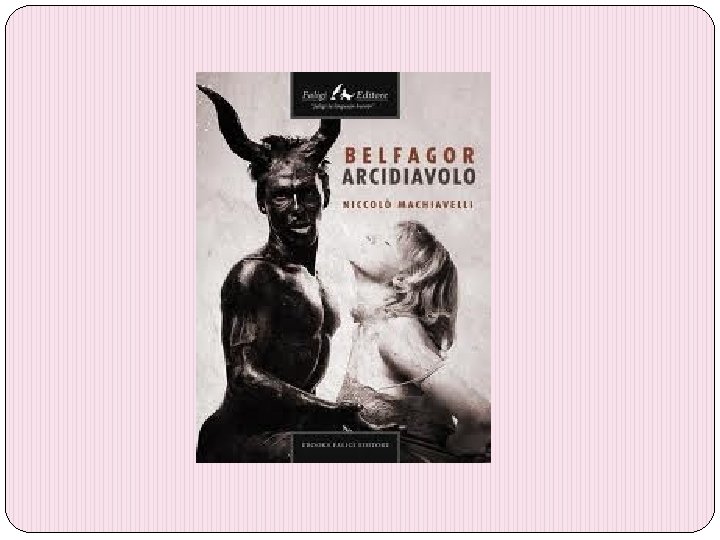
Still a popular novella �Many recent editions �Belfagor is the title of one of the most renown journal of Italian literature and culture �It has been recently adapted for theatre by Carlo Lucarelli �In 1966 Ettore Scola adapted for the big screen: L’arcidiavolo �Popular commercial mith
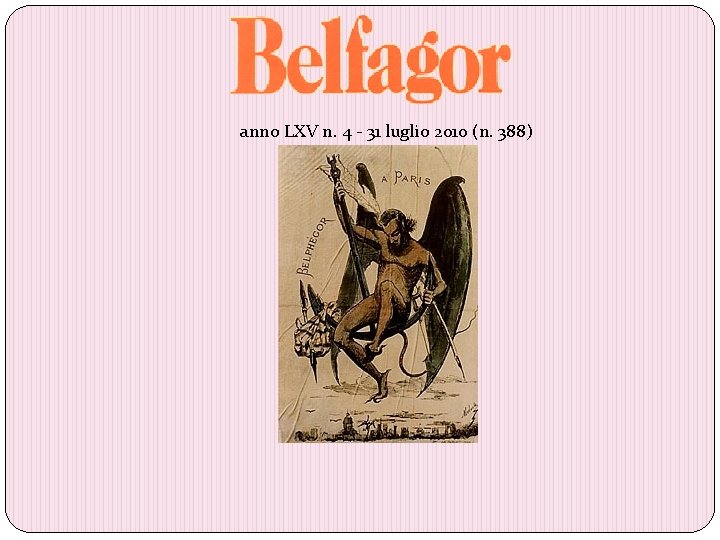
anno LXV n. 4 - 31 luglio 2010 (n. 388)
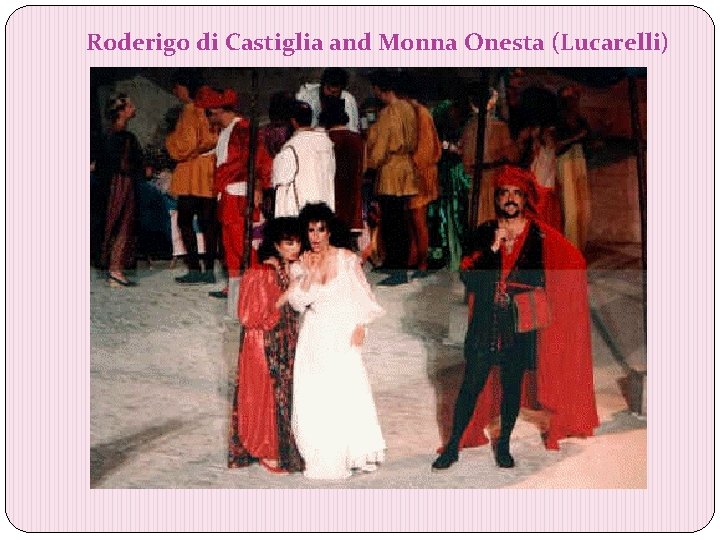
Roderigo di Castiglia and Monna Onesta (Lucarelli)
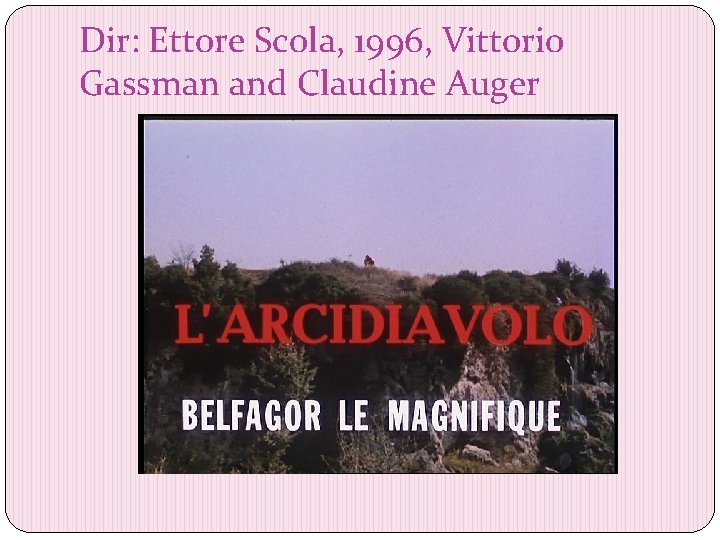
Dir: Ettore Scola, 1996, Vittorio Gassman and Claudine Auger
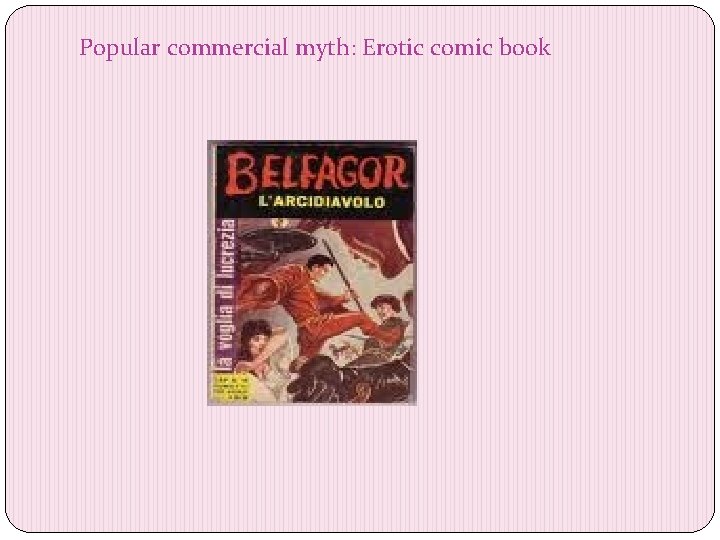
Popular commercial myth: Erotic comic book
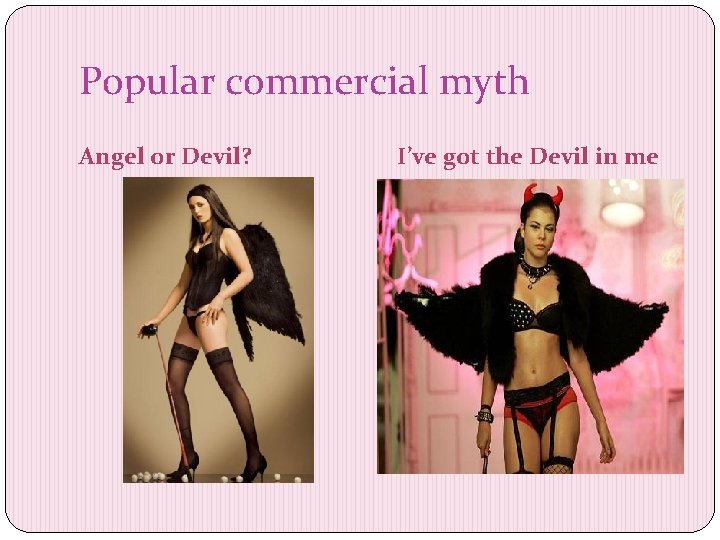
Popular commercial myth Angel or Devil? I’ve got the Devil in me
Structure of the FAVOLA �Three narrative parts + prologue �Prologue: the supreme court of Hell/Hades sends the arch-devil Belfagor to Earth for 10 years to find out if it is true that marriage is the cause of men’s damnation.
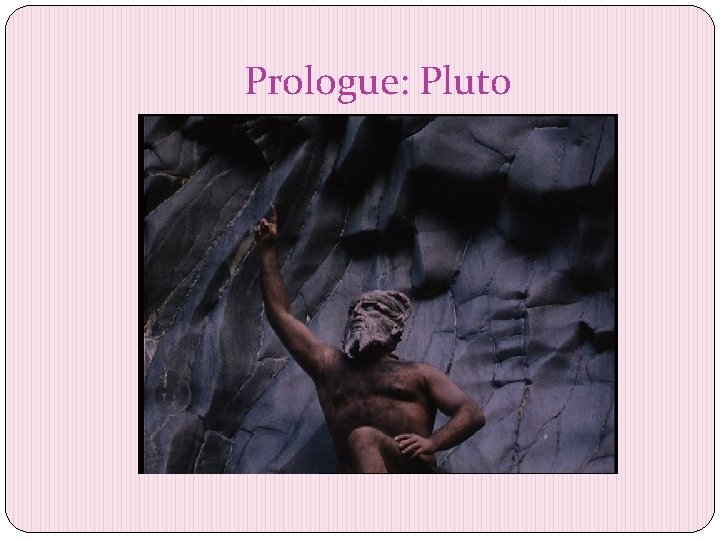
Prologue: Pluto
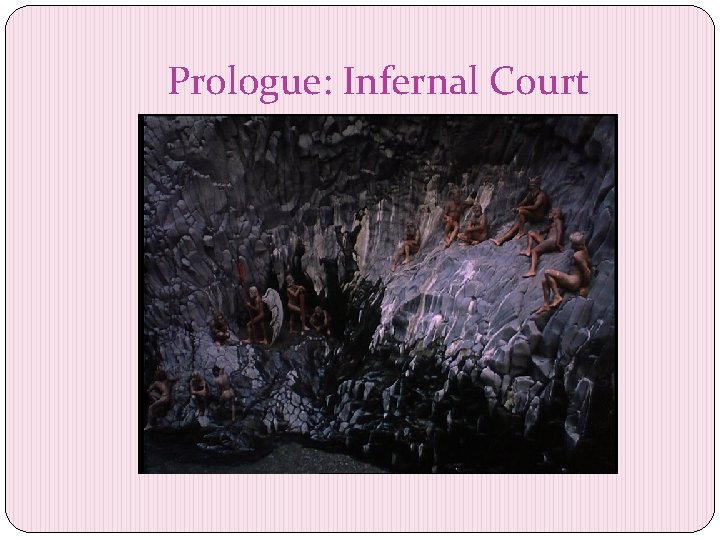
Prologue: Infernal Court
Part 1 �Belfagor/Roderigo di Castiglia arrives in Florence �Marries the beautiful Monna Onesta and falls in love with her �Experiences all the nuisances and bores of conjugal life
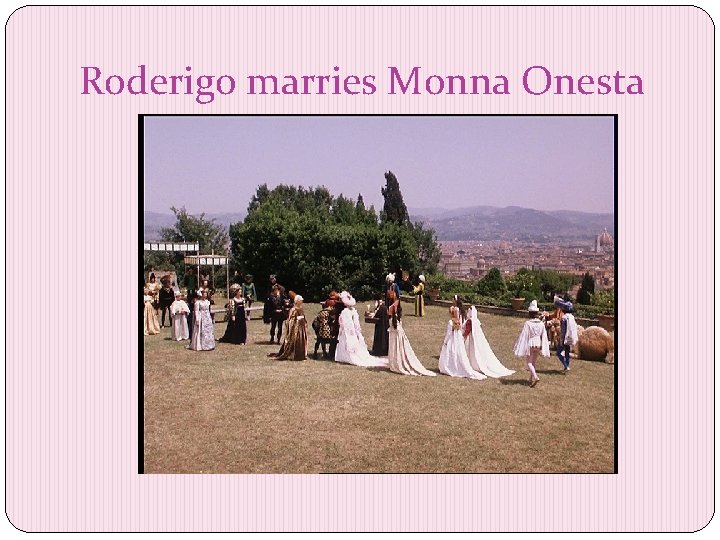
Roderigo marries Monna Onesta
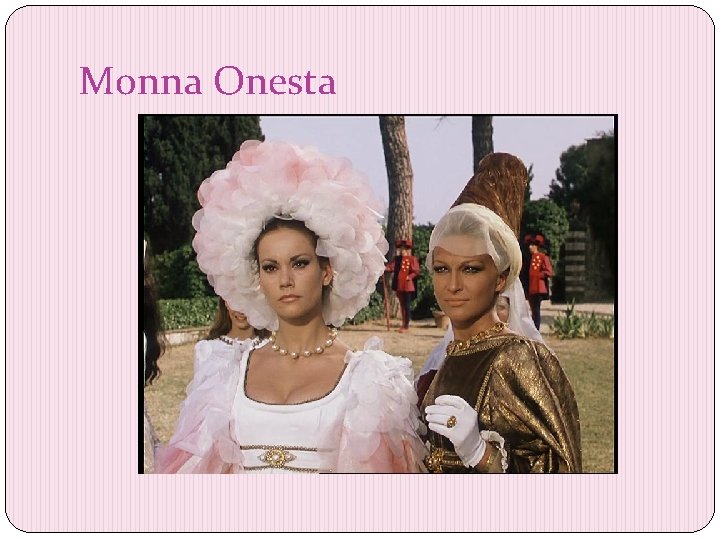
Monna Onesta
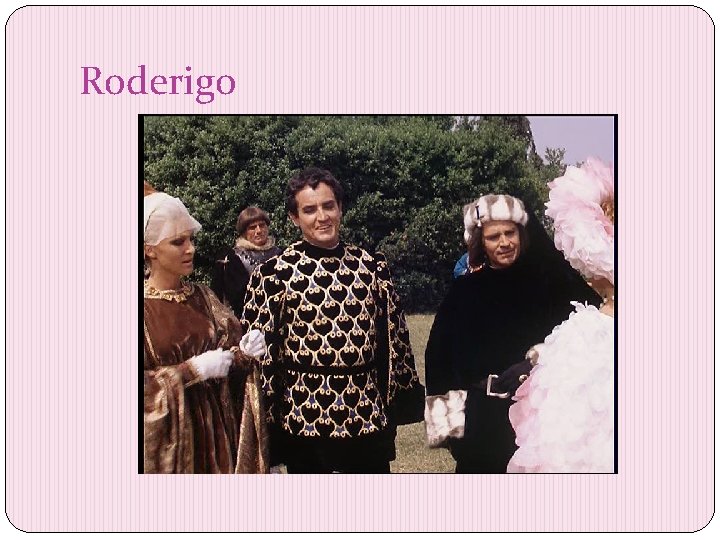
Roderigo
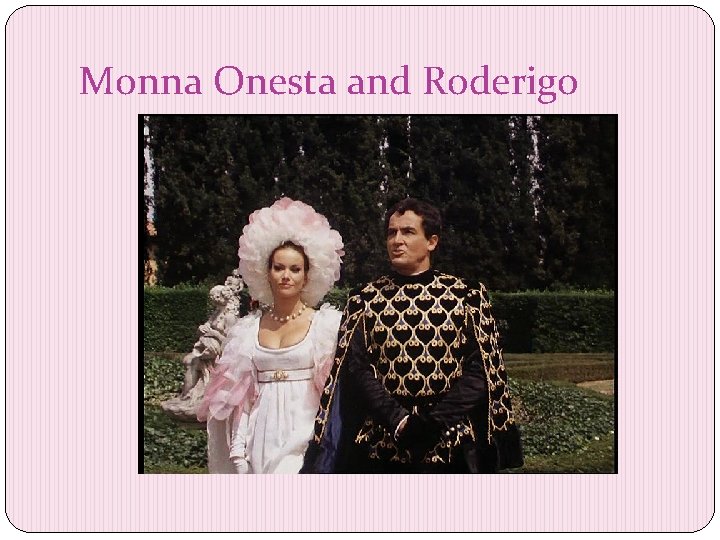
Monna Onesta and Roderigo
Part 2 �Roderigo’s financial ruin �His flight from Florence �His encounter with the peasant Gianmatteo, who saves him from his creditor
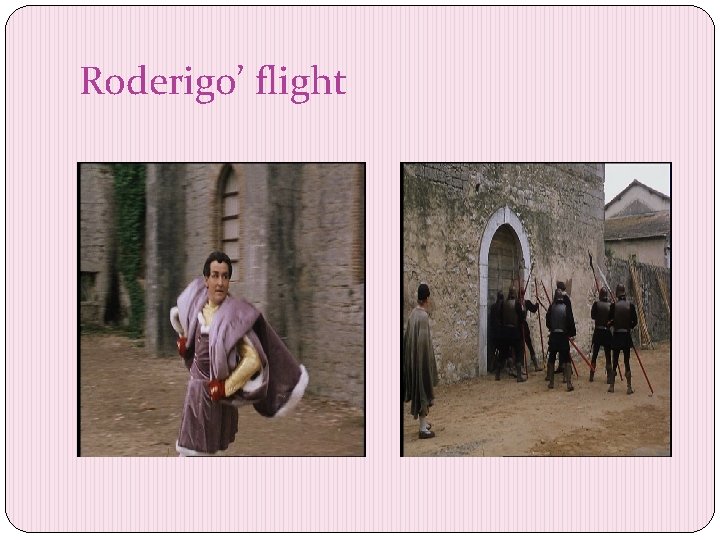
Roderigo’ flight
Part 3 �Part 3: �Possessed women and exorcisms �Definitive return to hell of Roderigo/Belfagor, defeated by the peasant’s cunning
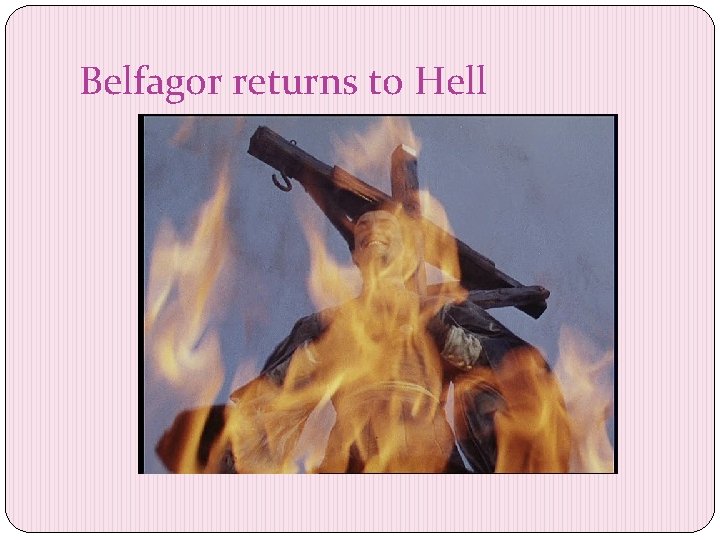
Belfagor returns to Hell
Genre of the FAVOLA � The original title appears in an odd arrangement � F. A. V. � O. L. � A. � It will not be a traditional fable � Not a classical fable � Not an apologue nor a medieval exemplum � Allusions to all of these genres � The apologue would be complete with Roderigo’s flight from Florence � The episode with Gianmatteo indicates that the FAVOLA wasn’t intended as an exemplary tale
Boccaccio’s Decameron �Between the exempla and Machiavelli, there was Boccaccio �Boccaccio’s novellas �Multidimensional characters whose actions were derived by rules of moral behaviour which were not fixed but ambivalent �Affirmation of the autonomy of humanity that Boccaccio contrasted with the presupposition of a transcendent destiny typical of the exempla �Genre of the Facezie, jokes based on witticism and paradox
Parody of themes and structures of the exempla � Metaphor taken literally: marriage is hell � Roderigo’s marriage is hell—in fact, worse than hell � Monna Onesta overdoes Lucifer in pride �Madam Onesta had brought into the house of Roderigo, along with her social position and her beauty, such a great pride that Lucifer’s was never so great; in fact Roderigo who had tested both of them, considered that of his wife greater. � She torments Roderigo like a devil in medieval literature: �Gives him orders without any mercy or consideration �Stings him with rude and offensive words
Marriage is worst than Hell � Roderigo, like all the damned souls in hell, tries but cannot find peace � He is forced to experience (inestimabile noia) “unimaginable distress” � “Her arrogant disposition” causes him (infinite incomodità) “countless difficulties” � The infernal court is contrasted with Monna Onesta’s family court: �Devils hired as servants and they prefer the fire of hell to her rule � Onesta like Lucifer is not adulterous: infidelity is not an attribute of the devil
Parody of the Facezia (Witty Joke) �Belfagor is a devil who penetrates the bodies of three women �Baal Peor (Lord of Peor, a hill in the region of Moab) was a god of Moabitian and Midianites, especially adored by women; St. Hierome and Isidorus suggest he is the Jewish version of Priapus �For the initiated friends of Machiavelli, the name Belfagor was already the sign of a joke
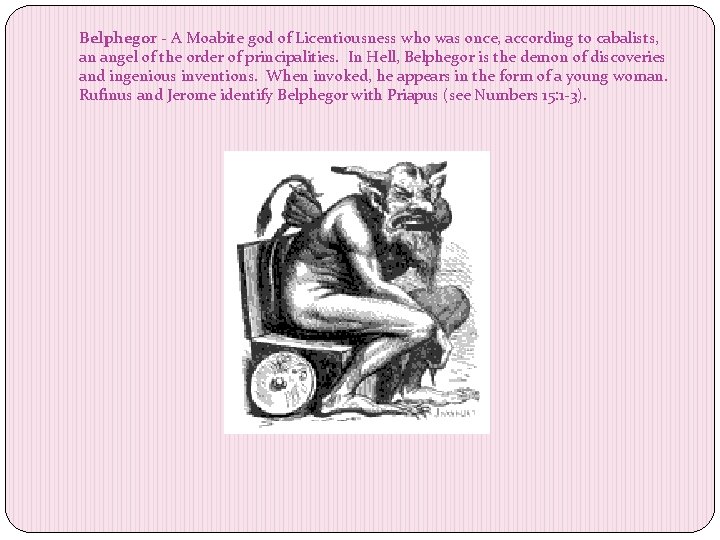
Belphegor - A Moabite god of Licentiousness who was once, according to cabalists, an angel of the order of principalities. In Hell, Belphegor is the demon of discoveries and ingenious inventions. When invoked, he appears in the form of a young woman. Rufinus and Jerome identify Belphegor with Priapus (see Numbers 15: 1 -3).
Ambiguous Comic � Last line of the novella �“And Gianmatteo, who was shrewder than the devil, in complete happiness returned home” � The whole novella as the literalization of a metaphor � To be shrewder than the devil � Ambivalent comic: not a joke by Piovano Arlotto (popular book of jokes, Motti e facezie del Piovano Arlotto) � Machiavelli always leaves a margin of ambiguity in his comic works �“Green” laughter with which he takes his leave of the public of the Mandragola �He himself becomes a donkey, when it is necessary, as in the poem, The Donkey
Boccaccian novella: multidimensional characters and affirmation of human autonomy �Monna Onesta: one-dimensional character, typical of the exempla, personifies Pride �Belfagor-Roderigo: ambivalent status of devil-man and his behaviour remains unpredictable, not ruled by any given moral norm, whether positive or negative �Gianmatteo: a peasant, i. e. traditionally belonging to the world of the animals or devils; endowed with peculiar capacities �Literary tradition put the image of the peasant as a beast close to that of the cunning peasant
Gianmatteo versus Roderigo/Belfagor �Gianmatteo is introduced ambiguously �First he is connected with beasts – Roderigo “found Gianmatteo, who had come home to feed his cattle” �But then is described by the narrator from a different perspective: “Though Gianmatteo was a farmer, he was a man of resolution. Judging that he could not lose by saving Roderigo, he gave his promise. ” “Gianmatteo, ancor che contadino, uomo animoso, e giudicando non poter perdere a pigliare partito di salvarlo, gliene promise. ”
City-Country-Virtue � Roderigo/Belfagor �Urban, liberal, “prudent”, unable to change his character; falls helplessly in love; bad merchant ; strikes deals that he cannot keep; very clumsy in flight � Gianmatteo �Knows how to calculate and to invest �Topos of the cunning peasant, always ready to cheat the city people �Topos of the Machiavellian myth of the virtuous man who knows when to seize the opportunity � Is defined as “animoso”, a man of resolution, the same adjective Machiavelli uses for the Duke Valentino or for Maximilian of Hapsburg (Arte della guerra)
Gianmatteo: shrewder than the devil � Ambivalent character of Gianmatteo �In front of his house there is “a pile of stable manure” where he hides Roderigo to save him from his pursuers “with all the threats they could make to Gianmatteo, they never got out of him that he had seen Roderigo” � Two typical motifs of the satire of the country-folk: � a) The parallel between the peasant and manure � b) Deceit of city-folks combined with stubbornness �The negativity of the motif of the peasant trickster is compensated by the motif of the qualities of a good merchant � When the danger is over, Gianmatteo asks to be compensated, peasant-like and at the same time animosamente, i. e. resolutely exploiting the favourable circumstances
Gianmatteo più furbo del diavolo � Gianmatteo adapts himself to nature �He is by nature resolute, i. e. ready for action �When circumstances require passivity, he adapts passively to the wishes of Roderigo �When the situation changes, though, and Roderigo corners him, Gianmatteo is once again ready for action and triumphs � Like all Machiavelli’s virtuous men in The Prince �Behaviour is not a compromise between impetuosity, resoluteness and “respectività”, cautiousness �Behaviour is dictated by astute attention to the circumstances: sometimes prudent and sometimes audacious
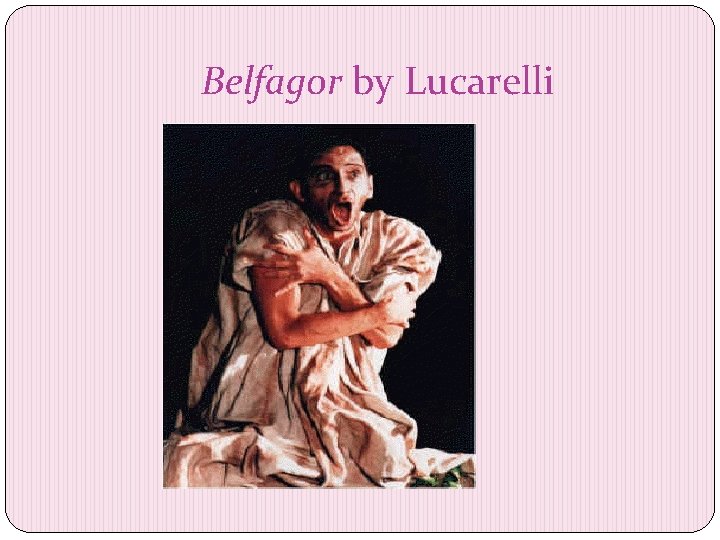
Belfagor by Lucarelli
Roderigo � Is not able to foretell, estimate � A worse merchant, politician and strategist than the peasant � When the peasant attacks, he is astonished �When Roderigo saw such an assembly of people and such great preparation, he was almost stunned and said to himself […] At the noise Roderigo pricked up his ears; not knowing what it could be and feeling greatly astonished, in a complete daze he asked Gianmatteo what it was. � Astonishment is never, according to Machiavelli, an adequate way to face life; it is not a form of knowledge but rather rejection of knowledge
Favola’s Comic Ambiguity �What gives the Favola its characteristic comic ambiguity is precisely the insertion of a ‘multidimensional’ character within a narrative structure which incorporates both the parody of an exemplum and the distortion of a joke
Credits � Photos from Belfagor Or La vanità del diavolo (free adaptation from Belfagor Arcidiavolo, by Nicolò Machiavelli) / script by Carlo Lucarelli / directed by Kido Emiliani, Compagnia delle feste, Teatro di Mordano, 2008 � L’arcidiavolo, directed by Ettore Scola, Italia 1966 � Cited works � Luigi Russo, Uomo di teatro e narratore, in (1937) in Machiavelli (Bari 19493) � � Giorgio Bárberi Squarotti, “L'aspirazione al tragico nelle 'Lettere' e nella ‘Favola’. " In Idem, La forma tragica del "Principe" e altri saggi sul Machiavelli (Firenze 1966), pp. 1 -41. � � Luigi Blasucci, Machiavelli novelliere e verseggiatore, in Cultura e scuola 9, No. 33 -34, (gennaio- giugno 1970), pp. 174 -191. � � N. Borsellino, Niccolò Machiavelli (Bari 1973) � � Mario Martelli, “Il buon geomètra di questo mondo”, in Mario Martelli, ed. , Tutte le opere di Machiavelli, Firenze, 1971, pp. xi-xlvii. � � FRANCO MANAI , “Note sulla Favola di Machiavelli: Gianmatteo, il villano più furbo del diavolo”, Rivista di Studi Italiani, Anno IV , n° 2, Dicembre 1986, pp. 11 -28
Bibliography on Machiavelli � Adams, R. M. (1992) = Machiavelli, The Prince, trans. R. M. Adams, “a revised � � � � translation, backgrounds, interpretations, marginalia”, 2 nd Ed. , London; New York. Anglo, S. (1969), Machiavelli: A Dissection, London. Constantine, P. (2007) = The Essential Writings of Machiavelli, trans. P. Constantine, “introduction by Albert Russell Ascol”, New York. Flanagan, T. E. (1972), ‘The concept of fortuna in Machiavelli’, in A. J. Parel, ed. , The Political Calculus: Essays on Machiavelli’s Philosophy, Toronto, 128 -156. Kahn, V. A. (1986), ‘Virtù and the example of Agathocles in Machiavelli’s Prince’, in Representations 13, 63 -83. Mansfield, H. C. (1996), Machiavelli’s Virtue, Chicago. Rebhorn, W. A. (1988), Foxes and Lions: Machiavelli’s Confidence Men, Ithaca: NY. Shin, J. J. (2004), ‘Beyond Virtù’, in M. J. Falco, ed. , Feminist interpretations of Niccolo Machiavelli, University Park: PA, 287 -308. Snyder, R. C. (2004), ‘Machiavelli and the Citizenship of Civic Practices’, in M. J. Falco, ed. , Feminist interpretations of Niccolo Machiavelli, University Park: PA, 213246.
- Slides: 42