
NHSF Secretariat Operational Structure and Membership Models OPERATIONAL

NHSF Secretariat Operational Structure and Membership Models

OPERATIONAL STRUCTURE
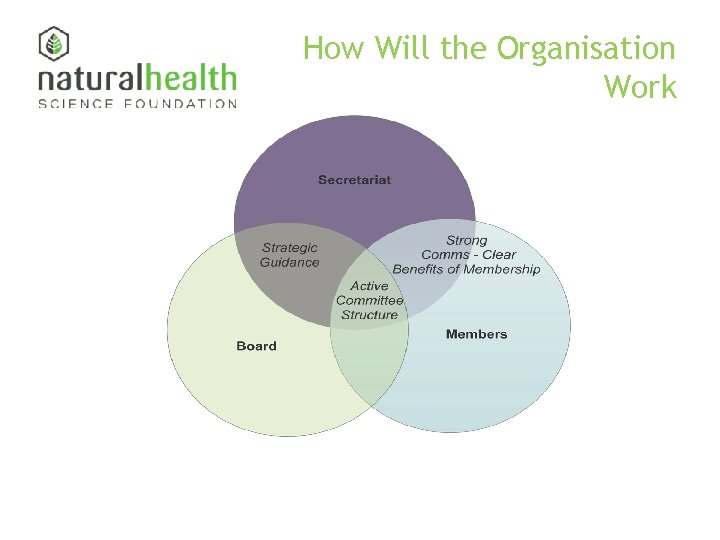
How Will the Organisation Work
How Will the Organisation Work • The Secretariat will be supported by the board and driven by the membership. • Underpinning the organisations direction will be a group of active member based committees who will make recommendations to the board via the secretariat • Key to success will be active involvement with all members to ensure they understand the objectives of the organisation and benefit appropriately from their involvement.
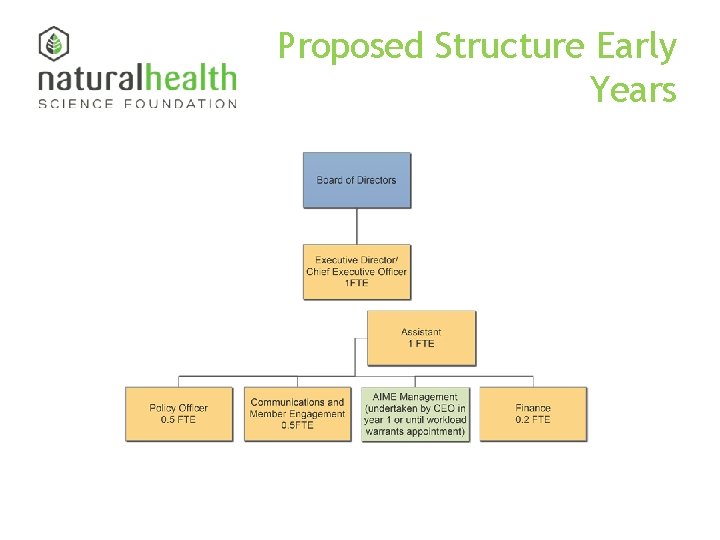
Proposed Structure Early Years
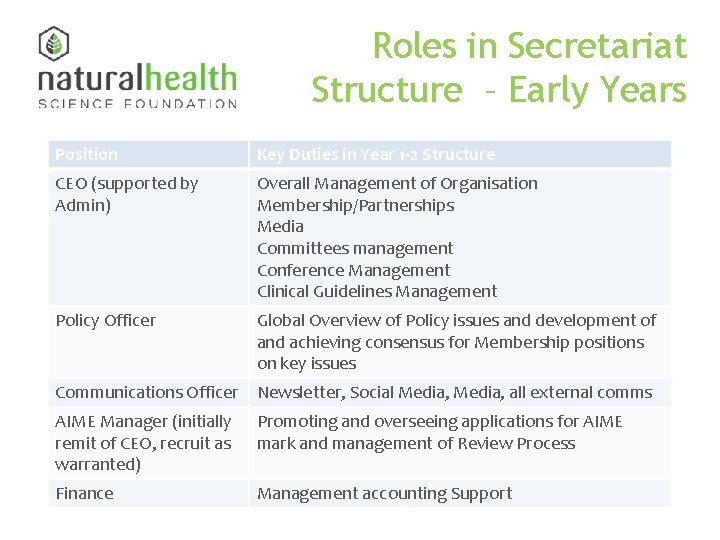
Roles in Secretariat Structure – Early Years Position Key Duties in Year 1 -2 Structure CEO (supported by Admin) Overall Management of Organisation Membership/Partnerships Media Committees management Conference Management Clinical Guidelines Management Policy Officer Global Overview of Policy issues and development of and achieving consensus for Membership positions on key issues Communications Officer Newsletter, Social Media, all external comms AIME Manager (initially remit of CEO, recruit as warranted) Promoting and overseeing applications for AIME mark and management of Review Process Finance Management accounting Support
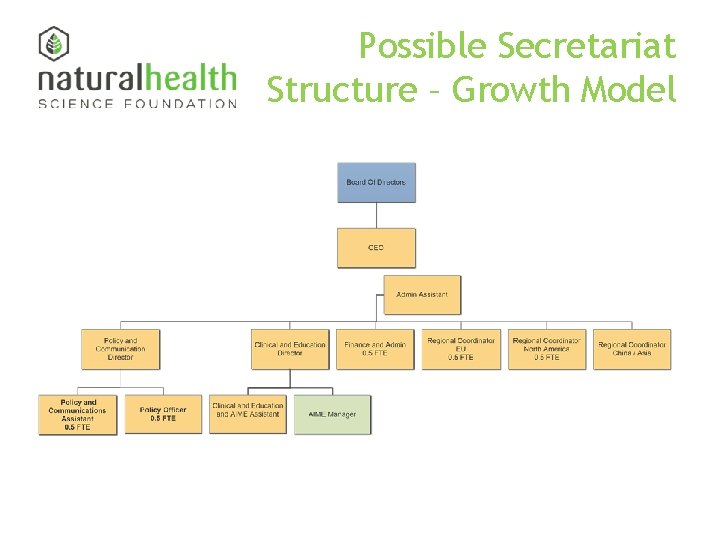
Possible Secretariat Structure – Growth Model

Roles in Secretariat Structure - Growth Phase Position Key Duties in Structure – Post Establishment CEO (supported by EA) Overall Management of Organisation Overseeing all key activities at senior level and driving strategic vision Membership Recruitment Policy and Communications Director (+2 support staff part time) Global Overview of Policy issues and development of and achieving consensus for Membership positions on key issues Membership Recruitment Newsletter, Social Media, all external comms Clinical and Education Director (+2 support staff) Clinical Guidelines Creation, management, distribution; Overseeing all Strategic aspects of AIME marking; Management and Governance of all aspects of AIME marking Membership Recruitment Finance Manager All finance functions. Part-time Regional Coordinators (3 or more– may be part time) Stay abreast of all regional issues and ensure that the organisation is managing all priority issues globally ; Ensure benefits of membership are experienced regardless of location; Membership Recruitment 7. 5 FTEs plus regional co-ordination (1. 5 FTE) Allocation will evolve based on available funds and strategic priorities If meetings and conferences become a significant part of the organisations Function, additional staff may be required to manage this function
Committee Structure • The Committee structures ensure that the voice of the members is heard by both the board and the secretariat – therefore are critical to the organisations success. • The committees will advise the board on the issues critical to their sector • The secretariat will facilitate the committee meeting and the CEO or a senior member of staff will be a member of each committee • New committees can be formed only with the approval of the board
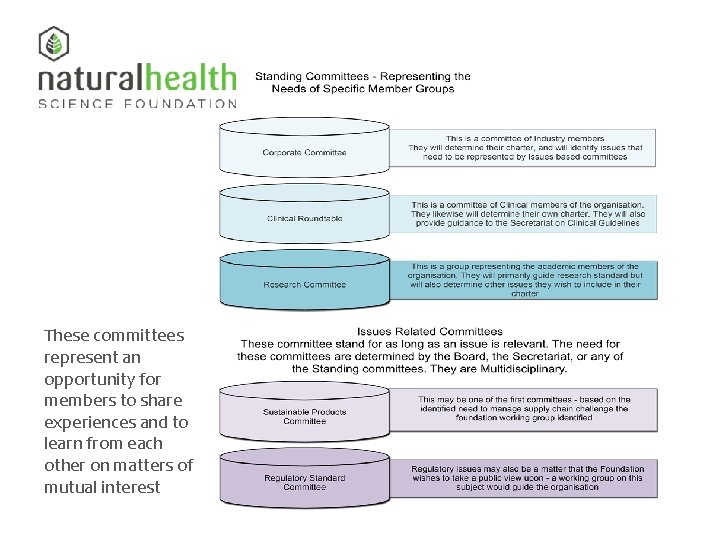
These committees represent an opportunity for members to share experiences and to learn from each other on matters of mutual interest
Corporate Advisory Committee – Multidisciplinary Approach only • • The Committee of Corporate Advisors is a forum composed of the wide and varied range of member companies committed to driving higher standards within the natural medicine industry. The objectives of the Corporate Advisory Committee are to: – Advise the Board in all industry matters related to the NHSF – Drive higher standard relating to natural health products – The committee will refine and determine its charter over time – The committee will also make recommendations to the board regarding the formation of Issues Based committees which require input from a wide range of members • • • The Committee members are selected from member companies. It is envisaged that there would be a maximum of 20 members at any given time, and there would be a structured process for nomination and election to the committee. The committee chair will be a member of Board of Directors with subject matter expertise, and will be nominated by the board The committee must represent both large and small member companies, and represent all markets globally Only one representative from each member company can be a member of the Corporate Advisory committee at any given time Ultimately, members will be elected for a 3 year term with 1/3 of the membership retiring each year. Retiring Members may stand for re-election
Research Committee • • • The objectives of the Research Committee are to: – Advise the Board in all scientific matters related to the NHSF – Further research methodologies relating to natural health products – Provide recommendations for research standards in the natural health arena – The committee will refine and determine its charter over time – The committee will also make recommendations to the board regarding the formation of Issues Based committees which require input from a wide range of members The Committee members are engaged in research in an academic or institutional setting The composition of the committee is global The committee chair will be a member of Board of Directors with subject matter expertise, and will be nominated by the board Over the long term – this is likely to be a large committee in order to ensure representation from all geographic areas as well as all areas of research practice. The number could in time approach 100 members, but it is envisaged that they would initially have 15 -20

Clinical Roundtable • The objectives of the Clinical Roundtable are to: – – • • Advise the Board in all clinical matters related to the NHSF Work with the secretariat to develop best practice guidelines The committee will also refine and determine its charter over time The committee will also make recommendations to the board regarding the formation of Issues Based committees which require input from a wide range of members The Committee members are engaged in clinical practice of integrative medicine (or using natural therapies) The composition of the committee is global A committee chair will be appointed by the Board for a three year term and will also hold a position on the Board of Directors The size of this committee with be determined by the chair
Issues Based Committees • The formation of Issues Based committees will be approved by the Board on the recommendation of the Chair of a Standing Committee or the CEO • It is suggested that initial Issues based committees may be a Sustainable Products Committee and a Regulatory Standard Committee, but these are presented as conceptual examples rather than firm recommendations. The formation of Issues based committees will be driven by a real policy need which requires input from a broad range of members. • The committees will stand as long as the issue requires; a Chair will be appointed who will report to the CEO of the Secretariat. There is no board position associated with chairmanship of these committees.
Board of Directors General • Term of Office – The Directors should be appointed for a term of 3 years, ultimately, with one-third of director retiring each year. The founding directors may be asked to take longer initial terms on the Board so the organisation can become well established under consistent leadership. This would mean there would be no retirements until year 3, when 1/3 would retire and either be replaced or stand for re-election – Foundation members should be well represented to the first board • Number of Positions on the Board – The number of board positions can be expected to vary over time. An ideal number of 12 -15 should be considered.
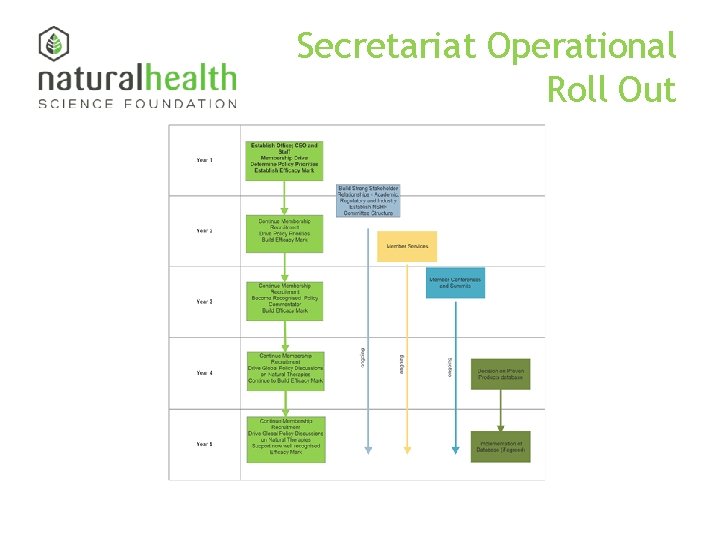
Secretariat Operational Roll Out

MEMBERSHIP STRUCTURE
Overall Direction of the Organisation Committee Decision Point #1 Do you want an organisation that is an Industry-Led Organisation? Or Do you want an organisation that is truly multidisciplinary?
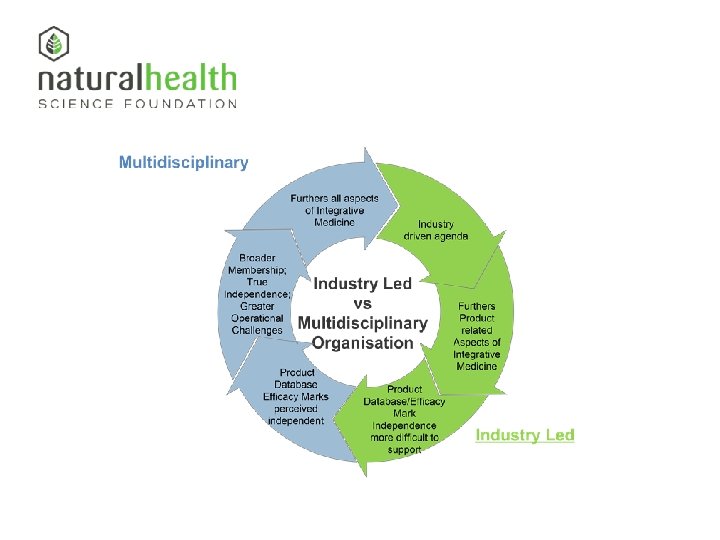
Multidisciplinary vs Industry-Led How are they Different Multidisciplinary • Full membership will be open to all interest group (eg Researchers, Institutions, Consumer Groups, and Industry) • The Board will represent all groups equally • All groups influence policy and industry has no greater say than any other group. • The development of an information source such as a database or Efficacy Mark will have a greater degree of perceived independence • There will be a need to focus activities on areas of agreement • Example – International Osteoporosis Foundation (https: //www. iofbonehealth. org ) • Membership fee structure will reflect orientation Industry-Led • Industry Members only will be full members. Associate Membership will be available to other interest groups • The Board will primarily represent Industry • Industry drives policy; but other interest groups join in an attempt to influence policy • The development of an information source such as a database or Efficacy Mark will be perceived as being Industry Controlled in an Industry Led organisation • The Organisation can focus on core Industry priorities – with input from other groups • Example – Bio (https: //www. bio. org ) • Membership fee structure will reflect orientation
Multidisciplinary vs Industry-Led How are they the Same • NHSF Vision and Mission can be achieved • The organisation can be a recognised international authority – regardless of orientation • All interest groups can be involved • Secretariat Structure and activities unlikely to differ • Committee Structures unlikely to differ (except at Board level)
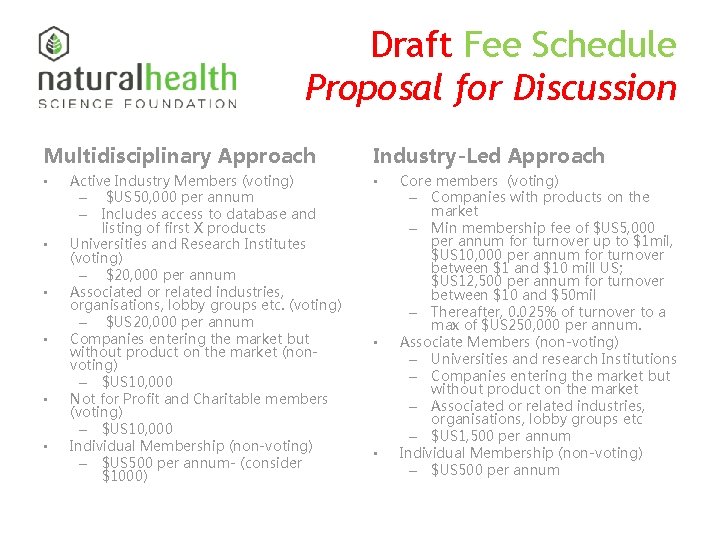
Draft Fee Schedule Proposal for Discussion Multidisciplinary Approach • • • Active Industry Members (voting) – $US 50, 000 per annum – Includes access to database and listing of first X products Universities and Research Institutes (voting) – $20, 000 per annum Associated or related industries, organisations, lobby groups etc. (voting) – $US 20, 000 per annum Companies entering the market but without product on the market (nonvoting) – $US 10, 000 Not for Profit and Charitable members (voting) – $US 10, 000 Individual Membership (non-voting) – $US 500 per annum- (consider $1000) Industry-Led Approach • • • Core members (voting) – Companies with products on the market – Min membership fee of $US 5, 000 per annum for turnover up to $1 mil, $US 10, 000 per annum for turnover between $1 and $10 mill US; $US 12, 500 per annum for turnover between $10 and $50 mil – Thereafter, 0. 025% of turnover to a max of $US 250, 000 per annum. Associate Members (non-voting) – Universities and research Institutions – Companies entering the market but without product on the market – Associated or related industries, organisations, lobby groups etc – $US 1, 500 per annum Individual Membership (non-voting) – $US 500 per annum

INDUSTRY LED STRUCTURE
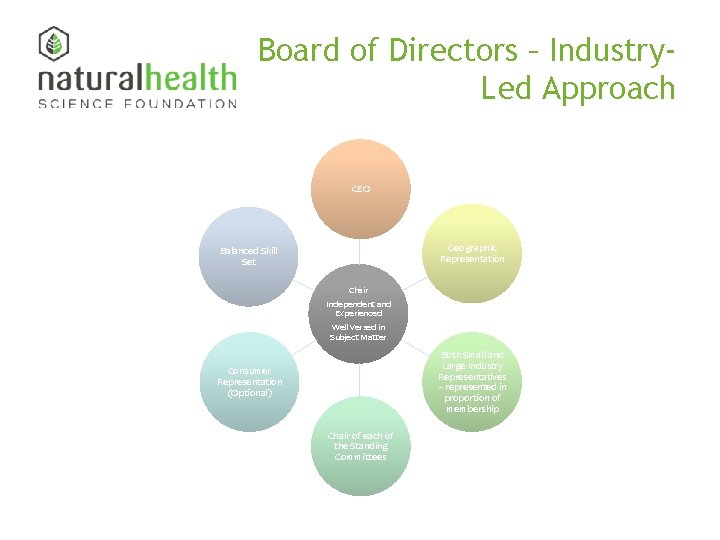
Board of Directors – Industry. Led Approach CEO Geographic Representation Balanced Skill Set Chair Independent and Experienced Well versed in Subject Matter Both Small and Large Industry Representatives – represented in proportion of membership Consumer Representation (Optional) Chair of each of the Standing Committees
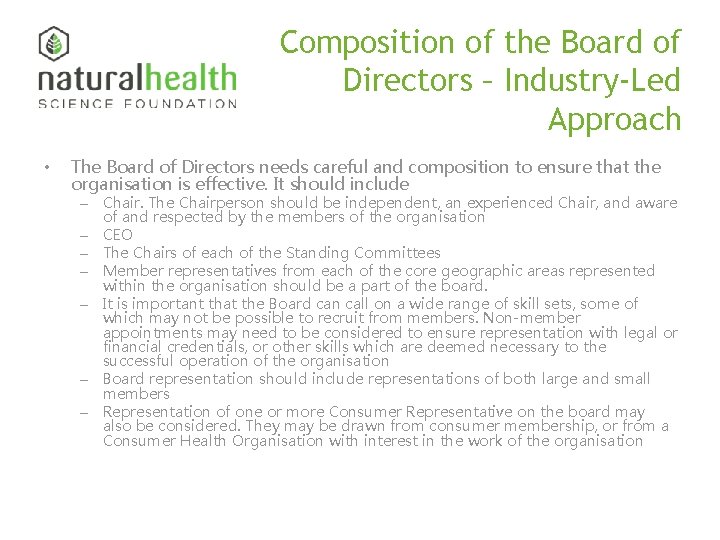
Composition of the Board of Directors – Industry-Led Approach • The Board of Directors needs careful and composition to ensure that the organisation is effective. It should include – Chair. The Chairperson should be independent, an experienced Chair, and aware of and respected by the members of the organisation – CEO – The Chairs of each of the Standing Committees – Member representatives from each of the core geographic areas represented within the organisation should be a part of the board. – It is important that the Board can call on a wide range of skill sets, some of which may not be possible to recruit from members. Non-member appointments may need to be considered to ensure representation with legal or financial credentials, or other skills which are deemed necessary to the successful operation of the organisation – Board representation should include representations of both large and small members – Representation of one or more Consumer Representative on the board may also be considered. They may be drawn from consumer membership, or from a Consumer Health Organisation with interest in the work of the organisation
Membership – Industry- Led Approach
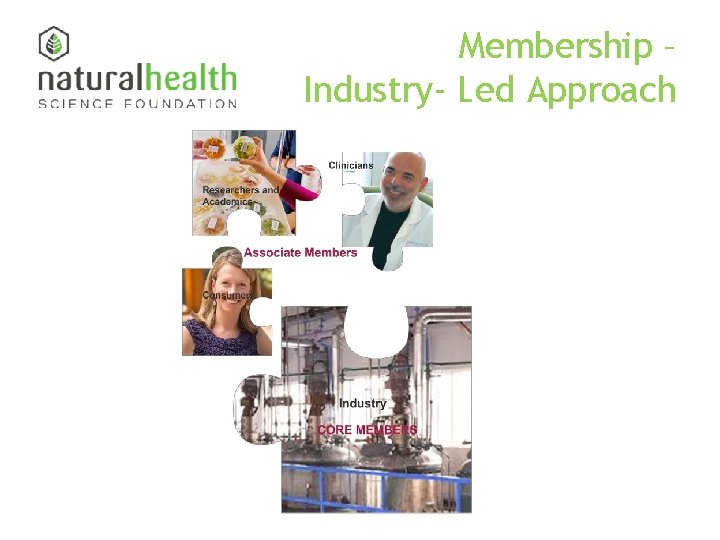
Membership – Industry Led- Approach • Core Members are Industry • Fees are allocated on a model of Turnover and Staff numbers • Associate (non-voting) membership is available to other interest groups – Integrative Medicine Practitioners/ Clinicians – Leaders in the Natural Products Industry – Consumers / Individuals

MULTIDISCIPLINARY STRUCTURE
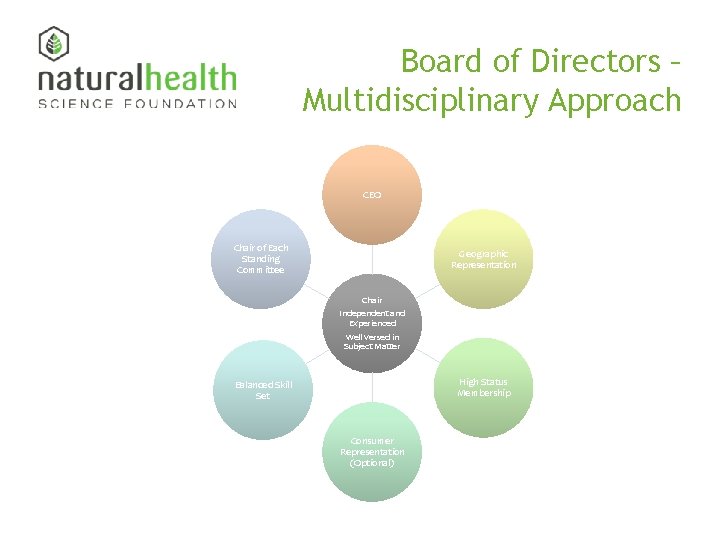
Board of Directors – Multidisciplinary Approach CEO Chair of Each Standing Committee Geographic Representation Chair Independent and Experienced Well versed in Subject Matter High Status Membership Balanced Skill Set Consumer Representation (Optional)
Composition of the Board of Directors - Multidisciplinary Approach • The Board of Directors needs careful and composition to ensure that the organisation is effective. It should include – Chair. The Chairperson should be independent, an experienced Chair, and aware of and respected by the members of the organisation – CEO – The Chairs of each of the Standing Committees – Member representatives from each of the core geographic areas represented within the organisation should be a part of the board. These do not need to be unique positions, eg – if the Chair of a Standing Committee was from India, they would also represent India on the board. The aim would be to ensure there are no major geographic gaps in the representation – It is important that the Board can call on a wide range of skill sets, some of which may not be possible to recruit from members. Non-member appointments may need to be considered to ensure representation with legal or financial credentials, or other skills which are deemed necessary to the successful operation of the organisation – Representation of one or more Consumer Representative on the board may also be considered. They may be drawn from consumer membership, or from a Consumer Health Organisation with interest in the work of the organisation
Membership– Multidisciplinary Approach
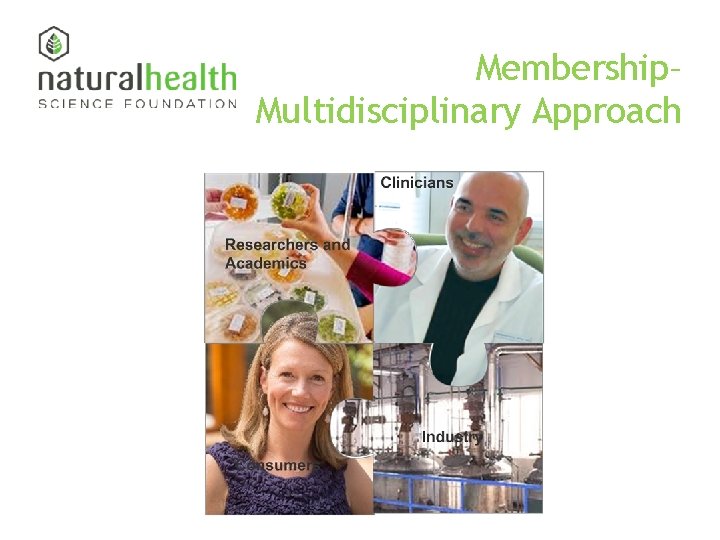
Membership – Multidisciplinary Approach • There will be 4 Main Classes of Member – – The Natural Products Research Community Integrative Medicine Practitioners/ Clinicians Leaders in the Natural Products Industry Consumers / Individuals • Fees will vary by class of membership

RECOMMENDATION
Recommendation on Structure : Adopt a Multidisciplinary Approach for the NHSF Rationale • The organisation needs to be recognised as independent in its thinking in order for this organisation to truly further the role of natural medicines in the clinical management of common conditions, to raise the standards and to be able to develop the independent thought leadership needed to advance the credibility of the sector • The greatest change can be made if all interests are represented equally by the organisation; and this can only be achieved with a multidisciplinary model
- Slides: 34