
NH Context Why WorkBased Learning WBL and Apprenticeships
NH Context: Why Work-Based Learning (WBL) and Apprenticeships? WBL Apprenticeships Goals Going Forward
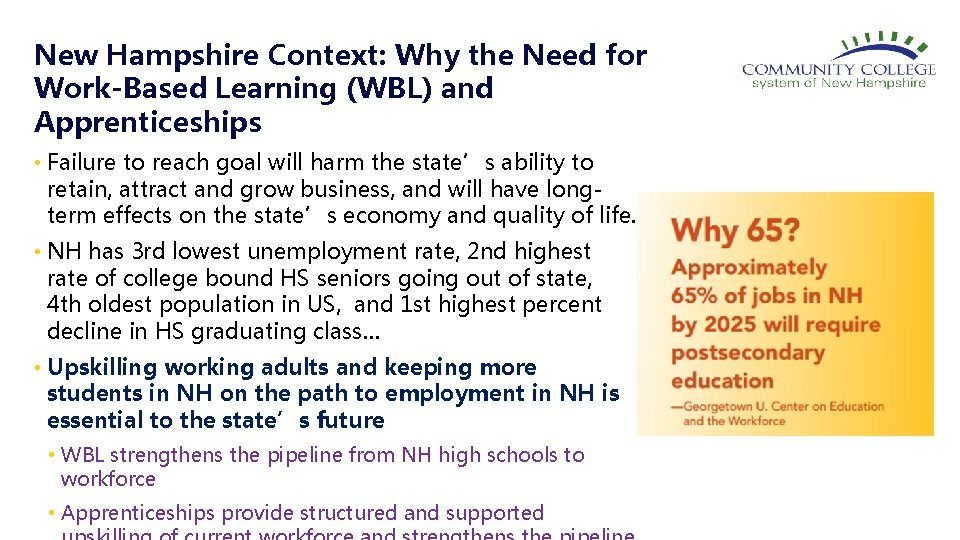
New Hampshire Context: Why the Need for Work-Based Learning (WBL) and Apprenticeships • Failure to reach goal will harm the state’s ability to retain, attract and grow business, and will have longterm effects on the state’s economy and quality of life. • NH has 3 rd lowest unemployment rate, 2 nd highest rate of college bound HS seniors going out of state, 4 th oldest population in US, and 1 st highest percent decline in HS graduating class… • Upskilling working adults and keeping more students in NH on the path to employment in NH is essential to the state’s future • WBL strengthens the pipeline from NH high schools to workforce • Apprenticeships provide structured and supported
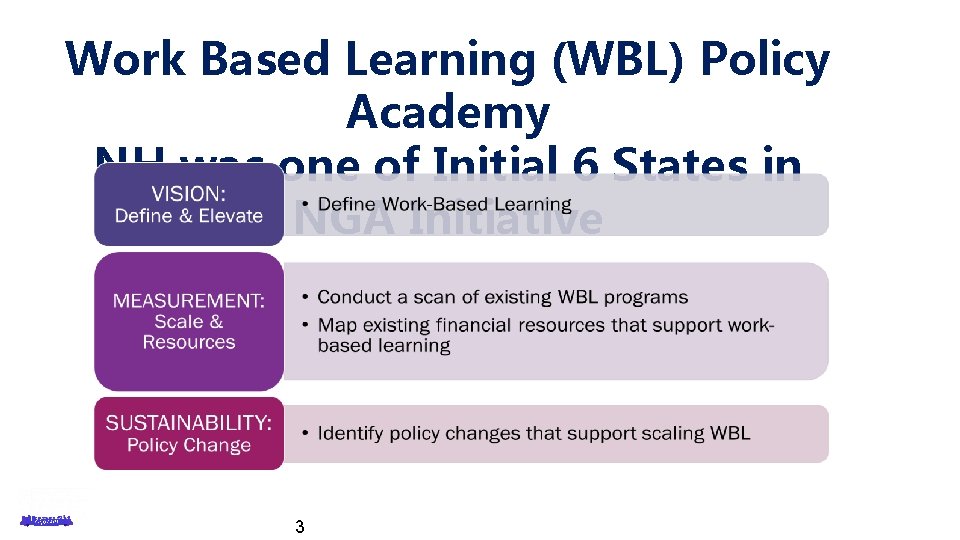
Work Based Learning (WBL) Policy Academy NH was one of Initial 6 States in NGA Initiative 3
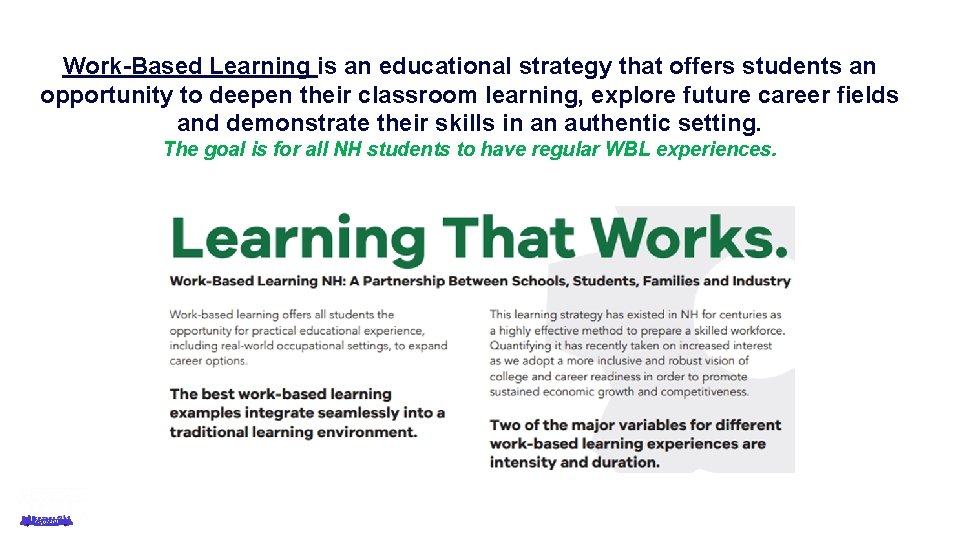
Work-Based Learning is an educational strategy that offers students an opportunity to deepen their classroom learning, explore future career fields and demonstrate their skills in an authentic setting. The goal is for all NH students to have regular WBL experiences.

Work Based Learning includes: Work/Career Awareness, Exploration of Work and Work Experience
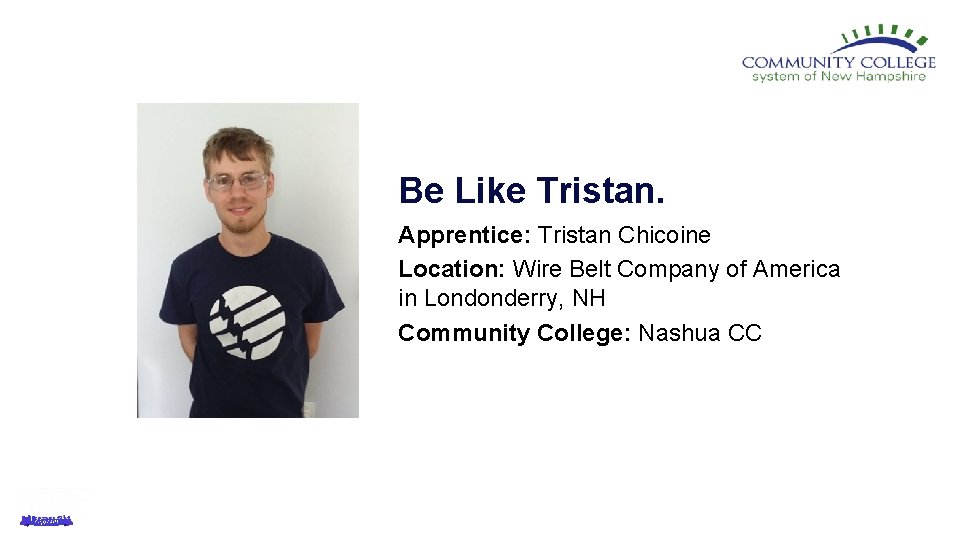
Be Like Tristan. Apprentice: Tristan Chicoine Location: Wire Belt Company of America in Londonderry, NH Community College: Nashua CC
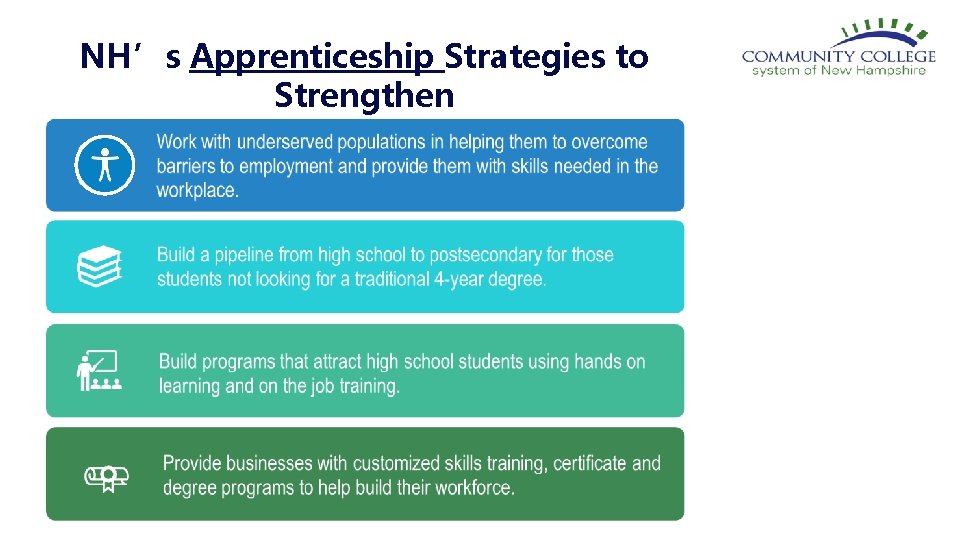
NH’s Apprenticeship Strategies to Strengthen HS to CC to Workforce Pipeline and Fill Skill Gaps
Apprenticeship. NH • Funded by grants from U. S. Department of Labor beginning in 2016 • Focus on helping employers in 5 key industries – Advanced Manufacturing, Healthcare, IT, Hospitality, Construction and Infrastructure • Assist business in developing Registered Apprenticeship (RA) program • Create sustainable system for RA in
Apprenticeship. NH and AACC • Awarded Additional Apprenticeship Funding through AACC in 2019 • Focus on assisting employers in 3 key industries – Auto, Biotechnology, and Healthcare • Works alongside original Do. L grant to leverage resources
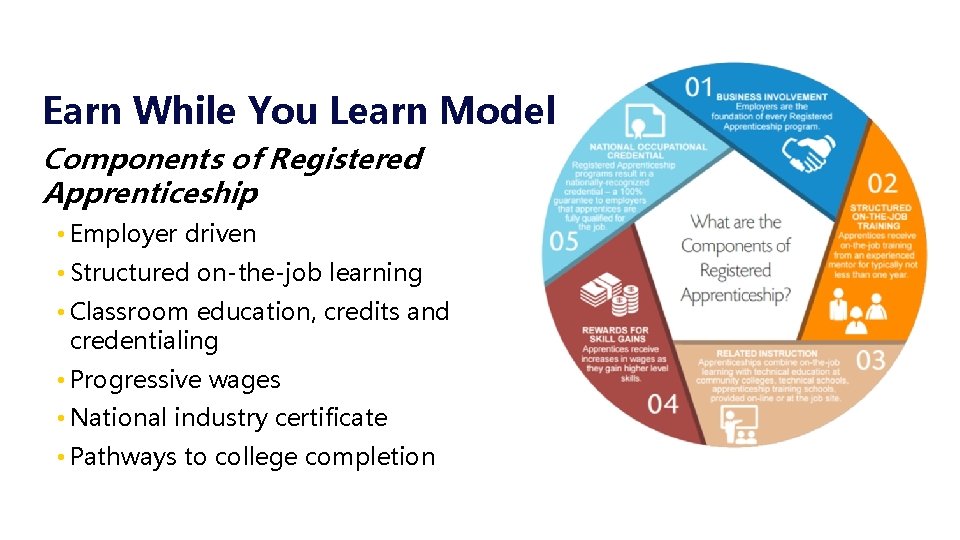
Earn While You Learn Model Components of Registered Apprenticeship • Employer driven • Structured on-the-job learning • Classroom education, credits and credentialing • Progressive wages • National industry certificate • Pathways to college completion
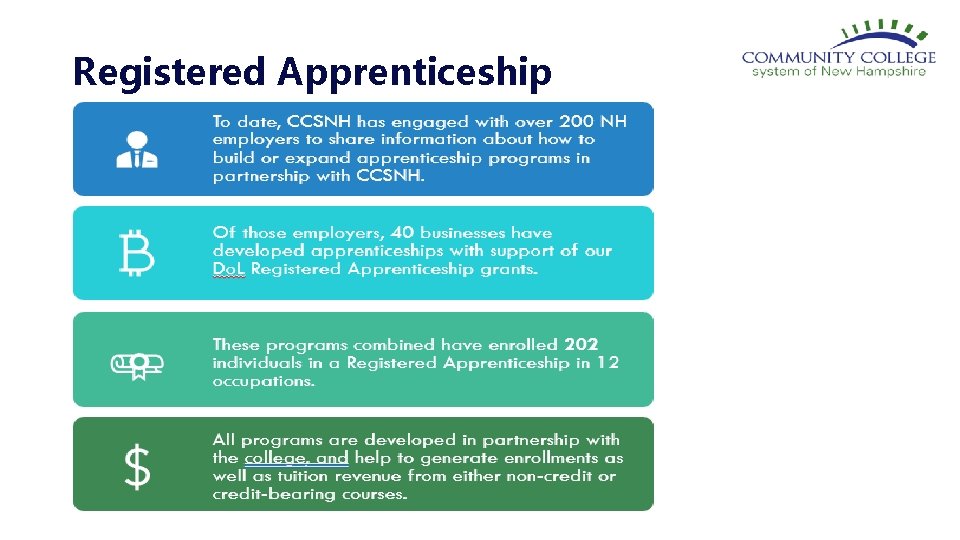
Registered Apprenticeship Progress to Date
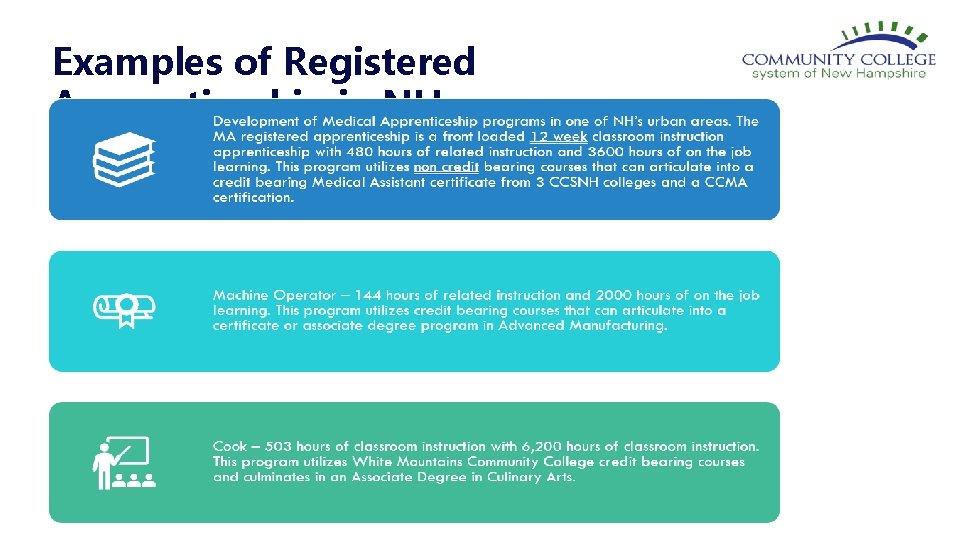
Examples of Registered Apprenticeship in NH
Goals and Future Expected Outcomes • Have each and every NH student, middle school through community college, experience WBL in different ways each year • Further engage teachers/faculty in the development of WBL and Apprenticeship programs • Increase outreach to businesses to participate and to promote WBL and Apprenticeships • Enroll 800 -1000 apprentices in Registered Apprenticeship by 2022 • Increase (1) post-secondary matriculation rates, (2) retention of college goers staying in NH, (3) NH high school and college graduates filling positions in high demand occupations in NH, and (4) adult learners
- Slides: 13