
NGC 660 Disk Kinematics in a Polar Ring
- Slides: 17
NGC 660: Disk Kinematics in a Polar Ring Galaxy Derek Cabone, Rochester Institute of Technology
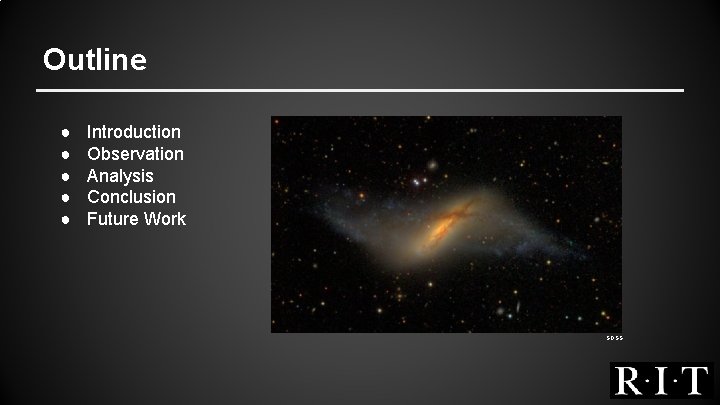
Outline ● ● ● Introduction Observation Analysis Conclusion Future Work SDSS
Goals (for today) ● Does a ring alter the kinematic characteristics of the disk ● Is the central distribution of mass in a polar ring galaxy different from a normal spiral
Observation
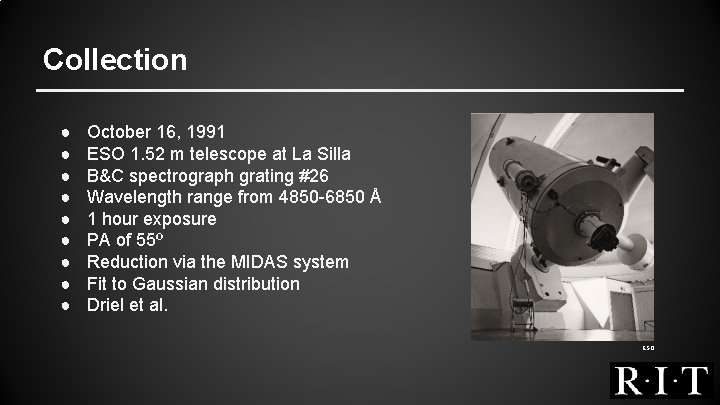
Collection ● ● ● ● ● October 16, 1991 ESO 1. 52 m telescope at La Silla B&C spectrograph grating #26 Wavelength range from 4850 -6850 Å 1 hour exposure PA of 55º Reduction via the MIDAS system Fit to Gaussian distribution Driel et al. ESO
Analysis
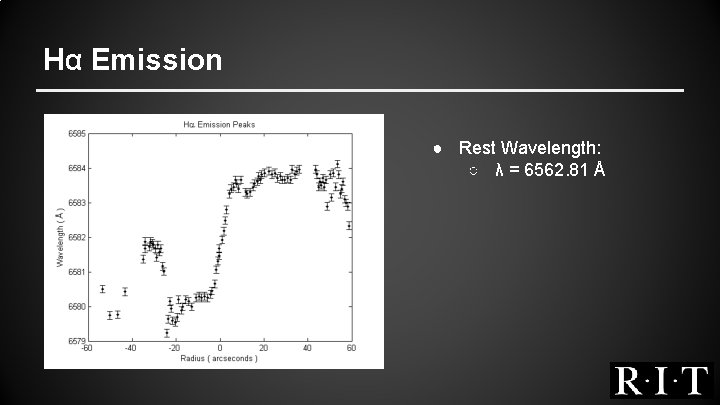
Hα Emission ● Rest Wavelength: ○ λ = 6562. 81 Å
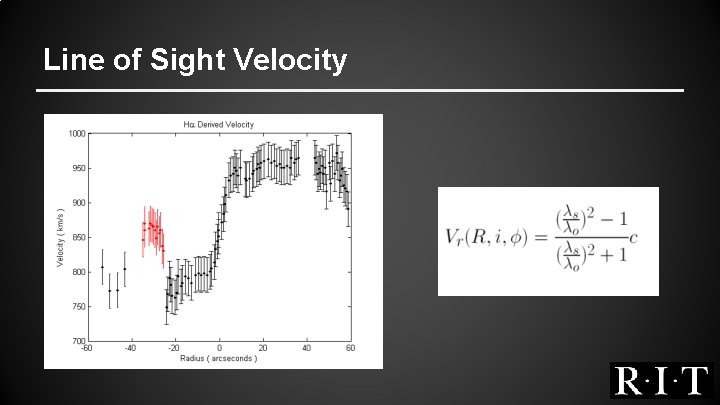
Line of Sight Velocity
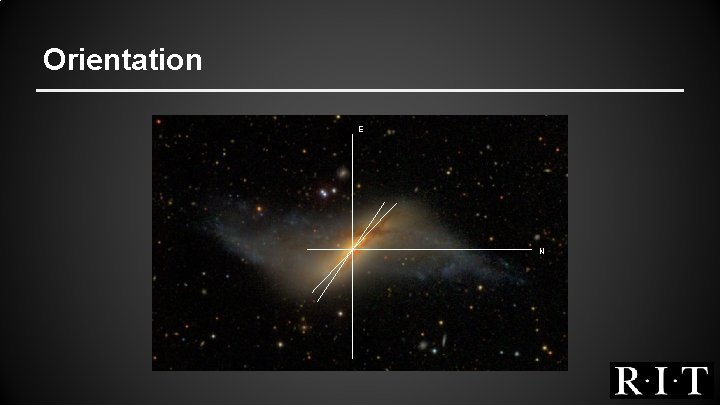
Orientation E N
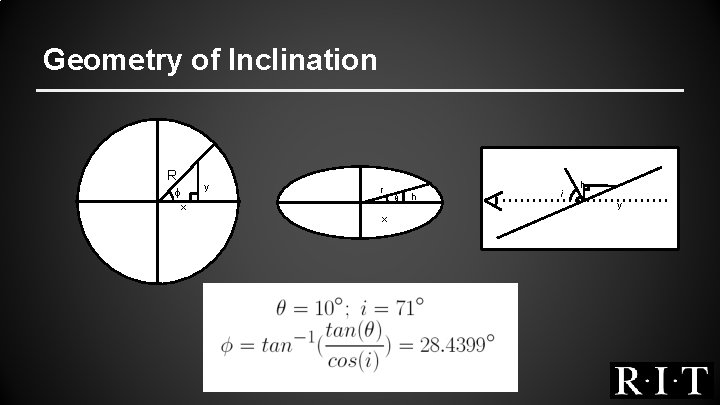
Geometry of Inclination R ϕ y r x x θ h i h y
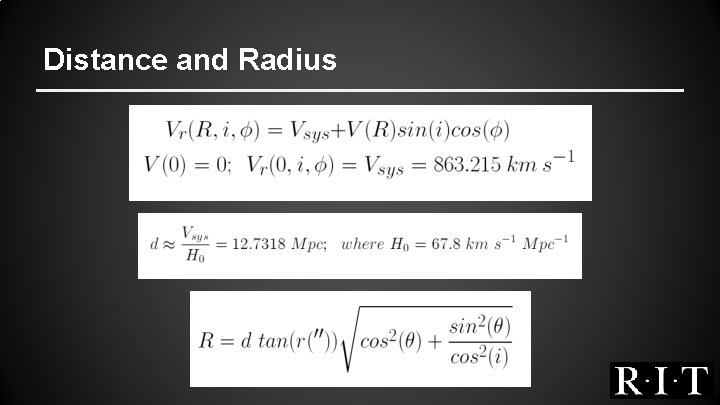
Distance and Radius
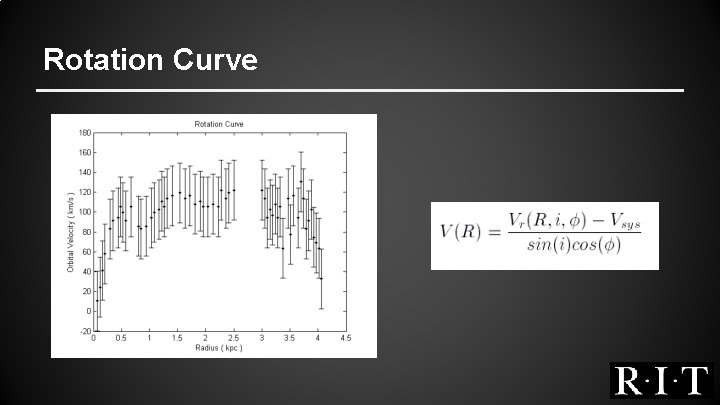
Rotation Curve
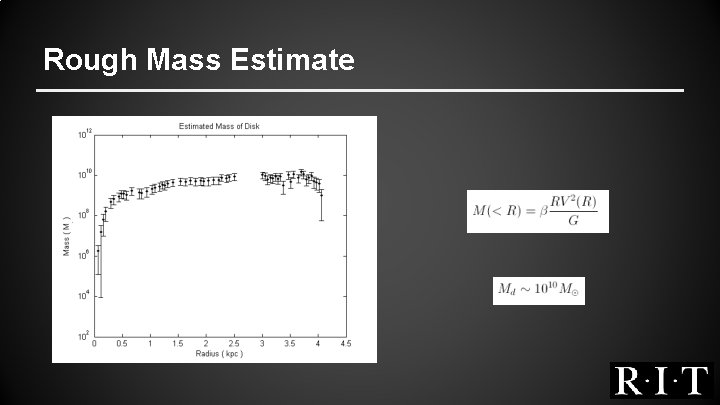
Rough Mass Estimate
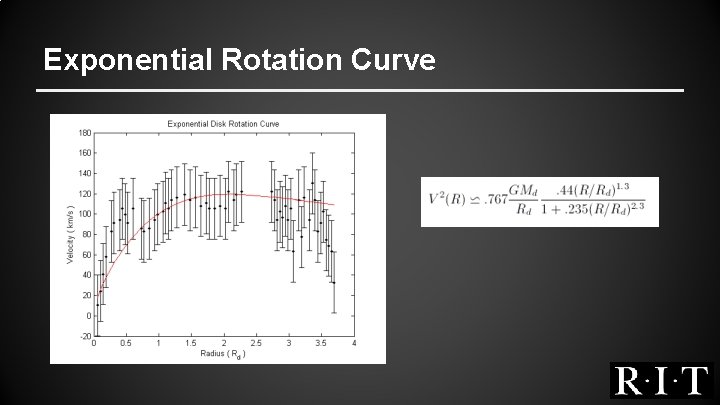
Exponential Rotation Curve
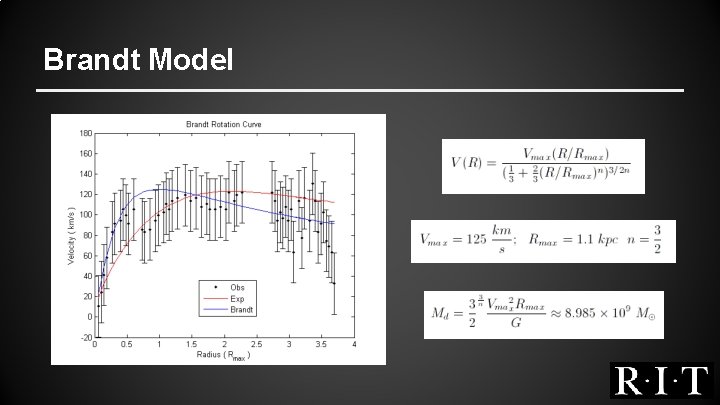
Brandt Model
Discussion ● Designed to characterize highly flattened systems ● Brandt model implies that the rotational velocity declines beyond optical radius ● Generally not true; rotation curve remains flat to observable limit
Future Work ● Observe 21 cm emission to extend radial limit ● Measure rotation curve in polar ring ● Consolidate analysis into three dimensional kinematic profile