
NFS Example WAFL File System The Sun Network
- Slides: 13
NFS � Example: WAFL File System
The Sun Network File System (NFS) � An implementation and a specification of a software system for accessing remote files across LANs (or WANs) � The implementation is part of the Solaris and Sun. OS operating systems running on Sun workstations using an unreliable datagram protocol (UDP/IP protocol and Ethernet
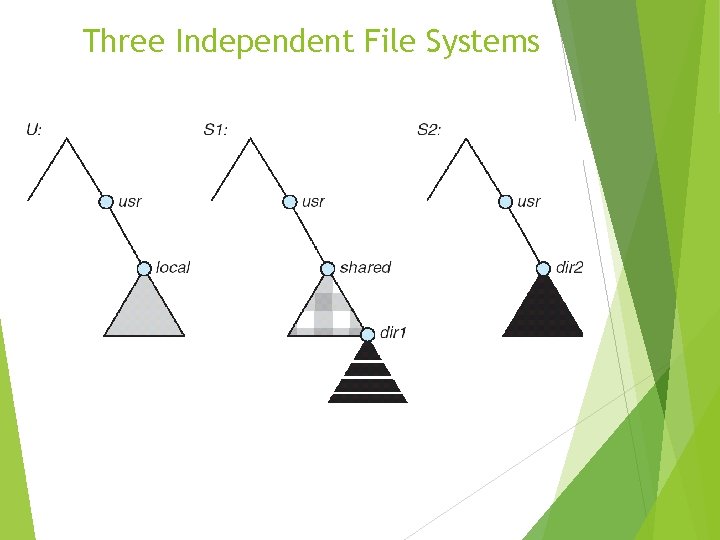
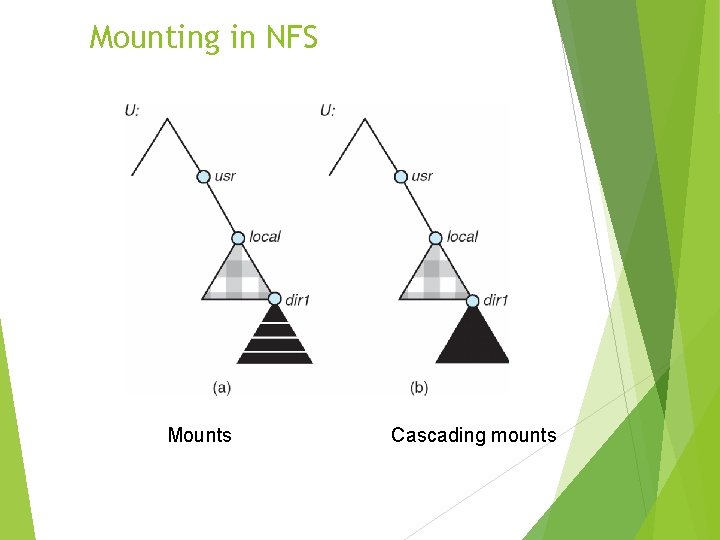
NFS (Cont. ) � Interconnected workstations viewed as a set of independent machines with independent file systems, which allows sharing among these file systems in a transparent manner � A remote directory is mounted over a local file system directory � The mounted directory looks like an integral subtree of the local file system, replacing the subtree descending from the local directory � Specification of the remote directory for the mount operation is nontransparent; the host name of the remote directory has to be provided � Files in the remote directory can then be accessed in a transparent manner � Subject to access-rights accreditation, potentially any file system (or directory within a file system), can be mounted remotely on top of any local directory
NFS (Cont. ) � NFS is designed to operate in a heterogeneous environment of different machines, operating systems, and network architectures; the NFS specifications independent of these media � This independence is achieved through the use of RPC primitives built on top of an External Data Representation (XDR) protocol used between two implementation-independent interfaces � The NFS specification distinguishes between the services provided by a mount mechanism and the actual remote-file-access services
Three Independent File Systems
Mounting in NFS Mounts Cascading mounts
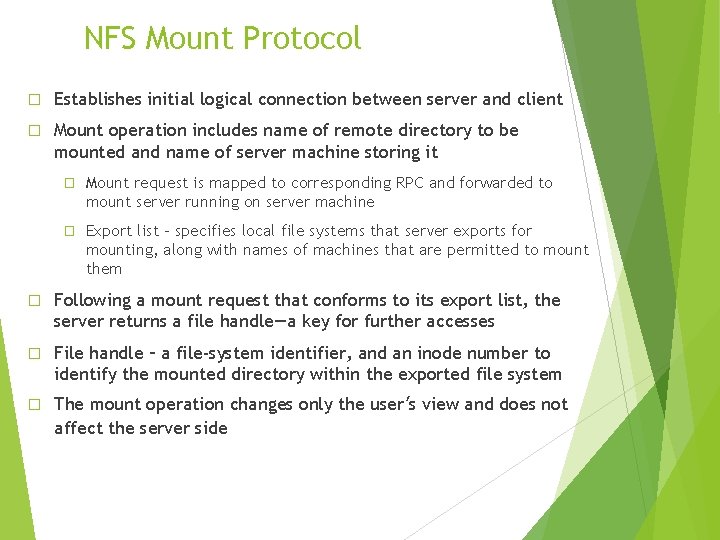
NFS Mount Protocol � Establishes initial logical connection between server and client � Mount operation includes name of remote directory to be mounted and name of server machine storing it � Mount request is mapped to corresponding RPC and forwarded to mount server running on server machine � Export list – specifies local file systems that server exports for mounting, along with names of machines that are permitted to mount them � Following a mount request that conforms to its export list, the server returns a file handle—a key for further accesses � File handle – a file-system identifier, and an inode number to identify the mounted directory within the exported file system � The mount operation changes only the user’s view and does not affect the server side
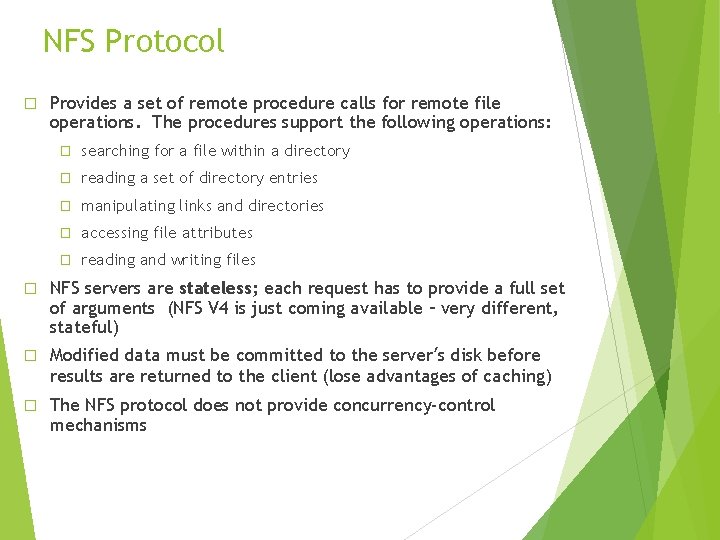
NFS Protocol � Provides a set of remote procedure calls for remote file operations. The procedures support the following operations: � searching for a file within a directory � reading a set of directory entries � manipulating links and directories � accessing file attributes � reading and writing files � NFS servers are stateless; each request has to provide a full set of arguments (NFS V 4 is just coming available – very different, stateful) � Modified data must be committed to the server’s disk before results are returned to the client (lose advantages of caching) � The NFS protocol does not provide concurrency-control mechanisms
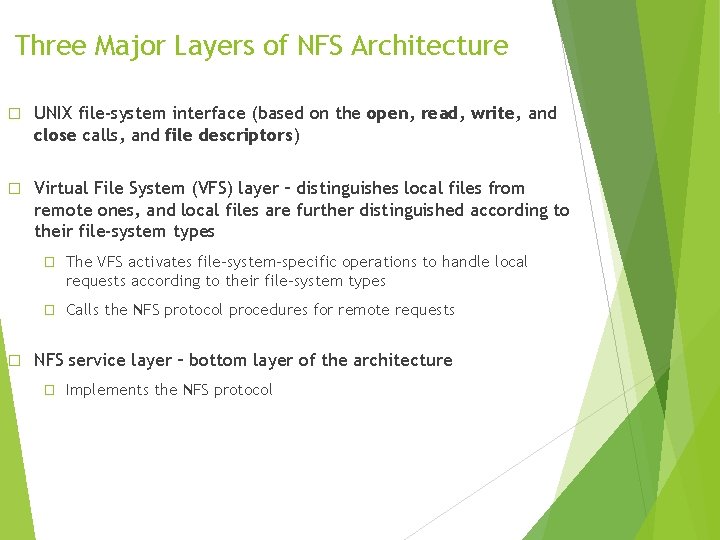
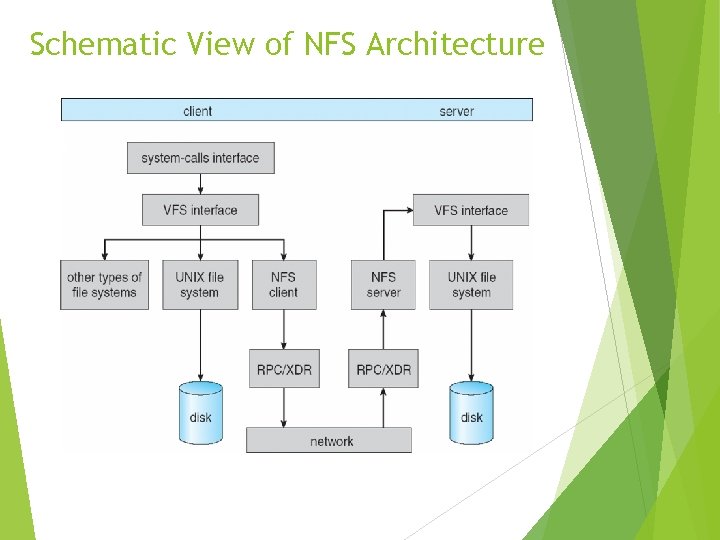
Three Major Layers of NFS Architecture � UNIX file-system interface (based on the open, read, write, and close calls, and file descriptors) � Virtual File System (VFS) layer – distinguishes local files from remote ones, and local files are further distinguished according to their file-system types � � The VFS activates file-system-specific operations to handle local requests according to their file-system types � Calls the NFS protocol procedures for remote requests NFS service layer – bottom layer of the architecture � Implements the NFS protocol
Schematic View of NFS Architecture
NFS Path-Name Translation � Performed by breaking the path into component names and performing a separate NFS lookup call for every pair of component name and directory vnode � To make lookup faster, a directory name lookup cache on the client’s side holds the vnodes for remote directory names
NFS Remote Operations � Nearly one-to-one correspondence between regular UNIX system calls and the NFS protocol RPCs (except opening and closing files) � NFS adheres to the remote-service paradigm, but employs buffering and caching techniques for the sake of performance � File-blocks cache – when a file is opened, the kernel checks with the remote server whether to fetch or revalidate the cached attributes � Cached file blocks are used only if the corresponding cached attributes are up to date � File-attribute cache – the attribute cache is updated whenever new attributes arrive from the server � Clients do not free delayed-write blocks until the server confirms that the data have been written to disk
References � “Operating System Concepts, " by Abraham Silberschatz, et al, 9 th Edition, 2012, John Wiley & Sons Inc. � Operating Systems: A Spiral Approach 1 st Edition by Ramez Elmasri , A Carrick , David Levine