
NFPA 70 E SAFETY TRAINING ELECTRICAL SAFETY PROGRAM




- Slides: 10
NFPA 70 E SAFETY TRAINING ELECTRICAL SAFETY PROGRAM
WHAT DOES ELECTRICAL SAFETY LOOK LIKE IN YOUR ORGANIZATION?
ELECTRICAL SAFETY PROGRAM PRINCIPLES • Inspecting and evaluation electrical equipment • Maintaining the electrical equipment’s insulation and enclosure integrity • Planning every job and document first-time procedures • De-energizing, if possible • Anticipating unexpected events
ELECTRICAL SAFETY PROGRAM PRINCIPLES • Identifying the electrical hazards and reduce the associated risk • Protecting employees from shock, burn, blast, and other hazards due to the working environment • Using the right tools for the job • Assessing people’s abilities • Auditing the principles
TYPICAL ELECTRICAL SAFETY PROGRAM CONTROLS • Employer develops the programs, including training, and the employees apply them • Employees are trained to be qualified to work in an environment influenced by the presence of electrical energy • Procedures are to be used to identify electrical hazards and to develop plans to eliminate those hazards or to control the associated risk for those hazards that cannot be eliminated • Every electrical conductor or circuit part is considered energized until proved otherwise
TYPICAL ELECTRICAL SAFETY PROGRAM CONTROLS • De-energizing an electrical conductor or circuit part and making it safe to work on is a potentially hazardous task • Tasks to be performed on or near exposed energized electrical conductors and circuit parts are to be identified and categorized • Precautions appropriate to the working environment are to be determined and taken • A logical approach is to be used to determine the associated risk with each task
TYPICAL SAFETY PROGRAM PROCEDURES • Purpose of task • Qualifications and number of employees to be involved • Identifications of hazards and assessment of risks of the task • Limits of approach • Safe work practices to be used • Personal protective equipment involved • Insulating materials and tools involved
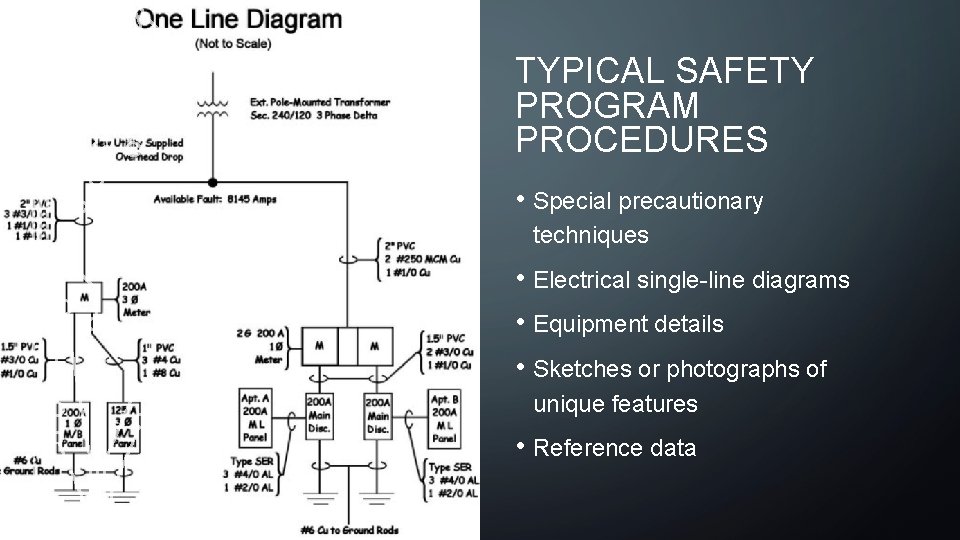
TYPICAL SAFETY PROGRAM PROCEDURES • Special precautionary techniques • Electrical single-line diagrams • Equipment details • Sketches or photographs of unique features • Reference data
WORKPLACE ASSESSMENT • Complete the Electrical Safety Program Checklist • Opportunities for improvement?
QUESTIONS?