
Nez Perce Tribe Resident Fish Substitution Program Proposal
Nez Perce Tribe Resident Fish Substitution Program Proposal #199501300 Tod Sween - Project Leader Nez Perce Tribe Department of Fisheries Resources Management 1/10/2022
Authorization • 1995 NPPC Fish & Wildlife Program – Measure 10. 8 D. 1 authorized BPA to fund Resident Fish Substitution actions for the Dworshak blocked area. – Measure 10. 8 D. 2 authorized NPT to develop, maintain, monitor, stock and manage 2 existing ponds and 6 to twelve new fish ponds. 1/10/2022
Authorization • 2000 NPPC Fish & Wildlife Program – Section C. 2. a. 2: defines a Resident Fish Substitution biological performance objective to “. . . administer and increase opportunities for consumptive and non-consumptive resident fisheries for native, introduced, wild and hatchery-reared stocks that are compatible with the continued persistence of native fish species (includes intensive fisheries within closed or isolated systems). ” 1/10/2022
NPPC 2000 Resident Fish Substitution Policy • 2000 Fish and Wildlife Program--Technical Appendix Part One, Section D. – The substitution of resident fish to make up for losses of anadromous fish in areas now permanently blocked to salmon and steelhead reflects the Council’s resolve to address complex, long-term problems. 1/10/2022
NPPC 2000 Resident Fish Substitution Policy (cont. ) – Historical records show that the Columbia Basin Indian Tribes relied extensively on salmon and steelhead, and that the permanent loss of these resources had incalculable impacts on Tribal economies, cultures and religions. 1/10/2022
Needs identified in the 2001 Clearwater Subbasin Summary • Develop catchable fish ponds in the subbasin to provide fishing opportunities. Catchable fish ponds are needed to provide opportunity as more restrictive regulations are implemented to protect native fish species. They are also needed as resident fish substitution to partially mitigate for loss of anadromous fish caused by the permanent blockage at Dworshak Dam 1/10/2022 (p. 248).
2001 Clearwater Subasin Sum HGMP Appendix Excerpts • Sec. 2. 1. This project strives to match the resident species stocked, quantity stocked, and the timing of stocking according to the isolated pond environment in which it is placed and targeted harvest activity. • Sec. 5. 3. Stocking fish into confined pond systems minimizes the risk of interaction (genetic, competition) with native stocks. Stocked fish are from certified disease-free 1/10/2022 sources.
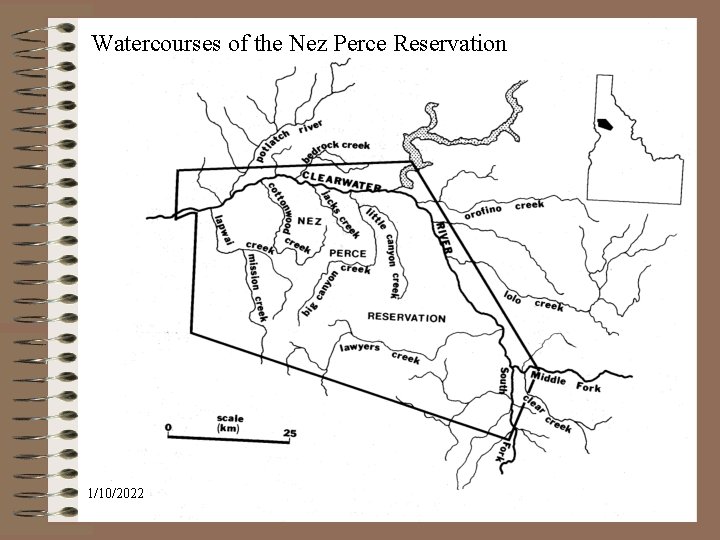
Watercourses of the Nez Perce Reservation 1/10/2022
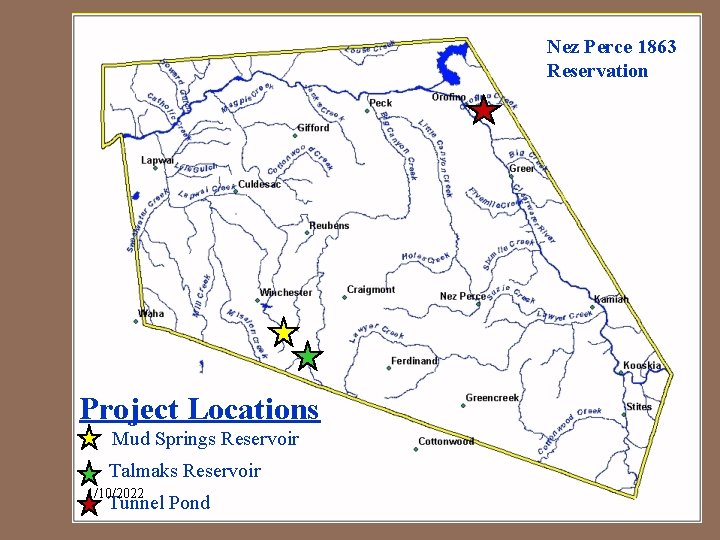
Nez Perce 1863 Reservation Project Locations Mud Springs Reservoir Talmaks Reservoir 1/10/2022 Tunnel Pond
Objectives • Apply intensive fisheries in isolated pond systems to avoid impacts to native species. • Manage the habitat and fisheries in three existing ponds to support harvest of 4, 750 kg of resident salmonids annually for four of five consecutive years. • Achieve a target harvest rate 0. 5 fish/hr. 1/10/2022
Objectives (continued) • Incorporate suitable warmwater species to complement the seasonal put-and-take rainbow trout fisheries and to help control nuisance species, such as black bullhead in Mud Springs Reservoir. • Complete construction of new facilities in future years to total six to twelve ponds. 1/10/2022
Limiting Factors • Identifying suitable locations for new pond sites. • Small pond eutrophication processes (internal and external nutrient enrichment). • High summer water temperatures, the severity of which varies from year to year. • Seasonally low dissolved oxygen associated with summer water temperatures, winter ice cover and 1/10/2022 respiration.
Mud Springs Reservoir • Restoration Measures – Dam reinforcement – Spillway repair – Deepening – Cattle exclusion fencing 1/10/2022
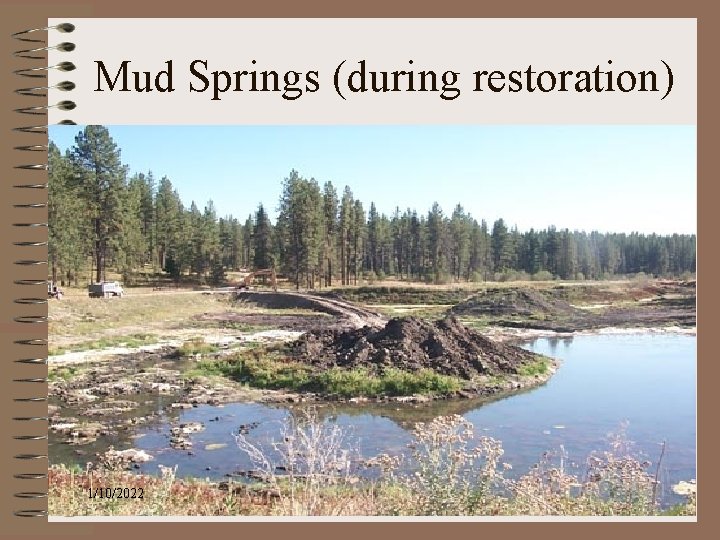
Mud Springs (during restoration) 1/10/2022
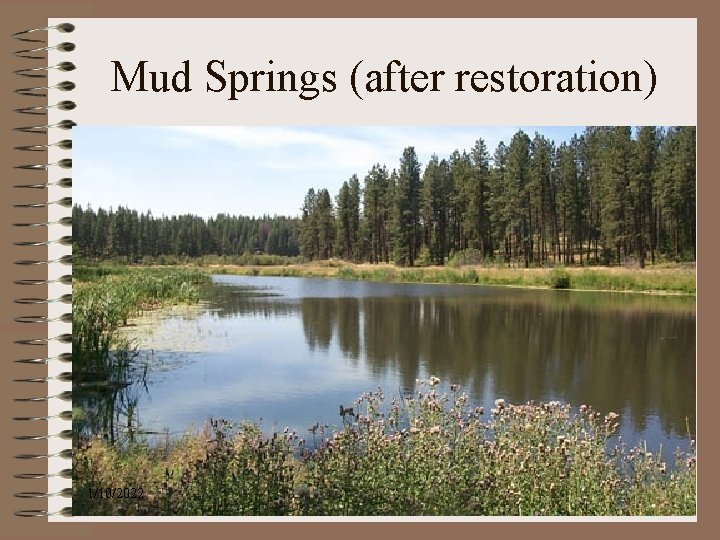
Mud Springs (after restoration) 1/10/2022
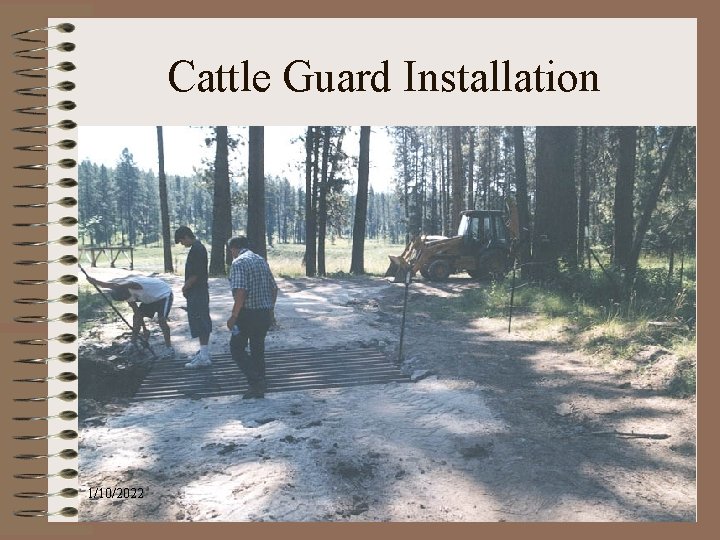
Cattle Guard Installation 1/10/2022
Talmaks Reservoir • Restoration Measures – Dam reinforcement – Deepening – Silt retention ponds – Cattle exclusion fencing 1/10/2022
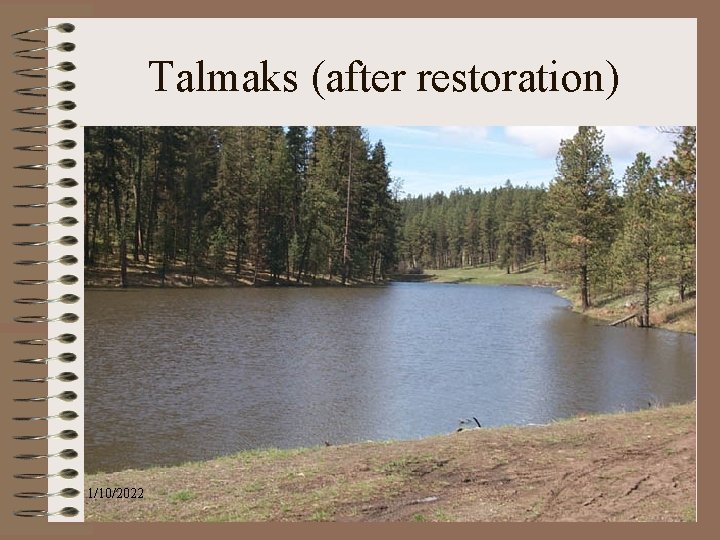
Talmaks (after restoration) 1/10/2022
Tunnel Pond • Construction Measures – Site clean-up and reclamation – Design – Deepening • Operational Highlights – Public fishing opportunity close to town – easy access for youths, seniors and impaired in a family-oriented setting – Wildlife benefits and viewing 1/10/2022
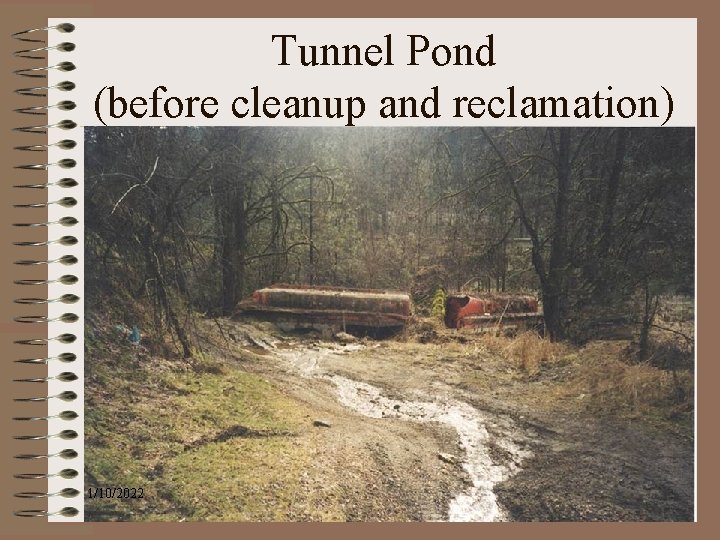
Tunnel Pond (before cleanup and reclamation) 1/10/2022
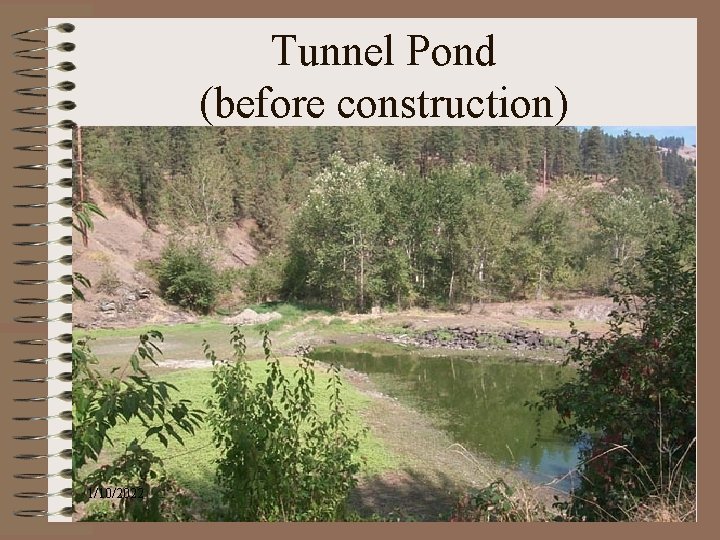
Tunnel Pond (before construction) 1/10/2022
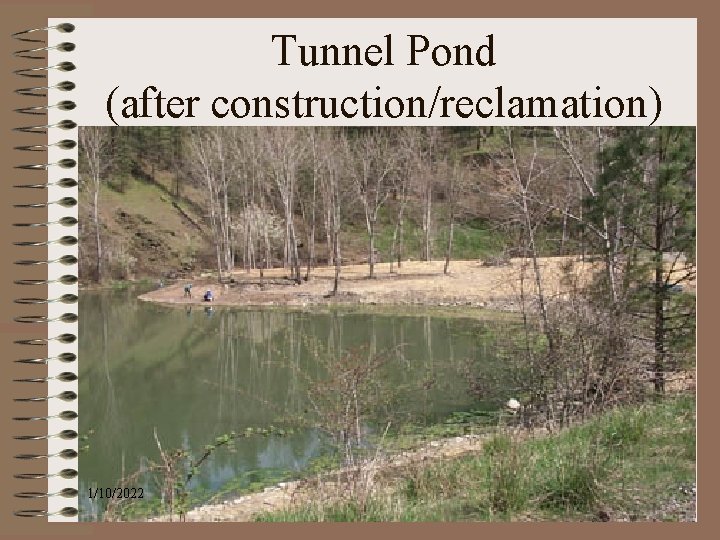
Tunnel Pond (after construction/reclamation) 1/10/2022
Management Approach • Intensive put-and-take trout fisheries in confined pond systems that avoid impacts to native species • Warmwater spp. to help control nuisance fish spp. and to provide supplementary fishing during seasonally marginal water quality conditions • Watershed (BMP), pond perimeter and structural measures to improve/protect water quality 1/10/2022
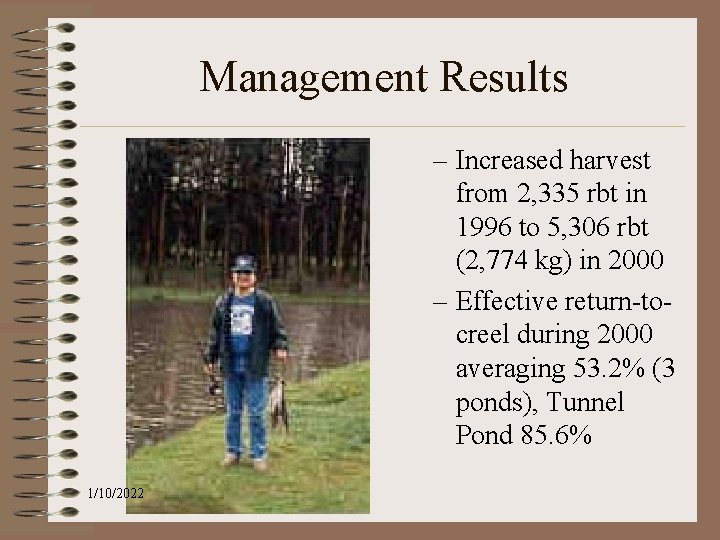
Management Results – Increased harvest from 2, 335 rbt in 1996 to 5, 306 rbt (2, 774 kg) in 2000 – Effective return-tocreel during 2000 averaging 53. 2% (3 ponds), Tunnel Pond 85. 6% 1/10/2022
Data Collection Monitoring and Evaluation • Environmental – Water quality – Habitat quantity • Biological – Fish stocking records – Fish growth and condition – Population structure • Fisheries – Fisher effort, harvest rate and total harvest 1/10/2022
Future Direction • Refine management of existing sites. • Construction and management of new pond facilities (e. g. , in eastern portion of reservation). • Potential management of additional facilities obtained through acquisition. • Restoration and management of a naturalized stream fishery in the Deer 1/10/2022 Creek watershed.
- Slides: 26