
Next Generation Switching Explored Tom Vande Water Regional
- Slides: 22
Next Generation Switching Explored Tom Vande. Water Regional Sales Director (510) 748 -8239
Agenda • • Introductions Where the industry is today Defining “Next Generation Switching” Next Generation Switching – Elements – Requirements • Emerging services • Case study and conclusion
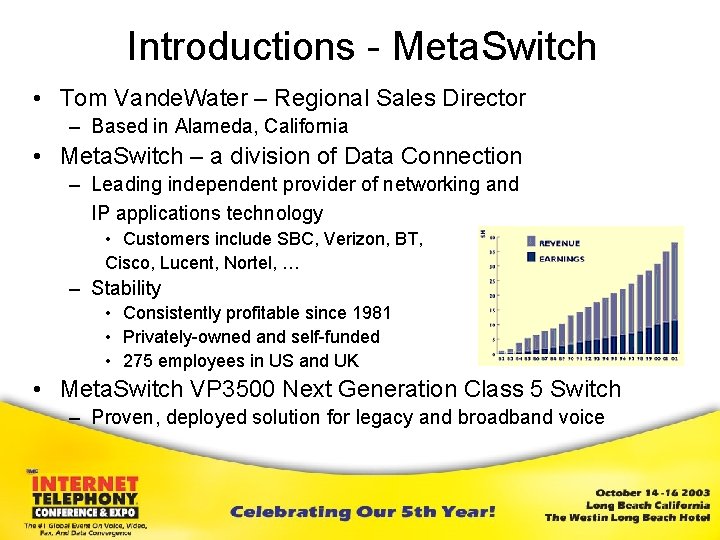
Introductions - Meta. Switch • Tom Vande. Water – Regional Sales Director – Based in Alameda, California • Meta. Switch – a division of Data Connection – Leading independent provider of networking and IP applications technology • Customers include SBC, Verizon, BT, Cisco, Lucent, Nortel, … – Stability • Consistently profitable since 1981 • Privately-owned and self-funded • 275 employees in US and UK • Meta. Switch VP 3500 Next Generation Class 5 Switch – Proven, deployed solution for legacy and broadband voice
IP Telephony – The First Wave • Offload of long-distance traffic on IP backbones – – Packet-based Class 4 switches Relatively simple, proven, reliable technology “Infinite bandwidth” backbone solves quality issues Business justification in toll bypass • Enterprise voice networks – IP phones / IP Centrex – Drivers • Reduced enterprise management costs • Advanced features
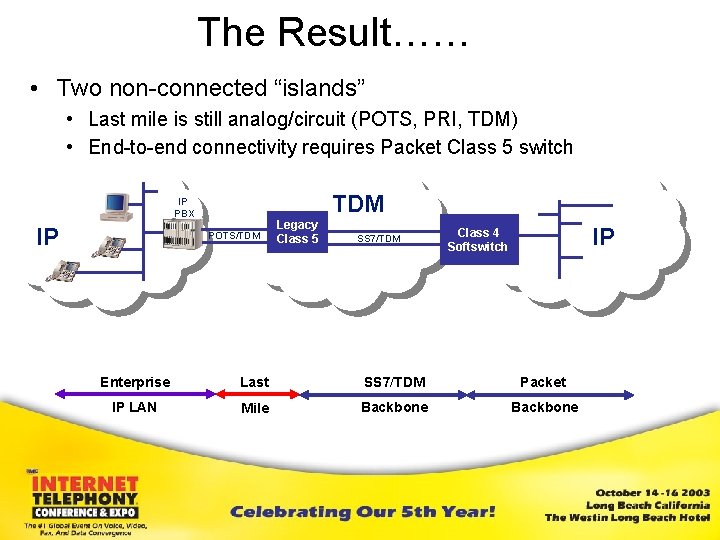
The Result…… • Two non-connected “islands” • Last mile is still analog/circuit (POTS, PRI, TDM) • End-to-end connectivity requires Packet Class 5 switch TDM IP PBX IP POTS/TDM Legacy Class 5 SS 7/TDM IP Class 4 Softswitch Enterprise Last SS 7/TDM Packet IP LAN Mile Backbone
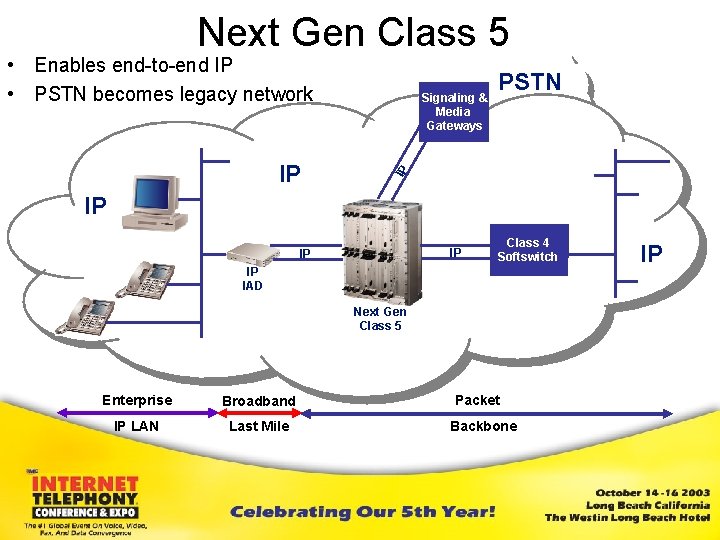
Next Gen Class 5 • Enables end-to-end IP • PSTN becomes legacy network PSTN IP IP Signaling & Media Gateways IP IP IP Class 4 Softswitch IP IAD Next Gen Class 5 Enterprise Broadband IP LAN Last Mile Packet Backbone IP
Next Gen Class 5 Switches Today • Service providers announcing true Class 5 replacements • Growth in Vo. IP over Cable • Successful CLECs deploying next-gen switches to provide a competitive advantage • Service providers bundling voice and data services with next-gen switches
What Is a Next Generation Switch? • Next generation ARCHITECTURE – Broadband interfaces – ATM and/or IP – “Softswitch” or “Hard switch” models • Distributed Softswitch + Media Gateway for larger networks • One-box “hard switch” easier to deploy for smaller carriers • Next generation SERVICES – Enabled by convergence of Web, Internet and Voice technologies – Advanced voice services to IP phones – Integration of web for phone control, messaging, conferencing
What Is a Next Generation Switch? • Migration from today’s network – – PSTN levels of reliability – software is now critical component Traditional services (CLASS, Centrex, 1 -800, voicemail, …) Legacy TDM interfaces (SS 7, MF, GR-303, T 1, …) Ability to “cap and grow” (SS 7 F-links, LNP, tools, …) • Next generation management – Point-and-click GUIs replace hard-to-use command line interface • Let’s identify the next-gen switching elements….
Next Gen Class 5 Switch Elements (1) • Call Agent – Maintains call state and implements call service logic, e. g. , for CLASS services – Often referred to as the “softswitch” • Media Server – Provides media services under CA control (e. g. , MGCP) e. g. , announcements, mixing, transcoding, tone detection/generation, IVR, fax, voice activity detection • Application Server – Provides service logic for applications such as voice mail and conferencing – Uses Call Agent to control resources on media gateways
Next Gen Class 5 Switch Elements (2) • Signaling Gateway – – • Trunk Gateway – – • Interface between IP and SS 7 networks Has protocol interface into Call Agent (e. g. , SS 7 over IP) Transcodes packet voice to/from TDM network Device controlled by Call Agent (e. g. , via MGCP / H. 248) Packet Access Gateway – – – Often omitted – but key distinguishing feature of carrier-class Vo. IP solutions Main function is to protect core network elements from misuse (e. g. , specifying “voice Qo. S” on data packets) Also provides for lawful interception, 3 -way calling, etc.
Requirements For A Next Gen Class 5 • Provide equivalent function to existing switches – – – • Reliability Subscriber services Regulatory and carrier requirements Interoperation with legacy POTS/TDM world Back-office integration Enable seamless migration to “New world” paradigm – – Service creation environment Open protocols for multi-vendor interworking Distributed architecture Packet interfaces (Vo. IP, Vo. ATM) • • Access – Voice over Broadband Backbone trunking
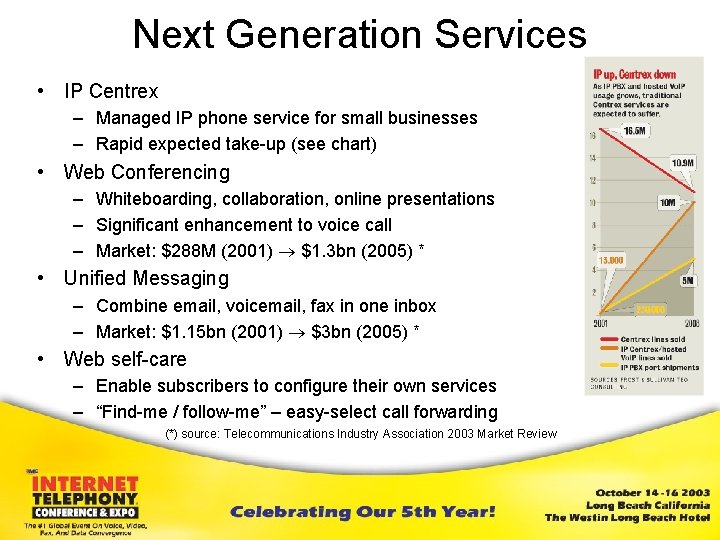
Next Generation Services • IP Centrex – Managed IP phone service for small businesses – Rapid expected take-up (see chart) • Web Conferencing – Whiteboarding, collaboration, online presentations – Significant enhancement to voice call – Market: $288 M (2001) $1. 3 bn (2005) * • Unified Messaging – Combine email, voicemail, fax in one inbox – Market: $1. 15 bn (2001) $3 bn (2005) * • Web self-care – Enable subscribers to configure their own services – “Find-me / follow-me” – easy-select call forwarding (*) source: Telecommunications Industry Association 2003 Market Review
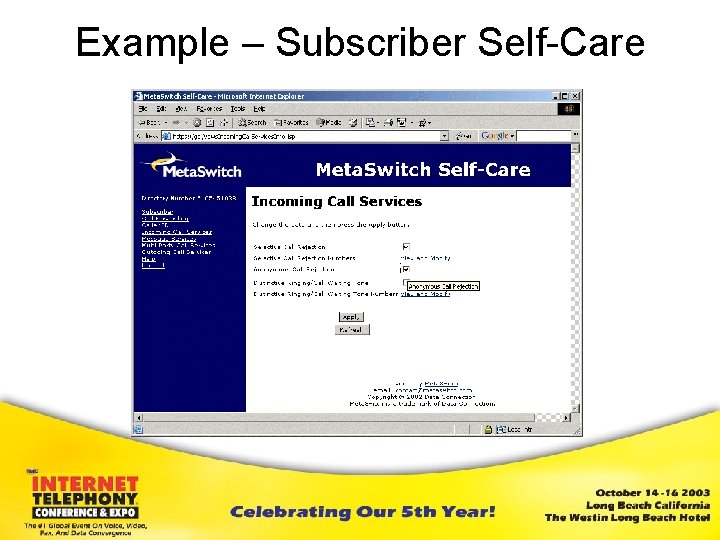
Example – Subscriber Self-Care
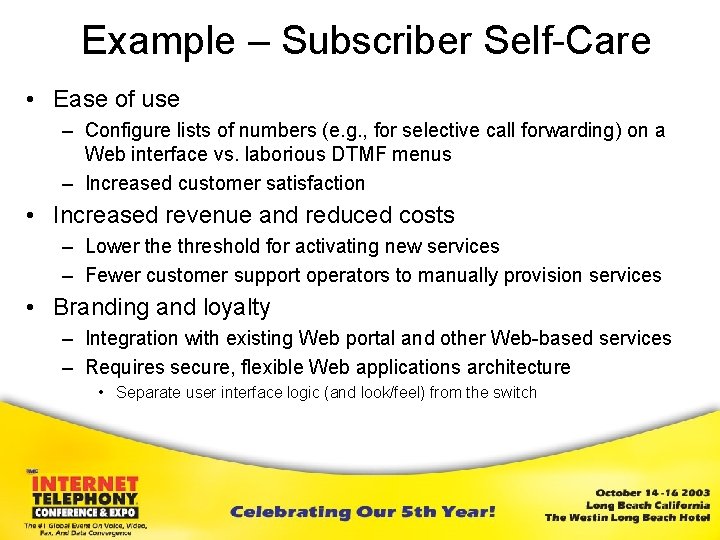
Example – Subscriber Self-Care • Ease of use – Configure lists of numbers (e. g. , for selective call forwarding) on a Web interface vs. laborious DTMF menus – Increased customer satisfaction • Increased revenue and reduced costs – Lower the threshold for activating new services – Fewer customer support operators to manually provision services • Branding and loyalty – Integration with existing Web portal and other Web-based services – Requires secure, flexible Web applications architecture • Separate user interface logic (and look/feel) from the switch
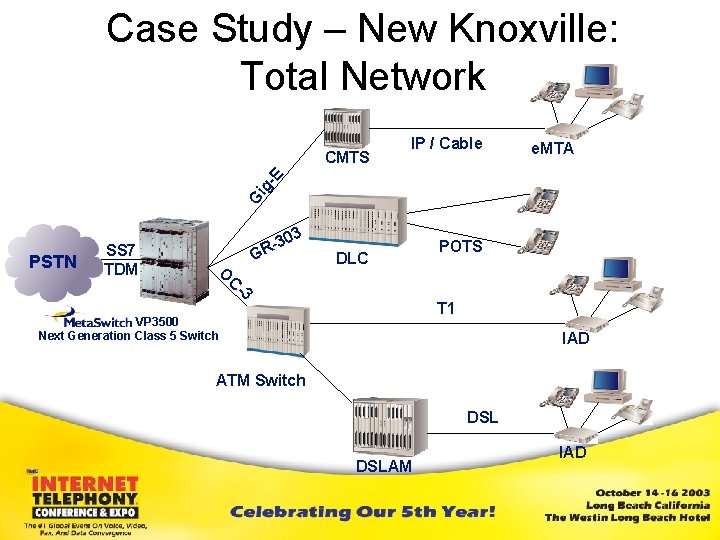
Case Study – New Knoxville Telephone • Founded 1905 • Small independent service provider in rural Ohio – Incumbent telco (New Knoxville Telephone) – Cable TV division (NKTELCO Cable) – CLEC division (Gold. Star Communications) • Seeking to – – Replace existing end-of-life Class 5 switch Rationalize and upgrade network Expand business and ward off competitors Exploit cable and DSL networks for out-of-region expansion – “After evaluating a number of Class 5 'alternatives', we identified the Meta. Switch VP 3500 as the only true Next Generation Class 5 Switch capable of supporting our legacy POTS customers while leveraging the Vo. IP potential of our installed cable network. ” – Preston Meyer, General Manager
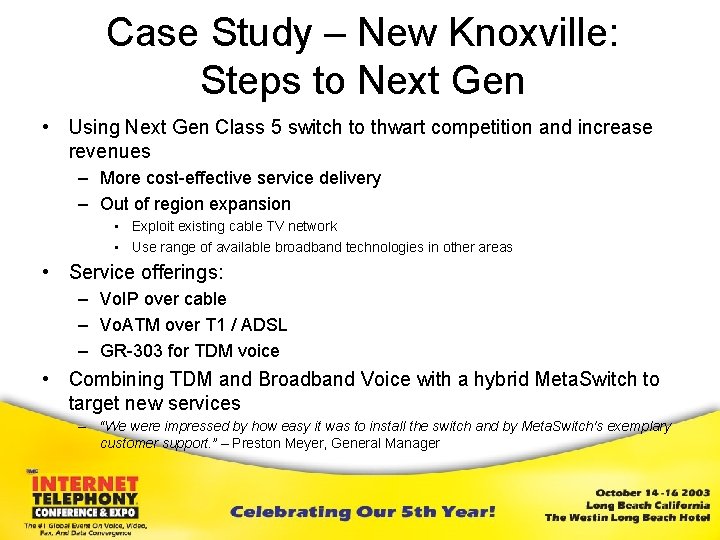
Case Study – New Knoxville: Steps to Next Gen • Using Next Gen Class 5 switch to thwart competition and increase revenues – More cost-effective service delivery – Out of region expansion • Exploit existing cable TV network • Use range of available broadband technologies in other areas • Service offerings: – Vo. IP over cable – Vo. ATM over T 1 / ADSL – GR-303 for TDM voice • Combining TDM and Broadband Voice with a hybrid Meta. Switch to target new services – “We were impressed by how easy it was to install the switch and by Meta. Switch's exemplary customer support. ” – Preston Meyer, General Manager
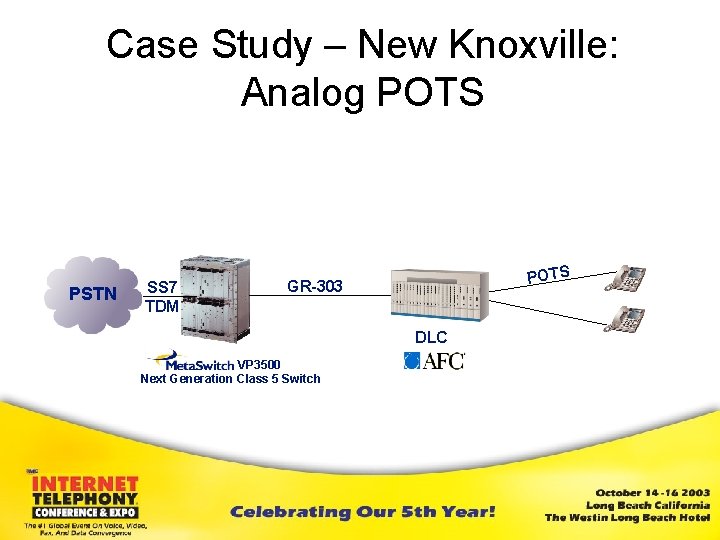
Case Study – New Knoxville: Analog POTS PSTN SS 7 TDM POTS GR-303 DLC VP 3500 Next Generation Class 5 Switch
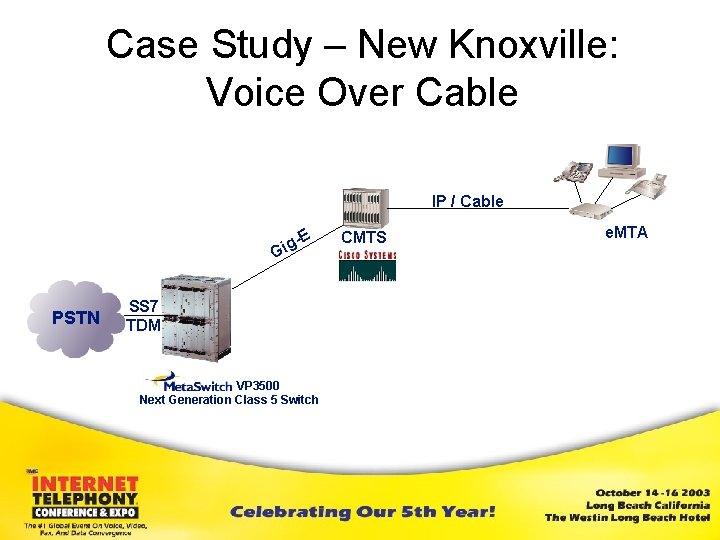
Case Study – New Knoxville: Voice Over Cable IP / Cable G PSTN E ig- SS 7 TDM VP 3500 Next Generation Class 5 Switch CMTS e. MTA
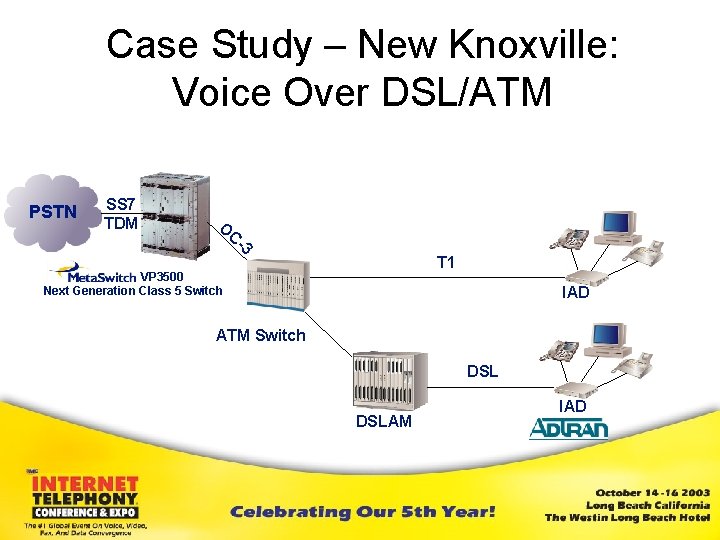
Case Study – New Knoxville: Voice Over DSL/ATM PSTN SS 7 TDM O C- 3 T 1 VP 3500 Next Generation Class 5 Switch IAD ATM Switch DSLAM IAD
Case Study – New Knoxville: Total Network IP / Cable e. MTA G ig -E CMTS PSTN SS 7 TDM 03 3 R O C- G DLC POTS 3 T 1 VP 3500 Next Generation Class 5 Switch IAD ATM Switch DSLAM IAD
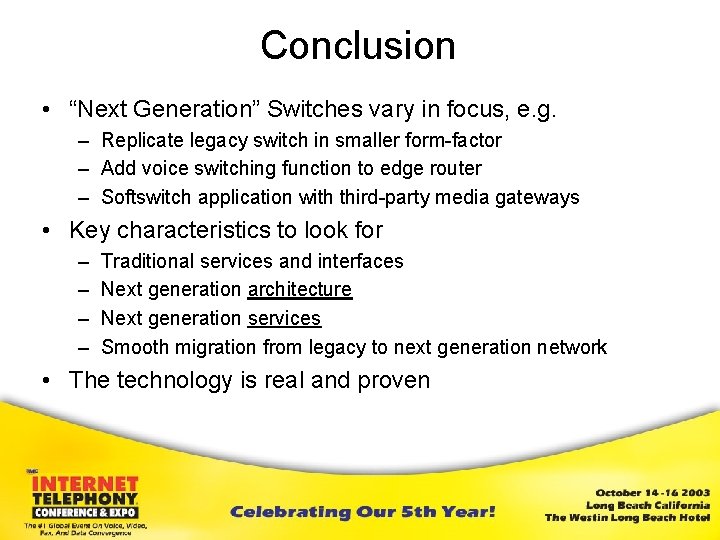
Conclusion • “Next Generation” Switches vary in focus, e. g. – Replicate legacy switch in smaller form-factor – Add voice switching function to edge router – Softswitch application with third-party media gateways • Key characteristics to look for – – Traditional services and interfaces Next generation architecture Next generation services Smooth migration from legacy to next generation network • The technology is real and proven