
Next Generation Sequencing in the Clinical Laboratory Norm
Next Generation Sequencing in the Clinical Laboratory Norm Nelson, Ph. D Senior Consultant NCN Enterprises
Agenda • What is Next Generation Sequencing (NGS)? • What are potential applications of NGS in human health care? • What are some obstacles to implementing NGS in the clinical laboratory? • Places to find more information about NGS
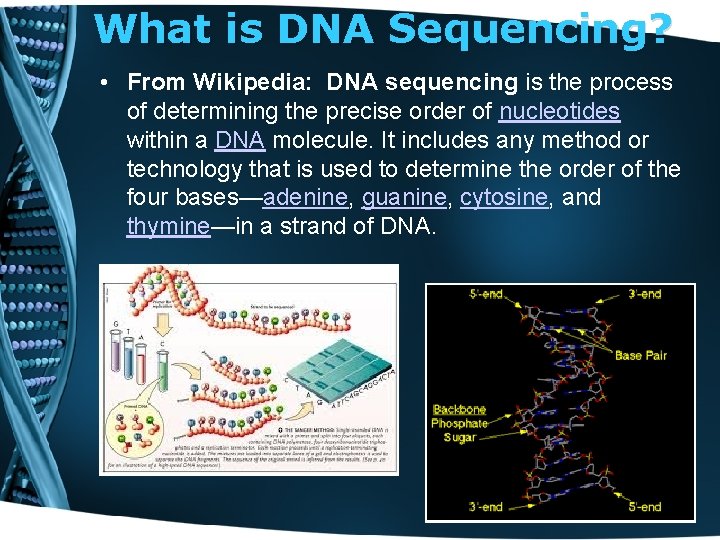
What is DNA Sequencing? • From Wikipedia: DNA sequencing is the process of determining the precise order of nucleotides within a DNA molecule. It includes any method or technology that is used to determine the order of the four bases—adenine, guanine, cytosine, and thymine—in a strand of DNA.
The Human Genome Project • The human genome is the genetic blueprint of the human body • The Human Genome Project was formally initiated in October, 1990, with the goal of sequencing the entire genome from one individual • The project was completed in 2003 • The cost of generating the sequence for one genome was close to $1 billion • The Sanger method was used to sequence the DNA
What is Next Generation Sequencing (NGS)? • One human genome is not enough to even begin to understand the impact of this genetic information on health care. Thousands of sequences are desired…for starters. • The Sanger method is too slow and costly to be practical to support generation of this many sequences • New, “next generation” methods have been developed over the last 10 years that are absolutely breathtaking
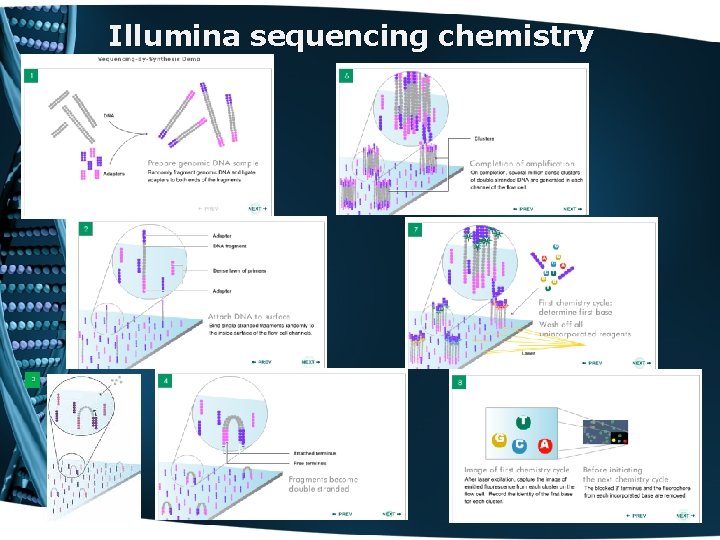
Illumina sequencing chemistry 3
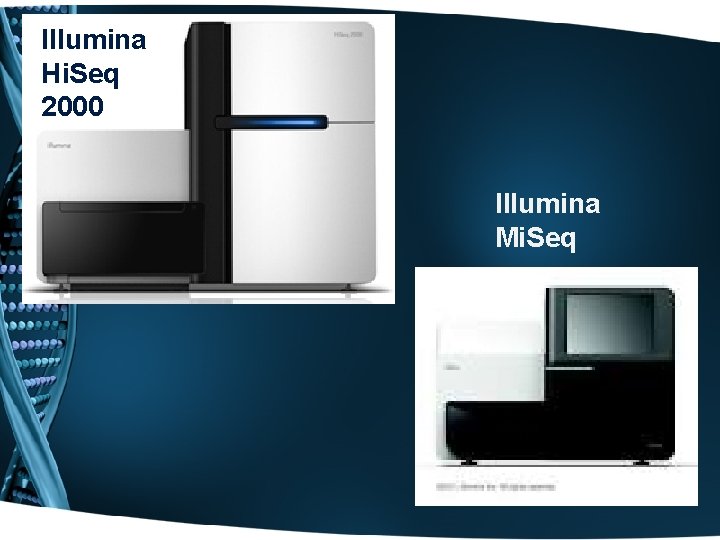
Illumina Hi. Seq 2000 Illumina Mi. Seq
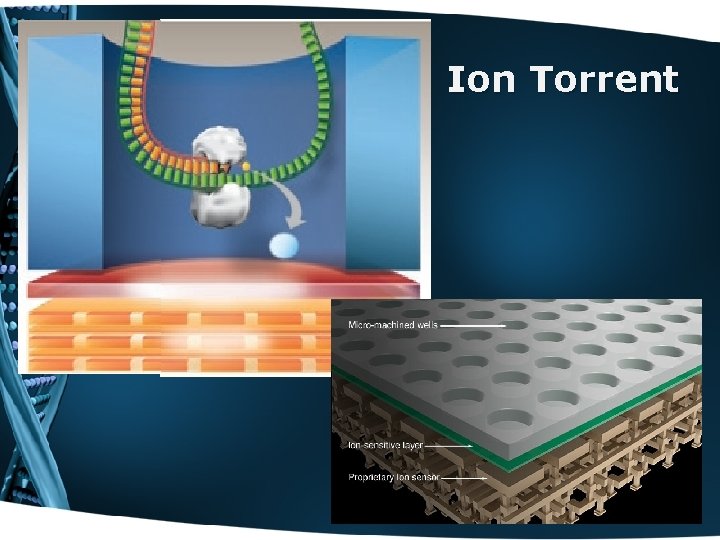
Ion Torrent
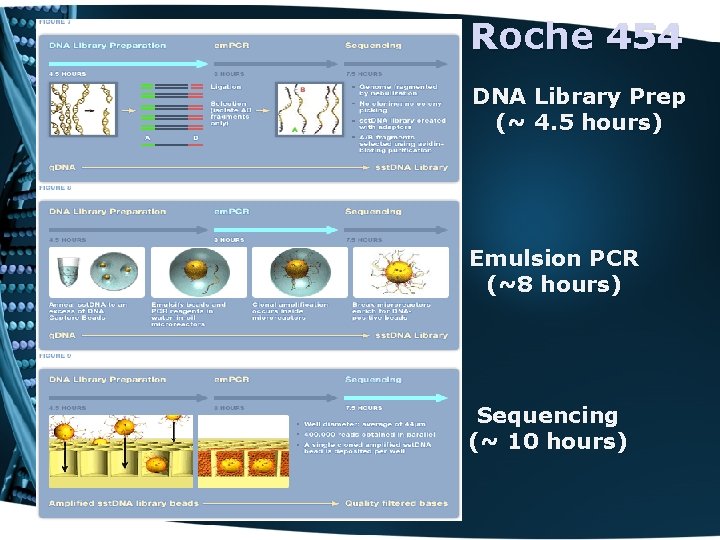
Roche 454 DNA Library Prep (~ 4. 5 hours) Emulsion PCR (~8 hours) Sequencing (~ 10 hours)
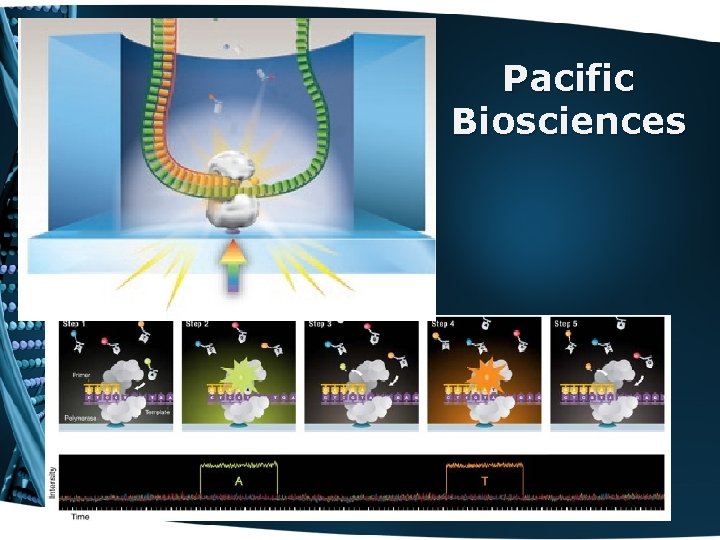
Pacific Biosciences
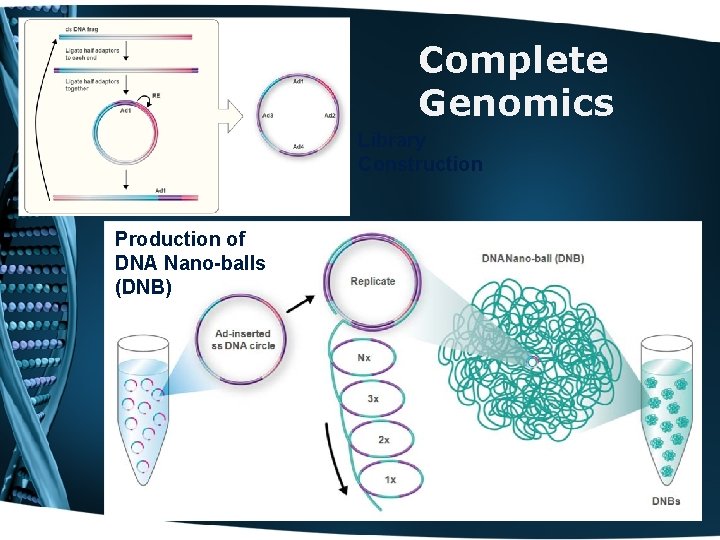
Complete Genomics Library Construction Production of DNA Nano-balls (DNB)
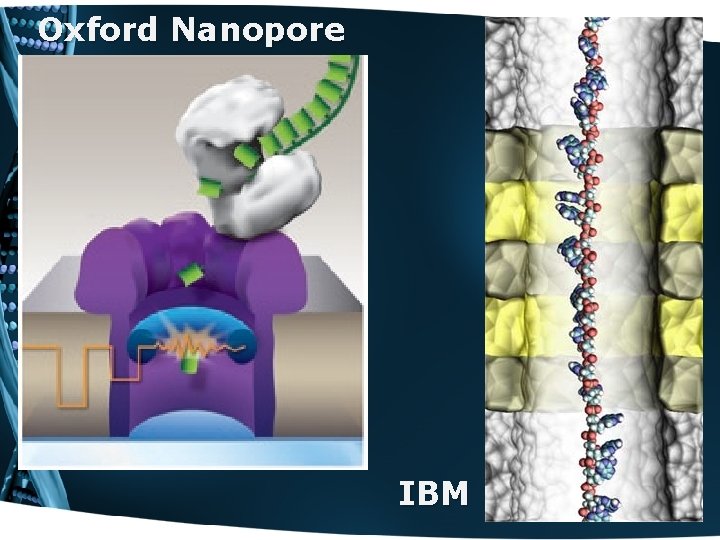
Oxford Nanopore IBM
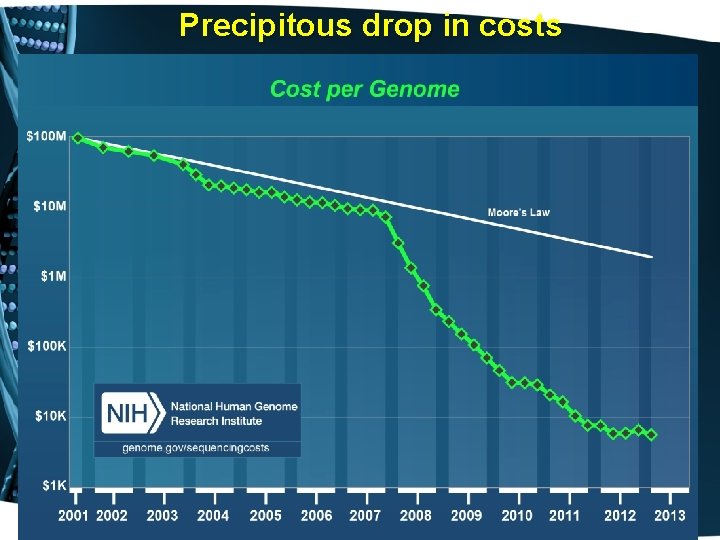
Precipitous drop in costs
Potential applications of NGS in clinical medicine • Biomarker discovery • Cancer mutation panels • Mendelian disorders • Bacterial ID and susceptibility • Viral rare variant determination (HIV, etc. ) • HLA tissue typing • Mystery illnesses (medical odyssey)
Challenges that pose a threat to the adoption of NGS in the clinical arena • NGS technology is still rapidly evolving – By the time a selected approach is commercialized for use as a diagnostic (product development, clinical trials, FDA approval, etc. ) it may be obsolete. – Full automation with FDA approval takes years and millions of dollars to develop. This could be a wasted investment if the technology changes and the assays can no longer run on the instrument. – A completely new and novel approach to sequencing that completely changes the way commercialization is pursued could be just around the corner. NCN Enterprises

Challenges to clinical adoption, cont’d • Current workflows not optimal for the clinical laboratory – Too cumbersome, technically challenging & slow – Automation not complete – Prep from real clinical specimen typically not rigorously addressed – Current workflows platform-specific – Expensive – Reagents that meet demanding performance standards may be difficult to manufacture in bulk in an industrial setting – Reagent stability may not be commercially viable in the diagnostics space
Challenges to clinical adoption, cont’d • Data manipulation still too challenging – Significant IT infrastructure required • This can be somewhat reduced by utilizing The Cloud – Bioinformatics staff required – Query against relevant databases cumbersome and not standardized
Challenges to clinical adoption, cont’d • Interpretation of data problematic – The physician ordering a test just wants a simple, actionable result they can use to make a treatment decision • One current protocol for use of NGS data in cancer diagnostics, for example, is to convene a board of experts (oncology, genomics, bioinformatics, pathology, ethics, etc. ) to discuss cases one by one and make treatment recommendations – Clinically validated and adequately annotated databases against which to compare patient data are currently inadequate – Biomarker sets with demonstrated clinical utility are sorely lacking
Challenges to clinical adoption, cont’d • Regulatory hurdles – FDA approval for IVD assays is much more rigorous than for LDTs, RUOs and even CE marked assays – Regulatory guidelines for approval of NGS-based IVDs are unclear, as this part of the process is in its infancy – NGS-based assays are inherently highly multiplex, which creates a huge unknown regarding the degree of validation required for FDA approval (will all possible targets require independent validation? ) – Clinical validity vs. clinical utility an issue
Challenges to clinical adoption, cont’d • Intellectual property protection – The patentability of genetic biomarkers in question • Landmark case (still in progress) – ACLU v. Myriad Genetics and the University of Utah Research Foundation, which hold patents on the genes BRCA 1 and BRCA 2 – – AKA Association for Molecular Pathology, et al. v. U. S. PTO Argument – “products of nature” 3/10 – A New York federal court ruled the patents invalid 7/11 – Appeals court ruled genes patentable but not methods to compare those genes – 3/12 – Supreme court vacated the appeals court decision and instructed them to reconsider in light of Mayo v. Prometheus – From a IVD Manufacturer’s perspective, potential lack of patent protection brings into question the value proposition of developing and acquiring FDA approval for NGS-based diagnostic assays
Challenges to clinical adoption, cont’d • Reimbursement – Who will pay…and how much? – The issues of clinical utility and highly multiplexed assays (many answers) raised earlier have huge impact on reimbursement decisions as well – The assays will be expensive to develop, acquire approval and manufacture, and a cloudy reimbursement picture will once again bring into question the value proposition for an IVD manufacturer – As with the regulatory piece, the reimbursement issues are in their infancy
General strategic roadmap to overcome these challenges • Fund directed R&D efforts towards development of a fully automated clinical sample to sequencing-ready template workflow that is rapid, simple, inexpensive and manufacturable – Ideally should be easily adaptable for use with different sequencing approaches – Should include automated chip loading interface and ability to easily integrate with the sequencing piece
General strategic roadmap to overcome these challenges • Engage in a wide variety of clinical collaborations – Biomarker discovery – Biomarker validation – Clinical utility demonstration – Access to clinical sample sets – These activities are extremely important in regards to ultimate regulatory approval and reimbursement

General strategic roadmap to overcome these challenges • Develop proprietary content beyond that which may or may not be patentable – Database – Software – Other… These features may be key in developing a competitive advantage
General strategic roadmap to overcome these challenges • Engage early and often in diverse forums and workshops created to discuss these challenges – National Cancer Institute (NCI) – Institute of Medicine (IOM) – Food and Drug Administration (FDA) – College of American Pathologists (CAP) – Association for Molecular Pathology (AMP) – National Human Genome Research Institute (NHGRI) – American College of Medical Genetics and Genomics (ACMG) Be part of the solution
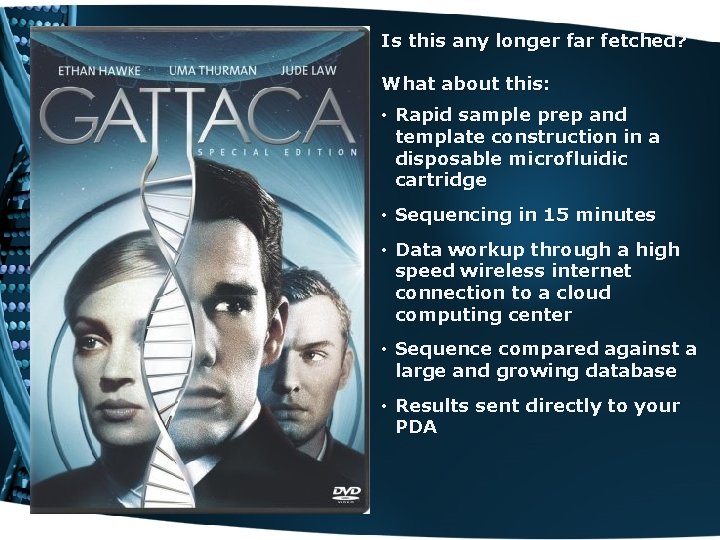
Is this any longer far fetched? What about this: • Rapid sample prep and template construction in a disposable microfluidic cartridge • Sequencing in 15 minutes • Data workup through a high speed wireless internet connection to a cloud computing center • Sequence compared against a large and growing database • Results sent directly to your PDA
Places to find more information about NGS • DNA sequencing - Wikipedia, the free encyclopedia • Human Genome Project Information (http: //www. ornl. gov/sci/techresources/Human_Genome/ home. shtml) • All About The Human Genome Project (http: //www. genome. gov/10001772) • Instrument manufacturers (www. illumina. com/; www. iontorrent. com/; www. pacificbiosciences. com) • General information about NGS (http: //www. blueseq. com/; http: //nextgenseek. com; http: //seqanswers. com/forums/index. php) • NGS for breast cancer recurrence risk (http: //dx. plos. org/10. 1371/journal. pone. 0040092) • Solution to mystery illness (http: //www. illumina. com/documents/icommunity/article_ 2011_10_Skeptic. Turned. Believer. pdf) • Clinical Sequencing article:

Questions?
- Slides: 28