
Newtons Second Law Motion Along a Line Readings


- Slides: 15
Newton’s Second Law: Motion Along a Line Readings: Chapter 6 (2 nd edition) 1
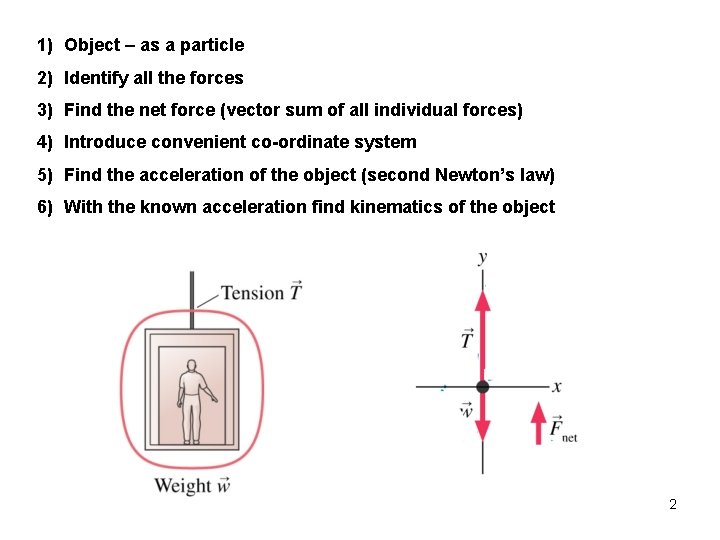
1) Object – as a particle 2) Identify all the forces 3) Find the net force (vector sum of all individual forces) 4) Introduce convenient co-ordinate system 5) Find the acceleration of the object (second Newton’s law) 6) With the known acceleration find kinematics of the object 2
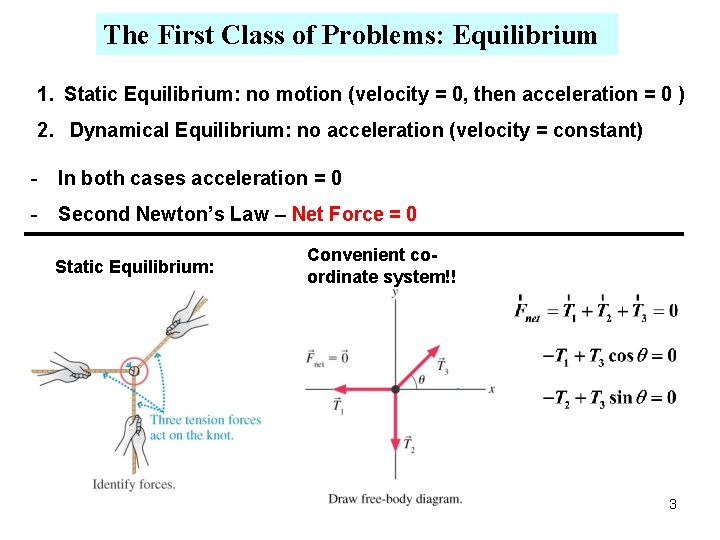
The First Class of Problems: Equilibrium 1. Static Equilibrium: no motion (velocity = 0, then acceleration = 0 ) 2. Dynamical Equilibrium: no acceleration (velocity = constant) - In both cases acceleration = 0 - Second Newton’s Law – Net Force = 0 Static Equilibrium: Convenient coordinate system!! 3
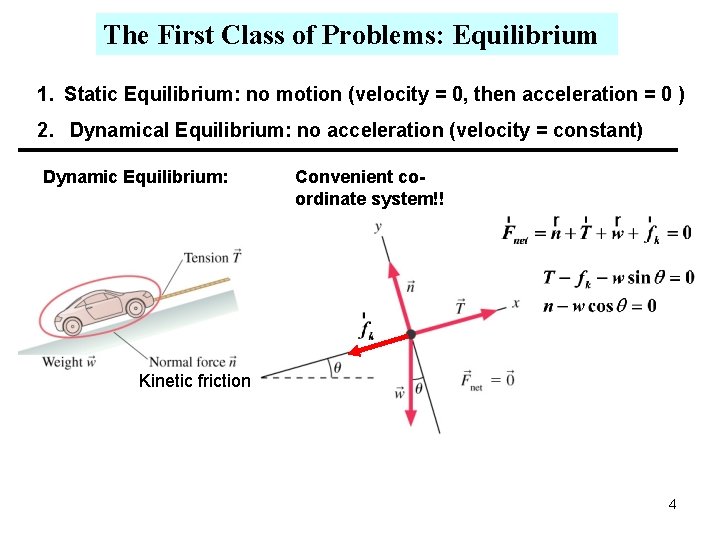
Special The First Class of of Problems: Equilibrium 1. Static Equilibrium: no motion (velocity = 0, then acceleration = 0 ) 2. Dynamical Equilibrium: no acceleration (velocity = constant) Dynamic Equilibrium: Convenient coordinate system!! Kinetic friction 4
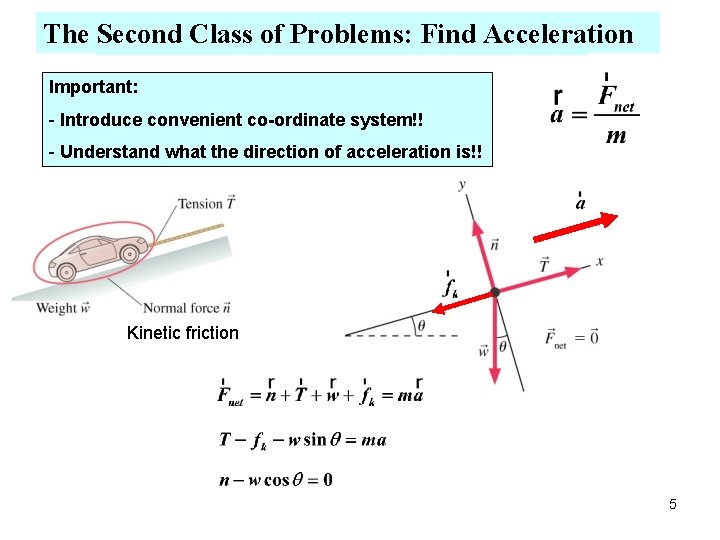
The Second Acceleration Special. Classof of. Problems: Find Equilibrium Important: - Introduce convenient co-ordinate system!! - Understand what the direction of acceleration is!! Kinetic friction 5
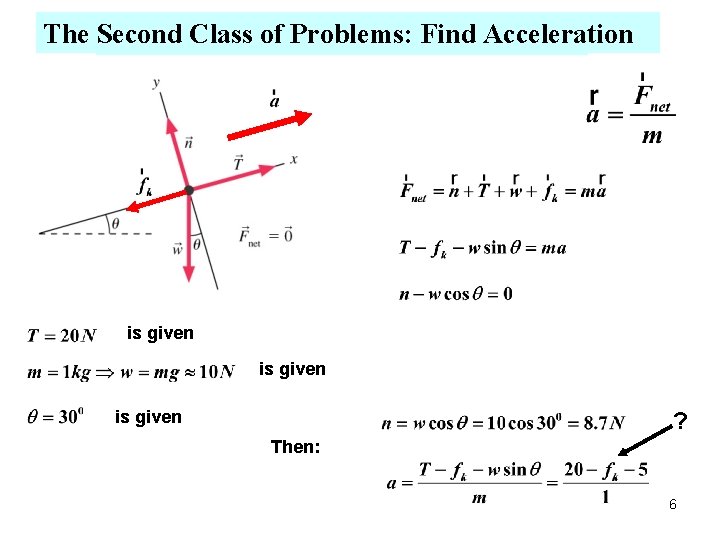
The Second Acceleration Special. Classof of. Problems: Find Equilibrium is given ? Then: 6
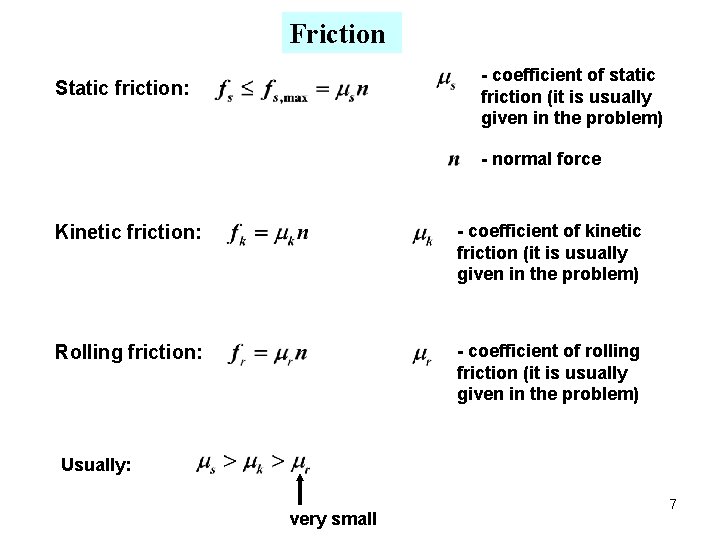
Friction - coefficient of static friction (it is usually given in the problem) Static friction: - normal force Kinetic friction: - coefficient of kinetic friction (it is usually given in the problem) Rolling friction: - coefficient of rolling friction (it is usually given in the problem) Usually: very small 7
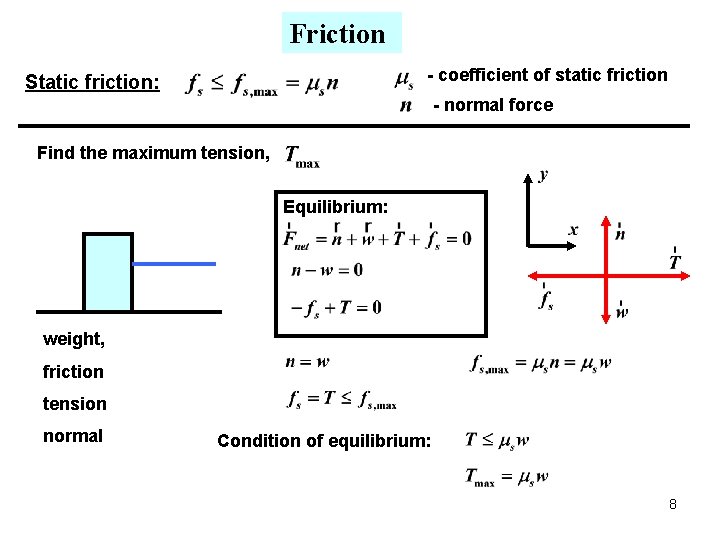
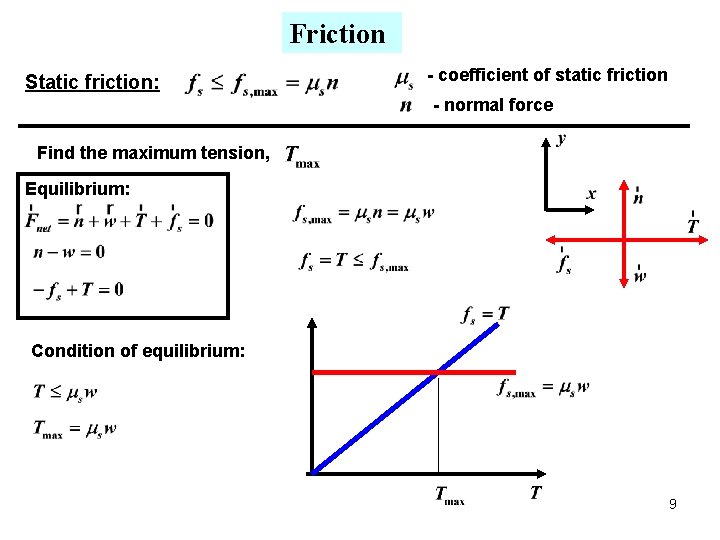
Friction - coefficient of static friction Static friction: - normal force Find the maximum tension, Equilibrium: weight, friction tension normal Condition of equilibrium: 8
Friction Static friction: - coefficient of static friction - normal force Find the maximum tension, Equilibrium: Condition of equilibrium: 9
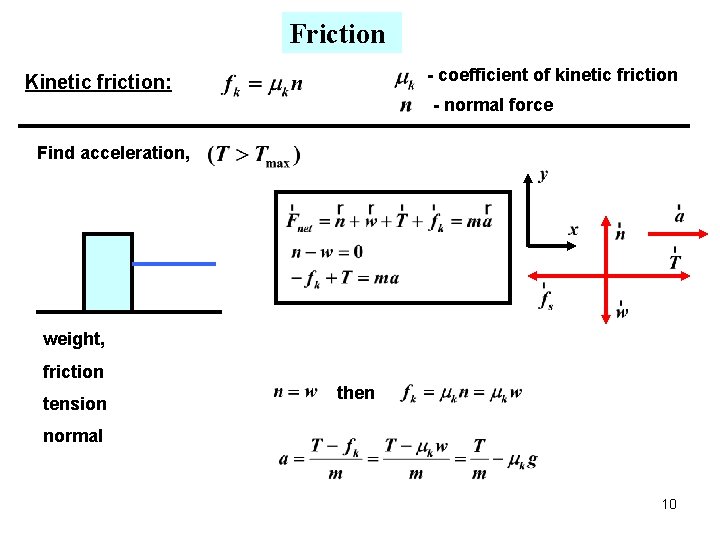
Friction - coefficient of kinetic friction Kinetic friction: - normal force Find acceleration, weight, friction tension then normal 10
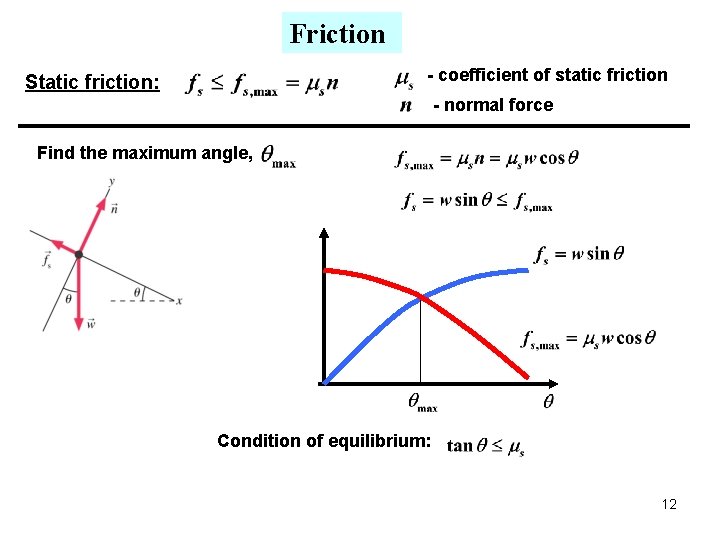
Friction - coefficient of static friction Static friction: - normal force Find the maximum angle, Equilibrium: Condition of equilibrium: 11
Friction - coefficient of static friction Static friction: - normal force Find the maximum angle, Condition of equilibrium: 12
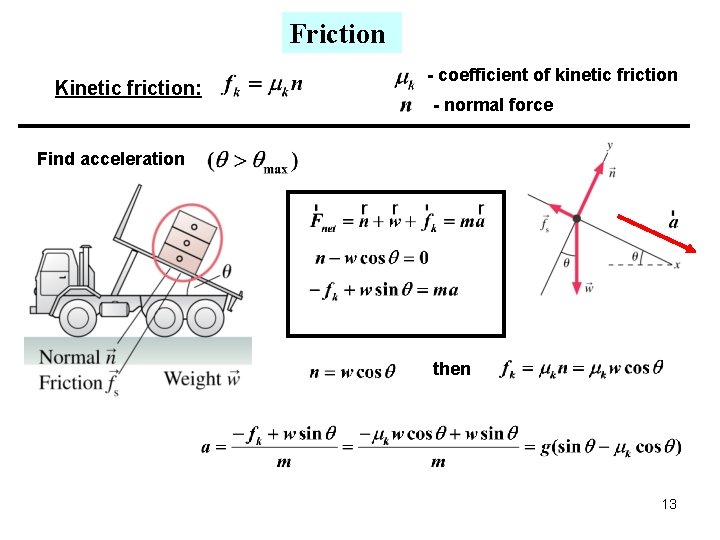
Friction Kinetic friction: - coefficient of kinetic friction - normal force Find acceleration then 13
Weight and Apparent Weight – gravitational force - pulls the objects down - mass of the object (the same on all planets) - free-fall acceleration (different on different planets) How can we measure weight? 1. We can measure mass by comparing with the known mass 2. We can measure the weight by comparing with the known force 14
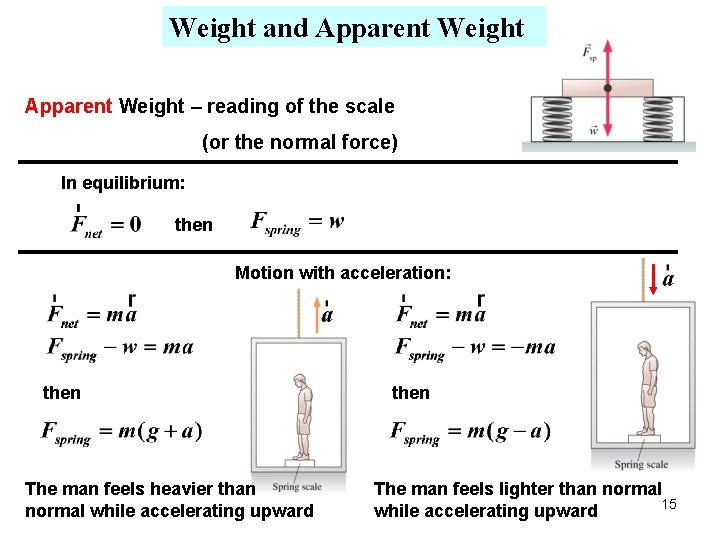
Weight and Apparent Weight – reading of the scale (or the normal force) In equilibrium: then Motion with acceleration: then The man feels heavier than normal while accelerating upward then The man feels lighter than normal 15 while accelerating upward