
Newtons Laws Applications Equilibrium Physics Mrs Coyle Outline
-Newton’s Laws Applications Equilibrium Physics Mrs. Coyle

Outline • Solving Newton’s Laws Problems where the objects are accelerating (involving tension, normal force). • Static Equilibrium including the Suspended Sign, Inclined Plane , Atwood Machine.
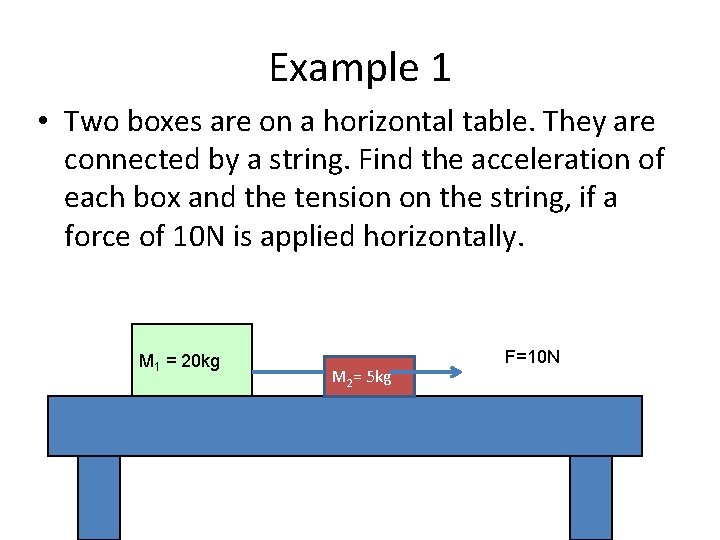
Example 1 • Two boxes are on a horizontal table. They are connected by a string. Find the acceleration of each box and the tension on the string, if a force of 10 N is applied horizontally. M 1 = 20 kg M 2= 5 kg F=10 N
Equilibrium: a)Static, b)Dynamic ∑F = 0 a=0 a) Static Equilibrium: the object is at rest, v=0. b) Dynamic (Translational) Equilibrium: the object is moving at constant velocity, v=constant. – The Equilibrant is a force that is exerted on the system to bring it to equilibrium.
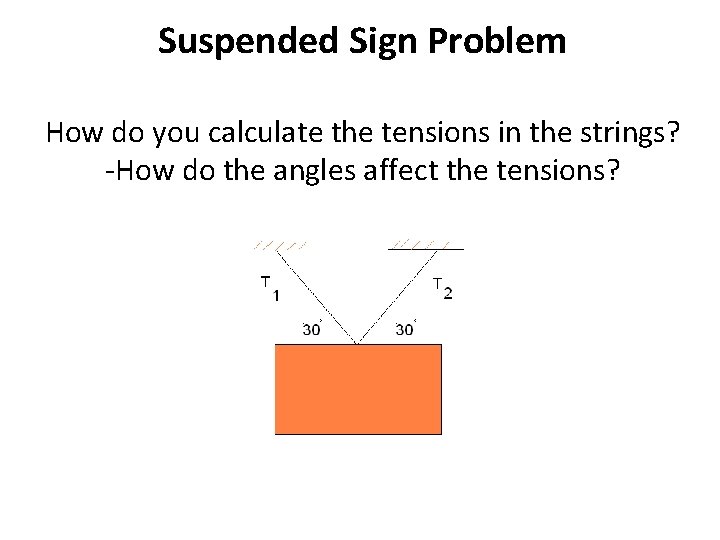
Suspended Sign Problem How do you calculate the tensions in the strings? -How do the angles affect the tensions?
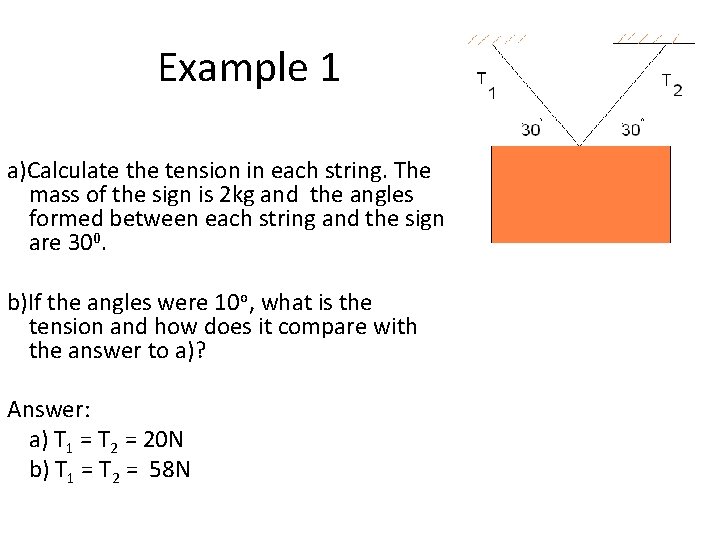
Example 1 a)Calculate the tension in each string. The mass of the sign is 2 kg and the angles formed between each string and the sign are 300. b)If the angles were 10 o, what is the tension and how does it compare with the answer to a)? Answer: a) T 1 = T 2 = 20 N b) T 1 = T 2 = 58 N
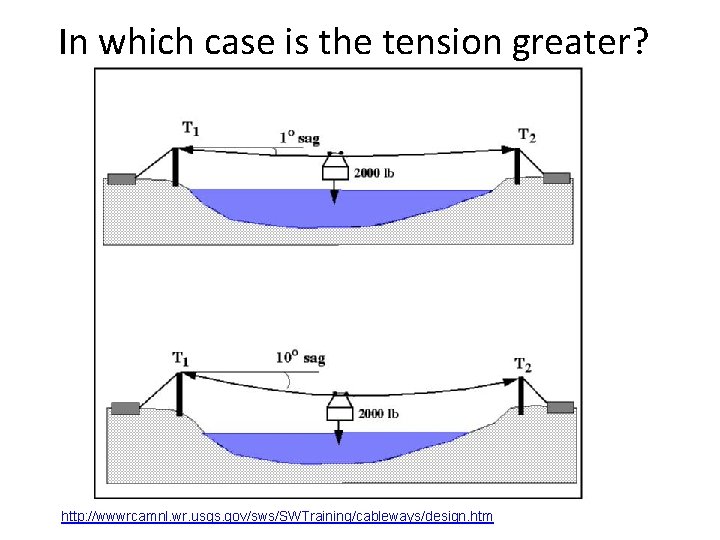
In which case is the tension greater? http: //wwwrcamnl. wr. usgs. gov/sws/SWTraining/cableways/design. htm
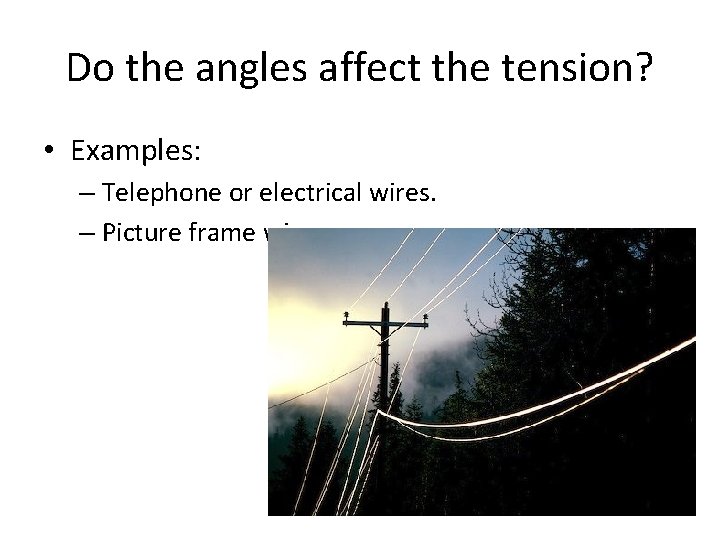
Do the angles affect the tension? • Examples: – Telephone or electrical wires. – Picture frame wire.
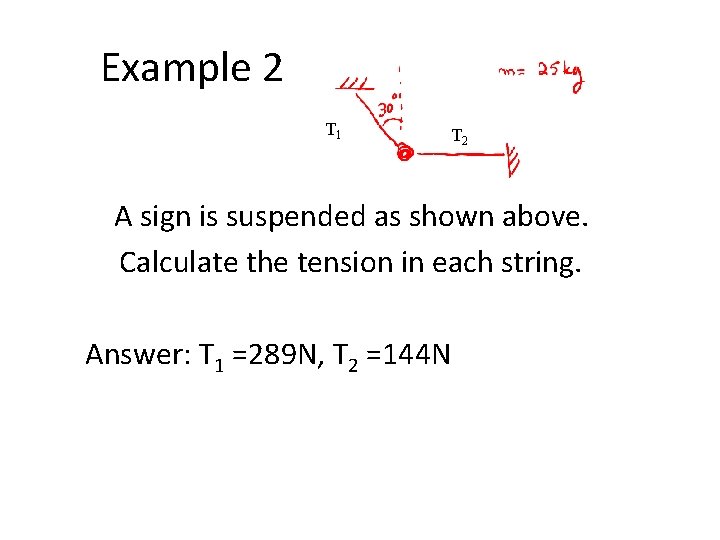
Example 2 T 1 T 2 A sign is suspended as shown above. Calculate the tension in each string. Answer: T 1 =289 N, T 2 =144 N
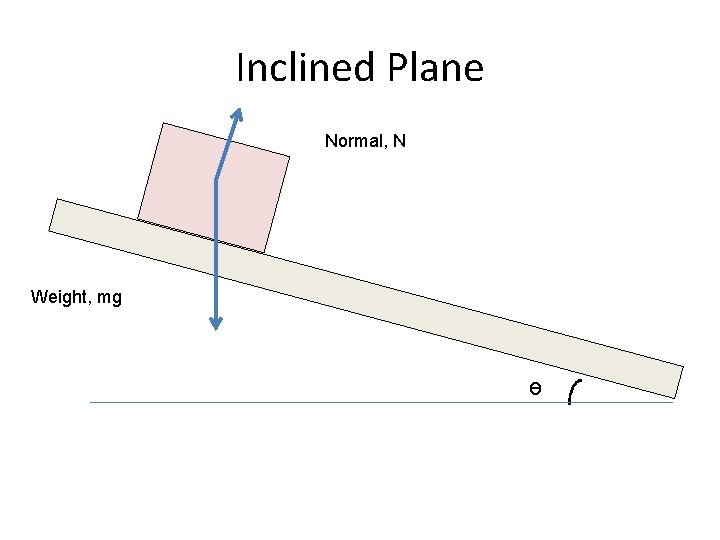
Inclined Plane Normal, N Weight, mg ө
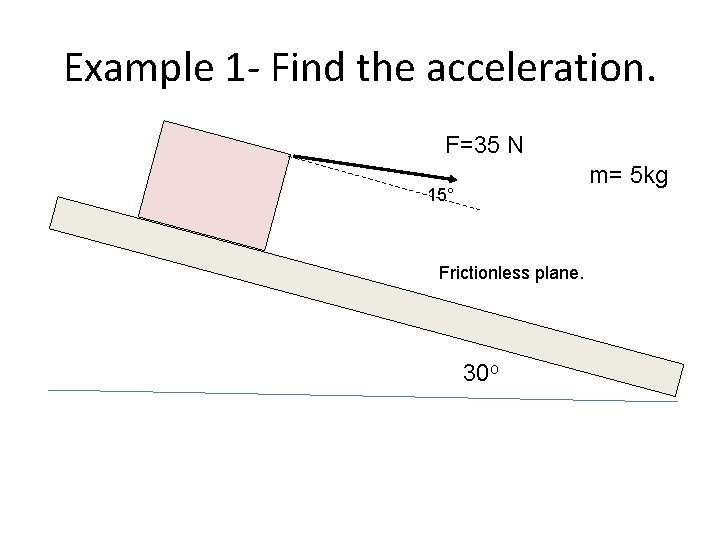
Example 1 - Find the acceleration. F=35 N m= 5 kg 15° Frictionless plane. 30 o
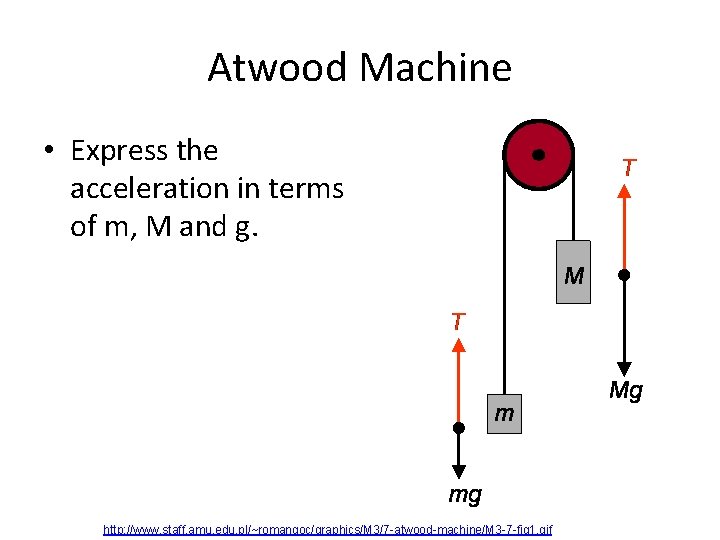
Atwood Machine • Express the acceleration in terms of m, M and g. http: //www. staff. amu. edu. pl/~romangoc/graphics/M 3/7 -atwood-machine/M 3 -7 -fig 1. gif
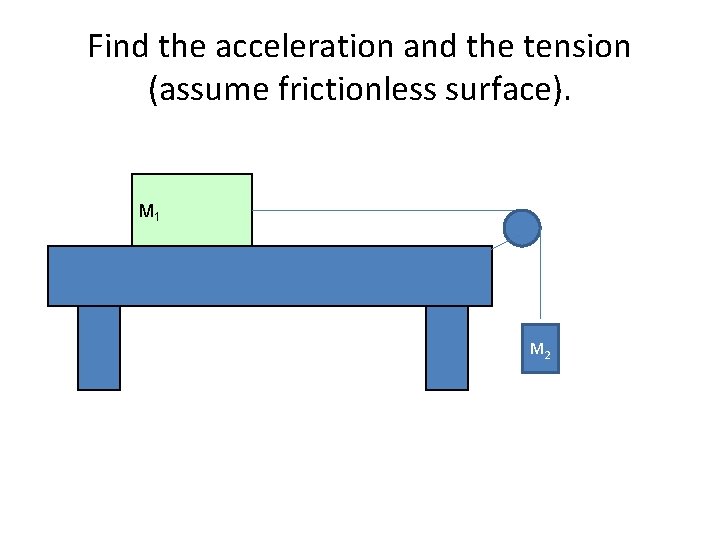
Find the acceleration and the tension (assume frictionless surface). M 1 M 2
- Slides: 13