
Newtons gravity Spherical systems Newtons theorems Gauss theorem
![[Below are large portions of Binney and Tremaine textbook’s Ch. 2. ]](https://slidetodoc.com/presentation_image_h2/5a02bc7365225e989a8ad156b32fa782/image-2.jpg "[Below are large portions of Binney and Tremaine textbook’s Ch. 2. ]")
- Slides: 22
Newton’s gravity Spherical systems - Newtons theorems - Gauss theorem as an integrated Poisson equation Simple density distribution and their potentials Dynamical time
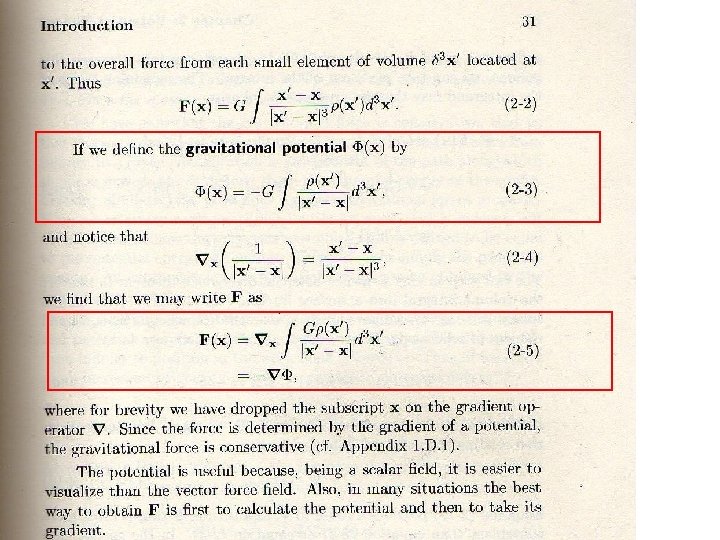
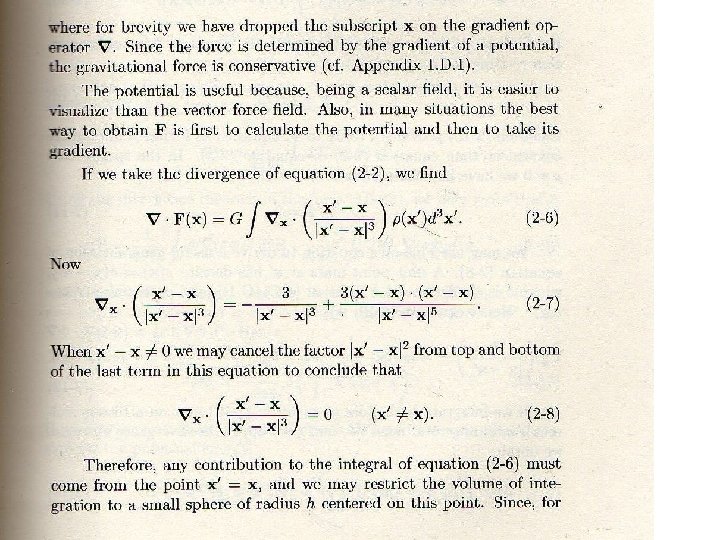
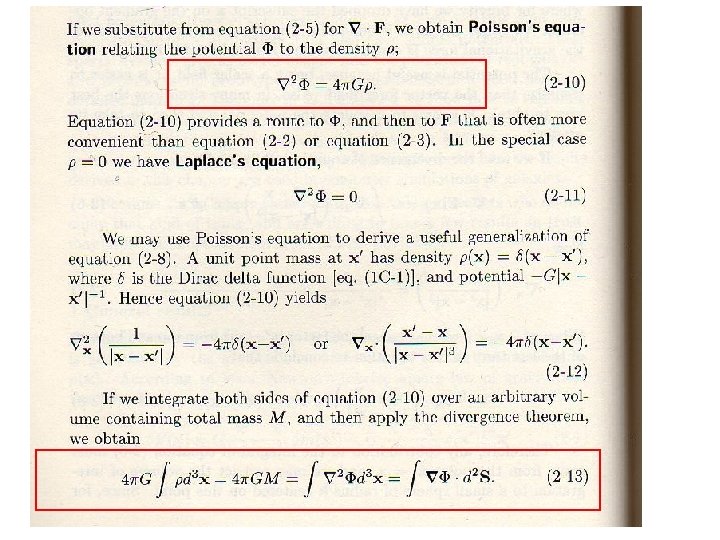
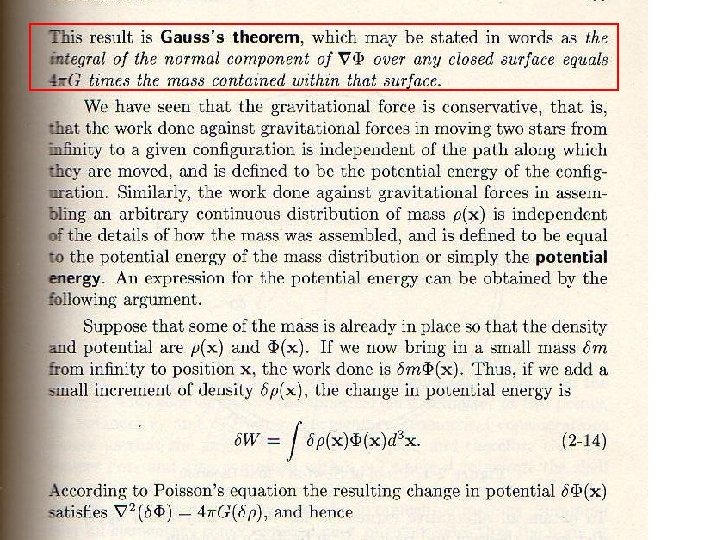
[Below are large portions of Binney and Tremaine textbook’s Ch. 2. ]
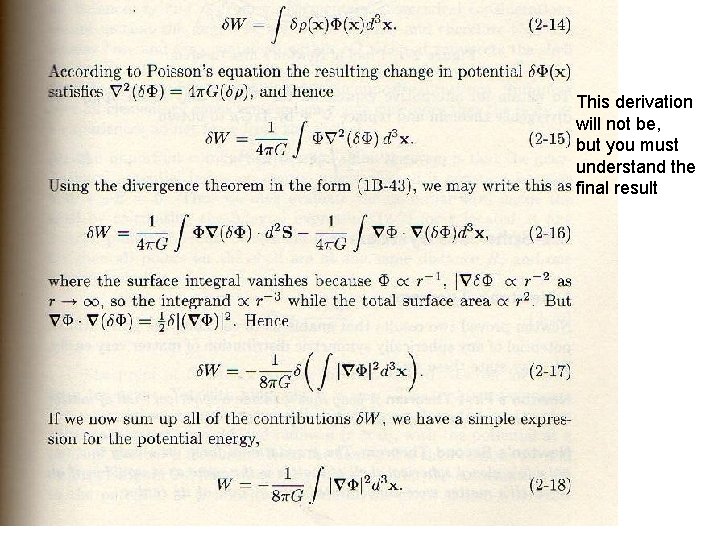
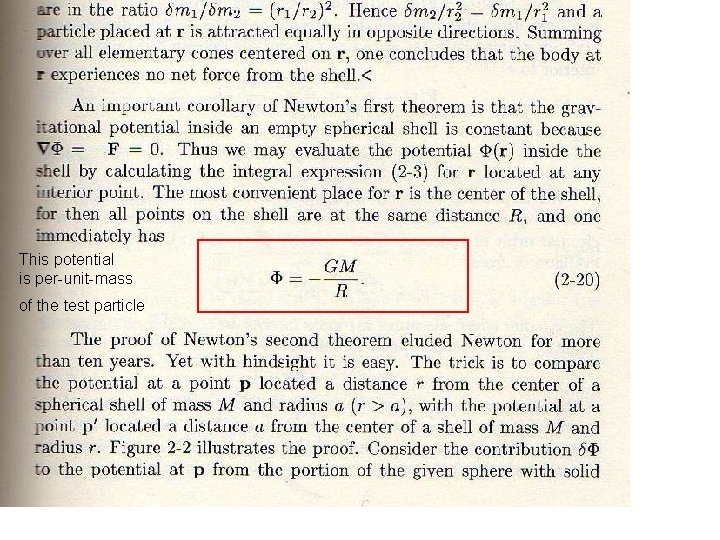
This derivation will not be, but you must understand the final result
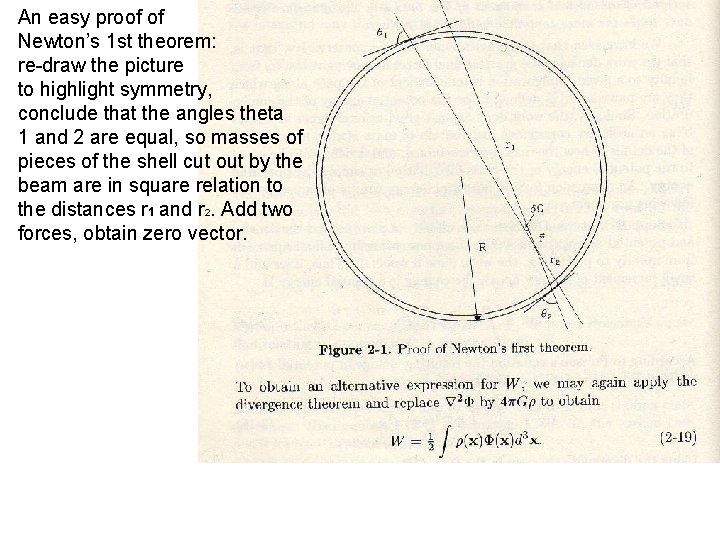
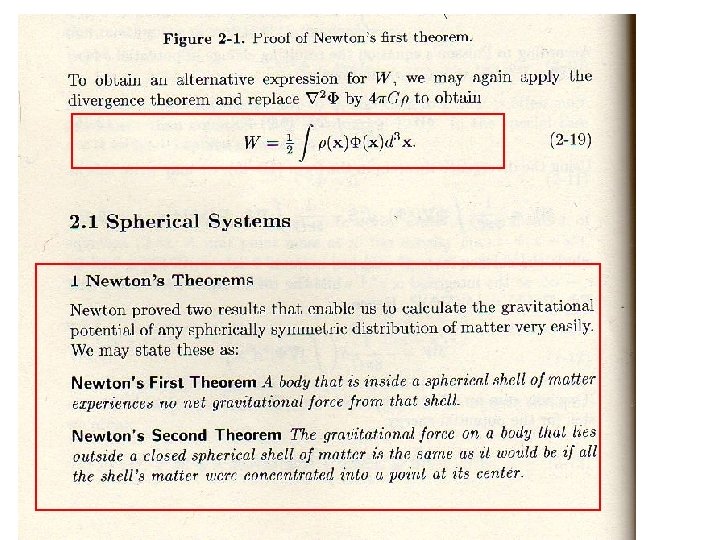
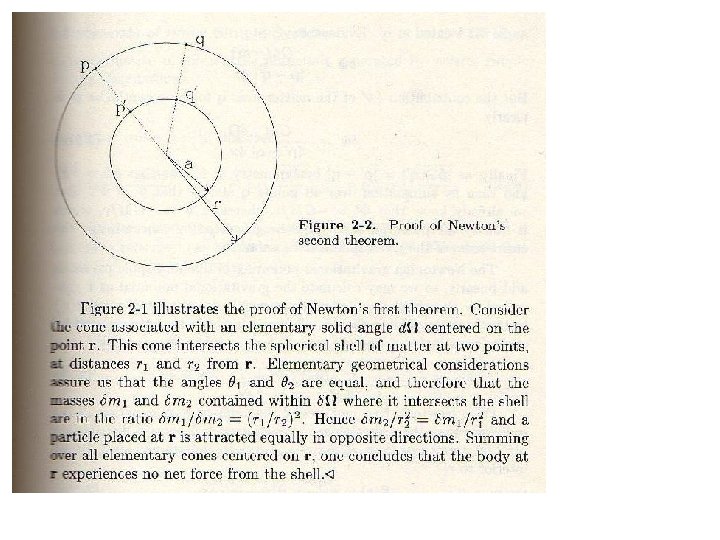
An easy proof of Newton’s 1 st theorem: re-draw the picture to highlight symmetry, conclude that the angles theta 1 and 2 are equal, so masses of pieces of the shell cut out by the beam are in square relation to the distances r 1 and r 2. Add two forces, obtain zero vector.
This potential is per-unit-mass of the test particle
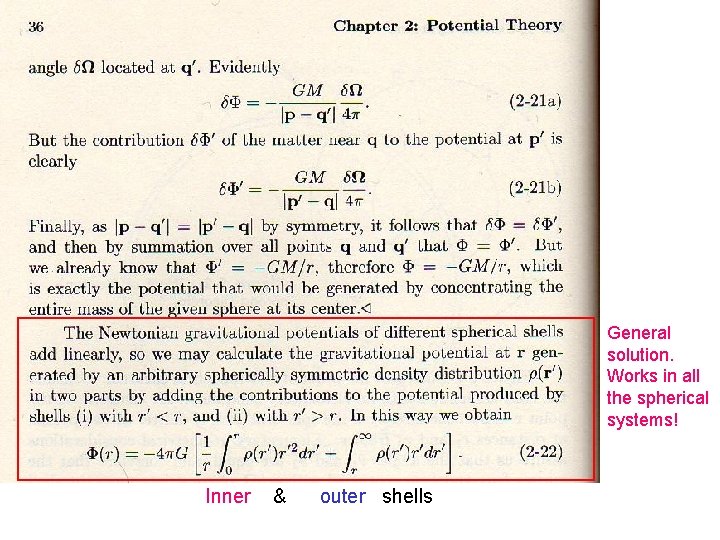
General solution. Works in all the spherical systems! Inner & outer shells
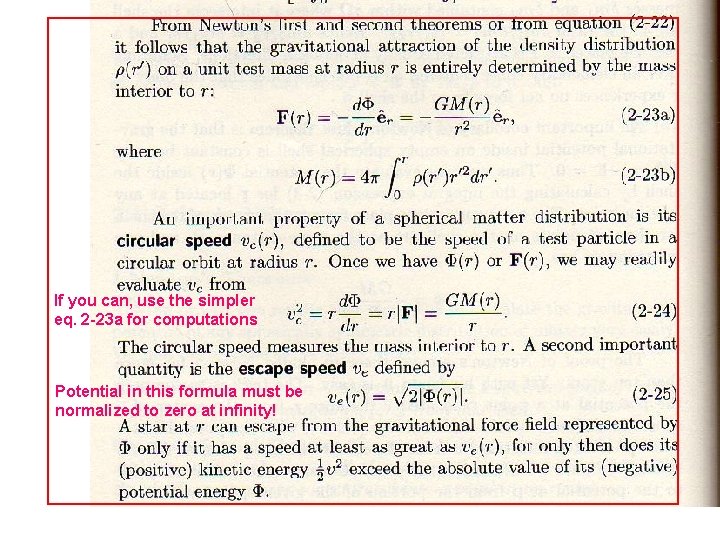
If you can, use the simpler eq. 2 -23 a for computations Potential in this formula must be normalized to zero at infinity!
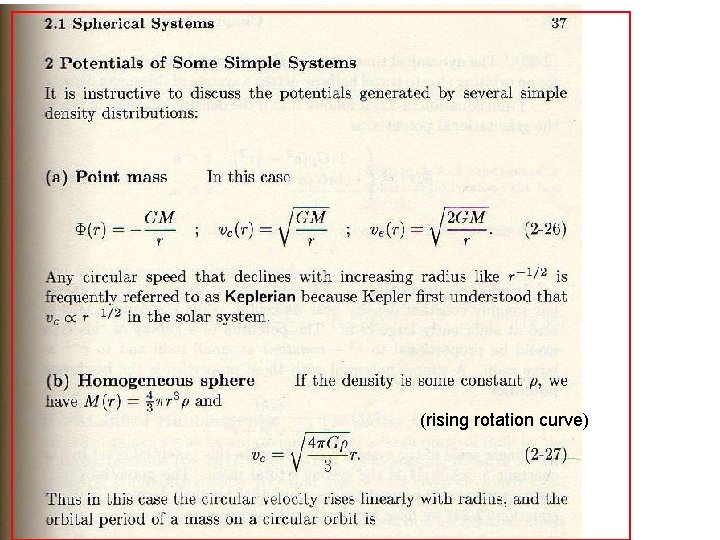
(rising rotation curve)
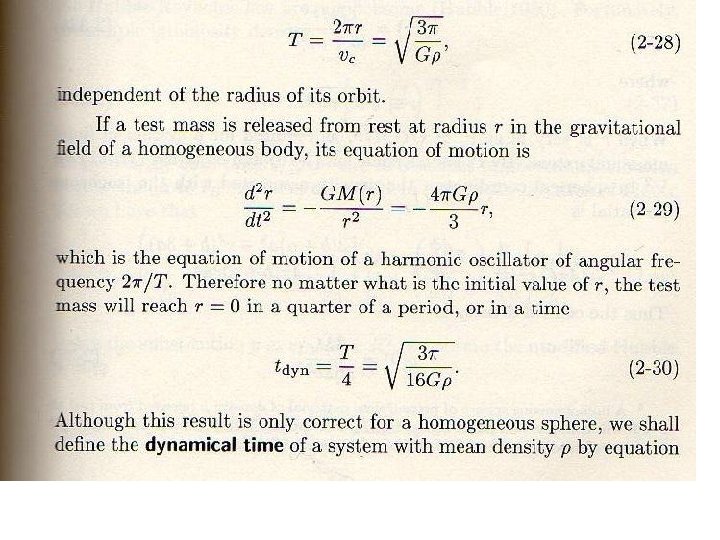
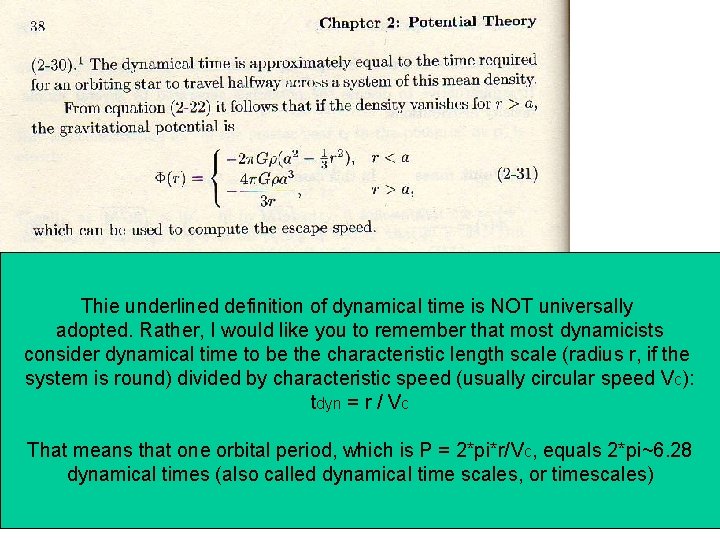
Thie underlined definition of dynamical time is NOT universally adopted. Rather, I would like you to remember that most dynamicists consider dynamical time to be the characteristic length scale (radius r, if the system is round) divided by characteristic speed (usually circular speed Vc): tdyn = r / Vc That means that one orbital period, which is P = 2*pi*r/Vc, equals 2*pi~6. 28 dynamical times (also called dynamical time scales, or timescales)
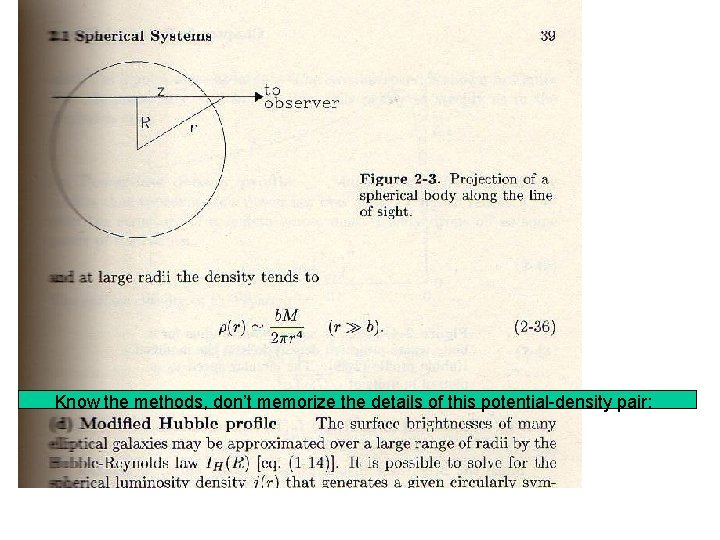
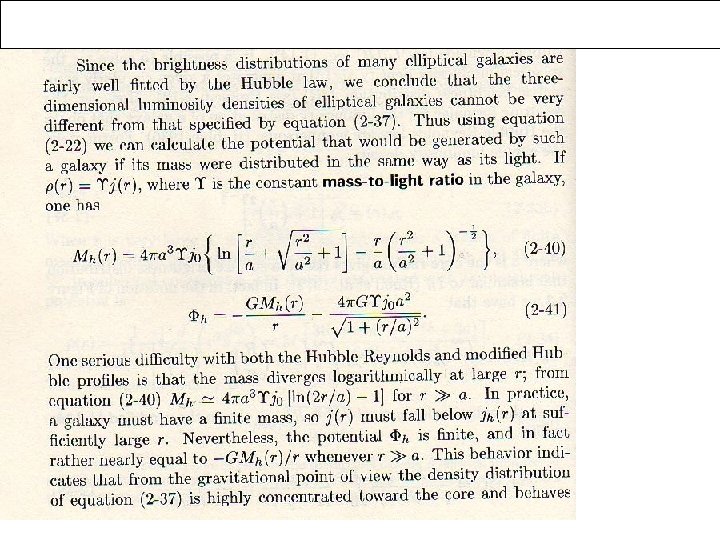
Know the methods, don’t memorize the details of this potential-density pair:
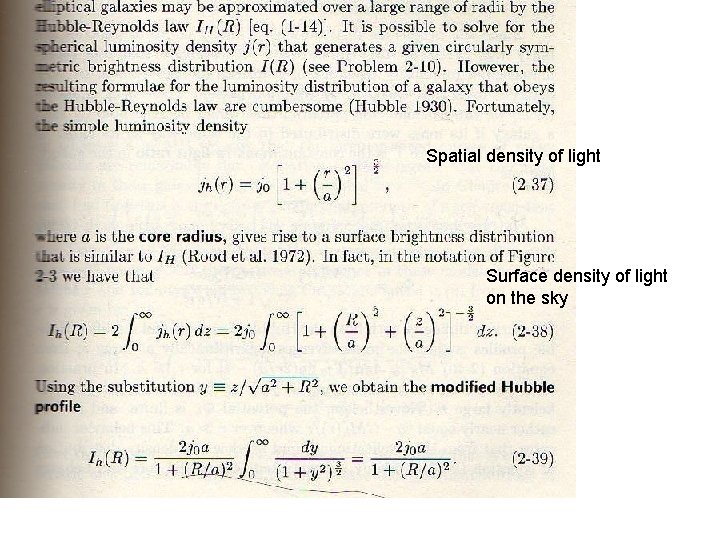
Spatial density of light Surface density of light on the sky
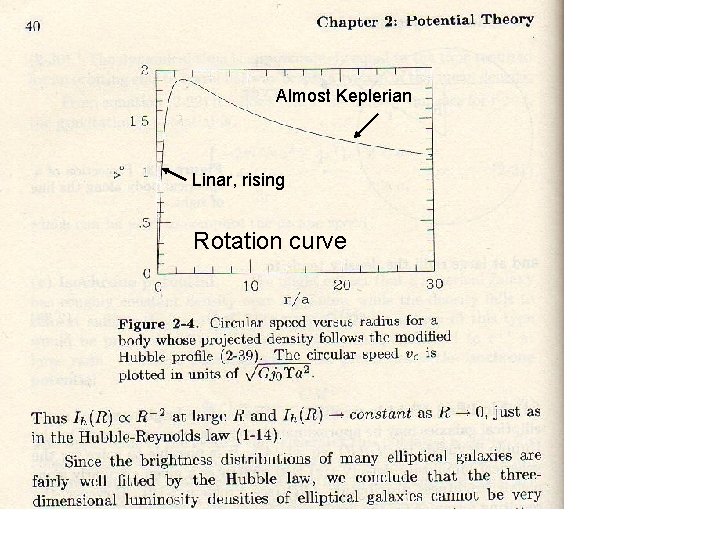
Almost Keplerian Linar, rising Rotation curve
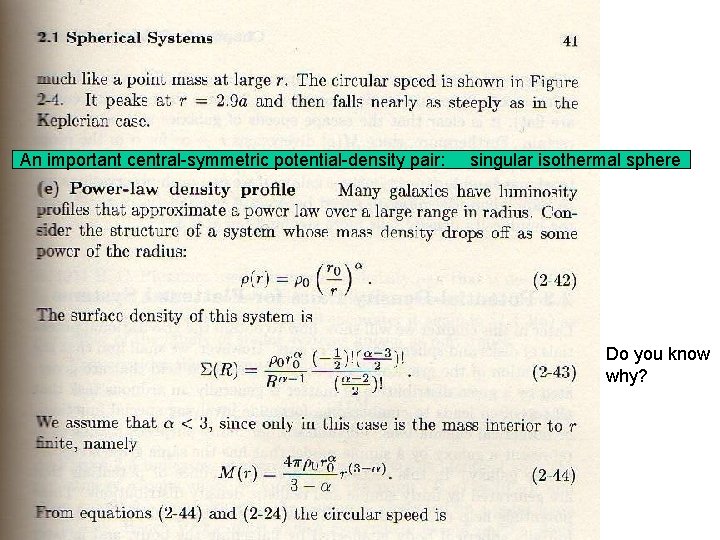
An important central-symmetric potential-density pair: singular isothermal sphere Do you know why?
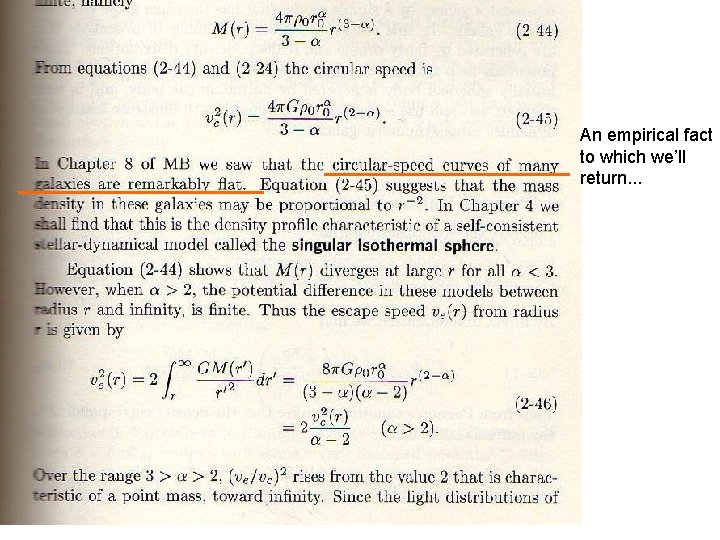
An empirical fact to which we’ll return. . .