
Newtons First Law of Migration The Gravity Model

- Slides: 21
Newton’s First Law of Migration: The Gravity Model Chapter 4
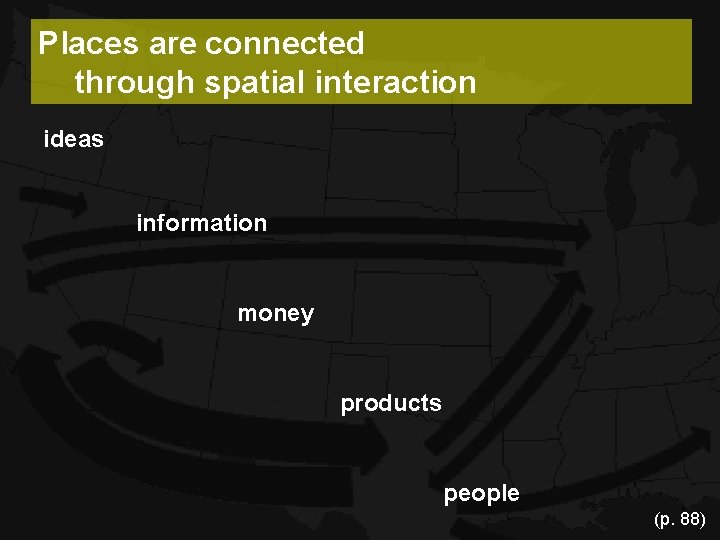
Places are connected through spatial interaction ideas information money products people (p. 88)
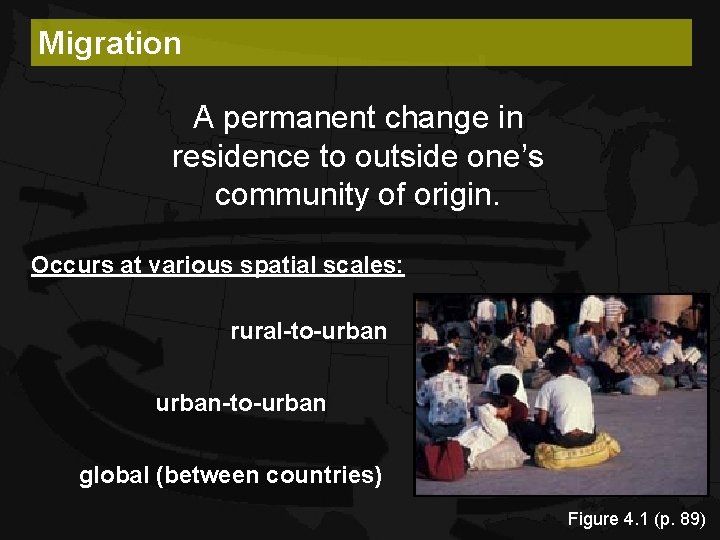
Migration A permanent change in residence to outside one’s community of origin. Occurs at various spatial scales: rural-to-urban-to-urban global (between countries) Figure 4. 1 (p. 89)
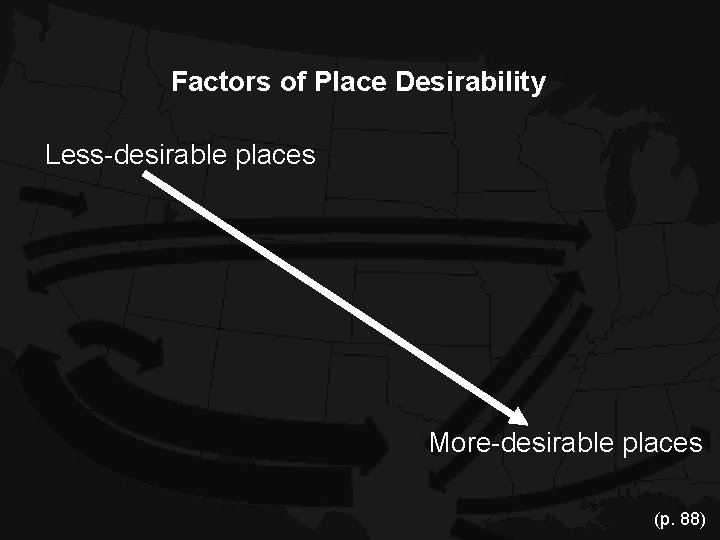
Factors of Place Desirability Less-desirable places More-desirable places (p. 88)
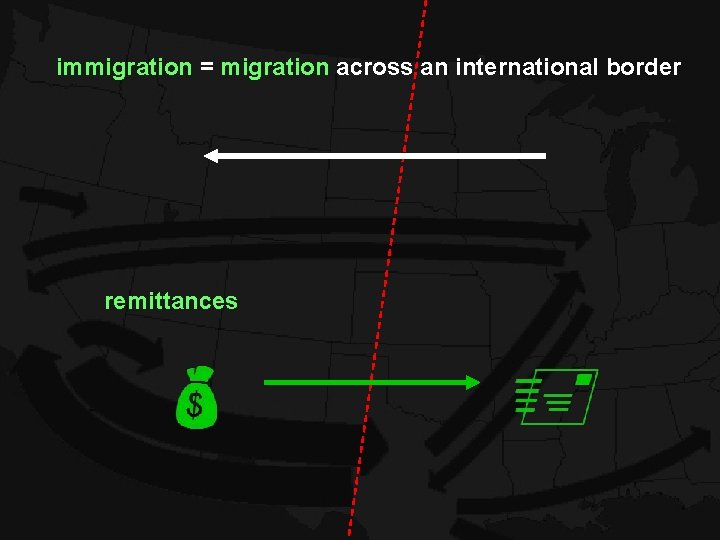
immigration = migration across an international border remittances
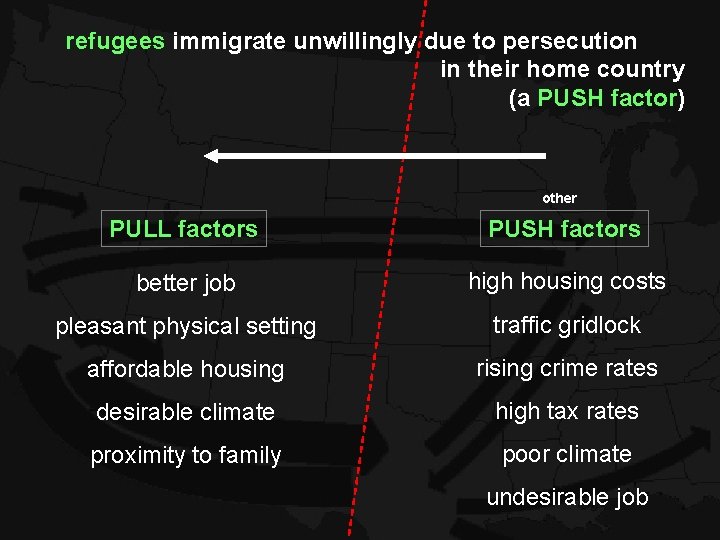
refugees immigrate unwillingly due to persecution in their home country (a PUSH factor) other PULL factors PUSH factors better job high housing costs pleasant physical setting traffic gridlock affordable housing rising crime rates desirable climate high tax rates proximity to family poor climate undesirable job
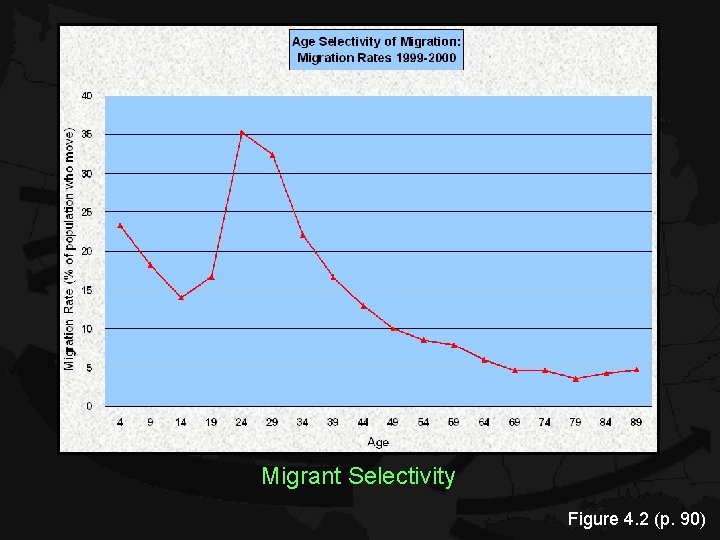
Migrant Selectivity Figure 4. 2 (p. 90)
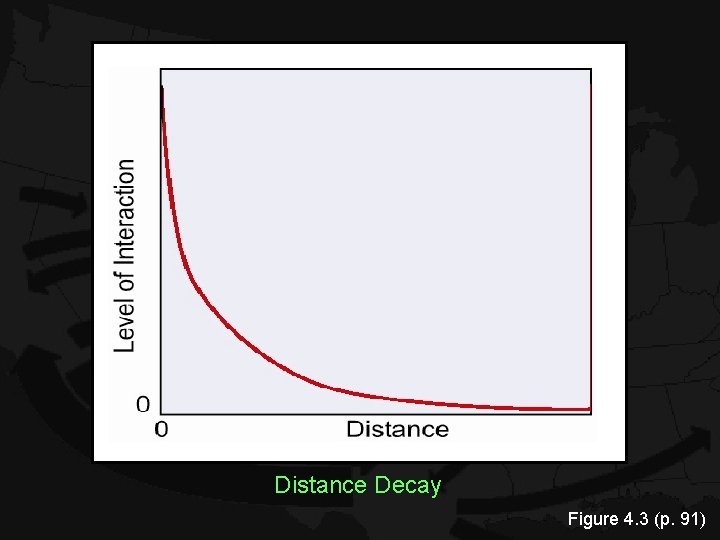
Distance Decay Figure 4. 3 (p. 91)
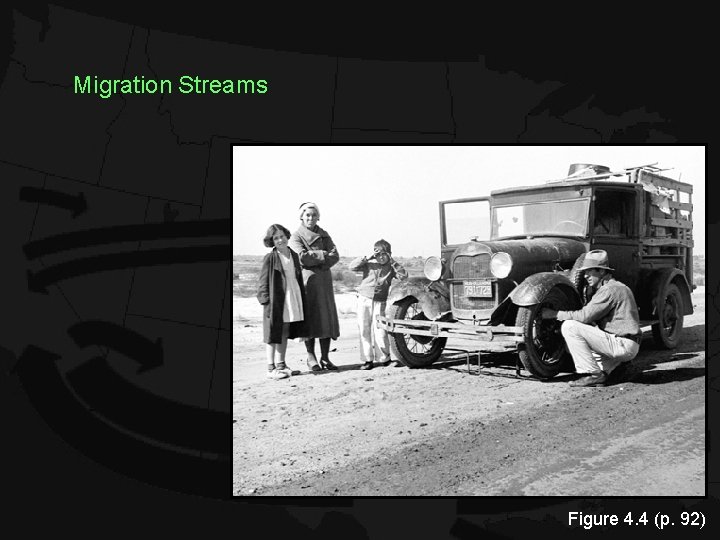
Migration Streams Figure 4. 4 (p. 92)
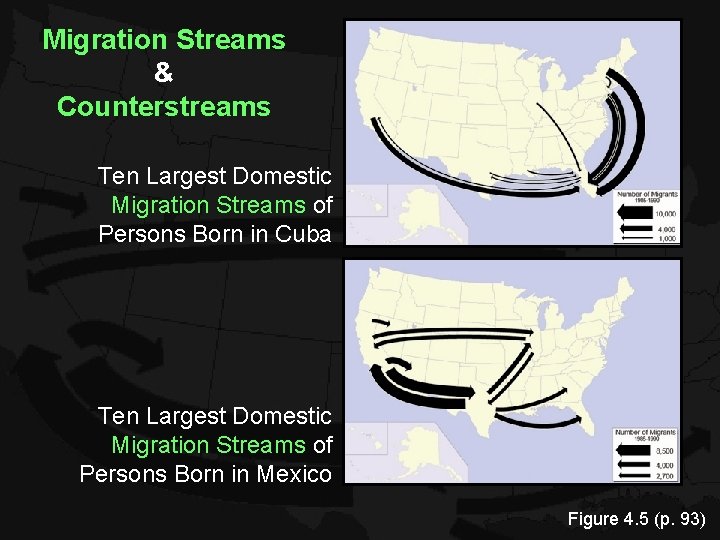
Migration Streams & Counterstreams Ten Largest Domestic Migration Streams of Persons Born in Cuba Ten Largest Domestic Migration Streams of Persons Born in Mexico Figure 4. 5 (p. 93)
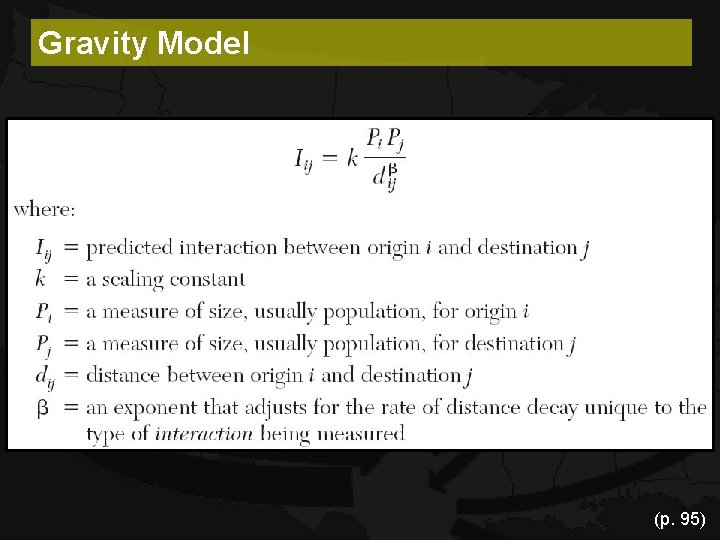
Gravity Model (p. 95)
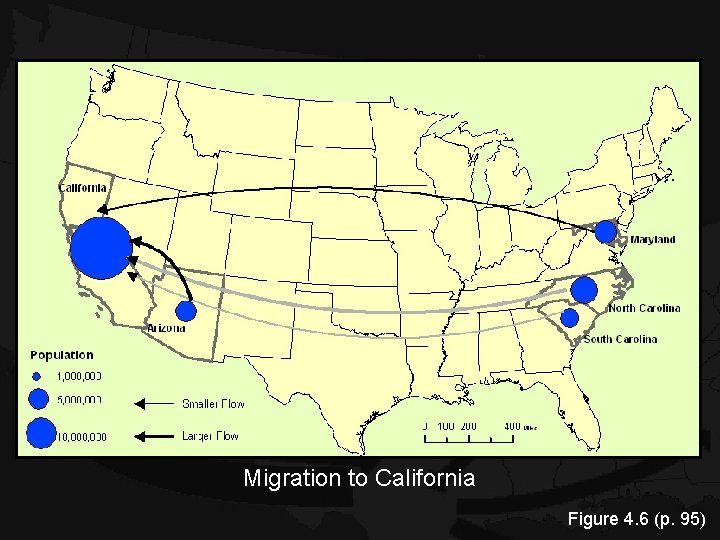
Migration to California Figure 4. 6 (p. 95)
Mobility • Part of American experience • Mobility is high in developed countries with immigrant background • Migration in the past as a predictor of future migration.
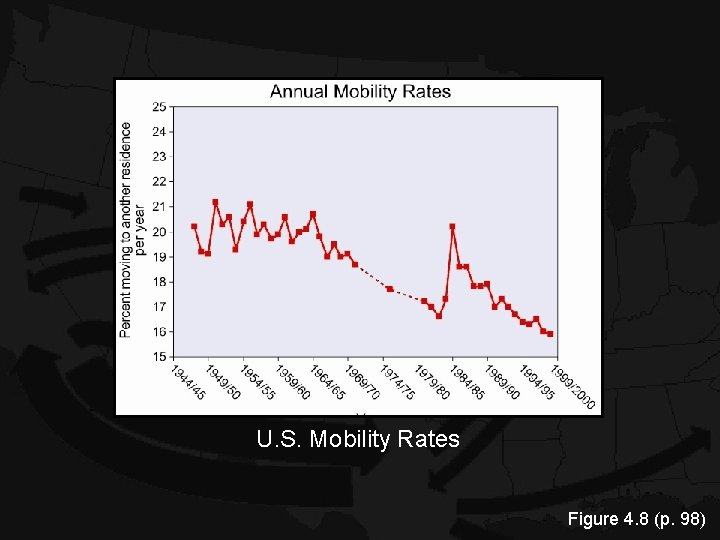
U. S. Mobility Rates Figure 4. 8 (p. 98)
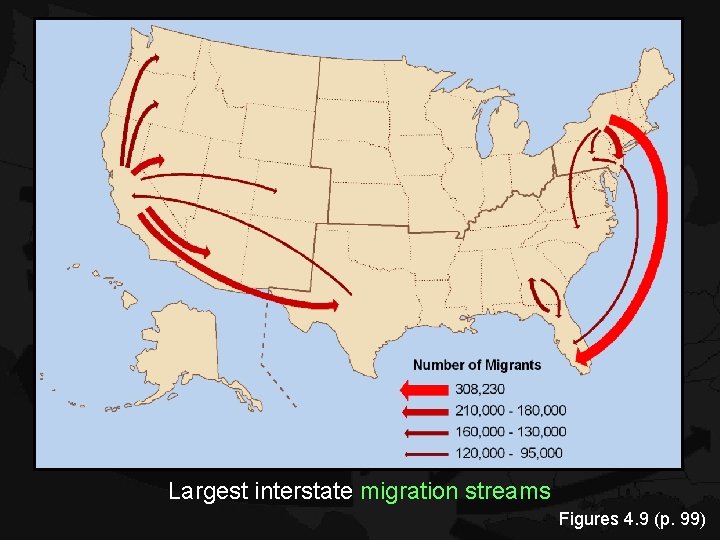
Largest interstate migration streams Figures 4. 9 (p. 99)
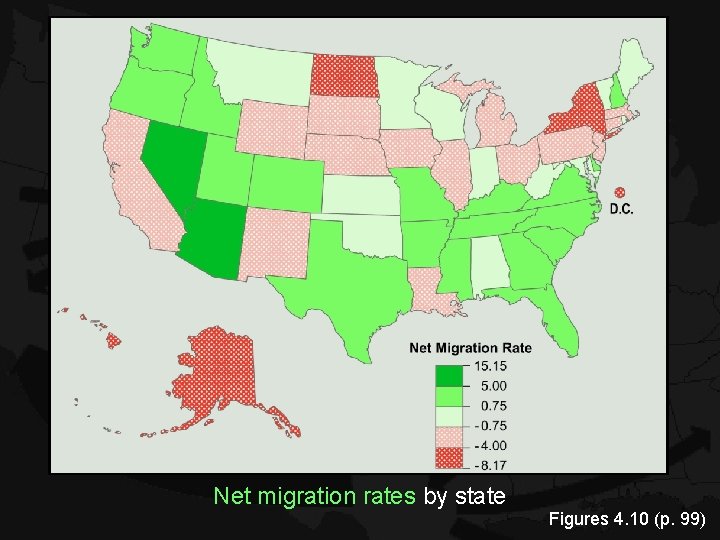
Net migration rates by state Figures 4. 10 (p. 99)
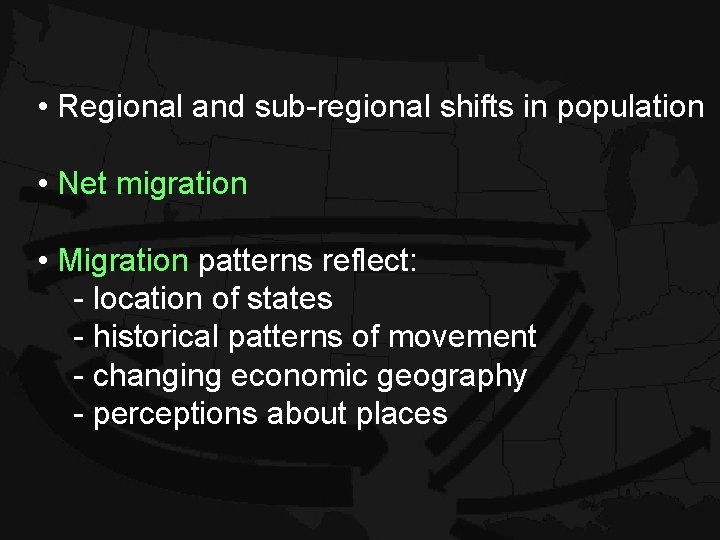
• Regional and sub-regional shifts in population • Net migration • Migration patterns reflect: - location of states - historical patterns of movement - changing economic geography - perceptions about places
Name That Key Term
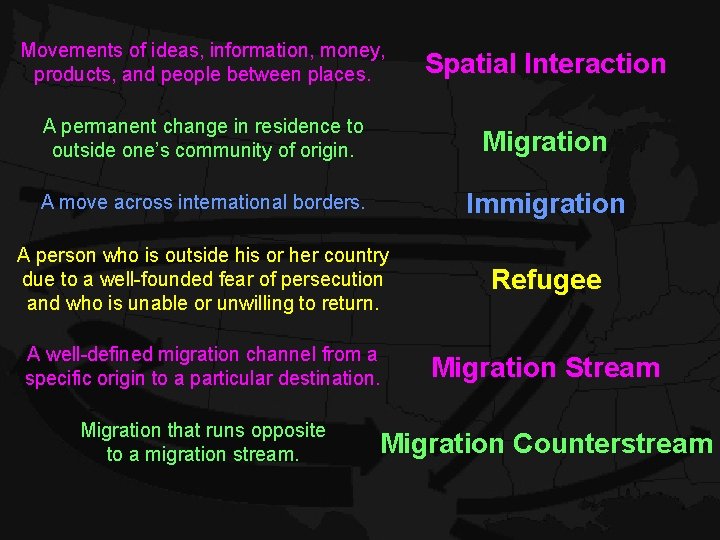
Movements of ideas, information, money, products, and people between places. Spatial Interaction A permanent change in residence to outside one’s community of origin. Migration A move across international borders. Immigration A person who is outside his or her country due to a well-founded fear of persecution and who is unable or unwilling to return. Refugee A well-defined migration channel from a specific origin to a particular destination. Migration Stream Migration that runs opposite to a migration stream. Migration Counterstream
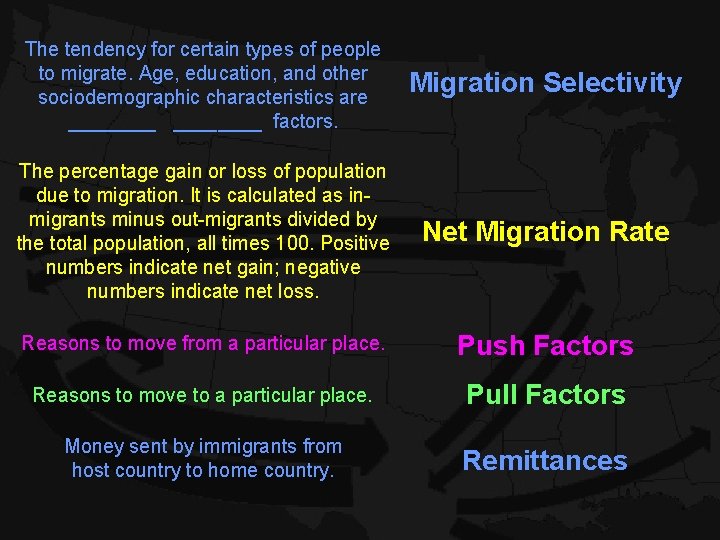
The tendency for certain types of people to migrate. Age, education, and other sociodemographic characteristics are ________ factors. Migration Selectivity The percentage gain or loss of population due to migration. It is calculated as inmigrants minus out-migrants divided by the total population, all times 100. Positive numbers indicate net gain; negative numbers indicate net loss. Net Migration Rate Reasons to move from a particular place. Push Factors Reasons to move to a particular place. Pull Factors Money sent by immigrants from host country to home country. Remittances
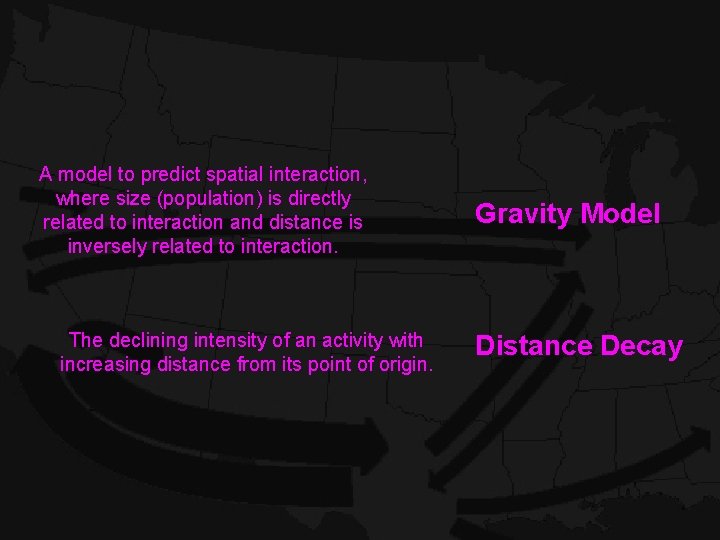
A model to predict spatial interaction, where size (population) is directly related to interaction and distance is inversely related to interaction. The declining intensity of an activity with increasing distance from its point of origin. Gravity Model Distance Decay