
Newtons 3 laws of motion Isaac Newton 1642
- Slides: 25
Newton’s 3 laws of motion Isaac Newton 1642 --- 1727 Physics 100 Chapt 3
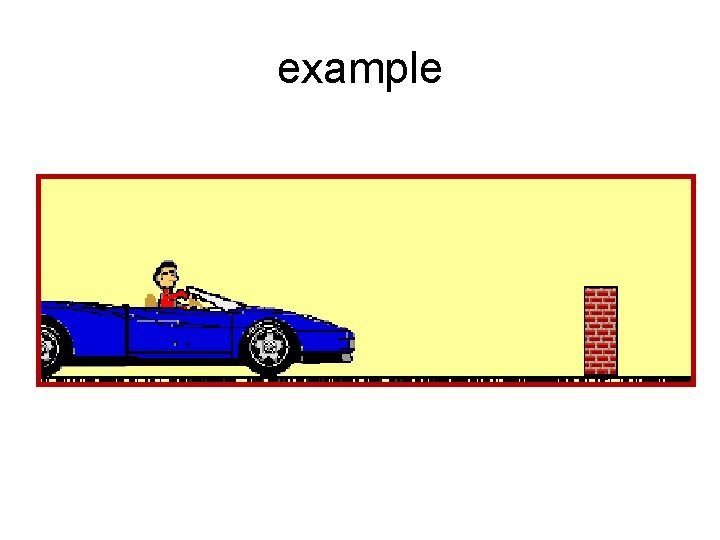
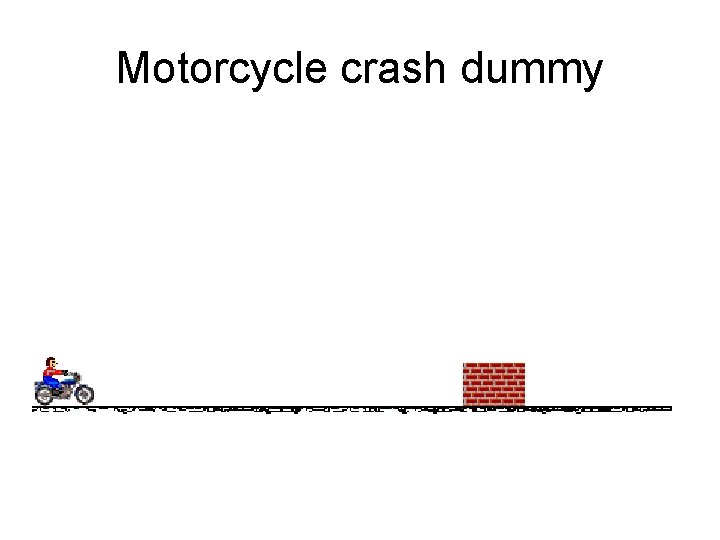
1 st Law: Law of Inertia A body at rest tends to stay at rest, a body in motion tends to keep moving along at a constant speed and in a straight-line path unless interfered with by some external forces.
example
Motorcycle crash dummy
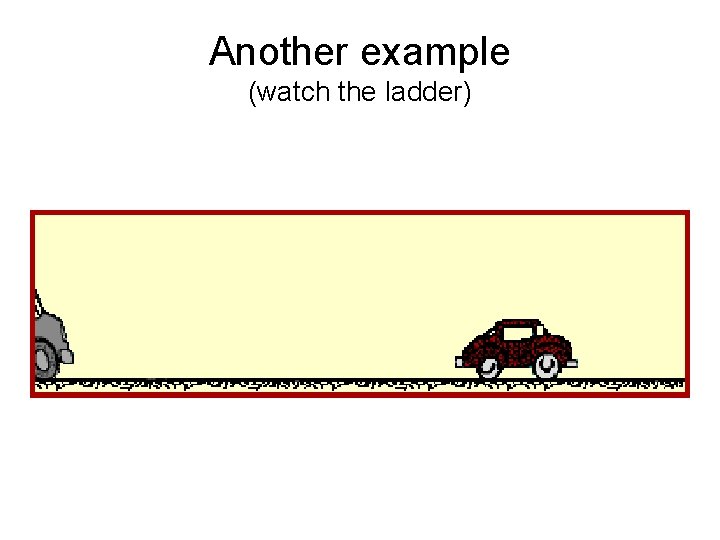
Another example (watch the ladder)
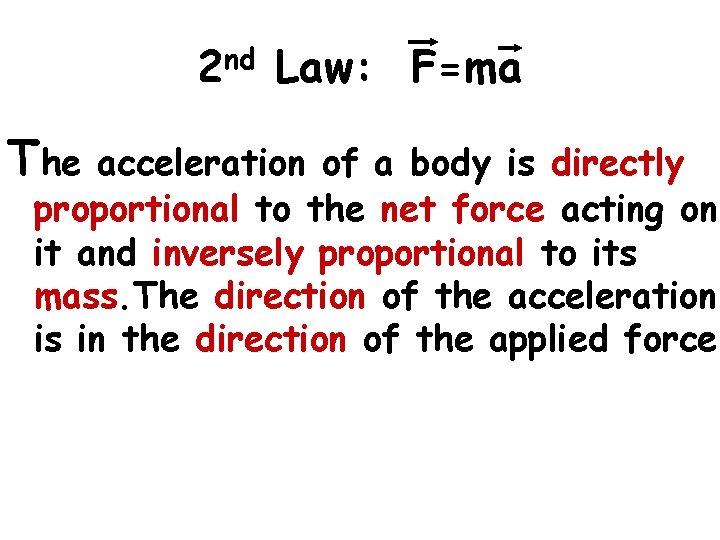
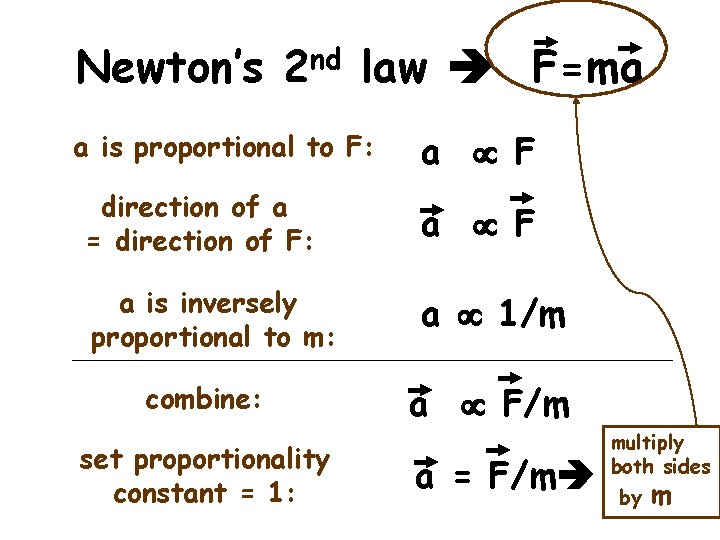
2 nd Law: F=ma The acceleration of a body is directly proportional to the net force acting on it and inversely proportional to its mass. The direction of the acceleration is in the direction of the applied force.
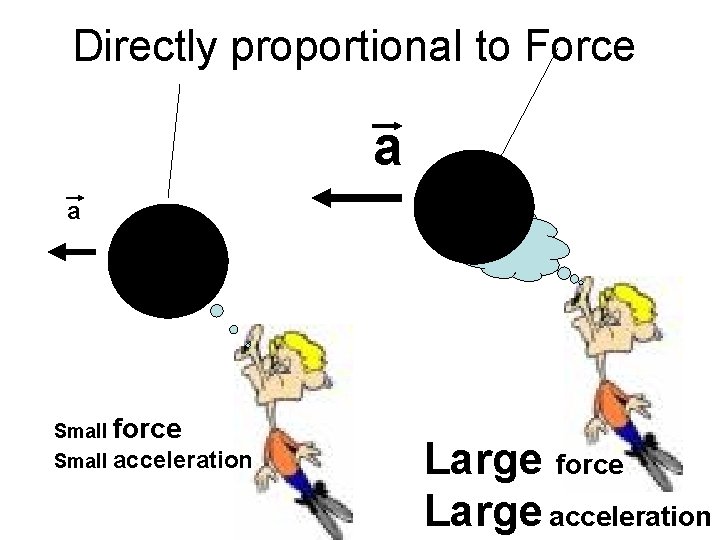
Directly proportional to Force a a Small force Small acceleration Large force Large acceleration
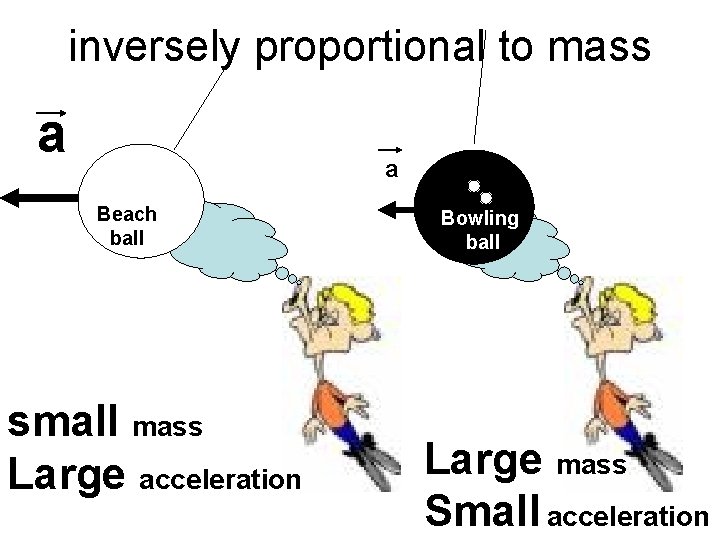
inversely proportional to mass a a Beach ball small mass Large acceleration Bowling ball Large mass Small acceleration
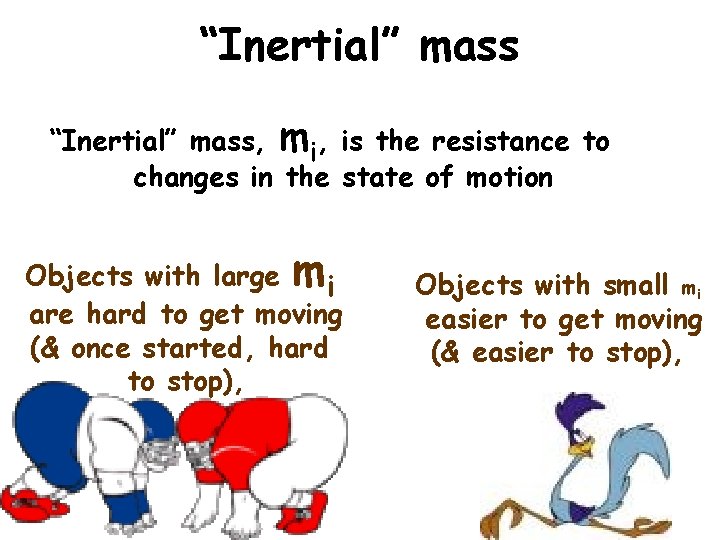
“Inertial” mass, mi, is the resistance to changes in the state of motion Objects with large mi are hard to get moving (& once started, hard to stop), Objects with small mi easier to get moving (& easier to stop),
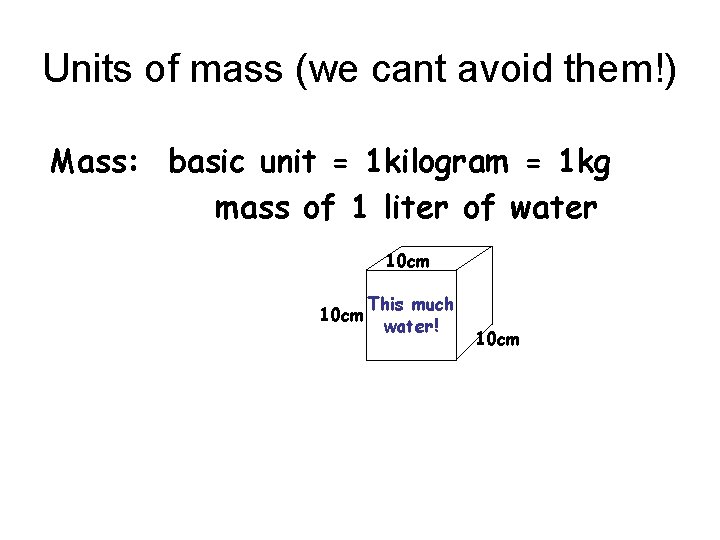
Units of mass (we cant avoid them!) Mass: basic unit = 1 kilogram = 1 kg mass of 1 liter of water 10 cm This much water! 10 cm
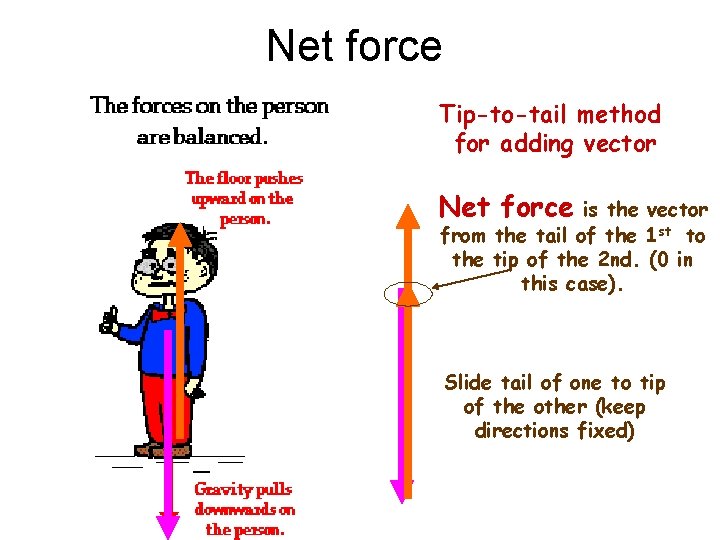
Net force Tip-to-tail method for adding vector Net force is the vector from the tail of the 1 st to the tip of the 2 nd. (0 in this case). Slide tail of one to tip of the other (keep directions fixed)
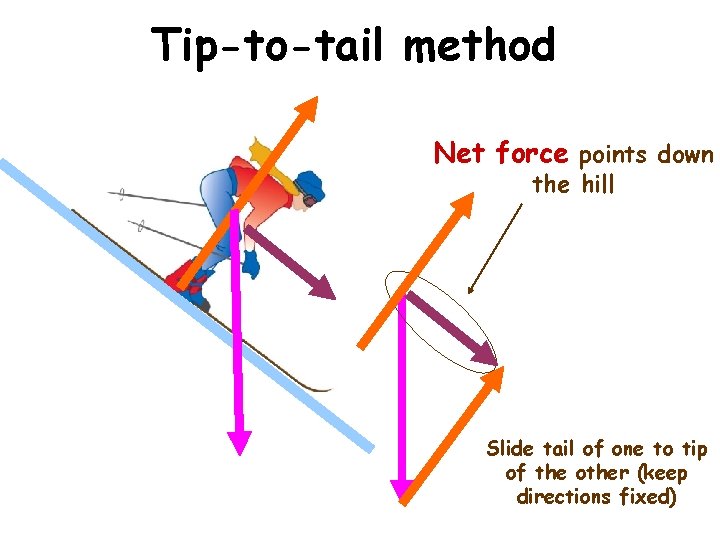
Tip-to-tail method Net force points down the hill Slide tail of one to tip of the other (keep directions fixed)
Newton’s 2 nd law F=ma a is proportional to F: a F direction of a = direction of F: a F a is inversely proportional to m: a 1/m combine: set proportionality constant = 1: a F/m a = F/m multiply both sides by m
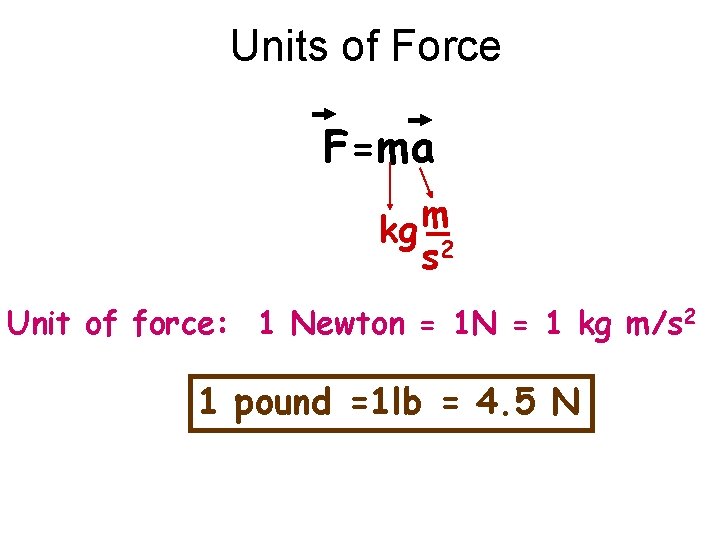
Units of Force F=ma m kg 2 s Unit of force: 1 Newton = 1 N = 1 kg m/s 2 1 pound =1 lb = 4. 5 N
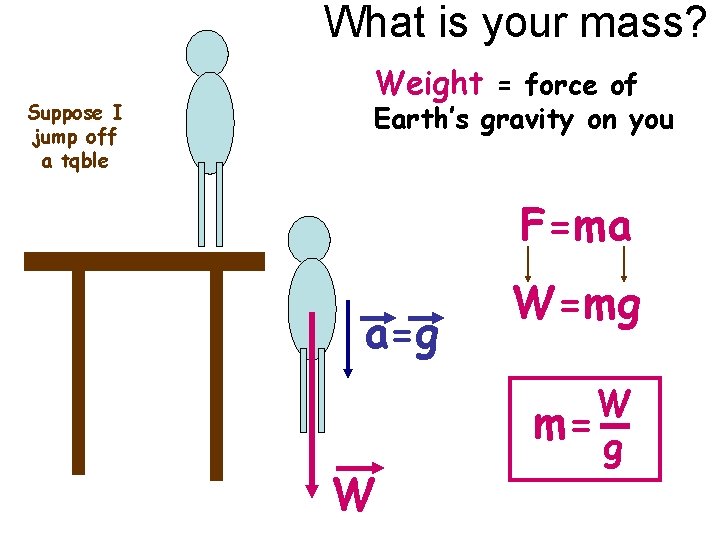
What is your mass? Suppose I jump off a tqble Weight = force of Earth’s gravity on you F=ma a=g W W=mg W m= g
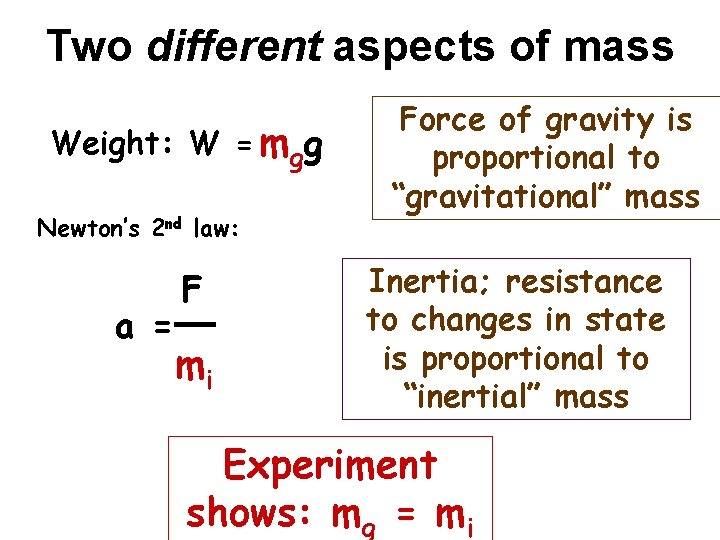
Two different aspects of mass Weight: W = m mggg Newton’s 2 nd law: a = F m m i Force of gravity is proportional to “gravitational” mass Inertia; resistance to changes in state is proportional to “inertial” mass Experiment shows: mg = mi
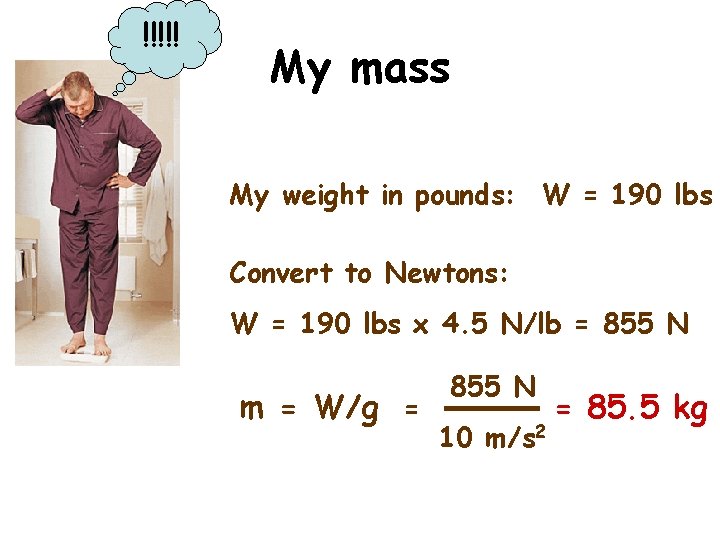
!!!!! My mass My weight in pounds: W = 190 lbs Convert to Newtons: W = 190 lbs x 4. 5 N/lb = 855 N m = W/g = 855 N 10 m/s 2 = 85. 5 kg
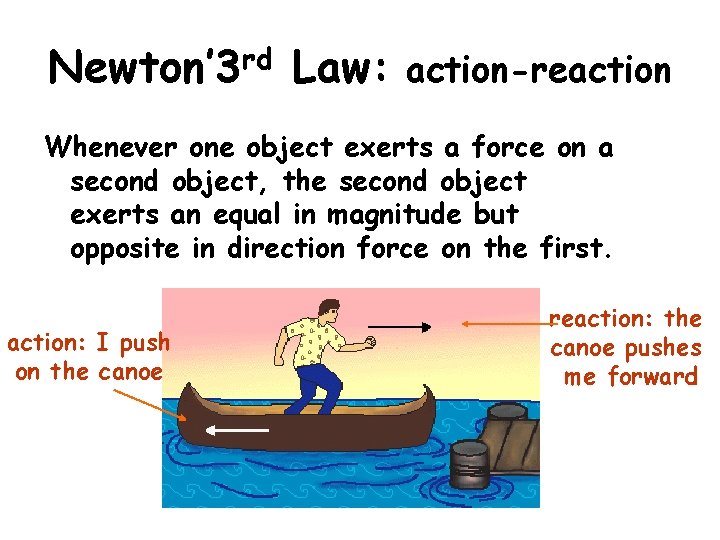
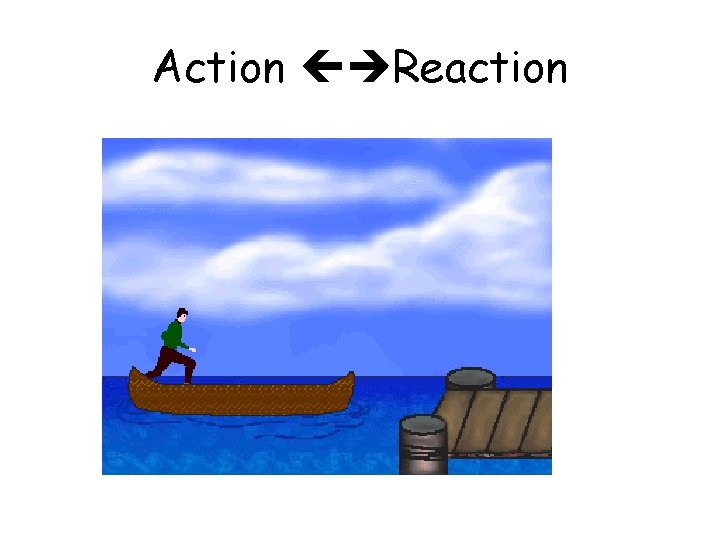
Newton’ 3 rd Law: action-reaction Whenever one object exerts a force on a second object, the second object exerts an equal in magnitude but opposite in direction force on the first. action: I push on the canoe reaction: the canoe pushes me forward
Action Reaction
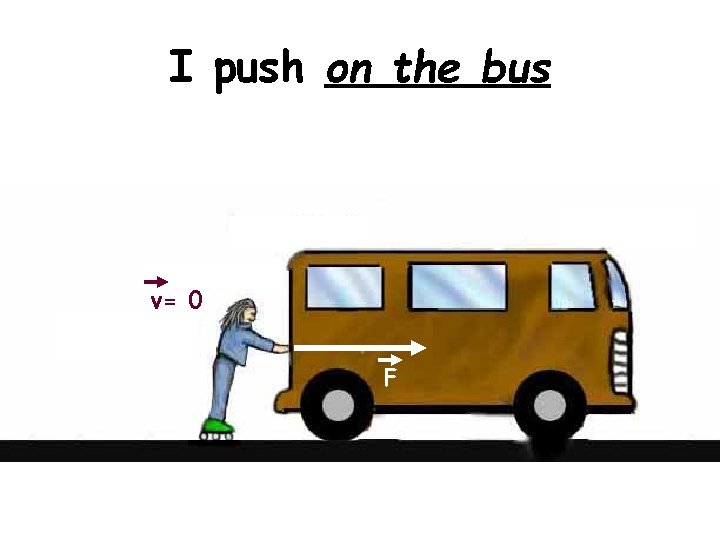
I push on the bus v= 0 F
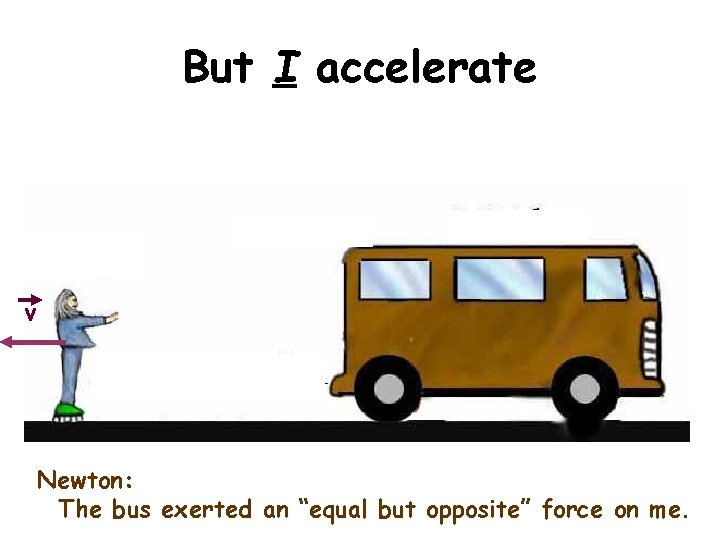
But I accelerate v Newton: The bus exerted an “equal but opposite” force on me.
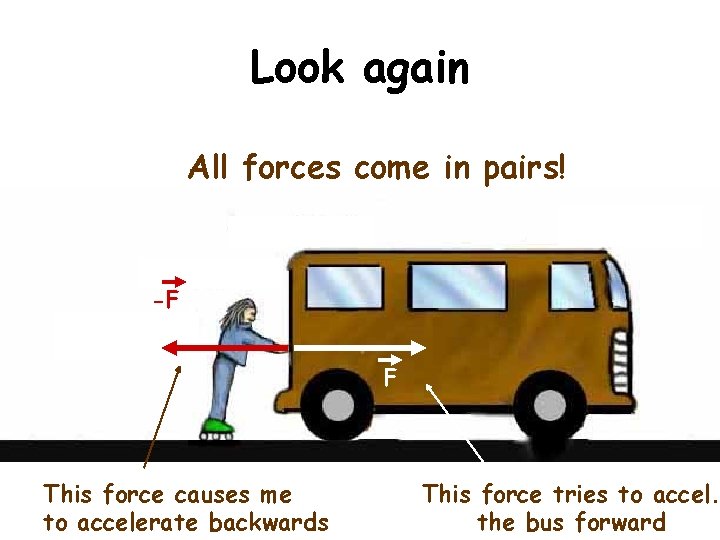
Look again All forces come in pairs! -F F This force causes me to accelerate backwards This force tries to accel. the bus forward
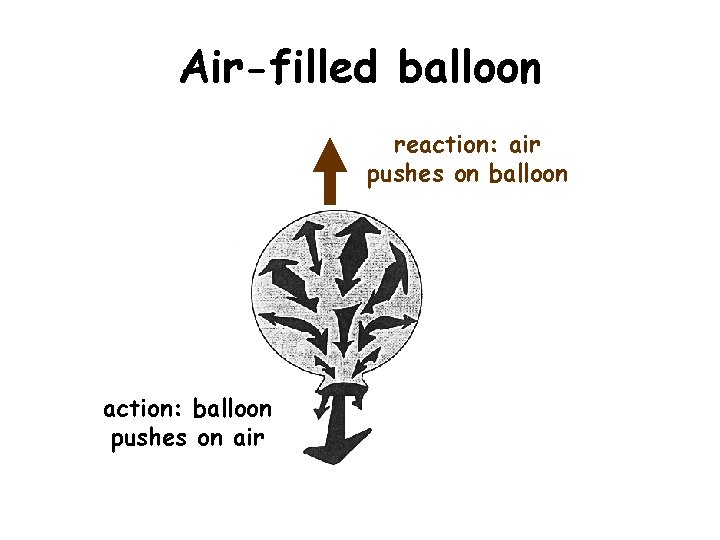
Air-filled balloon reaction: air pushes on balloon action: balloon pushes on air
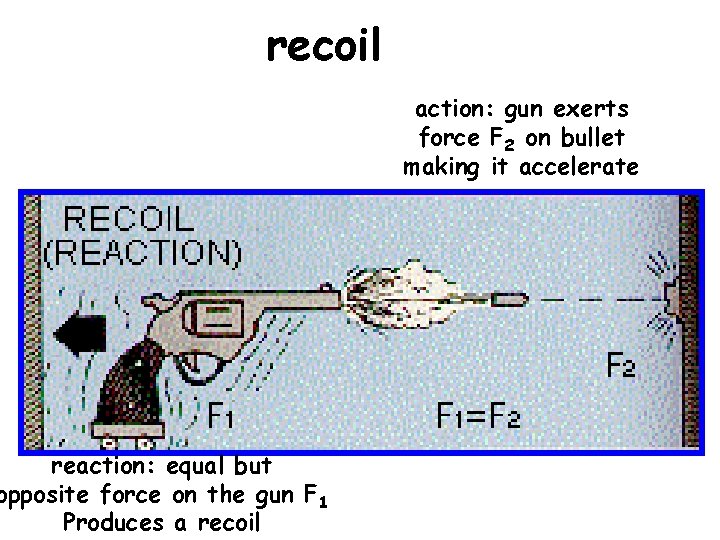
recoil reaction: equal but opposite force on the gun F 1 Produces a recoil action: gun exerts force F 2 on bullet making it accelerate
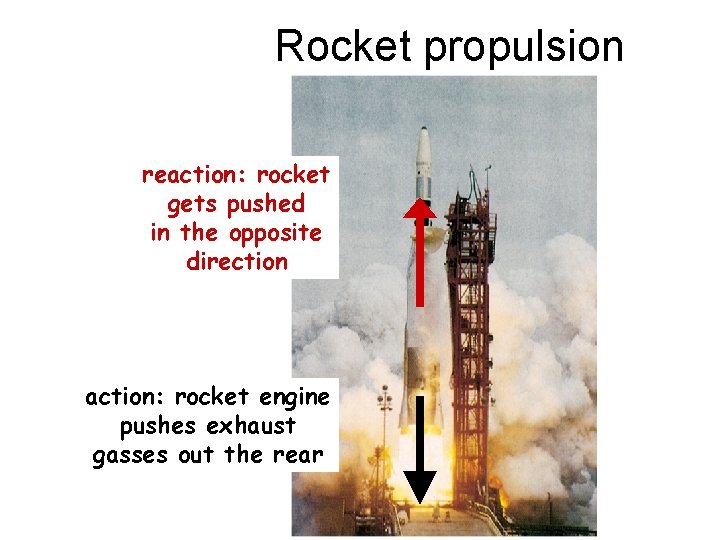
Rocket propulsion reaction: rocket gets pushed in the opposite direction action: rocket engine pushes exhaust gasses out the rear