
Newspaper article language To define identify and analyse






- Slides: 15
Newspaper article language
To define, identify and analyse persuasive language. SUCCESS CRITERIA Identify the persuasive language used in an article and explain and interpret the representation of the person/group it creates. (positive or negative)
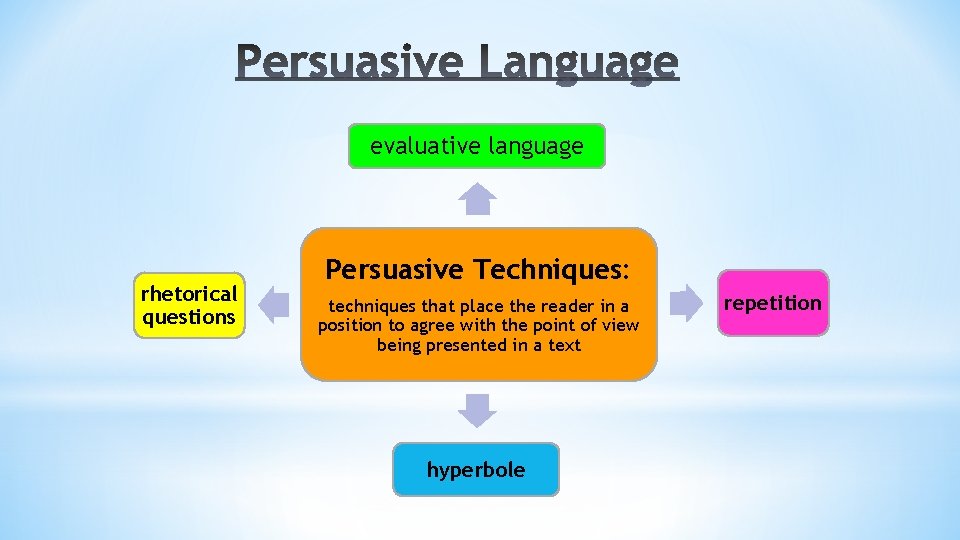
evaluative language rhetorical questions Persuasive Techniques: techniques that place the reader in a position to agree with the point of view being presented in a text hyperbole repetition
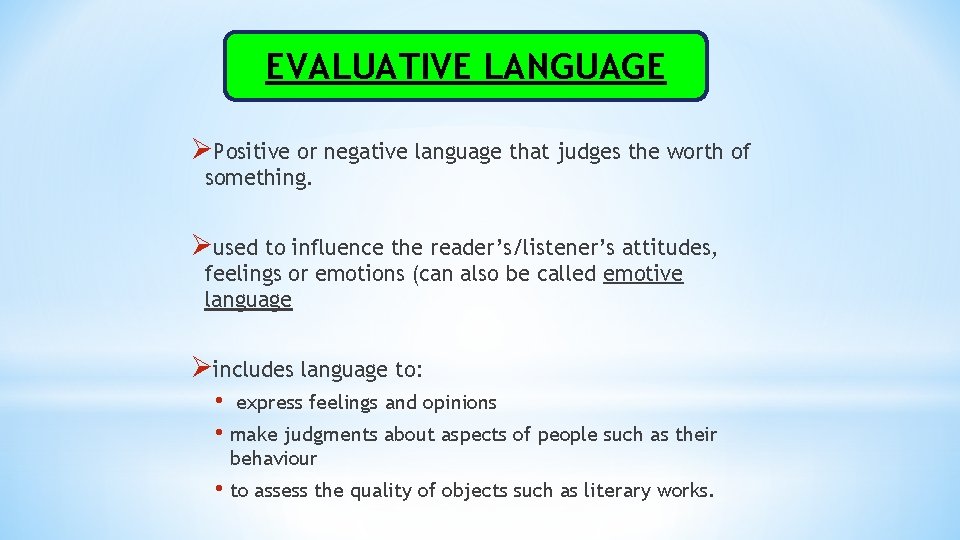
EVALUATIVE LANGUAGE ØPositive or negative language that judges the worth of something. Øused to influence the reader’s/listener’s attitudes, feelings or emotions (can also be called emotive language Øincludes language to: • express feelings and opinions • make judgments about aspects of people such as their behaviour • to assess the quality of objects such as literary works.
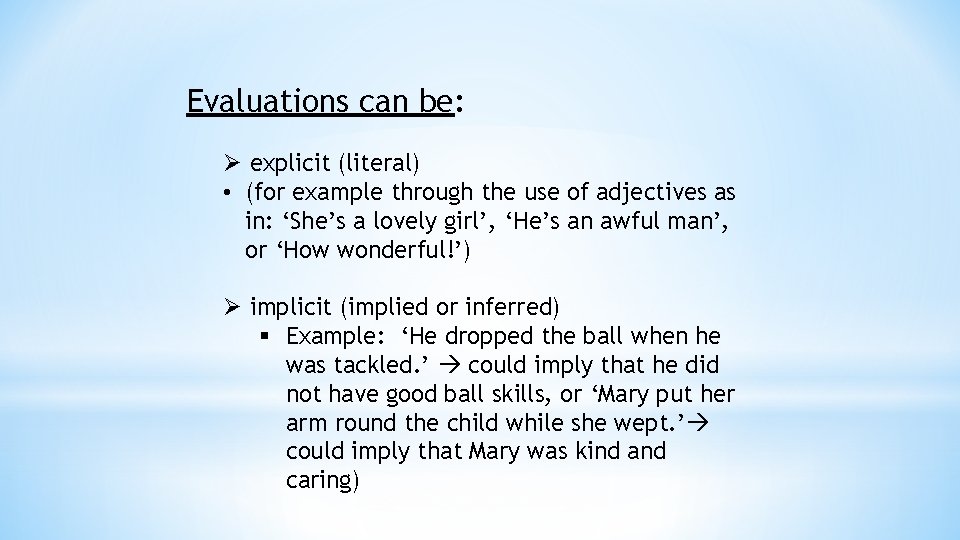
Evaluations can be: Ø explicit (literal) • (for example through the use of adjectives as in: ‘She’s a lovely girl’, ‘He’s an awful man’, or ‘How wonderful!’) Ø implicit (implied or inferred) § Example: ‘He dropped the ball when he was tackled. ’ could imply that he did not have good ball skills, or ‘Mary put her arm round the child while she wept. ’ could imply that Mary was kind and caring)
Inferring: A strategy that involves combining the information written in the text with the reader’s own ideas to create their own unique interpretation of the text. The answers are not usually written in the text but there is information given that will give you clues to what the author was intending. e. g. John played soccer every afternoon. (written in the text)---John loves to play soccer. (inferred)
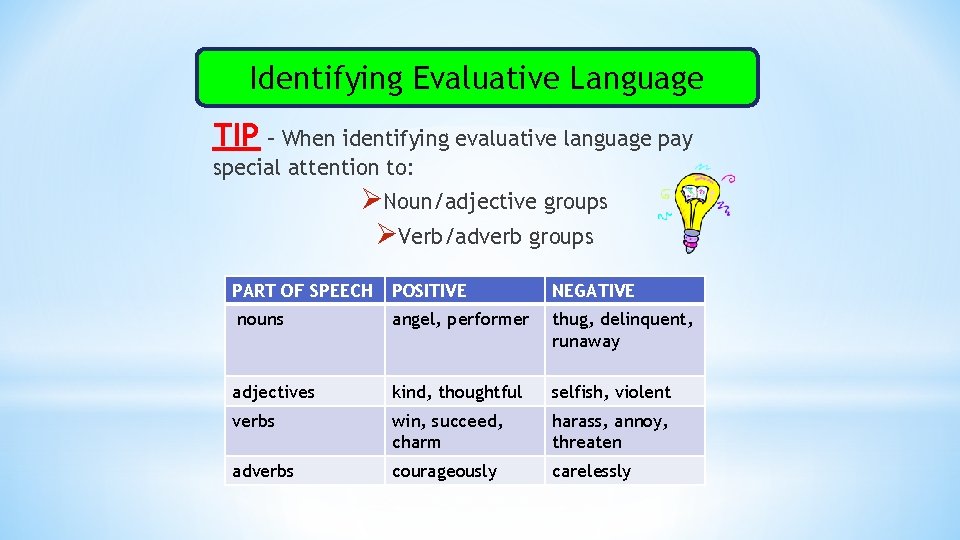
Identifying Evaluative Language TIP – When identifying evaluative language pay special attention to: ØNoun/adjective groups ØVerb/adverb groups PART OF SPEECH POSITIVE NEGATIVE angel, performer thug, delinquent, runaway adjectives kind, thoughtful selfish, violent verbs win, succeed, charm harass, annoy, threaten adverbs courageously carelessly nouns
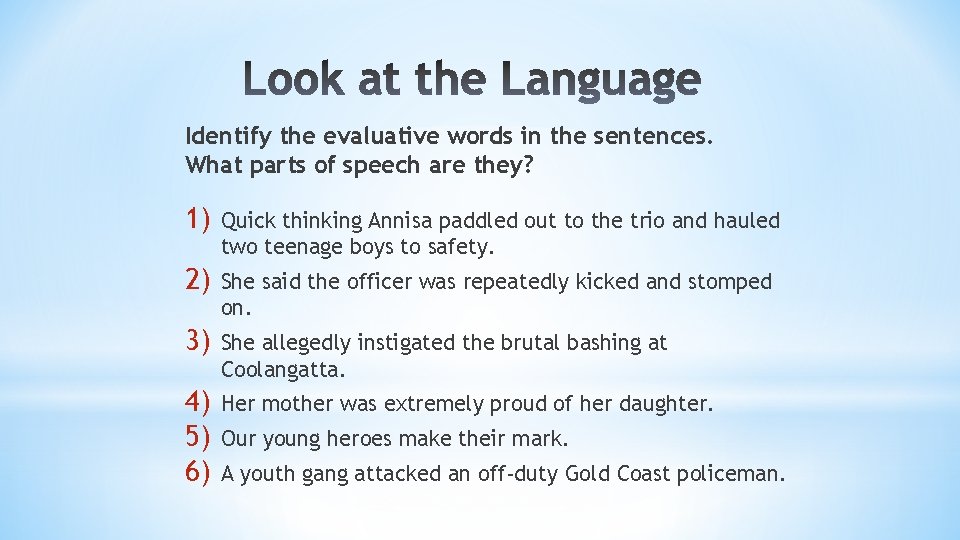
Identify the evaluative words in the sentences. What parts of speech are they? 1) Quick thinking Annisa paddled out to the trio and hauled two teenage boys to safety. 2) She said the officer was repeatedly kicked and stomped on. 3) She allegedly instigated the brutal bashing at Coolangatta. 4) 5) 6) Her mother was extremely proud of her daughter. Our young heroes make their mark. A youth gang attacked an off-duty Gold Coast policeman.
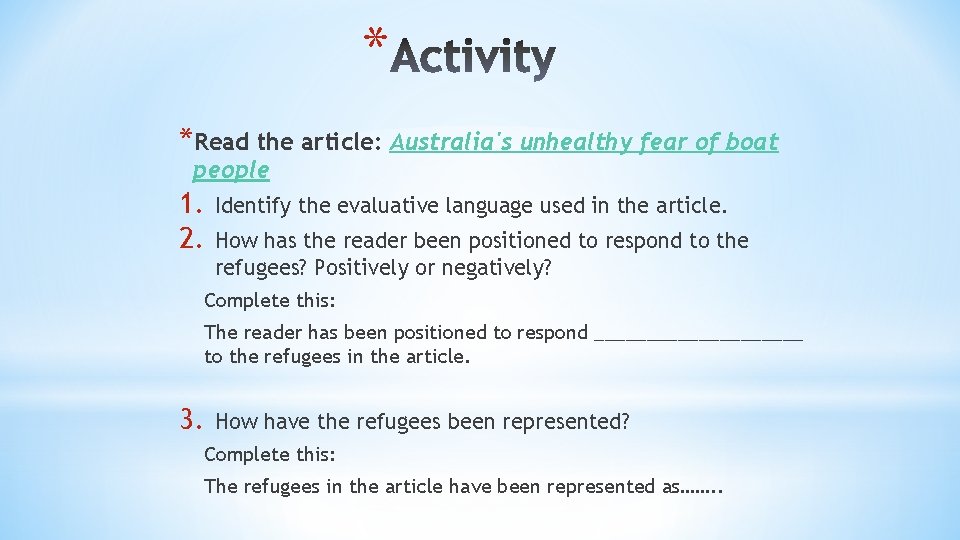
* *Read the article: Australia's unhealthy fear of boat people 1. 2. Identify the evaluative language used in the article. How has the reader been positioned to respond to the refugees? Positively or negatively? Complete this: The reader has been positioned to respond __________ to the refugees in the article. 3. How have the refugees been represented? Complete this: The refugees in the article have been represented as……. .
To define, identify and analyse persuasive techniques (repetition, rhetorical questions and hyperboles). SUCCESS CRITERIA Identify persuasive techniques (repetition, rhetorical questions and hyperboles) used in an article and interpret how they contribute to the representation of the person/group. (positive or negative)
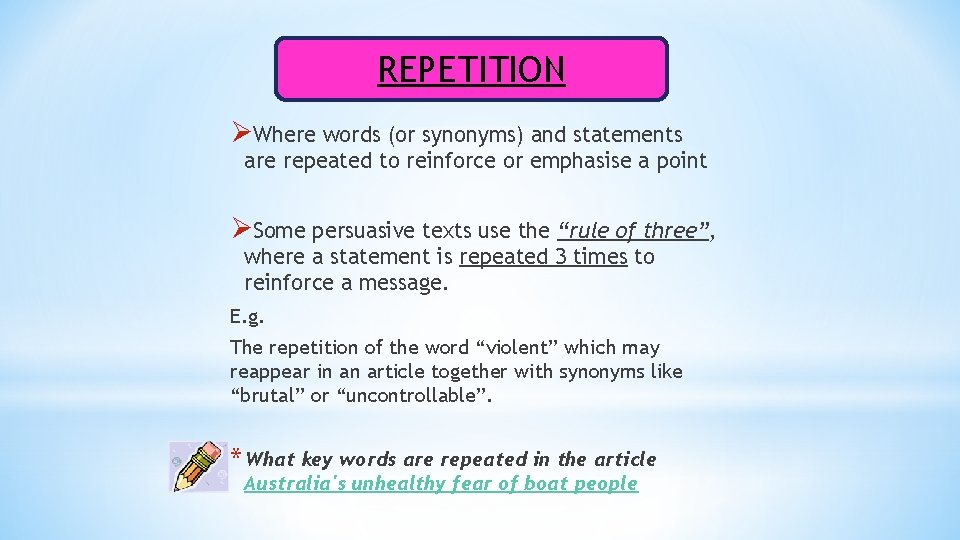
REPETITION ØWhere words (or synonyms) and statements are repeated to reinforce or emphasise a point ØSome persuasive texts use the “rule of three”, where a statement is repeated 3 times to reinforce a message. E. g. The repetition of the word “violent” which may reappear in an article together with synonyms like “brutal” or “uncontrollable”. * What key words are repeated in the article Australia's unhealthy fear of boat people
RHETORICAL QUESTIONS • Rhetorical questions are used in persuasive texts to make you think, but do not require an answer. E. g. § What hope do our children have? § What sort of person treats another human being like this? *Discussion about rhetorical question in the article Could cricket have a big future in China?
HYPERBOLE • A great exaggeration used to emphasize a point, and is used for expressive or comic effect. • A hyperbole is not to be taken literally. E. g. I was so embarrassed I thought I might die. Her brain is the size of a pea.
Persuasive Language Techniques Øevaluative language Ørepetition Ørhetorical questions Øhyperbole *Read the article Malaysia tells thousands of Rohingya refugees to 'go back to your country‘ and complete the retrieval chart examining the written persuasive techniques used to construct a representation of refugees.
During this unit you will be expected to: • Read media articles about refugees • Start collecting facts and recounts of refugee stories. • Start thinking about how refugees are represented in newspapers.