
Newborn Jaundice and the Prevention of Kernicterus A
Newborn Jaundice and the Prevention of Kernicterus A Six-Sigma Approach Vinod K. Bhutani, MD, FAAP Professor of Pediatrics Division of Neonatal and Developmental Medicine Lucile Packard Children’s Hospital Stanford University, Stanford, CA Supported by AAMC/CDC: MM 0048
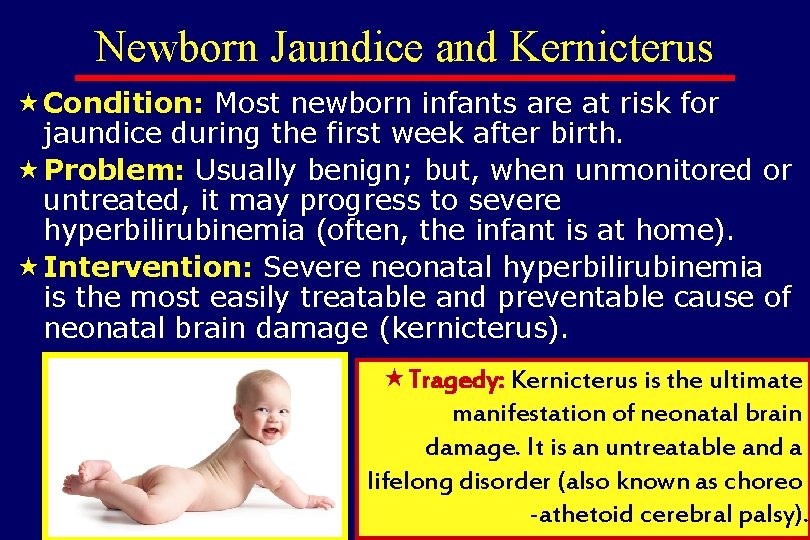
Newborn Jaundice and Kernicterus « Condition: Most newborn infants are at risk for jaundice during the first week after birth. « Problem: Usually benign; but, when unmonitored or untreated, it may progress to severe hyperbilirubinemia (often, the infant is at home). « Intervention: Severe neonatal hyperbilirubinemia is the most easily treatable and preventable cause of neonatal brain damage (kernicterus). «Tragedy: Kernicterus is the ultimate manifestation of neonatal brain damage. It is an untreatable and a lifelong disorder (also known as choreo -athetoid cerebral palsy).
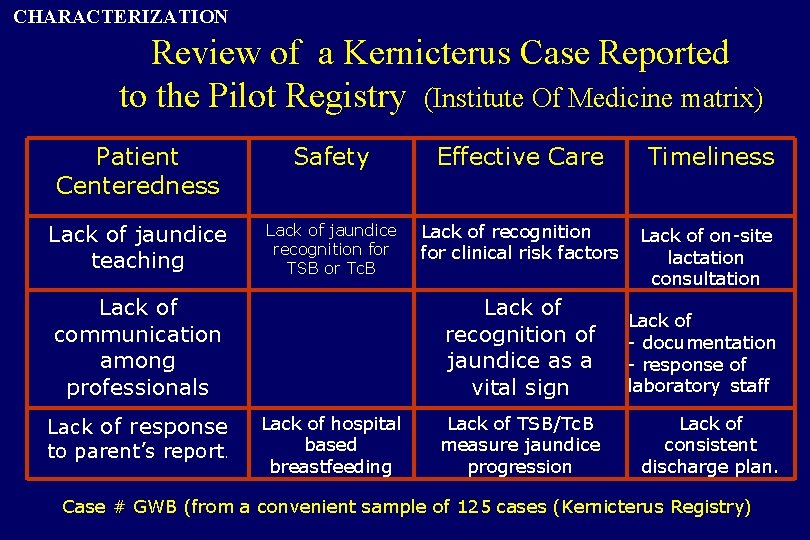
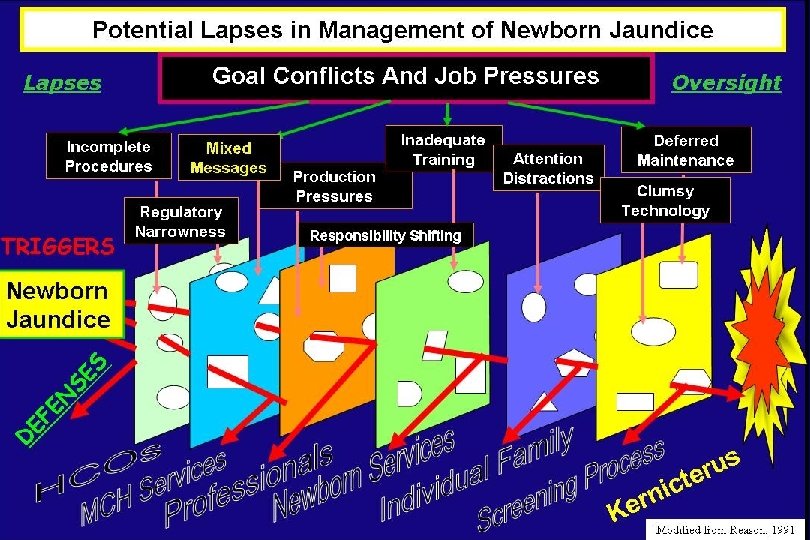
CHARACTERIZATION Review of a Kernicterus Case Reported to the Pilot Registry (Institute Of Medicine matrix) Patient Centeredness Safety Effective Care Timeliness Lack of jaundice teaching Lack of jaundice recognition for TSB or Tc. B Lack of recognition for clinical risk factors Lack of on-site lactation consultation Lack of communication among professionals Lack of response to parent’s report. Lack of hospital based breastfeeding Lack of recognition of jaundice as a vital sign Lack of - documentation - response of laboratory staff Lack of TSB/Tc. B measure jaundice progression Lack of consistent discharge plan. Case # GWB (from a convenient sample of 125 cases (Kernicterus Registry)
IDENTIFICATION
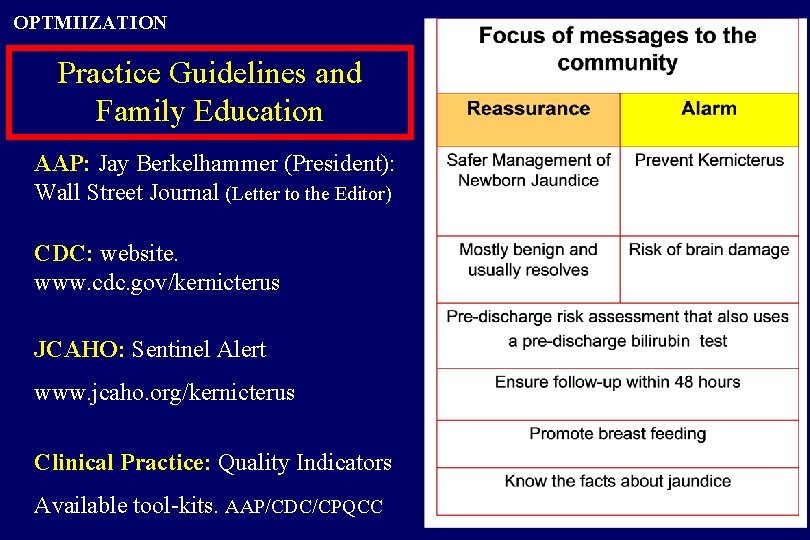
OPTMIIZATION Practice Guidelines and Family Education AAP: Jay Berkelhammer (President): Wall Street Journal (Letter to the Editor) CDC: website. www. cdc. gov/kernicterus JCAHO: Sentinel Alert www. jcaho. org/kernicterus Clinical Practice: Quality Indicators Available tool-kits. AAP/CDC/CPQCC
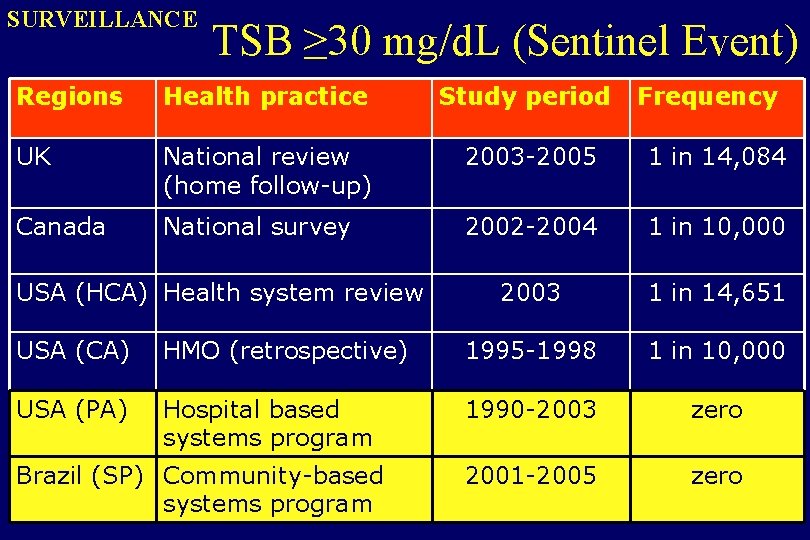
SURVEILLANCE TSB ≥ 30 mg/d. L (Sentinel Event) Regions Health practice Study period UK National review (home follow-up) 2003 -2005 1 in 14, 084 Canada National survey 2002 -2004 1 in 10, 000 2003 1 in 14, 651 USA (HCA) Health system review Frequency USA (CA) HMO (retrospective) 1995 -1998 1 in 10, 000 USA (PA) Hospital based systems program 1990 -2003 zero 2001 -2005 zero Brazil (SP) Community-based systems program

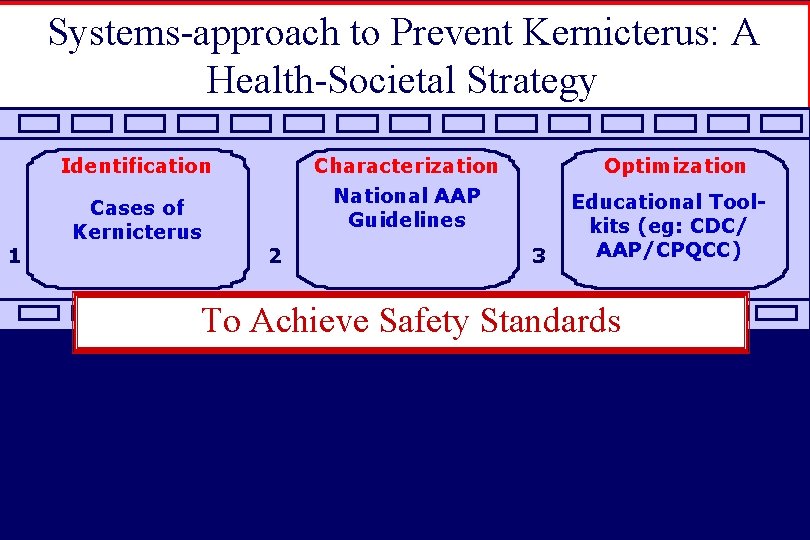
Systems-approach to Prevent Kernicterus: A Health-Societal Strategy Identification 1 Cases of Kernicterus Characterization National AAP Guidelines 2 Optimization 3 Educational Toolkits (eg: CDC/ AAP/CPQCC) To Achieve Safety Standards 4 5 6
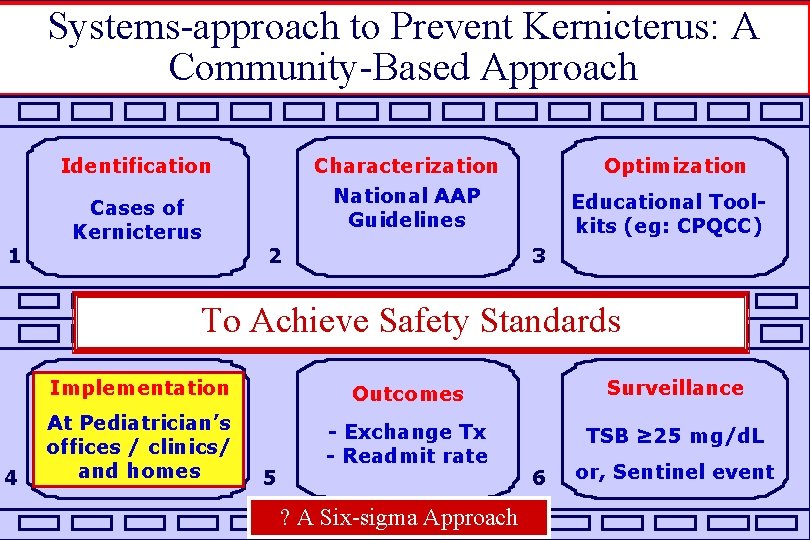
Systems-approach to Prevent Kernicterus: A Community-Based Approach Identification 1 Cases of Kernicterus Characterization National AAP Guidelines 2 Optimization Educational Toolkits (eg: CPQCC) 3 To Achieve Safety Standards 4 Implementation Outcomes Surveillance At Pediatrician’s offices / clinics/ and homes - Exchange Tx - Readmit rate TSB ≥ 25 mg/d. L 5 ? A Six-sigma Approach 6 or, Sentinel event

Current Sigma level for Newborn Jaundice Management • TSB level >25 mg/d. L (“close call”) – Incidence: 1 in 700 (1970 s) – Sigma level: 4. 5 – Incidence: 1 in 600 (2000) – Sigma level: 4. 0 • Readmission for Jaundice Rates – Rate: 27. 7 per 1000 live-births • Sigma level: 4. 0 (1988 -1988)
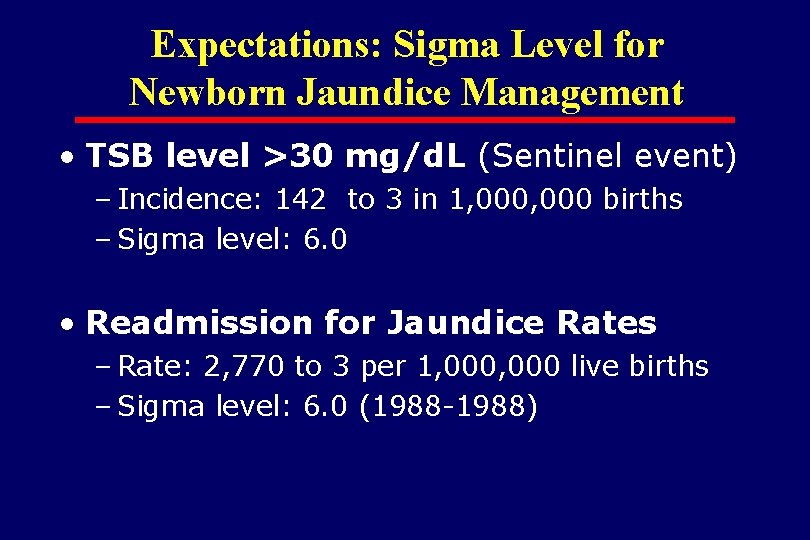
Expectations: Sigma Level for Newborn Jaundice Management • TSB level >30 mg/d. L (Sentinel event) – Incidence: 142 to 3 in 1, 000 births – Sigma level: 6. 0 • Readmission for Jaundice Rates – Rate: 2, 770 to 3 per 1, 000 live births – Sigma level: 6. 0 (1988 -1988)
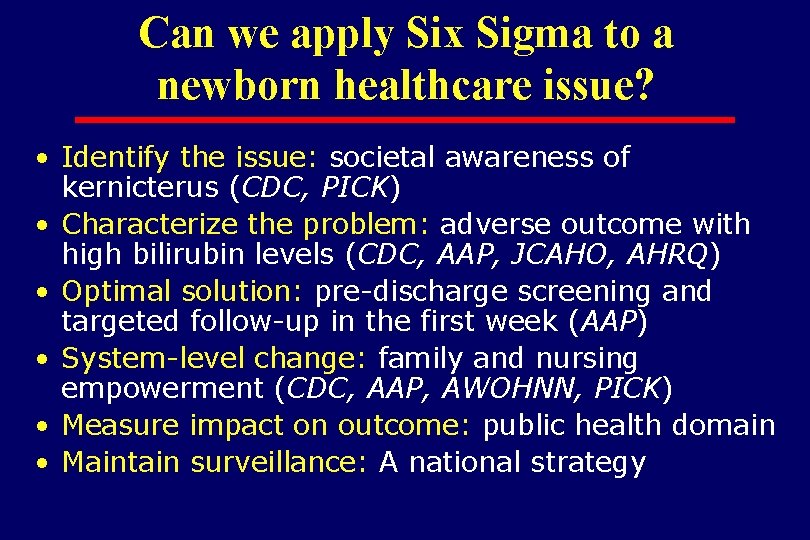
Can we apply Six Sigma to a newborn healthcare issue? • Identify the issue: societal awareness of kernicterus (CDC, PICK) • Characterize the problem: adverse outcome with high bilirubin levels (CDC, AAP, JCAHO, AHRQ) • Optimal solution: pre-discharge screening and targeted follow-up in the first week (AAP) • System-level change: family and nursing empowerment (CDC, AAP, AWOHNN, PICK) • Measure impact on outcome: public health domain • Maintain surveillance: A national strategy
IDENTIFICATION
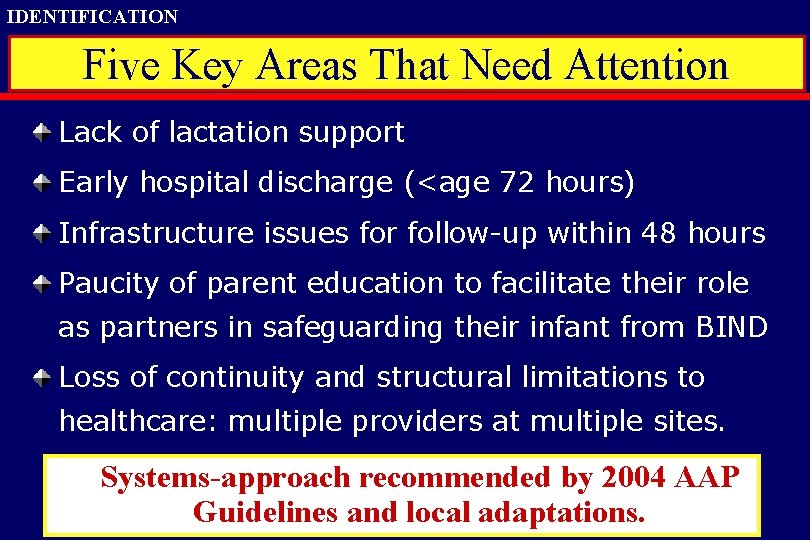
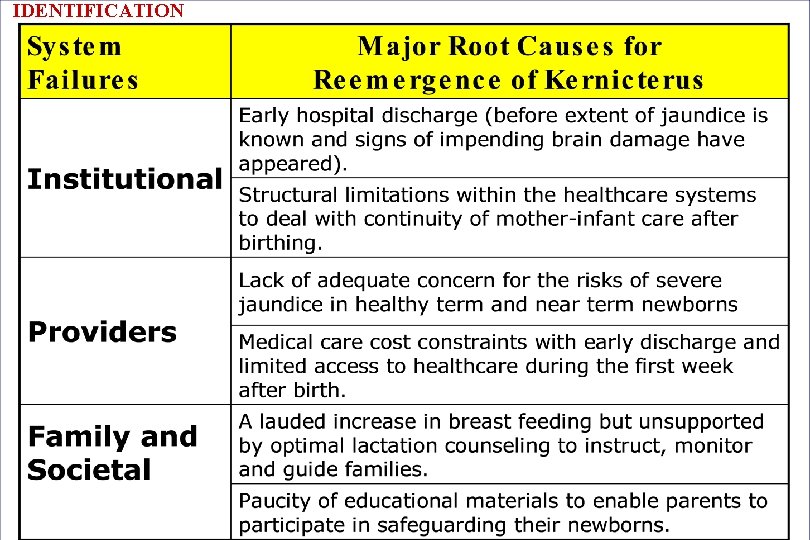
IDENTIFICATION Five Key Areas That Need Attention Lack of lactation support Early hospital discharge (<age 72 hours) Infrastructure issues for follow-up within 48 hours Paucity of parent education to facilitate their role as partners in safeguarding their infant from BIND Loss of continuity and structural limitations to healthcare: multiple providers at multiple sites. Systems-approach recommended by 2004 AAP Guidelines and local adaptations.
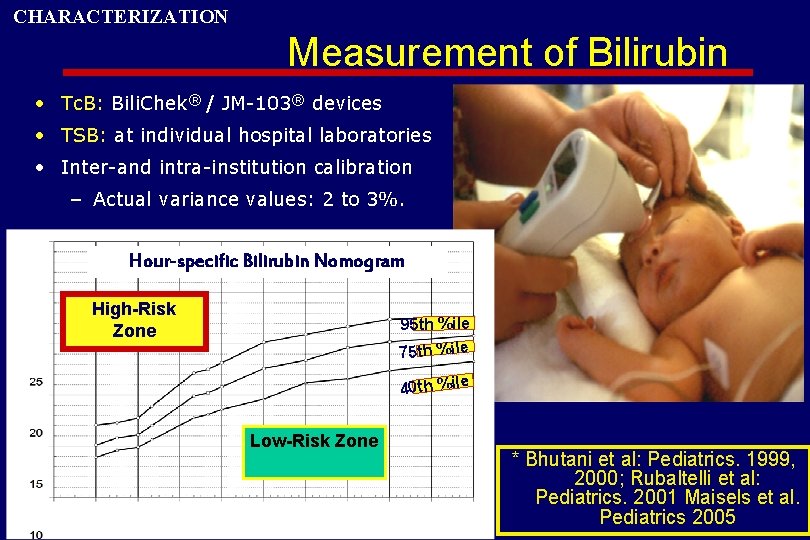
CHARACTERIZATION Measurement of Bilirubin • Tc. B: Bili. Chek® / JM-103® devices • TSB: at individual hospital laboratories • Inter-and intra-institution calibration – Actual variance values: 2 to 3%. Hour-specific Bilirubin Nomogram High-Risk Zone 95 th %ile 75 th %ile 40 th %ile Low-Risk Zone * Bhutani et al: Pediatrics. 1999, 2000; Rubaltelli et al: Pediatrics. 2001 Maisels et al. Pediatrics 2005
CHARACTERIZATION Clinical Risk Factors for Severe Hyperbilirubinemia Supposedly a baby who is not at (clinical or epidemiological) risk for hyperbilirubinemia is: A white, anglo-saxon, female neonate, who is exclusively formula-fed, who has no bruising, does not have a sibling with jaundice and in whom there is no ABO / Rh, minor blood group incompatibility or other evidence of hemolysis. Case report of Kernicterus in one such baby (Pilot Kernicterus Registry)

OPTIMIZATION 25 22. 5 19
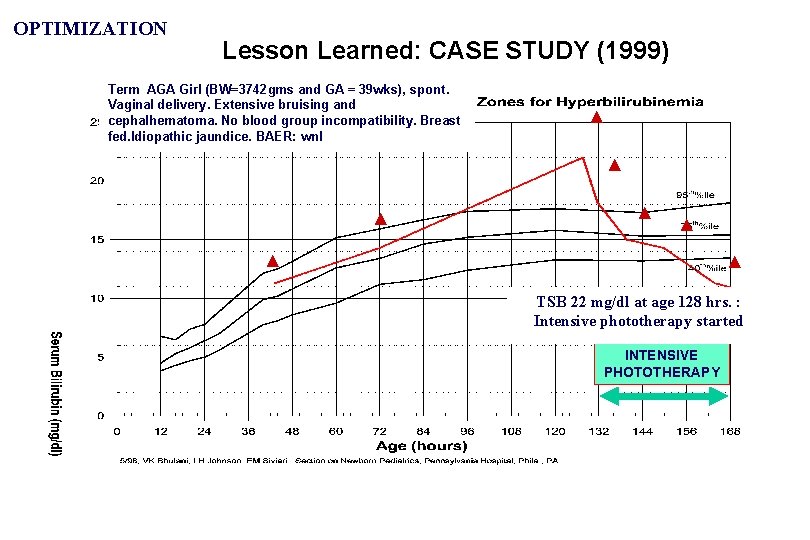
OPTIMIZATION Lesson Learned: CASE STUDY (1999) Term AGA Girl (BW=3742 gms and GA = 39 wks), spont. Vaginal delivery. Extensive bruising and cephalhematoma. No blood group incompatibility. Breast fed. Idiopathic jaundice. BAER: wnl ▲ ▲ ▲ ▲ TSB 22 mg/dl at age 128 hrs. : Intensive phototherapy started INTENSIVE PHOTOTHERAPY
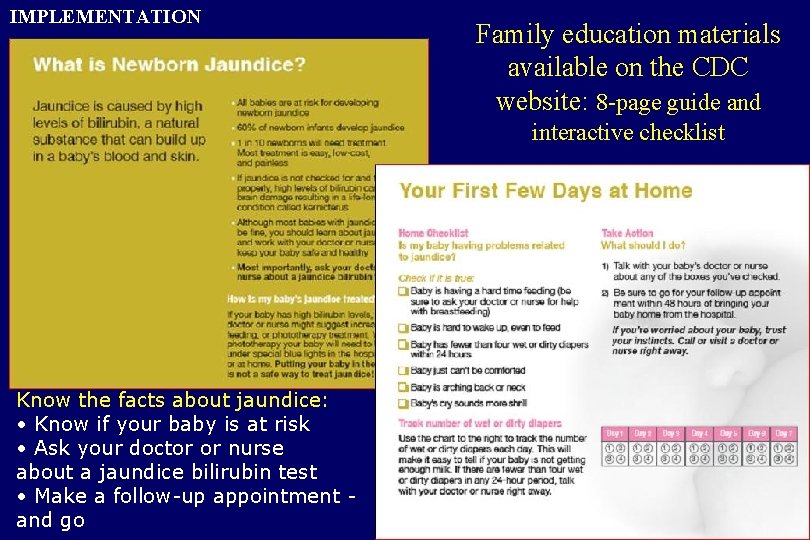
IMPLEMENTATION Family education materials available on the CDC website: 8 -page guide and interactive checklist Know the facts about jaundice: • Know if your baby is at risk • Ask your doctor or nurse about a jaundice bilirubin test • Make a follow-up appointment and go
Office-based Management 1. Familiarize “triage” staff with crash-cart approach 2. Assess for easy and risk rapid access to w Lo phototherapy 3. Review mechanisms of rapid transfer to neonatal intensive care units 4. Direct communication to NICU such that timely care is initiated. IMPLEMENTATION Download family education materials @ www. cdc. org
IMPLEMENTATION Questions to ask parents of jaundiced infants? • Can the baby be aroused from sleep? • Has the baby feeding pattern deteriorated? • Does the baby sleep with head in an extended posture? • Are there any signs of arching? • Is the baby unusually irritable or fussy? • Has the cry pattern changed? Is it shriller?
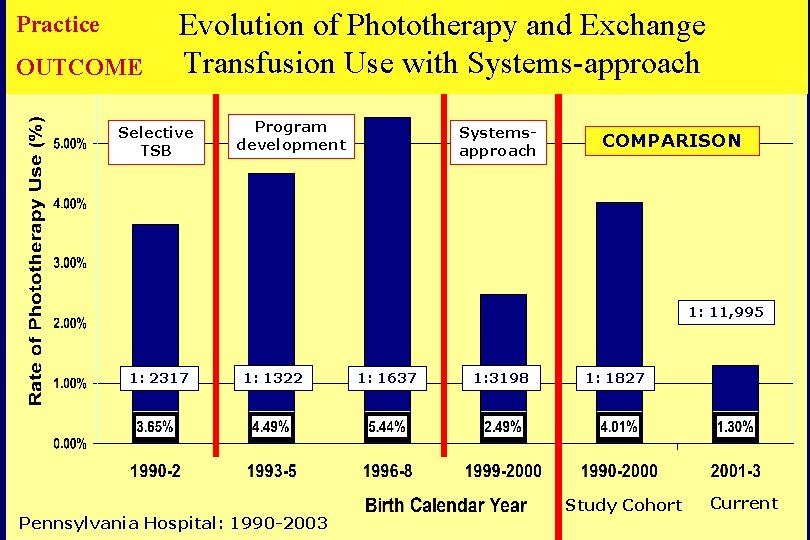
Practice OUTCOME Evolution of Phototherapy and Exchange Transfusion Use with Systems-approach Selective TSB Program development Systemsapproach COMPARISON 1: 11, 995 1: 2317 1: 1322 Pennsylvania Hospital: 1990 -2003 1: 1637 1: 3198 1: 1827 Study Cohort Current
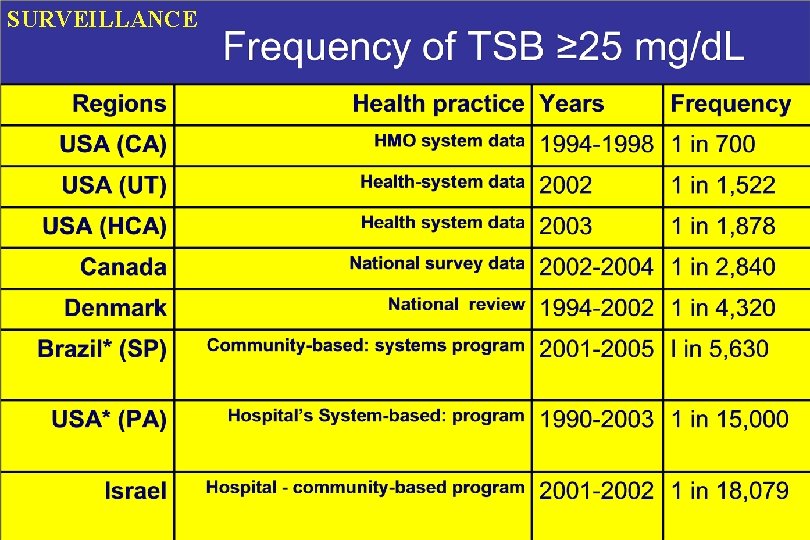
SURVEILLANCE
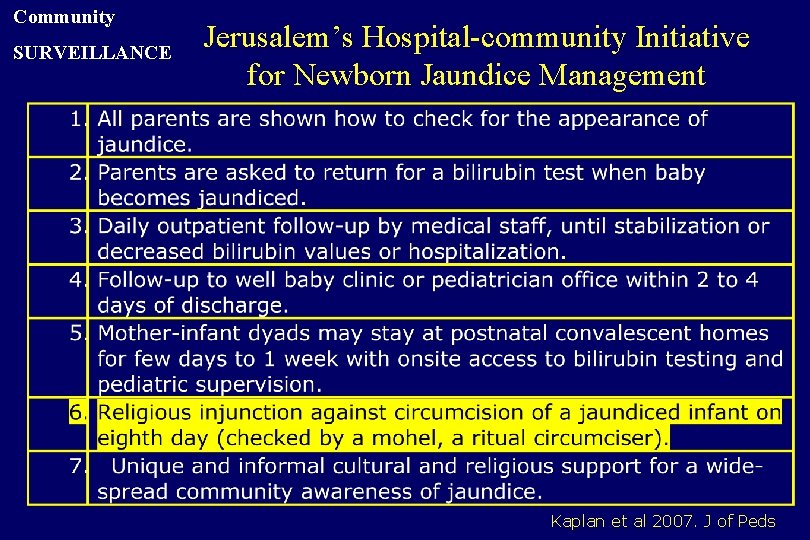
Community SURVEILLANCE Jerusalem’s Hospital-community Initiative for Newborn Jaundice Management Kaplan et al 2007. J of Peds
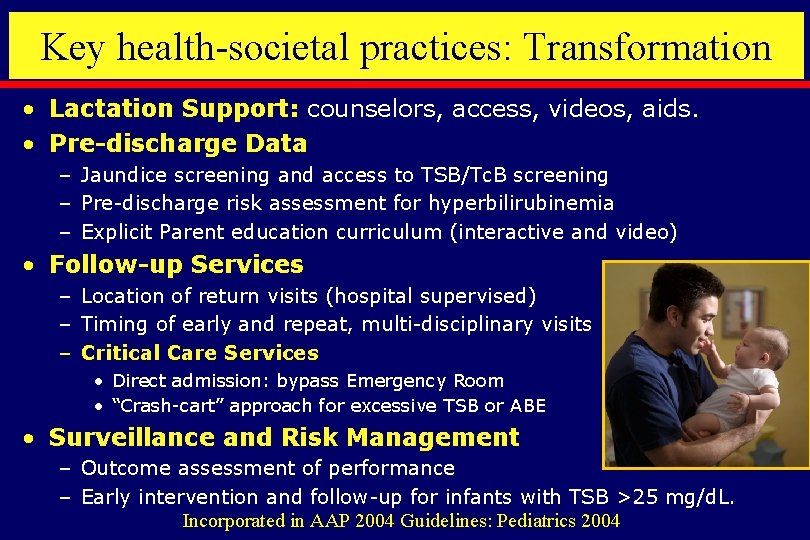
Key health-societal practices: Transformation • Lactation Support: counselors, access, videos, aids. • Pre-discharge Data – Jaundice screening and access to TSB/Tc. B screening – Pre-discharge risk assessment for hyperbilirubinemia – Explicit Parent education curriculum (interactive and video) • Follow-up Services – Location of return visits (hospital supervised) – Timing of early and repeat, multi-disciplinary visits – Critical Care Services • Direct admission: bypass Emergency Room • “Crash-cart” approach for excessive TSB or ABE • Surveillance and Risk Management – Outcome assessment of performance – Early intervention and follow-up for infants with TSB >25 mg/d. L. Incorporated in AAP 2004 Guidelines: Pediatrics 2004
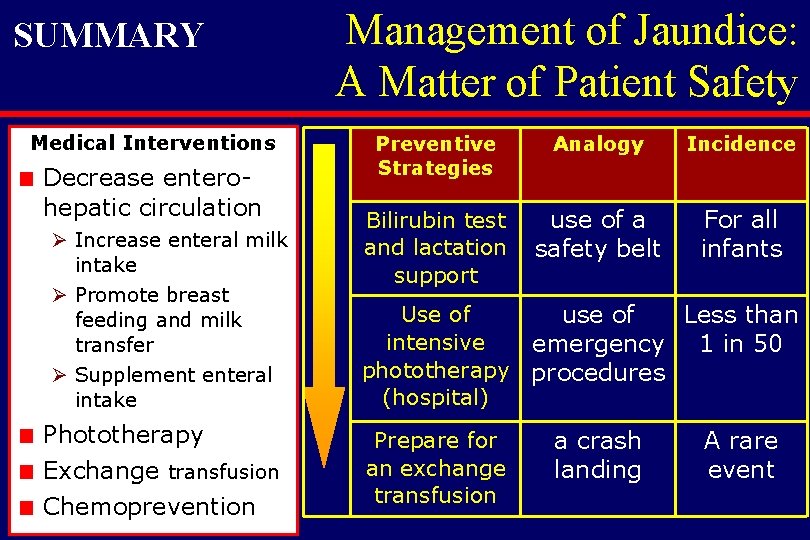
SUMMARY Medical Interventions Decrease enterohepatic circulation Ø Increase enteral milk intake Ø Promote breast feeding and milk transfer Ø Supplement enteral intake Phototherapy Exchange transfusion Chemoprevention Management of Jaundice: A Matter of Patient Safety Preventive Strategies Analogy Incidence Bilirubin test and lactation support use of a safety belt For all infants Use of use of Less than intensive emergency 1 in 50 phototherapy procedures (hospital) Prepare for an exchange transfusion a crash landing A rare event
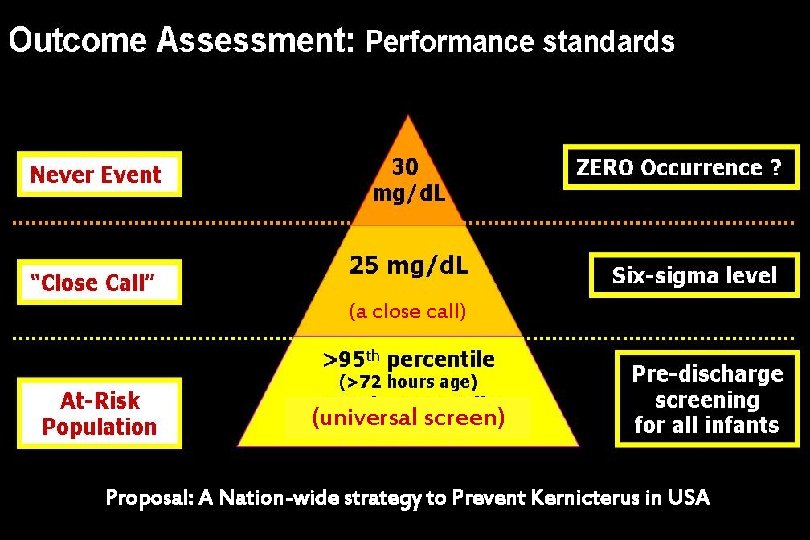
(a close call) (universal screen) Proposal: A Nation-wide strategy to Prevent Kernicterus in USA
Sentinel References • AAP: American Academy of Pediatrics (AAP) Subcommittee on Hyperbilirubinemia. Management of hyperbilirubinemia in the newborn infant 35 or more weeks of gestation. Pediatrics. 2004; 114: 297 -316. • AHRQ: Ip S, et al. and the AAP Subcommittee on Hyperbilirubinemia. An evidence-based review of important issues concerning neonatal hyperbilirubinemia. Pediatrics. 2004; 114: e 130 -53. • JCAHO: Revised guidance to help prevent kernicterus. Sentinel Event Alert. 2004 31(31): 1 -2. • Bhutani VK, Johnson L, Keren R. Diagnosis and management of hyperbilirubinemia in the term neonate: for a safer first week. Pediatric Clinics of North America: 2004 Aug; 51: 843 -61. • Bhutani VK, Johnson L, Maisels MJ, Newman TB, Phibbs C, Stark AR, Yeargin-Allsop M. Kernicterus: Epidemiological strategies for its prevention through systems-based approaches. J Perinatol 24: 650 -62, 2004. • Bhutani VK, Donn SM, Johnson L. Risk Management of severe neonatal hyperbilirubinemia to prevent kernicterus. Clin Perinatol 32: 125 -39, 2005.
- Slides: 30