
New Zealand Paleoclimate John Swartz 1262012 CE 394

- Slides: 22
New Zealand Paleoclimate John Swartz 12/6/2012 CE 394 K
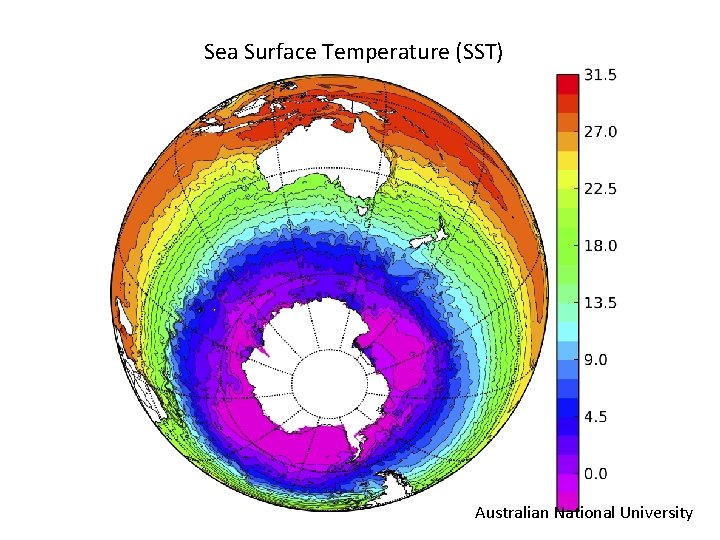
Sea Surface Temperature (SST) Australian National University
Towards a Climate Stratigraphy • Inter-hemisphere phasing major paleoclimate question, especially in mid-latitudes • New Zealand one of few land-masses located in this zone in the Southern Hemisphere • What drivers control its climate? How are these recorded? • NZ-INTIMATE major ongoing collaboration involving UT Paleoclimate research group
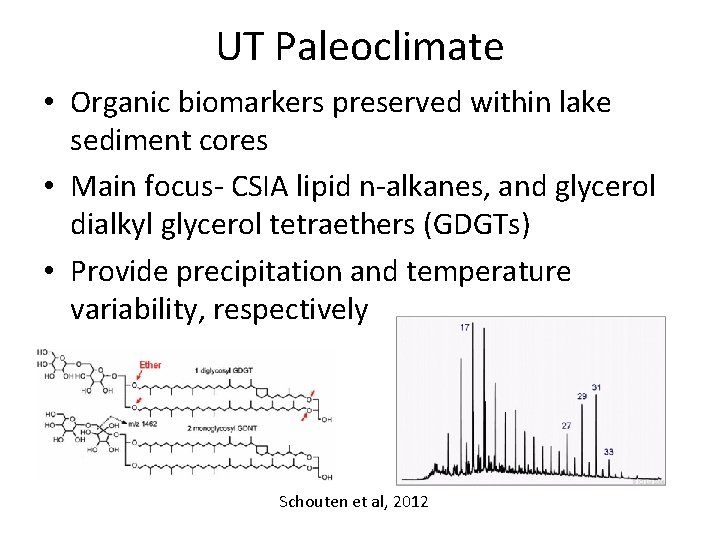
UT Paleoclimate • Organic biomarkers preserved within lake sediment cores • Main focus- CSIA lipid n-alkanes, and glycerol dialkyl glycerol tetraethers (GDGTs) • Provide precipitation and temperature variability, respectively Schouten et al, 2012
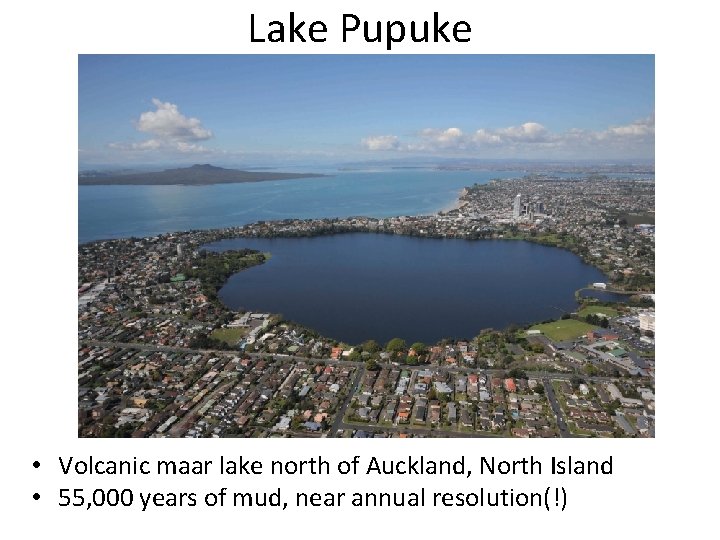
Lake Pupuke • Volcanic maar lake north of Auckland, North Island • 55, 000 years of mud, near annual resolution(!)
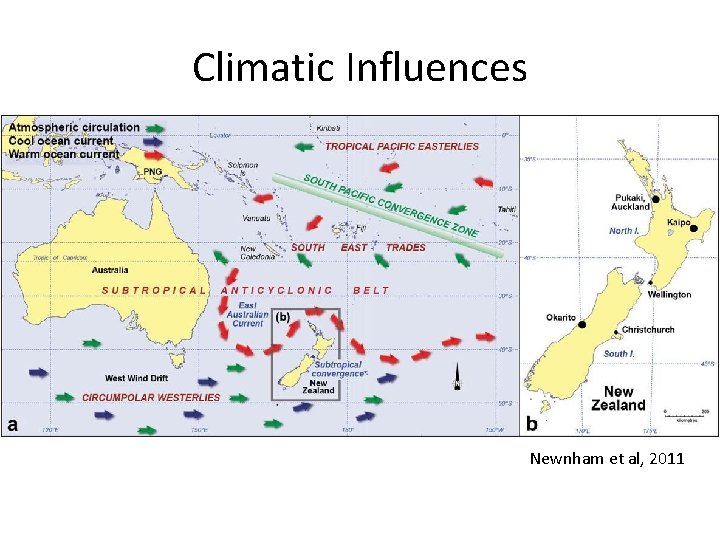
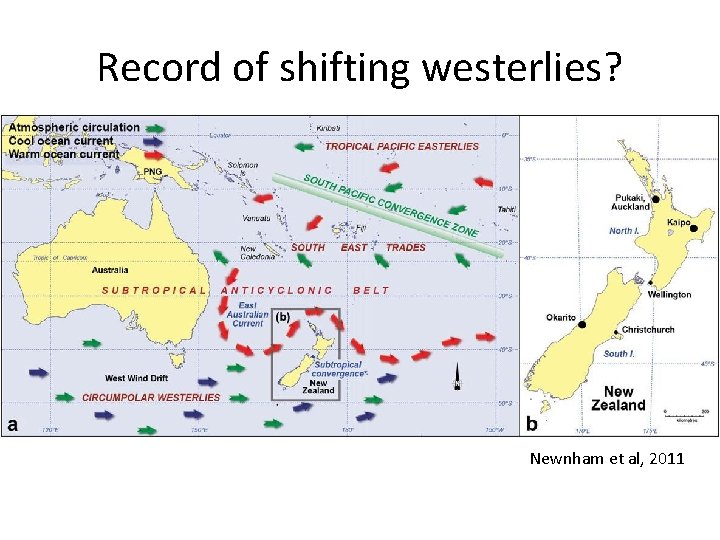
Climatic Influences Newnham et al, 2011
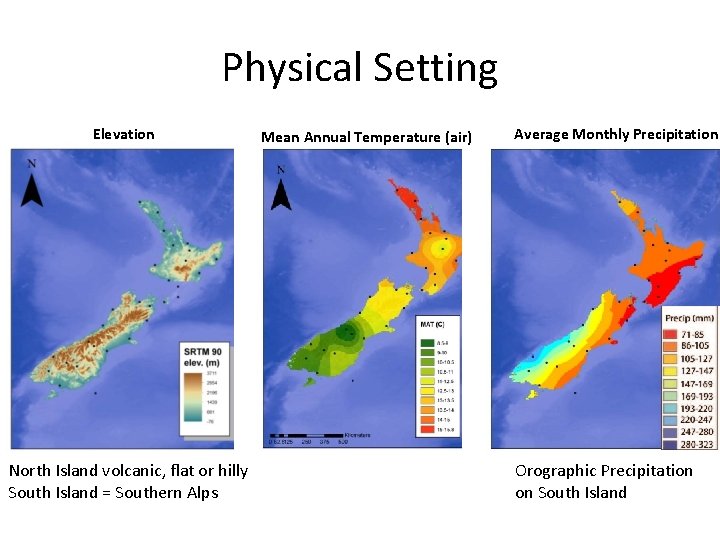
Physical Setting Elevation North Island volcanic, flat or hilly South Island = Southern Alps Mean Annual Temperature (air) Average Monthly Precipitation Orographic Precipitation on South Island
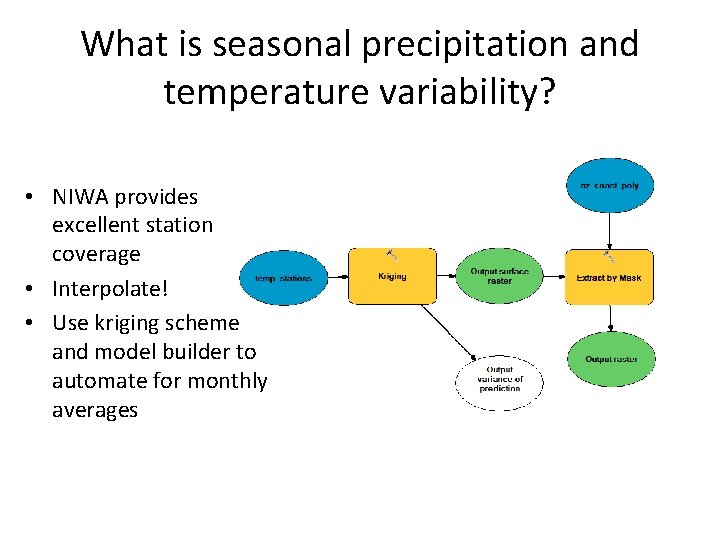
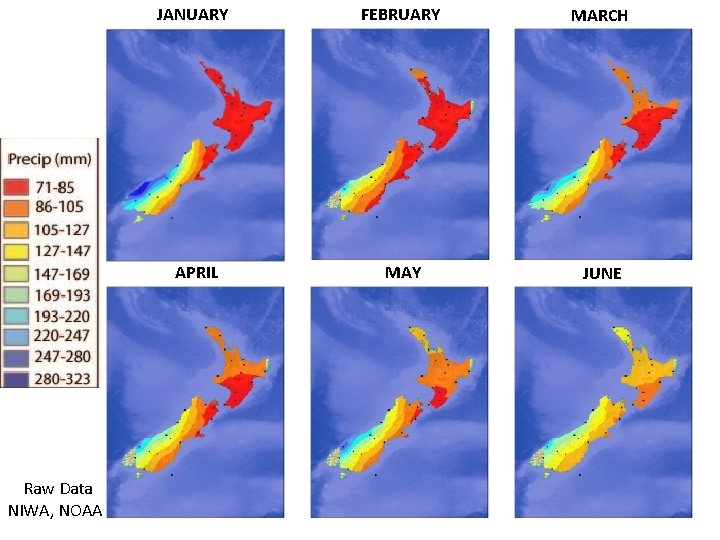
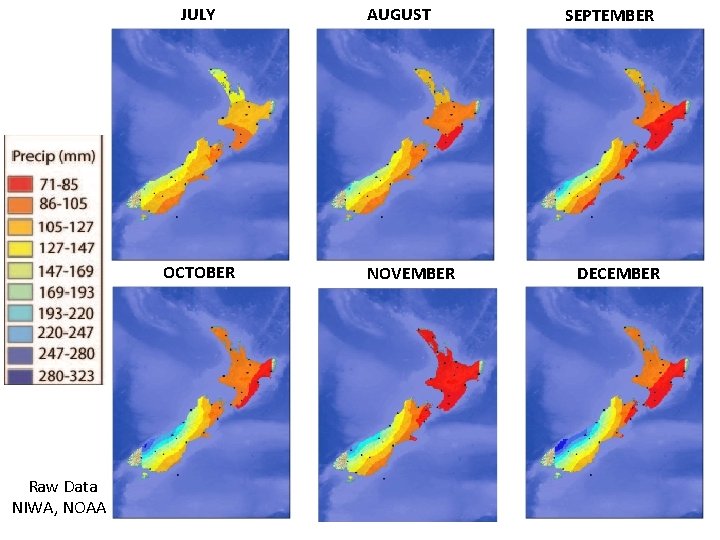
What is seasonal precipitation and temperature variability? • NIWA provides excellent station coverage • Interpolate! • Use kriging scheme and model builder to automate for monthly averages
Raw Data NIWA, NOAA JANUARY FEBRUARY MARCH APRIL MAY JUNE
JULY OCTOBER Raw Data NIWA, NOAA AUGUST NOVEMBER SEPTEMBER DECEMBER
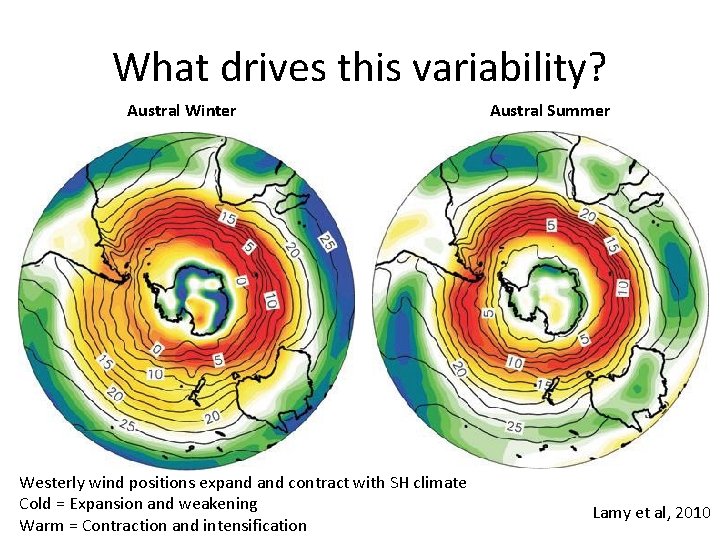
What drives this variability? Austral Winter Westerly wind positions expand contract with SH climate Cold = Expansion and weakening Warm = Contraction and intensification Austral Summer Lamy et al, 2010
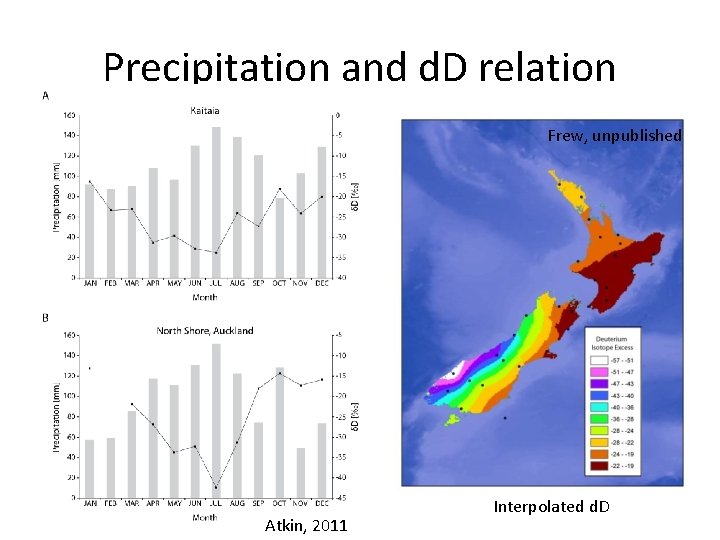
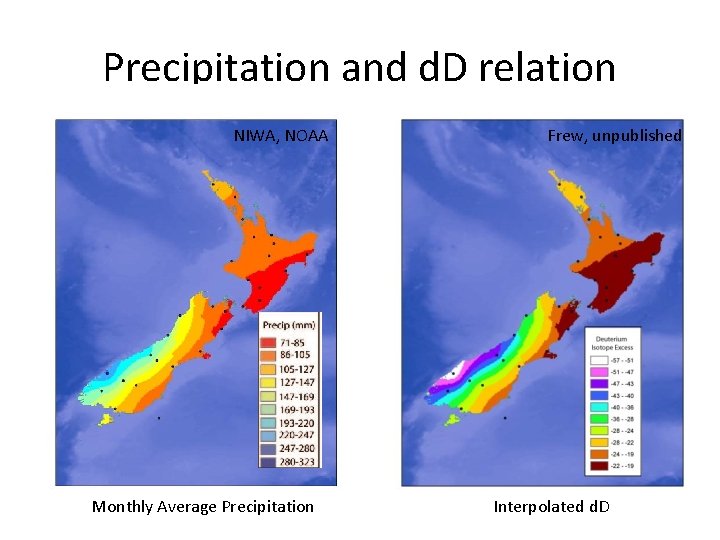
Precipitation and d. D relation NIWA, NOAA Monthly Average Precipitation Atkin, 2011 Frew, unpublished Interpolated d. D
Precipitation and d. D relation NIWA, NOAA Monthly Average Precipitation Frew, unpublished Interpolated d. D
Record of shifting westerlies? Newnham et al, 2011
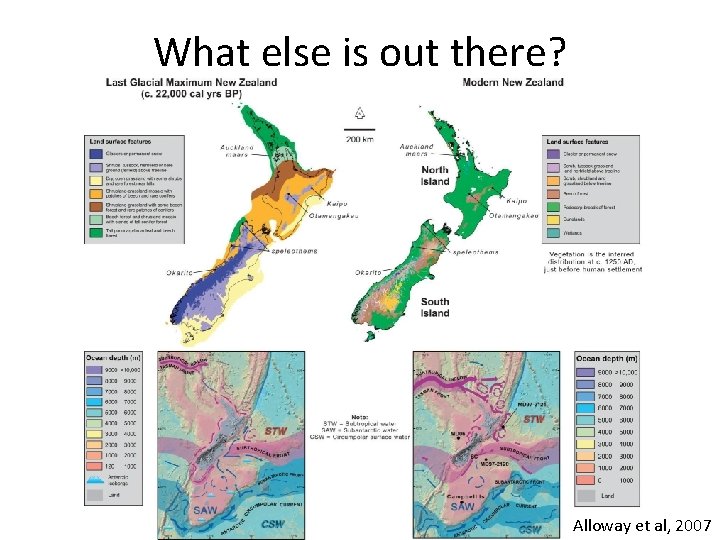
What else is out there? Alloway et al, 2007
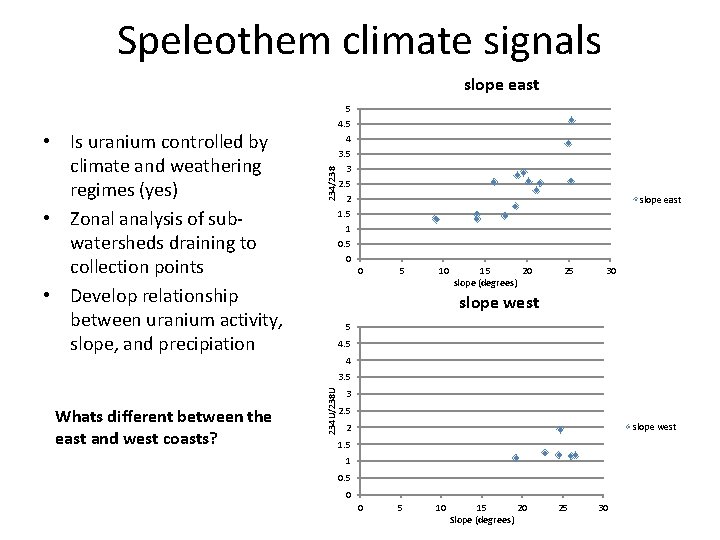
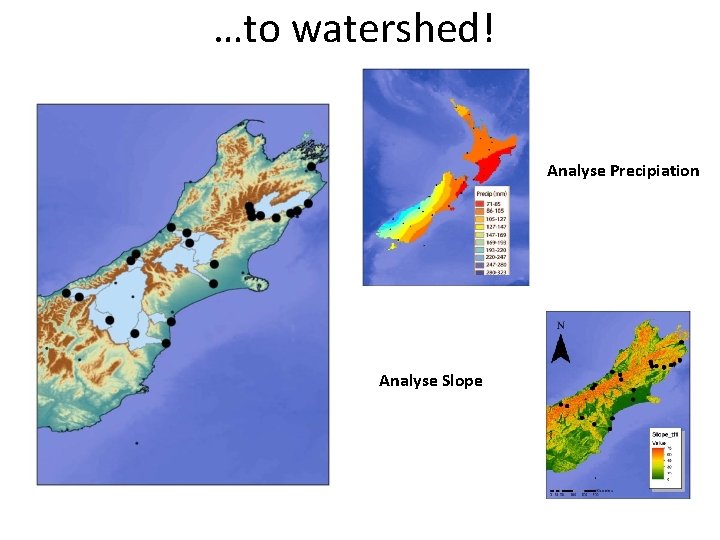
Speleothem climate signals • Is uranium controlled by climate and weathering regimes (yes) • Zonal analysis of subwatersheds draining to collection points • Develop relationship between uranium activity, slope, and precipiation 234/238 slope east 5 4 3. 5 3 2. 5 2 1. 5 1 0. 5 0 slope east 0 5 10 15 20 slope (degrees) 25 30 slope west 5 4 Whats different between the east and west coasts? 234 U/238 U 3. 5 3 2. 5 slope west 2 1. 5 1 0. 5 0 0 5 10 15 20 Slope (degrees) 25 30
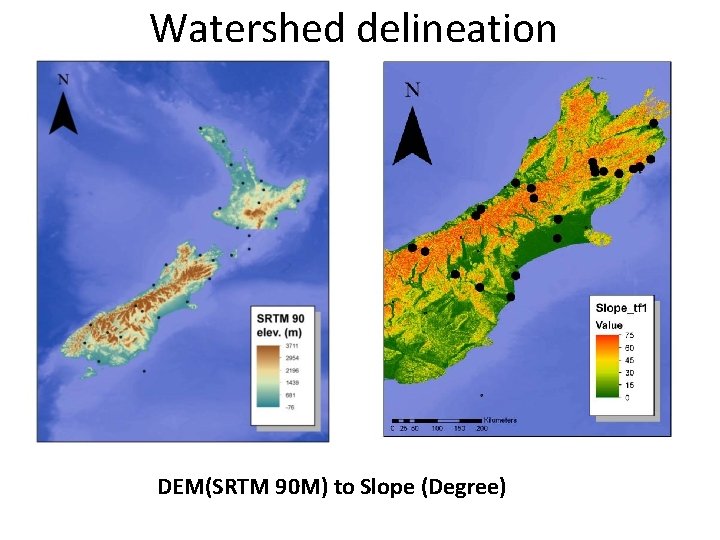
Watershed delineation DEM(SRTM 90 M) to Slope (Degree)
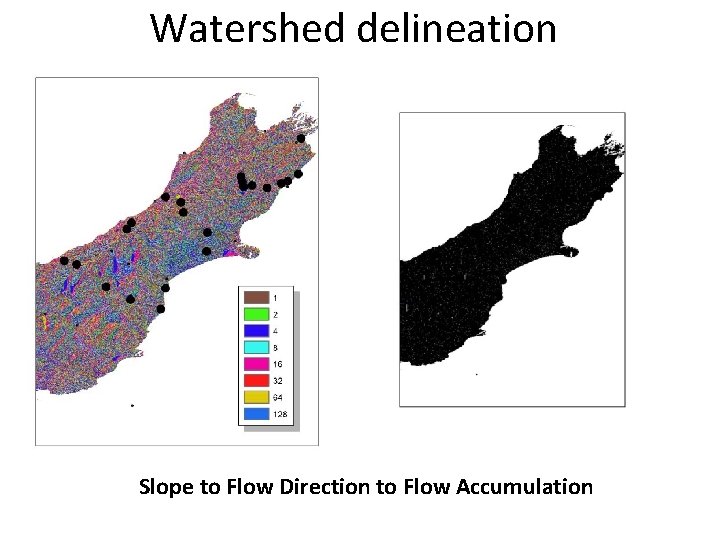
Watershed delineation Slope to Flow Direction to Flow Accumulation
…to watershed! Analyse Precipiation Analyse Slope
Future Work (and that unsaid) • Develop our downcore record • Integrate with NZ-INTIMATE climate stratigraphy to correlate climatic shifts across different areas of New Zealand • Develop climatic controls of speleothem uranium signature, further constrain precipitation record of New Zealand
Thank you! • Dr. Maidment for an excellent course • Dr. Augustinus and the rest of the NZINTIMATE team • Woods Hole Oceanographic Institution, Bristol University, University of Auckland, and others for funding
References • • • New Zealand. Ph. D. Thesis. The University of Auckland: N. Z. Alloway, B. V. , Lowe, D. J. , Barrell, D. , Newnham, R. M. , Almond, P. C. , Augustinus, P. C. , Bertler, N. , Carter, L. , Litchfield, N. J. , Mc. Glone, M. S. , Shulmesiter, J. , Vandergoes, M. J. , and Williams, P. W. (2007) Towards a climate event stratigraphy for New Zealand over the past 30000 years (NZ-INTIMATE). Journal of Quaternary Science 22, 9 -35 Atkins, D. (2011) Geochemical Proxies for Environmental Change in Lake Pupuke, Auckland, New Zealand. Ph. D. Thesis. The University of Auckland: N. Z. Lamy, F. , Kilian, R. , Helge, W. A. , Francois, JP. , Kaiser, J. , Prange, M. , and Steinke, T. (2010) Holocene changes in the position and intensity of the southern westerly wind belt. Nature Geoscience 3, 695 -699 Atkins, D. (2011) Geochemical Proxies for Environmental Change in Lake Pupuke, Auckland, Alloway, B. V. , Lowe, D. J. , Barrell, D. , Newnham, R. M. , Almond, P. C. , Augustinus, P. C. , Bertler, N. , Carter, L. , Litchfield, N. J. , Mc. Glone, M. S. , Shulmesiter, J. , Vandergoes, M. J. , and Williams, P. W. (2007) Towards a climate event stratigraphy for New Zealand over the past 30000 years (NZ-INTIMATE). Journal of Quaternary Science 22, 9 -35 NIWA, Taihoro Nukurangi! GNS Science, Te Pu Ao!