
New York UM Conference Sexual Harassment and Boundaries
New York UM Conference Sexual Harassment and Boundaries Training March 16, 2021
humans tend to live themselves into new ways of thinking more than think themselves into new ways of living
GROUNDING OUR CONVERSATION • Actively participate through listening and/or speaking • SILENCE CELL PHONES • Respect differing opinions • Use “I” statements. Speak for self. • All questions are valid. Do not hesitate to ask.
DIVERSITY Diversity is the mosaic of people who bring a variety of backgrounds, styles, perspectives, values, abilities and beliefs as assets to the groups and organizations to which they belong.
Where do you stand in terms of cultural sensitivity? Do you make assumptions? What are your conscious and unconscious biases? Do you form opinions about co-workers before really getting to know them? Do you have predetermined feelings or notions about a particular culture without truly having an understanding of that culture?
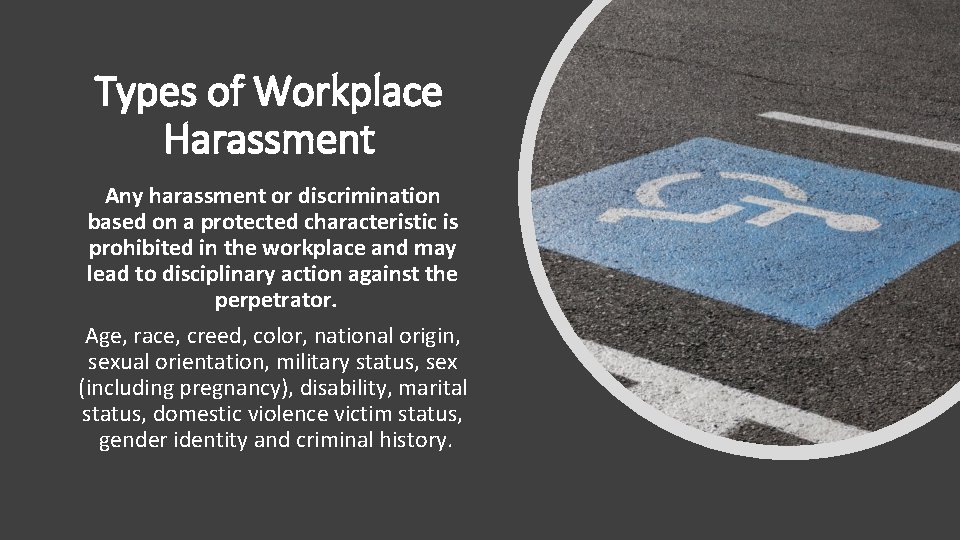
Types of Workplace Harassment Any harassment or discrimination based on a protected characteristic is prohibited in the workplace and may lead to disciplinary action against the perpetrator. Age, race, creed, color, national origin, sexual orientation, military status, sex (including pregnancy), disability, marital status, domestic violence victim status, gender identity and criminal history.
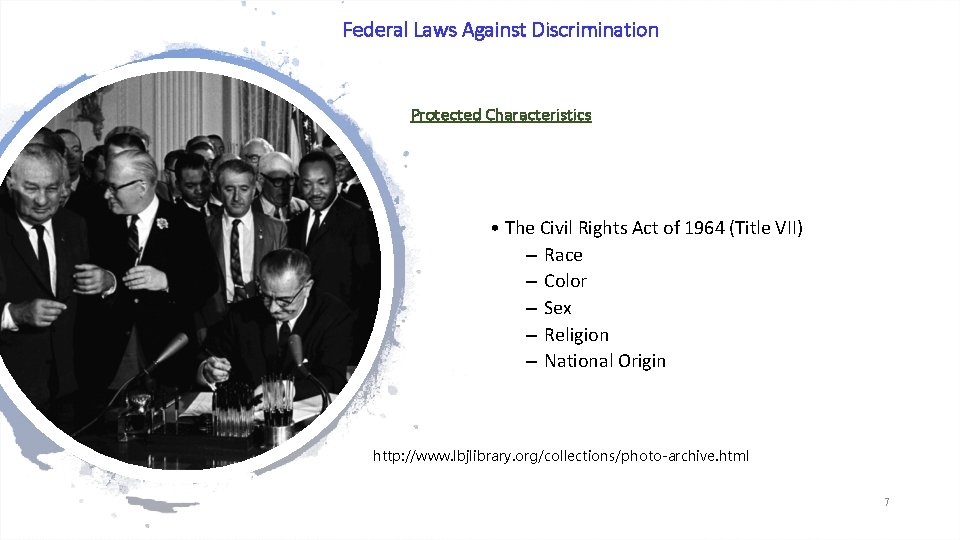
Federal Laws Against Discrimination Protected Characteristics • The Civil Rights Act of 1964 (Title VII) – Race – Color – Sex – Religion – National Origin http: //www. lbjlibrary. org/collections/photo-archive. html 7
FEDERAL HARASSMENT STATUTES • Title VII of the Civil Rights Act of 1964 • The Age Discrimination in Employment Act of 1967 • The Americans with Disabilities Act of 1990
Sexual harassment: What is Sexual Harassment? Is a form of sex discrimination and is unlawful Includes harassment on the basis of sex, sexual orientation, self-identified or perceived sex, gender expression, gender identity and the status of being transgender.
• Question: • What is the date actress Alyssa Milano tweeted, “If you’ve been sexually harassed or assaulted write ‘me too’ as a reply to this tweet”? • October 15, 2017 10
Examples of Sexual Harassment: 1. Unwanted touching of a sexual nature by a co-worker or manager 2. A supervisor conditioning a promotion on submission to sex 3. Repeated sexually offensive slurs or comments 4. Displaying or distributing pornography in the workplace 11
Sex Stereotyping • Harassing a person because that person does not conform to gender stereotypes is sexual harassment. • Harassment because someone is performing a job that is usually or was previously performed mostly by persons of a different sex is sex discrimination.
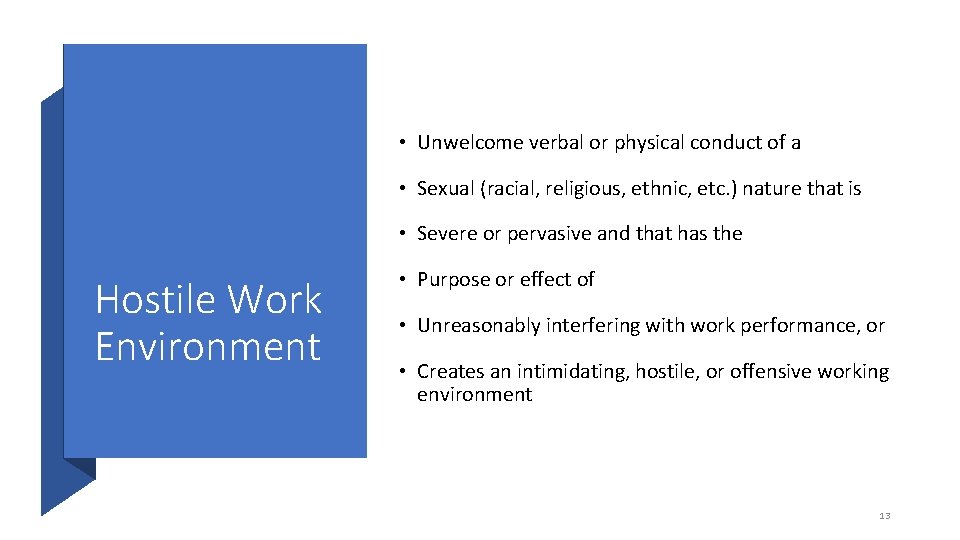
• Unwelcome verbal or physical conduct of a • Sexual (racial, religious, ethnic, etc. ) nature that is • Severe or pervasive and that has the Hostile Work Environment • Purpose or effect of • Unreasonably interfering with work performance, or • Creates an intimidating, hostile, or offensive working environment 13
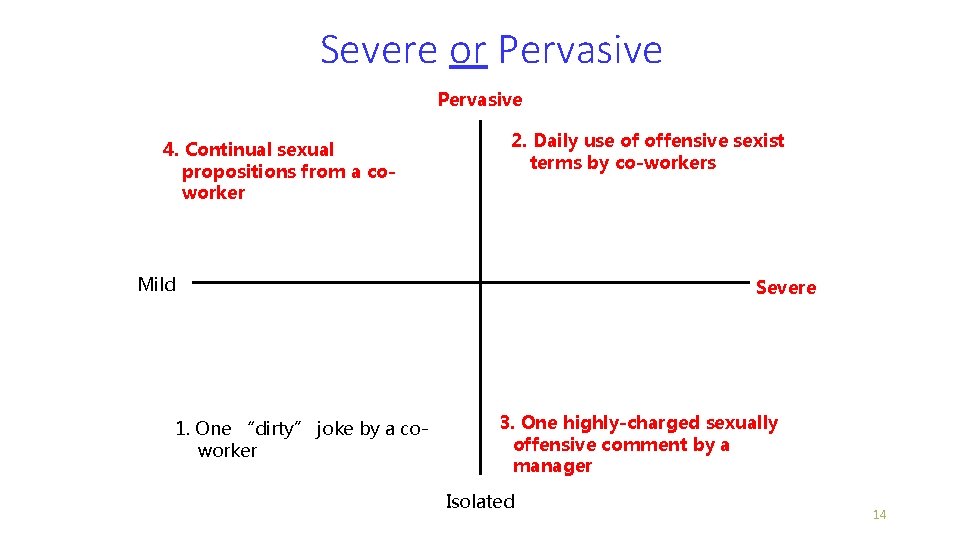
Severe or Pervasive 4. Continual sexual propositions from a coworker 2. Daily use of offensive sexist terms by co-workers Mild 1. One “dirty” joke by a coworker Severe 3. One highly-charged sexually offensive comment by a manager Isolated 14
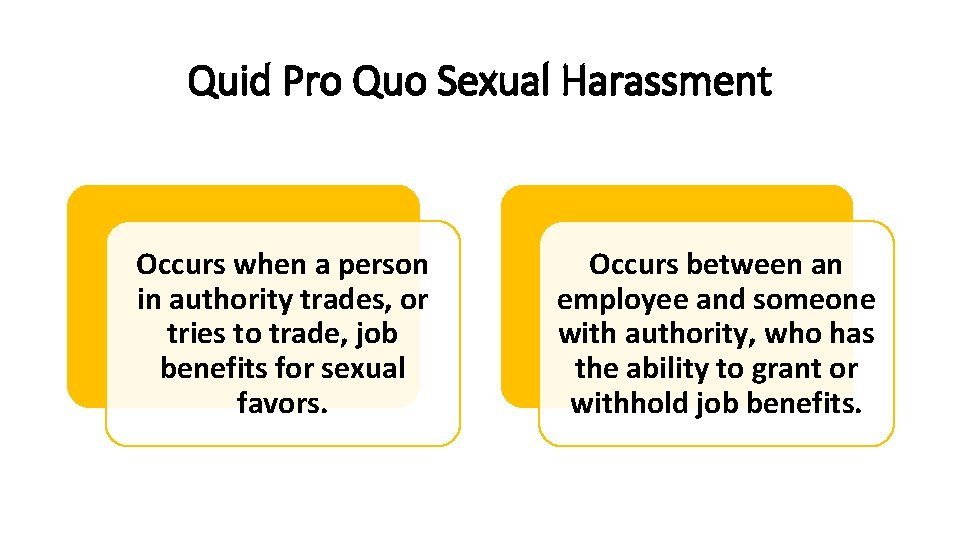
Quid Pro Quo Sexual Harassment Occurs when a person in authority trades, or tries to trade, job benefits for sexual favors. Occurs between an employee and someone with authority, who has the ability to grant or withhold job benefits.
Scenario 1: Are you joking? • Julia, a woman, is one of the friendliest and funniest employees at the workplace. She always tells jokes and tries to lighten the mood when work gets hectic. Often, the jokes are at Julia’s own expense. One morning, Julia tells a sexually raunchy joke about women in front of a group of co-workers, both male and female. Pete, Julia’s boss, is present when Julia tells the joke. • The joke makes everyone laugh. Kevin laughs too, even though he finds the joke inappropriate and offensive. He’s not a woman and he saw everyone else laughing, so he went ahead and laughed too. • Later that day, Kevin feels bad that he laughed at Julia’s joke. He wonders to himself about whether the joke crossed a line. Even though Julia made the joke, Kevin thinks other female colleagues might be offended. 16
Is Your Conduct Unwelcome? • The failure to make an explicit objection does not necessarily mean the conduct is welcome. • Going along to get along does not necessarily mean conduct is welcome. • Conduct that was welcome yesterday may be unwelcome today. • Conduct that is welcome outside the workplace may be unwelcome in the workplace. • Conduct that is welcome from a co-worker may be unwelcome from a leader. 17
“that concerns raised by employees—whatever those concerns may be—will be addressed objectively, that appropriate steps will be taken whenever a concern is reported (even if that means that no disciplinary action is warranted, given the particular circumstances), and that the organization has zero tolerance for unlawful retaliation. This culture of respect and reporting not only would help prevent full-blown harassment, but it also would likely prevent the precursors to harassment—incivility and disrespect. ”
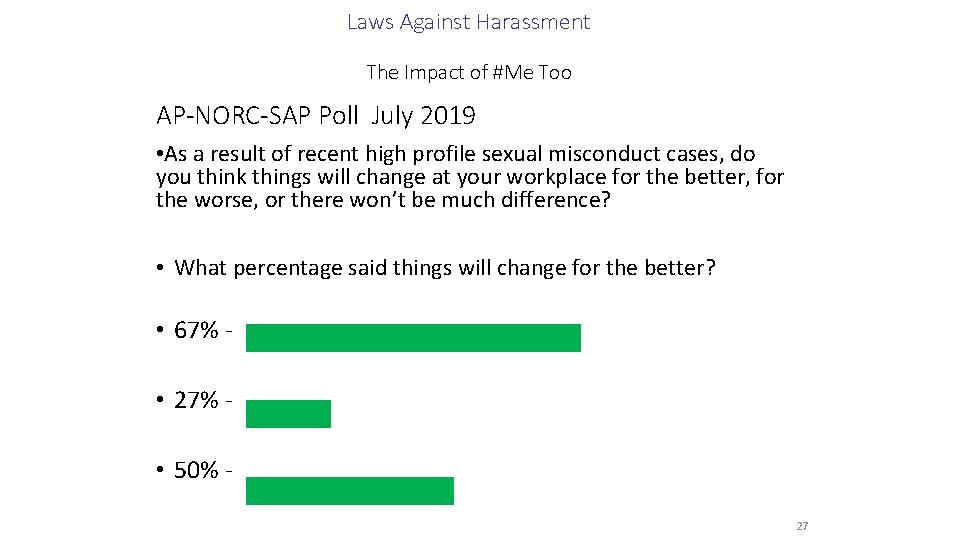
Laws Against Harassment The Impact of #Me Too AP-NORC-SAP Poll July 2019 • As a result of recent high profile sexual misconduct cases, do you think things will change at your workplace for the better, for the worse, or there won’t be much difference? • What percentage said things will change for the better? • 67% • 27% • 50% 27
Supervisors must report any harassment that they observe or know of, even if no one is objecting to it. Mandatory Reporting • Harassment must be promptly reported to the employer. • Supervisors and managers will be subject to discipline for failing to report suspected harassment/discrimination. • Supervisors and managers will also be subject to discipline for engaging in retaliation.
What to do if you believe you are being harassed: • Tell the person to stop • Document date, time, and behavior you experienced • Talk with your supervisor • Know what the next steps will be.
Filing a Charge of Discrimination • The EEOC has district, area, and field offices where complaints can be filed. (no cost & no need for atty) • Contact the EEOC by calling 1 -800669 -4000 (TTY: 1 -800 -669 -6820) • website at www. eeoc. gov or via email at info@eeoc. gov.
Protected Activities Any employee engaged in “protected activity” is protected by law from being retaliated against. • Protected activities include: • Making a complaint about harassment or suspected harassment • Providing information during an investigation • Testifying in connection with complaint
What is Retaliation? • Any action to alter an employee’s terms and conditions of employment because that individual engaged in protected activities. Examples: • Sudden change in work schedule or work location • Demotion
What is Not Retaliation • A negative employment action is not retaliatory merely because it occurs after the employee engages in protected activity.
Table talk rules Grounding the Boundaries in Ministry Training Scripture UMC Social Principles UMC Definition and Disciplinary Processes
• Maintain the integrity of the ministerial relationship? In ministry, how do we: • Always recognize the reality of power and vulnerability present? • Make choices that sustain healthy boundaries AND honor our deep, human need to be in intimate friendship relationships.
1 Corinthians 4: 1 -2 What is your response to the statement, “You have been given a sacred trust”? 2 Samuel 11 What is highlighted in this passage regarding how power is used/misused?
One gender is not superior to another. UMC SOCIAL PRINCIPLES Sexual harassment is exploitation of a power relationship. Sexual assault is wrong; it does not matter what a person is wearing…
The Judicial Council asserts that dating, romantic or sexual relationships between clergy and their parishioners “are never appropriate because of imbalance of power” (Decision 1228, 2012).
TABLE TALK • What is your plan for handling a sexual advance by a supervisor or by a member of your congregation? • What will your response be if you see and/or hear a colleague violating a boundary with someone? • How will you hold one another accountable to integrity in ministry?
SOCIAL MEDIA • How does your online presence through social networking, blogs, etc. reflect your professional role as minister?
YOUR MINISTRY IS NOT ABOUT YOU…. . and IT IS ALL ABOUT YOU • POWER • ADORATION • FIDUCIARY
SETTING BOUNDARIES • How would my actions be perceived if they were made public? • How might my behavior be misperceived? • Whose needs are being met? • Am I attempting to have my own personal needs met through this action? • How does my supervisor and/or colleagues respond when I HONESTLY report my behavior?
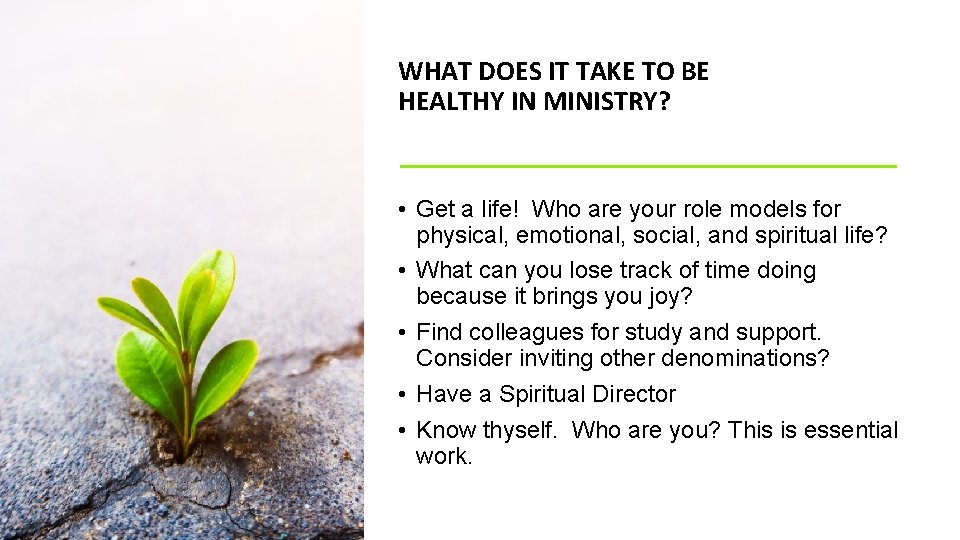
WHAT DOES IT TAKE TO BE HEALTHY IN MINISTRY? • Get a life! Who are your role models for physical, emotional, social, and spiritual life? • What can you lose track of time doing because it brings you joy? • Find colleagues for study and support. Consider inviting other denominations? • Have a Spiritual Director • Know thyself. Who are you? This is essential work.
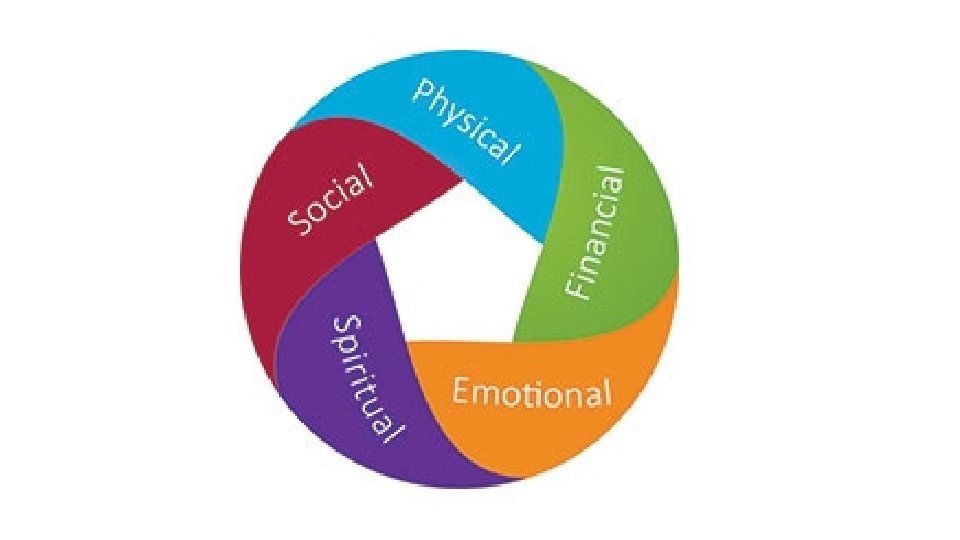
• Identify the pressures ministry can place upon you. PERSONAL NEEDS AND SELF-CARE • Recognize places where self-care can be improved. • Identify barriers to self-care • Outline a self-care plan
BRING THIS QUESTION TO EVERYTHING Does this nurture me or does this deplete me? (practice awareness in the moment)
- Slides: 39