
New York State Police Validation of True Allele
- Slides: 15
New York State Police Validation of True. Allele: a Statistical Tool for Genotype Inference and Match that Solves Casework Mixtures Problems Presented by: Jamie L. Belrose NYS DNA Sub-committee Meeting; New York, NY March 5, 2010
Why? Increased Automation Increased Sample Processing Bottleneck at Data Interpretation & Peer Review Despite sample automation – limited increase in throughput.
Outline of Validation 41 -Adjudicated A cases variety of case types Varying degrees of complexity Original raw data files
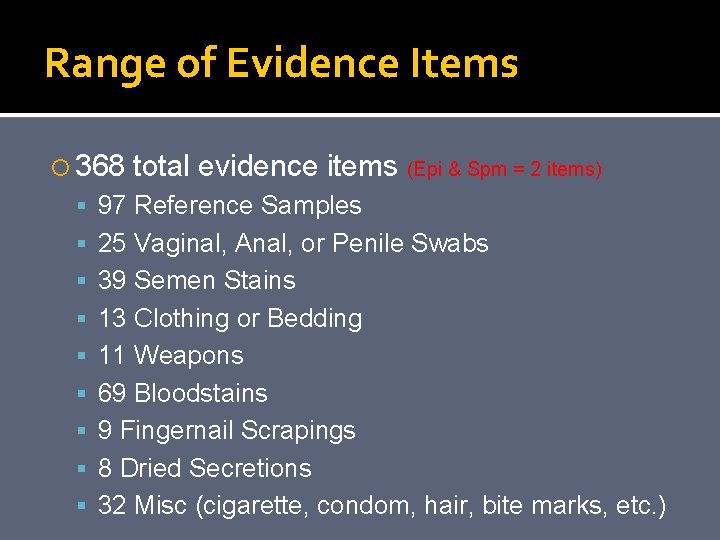
Range of Evidence Items 368 total evidence items (Epi & Spm = 2 items) 97 Reference Samples 25 Vaginal, Anal, or Penile Swabs 39 Semen Stains 13 Clothing or Bedding 11 Weapons 69 Bloodstains 9 Fingernail Scrapings 8 Dried Secretions 32 Misc (cigarette, condom, hair, bite marks, etc. )
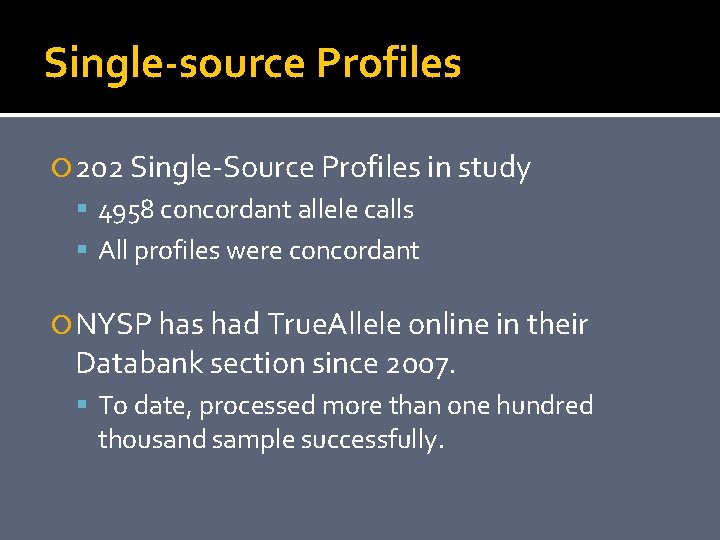
Single-source Profiles 202 Single-Source Profiles in study 4958 concordant allele calls All profiles were concordant NYSP has had True. Allele online in their Databank section since 2007. To date, processed more than one hundred thousand sample successfully.
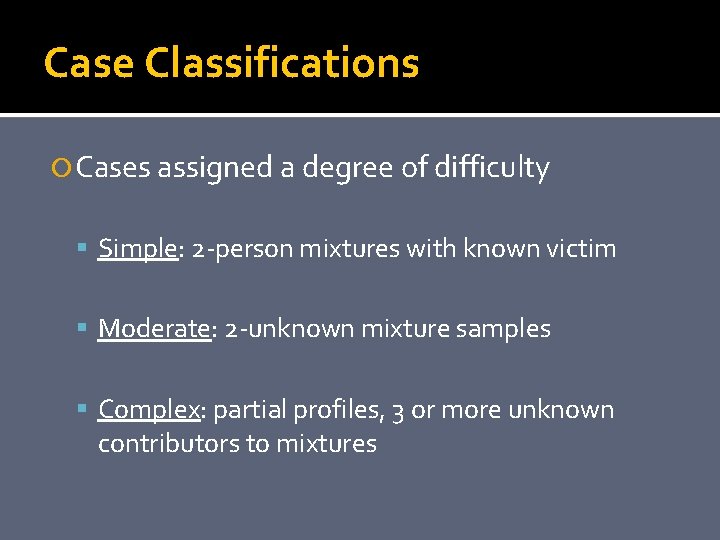
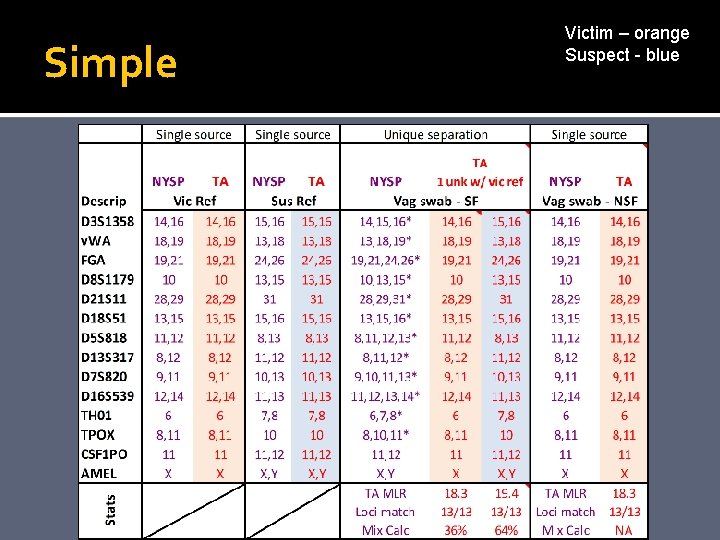
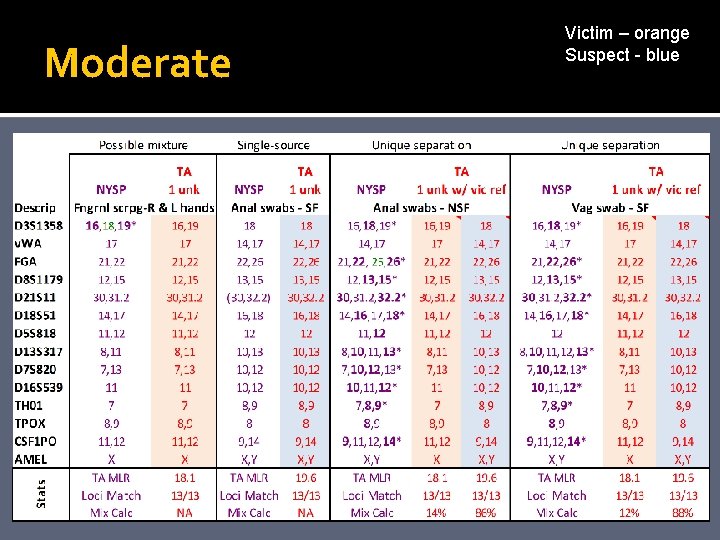
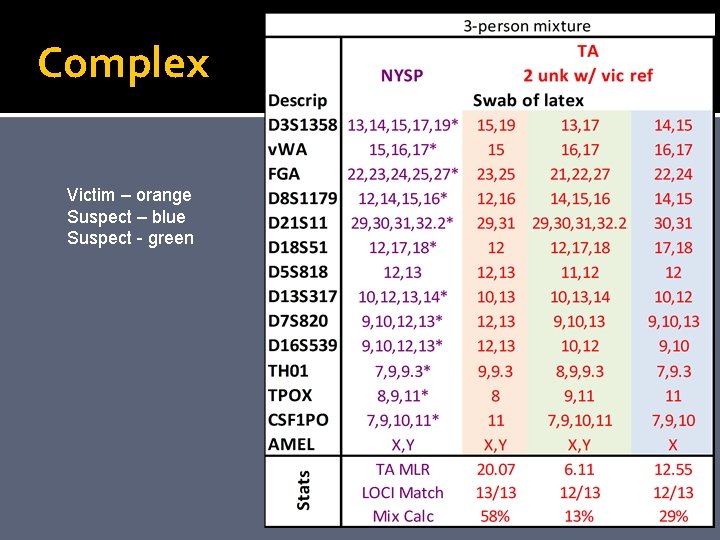
Case Classifications Cases assigned a degree of difficulty Simple: 2 -person mixtures with known victim Moderate: 2 -unknown mixture samples Complex: partial profiles, 3 or more unknown contributors to mixtures
Simple Victim – orange Suspect - blue
Moderate Victim – orange Suspect - blue
Complex Victim – orange Suspect – blue Suspect - green
Mixing Weight There were 88 mixture samples in the study. The mixing weight is modeled for mixture samples, with an associated probability distribution. As the uncertainty of the data increases, the probability distribution increases.
Statistical Strength As the data interpretation difficulty increases, the statistical strength decreases – for both human and computer-based methods. However, the computer-based method is still able to preserve more identification information with every sample.
Conclusions True. Allele is capable of: Unattended quality checks and data review Standardization of mixture interpretation Unbiased approach to data interpretation Increased sample processing capabilities
NYSP Looks to Achieve Analyst assistance with difficult mixtures Reduced peer review case file bottleneck And thus, increased throughput
Aknowledgements NYSP: Cybergenetics: Dr. Barry Duceman Dr. Mark Perlin Dr. Russ Gettig Matthew Ledger Shannon Morris Erin Turo Melissa Lee William Allen Elizabeth Staude Cara Spencer Dan Meyers Jessica Staab Urfan Muktar
Questions? Technical or software specific, please contact Dr. Mark Perlin: perlin@cybgen. com NYSP validation specific, please contact Barry Duceman: BDuceman@troopers. state. ny. us Regarding this presentation, Jamie L. Belrose: Jamie. Belrose@gmail. com Dr.