
New Techniques for Visualisation of Large and Complex
- Slides: 31
New Techniques for Visualisation of Large and Complex Networks with Directed Edges Tim Dwyer 1 Yehuda Koren 2 1 Monash University, Victoria, Australia 2 AT&T - Research
Papers Tim Dwyer, Yehuda Koren “Di. G-Co. La: Directed Graph Layout through Constrained Energy Minimization” IEEE Symposium on Information Visualization (2005) 65 -72 Tim Dwyer, Yehuda Koren, Kim Marriott “Stress Majorization with Orthogonal Ordering Constraints” Graph Drawing (2005)
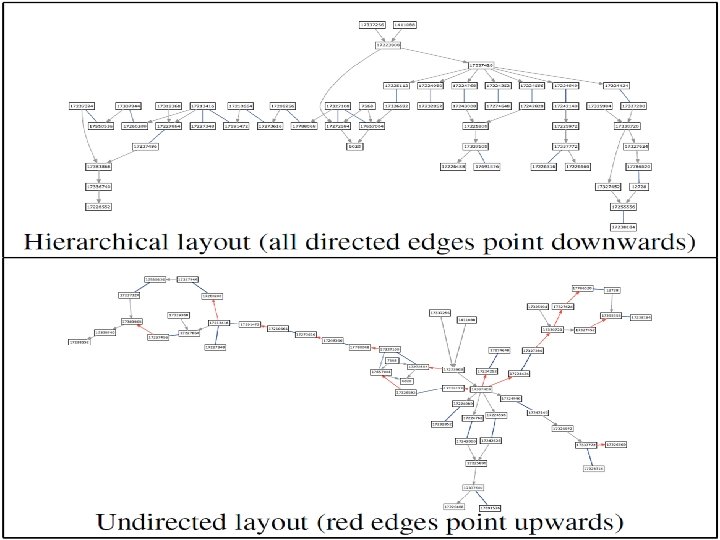
Directed graph drawing
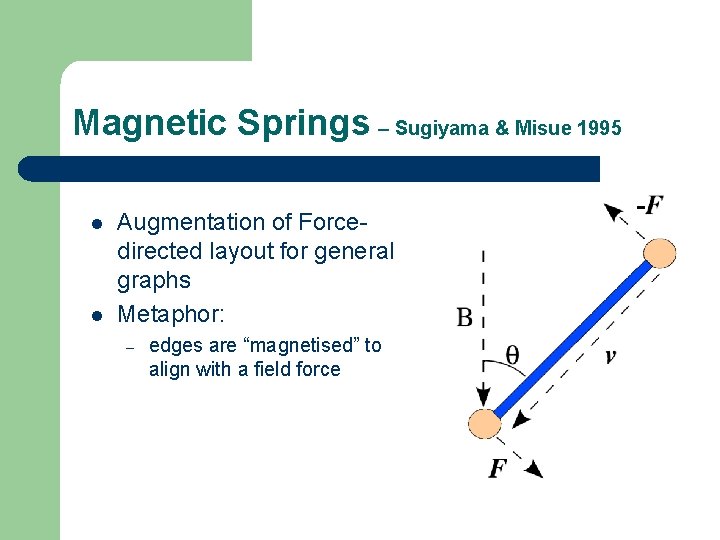
Magnetic Springs – Sugiyama & Misue 1995 l l Augmentation of Forcedirected layout for general graphs Metaphor: – edges are “magnetised” to align with a field force
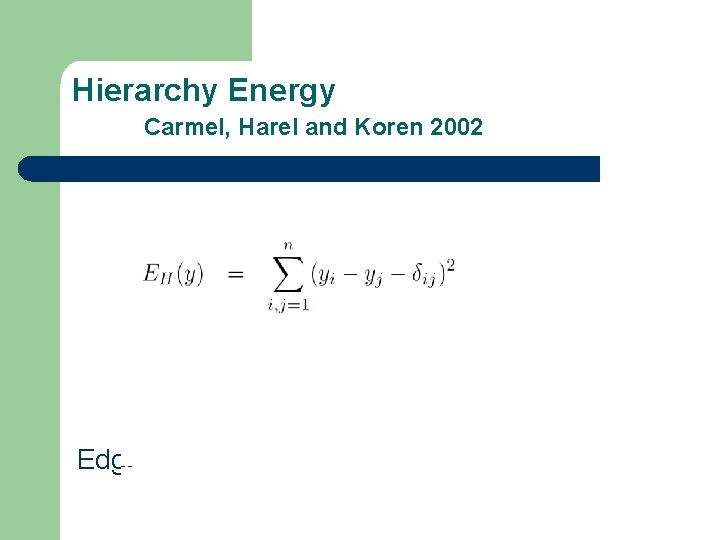
Hierarchy Energy Carmel, Harel and Koren 2002 Edge i→j implies δij=1
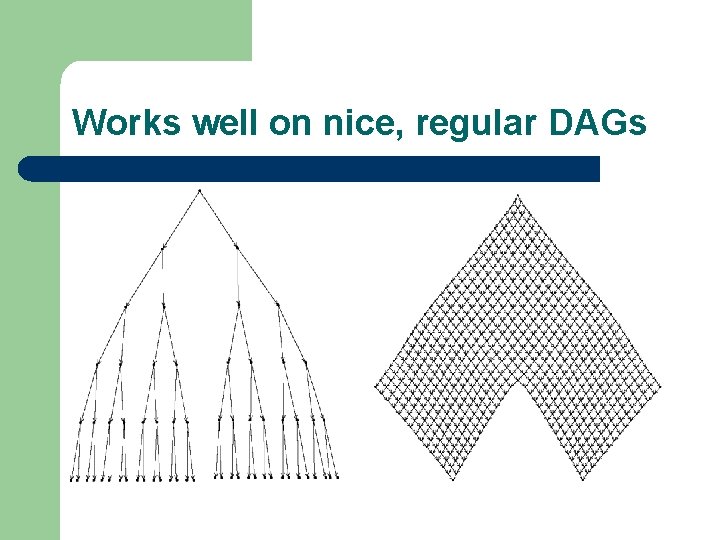
Works well on nice, regular DAGs
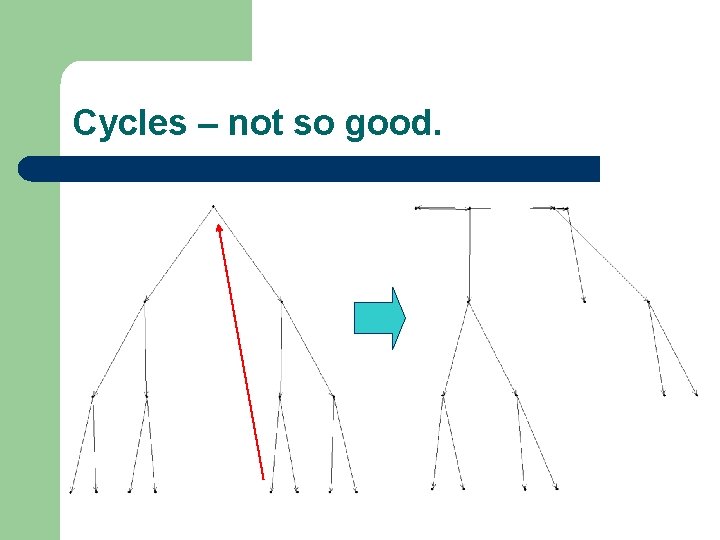
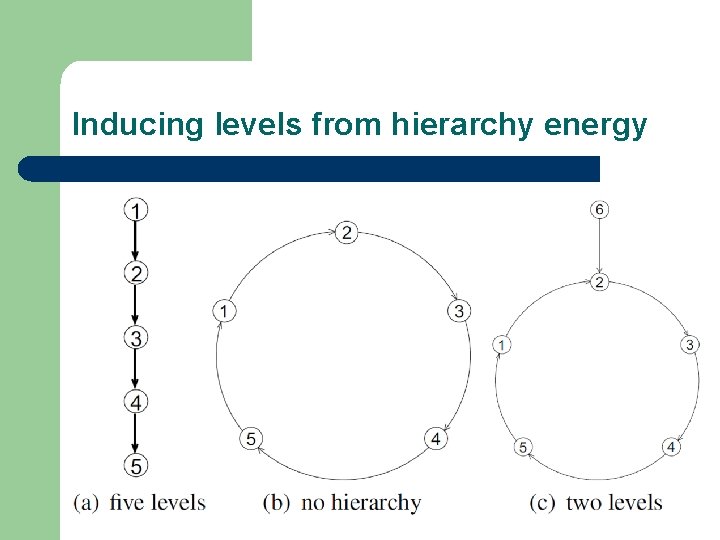
Cycles – not so good.
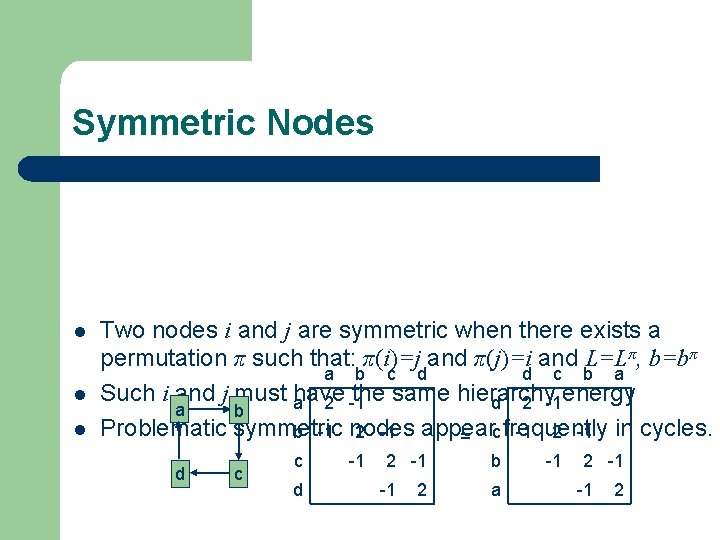
Symmetric Nodes l l l Two nodes i and j are symmetric when there exists a permutation π such that: π(i)=j and π(j)=i and L=Lπ, b=bπ a b c d d c b a Such i and j must have the same hierarchy energy a 2 -1 d 2 -1 a b Problematic symmetric b -1 nodes 2 -1 appear -1 2 -1 in cycles. = c frequently d c c d -1 2 -1 -1 2 b a -1 2 -1 -1 2
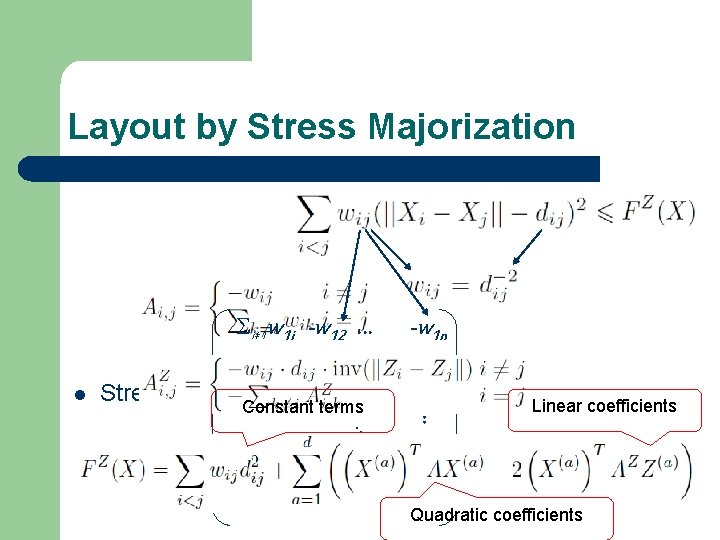
Layout by Stress Majorization Σi≠ 1 w 1 i -w 12 … l Σi≠ 2 w 2 i -w 2 n … Stress function: Constant terms -w 1 n Linear coefficients … Σi≠nwin Quadratic coefficients
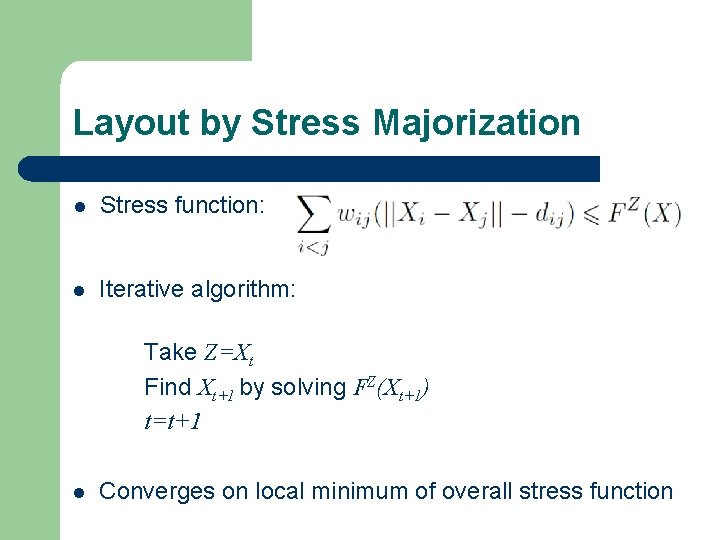
Layout by Stress Majorization l Stress function: l Iterative algorithm: Take Z=Xt Find Xt+1 by solving FZ(Xt+1) t=t+1 l Converges on local minimum of overall stress function
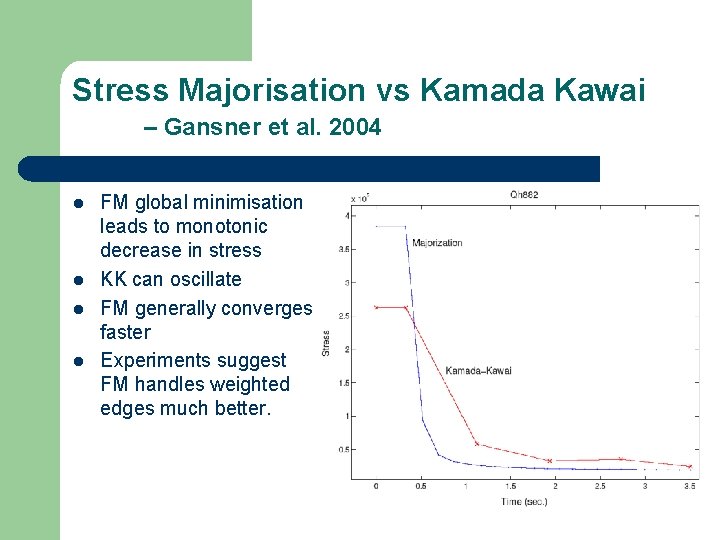
Stress Majorisation vs Kamada Kawai – Gansner et al. 2004 l l FM global minimisation leads to monotonic decrease in stress KK can oscillate FM generally converges faster Experiments suggest FM handles weighted edges much better.
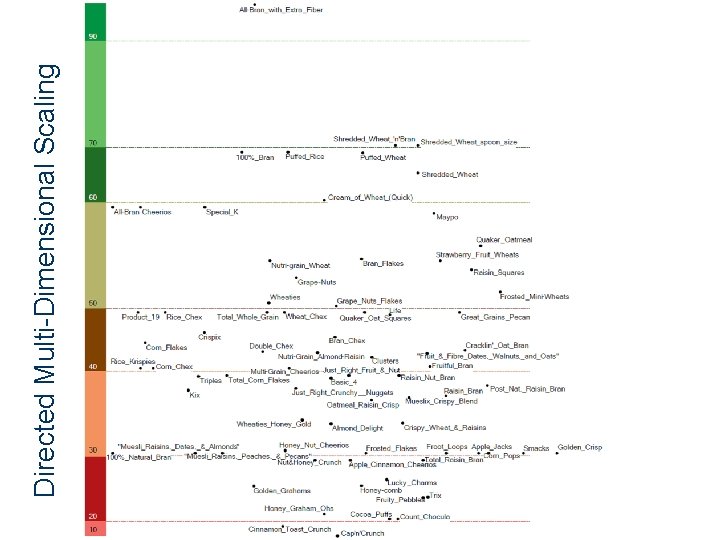
Our Contribution l Conjecture: – l l l Hierarchy Energy provides a more “natural” mapping of directed structure to levels than methods requiring cycle removal We can overcome HE method’s problems with symmetric nodes using constrained graph drawing We show that Stress Majorization (with it’s benefits over KK) is easily augmented with constraints Other applications: – – Directed Multi-Dimensional Scaling Orthogonal order preserving layout
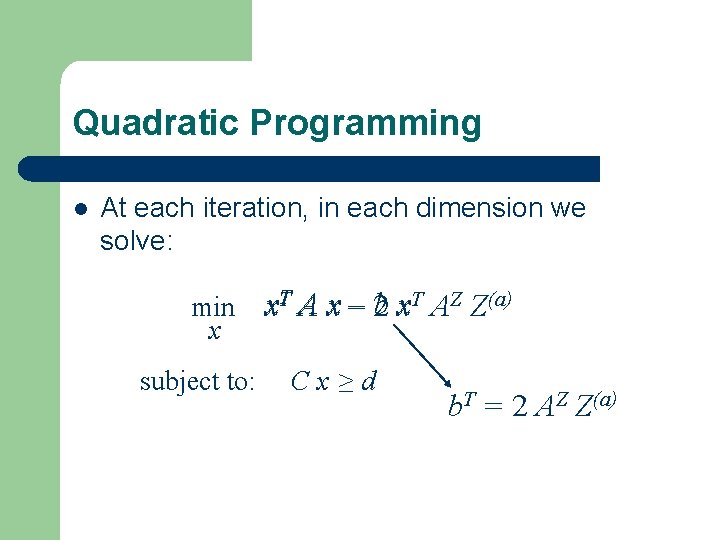
Quadratic Programming l At each iteration, in each dimension we solve: min x subject to: x. T A x – b 2 x. T AZ Z(a) Cx ≥d b. T = 2 AZ Z(a)
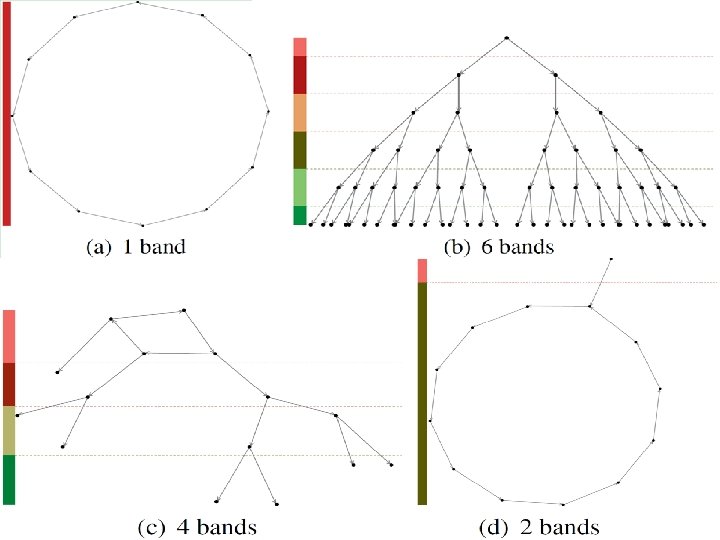
Inducing levels from hierarchy energy
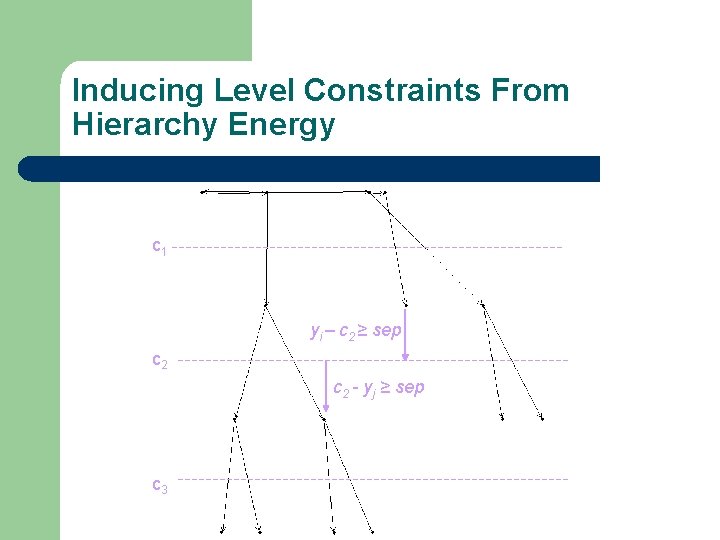
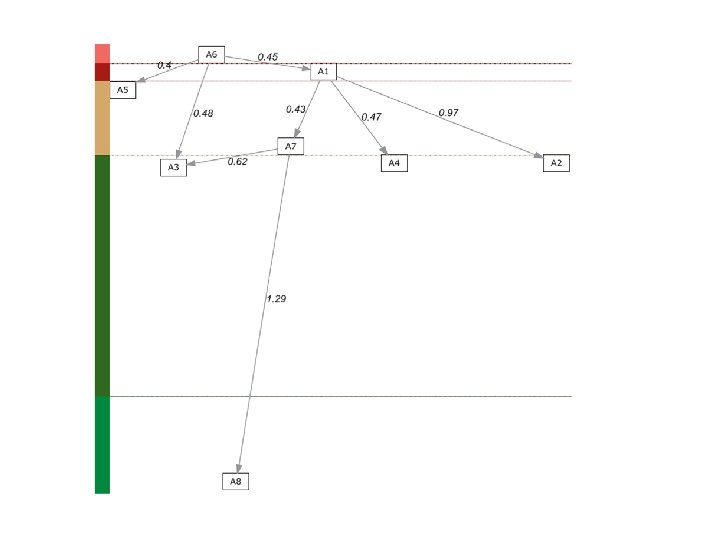
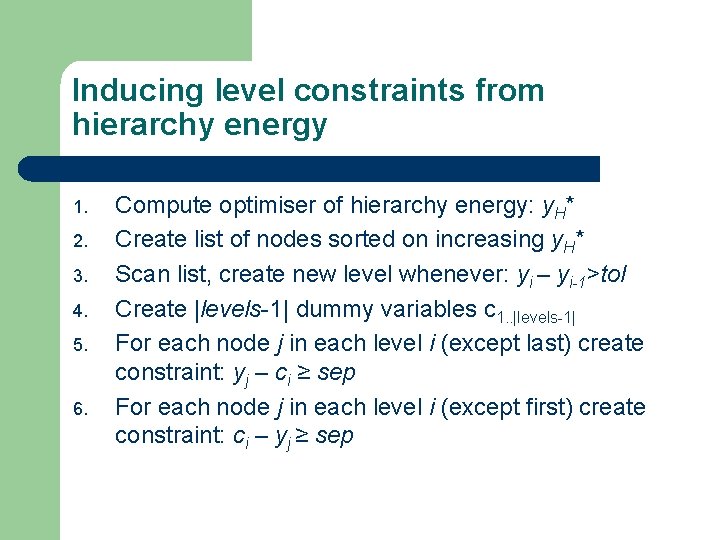
Inducing Level Constraints From Hierarchy Energy c 1 yi – c 2 ≥ sep c 2 - yj ≥ sep c 3
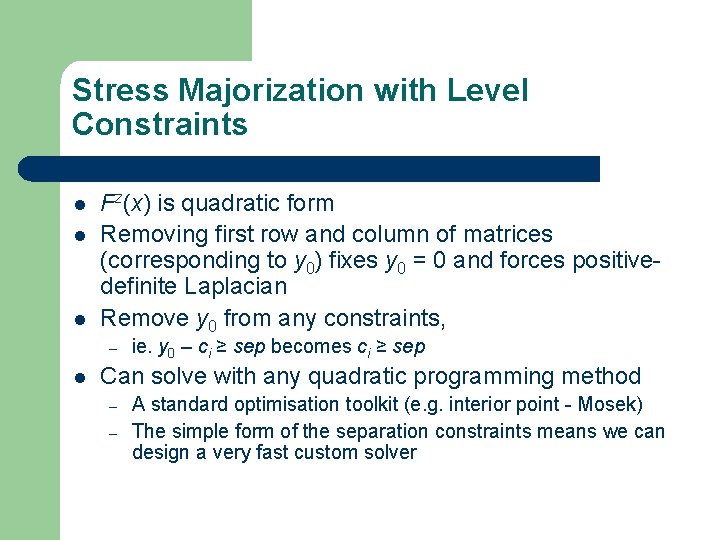
Stress Majorization with Level Constraints l l l Fz(x) is quadratic form Removing first row and column of matrices (corresponding to y 0) fixes y 0 = 0 and forces positivedefinite Laplacian Remove y 0 from any constraints, – l ie. y 0 – ci ≥ sep becomes ci ≥ sep Can solve with any quadratic programming method – – A standard optimisation toolkit (e. g. interior point - Mosek) The simple form of the separation constraints means we can design a very fast custom solver
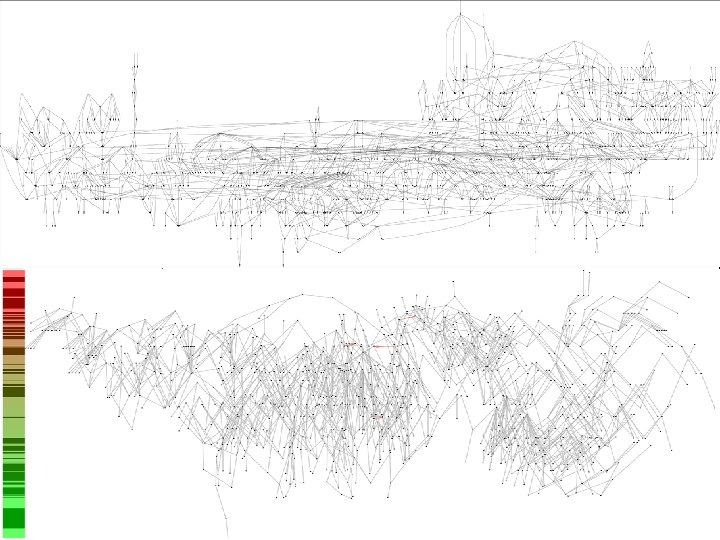
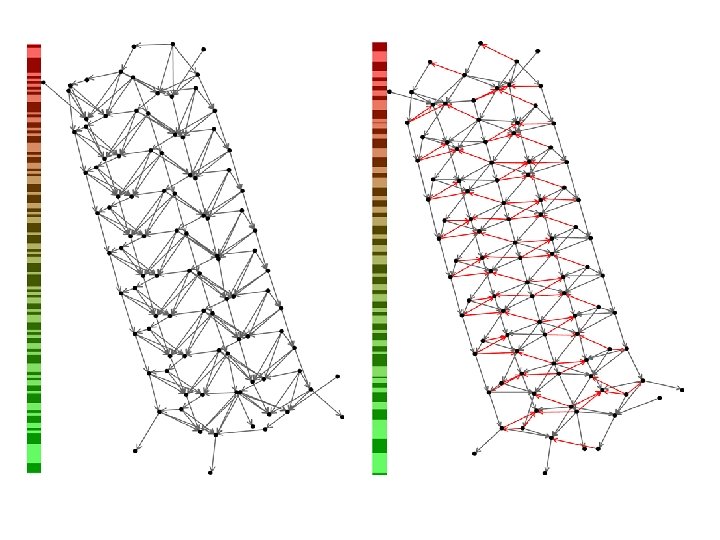
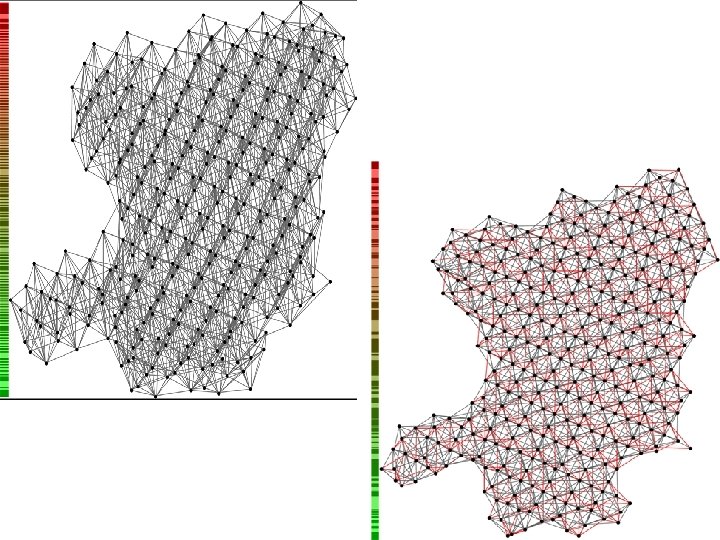
Examples
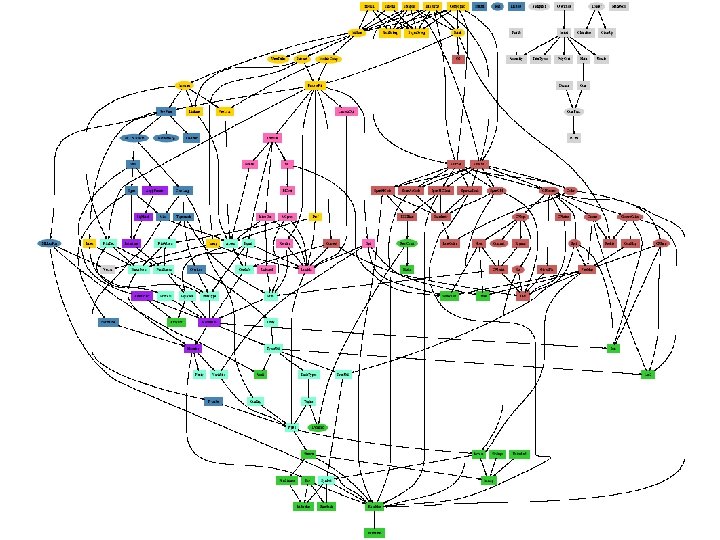
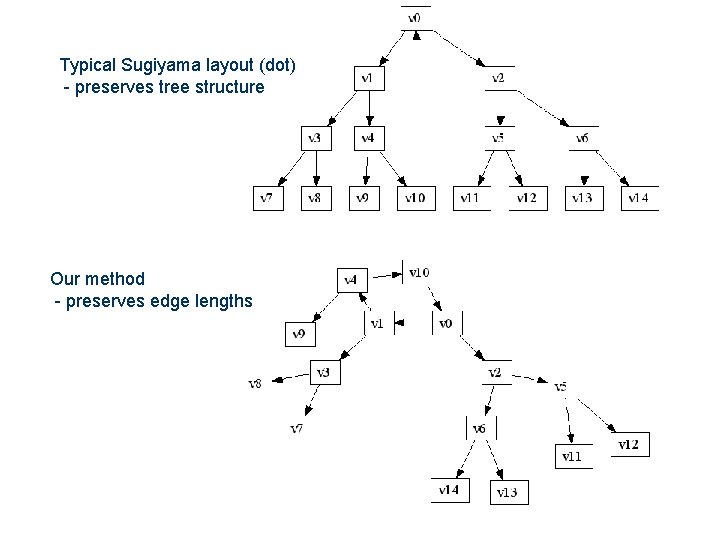
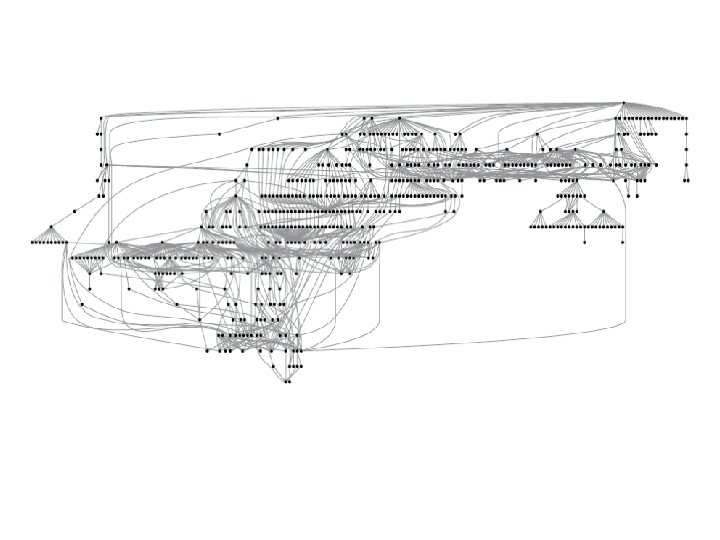
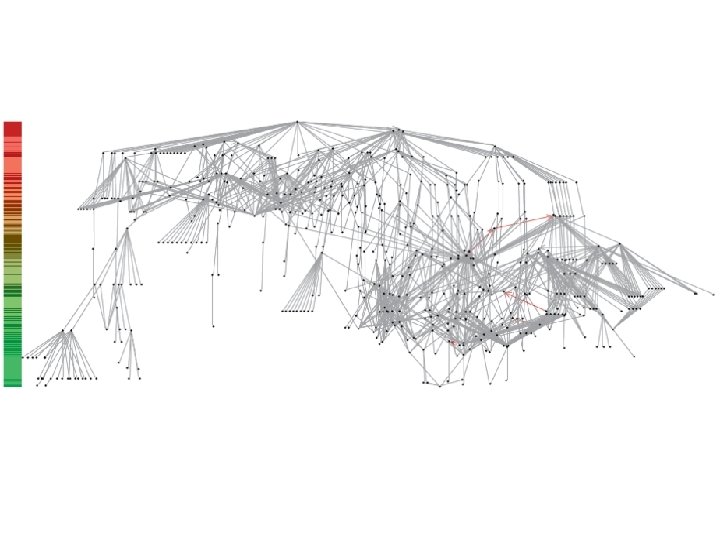
Typical Sugiyama layout (dot) - preserves tree structure Our method - preserves edge lengths
Directed Multi-Dimensional Scaling
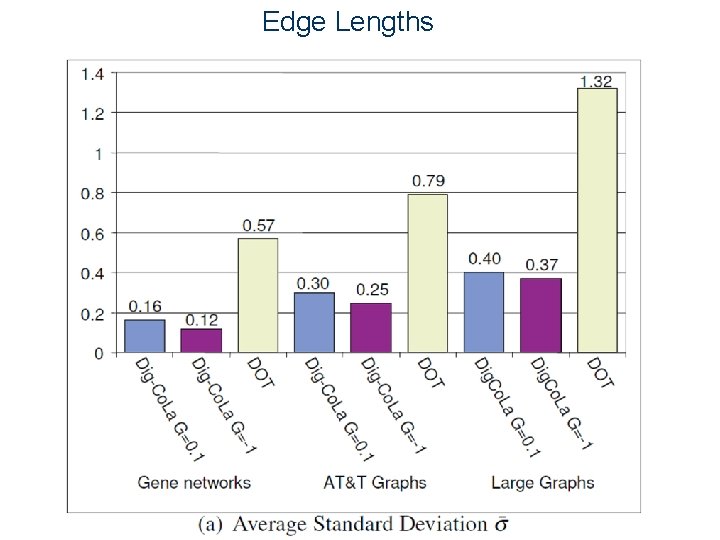
Edge Lengths
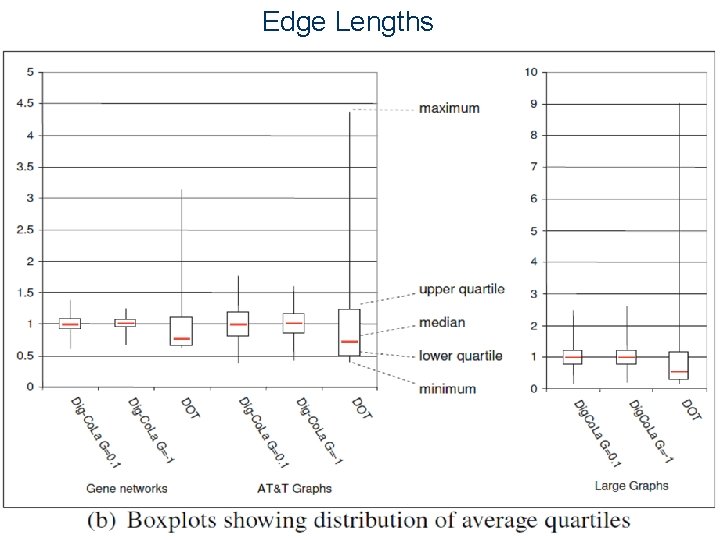
Edge Lengths
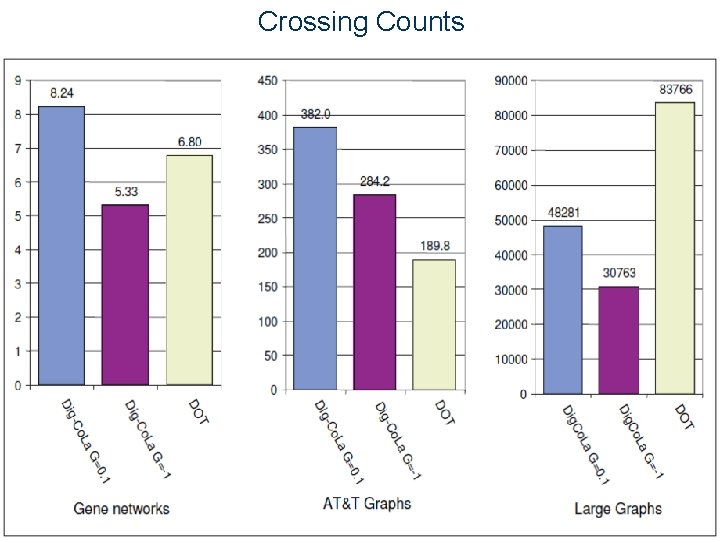
Crossing Counts
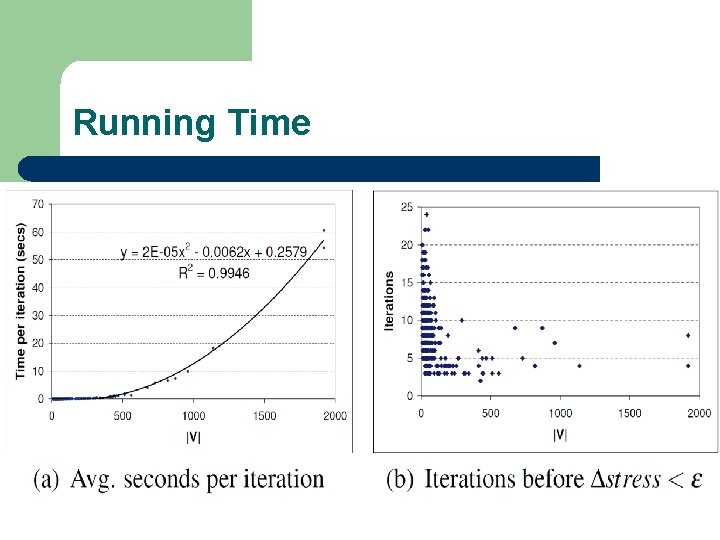
Running Time
Inducing level constraints from hierarchy energy 1. 2. 3. 4. 5. 6. Compute optimiser of hierarchy energy: y. H* Create list of nodes sorted on increasing y. H* Scan list, create new level whenever: yi – yi-1>tol Create |levels-1| dummy variables c 1. . |levels-1| For each node j in each level i (except last) create constraint: yj – ci ≥ sep For each node j in each level i (except first) create constraint: ci – yj ≥ sep