
New Systemic Therapies for Mycosis Fungoides and Szary
![Patch/Plaque-Stage Disease § Skin lesions can be hypopigmented, hyperpigmented, or erythematous[1, 2] ‒ Patches:](https://slidetodoc.com/presentation_image_h/1703c9799ae27226c18509a1e82a6313/image-10.jpg "Patch/Plaque-Stage Disease § Skin lesions can be hypopigmented, hyperpigmented, or erythematous[1, 2] ‒ Patches:")


![Systemic Therapies for Relapsed/Refractory MF § Alemtuzumab[1] § Pembrolizumab[5] § Bortezomib[2] § Pentostatin[6] §](https://slidetodoc.com/presentation_image_h/1703c9799ae27226c18509a1e82a6313/image-18.jpg "Systemic Therapies for Relapsed/Refractory MF § Alemtuzumab[1] § Pembrolizumab[5] § Bortezomib[2] § Pentostatin[6] §")
![FDA Approved Agents for Relapsed/Refractory CTCL Agent (Class) CTCL Indication Romidepsin[1] CTCL with ≥](https://slidetodoc.com/presentation_image_h/1703c9799ae27226c18509a1e82a6313/image-20.jpg "FDA Approved Agents for Relapsed/Refractory CTCL Agent (Class) CTCL Indication Romidepsin[1] CTCL with ≥")
![New Agents in Clinical Trials for MF/SS § E 7777: interleukin-2/diphtheria toxin fusion protein[1]](https://slidetodoc.com/presentation_image_h/1703c9799ae27226c18509a1e82a6313/image-38.jpg "New Agents in Clinical Trials for MF/SS § E 7777: interleukin-2/diphtheria toxin fusion protein[1]")
- Slides: 39
New Systemic Therapies for Mycosis Fungoides and Sézary Syndrome Supported by an educational grant from Kyowa Kirin, Inc.
About These Slides § Please feel free to use, update, and share some or all of these slides in your noncommercial presentations to colleagues or patients § When using our slides, please retain the source attribution: Slide credit: clinicaloptions. com § These slides may not be published, posted online, or used in commercial presentations without permission. Please contact permissions@clinicaloptions. com for details
Program Directors Francine Foss, MD Professor of Medicine and Dermatology Yale Cancer Center Yale University School of Medicine New Haven, Connecticut Francine Foss, MD, has disclosed that she has received consulting fees from Mallinkrodt and Miragen and fees for non-CME/CE services from Seattle Genetics and Spectrum.
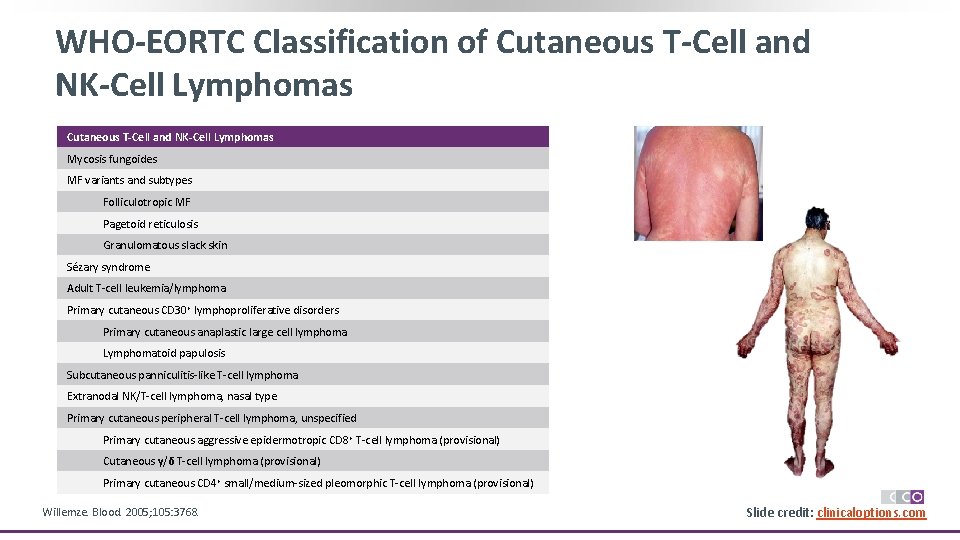
WHO-EORTC Classification of Cutaneous T-Cell and NK-Cell Lymphomas Mycosis fungoides MF variants and subtypes Folliculotropic MF Pagetoid reticulosis Granulomatous slack skin Sézary syndrome Adult T-cell leukemia/lymphoma Primary cutaneous CD 30+ lymphoproliferative disorders Primary cutaneous anaplastic large cell lymphoma Lymphomatoid papulosis Subcutaneous panniculitis-like T-cell lymphoma Extranodal NK/T-cell lymphoma, nasal type Primary cutaneous peripheral T-cell lymphoma, unspecified Primary cutaneous aggressive epidermotropic CD 8+ T-cell lymphoma (provisional) Cutaneous γ/δ T-cell lymphoma (provisional) Primary cutaneous CD 4+ small/medium-sized pleomorphic T-cell lymphoma (provisional) Willemze. Blood. 2005; 105: 3768. Slide credit: clinicaloptions. com
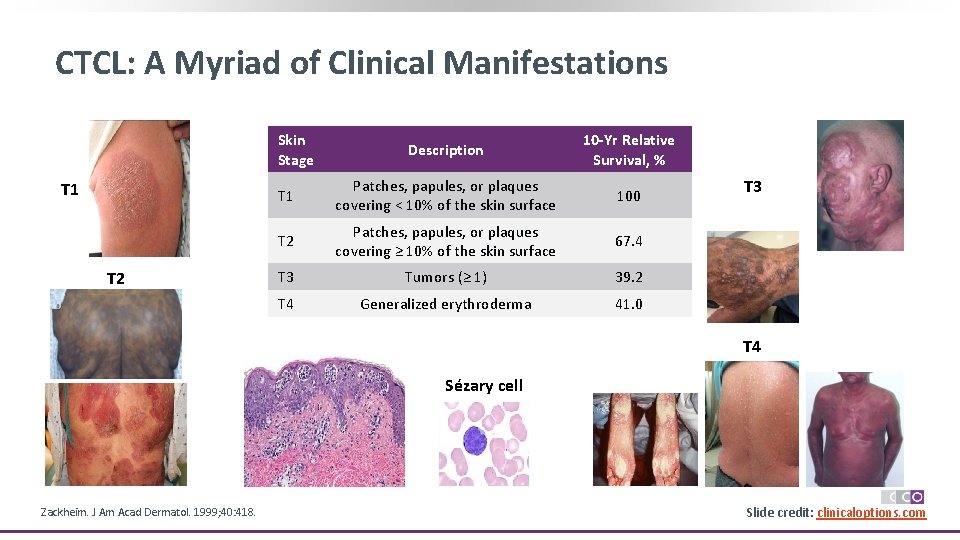
CTCL: A Myriad of Clinical Manifestations Skin Stage T 1 T 2 Description 10 -Yr Relative Survival, % T 1 Patches, papules, or plaques covering < 10% of the skin surface 100 T 2 Patches, papules, or plaques covering ≥ 10% of the skin surface 67. 4 T 3 Tumors (≥ 1) 39. 2 T 4 Generalized erythroderma 41. 0 T 3 T 4 Sézary cell Zackheim. J Am Acad Dermatol. 1999; 40: 418. Slide credit: clinicaloptions. com
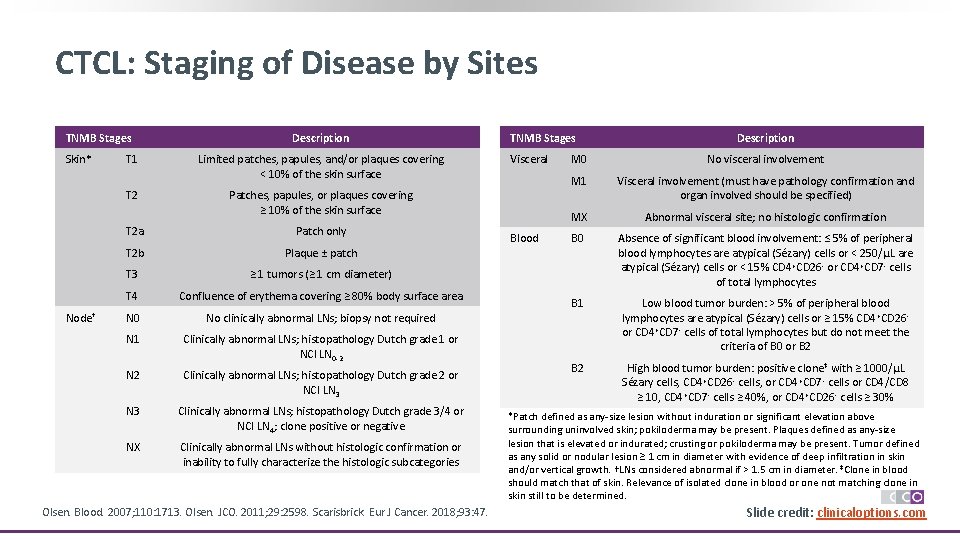
CTCL: Staging of Disease by Sites TNMB Stages Skin* Node† Description T 1 Limited patches, papules, and/or plaques covering < 10% of the skin surface T 2 Patches, papules, or plaques covering ≥ 10% of the skin surface T 2 a Patch only T 2 b Plaque ± patch T 3 ≥ 1 tumors (≥ 1 cm diameter) T 4 Confluence of erythema covering ≥ 80% body surface area N 0 No clinically abnormal LNs; biopsy not required N 1 Clinically abnormal LNs; histopathology Dutch grade 1 or NCI LN 0 -2 N 2 Clinically abnormal LNs; histopathology Dutch grade 2 or NCI LN 3 Clinically abnormal LNs; histopathology Dutch grade 3/4 or NCI LN 4; clone positive or negative NX Clinically abnormal LNs without histologic confirmation or inability to fully characterize the histologic subcategories Olsen. Blood. 2007; 110: 1713. Olsen. JCO. 2011; 29: 2598. Scarisbrick. Eur J Cancer. 2018; 93: 47. TNMB Stages Visceral Blood Description M 0 No visceral involvement M 1 Visceral involvement (must have pathology confirmation and organ involved should be specified) MX Abnormal visceral site; no histologic confirmation B 0 Absence of significant blood involvement: ≤ 5% of peripheral blood lymphocytes are atypical (Sézary) cells or < 250/μL are atypical (Sézary) cells or < 15% CD 4 +CD 26 - or CD 4+CD 7 - cells of total lymphocytes B 1 Low blood tumor burden: > 5% of peripheral blood lymphocytes are atypical (Sézary) cells or ≥ 15% CD 4 +CD 26 or CD 4+CD 7 - cells of total lymphocytes but do not meet the criteria of B 0 or B 2 High blood tumor burden: positive clone‡ with ≥ 1000/μL Sézary cells, CD 4+CD 26 - cells, or CD 4+CD 7 - cells or CD 4/CD 8 ≥ 10, CD 4+CD 7 - cells ≥ 40%, or CD 4 +CD 26 - cells ≥ 30% *Patch defined as any-size lesion without induration or significant elevation above surrounding uninvolved skin; pokiloderma may be present. Plaques defined as any-size lesion that is elevated or indurated; crusting or pokiloderma may be present. Tumor defined as any solid or nodular lesion ≥ 1 cm in diameter with evidence of deep infiltration in skin and/or vertical growth. †LNs considered abnormal if > 1. 5 cm in diameter. ‡Clone in blood should match that of skin. Relevance of isolated clone in blood or one not matching clone in skin still to be determined. Slide 6 credit: clinicaloptions. com
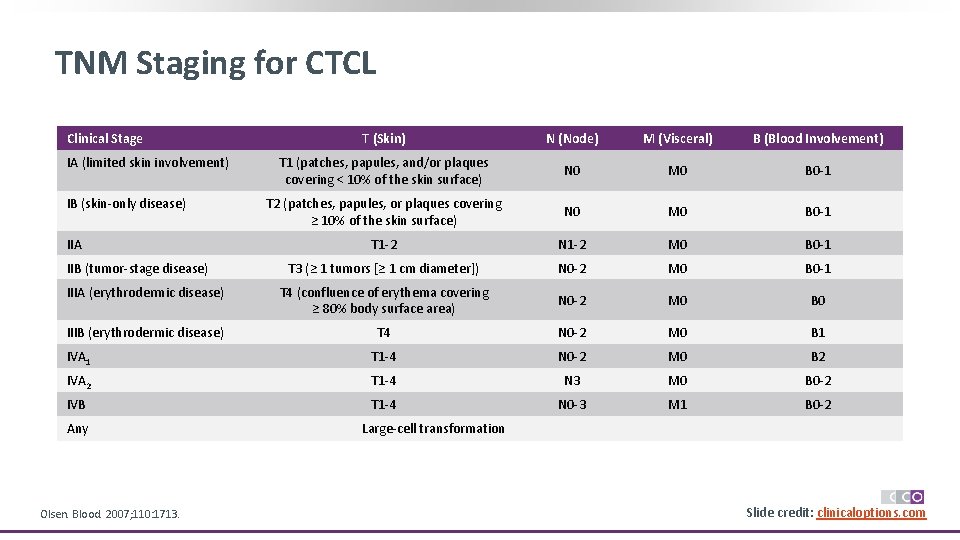
TNM Staging for CTCL Clinical Stage T (Skin) N (Node) M (Visceral) B (Blood Involvement) T 1 (patches, papules, and/or plaques covering < 10% of the skin surface) N 0 M 0 B 0 -1 T 2 (patches, papules, or plaques covering ≥ 10% of the skin surface) N 0 M 0 B 0 -1 T 1 -2 N 1 -2 M 0 B 0 -1 T 3 (≥ 1 tumors [≥ 1 cm diameter]) N 0 -2 M 0 B 0 -1 IIIA (erythrodermic disease) T 4 (confluence of erythema covering ≥ 80% body surface area) N 0 -2 M 0 B 0 IIIB (erythrodermic disease) T 4 N 0 -2 M 0 B 1 IVA 1 T 1 -4 N 0 -2 M 0 B 2 IVA 2 T 1 -4 N 3 M 0 B 0 -2 IVB T 1 -4 N 0 -3 M 1 B 0 -2 IA (limited skin involvement) IB (skin-only disease) IIA IIB (tumor-stage disease) Any Olsen. Blood. 2007; 110: 1713. Large-cell transformation Slide 7 credit: clinicaloptions. com
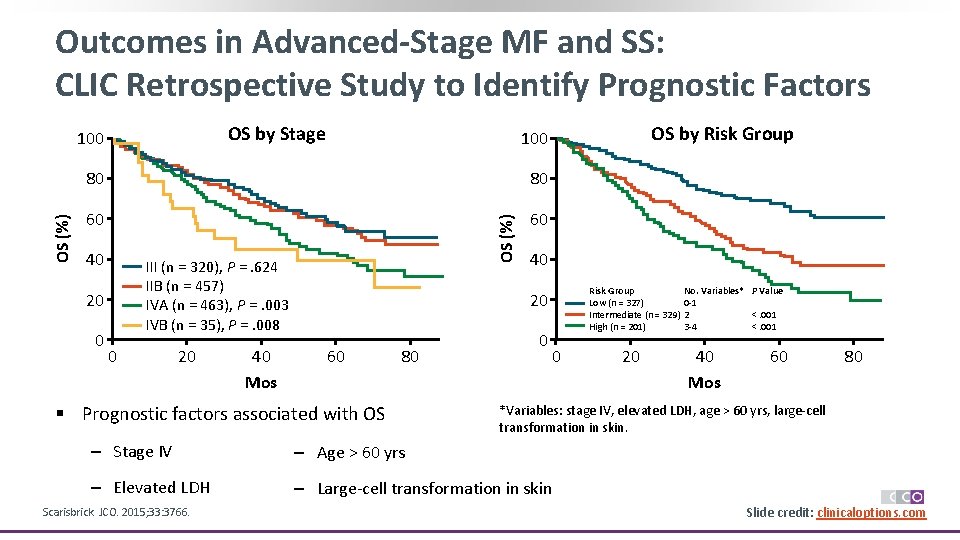
Outcomes in Advanced-Stage MF and SS: CLIC Retrospective Study to Identify Prognostic Factors OS by Stage 80 80 60 60 40 III (n = 320), P =. 624 IIB (n = 457) IVA (n = 463), P =. 003 IVB (n = 35), P =. 008 20 0 0 20 40 Mos OS by Risk Group 100 OS (%) 100 40 Risk Group Low (n = 327) Intermediate (n = 329) High (n = 201) 20 60 80 § Prognostic factors associated with OS 0 0 40 Mos 60 80 *Variables: stage IV, elevated LDH, age > 60 yrs, large-cell transformation in skin. ‒ Stage IV ‒ Age > 60 yrs ‒ Elevated LDH ‒ Large-cell transformation in skin Scarisbrick. JCO. 2015; 33: 3766. 20 No. Variables* P Value 0 -1 2 <. 001 3 -4 <. 001 Slide credit: clinicaloptions. com
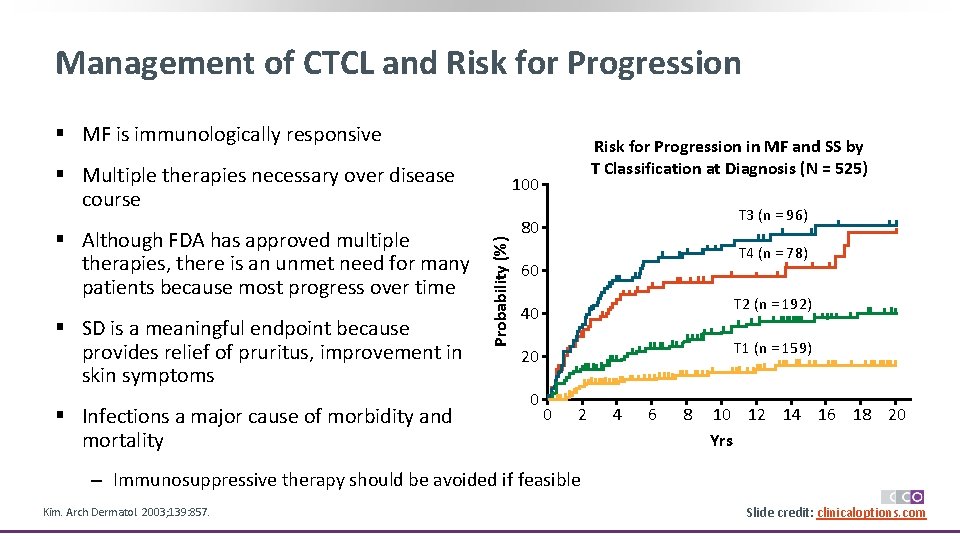
Management of CTCL and Risk for Progression § MF is immunologically responsive § Multiple therapies necessary over disease course § SD is a meaningful endpoint because provides relief of pruritus, improvement in skin symptoms § Infections a major cause of morbidity and mortality 100 Probability (%) § Although FDA has approved multiple therapies, there is an unmet need for many patients because most progress over time Risk for Progression in MF and SS by T Classification at Diagnosis (N = 525) T 3 (n = 96) 80 T 4 (n = 78) 60 T 2 (n = 192) 40 T 1 (n = 159) 20 0 0 2 4 6 8 10 12 14 16 18 20 Yrs ‒ Immunosuppressive therapy should be avoided if feasible Kim. Arch Dermatol. 2003; 139: 857. Slide credit: clinicaloptions. com
Patch/Plaque-Stage Disease § Skin lesions can be hypopigmented, hyperpigmented, or erythematous[1, 2] ‒ Patches: flat lesions ‒ Plaques: raised/scaling lesions § Generally distributed in areas not exposed to sun[3] § Should perform biopsy off topical steroids[4] § Differential diagnosis: tinea corporis, eczema, drug reaction, psoriasis[5] § Skin involvement based on % of BSA[2] ‒ T 1: < 10% BSA ‒ T 2: ≥ 10% BSA 1. NCI. Mycosis Fungoides (Including Sézary Syndrome) Treatment (PDQ®)–Health Professional Version. Updated September 20, 2019. 2. Willemze. Ann Oncol. 2018; 29(suppl 4): iv 30. 3. Mycosis fungoides. Cutaneous Lymphoma Foundation. July 2018. 4. Poligone. Semin Cutan Med Surg. 2012; 31: 25. 5. Nashan. Br J Dermatol. 2007; 156: 1. Slide credit: clinicaloptions. com
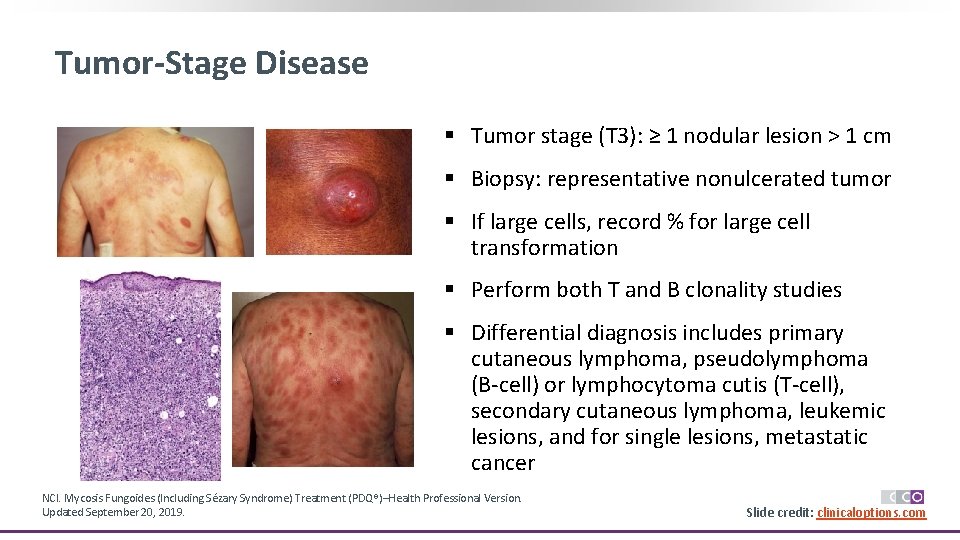
Tumor-Stage Disease § Tumor stage (T 3): ≥ 1 nodular lesion > 1 cm § Biopsy: representative nonulcerated tumor § If large cells, record % for large cell transformation § Perform both T and B clonality studies § Differential diagnosis includes primary cutaneous lymphoma, pseudolymphoma (B-cell) or lymphocytoma cutis (T-cell), secondary cutaneous lymphoma, leukemic lesions, and for single lesions, metastatic cancer NCI. Mycosis Fungoides (Including Sézary Syndrome) Treatment (PDQ®)–Health Professional Version. Updated September 20, 2019. Slide credit: clinicaloptions. com
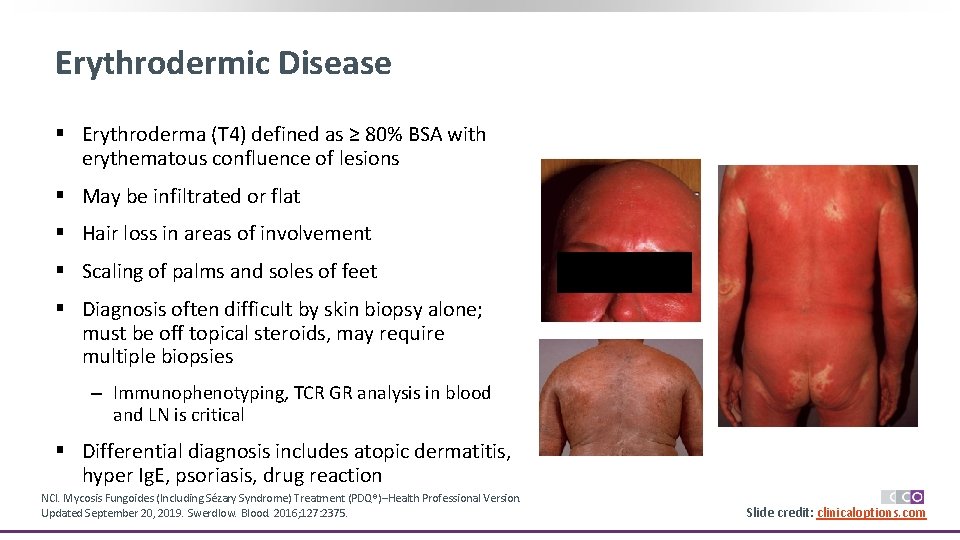
Erythrodermic Disease § Erythroderma (T 4) defined as ≥ 80% BSA with erythematous confluence of lesions § May be infiltrated or flat § Hair loss in areas of involvement § Scaling of palms and soles of feet § Diagnosis often difficult by skin biopsy alone; must be off topical steroids, may require multiple biopsies ‒ Immunophenotyping, TCR GR analysis in blood and LN is critical § Differential diagnosis includes atopic dermatitis, hyper Ig. E, psoriasis, drug reaction NCI. Mycosis Fungoides (Including Sézary Syndrome) Treatment (PDQ®)–Health Professional Version. Updated September 20, 2019. Swerdlow. Blood. 2016; 127: 2375. Slide credit: clinicaloptions. com
Sézary Syndrome § Systemic and aggressive variant of erythroderma § Exfoliative erythroderma, ectropion, alopecia, palmoplantar keratoderma § Severe pruritus often associated § High incidence of infections due to poor skin integument § Circulating, atypical, malignant T lymphocytes ‒ Sézary cells: CD 3+, CD 4+, CD 5+, CD 7+/-, CD 8 -, CD 25+/-, CD 26–, CD 30 -, CD 45 RO+, CD 52+, CD 158+ Querfeld. Management of Hematologic Malignancies. 2011. Slide 13 credit: clinicaloptions. com
ISCL Recommended Staging Evaluation for CTCL Recommendation Physical exam: Identify abnormal peripheral LNs ≥ 1. 5 cm, organ involvement Radiologic tests: CT scans of chest, abdomen, pelvis except in stages IA or limited IB. PET scans may be helpful to identify which LN to biopsy LN biopsy: Complete LN biopsy preferred over core LN biopsy, no FNA Immunophenotyping: CD 2, CD 3, CD 4, CD 5, CD 7, CD 8, CD 20, CD 26, CD 30 Molecular genetics: T-cell receptor rearrangement or V-beta by flow cytometry BM biopsy: Not routine except for stage B 2 blood involvement or hematologic abnormalities Olsen. Blood 2007; 110: 1713. Slide credit: clinicaloptions. com
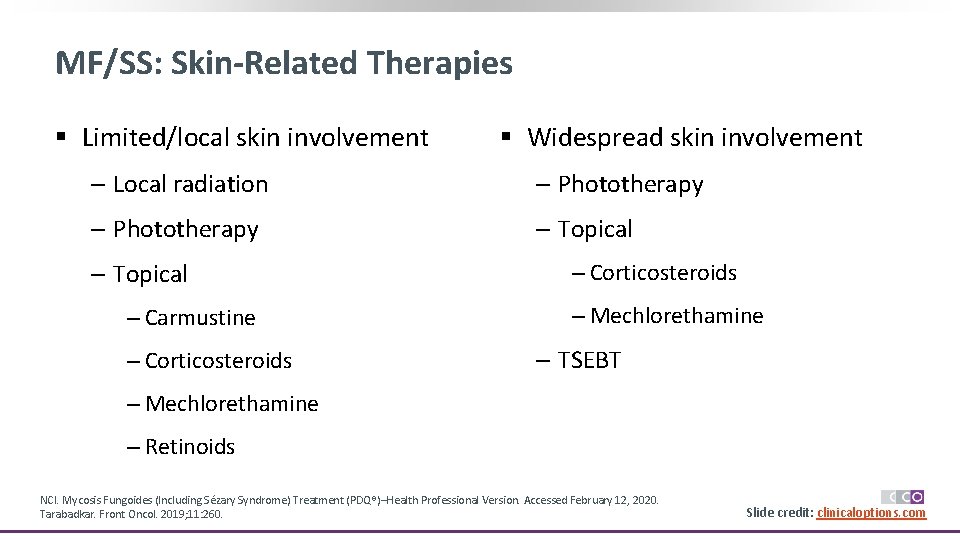
MF/SS: Skin-Related Therapies § Limited/local skin involvement § Widespread skin involvement ‒ Local radiation ‒ Phototherapy ‒ Topical ‒ Carmustine ‒ Corticosteroids ‒ Mechlorethamine ‒ TSEBT ‒ Mechlorethamine ‒ Retinoids NCI. Mycosis Fungoides (Including Sézary Syndrome) Treatment (PDQ®)–Health Professional Version. Accessed February 12, 2020. Tarabadkar. Front Oncol. 2019; 11: 260. Slide credit: clinicaloptions. com
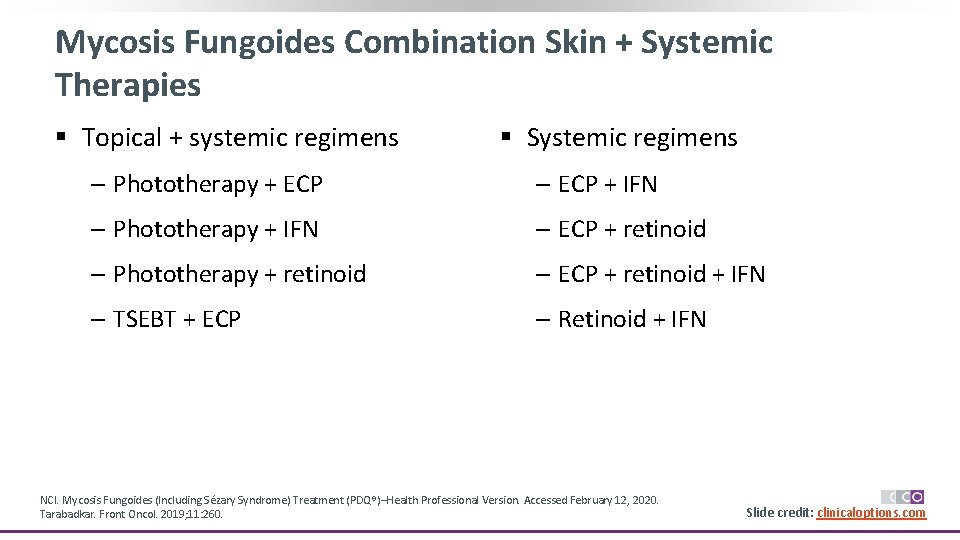
Mycosis Fungoides Combination Skin + Systemic Therapies § Topical + systemic regimens § Systemic regimens ‒ Phototherapy + ECP ‒ ECP + IFN ‒ Phototherapy + IFN ‒ ECP + retinoid ‒ Phototherapy + retinoid ‒ ECP + retinoid + IFN ‒ TSEBT + ECP ‒ Retinoid + IFN NCI. Mycosis Fungoides (Including Sézary Syndrome) Treatment (PDQ®)–Health Professional Version. Accessed February 12, 2020. Tarabadkar. Front Oncol. 2019; 11: 260. Slide credit: clinicaloptions. com
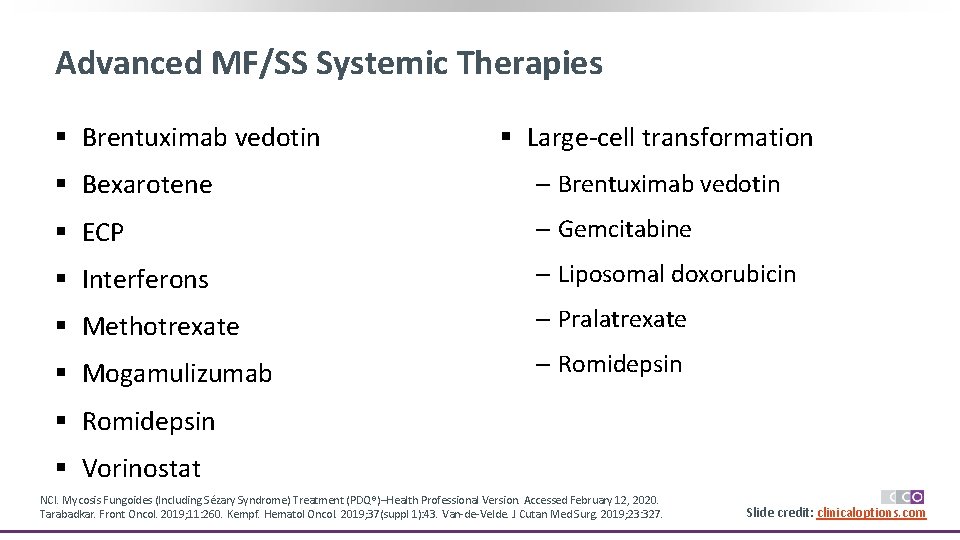
Advanced MF/SS Systemic Therapies § Brentuximab vedotin § Large-cell transformation § Bexarotene ‒ Brentuximab vedotin § ECP ‒ Gemcitabine § Interferons ‒ Liposomal doxorubicin § Methotrexate ‒ Pralatrexate § Mogamulizumab ‒ Romidepsin § Vorinostat NCI. Mycosis Fungoides (Including Sézary Syndrome) Treatment (PDQ®)–Health Professional Version. Accessed February 12, 2020. Tarabadkar. Front Oncol. 2019; 11: 260. Kempf. Hematol Oncol. 2019; 37(suppl 1): 43. Van-de-Velde. J Cutan Med Surg. 2019; 23: 327. Slide credit: clinicaloptions. com
Systemic Therapies for Relapsed/Refractory MF § Alemtuzumab[1] § Pembrolizumab[5] § Bortezomib[2] § Pentostatin[6] § Chlorambucil[3] § Temozolomide[7] § Cyclophosphamide[3] § Etoposide[4] 1. Querfeld. Leuk Lymphoma. 2009; 50: 1969. 2. Zinzani. JCO. 2007; 25: 4293. 3. NCI. Mycosis Fungoides (Including Sézary Syndrome) Treatment (PDQ®)–Health Professional Version. Accessed February 12, 2020. 4. Purnak. Dermatol Ther. 2018; 31: e 12586. 5. Khodadoust. JCO. 2019. [Epub]. 6. Cummings. JCO. 1991; 9: 565. 7. Tani. Haematologica. 2005; 90: 1283. Slide credit: clinicaloptions. com
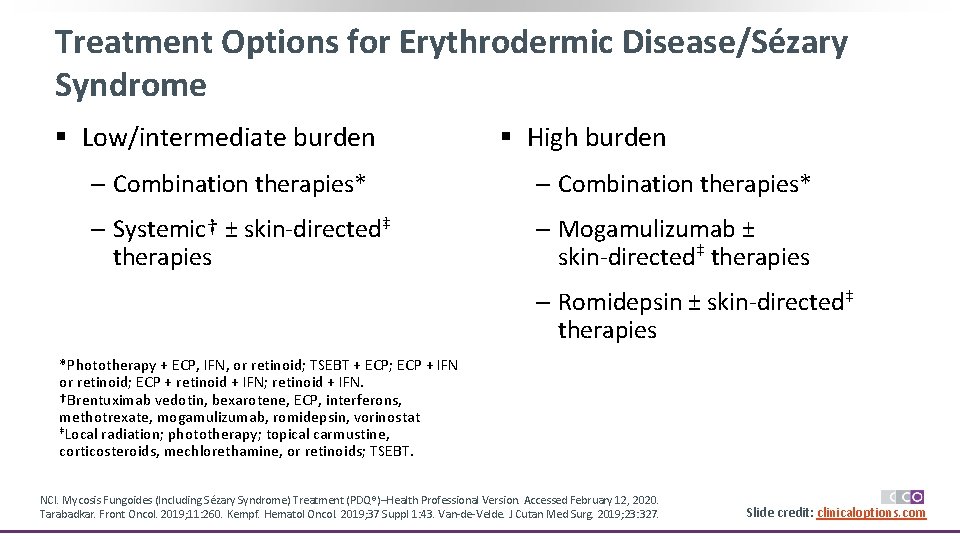
Treatment Options for Erythrodermic Disease/Sézary Syndrome § Low/intermediate burden § High burden ‒ Combination therapies* ‒ Systemic† ± skin-directed‡ therapies ‒ Mogamulizumab ± skin-directed‡ therapies ‒ Romidepsin ± skin-directed‡ therapies *Phototherapy + ECP, IFN, or retinoid; TSEBT + ECP; ECP + IFN or retinoid; ECP + retinoid + IFN; retinoid + IFN. †Brentuximab vedotin, bexarotene, ECP, interferons, methotrexate, mogamulizumab, romidepsin, vorinostat ‡Local radiation; phototherapy; topical carmustine, corticosteroids, mechlorethamine, or retinoids; TSEBT. NCI. Mycosis Fungoides (Including Sézary Syndrome) Treatment (PDQ®)–Health Professional Version. Accessed February 12, 2020. Tarabadkar. Front Oncol. 2019; 11: 260. Kempf. Hematol Oncol. 2019; 37 Suppl 1: 43. Van-de-Velde. J Cutan Med Surg. 2019; 23: 327. Slide credit: clinicaloptions. com
FDA Approved Agents for Relapsed/Refractory CTCL Agent (Class) CTCL Indication Romidepsin[1] CTCL with ≥ 1 prior systemic therapy Denileukin diftitox[2] Resistant/recurrent CTCL with cells that express CD 25 (Fusion protein) Bexarotene[3] (Retinoid x-receptor activator) Vorinostat[4] (HDAC inhibitor) Cutaneous lesions in patients with CTCL refractory to ≥ 1 prior systemic therapy Persistent/recurrent CTCL with cutaneous manifestations on or after 2 prior systemic therapies Brentuximab vedotin[5] CD 30+ CTCL after prior systemic therapy Mogamulizumab[6] Relapsed/refractory CTCL after ≥ 1 systemic therapy Trial Description Pivotal Supportive N* 96 71 ORR, % 34 35 Do. R, Mos 15 11 Pivotal 71 30 4 Pivotal 62 32 >5 Pivotal 74 30 >6 Supportive 33 24 3. 5 64 67 17 (PFS) 186 28 14 Randomized trial vs methotrexate or bexarotene Randomized trial vs vorinostat *Patients treated with listed drug only. 1. Romidepsin PI. 2. Denileukin diftitox PI. 3. Bexarotene PI. 4. Vorinostat PI. 5. Brentuximab vedotin PI. 6. Mogamulizumab PI. Slide credit: clinicaloptions. com
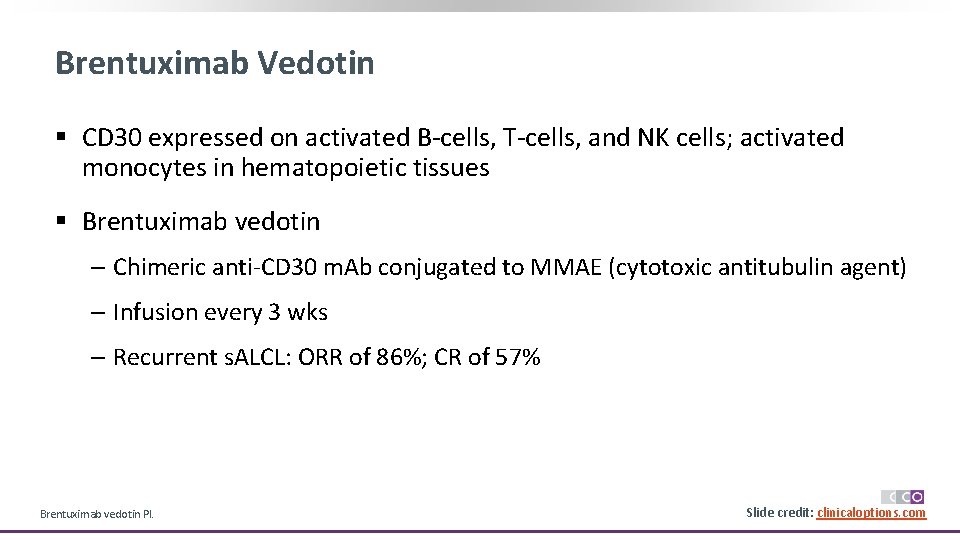
Brentuximab Vedotin § CD 30 expressed on activated B-cells, T-cells, and NK cells; activated monocytes in hematopoietic tissues § Brentuximab vedotin ‒ Chimeric anti-CD 30 m. Ab conjugated to MMAE (cytotoxic antitubulin agent) ‒ Infusion every 3 wks ‒ Recurrent s. ALCL: ORR of 86%; CR of 57% Brentuximab vedotin PI. Slide 21 credit: clinicaloptions. com
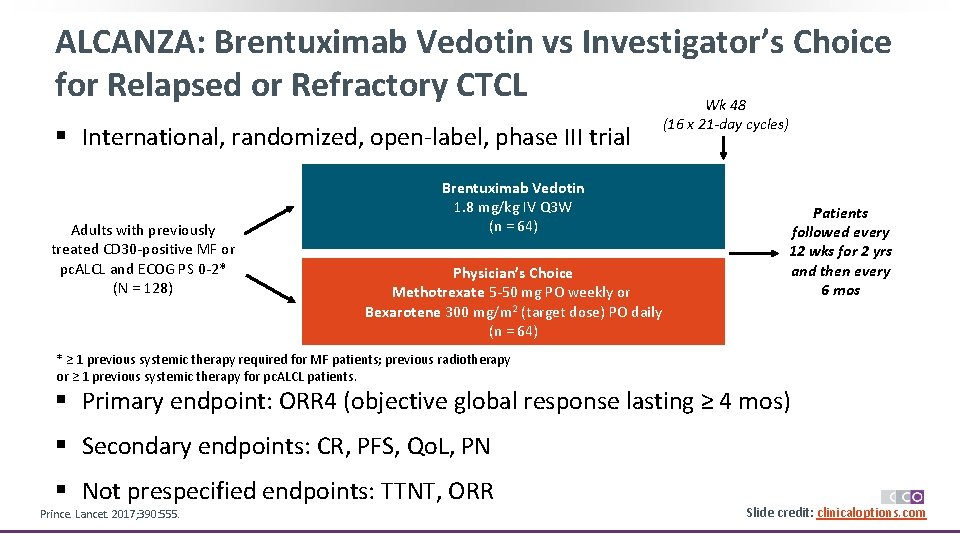
ALCANZA: Brentuximab Vedotin vs Investigator’s Choice for Relapsed or Refractory CTCL Wk 48 § International, randomized, open-label, phase III trial Adults with previously treated CD 30 -positive MF or pc. ALCL and ECOG PS 0 -2* (N = 128) Brentuximab Vedotin 1. 8 mg/kg IV Q 3 W (n = 64) Physician’s Choice Methotrexate 5 -50 mg PO weekly or Bexarotene 300 mg/m 2 (target dose) PO daily (n = 64) (16 x 21 -day cycles) Patients followed every 12 wks for 2 yrs and then every 6 mos * ≥ 1 previous systemic therapy required for MF patients; previous radiotherapy or ≥ 1 previous systemic therapy for pc. ALCL patients. § Primary endpoint: ORR 4 (objective global response lasting ≥ 4 mos) § Secondary endpoints: CR, PFS, Qo. L, PN § Not prespecified endpoints: TTNT, ORR Prince. Lancet. 2017; 390: 555. Slide credit: clinicaloptions. com
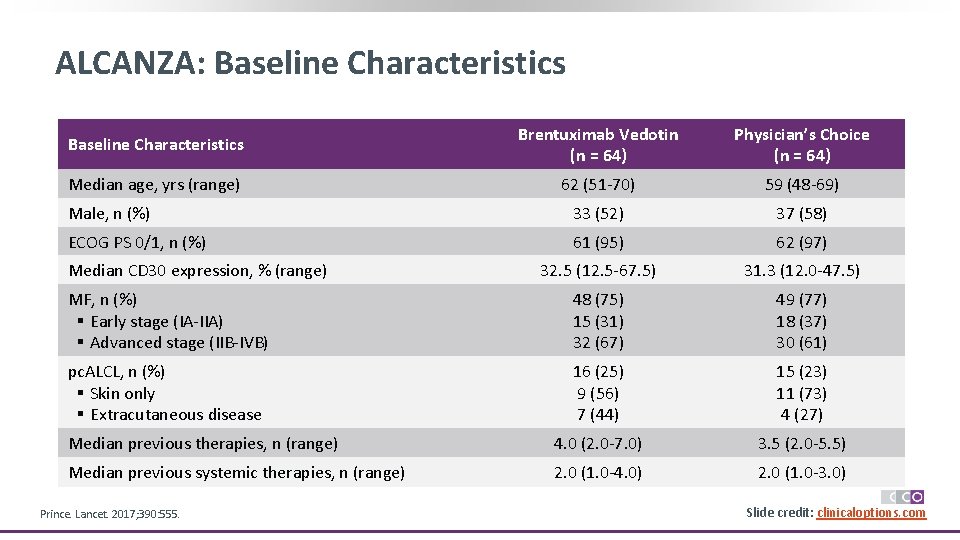
ALCANZA: Baseline Characteristics Brentuximab Vedotin (n = 64) Physician’s Choice (n = 64) Median age, yrs (range) 62 (51 -70) 59 (48 -69) Male, n (%) 33 (52) 37 (58) ECOG PS 0/1, n (%) 61 (95) 62 (97) 32. 5 (12. 5 -67. 5) 31. 3 (12. 0 -47. 5) MF, n (%) § Early stage (IA-IIA) § Advanced stage (IIB-IVB) 48 (75) 15 (31) 32 (67) 49 (77) 18 (37) 30 (61) pc. ALCL, n (%) § Skin only § Extracutaneous disease 16 (25) 9 (56) 7 (44) 15 (23) 11 (73) 4 (27) Median previous therapies, n (range) 4. 0 (2. 0 -7. 0) 3. 5 (2. 0 -5. 5) Median previous systemic therapies, n (range) 2. 0 (1. 0 -4. 0) 2. 0 (1. 0 -3. 0) Median CD 30 expression, % (range) Prince. Lancet. 2017; 390: 555. Slide credit: clinicaloptions. com
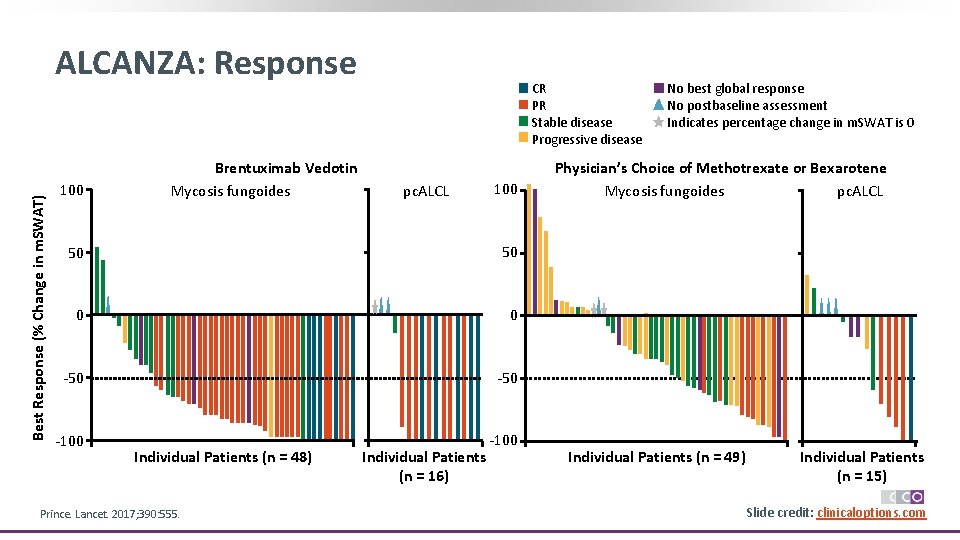
Best Response (% Change in m. SWAT) ALCANZA: Response 100 Brentuximab Vedotin Mycosis fungoides CR PR Stable disease Progressive disease pc. ALCL 100 50 50 0 0 -50 -100 Individual Patients (n = 48) Prince. Lancet. 2017; 390: 555. Individual Patients (n = 16) No best global response No postbaseline assessment Indicates percentage change in m. SWAT is 0 Physician’s Choice of Methotrexate or Bexarotene Mycosis fungoides pc. ALCL Individual Patients (n = 49) Individual Patients (n = 15) Slide credit: clinicaloptions. com
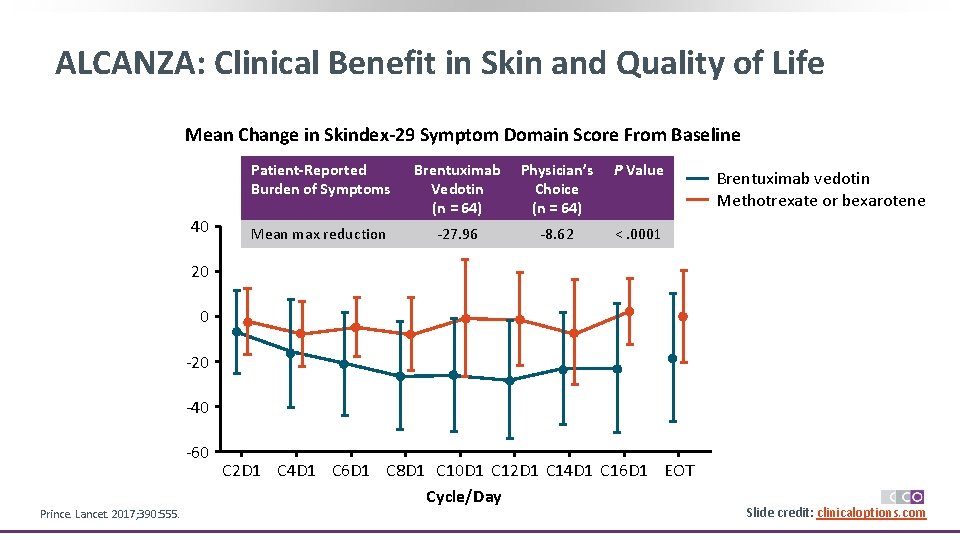
ALCANZA: Clinical Benefit in Skin and Quality of Life Mean Change in Skindex-29 Symptom Domain Score From Baseline 40 Patient-Reported Burden of Symptoms Brentuximab Vedotin (n = 64) Physician’s Choice (n = 64) P Value Mean max reduction -27. 96 -8. 62 <. 0001 Brentuximab vedotin Methotrexate or bexarotene 20 0 -20 -40 -60 Prince. Lancet. 2017; 390: 555. C 2 D 1 C 4 D 1 C 6 D 1 C 8 D 1 C 10 D 1 C 12 D 1 C 14 D 1 C 16 D 1 EOT Cycle/Day Slide credit: clinicaloptions. com
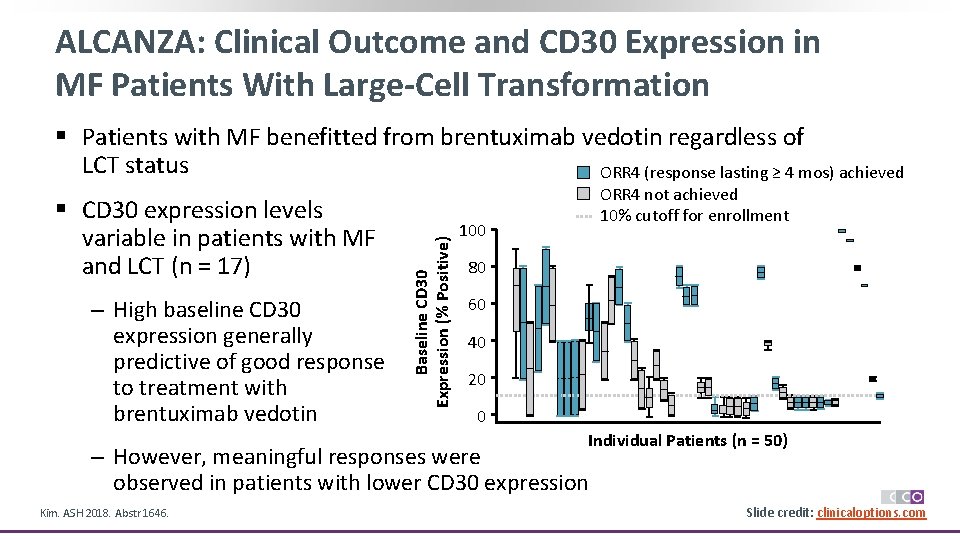
ALCANZA: Clinical Outcome and CD 30 Expression in MF Patients With Large-Cell Transformation § CD 30 expression levels variable in patients with MF and LCT (n = 17) ‒ High baseline CD 30 expression generally predictive of good response to treatment with brentuximab vedotin Baseline CD 30 Expression (% Positive) § Patients with MF benefitted from brentuximab vedotin regardless of LCT status ORR 4 (response lasting ≥ 4 mos) achieved ORR 4 not achieved 10% cutoff for enrollment 100 80 60 40 20 0 Individual Patients (n = 50) ‒ However, meaningful responses were observed in patients with lower CD 30 expression Kim. ASH 2018. Abstr 1646. Slide credit: clinicaloptions. com
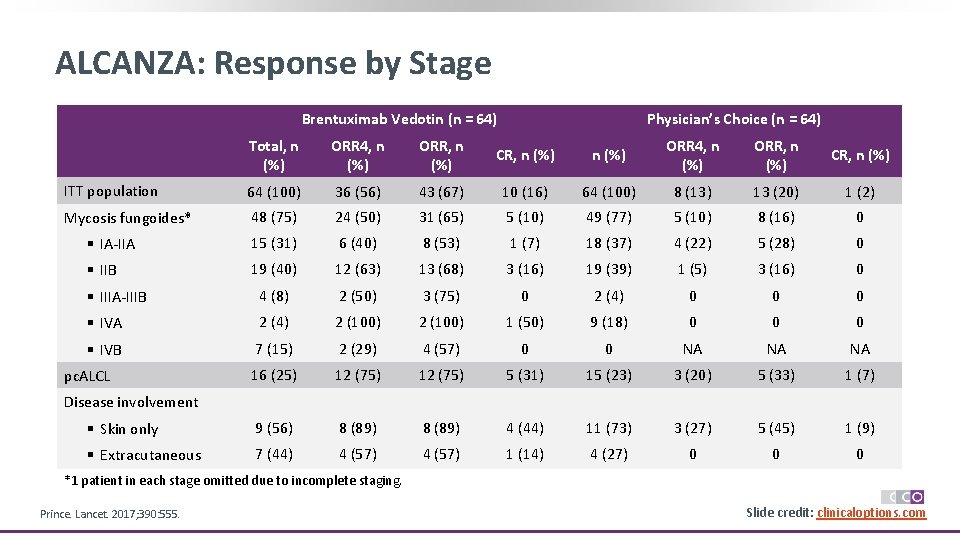
ALCANZA: Response by Stage Brentuximab Vedotin (n = 64) Physician’s Choice (n = 64) Total, n (%) ORR 4, n (%) ORR, n (%) CR, n (%) ITT population 64 (100) 36 (56) 43 (67) 10 (16) 64 (100) 8 (13) 13 (20) 1 (2) Mycosis fungoides* 48 (75) 24 (50) 31 (65) 5 (10) 49 (77) 5 (10) 8 (16) 0 § IA-IIA 15 (31) 6 (40) 8 (53) 1 (7) 18 (37) 4 (22) 5 (28) 0 § IIB 19 (40) 12 (63) 13 (68) 3 (16) 19 (39) 1 (5) 3 (16) 0 § IIIA-IIIB 4 (8) 2 (50) 3 (75) 0 2 (4) 0 0 0 § IVA 2 (4) 2 (100) 1 (50) 9 (18) 0 0 0 § IVB 7 (15) 2 (29) 4 (57) 0 0 NA NA NA 16 (25) 12 (75) 5 (31) 15 (23) 3 (20) 5 (33) 1 (7) § Skin only 9 (56) 8 (89) 4 (44) 11 (73) 3 (27) 5 (45) 1 (9) § Extracutaneous 7 (44) 4 (57) 1 (14) 4 (27) 0 0 0 pc. ALCL Disease involvement *1 patient in each stage omitted due to incomplete staging. Prince. Lancet. 2017; 390: 555. Slide credit: clinicaloptions. com
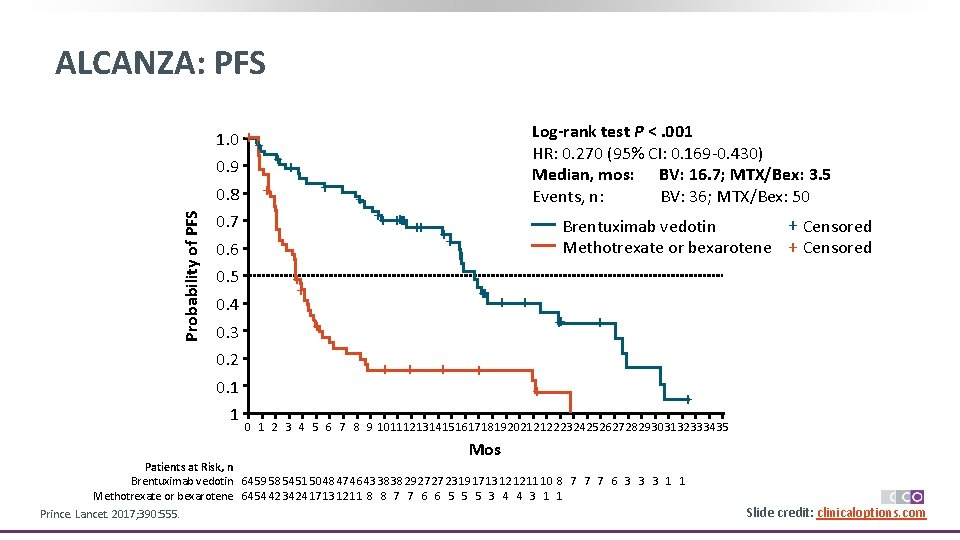
ALCANZA: PFS 1. 0 ++ 0. 9 Probability of PFS 0. 8 + ++ + 0. 7 0. 6 0. 5 0. 4 0. 3 0. 2 0. 1 1 + ++ ++ Log-rank test P <. 001 HR: 0. 270 (95% CI: 0. 169 -0. 430) Median, mos: BV: 16. 7; MTX/Bex: 3. 5 Events, n: BV: 36; MTX/Bex: 50 + Censored Brentuximab vedotin Methotrexate or bexarotene + Censored ++ + + ++ + 0 1 2 3 4 5 6 7 8 9 1011121314151617181920212122232425262728293031323334 35 Mos Patients at Risk, n Brentuximab vedotin 64 59 58 54 51 50 48 47 46 43 38 38 29 27 27 23 19 17 13 12 12 11 10 8 7 7 7 6 3 3 3 1 1 Methotrexate or bexarotene 64 54 42 34 24 17 13 12 11 8 8 7 7 6 6 5 5 5 3 4 4 3 1 1 Prince. Lancet. 2017; 390: 555. Slide credit: clinicaloptions. com
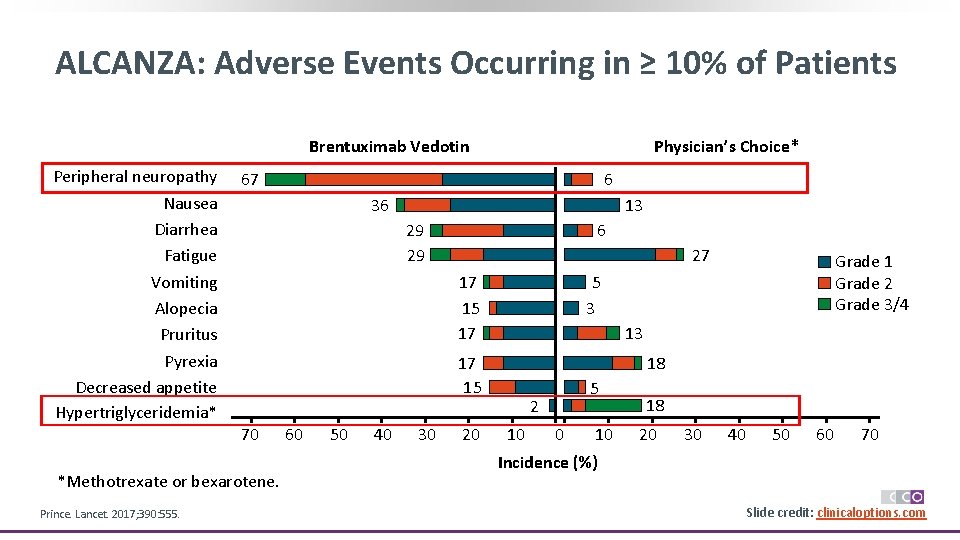
ALCANZA: Adverse Events Occurring in ≥ 10% of Patients Physician’s Choice* Brentuximab Vedotin Peripheral neuropathy Nausea Diarrhea Fatigue Vomiting Alopecia Pruritus Pyrexia Decreased appetite Hypertriglyceridemia* 67 36 13 29 29 6 27 17 15 17 *Methotrexate or bexarotene. 60 50 40 30 20 Grade 1 Grade 2 Grade 3/4 5 3 13 17 15 70 Prince. Lancet. 2017; 390: 555. 6 18 5 2 10 0 10 18 20 30 40 50 60 70 Incidence (%) Slide credit: clinicaloptions. com
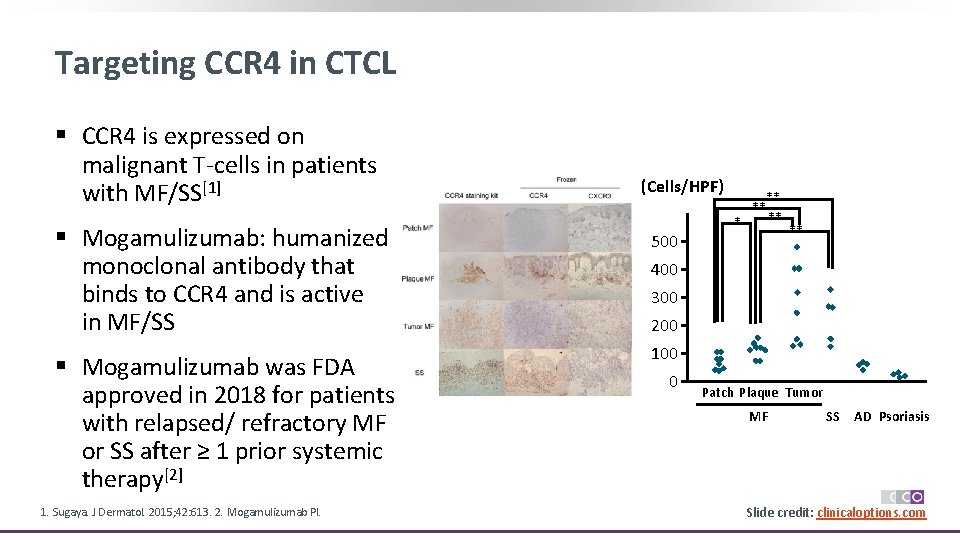
Targeting CCR 4 in CTCL § CCR 4 is expressed on malignant T-cells in patients with MF/SS[1] (Cells/HPF) § Mogamulizumab: humanized monoclonal antibody that binds to CCR 4 and is active in MF/SS 500 § Mogamulizumab was FDA approved in 2018 for patients with relapsed/ refractory MF or SS after ≥ 1 prior systemic therapy[2] 100 1. Sugaya. J Dermatol. 2015; 42: 613. 2. Mogamulizumab PI. * ** ** 400 300 200 0 Patch Plaque Tumor MF SS AD Psoriasis Slide credit: clinicaloptions. com
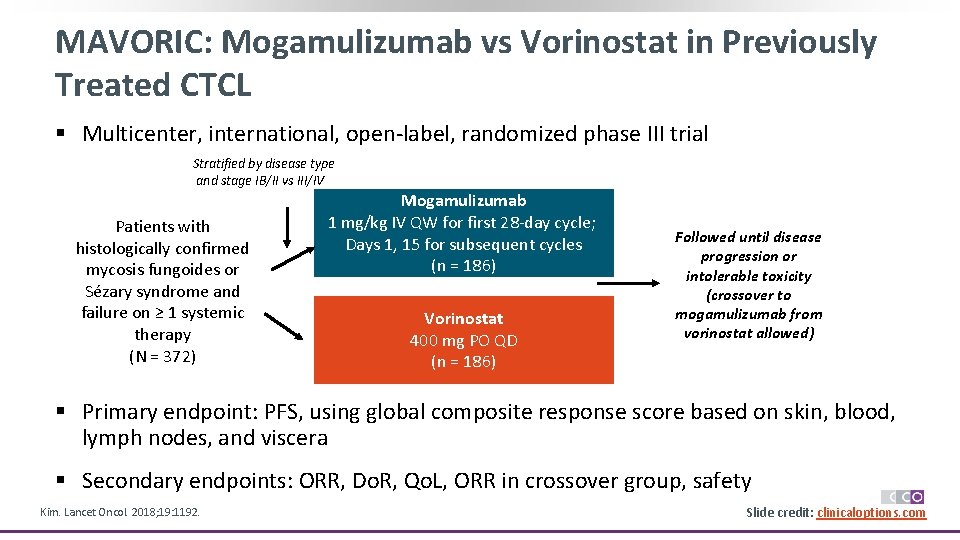
MAVORIC: Mogamulizumab vs Vorinostat in Previously Treated CTCL § Multicenter, international, open-label, randomized phase III trial Stratified by disease type and stage IB/II vs III/IV Patients with histologically confirmed mycosis fungoides or Sézary syndrome and failure on ≥ 1 systemic therapy (N = 372) Mogamulizumab 1 mg/kg IV QW for first 28 -day cycle; Days 1, 15 for subsequent cycles (n = 186) Vorinostat 400 mg PO QD (n = 186) Followed until disease progression or intolerable toxicity (crossover to mogamulizumab from vorinostat allowed) § Primary endpoint: PFS, using global composite response score based on skin, blood, lymph nodes, and viscera § Secondary endpoints: ORR, Do. R, Qo. L, ORR in crossover group, safety Kim. Lancet Oncol. 2018; 19: 1192. Slide credit: clinicaloptions. com
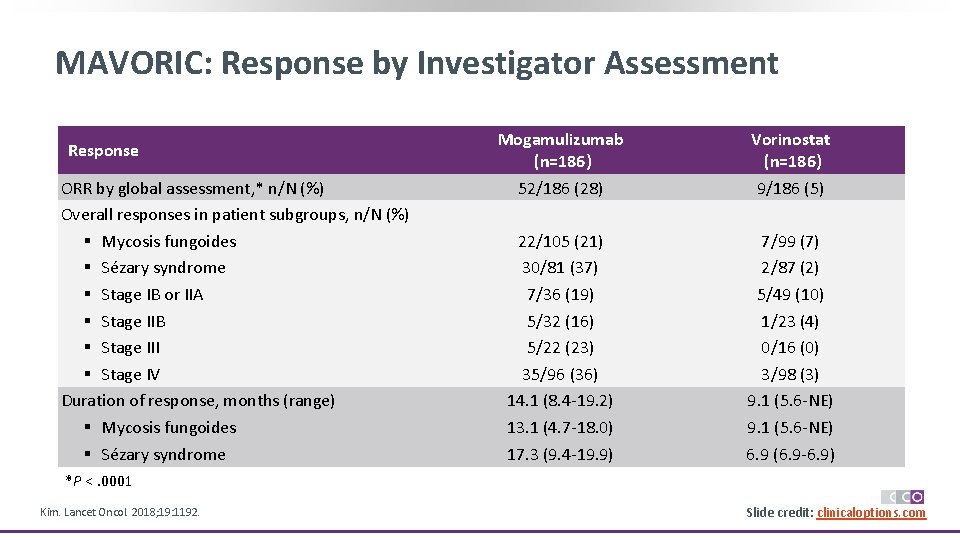
MAVORIC: Response by Investigator Assessment Response ORR by global assessment, * n/N (%) Overall responses in patient subgroups, n/N (%) § Mycosis fungoides § Sézary syndrome § Stage IB or IIA § Stage IIB § Stage III § Stage IV Duration of response, months (range) § Mycosis fungoides § Sézary syndrome Mogamulizumab (n=186) 52/186 (28) Vorinostat (n=186) 9/186 (5) 22/105 (21) 30/81 (37) 7/36 (19) 5/32 (16) 5/22 (23) 35/96 (36) 14. 1 (8. 4 -19. 2) 13. 1 (4. 7 -18. 0) 17. 3 (9. 4 -19. 9) 7/99 (7) 2/87 (2) 5/49 (10) 1/23 (4) 0/16 (0) 3/98 (3) 9. 1 (5. 6 -NE) 6. 9 (6. 9 -6. 9) *P <. 0001 Kim. Lancet Oncol. 2018; 19: 1192. Slide credit: clinicaloptions. com
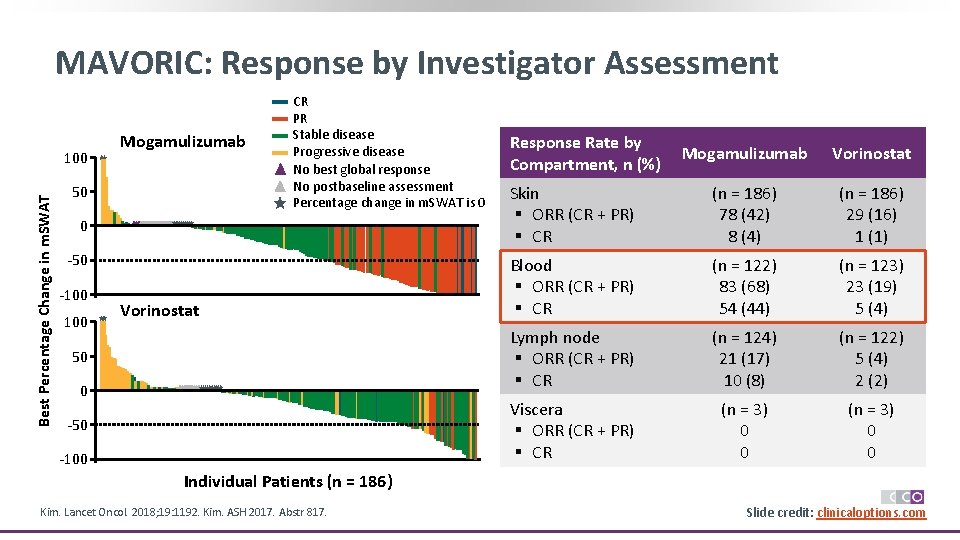
MAVORIC: Response by Investigator Assessment Best Percentage Change in m. SWAT 100 Mogamulizumab 50 CR PR Stable disease Progressive disease No best global response No postbaseline assessment Percentage change in m. SWAT is 0 0 -50 -100 Vorinostat 50 0 -50 -100 Response Rate by Compartment, n (%) Mogamulizumab Vorinostat Skin § ORR (CR + PR) § CR (n = 186) 78 (42) 8 (4) (n = 186) 29 (16) 1 (1) Blood § ORR (CR + PR) § CR (n = 122) 83 (68) 54 (44) (n = 123) 23 (19) 5 (4) Lymph node § ORR (CR + PR) § CR (n = 124) 21 (17) 10 (8) (n = 122) 5 (4) 2 (2) Viscera § ORR (CR + PR) § CR (n = 3) 0 0 Individual Patients (n = 186) Kim. Lancet Oncol. 2018; 19: 1192. Kim. ASH 2017. Abstr 817. Slide credit: clinicaloptions. com
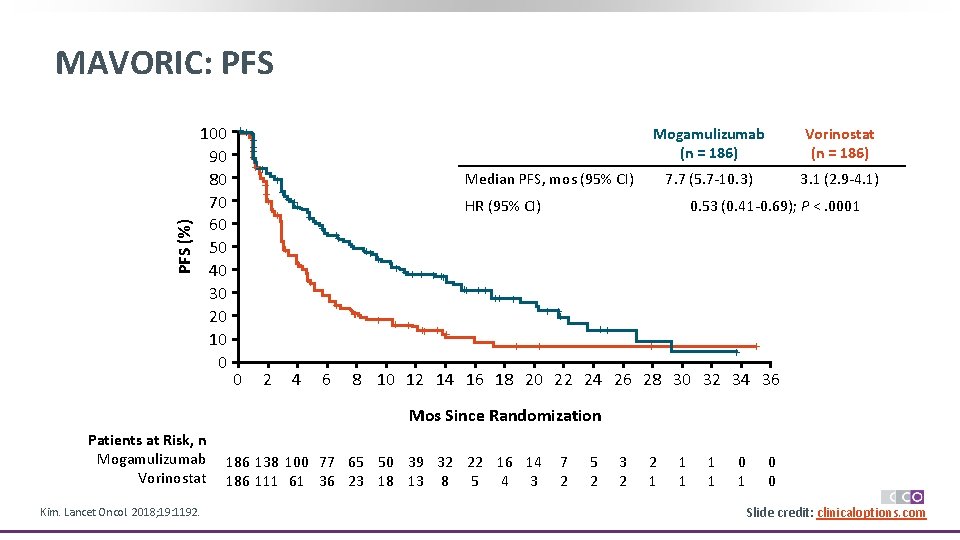
PFS (%) MAVORIC: PFS 100 90 80 70 60 50 40 30 20 10 0 ++ + ++ + + ++ ++ + + 4 7. 7 (5. 7 -10. 3) 3. 1 (2. 9 -4. 1) HR (95% CI) + 2 Vorinostat (n = 186) Median PFS, mos (95% CI) + 0 Mogamulizumab (n = 186) 6 ++ + + ++ ++ ++ + + 0. 53 (0. 41 -0. 69); P <. 0001 + ++ + + + 8 10 12 14 16 18 20 22 24 26 28 30 32 34 36 Mos Since Randomization Patients at Risk, n Mogamulizumab Vorinostat Kim. Lancet Oncol. 2018; 19: 1192. 186 138 100 77 65 50 39 32 22 16 14 186 111 61 36 23 18 13 8 5 4 3 7 2 5 2 3 2 2 1 1 1 0 0 Slide credit: clinicaloptions. com
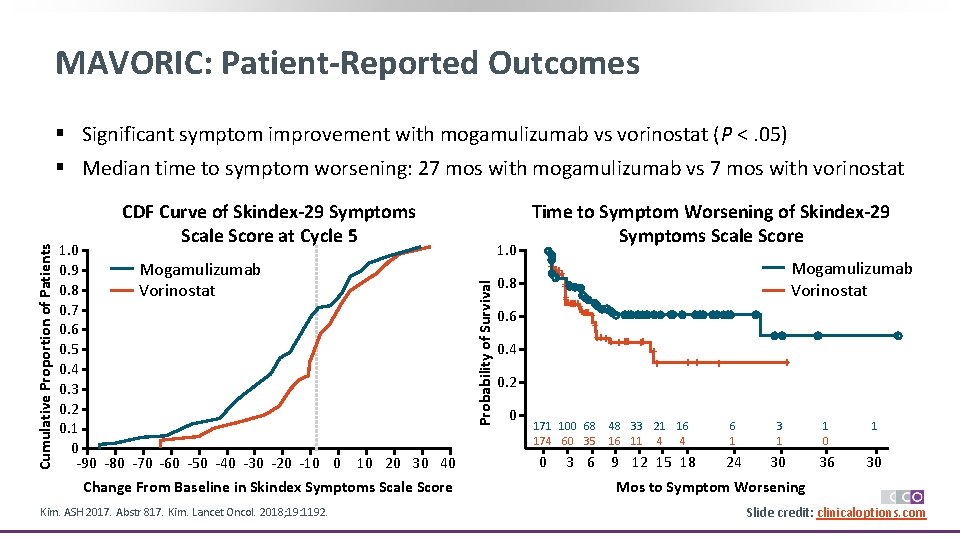
MAVORIC: Patient-Reported Outcomes § Significant symptom improvement with mogamulizumab vs vorinostat (P <. 05) CDF Curve of Skindex-29 Symptoms Scale Score at Cycle 5 1. 0 Mogamulizumab 0. 9 0. 8 Vorinostat 0. 7 0. 6 0. 5 0. 4 0. 3 0. 2 0. 1 0 -90 -80 -70 -60 -50 -40 -30 -20 -10 0 10 20 30 40 Change From Baseline in Skindex Symptoms Scale Score Kim. ASH 2017. Abstr 817. Kim. Lancet Oncol. 2018; 19: 1192. 1. 0 Probability of Survival Cumulative Proportion of Patients § Median time to symptom worsening: 27 mos with mogamulizumab vs 7 mos with vorinostat 0. 8 0. 6 0. 4 Time to Symptom Worsening of Skindex-29 Symptoms Scale Score ++ ++++++ + + +++ ++ 0. 2 0 171 100 68 174 60 35 0 Mogamulizumab Vorinostat + + ++ + 48 33 21 16 16 11 4 4 3 6 9 12 15 18 + 6 1 3 1 1 0 1 24 30 36 30 Mos to Symptom Worsening Slide credit: clinicaloptions. com
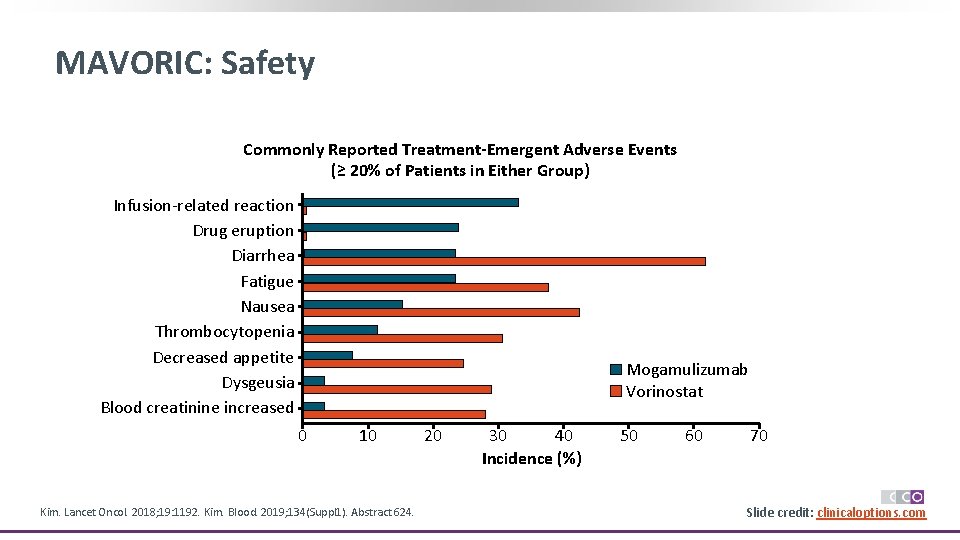
MAVORIC: Safety Commonly Reported Treatment-Emergent Adverse Events (≥ 20% of Patients in Either Group) Infusion-related reaction Drug eruption Diarrhea Fatigue Nausea Thrombocytopenia Decreased appetite Dysgeusia Blood creatinine increased Mogamulizumab Vorinostat 0 10 Kim. Lancet Oncol. 2018; 19: 1192. Kim. Blood. 2019; 134(Suppl 1). Abstract 624. 20 30 40 Incidence (%) 50 60 70 Slide credit: clinicaloptions. com
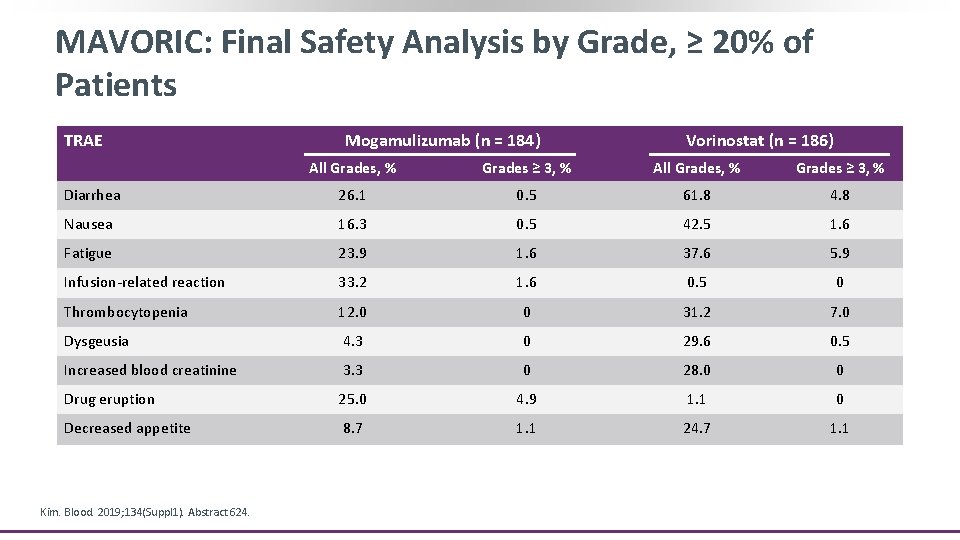
MAVORIC: Final Safety Analysis by Grade, ≥ 20% of Patients TRAE Mogamulizumab (n = 184) Vorinostat (n = 186) All Grades, % Grades ≥ 3, % Diarrhea 26. 1 0. 5 61. 8 4. 8 Nausea 16. 3 0. 5 42. 5 1. 6 Fatigue 23. 9 1. 6 37. 6 5. 9 Infusion-related reaction 33. 2 1. 6 0. 5 0 Thrombocytopenia 12. 0 0 31. 2 7. 0 Dysgeusia 4. 3 0 29. 6 0. 5 Increased blood creatinine 3. 3 0 28. 0 0 Drug eruption 25. 0 4. 9 1. 1 0 Decreased appetite 8. 7 1. 1 24. 7 1. 1 Kim. Blood. 2019; 134(Suppl 1). Abstract 624.
New Agents in Clinical Trials for MF/SS § E 7777: interleukin-2/diphtheria toxin fusion protein[1] § Cobomarsen: micro. RNA 155 inhibitor[2, 3] § ASTX 660: XIAP inhibitor[4] § Lacutamab (IPH 4102): humanized anti-KIR 3 DL 2 monoclonal antibody[5, 6] § Checkpoint inhibitors[7] § PI 3 kinase inhibitors[8, 9] § Selinexor: nuclear export inhibitor § CAR T-cell constructs[10] 1. NCT 01871727. 2. NCT 03713320. 3. NCT 02580552. 4. NCT 02503423. 5. NCT 02593045. 6. NCT 03902184. 7. NCT 03385226. 8. NCT 02567656. 9. Horwitz. Blood. 2018; 131: 888. 10. NCT 03602157 Slide credit: clinicaloptions. com
Go Online for More CCO Coverage of Mycosis Fungoides, Sézary Syndrome, and Other Lymphomas! Text module associated with this downloadable slideset Downloadable slidesets from MF/SS, CLL, and other lymphoma studies clinicaloptions. com/oncology