
New STIP PIE plan for tungsten and conceptual
- Slides: 23
New STIP PIE plan for tungsten and conceptual study for PIECE Yongjoong Lee Target Division www. europeanspallationsource. se
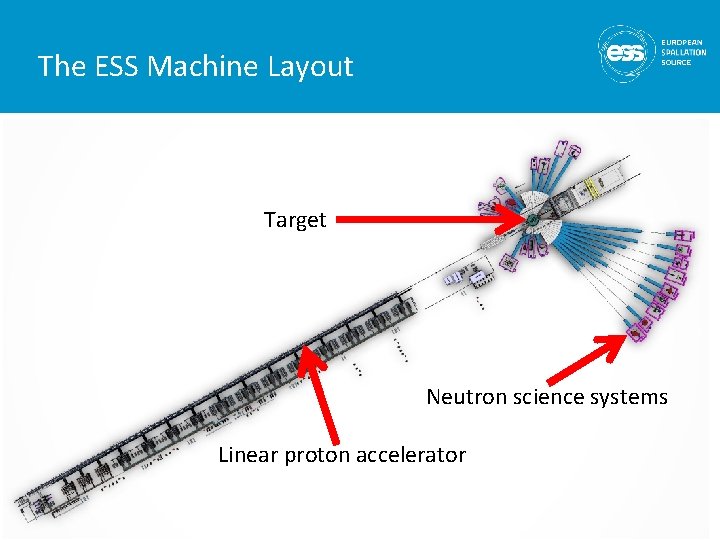
The ESS Machine Layout Target Neutron science systems Linear proton accelerator
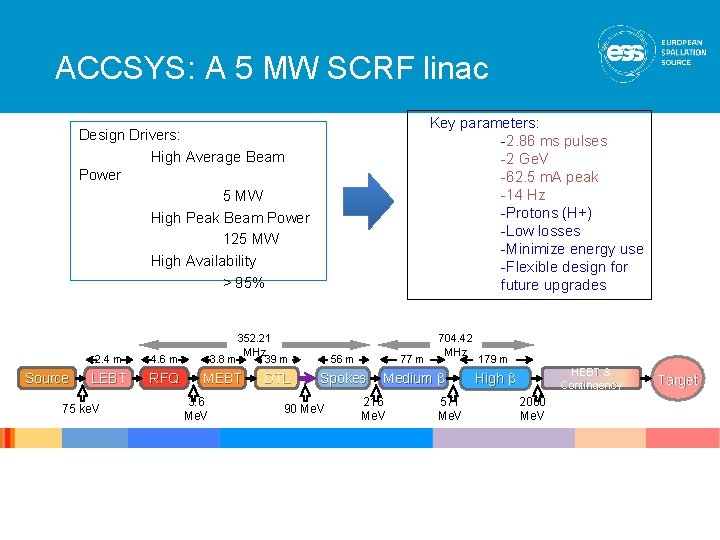
ACCSYS: A 5 MW SCRF linac Key parameters: -2. 86 ms pulses -2 Ge. V -62. 5 m. A peak -14 Hz -Protons (H+) -Low losses -Minimize energy use -Flexible design for future upgrades Design Drivers: High Average Beam Power 5 MW High Peak Beam Power 125 MW High Availability > 95% Source 2. 4 m 4. 6 m LEBT RFQ 75 ke. V 352. 21 MHz 3. 8 m 39 m MEBT 3. 6 Me. V DTL 704. 42 MHz 56 m 77 m Spokes Medium β 90 Me. V 216 Me. V 571 Me. V 179 m HEBT & Contingency High β 2000 Me. V Target
Spallation Material: Material Selection • For better neutronic performance, the spallation volume must have high neuron production density. – Spallation material shall have high atomic number – Spallation material shall have high density – The material must be affordable, preferably with operational track records at other spallation sources. 4
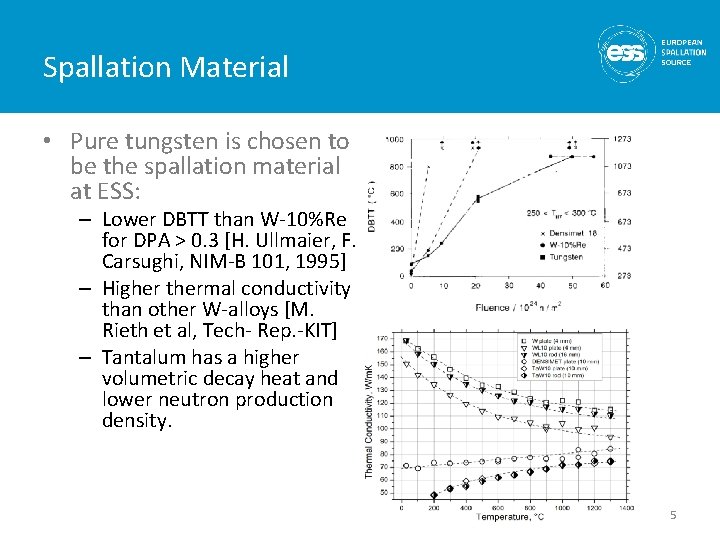
Spallation Material • Pure tungsten is chosen to be the spallation material at ESS: – Lower DBTT than W-10%Re for DPA > 0. 3 [H. Ullmaier, F. Carsughi, NIM-B 101, 1995] – Higher thermal conductivity than other W-alloys [M. Rieth et al, Tech- Rep. -KIT] – Tantalum has a higher volumetric decay heat and lower neutron production density. 5
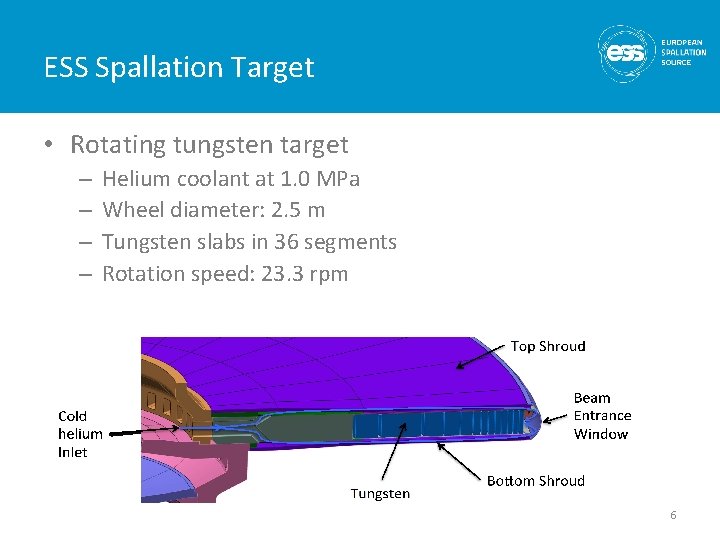
ESS Spallation Target • Rotating tungsten target – – Helium coolant at 1. 0 MPa Wheel diameter: 2. 5 m Tungsten slabs in 36 segments Rotation speed: 23. 3 rpm 6
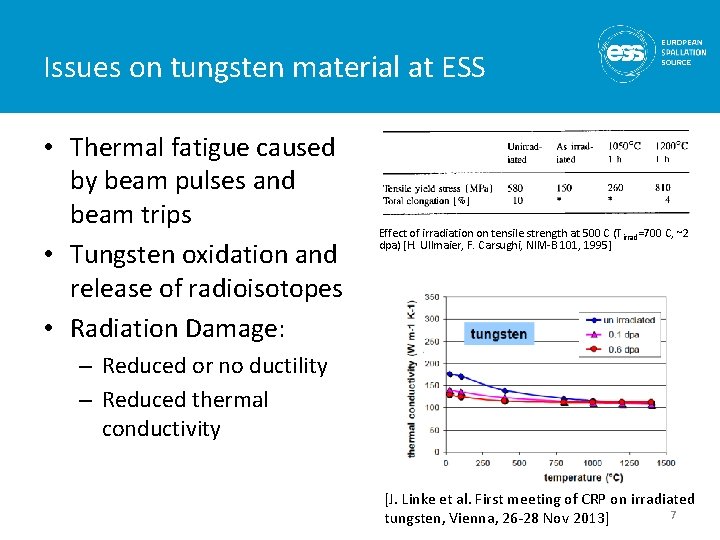
Issues on tungsten material at ESS • Thermal fatigue caused by beam pulses and beam trips • Tungsten oxidation and release of radioisotopes • Radiation Damage: Effect of irradiation on tensile strength at 500 C (T irrad=700 C, ~2 dpa) [H. Ullmaier, F. Carsughi, NIM-B 101, 1995] – Reduced or no ductility – Reduced thermal conductivity [J. Linke et al. First meeting of CRP on irradiated 7 tungsten, Vienna, 26 -28 Nov 2013]
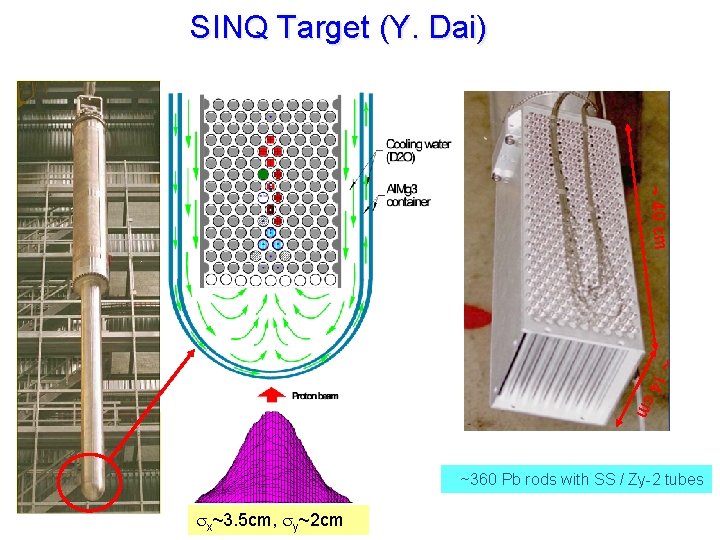
SINQ Target (Y. Dai) ~ 40 cm ~ m 14 c ~360 Pb rods with SS / Zy-2 tubes sx~3. 5 cm, sy~2 cm
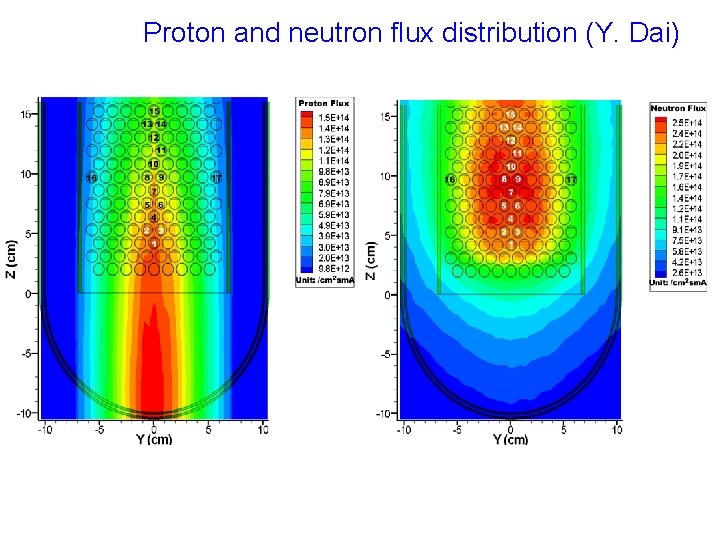
Proton and neutron flux distribution (Y. Dai)
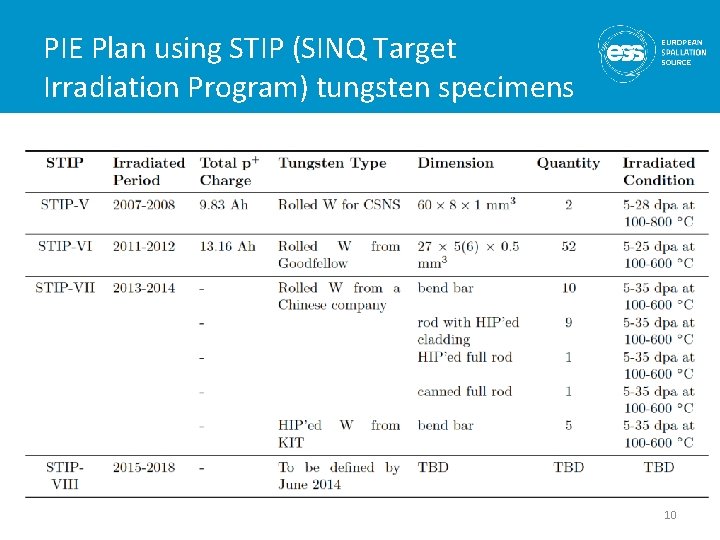
PIE Plan using STIP (SINQ Target Irradiation Program) tungsten specimens 10
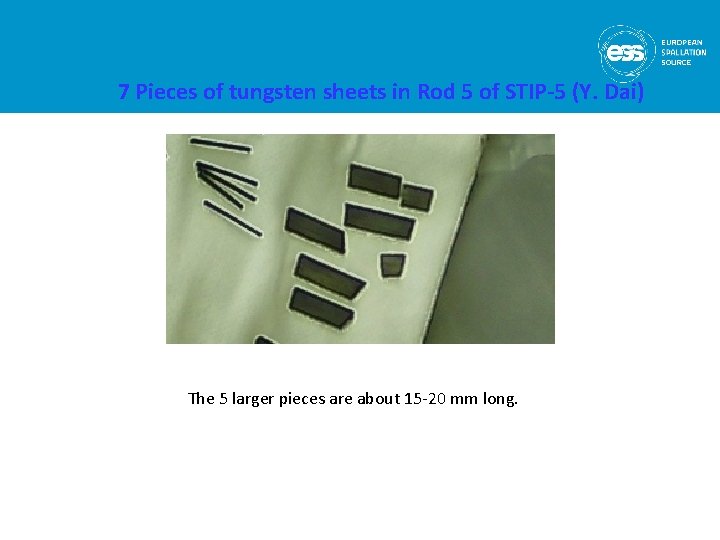
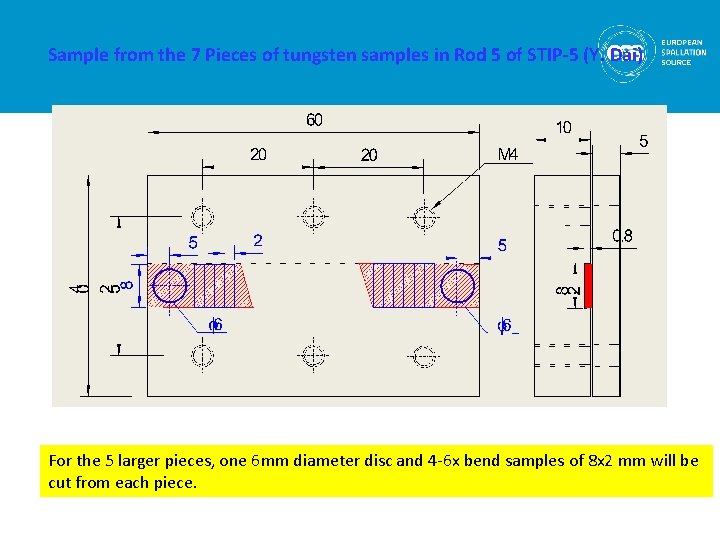
7 Pieces of tungsten sheets in Rod 5 of STIP-5 (Y. Dai) The 5 larger pieces are about 15 -20 mm long.
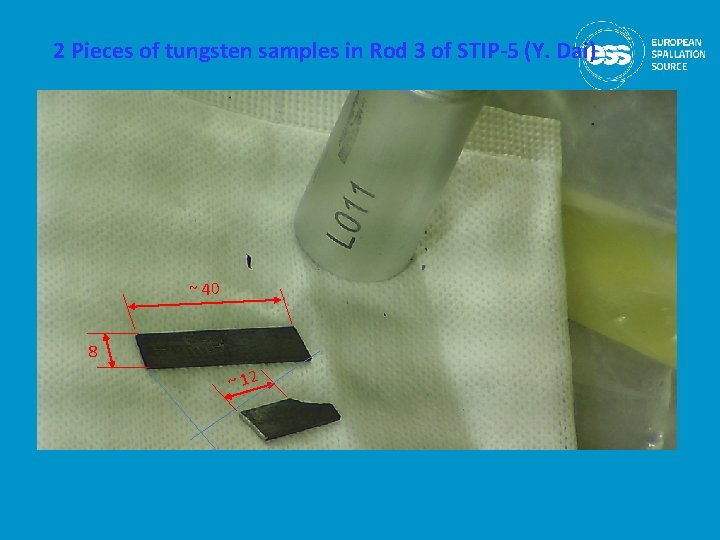
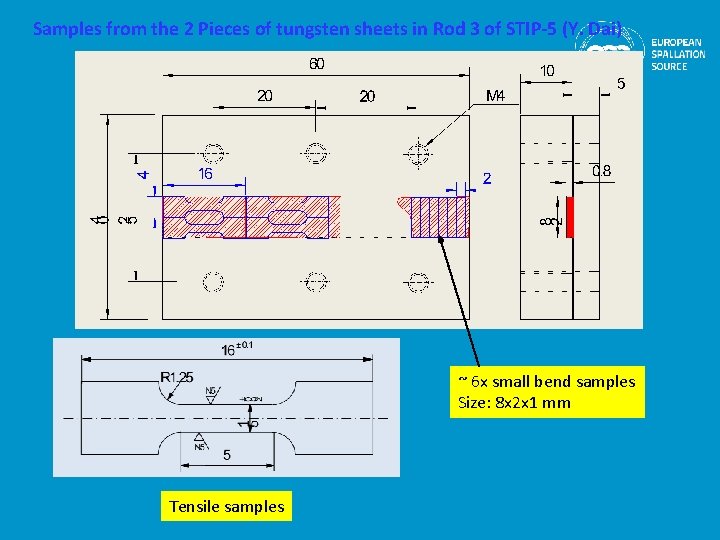
2 Pieces of tungsten samples in Rod 3 of STIP-5 (Y. Dai) ~ 40 8 ~ 12
Samples from the 2 Pieces of tungsten sheets in Rod 3 of STIP-5 (Y. Dai) ~ 6 x small bend samples Size: 8 x 2 x 1 mm Tensile samples
Sample from the 7 Pieces of tungsten samples in Rod 5 of STIP-5 (Y. Dai) For the 5 larger pieces, one 6 mm diameter disc and 4 -6 x bend samples of 8 x 2 mm will be cut from each piece.
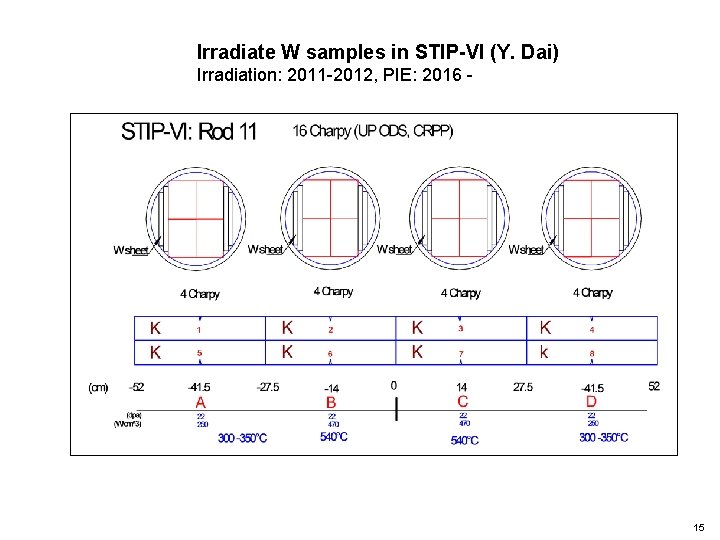
Irradiate W samples in STIP-VI (Y. Dai) Irradiation: 2011 -2012, PIE: 2016 - 15
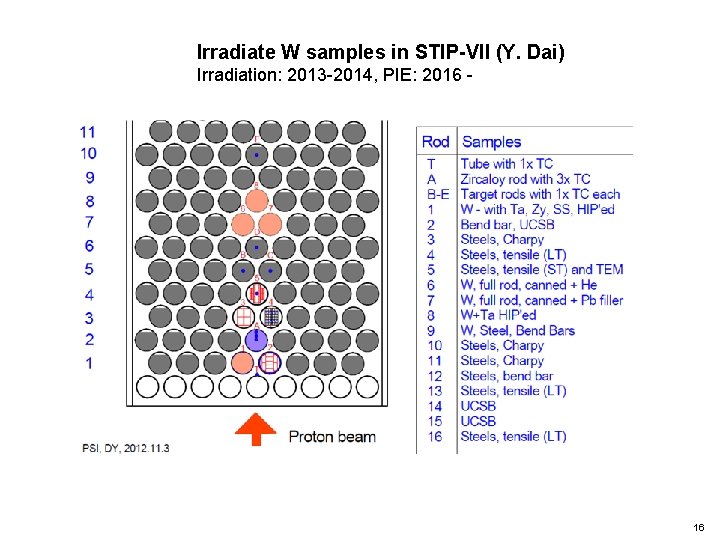
Irradiate W samples in STIP-VII (Y. Dai) Irradiation: 2013 -2014, PIE: 2016 - 16
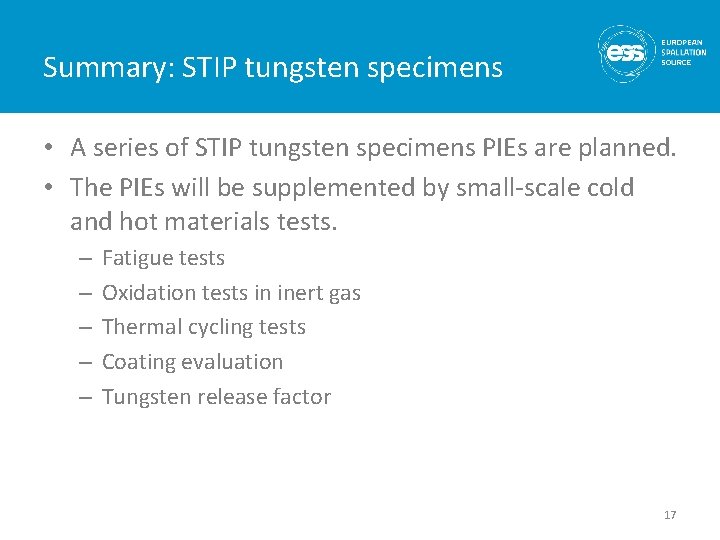
Summary: STIP tungsten specimens • A series of STIP tungsten specimens PIEs are planned. • The PIEs will be supplemented by small-scale cold and hot materials tests. – – – Fatigue tests Oxidation tests in inert gas Thermal cycling tests Coating evaluation Tungsten release factor 17
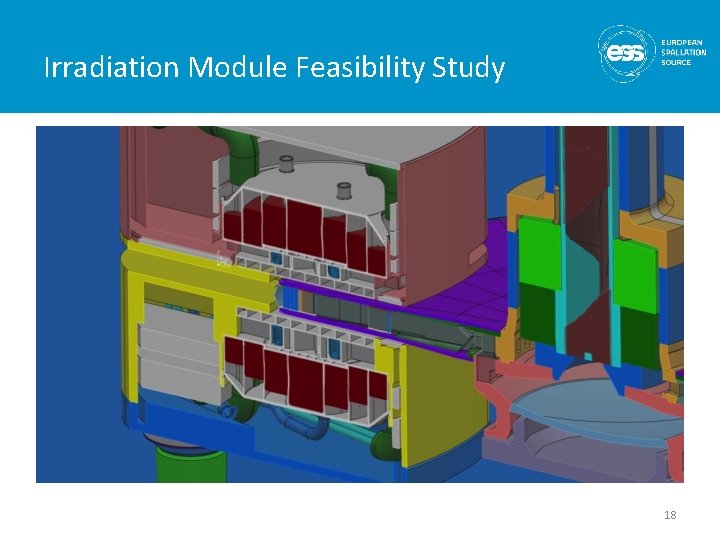
Irradiation Module Feasibility Study 18
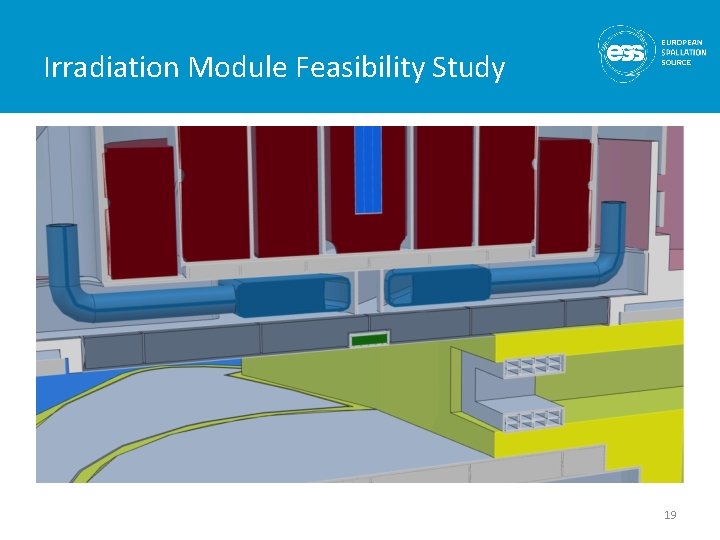
Irradiation Module Feasibility Study 19
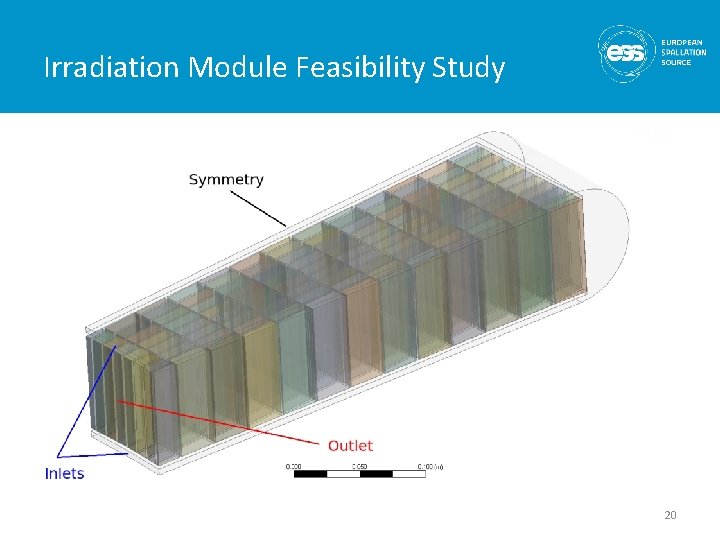
Irradiation Module Feasibility Study 20
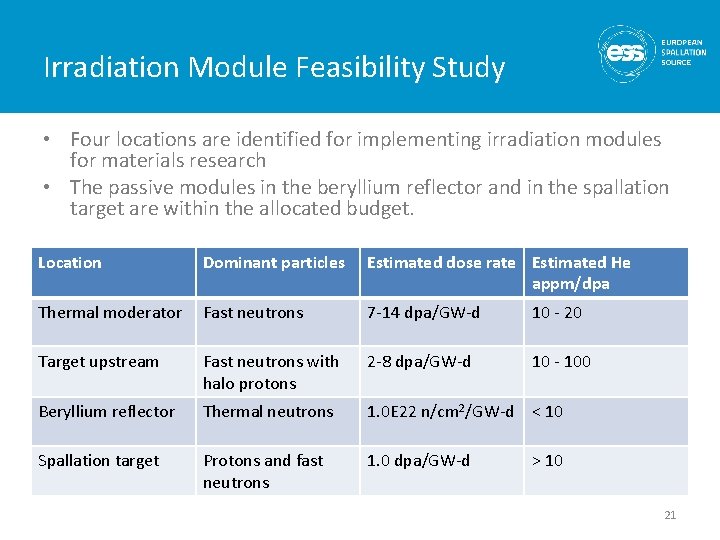
Irradiation Module Feasibility Study • Four locations are identified for implementing irradiation modules for materials research • The passive modules in the beryllium reflector and in the spallation target are within the allocated budget. Location Dominant particles Estimated dose rate Estimated He appm/dpa Thermal moderator Fast neutrons 7 -14 dpa/GW-d 10 - 20 Target upstream Fast neutrons with halo protons 2 -8 dpa/GW-d 10 - 100 Beryllium reflector Thermal neutrons 1. 0 E 22 n/cm 2/GW-d < 10 Spallation target Protons and fast neutrons 1. 0 dpa/GW-d > 10 21
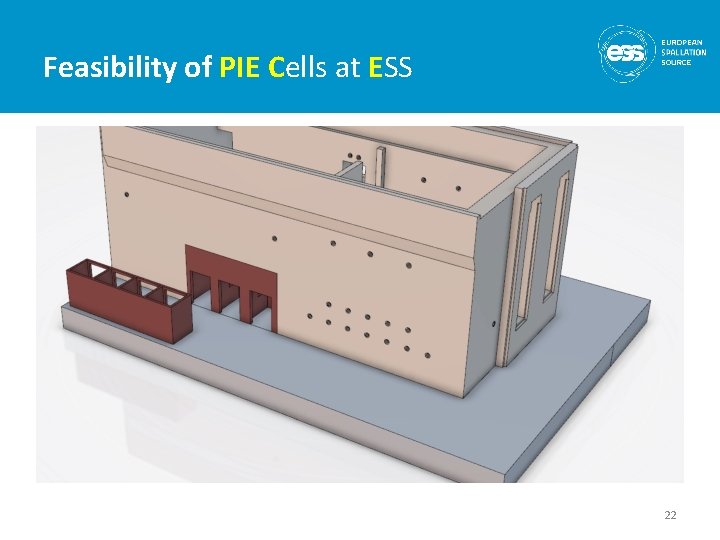
Feasibility of PIE Cells at ESS 22
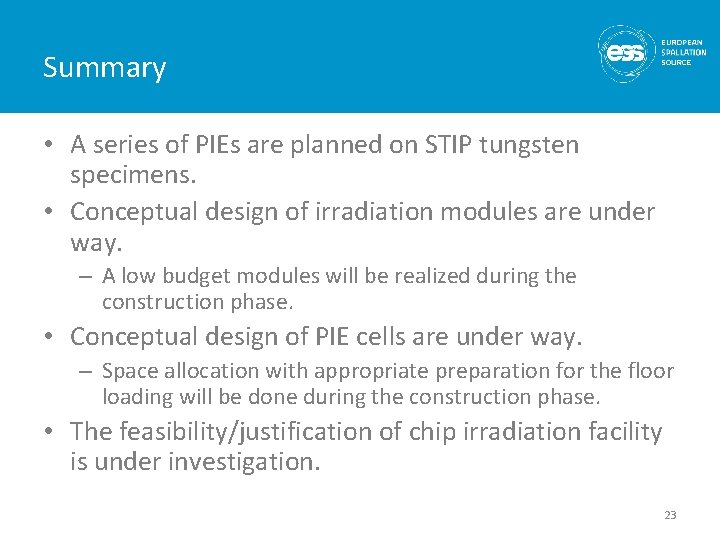
Summary • A series of PIEs are planned on STIP tungsten specimens. • Conceptual design of irradiation modules are under way. – A low budget modules will be realized during the construction phase. • Conceptual design of PIE cells are under way. – Space allocation with appropriate preparation for the floor loading will be done during the construction phase. • The feasibility/justification of chip irradiation facility is under investigation. 23