
New Standards for Local Comprehensive Planning Seeking A
- Slides: 20
New Standards for Local Comprehensive Planning Seeking A Better Fit for Georgia’s Communities
A Brief History How We Got Here • The Planning Act – 1980 s Context • A Different Situation since 2008 Economic Downturn • Criticisms of DCA’s Rules • 2011 Legislation and Veto • Advisory Task Force
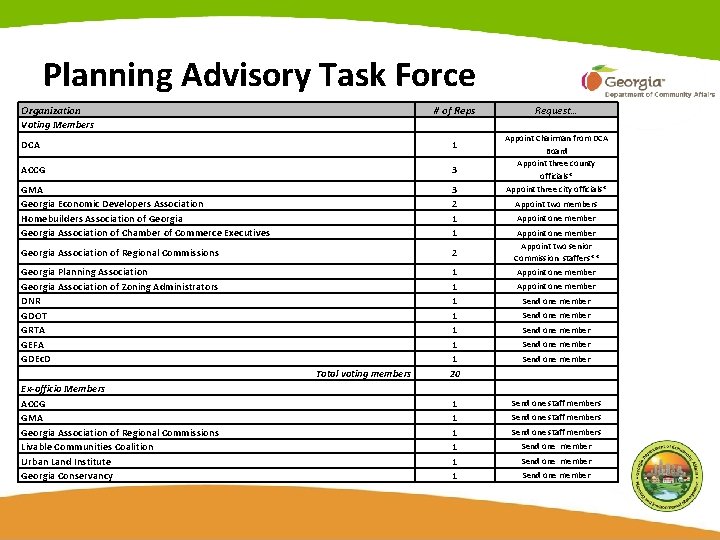
Planning Advisory Task Force Organization Voting Members # of Reps DCA 1 ACCG 3 GMA Georgia Economic Developers Association Homebuilders Association of Georgia Association of Chamber of Commerce Executives 3 2 1 1 Georgia Association of Regional Commissions 2 Georgia Planning Association Georgia Association of Zoning Administrators DNR GDOT GRTA GEFA GDEc. D 1 1 1 1 20 Total voting members Ex-officio Members ACCG GMA Georgia Association of Regional Commissions Livable Communities Coalition Urban Land Institute Georgia Conservancy 1 1 1 Request… Appoint Chairman from DCA Board Appoint three county officials* Appoint three city officials* Appoint two members Appoint one member Appoint two senior Commission staffers** Appoint one member Send one member Send one staff members Send one member Send one member
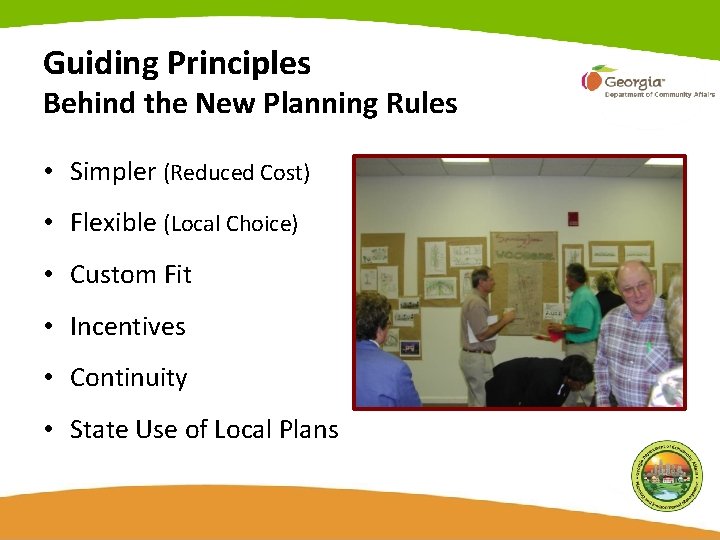
Guiding Principles Behind the New Planning Rules • Simpler (Reduced Cost) • Flexible (Local Choice) • Custom Fit • Incentives • Continuity • State Use of Local Plans
Reducing the Cost of Planning Regional Commissions have agreed to prepare the comprehensive plan at NO COST to the community: • For core elements of the comprehensive plan • At normal plan update deadline DCA will provide all data needed for planning on its website $
Overview of the New Standards • Menu of Plan Elements (Community Chooses) • Brief, Flexible Guidance • Only Three Elements are Required of All • Five Elements are Required for Some Communities (depending on local conditions) • Substitution of Existing Plans/Elements Encouraged • Maximum of Three Elements Updated Every Five Years, Remainder Updated at Local Discretion
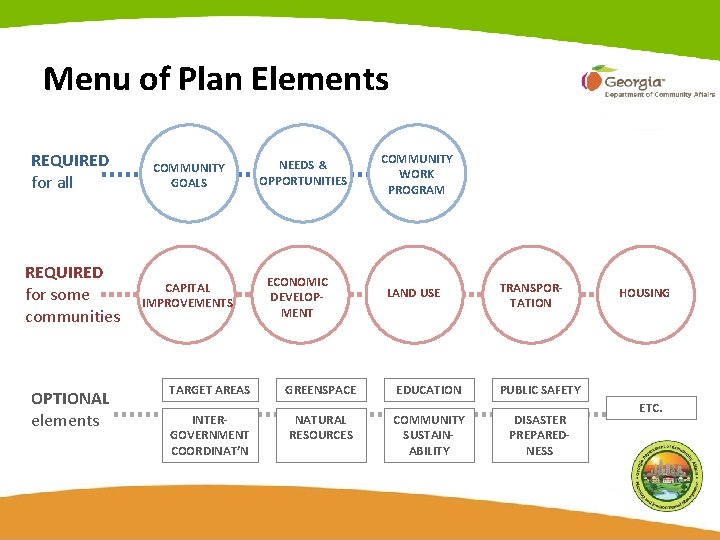
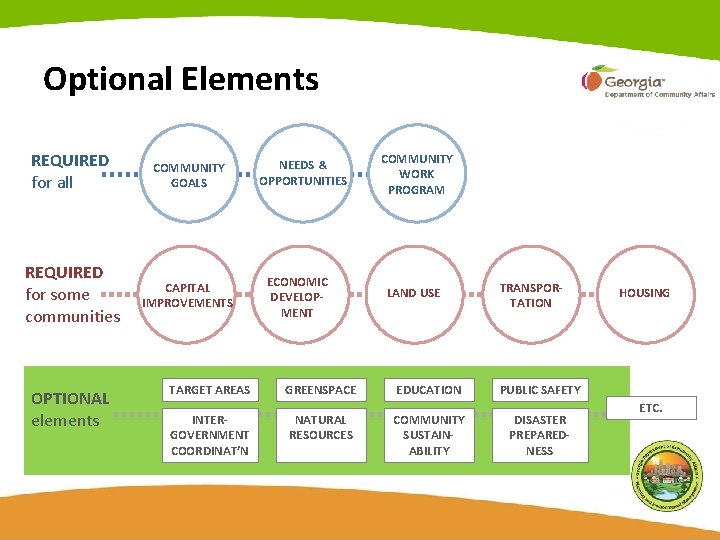
Menu of Plan Elements REQUIRED for all COMMUNITY GOALS REQUIRED for some communities CAPITAL IMPROVEMENTS OPTIONAL elements NEEDS & OPPORTUNITIES ECONOMIC DEVELOPMENT COMMUNITY WORK PROGRAM LAND USE TRANSPORTATION TARGET AREAS GREENSPACE EDUCATION PUBLIC SAFETY INTERGOVERNMENT COORDINAT’N NATURAL RESOURCES COMMUNITY SUSTAINABILITY DISASTER PREPAREDNESS HOUSING ETC.
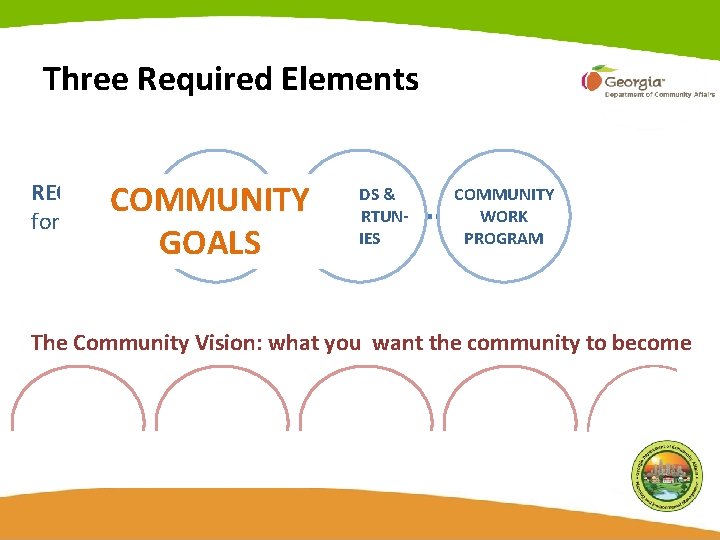
Three Required Elements REQUIRED COMMUNITY for all GOALS NEEDS & OPPORTUNITIES COMMUNITY WORK PROGRAM The Community Vision: what you want the community to become
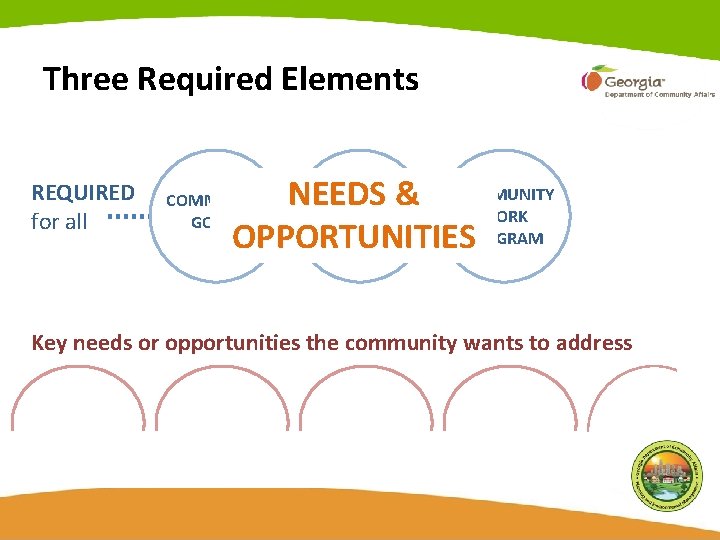
Three Required Elements REQUIRED for all NEEDS & COMMUNITY WORK OPPORTUNITIESPROGRAM COMMUNITY GOALS Key needs or opportunities the community wants to address
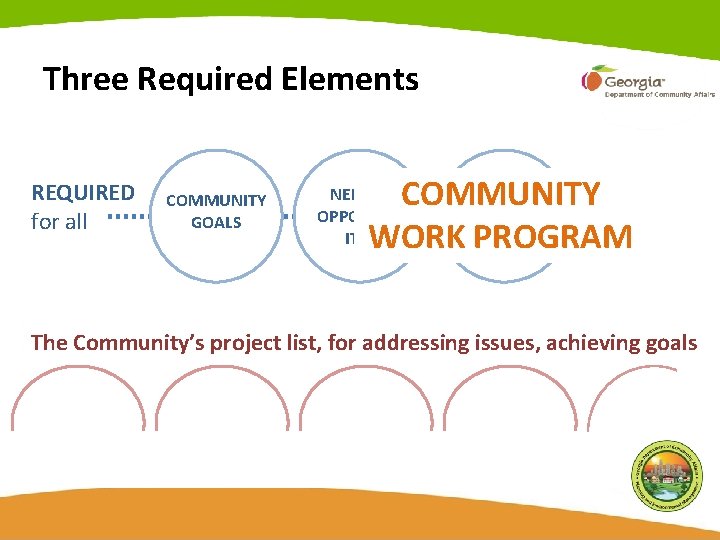
Three Required Elements REQUIRED for all COMMUNITY GOALS COMMUNITY WORK PROGRAM NEEDS & OPPORTUNITIES The Community’s project list, for addressing issues, achieving goals
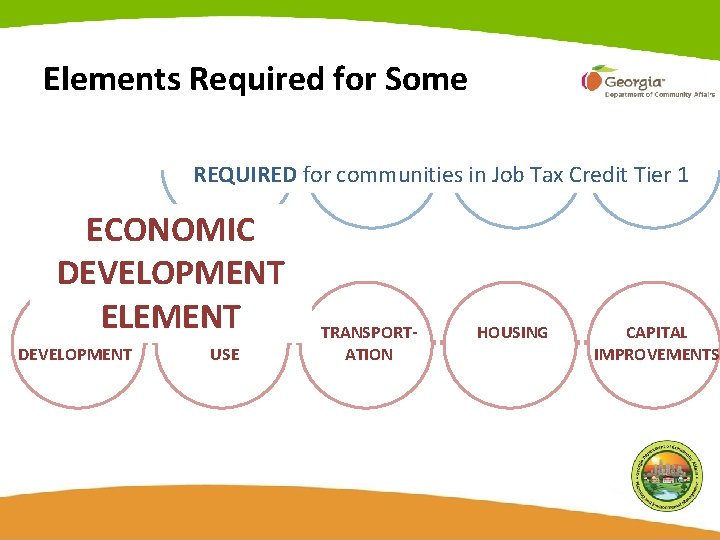
Elements Required for Some REQUIRED for communities in Job Tax Credit Tier 1 ECONOMIC DEVELOPMENT ELEMENT ECONOMIC LAND DEVELOPMENT USE TRANSPORTATION HOUSING CAPITAL IMPROVEMENTS
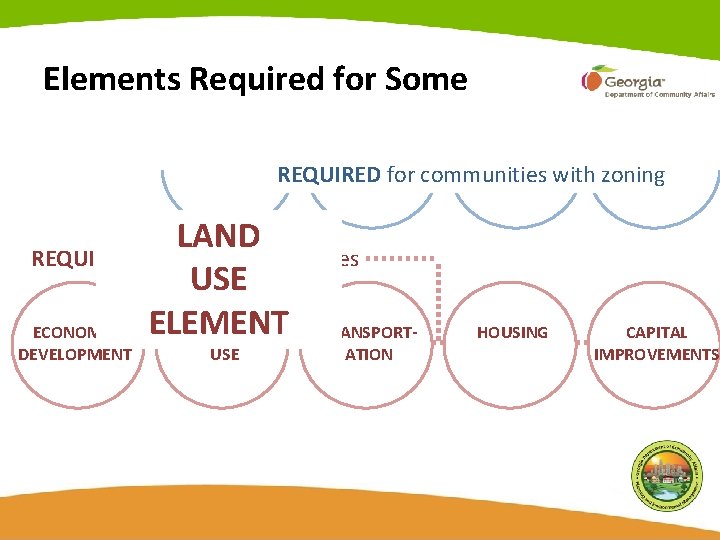
Elements Required for Some REQUIRED for communities with zoning LAND REQUIRED for some communities USE ELEMENT ECONOMIC LAND TRANSPORT- DEVELOPMENT USE ATION HOUSING CAPITAL IMPROVEMENTS
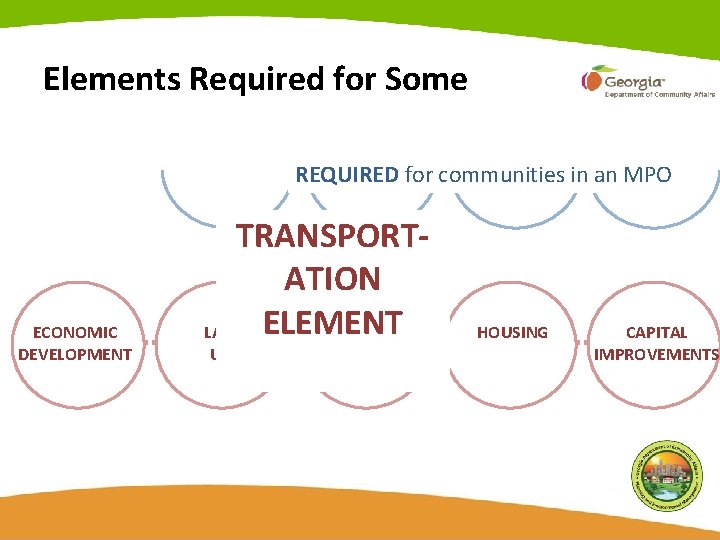
Elements Required for Some REQUIRED for communities in an MPO ECONOMIC DEVELOPMENT TRANSPORTATION LAND ELEMENT TRANSPORTUSE ATION HOUSING CAPITAL IMPROVEMENTS
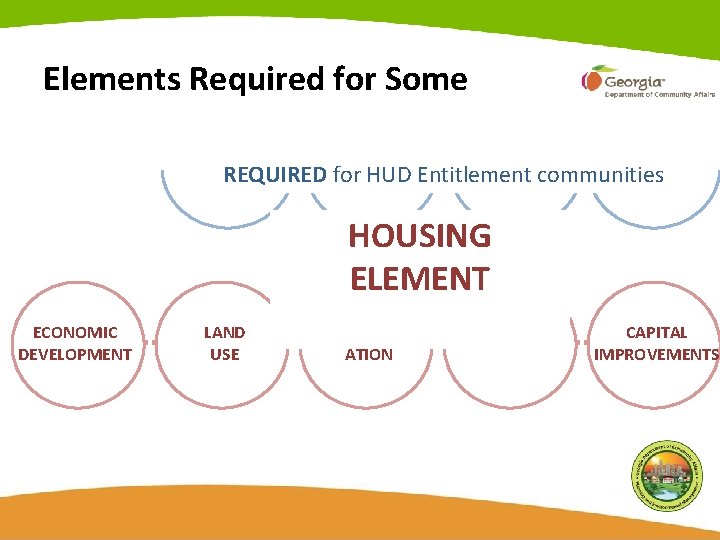
Elements Required for Some REQUIRED for HUD Entitlement communities HOUSING ELEMENT ECONOMIC DEVELOPMENT LAND USE TRANSPORTATION HOUSING CAPITAL IMPROVEMENTS
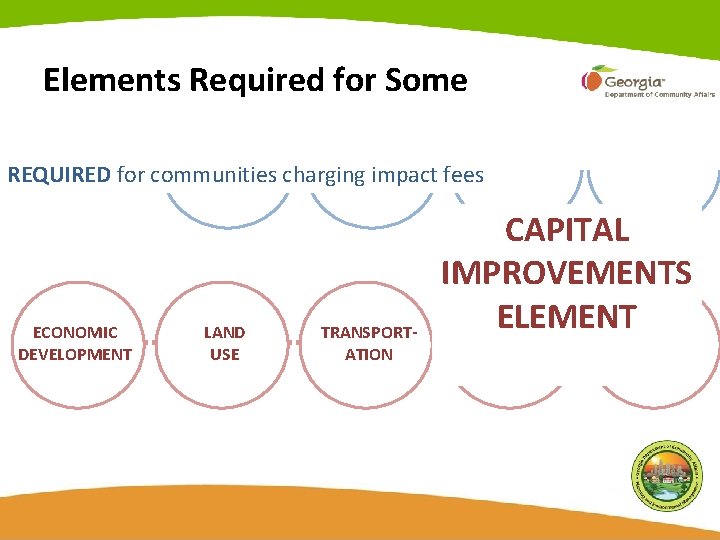
Elements Required for Some REQUIRED for communities charging impact fees ECONOMIC DEVELOPMENT LAND USE TRANSPORTATION CAPITAL IMPROVEMENTS ELEMENT HOUSING
Optional Elements REQUIRED for all COMMUNITY GOALS REQUIRED for some communities CAPITAL IMPROVEMENTS OPTIONAL elements NEEDS & OPPORTUNITIES ECONOMIC DEVELOPMENT COMMUNITY WORK PROGRAM LAND USE TRANSPORTATION TARGET AREAS GREENSPACE EDUCATION PUBLIC SAFETY INTERGOVERNMENT COORDINAT’N NATURAL RESOURCES COMMUNITY SUSTAINABILITY DISASTER PREPAREDNESS HOUSING ETC.
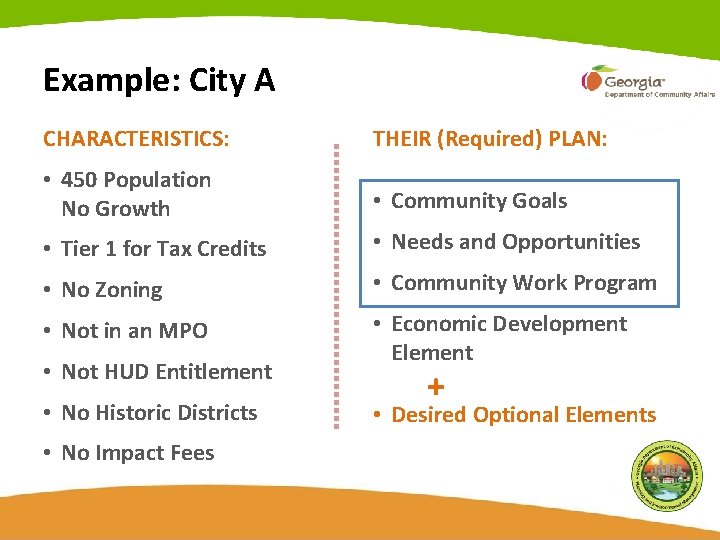
Example: City A CHARACTERISTICS: THEIR (Required) PLAN: • 450 Population No Growth • Community Goals • Tier 1 for Tax Credits • Needs and Opportunities • No Zoning • Community Work Program • Not in an MPO • Economic Development Element • Not HUD Entitlement • No Historic Districts • No Impact Fees + • Desired Optional Elements
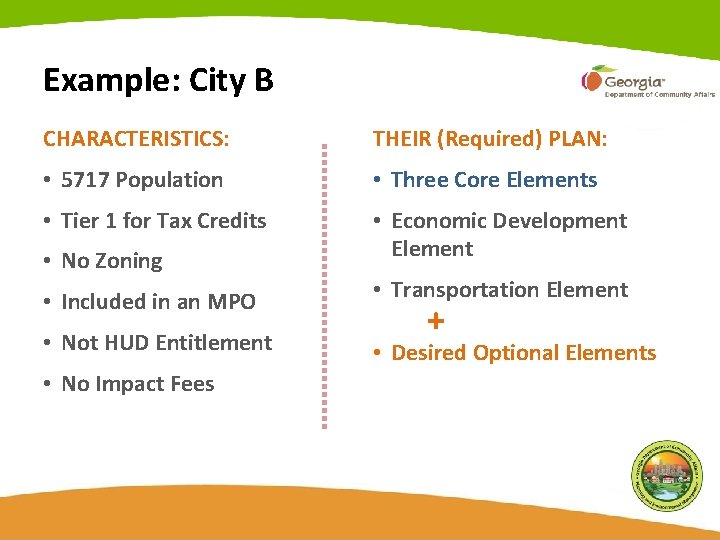
Example: City B CHARACTERISTICS: THEIR (Required) PLAN: • 5717 Population • Three Core Elements • Tier 1 for Tax Credits • Economic Development Element • No Zoning • Included in an MPO • Transportation Element • Not HUD Entitlement • Desired Optional Elements • No Impact Fees +
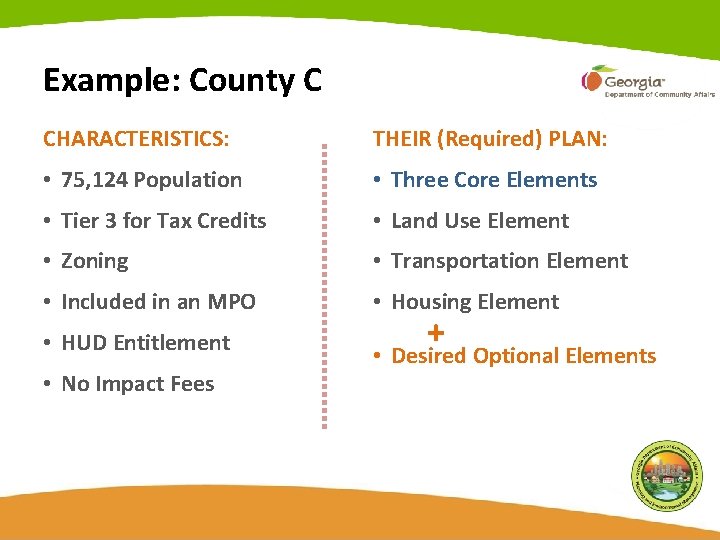
Example: County C CHARACTERISTICS: THEIR (Required) PLAN: • 75, 124 Population • Three Core Elements • Tier 3 for Tax Credits • Land Use Element • Zoning • Transportation Element • Included in an MPO • Housing Element • HUD Entitlement • No Impact Fees + • Desired Optional Elements
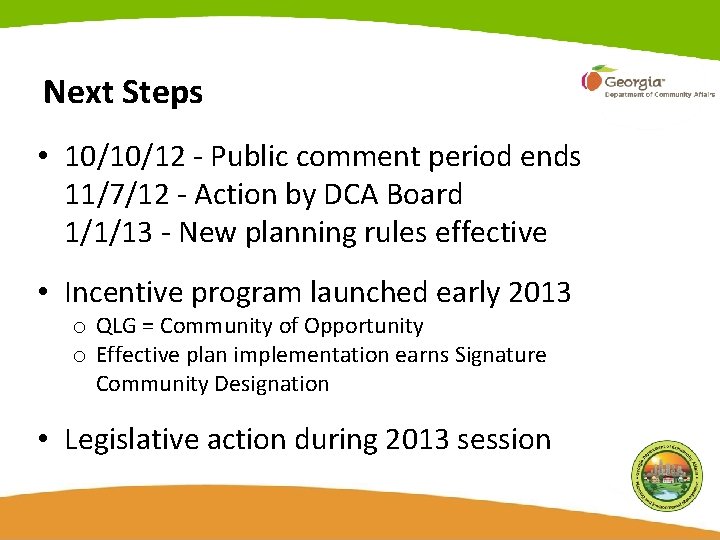
Next Steps • 10/10/12 - Public comment period ends 11/7/12 - Action by DCA Board 1/1/13 - New planning rules effective • Incentive program launched early 2013 o QLG = Community of Opportunity o Effective plan implementation earns Signature Community Designation • Legislative action during 2013 session